
The WNBA’s Top 25 Players Under 25
From Caitlin, Paige, and Angel to the next wave of international stars, here are the 25 players defining the future of the WNBAThe WNBA’s Top 25 Players Under 25
From Caitlin, Paige, and Angel to the next wave of international stars, here are the 25 players defining the future of the WNBA
The WNBA is brimming with young talent. Rookies are arriving ready to play. Second- and third-round picks are contributing to contenders. Add in a robust international pipeline and more emphasis on player development across the board, and the league has never been more defined by its youth.
With that in mind, we’re breaking down the WNBA’s top 25 players under 25 this week. For a longer breakdown of the rankings, check out The Ringer WNBA Show from earlier this week, when I went player-by-player with The Ringer’s own Steven Ruiz.
Some of the WNBA’s biggest young names, including Caitlin Clark, Paige Bueckers, and Angel Reese, are conversation-shaping superstars. Others are having breakouts—or slumps—this season that could define their teams’ trajectories.
Before we dive in, a few ground rules: This ranking is based on production, not potential. It's not a draft board, but an assessment of who these players are right now. This is a snapshot of the present, for the players who will define the future of the WNBA.
I also excluded rookies such as Awa Fam and Juste Jocyte, who haven't had enough time to acclimate after arriving from overseas. Even so, more than a quarter of this list features international players. Thanks in part to the new CBA, talent is flowing in from overseas, reshaping the league's demographics, play style, and future. France alone could field its own starting lineup from this ranking. (Team USA: consider yourself warned.)
And now, without further ado, here’s my top 25 under 25 list.


25. Saniya Rivers, Connecticut Sun
2026 stats: 6.5 points, 3.5 assist, 2 rebounds, 31 percent shooting/14 percent on 3-pointers/70 percent on free throws (6.4 PER, -0.6 win shares)
Age: 21 years, 92 days
I reserve my right to panic later, but I’m holding onto my Saniya Rivers stock for now.
After a promising rookie year that showcased her shooting ability alongside truly eye-popping moments of athleticism on defense, Rivers is in the midst of a gnarly sophomore slump, featuring drop-offs in almost every statistical category.
Rivers’s second year feels especially hard to evaluate given how everything around the Sun in their final year in Connecticut feels like a Tillman Fertitta psy-op designed to procure UT’s Madison Booker to Houston in 2027 (if JuJu Watkins stays in college another year). There is, of course, the less surreptitious possibility that Rivers—who needs space to thrive–is struggling on a roster that lost its only good shooters from last year in Marina Mabrey and Jacy Sheldon.
Guard Leila Lacan’s return from Europe will help, allowing Rivers to play off the ball more again, and opening her up for cuts and open looks. Her defense potential has always been exciting, but Rivers needs to find an offensive rudder to stay on the court, whether it’s using her athleticism to generate points as a two-way transition threat or continuing to work on her shot.
24. Kaitlyn Chen, Golden State Valkyries
2026 stats: 7.3 points, 1.7 rebounds, 1.7 assists, 49/64/85 (16.8 PER, 0.6 WS)|
Age: 24 years, 102 days
Selected last year by the Valkyries as part of their inaugural draft, Chen is a part of a rare but growing group of third-round picks who are finding success and opportunities thanks to a growing amount of WNBA roster spots. Chen, who was plucked from Princeton by Geno Auriemma in her final college year, is the type of intelligent grinder that coaches trust instinctively. She’s a ball mover, a fundamentally sound defender, and a reliable shooter who makes smart, controlled plays off the dribble.
23. Hailey Van Lith, Connecticut Sun
2026 stats: 8.1 points, 2.2 assists, 49/47/83 (14.9 PER, 0.2 WS)
Age: 24 years, 268 days
The Sun downgraded Van Lith to a developmental contract (after Carla Leite minced her alive in a loss last week), which will limit the amount of games she can appear in this season to 12. But I think we’re starting to realize that’s just what Leite does, and Van Lith’s been pretty decent this season outside of that matchup. Beyond that, I just have a hard time with the idea that there isn’t a full-time roster spot in this league for a shooter who has been so efficient to start the season despite the high degree of difficulty of her attempts. I understand that the league is souring on small guards, but I think front offices missed a chance on a worthwhile zag with Van Lith.
22. Te-Hina Paopao, Atlanta Dream
2026 stats: 5.9 points, 1.8 rebounds, 1.6 assists, 40/42/83 (9.7 PER, 0.3 WS)
Age: 23 years, 287 days
PaoPao could end up a lot higher on this list, but she’s been buried in Atlanta’s guard-heavy rotation this year, despite her 3-point shooting, playmaking poise and clutch bona fides. It’s only a matter of time before Smesko finds more consistent minutes for her. PaoPao’s skill set is tailor-made for Smesko’s 3-point heavy system, and as Allisha Gray, Rhyne Howard and Angel Reese continue to gel, Atlanta will need spacing more than they’ll need table-setting.
21. Jade Melbourne, Seattle Storm
2026 stats: 9.5 points, 3.7 assists, 46/37/80 (15.2 PER, 0.8 WS)
Age: 23 years, 290 days
Melbourne’s speed makes her hand in glove with head coach Sonia Raman’s offense, which empowers perimeter players, obsesses overspacing, and prioritizes the high pick-and-roll. But after a hot start, Melbourne’s efficiency has fallen off a bit. Her quickness, finishing ability, and point-of-attack defense will help her carve out a career, but the next step to becoming a consistent starter is learning to slow down and punish defenses who are becoming wise to her 0-to-100 style.
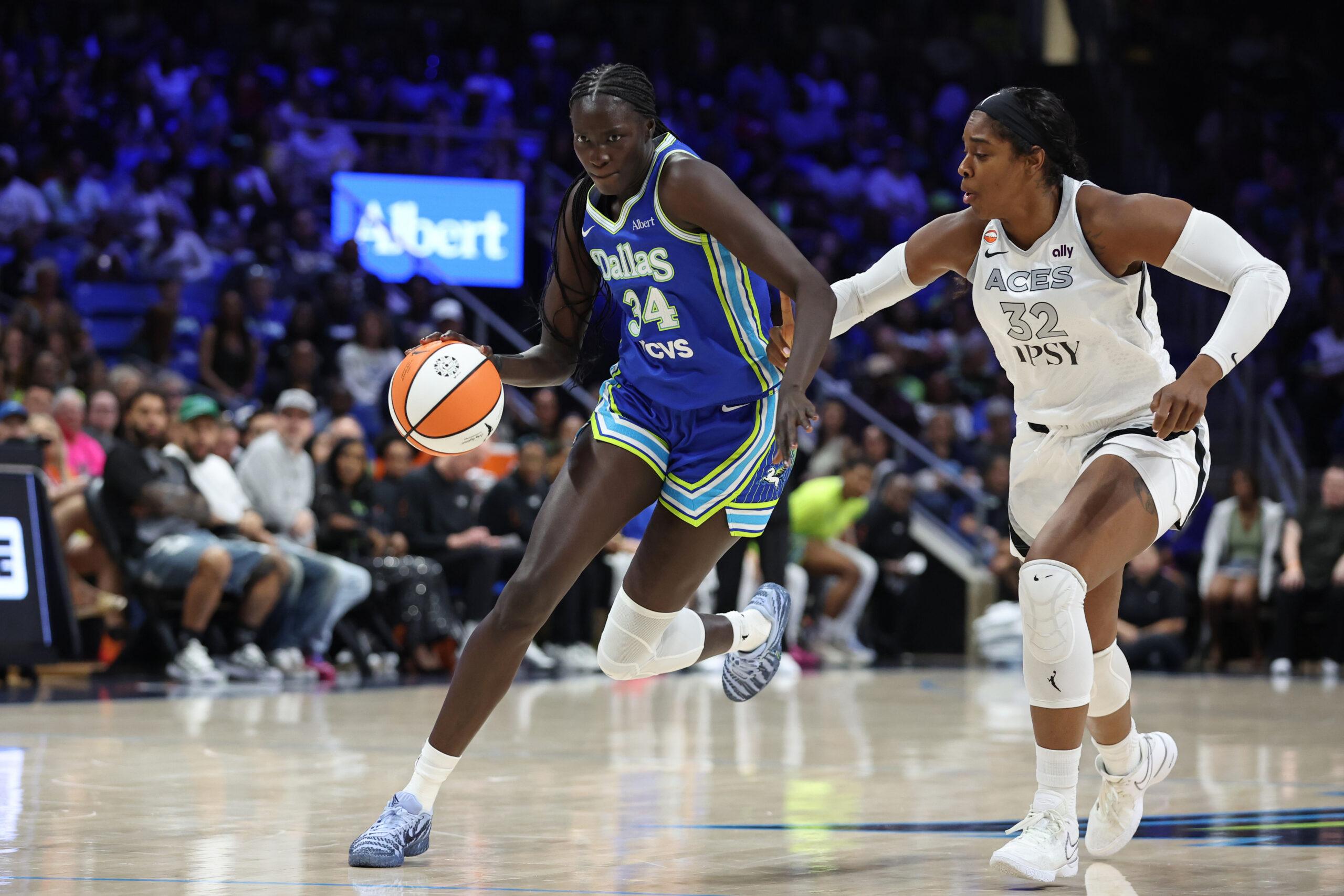
20. Awak Kuier, Dallas Wings
2026 stats: 6.6 points, 3 rebounds, 65/54/75 (25.5 PER, 0.7 WS)
Age: 24 days, 289 days
If not for a momentum-killing wrist injury that will keep her out for at least a week, Kuier would have been even higher on this board. Kuier, drafted second overall by the Wings in 2021, was Awa Fam before Awa Fam—the teenager with the dreamy wingspan and mesmerizing shooting touch who had scouts and sponsors lining up left and right. But after seven years of pro ball, including three in the WNBA, she gave her body a two-year break from playing year-round and focused on her overseas career.
Two years later, she’s back. And in a small amount of time, she’s showcasing the potential that makes her worthy of a no. 2 overall selection, nailing triples off split actions while playing three positions for the Wings. If you like small samples, you’ll like this: Among players to have taken at least 10 3-point attempts this season, Kuier is 5th in the league in accuracy, nailing 54 percent of her attempts so far.
The Wings are a whopping 24.5 points per 100 possessions better when she’s on the court—with a net rating 29 in the 24 minutes she has played with the starting lineup. The eye test bears it out, too. Which is why, prior to her injury, Jose Fernandez started Kuier in place of million-dollar acquisition Alanna Smith.
19. Flau’jae Johnson, Seattle Storm
2026 stats: 11.6 points, 5 rebounds, 1 steal, 1.4 blocks, 31/26/84 (11.6 PER, -0.1 WS)
Age: 22 years, 213 days
Johnson has been both better and worse than you think so far during her rookie season. If you’re just looking at the numbers, you’re cringing at the efficiency figures. But then you’re missing the glimmers of her rare combination of offensive creativity and athleticism, and the elite defense that has allowed her to stay on the court and play through the mistakes. Johnson is leading all rookies in combined steals and blocks, while holding opponents to 35.1 percent shooting from the field as a primary defender. As a scorer, she hasn’t quite found her feet yet—getting blocked on floaters she unleashes too late and forcing drives that aren’t there—but that should improve with reps. It’s hard to suss out Johnson’s potential, but right now, she’s finding a way to stay on the court and play through her mistakes.
18. Sarah Ashlee Barker, Portland Fire
2026 stats: 10 points, 4.5 rebounds, 1.9 assists, 0.8 steals, 52/48/73 (17.0 PER, 0.5 WS)
Age: 24 years, 267 days
After an up-and-down rookie season with the Sparks, Barker was at risk of turning into a forgotten folk hero, relegated to the footnotes of March Madness lore. But she’s found new life—and created new, chill-inducing highlights—with the Fire, who selected her in the expansion draft. Under rookie head coach Alex Sarama, Barker has figured out how to use her size and athleticism to create points off aggressive two-way play, cuts, and early post seals in transition.
On defense, she has been a jack-of-all-trades, guarding speedy perimeter players like Kelsey Mitchell and Marine Johannes, and switching onto bigs like Breanna Stewart and Jonquel Jones. Per Synergy, she’s holding opponents to just 29 percent shooting from the field as a primary defender.
Barker is, at her core, a trier—first-team All-Motor with a heart of gold. If she can find a way to consistently create offense, and her early hot shooting isn’t a mirage, she’s going to grow into one of the elite 3-and-D wings in the league.
17. Gabriela Jaquez, Chicago Sky
2026 stats: 11.5 points, 5.3 rebounds, 1.2 assists, 43/33/88 (13.9 PER, 0.5 WS)
Age: 22 years, 197 days
Jaquez might already be a Connective Tissue Hall of Fame shoo-in. Jaquez was the glue girl for the title-winning UCLA Bruins, and she will likely be the glue girl for a WNBA title team one day, too. She’s a dyed-in-the-wool competitor with elite motor and intuitive hustle. Her speed stands out even more in the WNBA, where she’s been an elite downhill slasher who creates a ton of points in transition and has enough range from beyond the arc that you can’t just ignore her. She makes errors typical of a rookie, like driving without a plan and not slowing down on her finishes at the rim, but on the whole, she’s off to a great start, vindicating the Chicago Sky’s selection of her with the fifth pick.
16. Aneesah Morrow, Connecticut Sun
2026 stats: 12.7 points, 10.4 rebounds, 43/29/62 (18 PER, 0.3 WS)
Age: 23 years, 122 days
Morrow seems to have struck a mutually beneficial agreement with coach Rachid Meziane: If she defends and plays within the flow of the offense, she’s free to fire those 3-pointers she’s eager to improve on. It’s an understandable developmental goal for Morrow, who is undersized at the power forward position. She has the potential of taking on my favorite developmental trajectory: the undersized power forward who finds new life as a power guard, punishing weaker perimeter players with bruising inverted screens, explosive cuts to the rim, and relentless pressure on the boards. That last part is where Morrow, a walking double-double, thrives. Morrow isn’t quite there as a shooter, but her perimeter defense has significantly improved. If she can stay on the floor, her speed, strength, and motor can create enough hustle plays to allow her to be a valuable creator in the league.
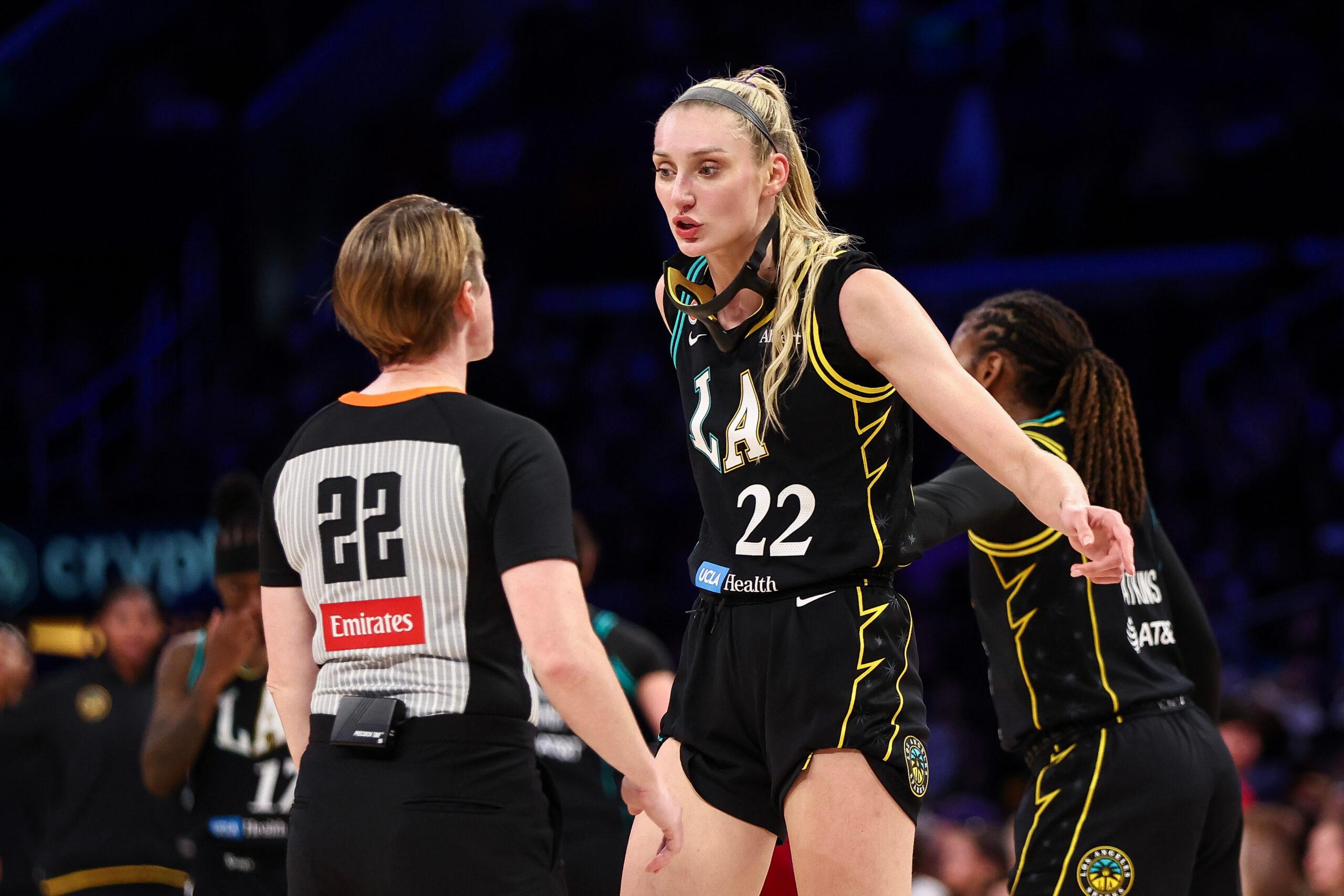
15. Cameron Brink, Los Angeles Sparks
2026 stats: 9.2 points, 4.4 rebounds, 54/32/76 (15.5 PER, 0.1 WS)
Age: 24 years, 155 days
Brink is in year three but has played just 43 career games after tearing her ACL in her rookie year. She’s essentially going into her sophomore season, and her consistency suggests as much.
The glimmers are electric. The mistakes are glaring. She’ll drop 16 points in 17 minutes with elite rim protection one night, and put up a one-for-four clunker the next. She’ll airball one 3, then swish her next.
On paper, Brink is a unicorn. She’a a coast-to-coast threat with elite finishing ability. Her shot-blocking ability and length make her a geometry-warping defensive force for a Sparks team that desperately needs her rim protection. She has the lateral ability to guard perimeter players. She can play in the mud and bang with bigger foes, and she has a competitive streak that makes her want to block every shot, which is why she is simultaneously a block and foul machine.
As of late though, she’s taken more of a harm-reduction approach on defense, playing the percentages instead of trying to block every shot, keeping defenders in front of her long enough to help her teammates catch up. On a good night, Brink can make your imagination run wild. But right now, I need more data, and Brink needs more reps.
14. Pauline Astier, New York Liberty
2026 stats: 11.8 points, 3.7 assists, 3.3 rebounds, 59/50/72 (18.1 PER, 1.2 WS)
Age: 24 years, 109 days
We’ve entered the Spicy Whites of Alsace portion of the ranking, starting with 24-year-old Frenchwoman Pauline Astier, who was heavily recruited by several WNBA teams but ultimately chose to play alongside her national teammate Marine Johannes in New York.
Astier is a mesmerizing pick-and-roll manipulator. She’s a fearless and fun driver, but she’s never rushed. Her frame allows her to create space, and she’s an expert at manipulating passing angles. She’d be a touch higher, but she’s way worse on defense than you think. She’s second on this list in fouls committed, and she’s a bit of a cone against quicker players. Still, Astier’s talent gives her genuine star-level potential, especially if her 3 continues to fall.
13. Janelle Salaun, Golden State Valkyries
2026 stats: 13.9 points, 3.7 rebounds, 1.2 assists, 41/37/74 (19.6 PER, 1 WS)
Age: 24 years, 272 days
Salaun is a human heat check. Her broad 6-foot-2 frame and elite ball control allows her to play the game at her own pace and get her silky shot off from anywhere on the court. But her ability to fire from anywhere is both her greatest strength and greatest weakness. In Golden State’s offense, she plays both forward positions, rolling destructively to the hoop or popping and finding her spots. If she cleans up her shot selection, and keys in on being an aggressive rim attacker, Salaun could evolve into a legit All-Star with three-level scoring ability.
12. Leila Lacan, Connecticut Sun
2025 stats: 11.5 points, 2 rebounds, 4 assists, 33/17/38 (6.0 PER, -0.2 WS)
Age: 22 years, 2 days
We’re entering “I’d ride with you in a playoff series” territory, which is high praise for any young player. The young Frenchwoman, after carrying a mediocre Euroleague team to third place, has given the disjointed Sun a sense of coherence and pace in her first two games back in the WNBA, which included a win against the Sparks. It’s a cliche, but good things happen when Lacan is on the court. Her point-of-attack defense makes her a legitimate defensive play generator and a terror in transition, hearkening back to Sydney Colson’s tweet that France “has a bunch of Gabby Williams running around.” Lacan has always been an elite midrange shooter, and she has the most dangerous first step on this list. She’s now toying with a 3-point shot she hit with 38 percent accuracy overseas this winter. If Lacan can become reliable from beyond the arc, she’ll legitimately be an unguardable three-level threat.
11. Azzi Fudd, Dallas Wings
2026 stats: 12.1 points, 1.4 rebounds, 1.1 assists, 57/44/75 (19.4 PER, 0.9 WS)
Age: 23 years, 105 days
Our long, national nightmare is over: Azzi Fudd is finally in the Wings starting lineup.
This year’s no. 1 pick has predictably already been terrifying from beyond the arc. But I think the reason she’s in the starting lineup is because Jose Fernandez probably realized Fudd, whose defense has often been critiqued, is actually the Wings’ best point-of-attack defender. As she gains more familiarity with WNBA personnel, this aspect of her game should only improve.
As an off-ball threat, she’s been intentional and ruthless, shedding defenders with ease—giving, going, locating, and relocating while teammates Paige Bueckers and Jess Shepard keep a perpetual eye on her whereabouts.
And for those of you who see a young Klay Thompson in the making, you’ll love this: In Fudd’s 17-point third quarter against the Liberty last month, she ran all over the court but didn’t dribble on any of her made 3s.
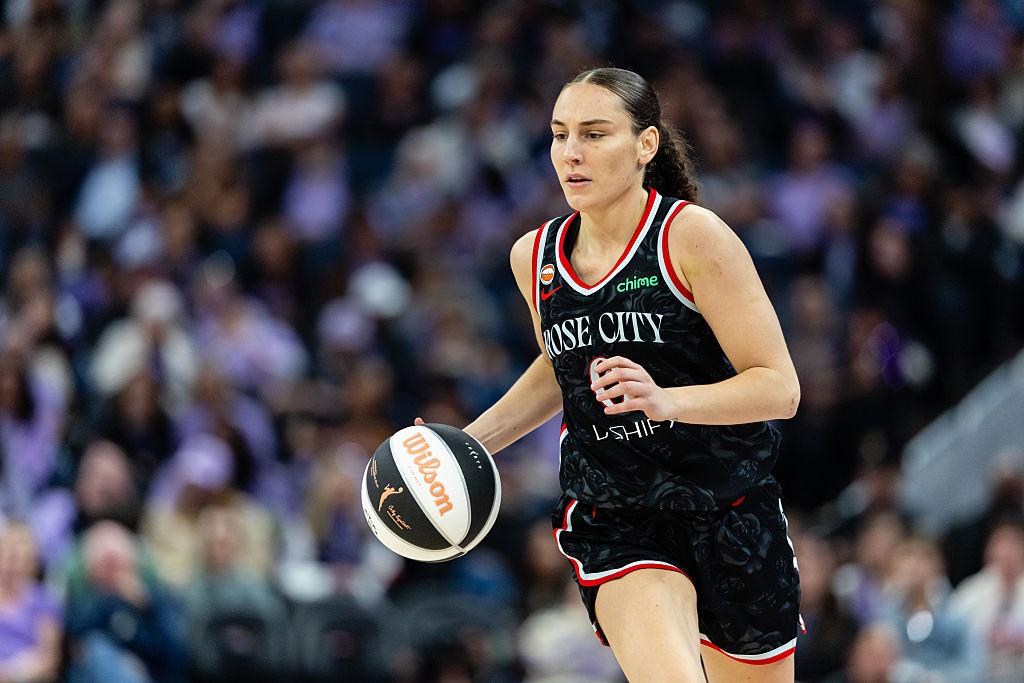
10. Carla Leite, Portland Fire
2026 stats: 15.2 points, 1.6 rebounds, 5.2 assists, 47/36/96 (21.5 PER, 0.7 WS)
Age: 22 years, 49 days
The surest sign that Carla Leite should be the front-runner for Most Improved Player might be what she’s doing to her peers. Is she the reason Hailey Van Lith was just put on a developmental contract? Or the reason Caitlin Clark is enduring a dark night of the soul?
Or do we need to recalibrate how we think about her? Is Leite just that dangerous as a one-on-one driver and downhill force, especially now that she’s shooting 41 percent from the arc and making high-level reads in the pick-and-roll?
Early this season, Leite is generating 19 points per game out of pick-and-rolls—more than anyone else in the league. She has navigated traps, switches, and mixed coverages with poise, finding bigs on switches, spraying out to shooters on hedges, and calling her own number when the lane is open. Under the tutelage of Alex Sarama, what Leite is doing is the perfect alchemy of improvement, fit, and empowerment.
9. Kiki Rice, Toronto Tempo
2026 stats: 12.7 points, 4.7 rebounds, 2.6 assists, 53/40/84 (20.6 PER, 1.3 WS)
Age: 22 years, 141 days
The more you watch the exceedingly reliable Kiki Rice, the better she gets.
Her bag is deep. She doesn’t have a crossover as much as she has a teleportation device.
She can turn defenders dizzy in the pick-and-roll and turn drives into a post-up for a turnaround hook. Her herky-jerky movements, well-placed hesitation dribbles, tight handle, and bulldozer of a body make her a foul-drawing machine. She can shift her body midair after taking hits. You simply don’t find this mix of strength, fluidity, control, and touch in one player very often, let alone in a rookie.
Rice is an advanced and regular stats darling. She leads all rookies, even Olivia Miles, in points per possession (including assists). She draws free throws on 9 percent of her shots, second among rookies, and she’s making over three-fourths of her attempts in the restricted area. She is also, with no shadow of a doubt, Toronto’s best point-of-attack defender—even better than Brittney Sykes.
Just 10 games into her career, Rice is already a burgeoning Rookie of the Year candidate and a foundational cornerstone for the Tempo in their inaugural season.
8. Angel Reese, Atlanta Dream
2026 stats: 13 points, 11.3 rebounds, 3.5 assists, 41/10/73 (17.5 PER, 0.7 WS)
Age: 24 years, 29 days
Reese, who reliably anchors the no. 2 defense in the league and continues to put up historic rebounding figures, is taking a step back to take a step forward on offense this season. As the fourth-ish option in Karl Smesko’s five-out offense, Reese has been hanging out on the perimeter more, building her shooting range and facing up more. Her average shot distance has increased to 5.5 feet away from the rim, the farthest of her career. Factor that in with her playing out of position as the center until Brionna Jones returns, and she’s had a clunky offensive start, full of turnovers, missed shots, and uncomfortable but likely necessary growing pains. Reese has undeniable, court-warping gifts on defense and one of the best motors I’ve ever seen, but growing her offensive game would make her a far less complicated player to build around.
7. Sonia Citron, Washington Mystics
2026 stats: 17.7 points, 3.4 rebounds, 2.9 assists, 54/31/84 (21.1 PER, 1.1 WS)
Age: 22 years, 225 days
Citron, after a breakout rookie campaign, has picked up right where she left off. She has defended more actions as a primary defender than anyone else in the league this year, and she is holding opponents to 25.6 percent shooting from the field. With her combination of height, balance, and touch, she’s still destroying teams off screens. She’s also been a menace on empty-side pick-and-rolls, using her stride to blow past defenders and finish at the rim, where she’s shooting a sizzling 93 percent. Once her 3-pointer comes online, the Mystics are going to be cooking with gas.
6. Olivia Miles, Minnesota Lynx
2026 stats: 15.8 points, 6.2 assists, 5 rebounds, 50/11/91 (21 PER, 1.5 WS)
Age: 23 years, 126 days
While Miles’s lack of accuracy from beyond the arc early in her career raises a yellow flag or two, it hasn’t hindered her production or maneuverability. Miles is running over 16 pick-and-rolls every game, according to Synergy, and she’s doing it with more flair, more aplomb, and more ease than anyone else in the league. She invents new passing angles on the fly. Her ball placement is near perfect. Her reads are always three steps ahead of the defense. She attacks defenders in multiple ways, slowing them down and caging them behind her, bursting past them and finishing with English. Even when she picks up the ball, she can get herself out of tricky situations with ball fakes, pivots, and step-throughs. She’s the WNBA’s new trickster goddess, and she has the Lynx at the top of the league despite the fact that she hasn’t logged a single minute with Napheesa Collier yet.
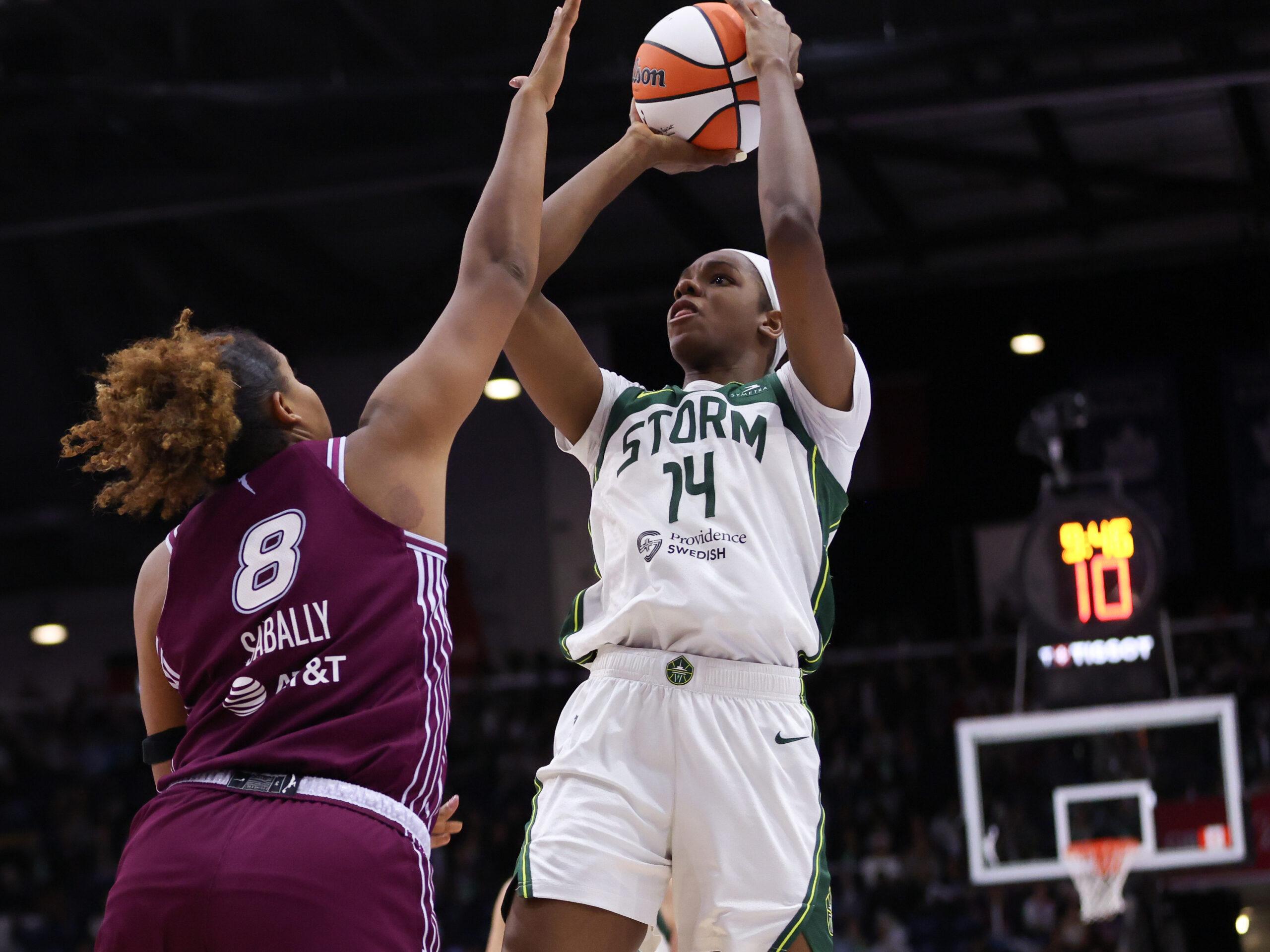
5. Dominique Malonga, Seattle Storm
2026 stats: 16 points, 7.3 rebounds, 2 blocks, 48/40/53 (19.5 PER, 0.1 WS)
Age: 20 years, 200 days
Malonga is currently out with a concussion, but before her injury, she was building on the momentum of a breakout rookie season, which included giving A’ja Wilson fits in Seattle’s first-round loss to the Aces. With the Storm leaning into a new era, Malonga has taken the reins, notching two 20-point games prior to her injury. On offense, she’s a fluid pick-and-roll threat who sets great screens, has mitts for hands, can take the ball coast-to-coast in transition, and is expanding her range as a shooter. On defense, she’s a geometry-shifting shot blocker who goads players into bad shots on the perimeter and blockades the rim altogether.
If this was a re-draft of the entire league, I would take the 6-foot-6 shot-warping force a lot higher than fifth—and so would WNBA GMs, who gave her votes for the player they’d most want to start a franchise with.
4. Kiki Iriafen, Washington Mystics
2026 stats: 15 points, 10.5 rebounds, 1.5 assist, 54/36/67 (22.4 PER, 1.2 WS)
Age: 22 years, 282 days
Iriafen is one of the most dynamic young scorers in the WNBA. She uses her speed to blow past longer defenders, and her strength to barrel through faster ones. In the post, she has elite touch with both hands. She often cleans up her rare misses (she’s shooting 76 percent at the rim) with a putback.
Her lack of rim protection draws ire, but she’s an elite perimeter defender who can move laterally and pick up guards, which feels more relevant for a modern-era power forward. She’s an elite switcher, and her closeouts on forwards who can shoot are tight and controlled. According to Synergy, opponents are shooting 29 percent against her as a primary defender.
Iriafen does almost everything you need out of a traditional low-post player, and almost everything you’d want out of a new generation big. The next step for her is continued refinement as a decision-maker. She’ll likely never be a playmaking offensive hub like Aliyah Boston (who we’ll talk about very soon), but she could develop into the world’s best finisher. Like a young, mini A’ja Wilson, Iriafen has all the tools, and elite athleticism. It’s just about knowing when to play which note.
3. Aliyah Boston, Indiana Fever
2026 stats: 15.9 points, 7.4 rebounds, 2.6 assists, 1.1 steals, 52/35/84 (25.4 PER, 0.9 WS)
Age: 24 years, 175 days
I’m hedging here. Boston has showcased the talent, force, versatility, and skill to be the best young player in the WNBA, but she hasn’t put it all together yet this season, so I’ll settle for ranking her as the best young big.
Boston, who was the most efficient high-volume post scorer in the WNBA last year, is one of the most physical, imposing two-way players in the league. She’s built her stamina up to be able to play at Clark’s breakneck pace, and the duo is impossible to guard in the pick-and-roll, where Boston’s soft hands and softer touch thrive.
At the same time, Boston is a modern playmaking hub in the making—a smooth operator on short rolls, hitting teammates for dump-offs, spraying the ball out to shooters, or nailing short jumpers.
Boston’s combination of physicality, fluidity, movement, and competitiveness doesn’t come around very often. She could bridge the gap between the past and the future of the post position. She’s nailing 0.9 3s per game this year at a 35 percent rate and handling the ball more in transition. The evolution is clear. By the end of the year, she could very well end up being no. 1 on this list.
2. Paige Bueckers, Dallas Wings
2026 stats: 18.3 points, 5.3 assist, 3.7 rebounds, 49/42/78 (20.5 PER, 1.3 WS)
Age: 24 years, 227 days
Bueckers is about as close as you can get to a flawless basketball player. She is a two-way expert on player tendencies, sets, spacing, angle exploitation, and timing, while being an efficient three-level scorer from all areas of the court and an unselfish, whip-smart passer.
In Year 2, she’s continuing to fuse her basketball IQ and tough shotmaking ability, and new coach Jose Fernandez has her running more isolations (a play type in which she was the league’s most efficient low-volume scorer last year) and post-ups. She can dribble herself into the teeth of the defense's most vulnerable spots and attack. She can wait you out until the end of a possession and hit a dagger at the perfect, most critical moment.
The next step for her is just doing more of this. The stats can be simultaneously misleading and informative. While they certainly don’t do her justice, as Bueckers is a Napheesa Collier–coded watch-every-possession All-Star, her lack of overall production relative to her ability can also be attributed to a waning-yet-still-present tendency to ebb in and out of the game.

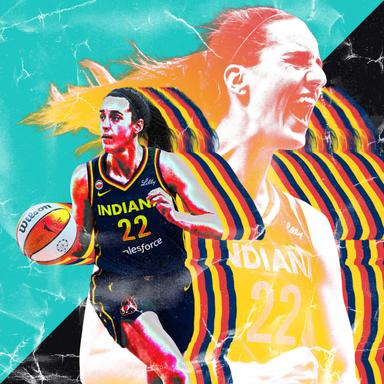
1. Caitlin Clark, Indiana Fever
2026 stats: 20.1 points, 8.1 assists, 4 rebounds, 39/33/95 (21.5 PER, 0.7 WS)
Age: 24 years, 133 days
Let’s address the obvious: Clark isn’t off to an ideal start this year. Her season has started with a shooting slump and the Fever have stumbled to a 4-4 record, including a loss to Portland in which the Fire relentlessly targeted her as an isolation defender.
Yes, Clark’s game is far from perfect. She needs to improve her defense, and she might be the most volatile player on this list. She is also, clearly, the most talented.
Consider for a moment that even with the walls caving in on her, Clark leads this list in scoring, while leading the league in assists. The Fever offense falls off a cliff when she sits, and performs at an all-time level when she’s on the court.
From a developmental standpoint, I feel similar about Clark as I do about Boston. She’s worked on her finishing, as well as her floater game. The logo 3 is back. The playmaking is top-3 in the world. We just haven’t seen her put it together consistently this season yet.
Beyond that, part of the reason her weaknesses are targeted so relentlessly is that it’s worthwhile for teams to make it hard on her. All great players go through this. Think about LeBron James in 2011, or A’ja Wilson in 2020. In this regard, Clark is farther along in the athletic heroine’s journey, facing a moment of truth when most of her peers’ flaws are still being justified by youth and potential. I don’t feel like punishing her for that. I’d rather stay on the roller coaster and enjoy the ride.