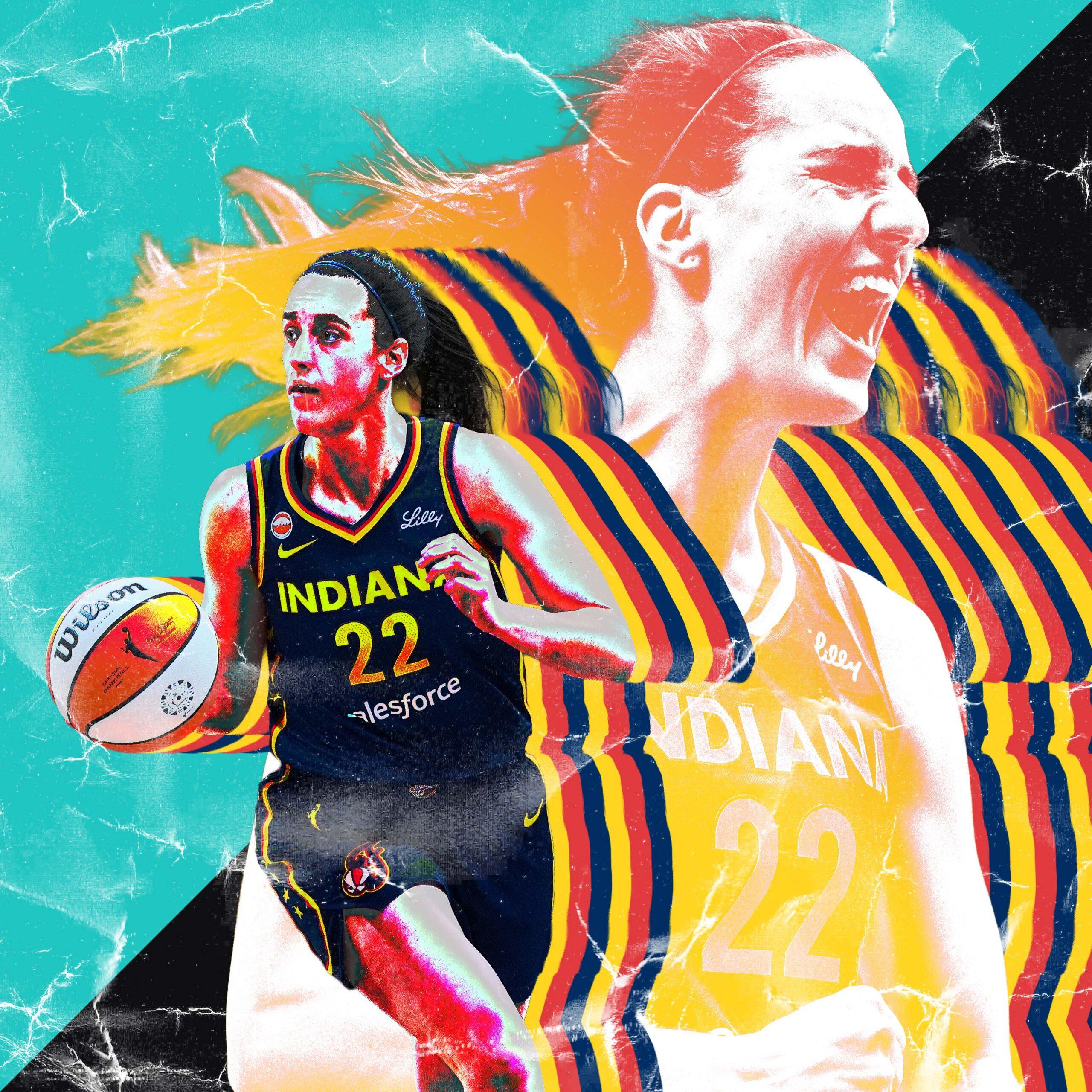

In 49 states, resting a superstar after a season mired by injuries is just good organizational practice. But in Indiana, it’s fodder for a social media shitstorm.
Last week, just hours before a Wednesday tipoff against the expansion team the Portland Fire, Clark was a surprise late scratch after not appearing on the injury report. She didn't practice the day prior, and she woke up on game day with a sore back. Less than two hours before the game, she was listed as out.
And because nothing is ever normal with the coverage of Caitlin Clark, the theories came fast and fervent: Was Clark actually suspended because of an argument with an assistant coach that was caught on camera? Was Fever coach Stephanie White reprimanding her for “going rogue” on offense? Was she secretly injured again? Did the Fever wait until the last minute to announce Clark’s injury in hopes of maintaining a home sellout?
None of this is new, of course.
Imagine, for a moment, if Isaiah Hartenstein pulling Stephon Castle’s hair in Game 2 of the Western Conference finals rose to CNN levels of news coverage—except that most of the talking heads didn’t watch the game, and they had no context for the Thunder’s defensive quote, unquote style or for anything else about the series. This is the simultaneously microscopic and distorted lens that’s been turned on Clark since her arrival two years ago. Everything Clark does is news. Even the things she doesn't do become cycles unto themselves.
But now that the discourse is short on external enemies for Clark, it’s being forced to find obstacles for her within the Fever organization.
All of this came to a head on Friday night before the Fever beat the Valkyries. Clark returned, scoring 22 points, hitting four 3s, and dishing nine assists. But it was her performance before the game that was more noteworthy, when she delivered the most blunt, transparent, and frustrated press conference of her career.


As she recounted her day, she asked the assembled reporters whether they’d like to know what she had for breakfast before giving them a somewhat heated timeline.
“I actually went back and looked, because of all these narratives that are going crazy online, about when I told my mom I wasn't gonna play the game: 4:47. You guys found out at 5:20,” said Clark. “So one of the most important people in my life found out 40 minutes before you guys.”
She said that she’d made the final call to sit out, dispelling rumors that she was being held out or punished. “At the end of the day, it’s me and my confidence.
“I feel really good and really confident in my body. But there's moments where I still struggle a little bit, and I get in my head and things like that, and I'm sore. That's just the reality of it. You can ask any athlete, you can ask any basketball player, women's basketball players, or any athlete around the country in any professional sport, they'll tell you the same exact thing.”
How does one conduct day-to-day league business under this cloud of suspicion? Dare I say that the Caitlin Clark effect is making it hard for Caitlin Clark to operate?
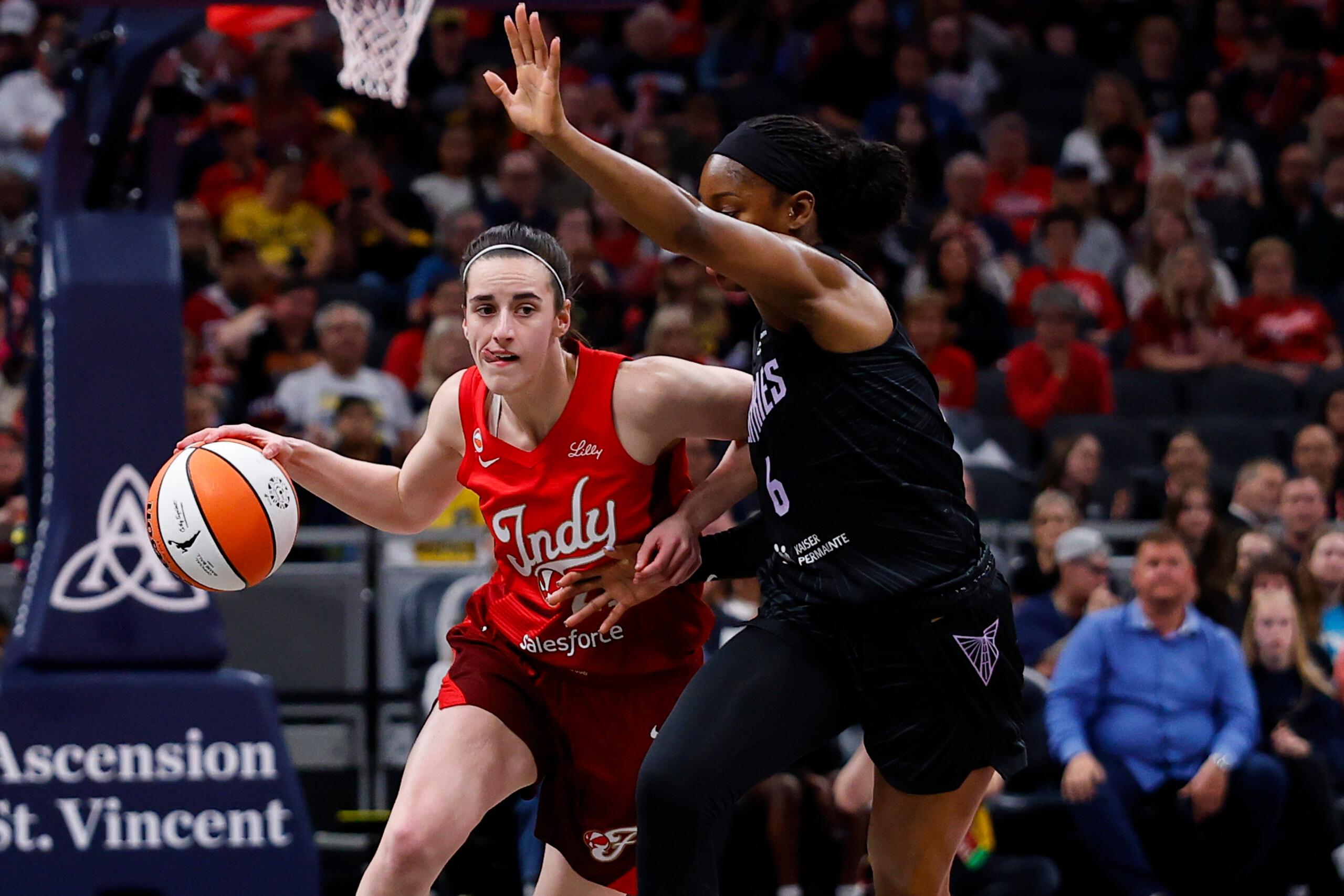
From the moment Clark entered the mainstream consciousness, she has been tied to an enemy of some sort, whether Angel Reese, Diana Taurasi, the refs, or the league itself. But the Reese rivalry has cooled for now. Clark wears Taurasi’s Team USA jersey while podding with her. She’s even pretty happy with the refs these days.
The W isn’t Caitlin or nothing anymore. While she remains the biggest television draw by a good measure, TV ratings have grown exponentially across the league. The Aces, Liberty, and Valkyries are outselling the Fever at home, while stars like Reese and Paige Bueckers are creating demand for larger arenas. But those are good, fun stories that don’t feed an algorithmic beast that sustains itself on aggrievement, rage, and suspicion. Hell, Clark playing basketball drives less attention than Clark not playing basketball.
So now you have people searching for hate under the couch cushions, to suggest that her own team—her own coach—is sabotaging her.
This is how it works in Clarkworld in 2026: Throw something against the wall, and the theory that invokes the most rage, that hints most shamelessly at conspiracy and sabotage, will likely stick. Kelsey Mitchell is freezing her out. Wait, no—Christie Sides is freezing her out. Now, Stephanie White is freezing her out. What if the Fever drafted Raven Johnson, a college rival who plays her position, just to spite her? No, that’s not spicy enough: They’re preparing to trade her.
The overplay reveals the con: Not everybody hates Clark, but the algorithm wishes they did, so its servants make up imaginary slights that would make even Michael Jordan blush.
It tends to be those at the most polarized ends of the Clark debate—her biggest haters and her biggest fans—throwing out the most outlandish theories. If she’s missing 3s, it’s either because her control-driven coach is sucking the confidence out of her or because she was just a passing fad—the Linsanity of the WNBA. That’s because anti-Clark discourse and pro-Clark outrage are both part of the content economy.
The Fever are 4-2 to start the season, their two losses coming by two and three points. Clark, who looks healthy and explosive, is averaging 23.8 points, nine assists, and 4.4 rebounds while rediscovering her logo range. She is three assists away from becoming the fastest player to get to 1,000 points and 500 assists, on pace to clear Sabrina Ionescu and Sue Bird by over 20 games.
You wouldn’t know it, though, because the biggest headline about her this season is that she's missed one game out of what her coach called “an abundance of caution” (she missed 31 of 44 games last season).
Fever beat writer Scott Agness, in his report on Clark’s injury, called it a “strategic management plan,” which sounds like something between load management and injury management and which requires a certain operating level of obfuscation and ambiguity.
There is a conspiratorial thread to weave here: The WNBA let the Fever off with just a warning, even though they never listed Clark as questionable before announcing she was out. Plus, there are financial ripple effects that will follow if something serious is happening that will make her sit out more games.
But those headlines may feel a little dull when you’re used to getting your dopamine from such classics as “Indiana Fever EVISCERATED by Caitlin Clark Fans! Stephanie White OVER THE MOON Without Her Playing” or “‘I'M NOT INJURED!’ Caitlin Clark FINALLY Reveals Why Stephanie White REALLY Benched Her” or my favorite, “WNBA Scrambles for More TV MONEY Before Caitlin Clark's Career Is RUINED by the Indiana Fever!”
Clark discourse is where so many modern online phenomena collide, in their most cynical form. There is the political meme-ification of identity, wherein the values people symbolize (that are often projected onto them) trump what they actually believe. Healthy skepticism about what a player really thinks is replaced by full-blown, cash-incentivized paranoia, which pushes content creators to seek out controversy for clicks. Our attention spans are attuned to micro-content, headline skimming, and the ongoing enshittification of everything. Fake Clark news isn’t the only place where this brand of discourse has spread, but it is probably the most absurd example of it.
Clark can be a sinner or a saint.
She can be a turnover-spouting disaster or a logo-hurling hero. She can be a victim, a trash-talker, a crybaby, or an unfairly maligned savior.
What the algorithm cannot afford is for her to be normal.
If her 3s aren’t falling, it has to be because her coach banned her from taking them or drained her confidence.
When they do start falling, it must be a repudiation of that coach.
If she’s not playing, it can’t be because she’s simply hurting or sore.
Caitlin Clark must create engagement somehow, so her coach must be holding her out. She must be getting suspended. Or traded. Or, I don’t know, investigating the dancing plague of 1518.
She cannot be what she is: a human being who, after admitting that she pushed her body to its limits last year, needs time and patience to regain confidence after a spate of injuries she’s referred to as traumatizing. Nothing more, nothing less.
“I need to have a little grace with myself,” she said on Friday. “I need people to give me a little bit of grace, too.”