
I was in the building the last time the San Antonio Spurs hosted Game 1 of the NBA Finals, and I was sweating my ass off. An electrical failure had caused the air conditioning in the arena to go kaput, and the hot June air had been streaming in for hours. The Spurs were facing the Miami Heat, a rematch from the previous year’s championship series. In that setting, my rising body temperature registered only as a sort of background condition. We used programs and clappers to fan ourselves. We rolled our sleeves up and shed our outer layers. We spent a lot of money on water. By the time a message flashed onto the jumbotron explaining why it was so goddamn hot, the temperature in the arena had crossed into the 90s. And the players were feeling it too.
Around the start of the fourth quarter, LeBron James started to cramp. He had just finished a dominant third to give Miami a four-point lead, but the heat was catching up to him. He spent the fourth battling exhaustion, shuttling back and forth from the court to the sideline until, with four minutes to go, he just couldn’t continue. I still remember how jarring it was to watch the best basketball player in the world get carried—literally—to the bench. The Spurs were up 94-92 at the time; they went on a 16-3 ambush to win 110-95, before taking three of the next four games to close out the 2014 Finals.
That series was an apotheosis of more than a decade of workmanlike dominance. It was the fifth and final title of the Tim Duncan era. It was arguably the most satisfying revenge arc for any NBA champion this century, sure, but also the peak of the “beautiful game”—the Spurs’ unselfish, tiki-taka style of basketball built on the age-old principle that the team is greater than any individual. It was supposed to be the bridge to the future: one last job for the Spurs’ core three amid the coming-out party for Finals MVP Kawhi Leonard. Instead, it ended up being the last hurrah, the beginning of a 12-year cycle of razing and, now, renewal.
Like that 2014 team, this year’s Spurs are balanced, unselfish, and play incredibly hard. Like that team, there have been stretches on the way to the Finals when San Antonio buries its opponents under an avalanche of 3s. Like that summer, it feels as if the literal air is conspiring to propel them. But where the Spurs of yore picked opponents apart with ball movement and precision, this team suffocates them with defense and overpowers them with athleticism. While the 2014 Spurs made magic through their shared history and heartbreak, the 2026 Spurs are transfixing precisely because they’re new.

Watching Victor Wembanyama is nothing like watching Tim Duncan. Duncan was a star for the real heads. To truly appreciate him, you had to tune in to his defensive positioning, post footwork, and all the little hugs and high-fives that built the Spurs’ vaunted culture. By contrast, Wembanyama strides off the screen. He does little things, too, but his greatness is loud. He shoots from half court, he dunks from anywhere, and he makes opponents look like middle schoolers when he blocks their shots into the third row—or just plucks them from the air. He talks with thoughtful candor about himself, his emotions, and his ambition to be the face of the NBA. He’s the biggest reason sports fans 80 miles up the road in Austin are latching onto the Spurs. And he’s the biggest reason that the clash of titans with the Oklahoma City Thunder in the Western Conference finals felt like a battle for the future of the league.
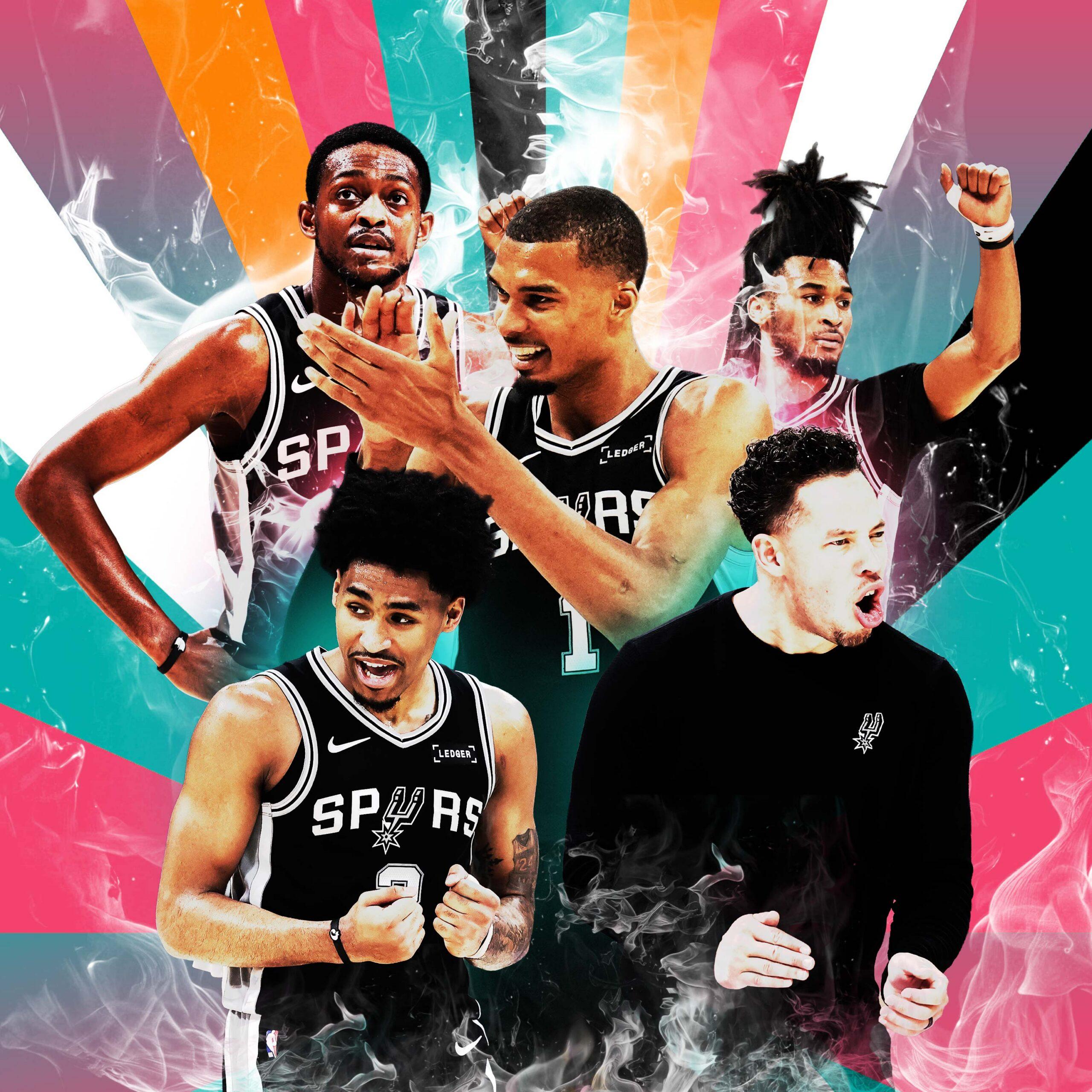
But Wembanyama isn’t the Spurs’ only draw. Stephon Castle plays with a force that jolts you off your living room sofa. It’s hard not to cackle watching a 21-year-old kid collect the bodies of the NBA’s baddest men as if they’re trading cards. Dylan Harper is, somehow, a cross between Manu Ginobili and Tony Parker—a sweet-footed lefty with an innate feel for getting to the basket and a Cheesecake Factory menu of creative finishes. Drafting Wemby, Castle, and Harper in consecutive years is borderline unfair, to the point that the NBA board of governors just voted to ensure it will never happen again.
Already, there’s something inevitable about the Spurs’ precocious trio; they’ve disproved the notion that young teams can’t win big, and they’ve asserted themselves with remarkably little conflict in a league where ego and status can turn into landmines. De’Aaron Fox, the team’s big trade swing at the 2025 deadline, has happily modulated into a supporting role and, less happily, into the “unc” zone at just 28 years old. Keldon Johnson and Devin Vassell, who carried the Spurs through the lean years, have recalibrated their games to fit the new program. At various points throughout the playoffs, they’ve jumped back into the spotlight with huge shots in big moments, clutch defensive plays, and game-changing displays of athleticism, the likes of which the Spurs’ old weirdo bench mob, awesome as they were, could hardly have imagined. This mix of players, timelines, and success is virtually unprecedented in the NBA. Just three years ago, the Spurs were one of the worst teams in the league. Last year, they missed the playoffs. This year, San Antonio has the second-youngest Finals roster in NBA history by weighted minutes played, behind only the 1977 Portland Trail Blazers.
Most NBA teams adopt the culture of their best player. In the Spurs’ case, that culture—the organizational values, infrastructure, and expectations—has carried over from the glory days. Duncan, Ginobili, David Robinson, and a coterie of team legends continue to dot the stands at every Spurs home game. Earlier in the playoffs, when the Spurs landed in San Antonio after a Game 4 loss in Minnesota—wherein Wembanyama was ejected for throwing an angry elbow—Gregg Popovich met his towering former player for a talking-to on the tarmac. (Wemby bounced back with 27 points and 17 rebounds in the following game.)
A few weeks earlier, Wembanyama was asked whether San Antonio’s storied history feels like a weight. “I wouldn’t say weight,” he said. “I would say it feels safe. It feels like if you trip, there’s a lot of hands ready to catch you.”
It’s no small feat that the constant reminders of the past have buoyed these Spurs rather than sunk them. It works because, for all the echoes and through lines within the franchise’s culture, the team’s identity has done a total 180. Wembanyama’s Spurs are exciting, irrepressible. They talk shit, they back it up. They show emotion. They aren’t precise, per se, but they win anyway through sheer force of will and talent. They reward the close watchers with constant growth—we are all learning the limits of their abilities in real time, assuming such limits exist—but their appeal is just as obvious to anyone, any age, anywhere, whether you’re stumbling upon an Instagram highlight or catching a nightly news hit on KXAN.
Wembanyama’s Spurs have done something Duncan’s didn’t manage until the very end. They have leapt to the forefront of the NBA—culturally, materially, and spiritually. They’ve become an “it” team. In this respect, they pose an interesting juxtaposition to the team they’ll face in the 2026 Finals. While San Antonio flew under the radar with one of the longest, and supposedly the most boring, runs of sustained success in NBA history, the New York Knicks flailed through chaos and failure for all to see (and laugh at) in the country’s biggest market. The Knicks haven’t played for a title in 27 years—since 1999, when they faced the Spurs during Duncan’s second NBA season—but they’ve dominated the East this postseason.
Ironically, the Knicks have broken their Finals drought by becoming a bit more Spurs-like. They methodically built a title contender piece by piece. Their starting lineup harnesses an unselfish brand of basketball in which everyone plays an essential role by being themselves. Their best player, Jalen Brunson, is a legendary leader who uses fundamentals and creativity to overcome his small stature. If they win the title, the Knicks will be the first team since the 2014 Spurs to do so without a top-five player near the peak of his powers.
San Antonio, too, is in uncharted waters. The Spurs—the Spurs—are the NBA’s bright, shiny object, coming off the most-watched conference finals in history. Wembanyama is vying to become the sport’s biggest star. There is a vibrancy coursing through the veins of this team that the Spurs of old never achieved—or ever really wanted. Today, it’s impossible to miss.
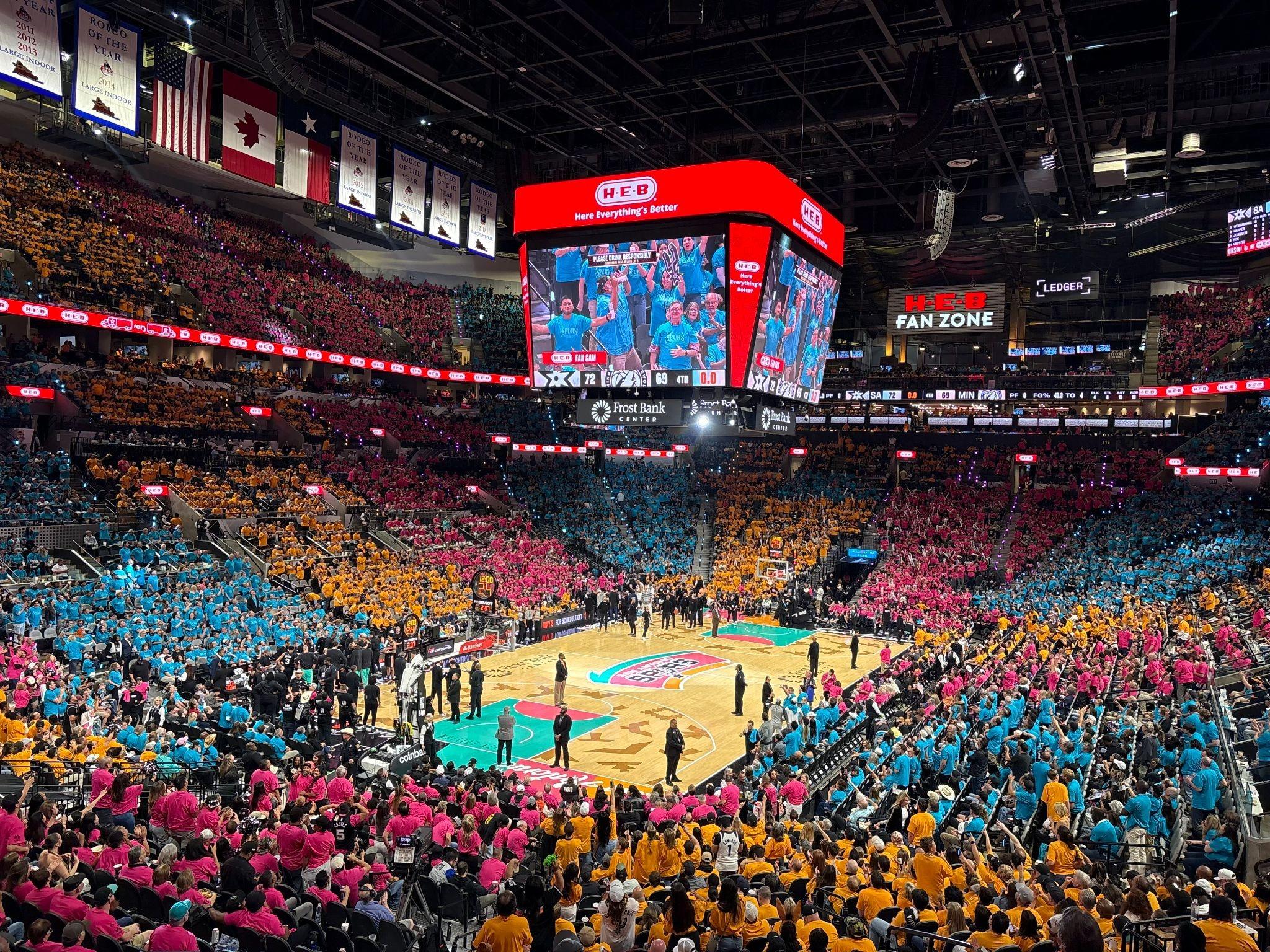
The Spurs re-adopted the Fiesta color scheme in 2020, just after they missed the playoffs for the first time since 1997. As I wrote then, it felt like an acknowledgement that the monochrome brilliance of the Duncan era had run its course, but also, perhaps, a statement of intent about what the next era of Spurs basketball could be. In April 2026, those colors lined the arena for the first Spurs playoff game since 2019. On Wednesday night, the NBA Finals will begin in San Antonio. The future is already finally here.
An earlier version of this story incorrectly stated that Wembanyama has been announced as the cover athlete for NBA 2K27.