
The football world had no idea what was coming when the New England Patriots traded for Hall of Fame receiver Randy Moss in 2007. So much time was spent debating what the Patriots could do for Moss—whether they could get him back to playing at a best-in-the-league level and keep his focus on football to head coach Bill Belichick’s and quarterback Tom Brady’s liking. At the time, most everyone thought that Moss needed “the Patriot way” more than the inverse. Not enough people stopped to ask why New England felt it needed Moss, too.
The league had changed under Belichick’s feet, and he needed to change along with it. The Patriots had already established themselves as a dynasty with three titles, but they couldn’t continue to win the way they had in the first half of the decade. A new pass-first era was blooming just as the Patriots’ legendary defense was aging out, and Brady simply didn’t have enough talent around him to stay in perennial championship contention—certainly not as much as his rival Peyton Manning did in Indianapolis. Just a few months prior to the Moss trade, the Colts came back from an 18-point deficit to beat New England in the AFC championship game and won Super Bowl XLI by leaning on its spread passing game (and overcoming its bad defense). That game (and two seasons without a Super Bowl appearance) was enough to convince the Patriots to revolutionize their offensive approach, and New England added three receivers the next offseason: Moss, Wes Welker, and Donte’ Stallworth. And while the 2007 Patriots came up short in Super Bowl XLII, the Moss acquisition unlocked one of the greatest offenses of all time—and charted a new, offense-first path for the franchise.
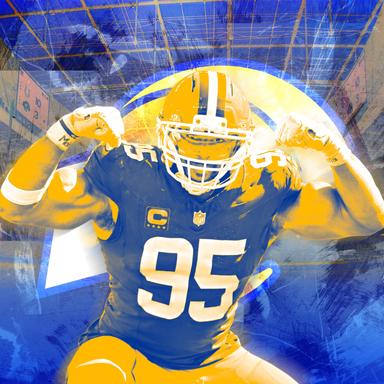
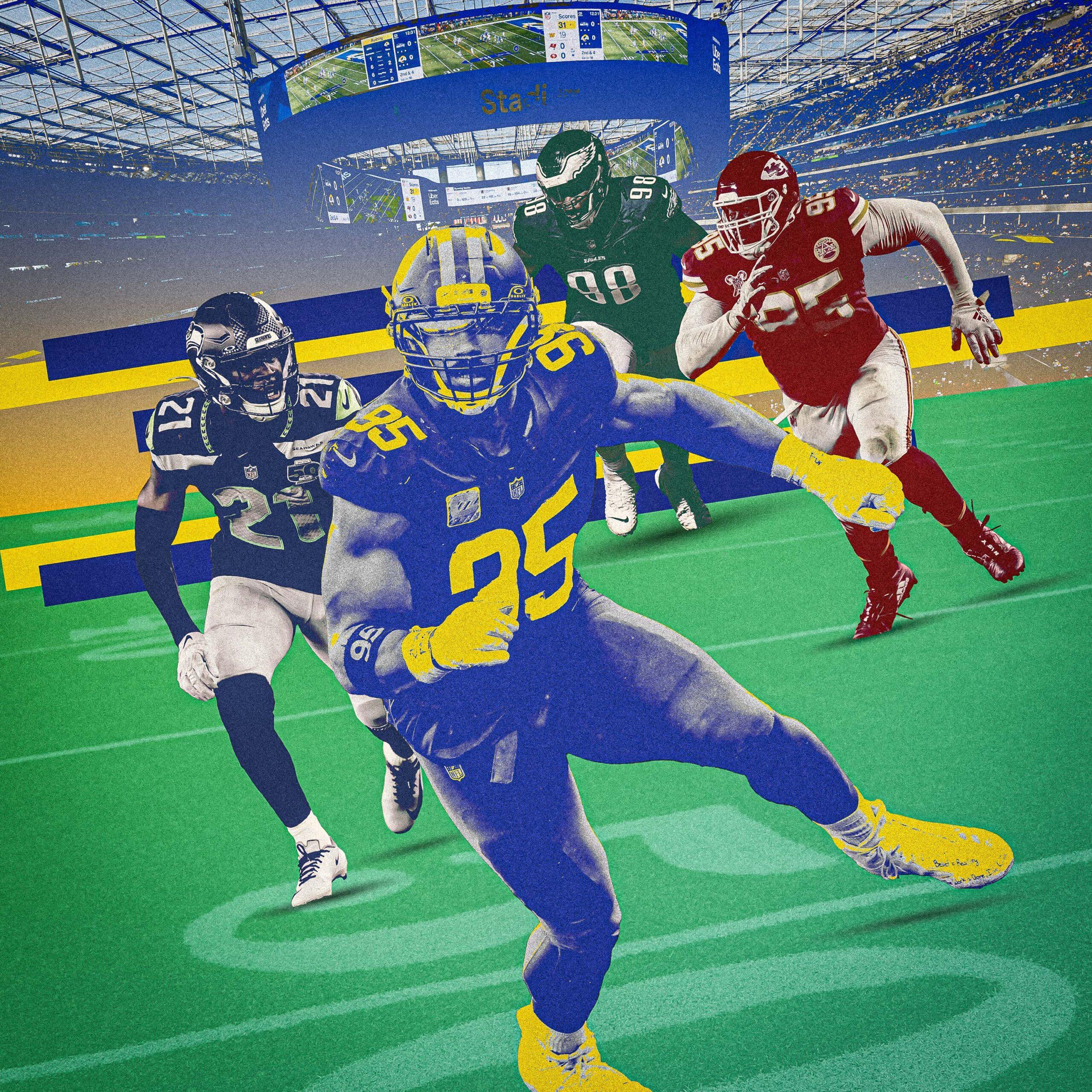
Fast-forward to 2026, and the pendulum has swung back in the other direction. Great defenses are winning championships, even when they’re paired with less-than-impressive offenses. Since the Rams won Super Bowl LVI, the Chiefs, Eagles, and Seahawks have captured the past four championships, with two of those teams beating the Rams along the way thanks to stellar defenses. And after Los Angeles came up short in last season’s NFC title game (mostly because its defense couldn’t get a stop), the Rams have decided to adjust their approach and adopt the methods of recent champions, like the Patriots did two decades ago. On Monday, Los Angeles traded for future Hall of Fame edge rusher Myles Garrett in exchange for draft picks and young edge rusher Jared Verse, completing a defense that had already added veteran defensive backs Trent McDuffie and Jaylen Watson this spring.
While there’s an ocean of difference in the trade compensation between Moss and Garrett (Moss was traded for just a single fourth-rounder), the similarities in circumstances line up. Both players were 30 years old and nearly a decade into their respective careers, stuck on bad franchises that were multiple years away from contending, and both were playing on expensive deals. Both players restructured their contracts to grease the wheels on a trade—Moss shaved down his base salary and Garrett agreed to convert salary into bonus options. And both players entered their new situations with an opportunity to stamp themselves as historic difference-makers for a championship-level team. Moss set an NFL single-season record in 2007 with 23 receiving touchdowns (which still stands today), and Brady set the league’s single-season passing touchdown record with 50 (which was later broken by Manning in 2013). The question now is whether Garrett can have a Moss-esque impact for the Rams, which would mean setting new personal highs and lifting the play of his teammates to a new level.
The framework is already there if you look at Garrett’s time in Cleveland. When he’s been on the field in his career, opposing quarterbacks had a passer rating of 86.7 and averaged just 6.6 yards per attempt. Without him, the Browns allowed a passer rating of 98.0 and 7.7 yards per attempt. For context, the Falcons had a passer rating of 86.7 and averaged 6.8 yards per attempt last year—the 49ers and Cowboys had passer ratings of 98.8 and 98.2 last year, both averaging around 7.5 yards per attempt. In short, when Garrett wasn’t on the field, whichever quarterback the Browns faced played like one of the league’s best; with him, that QB played like one that needed to be replaced.
Nobody is as efficient at getting quarterbacks on the ground as Garrett was last year. His 4 percent sack rate was the highest recorded in the past 25 years among edge rushers. And it's important to remember that Garrett was often producing during losing efforts, thus not getting as many opportunities to chase quarterbacks as his opponents ran the ball on early downs. He just broke the single-season sack record with 23 last year despite being nineteenth in pass rush opportunities on first and second down. And since his career started in 2017, he has 47 sacks while his team is trailing—the next closest is Pittsburgh’s T.J. Watt, who has only 26. Imagine what Garrett can do for the Rams, who already have good young pieces on defense, and the best offense he’s played with by an extreme margin. Garrett has averaged just 27.44 defensive snaps per game with a lead in his career, which ranks outside of the top 75 defensive players with at least 50 career games played. We can’t even begin to calibrate what his production could look like when his team is a front-runner, because he’s never had a consistently successful supporting cast around him.
The Rams haven’t had a closer like Garrett since defensive tackle Aaron Donald retired, and that hole has continuously shown up in the postseason. The Rams have played in five playoff games since Donald retired after the 2023 season, and in three of those games the L.A. defense has been below the 50th percentile in third down conversion rate and overall defensive success rate. Each of those games came last postseason, where the Rams narrowly squeaked by the Panthers and Bears before being eliminated in Seattle. The margins are slim, even for contenders, and Los Angeles can directly point to its defense and say it's the reason this team hasn’t had a shot at a title, especially last season. If Garrett supplies his usual production for Los Angeles’s defense, it seems like a foregone conclusion that this team will get over the hump—and recent history would suggest the same. The 2025 Seahawks and 2024 Eagles were both top five in expected points added on sacks in their respective postseason runs, and both teams knocked the Rams off before beating MVP-caliber quarterbacks in the Super Bowl.
Head coach Sean McVay and GM Les Snead saw this, and have called their championship shot this offseason. The Rams didn’t add much to their offense, believing they already have the perfect mix of McVay’s play calling in the run game and quarterback Matthew Stafford’s ability to find explosive passes off of play-action. No big extensions came for their home-grown talent this year either; all the money and resources were instead spent on bringing in missing pieces for this defense.
Now, the Rams have a true dream team, and Garrett has a shot to deliver what Moss did with the 2007 Patriots: a new gold standard in team building for a new era of football. Garrett also could deliver to Los Angeles something Moss couldn’t to New England: a Lombardi Trophy.