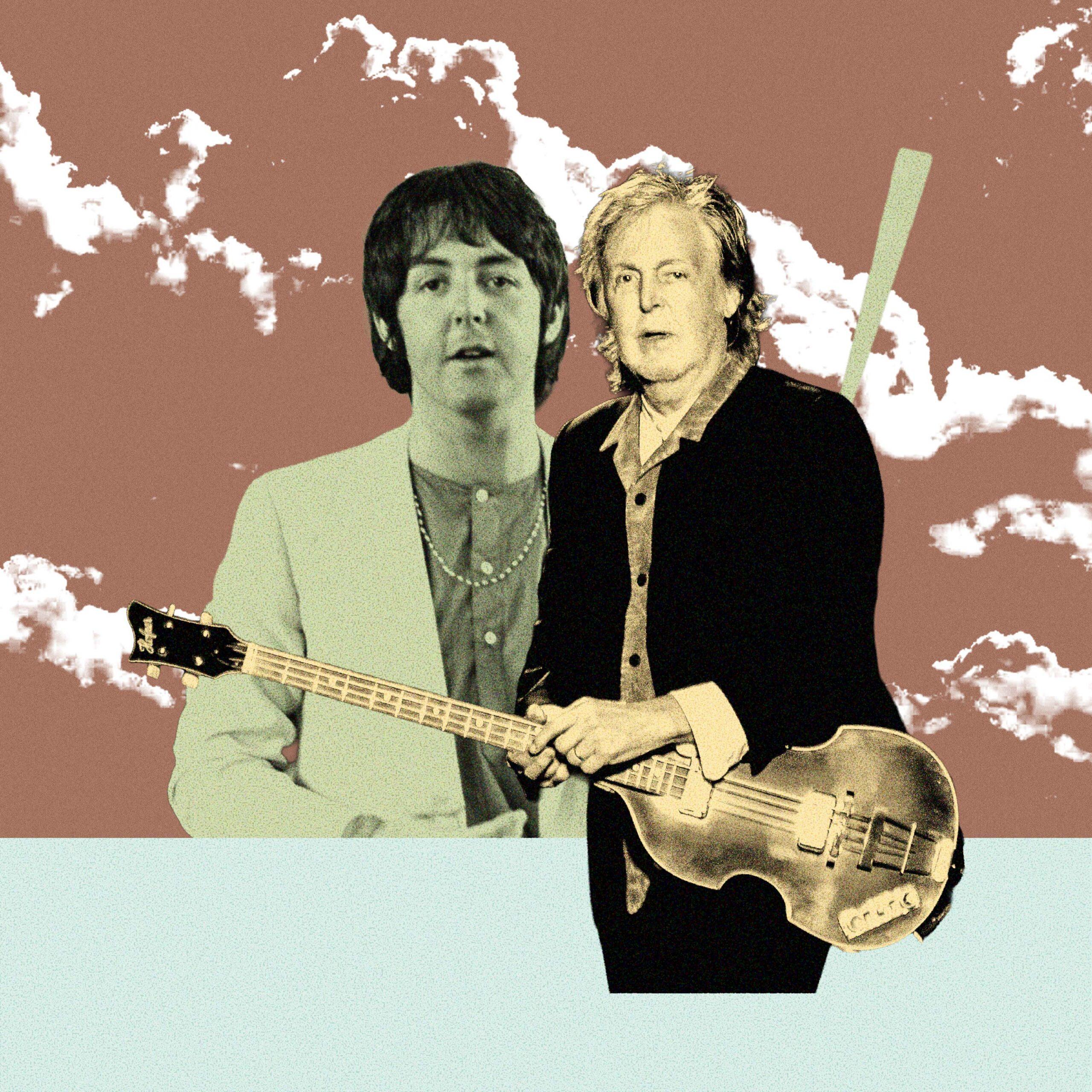

Fifty-six years after the cute Beatle harshed Apple scruffs’ vibes by publicly breaking the news about their favorite band’s breakup, Paul McCartney’s past is ever present. The 2020s have ushered in an avalanche of McCartney chronicles: biographies, oral histories, podcasts, compilations of all kinds (songs, lyrics, photos), documentaries, streaming miniseries, biographical films, soundtracks, installations, seven-story museums. McCartney-cana isn’t a cottage industry; it’s a thriving multimedia sector. Ardent devotees of the most industrious Beatle could construct their entire media diet around newly released retrospectives about McCartney’s career. But it’s a rare, refreshing treat, in 2026, to encounter an entirely new work by the master of melody—even a partly past-focused one in which McCartney can’t help getting back to where he once belonged.
The Boys of Dungeon Lane, McCartney’s 20th solo album (not counting classical recordings and works with Wings and other collaborators), arrived on Friday, following the longest lull between records of McCartney’s career. In the six years since 2020’s McCartney III, McCartney has been busy curating the first six decades of his career—and, as always, touring on his hits from the first few of them. So it’s not so surprising that Sir Paul would devote a portion of this year’s 47-minute, 14-track musical trip to his biographical back pages—although in this case, he trains his gaze less on the ’60s and ’70s, which spawned his setlists, than on the ’40s and ’50s, which formed the person who predated the persona.
Much as McCartney took James Corden on a tour of Liverpool on Carpool Karaoke, he invites listeners into his childhood habitat on several songs on Dungeon Lane, which is named after a road in the Liverpool suburb of Speke—the second-most famous Liverpool lane McCartney has memorialized. These days, the elder-statesman McCartney is a closer, the nearly universally loved, larger-than-life figure tapped to provide big finishes for Saturday Night Live, The Late Show With Stephen Colbert, and Apple’s (Inc., not Corps) 50th-birthday bash. Given McCartney’s age, Dungeon Lane’s relatively lengthy gestation, and its autobiographical veneer, one might imagine a majestic artistic statement in which McCartney aims to close out his musical catalog: an album that reframes his whole oeuvre, or a confessional collection in which the affable Beatle bares his soul and ruminates on mortality.
But The Boys of Dungeon Lane isn’t quite that kind of career-capping classic, or even one of his most memorable sets of songs. It also isn’t a misfire that might make McCartney lovers question whether someone should confiscate his keys to the studio and encourage him to contemplate retirement. It’s simply a solid, sweet, sometimes touching addition to the richest library in popular music; not a creative high point—an all but unreachable bar, in McCartney’s case—but the latest in a very long line of testaments to his well-honed, well-loved, and largely well-preserved talents.
McCartney may be building a building-sized monument to the Beatles in London, but he’s long been a mobile, breathing exhibit. His longevity and vitality are legend: He’s been making music for so long that a McCartney-concert equivalent of the Eras Tour might take 24 hours. After reaching obvious stopping points, he continues to record; Dungeon Lane drops 57 years after “The End” and 19 years after “The End of the End.” Come next month, it will be 20 years since McCartney was 64; even New is now getting old.
Unlike Ringo Starr—who, after recently releasing Long Long Road, waves his tambourine on two tracks from Dungeon Lane and duets with his former Fab bandmate on “Home to Us”—McCartney hasn’t laden many of his latter-day solo songs with explicit callbacks to his Beatle days. That referential restraint extends to Dungeon Lane: Although McCartney alludes to his early histories with John Lennon and George Harrison on “Days We Left Behind” and “Down South,” respectively, the closest he comes to name-checking the group is a lyric from the latter, “before we learned to twist and shout.” (There’s a “Yeah, yeah” on “Home to Us,” but not a “Yeah, yeah, yeah.”) But McCartney has long looked back at old hits and haunts, from oldies cover albums CHOBA B CCCP and Run Devil Run, to the mid-’90s Beatles Anthology project and his own Archive Collection, to “The Song We Were Singing” and “Young Boy” from the Beatles-inflected Flaming Pie, to self-mythologizing 21st-century tracks like “That Was Me,” “Early Days,” “On My Way to Work,” and yes, “Ever Present Past.”
Dungeon Lane is McCartney’s most nostalgic collection of originals, but it’s not a full-fledged, thematically cohesive concept album, or even a set of tunes that share a common, retro inspiration, in the vein of the Kinks’ Muswell Hillbillies. It’s more a loosely linked assortment of several songs that embrace the introspective assignment—especially the album’s first single, “Days We Left Behind,” along with “Down South”; the reverse-engineered “Home to Us”; and a cleverly orchestrated, multi-time-signature, waltzing tribute to Paul’s parents, “Salesman Saint”—which share RAM and wax with tracks that could fit on any other McCartney record. Early on, I wished McCartney had picked a (dungeon) lane instead of straddling multiple approaches. But during later listens, I appreciated that Paul paid some attention to his present life and loves instead of solely looking backward. The album is better, and more true to its dynamic creator, because it spans now and then. As McCartney sings on “Lost Horizon,” which lyrically unites the album’s two main modes, “You’ve got to live for now / Make every moment count”—an ethos he demonstrates daily by refusing to slow down.
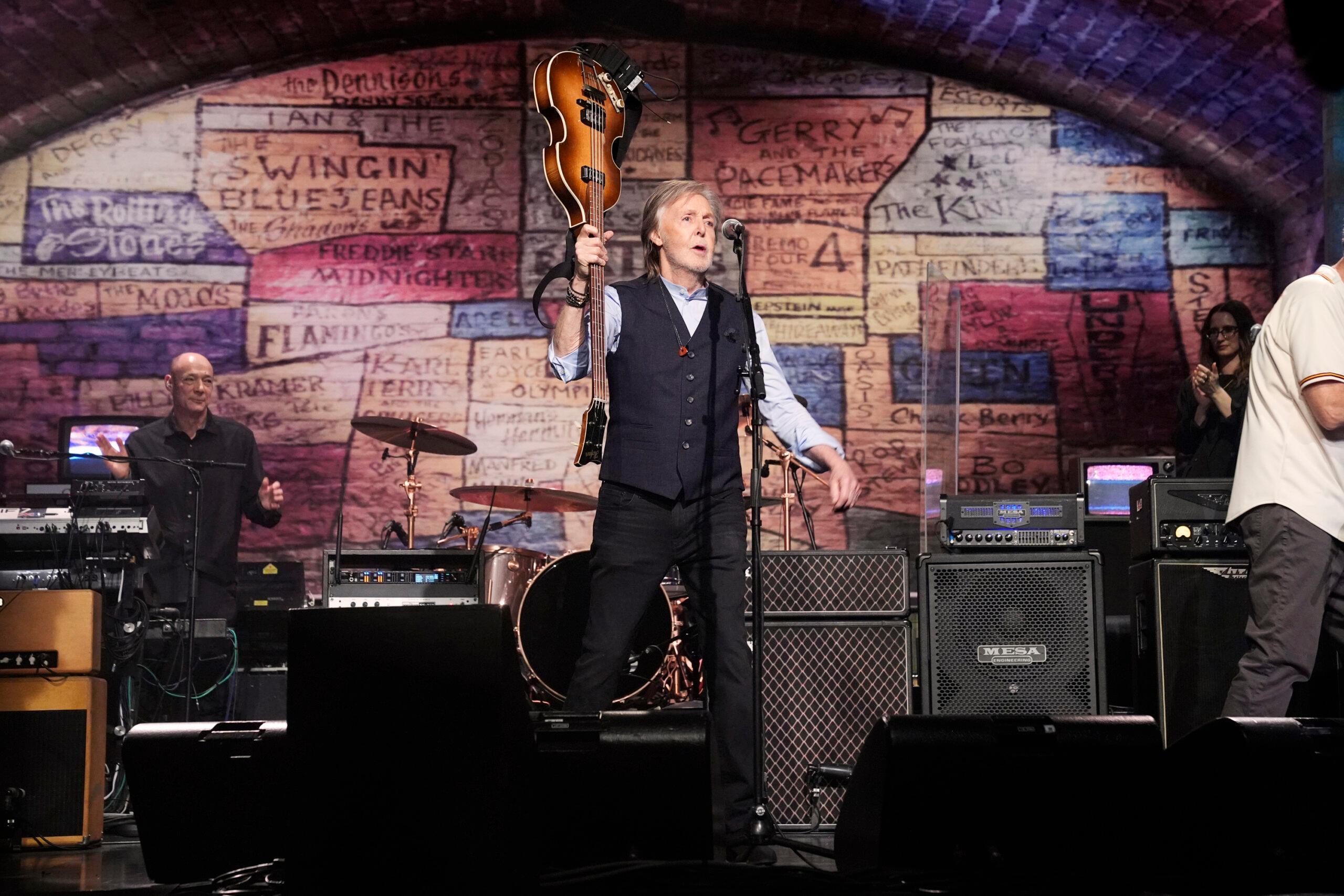
Paul McCartney performs on ‘SNL’
Dungeon Lane doesn’t feature any members of McCartney’s current touring band—which will have clocked a quarter century as a unit as of early next year—but it isn’t a full-on DIY effort in the mold of McCartney’s eponymous solo trilogy. Apart from a couple of cameos and string or brass embellishments, Paul plays most of the instruments himself. However, he also accepts ample assistance from producer Andrew Watt, a first-time McCartney collaborator. Just as Rick Rubin and Don Was did with dinosaurs of classic rock in the ’90s—as distant from today as the ’60s were then—the 35-year-old Watt has established himself as a helper to Hall of Famers who’s coaxed quality twilight-years revivals from the likes of Elton John, Iggy Pop, the Rolling Stones, and the late Ozzy Osbourne.
McCartney doesn’t need to make a comeback because he never went away. Not only has he not taken much time off, but also, his knack for songcraft has hardly faltered in what would be the dotage of other artists. 2005 album Chaos and Creation in the Backyard—fronted by a photo of the young man McCartney reminisces about on Dungeon Lane—has attained a deserved reputation as a post-peak gem. But every album since has sported glimmers of vintage McCartney genius, including (but not limited to) “Only Mama Knows,” “Mr. Bellamy,” Memory Almost Full’s flavorful four-song medley, “Nothing Too Much Just out of Sight,” “My Valentine,” “Alligator,” “Queenie Eye,” “I Don't Know,” “Despite Repeated Warnings,” “Hunt You Down/Naked/C-Link,” and “Winter Bird/When Winter Comes.” These songs will never make a McCartney greatest hits package, and many self-described Beatle- or Maccamaniacs may not have heard them. But although they may have hailed from a period when their composer was widely viewed as a legacy act, they proved he hadn’t lost his gift.
Dungeon Lane’s best bid to join that group is opener “As You Lie There,” a shape-shifting, tempo-changing rock collage that starts with a spoken-word address to a childhood secret crush and incorporates discordance and distortion. It’s the most musically restless, inventive track on the album, and it’s no insult to say that sonically speaking, it’s all downhill from there. On balance, the best songs are those that spend less time in Dungeon Lane’s memory lane: the trippy, tape loop–filled “Mountain Top,” the slightly psychedelic “Never Know” (which features “Fool on the Hill” recorder), the hopeful “First Star of the Night,” and a throwback McCartney character sketch/story song, “Momma Gets By.” On an emotional level, though, there’s something to be said for the pathos of Paul alluding to Lennon (“We met at Forthlin Road and wrote a secret code / To never be spoken”) or warbling with Ringo.
Speaking of warbling: Although McCartney may not have needed a dinosaur whisperer to kick-start his songwriting, Watt did well to camouflage or, at times, effectively accentuate McCartney’s greatest concession to age—his weakened voice. Mick Jagger, who’s teamed with Watt on two Stones albums, may still sound more or less like his old (that is, young) self, but when Paul performs without the benefit of his band’s backing vocalists and an arena full of affectionate, full-throated fans, the thinness of his formerly fluid, rangy pipes is apparent. (Comments on the videos of his recent SNL numbers alternate between “We are blessed to be alive at the same time as Paul” and “Woof, that’s what he sounds like now?”)



More on Paul McCartney’s Career
It helps that we never heard the young Paul perform the songs on Dungeon Lane. But some studio magic and shrewd vocal work-arounds contribute, too: multiple Pauls performing in unison, intermittent transitions to McCartney’s gruffer “rock voice,” and a lot of falsetto. None of this comes across as the vocal equivalent of a combover. When McCartney wistfully sings, “Nothing stays the same” on “Days We Left Behind,” his unadorned, ragged delivery helps sell the sentiment by emphasizing that those days were once upon a long ago. And nowhere on Dungeon does McCartney reach for raunchiness or unlikely crossover pop airplay in a way that anyone would consider unbecoming of an octogenarian.
Some Dungeon Lane listeners may hoist an eyebrow as a newly minted billionaire—even one who sometimes takes public transit—salutes his working-class origins, or as one of the world’s most famous men wonders, in the album’s first few moments, “Do you think of me? Do I ever cross your mind?” But The Boys of Dungeon Lane’s subject suggests that no one ever really leaves behind their early days. If there’s any disappointment to Dungeon, aside from a paucity of truly standout songs, it’s that the reflective record doesn’t do much to illuminate McCartney’s inner life. The musician has said that his 2021 tome of lyrics is the closest he’ll come to publishing a memoir, so once again, we’re left to scrutinize the words he’s set to song in search of hidden depths.
On “Come Inside,” McCartney sings, “Step right up and take a look, see what you can find / All my life’s an open book, come inside my mind.” If we find nothing new, is that because McCartney is reluctant to reveal the “secret code” that would unlock whatever he may have kept private from fans, journalists, and scholars? Or because, almost 70 years after McCartney became a Quarryman, there’s little left to divulge that hasn’t already been excavated during his decades in the spotlight? We may never know for sure—unless, of course, Billy Corgan gets McCartney, his dream podcast guest, to open up on mic.
Maybe, then, the most profound effect of this musical recounting of McCartney’s core memories is how it spurs us to consider our personal Dungeon Lanes—and to discover how many of our own memories Paul plays a part in. On Dungeon Lane, McCartney is a kid again—and when we hear him, however he sounds, so are we.
McCartney was 44 and well into his decline phase as a chart-topper by the time I was born, but his music—old and new—still soundtracked my millennial upbringing, as it did my baby boomer mother’s adolescence and as it now does my Gen Alpha daughter’s childhood (if only through proximity to me). In 2005, as a sporadically homesick college freshman, I kept McCartney’s then-new Chaos and Creation in heavy rotation in my dorm room—sometimes propping open the door in the vague hope that the strains of “Fine Line” or “Jenny Wren” could become a conversation starter. I may have misjudged McCartney’s appeal to my teenaged contemporaries. (A solo listening party featuring a 63-year-old’s latest LP was not, to quote “Follow Me,” “the perfect place for me to find a friend.”) But I imprinted on his classic and contemporary tunes just as readily as earlier (and later) generations.
It’s hard to know whether the 10-year, five-record run from 1997’s Flaming Pie through 2007’s Memory Almost Full—plus the fantastic 2008 “Fireman” trilogy ender Electric Arguments—was actually McCartney’s most fertile stretch since the ’70s, as I believe it to be, or just the one that coincided with my most musically impressionable period. The Boys of Dungeon Lane belongs on a lesser tier of McCartney accomplishment, but there isn’t a bad song in the bunch—only some that seem blander than McCartney has conditioned diehards to expect. And as for his weathered voice? Well, listen to Ringo: You could be forgiven if you thought that it was rough, but it’s home to us.