

Have you had enough of the Beatles yet? Probably not—after all, they’re the Beatles—but I wouldn’t blame you if the Beatles-industrial complex is wearing a bit thin. There was that docuseries, and that new old song, and that new old documentary, and that new old book, and those other books, and the latest remasters, and the steady stream of casting news, production details, and stills from the four movies due to drop on the same day in April 2028. The music isn’t getting old—qualitatively, at least—but the mythologizing may be.
The Beatles were better than the sum of their parts, but those parts were pretty fantastic. So if you need a break from Beatles nostalgia but don’t want to range too far afield from the Fabs, you could keep just as busy listening to, reading, and watching chronicles of Paul McCartney’s post-Beatles band Wings. The past two years have brought the belated audio and video release of One Hand Clapping, a live-in-studio album intended for a rockumentary; the oral history book Wings: The Story of a Band on the Run, credited to McCartney himself; a double-disk compilation called Wings, which consists entirely of Wings tracks curated by McCartney and which spawned a series of new music videos; and a new documentary, Man on the Run, which was accompanied by a soundtrack album. And then there’s the forthcoming exhibit at the Rock & Roll Hall of Fame, Paul McCartney and Wings.
This wave of Wings content represents a subset of recent Sir Paul–related material that includes a multivolume biography, a lyrics book (and podcast), a photography book, the Archive Collection, a streaming miniseries, and so on. But Paul is hawking Wings wares with special enthusiasm—to hear him tell it, by popular request. “Suddenly Wings has found its moment,” McCartney told the BBC last year. “There’s a generational shift at play.” The notion of a widespread embrace of a band that dissolved 45 years ago might seem dubious, but, McCartney continued, “In recent years, I noticed I'd be asked just as many questions about Wings in interviews as I would about the Beatles.”
Man on the Run, which debuted on Prime Video last Friday, offers Wings-affirming answers. But there’s one question that the film, along with the rest of this latest round of retrospectives, re-packagings, and archival barrel scrapes, still struggles to answer: Can a band like Wings, however winsome and melodic, ever become cool? Or will the tension between competing portrayals and interpretations of what Wings was—real, original band or ex-Beatle’s backing band—always undercut its case for greatness?
The lack of coolness that McCartney—and, by extension, Wings—once embodied forms the foundation of what the movie makes into an underdog success story. One of the film’s few non-Wings-affiliated voices, Beatles book author Peter Doggett, says, “Looking back to the early ’70s, Paul was remarkably uncool. He was conservative, he was lame, he was boring, he was making music for housewives and grannies.” Denny Seiwell, Wings’ first drummer, invokes Bruce McMouse and “all that soppy shit” Paul loved in echoing that McCartney was “not cool, totally not cool.”
The recounting of Paul’s perceived failures continues as McCartney biographer Chris Welch observes, “There was a sense that rock music was supposed to be the voice of revolt or revolution. It wasn’t just all about fun.” To which the modern McCartney’s voice responds, “And I get that, you know. But the thing is, not everyone can do that. And not everyone wants to do that.” Of course, McCartney has occasionally done it anyway: Wings’ debut single was “Give Ireland Back to the Irish.” The documentary doesn’t mention that protest song, either because the film’s 115-minute running time necessitated some cuts—entire Wings albums, including some really good ones, go unmentioned by name—or because political activism has always been a bit of an odd fit for Paul.
At one point, the current McCartney—who, like all of the film’s fresh interviewees, is heard but not seen, a choice that effectively keeps our focus on the ’70s—says, “Whenever I hear someone damning Paul McCartney, I tend to agree with them.” Man on the Run, however, was coproduced by McCartney’s company MPL Communications, as was 2001 made-for-TV documentary Wingspan. (Although unlike Wingspan, Man on the Run—helmed by 20 Feet From Stardom and Won’t You Be My Neighbor? maker Morgan Neville—wasn’t directed by McCartney’s ex-son-in-law.) When the movie airs his critics’ grievances—by, for instance, rehashing the contention that a controlling McCartney broke up the Beatles—the slights mostly serve to set up his vindication. (“Possibly Paul’s suspicions were right,” John Lennon concedes, after he, George Harrison, and Ringo Starr came around to McCartney’s dim view of manager Allen Klein.)
So when McCartney recalls about Wings, “Anybody who bad-mouthed us made us even more determined to prove them wrong,” the implication is that the doubters did get their comeuppance. Before the credits roll, McCartney, like Picasso on one Wings track, gets the last words: “I doubted whether it was possible to follow the Beatles. But looking back on it now, I think we made what seemed like an impossible dream come true. That was the magic of it.”
Wings undeniably followed the Beatles in a chronological sense. On the charts and onstage, the band’s peaks proved that Paul didn’t need his Beatles bandmates to find favor with the public. (Although his Beatles aura—understandably cited throughout the film as a factor that weighed on Wings—also ensured that the band wasn’t really, as McCartney asserts, starting at square one when it formed.) And much of the music McCartney made during his days with—as?—Wings is as strong as any he ever recorded. But Wings was, and remains, a murky concept, perhaps one reason why the film’s title makes McCartney the subject even though the portion of his story it documents ends roughly when Wings does.
Wings was, and is, tough to mythologize. Part of the problem with Wings as a subject is that the most narratively rich chapter in McCartney’s immediate post-Beatles period predates Wings, when a self-doubting, depressed Paul, a full life’s worth of hits behind him at age 27, rode out the Beatles’ turbulent disbandment in London and later sequestered himself in Scotland to figure out who he was and what he wanted as an independent artist. That period of homespun experimentation produced perhaps his most celebrated solo song, “Maybe I’m Amazed,” followed by the then-underappreciated Ram, which—as I wrote when it turned 50—became a classic. Once Wings appears, the greatest adversity left for Man on the Run to rehash is that people mocked the group’s uncool cover of “Mary Had a Little Lamb.”
The Beatles became icons not only because of their music but also because of everything that went with it: their wits, what they wore, the way they collaborated and, later, clashed. There’s not nearly as much drama to work with where Wings is concerned, or as much lore in McCartney’s transition from mop top to mane to mullet. Man on the Run devotes time to the low-key University Tour, which quietly announced Wings’ arrival as a live act—a conscious throwback to McCartney’s hardscrabble Beatles past. As the film acknowledges, though, Wings could have played the biggest venues in the world from the start, solely on the strength of Paul’s stardom. Paul chose to start small for the sequel, whereas the Quarrymen and the Beatles had to work their way up from Casbah to Cavern to Hamburg and beyond.
The Beatles' early crucible forged friendships and rapport that Wings lacked. “What’s it like playing with Wings?” an interviewer once asked Wings’ second lead guitarist, Jimmy McCulloch. “Playing the guitar as usual, you know,” he said. “Just playing.” The interviewer tried again: “What’s it like playing with Mr. McCartney, then?” McCulloch considered. “All right, you know,” he said.
Much of the conflict and excitement surrounding Wings stem from external strife, such as the mugging in 1973 that parted Paul from his demos for Band on the Run or his arrest in 1980 for trying to bring marijuana on a Japanese tour. (Which wasn’t the subject of London Town track “I’m Carrying.”) Otherwise, Wings wasn’t messy or a tabloid sensation.
The blandness of the band’s persona beyond the Beatle at its core extends to its origin story, as newly retold by Paul: “I was in bed with Linda one night. On the spur of the moment, I said, ‘Well, if I form a new band, do you want to be in it?' And she kind of: 'Um, yeah.' It's as simple as that. ‘OK, well, that’s—we got two members.’” Former Moody Bluesman Denny Laine, the third member and the only one other than the McCartneys to span the band’s decade-long run, enlisted in similarly unremarkable fashion. “I rang him one day and said …” McCartney begins, before Laine finishes, “‘... do you fancy getting a band together?’ And I said, ‘Yeah, sure.' That’s all it was!” As beginnings go, it’s not quite as compelling as the Woolton church hall fete.
The breakup, if you can call it that, was just as unceremonious. Wings was more or less grounded for good in April 1981, when Laine left the band, which McCartney had essentially sidelined. As the late Laine says, “There is no end. It's just that we didn’t go out on the road again or make another album.” But McCartney continues to do both.
When Laine’s departure was reported, a McCartney spokesman denied that Wings was dead, saying, “Wings are Paul and Linda McCartney and whoever they wish to record with.” Which, if true, would suggest that Ram—the only album ever credited to “Paul and Linda McCartney,” although it also featured two other guitarists and future Wings drummer Seiwell—was as Wings as anything else. Plus, Paul and Linda didn’t stop recording until death did them part: Their romantic and musical relationship continued through 1997’s Flaming Pie, the last McCartney album recorded during Linda’s life.
So who or what was Wings, really? The definition varied, and not just because the band underwent several lineup changes. Wild Life was credited to Wings. When that album didn’t do well, its successor Red Rose Speedway was credited to “Paul McCartney and Wings.” After that, the branding reverted to “Wings” alone, but the precedent for Wings to be, at best, the Crickets to McCartney’s Buddy Holly was set.
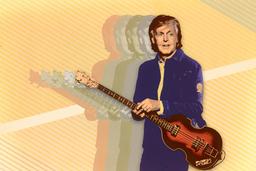

More on Paul McCartney
Not that McCartney was quick to acknowledge the band’s lopsided dynamic. In Man on the Run, Seiwell recalls Paul’s vision for Wings: “He said, ‘We're all gonna be a part of this. What I make, you’re gonna make.’ … He wanted us to be known just like the Beatles were known.” Nick Lowe, whose band Brinsley Schwarz opened for Wings in 1973, says, “It was interesting seeing people on the street who’d see the bus going by, but it’s almost like their eyes would be drawn like magnets to Paul’s face. ... He wanted to engender this ‘We’re all mates and on the same plane,’ which, of course, we weren’t at all.” Or, as Seiwell’s successor, drummer Geoff Britton, says, “He wants you all to be normal and equal. You ain’t normal and equal because he’s the world superstar and you're a dogface nobody.”
Seiwell, who along with guitarist Henry McCullough left the band on the eve of its journey to Lagos to record Band on the Run, explains his disillusionment: “We really felt like it was a family thing. But for years, we’re living on a meager, meager retainer. He wanted us to be like John, Paul, George, and Ringo. But it was really Paul McCartney and these other guys that played with him.” The late McCullough gripes, “Half the band left within the same week, and he never asked why. I didn’t want to be part of it anymore because it wasn’t really for real. It was a dream. That’s what it was.’”
In one of the few non-Wings-washing moments when the movie makes McCartney look bad—“There are parts that are embarrassing,” McCartney writes in his Letterboxd review—he offers a feeble mea culpa for driving two of his original Wingsmen away: “I wasn’t on top of it. I wasn’t in the accounts department looking at what everyone was getting.” McCartney mostly frames these desertions as another challenge for him to overcome and another grudge he can harness to fuel his creative ambitions: “In my mind, it’s ‘Well, get better than me, then. Write some great songs. That’s how you can solve your problem.’” Sure! Be better than Paul McCartney. Simple.
Only Linda didn’t need to justify her role in the band—to her husband, that is. To the world, Paul’s decision to make music with his musically untrained wife—which Lennon had done first—proved that Wings wasn’t a serious band. Linda’s determination to fly in the face of the haters was courageous. Not only did she bear and care for children while learning on the job in one of the biggest bands in the world, but her unpolished, pleasing vocals were also essential to the sound of much of McCartney’s solo and Wings work. Still, she wasn’t in Wings because of her musical partnership with Paul. As we hear her explain in Man on the Run, “I’m not there ’cause I’m the greatest keyboard player. I’m there ’cause we love each other.”
In one of Man on the Run’s archival clips, an interviewer asks Paul why he “always made strenuous efforts to make it clear that Wings wasn’t just a backing group” but a “complete band.” Paul replies, “I don't know, really. I mean, I think I’ve been accused of treating people just like sidemen, which I’ve never meant to do.” In another clip, McCartney concedes that the democratic dream did die: “I wanted for us all to feel equal, but people are looking at Wings as my group. So I just decided I’d try and be a good boss.”
Then again, the movie doesn’t mention some of McCartney’s more tangible Wings-era efforts to include his compatriots. Before EMI reduced planned double album Red Rose Speedway to a single disk, the underrated record was set to feature “showcase moments for everyone, either as a singer, a player, or a songwriter.” With Wings at the Speed of Sound, McCartney shared lead vocals with every other member of the band, along with some writing or cowriting credits—which led to a weaker record than the few that preceded it, albeit a hit one thanks to the power of Paul’s “Silly Love Songs” and “Let ’Em In.”
Another anecdote: During the recording of 1979’s Back to the Egg, Paul reportedly told his bandmates that if one of them could write a quality song, it would be the B-side of single “Goodnight Tonight.” Each of them spent a weekend working on candidates, only for Paul to show up on Monday morning with the phenomenal “Daytime Nighttime Suffering,” which became a top-10 hit. How could anyone not named Lennon compete with McCartney? “In Wings we always thought we were failing because we always matched everything to the Beatles,” McCartney says in Man on the Run. In a way, Wings’ greatest failing from a legacy standpoint is that none of its members could come close to matching McCartney.
The truth is that while McCartney may need glorified sidemen for moral support, he’s creatively self-sufficient, as he’s shown in the course of recording a trio of albums by himself. In Man on the Run, Steve Holley, Wings’ last drummer, says, “I couldn't help thinking, ‘He can play everything.’ I mean, he doesn’t need anybody else.” Chris Thomas, who coproduced the band’s final album, says, “When I was working on Back to the Egg, I didn’t feel as though I was even particularly producing it. I didn't know how stuff worked with Wings before. It seemed a square peg in a round hole."
The irony in the Rock Hall’s upcoming Wings exhibit is that Wings, unlike Beatle Paul and solo Macca, is not enshrined. (It took until 1999—a galling five years after McCartney had delivered an induction speech for Lennon—for Paul to earn individual recognition, which his fashion designer daughter Stella greeted with a T-shirt that said, “About fucking time!”) Some have speculated that the exhibit could be a precursor to a formal welcome of Wings. And sure, if contemporaries like Roxy Music, the Doobie Brothers, and Bad Company are in, why not Wings? But if Wings was, for all intents and purposes, Paul, it would be redundant to make McCartney the second triple inductee in the Hall, along with Eric Clapton, who was admitted as a solo artist and as a member of the Yardbirds and Cream.
The Rock Hall’s snub seems to suggest that Wings was a kind of cosplay, as much a mirage as Sgt. Pepper’s Lonely Hearts Club Band. No musician makes the act of creation seem more effortless than McCartney. But Wings highlighted how hard he worked to project a certain image—or, perhaps, to conform to one, in the wake of his first band’s demise. (As Wings guitarist Laurence Juber says in Man on the Run, “When Wings started, he felt the need for a band because he came out of a band.”) “It was made up, you know, it was like, homemade, Wings,” McCartney muses in Man on the Run. What a difference the word next to “made” makes. “Homemade” makes Wings sound charming and authentic. “Made up” makes it sound artificial, a fraud.
Paul is genuinely both a band guy and a wife guy; he’s effectively had three of each. The third band has been a unit for 24 years, longer than McCartney was with the Quarrymen/Beatles and the Wings combined. This one capably plays Beatles, Wings, and solo McCartney music, accompanying McCartney live and sometimes in the studio, but it’s never earned its own name. Just as Paul has stopped pretending his hair hasn’t gone gray, he’s dropped the fiction of shared creative credit.
Which isn’t to say that Wings—or, at least, McCartney’s contribution to it—doesn’t deserve ample plaudits. The target market for Man on the Run is me, an unabashed Paul appreciator. If forced to go the rest of my life without listening to either the music McCartney composed as a Beatle or the music he’s composed since, I’d have a hard time choosing. (On average, the former is better, but there’s so much more of the latter that on balance, the brilliance is comparable.) The main problem with Man on the Run, aside from the ground it can’t cover in its breezy treatment of 12 years or so of McCartney’s packed career, is that not much of it surprises a seasoned disciple of Paul. Decades before Man on the Run, there was the Wingspan TV movie; decades before the Wings box set, there was Wingspan: Hits and History, a 2001 collection that accompanied the Wingspan doc; and decades before Wings: The Story of a Band on the Run, there was 2002 book Wingspan: Paul McCartney's Band on the Run.
This latest multimedia rollout will likely strike even many McCartney-curious spectators as a surplus of Paul: I’ve had enough, some may say, quoting Wings unwittingly. But McCartney’s catalog is so rich that repeated looks yield renewed respect. Perhaps the best testament to Wings (or McCartney, or both) is that there wasn’t room for “Daytime Nighttime Suffering”—which would be the biggest hit for a lot of great bands—on last year’s two-disk, 32-track Wings box set. It was on Wingspan, but one could come up with a killer collection of deep cuts that appeared on neither Wings compilation. In fact, cribbing a bit from myself, I just did.
I could’ve kept adding, but I had to stop somewhere. To put McCartney’s output in perspective, that’s a long list of great songs that weren’t deemed good enough for either greatest-hits package culled from McCartney’s second-best band, which itself ceased to exist before he was half as old as he is now. And he’s still touring and making new music, although he’ll soon be 20 years older than 64. Sing your song, love is long. And yes, he still makes some missteps. But what’s cooler than not caring about being cringe?
When he hits the road again, Paul will undoubtedly sequence seven or eight Wings cuts into his 30-something-song set, and attendees who paid dearly to see a Beatle before he’s gone will be just as happy to hear those hits. Some of those ticket buyers will have watched Man on the Run, and at least a few will love Wings more than McCartney’s most revered group. So has Wings found its moment, or has McCartney manufactured its moment, much as he willed Wings to the top of the charts in the ’70s? Maybe a bit of both. But if the manufacturing makes more people listen to what the man sang, so be it.