

The U.S. men’s national soccer team enters the 2026 World Cup with both promise and pressure. The core of the roster is more accomplished at the club level than any generation in American history. Yet most U.S. soccer fans are tired of hearing about how talented this group is supposed to be. The national team has consistently underperformed expectations and failed to live up to its “golden generation” moniker that supporters spent years dreaming about. It’s time to turn potential into reality.
There isn’t a single result the United States can point to from the 2022 World Cup to now that represents real progress. Failing to escape group play at Copa América was embarrassing. Reaching the Gold Cup final last summer was an on-par performance. Losing to Mexico in the final stung.
Their failures to launch on the pitch mean that the USMNT’s biggest accomplishment over the past few years might honestly be convincing a manager of Mauricio Pochettino’s pedigree to take the job.
Beneath all the malaise, though, there should still be real hope entering this summer. The Americans finally have a healthy core. Christian Pulisic is a star at AC Milan. Weston McKennie just completed the best season of his career at Juventus. Antonee Robinson developed into one of the Premier League’s best attacking fullbacks at Fulham. Chris Richards helped anchor one of England’s better defensive units at Crystal Palace and lifted the FA Cup. There may not be a true global superstar on this squad, but there’s more high-level European experience than the United States has ever brought into a World Cup.
The USMNT officially announced its final 26-man roster on Tuesday. There are still major questions about tactics, the formation, and whether this group can deliver under pressure. But before the matches begin, we ranked all 26 players based on their importance to American success this summer.
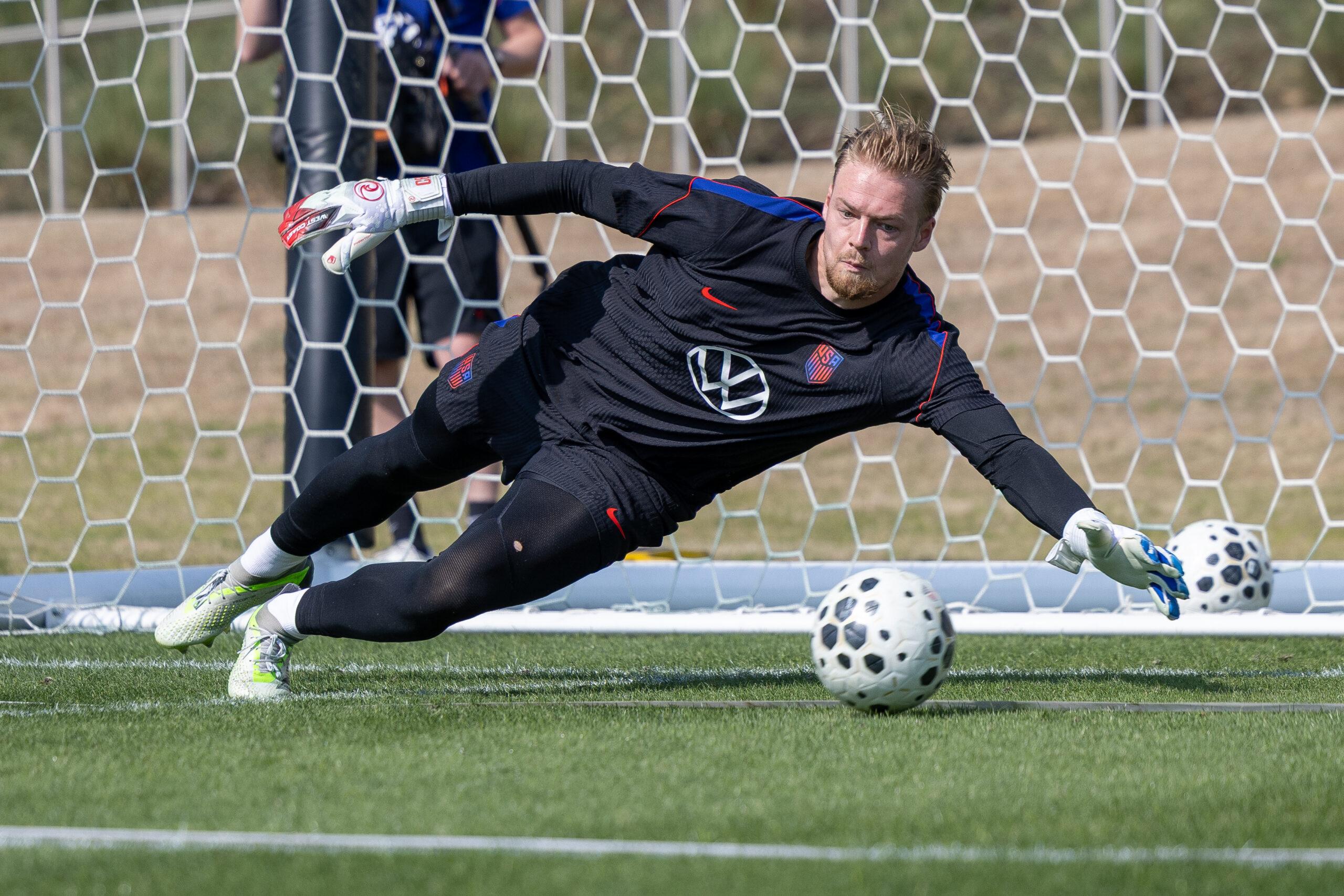
26. Chris Brady
Goalkeeper, Chicago Fire
FIFA requires every team to carry three goalkeepers on its final 26-man roster. At 22 years old, Brady has never played for the senior national team. If Brady is in a game this summer, something has gone terribly wrong with red cards or injuries.
25. Auston Trusty
Center back, Celtic
Trusty is the fifth of five center backs on the depth chart, and he’ll be more likely to play if Pochettino opts to play a back three instead of a more traditional back four. Trusty was a mainstay for Celtic in the second half of the season as the Scottish giant won a fifth consecutive Scottish Premiership title with a dramatic final-day comeback against Hearts. It’s a testament to the depth of Pochettino’s selections that a starter on a title-winning team in Europe isn’t likely to see the field at this tournament.
24. Joe Scally
Right back, Borussia Monchengladbach
Since joining Borussia Monchengladbach in 2021, Scally has started at least 20 Bundesliga matches every season. Gladbach has slowly slipped down the German mid-table since Scally joined though, and he’s hardly been a standout. So even though he’s carved out a quality career for himself in a top-five European league, he’s not enough of an attacking or defensive specialist as a right back to serve a clear role for Pochettino.
23. Gio Reyna
Attacking midfielder, Borussia Monchengladbach
There’s probably been more ink spilled on Reyna in the last five years than on every other player not named Pulisic on this list. He’s still only 23 and, in theory, should be nearing his peak as a player right now. Injuries and fitness issues have derailed his career in a way that makes it difficult to imagine that he’ll ever reach that beautifully imagined potential. Reyna made only four starts for Gladbach this season and totaled 520 minutes. He probably doesn’t have the fitness to play significant minutes for the Americans this summer, but he still flashes excellent passing range that is largely lacking in this squad. Reyna could be a valuable super-sub if they’re chasing a result and need a goal late, but otherwise, we’ll all be left wondering what could have been if not for the injuries and interpersonal drama.
22. Alejandro Zendejas
Attacking midfielder, Club América
The USMNT has a glut of attacking midfielders, and Zendejas’s inclusion on the final 26 is one of the bigger surprises. Many expected this spot to be occupied by either Real Salt Lake’s Diego Luna, who shone at the Gold Cup last summer, or Lyon’s Tanner Tessmann.
Zendejas has started only one match for USMNT—a friendly in September against Japan—since the end of the 2023 Gold Cup. Even though he’s in good form for his club, it will be hard for him to bypass the better attacking midfielders.
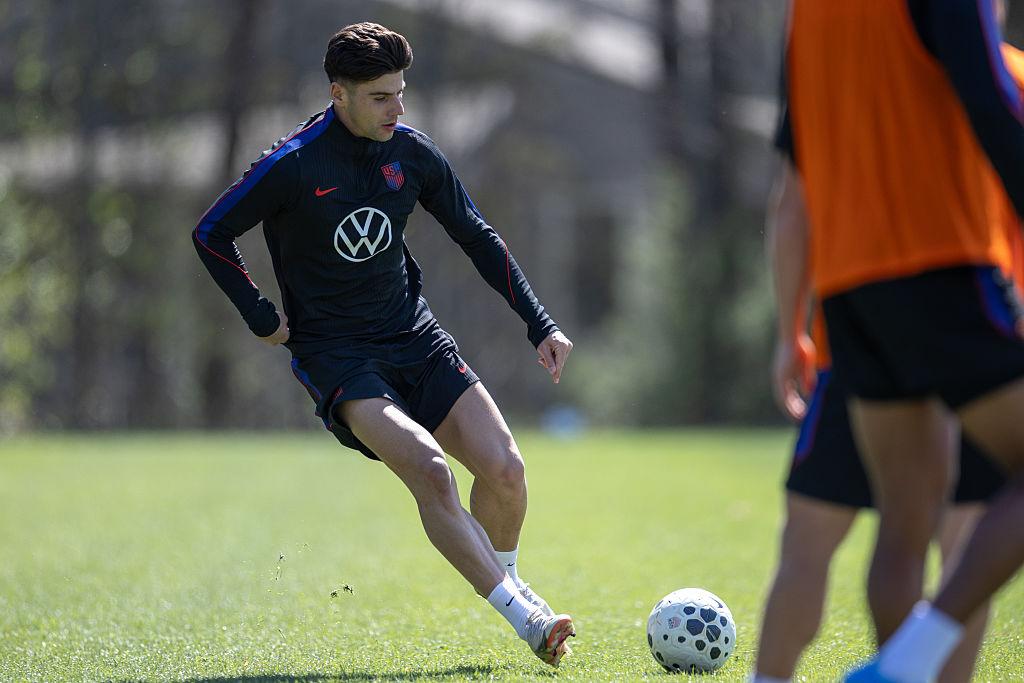
21. Max Arfsten
Left back, Columbus Crew
Arfsten showcased real attacking prowess at the Gold Cup last summer, with two goals, two assists, and seven shots as the Americans’ primary left back. His performance earned him a place on the roster this summer, but he remains the clear deputy to starting left back Antonee Robinson. Arfsten has proved himself to be a capable attacking fullback, but he’ll provide the most value to this USMNT squad as a set of fresh legs to replace Robinson later in matches.
20. Miles Robinson
Center back, FC Cincinnati
Four years ago, Robinson was a promising center back expected to anchor the American defense at the World Cup. An Achilles injury derailed him for that cycle, but now Robinson is fit just in time to make the roster for this World Cup. Robinson is probably behind Mark McKenzie on the depth chart, but central defense is arguably the most uncertain position in the squad right now.
19. Ricardo Pepi
Striker, PSV Eindhoven
Pepi grabbed an assist off the bench for the USMNT in a 5-2 friendly loss to Belgium in March. He expanded his role beyond super-sub at PSV this season with 16 starts for the Dutch champions, but has played little for the USMNT since Pochettino became manager. He’s trusted enough to make this roster but will appear only if Folarin Balogun’s gas tank is empty.
18. Matt Turner
Goalkeeper, New England Revolution
Turner was one of the bright spots for the USMNT in the 2022 World Cup. And at one point, he was one of the best shot stoppers in MLS history. Unfortunately for Turner, you have to look pretty far back in his career to find his brightest accomplishments. He has started two games in the last calendar year for the USMNT, against Switzerland and Belgium, and the Americans conceded nine goals in those two games. He’s lost the job to a different Matt in MLS.
17. Sebastian Berhalter
Midfielder, Vancouver Whitecaps
If soccer were like basketball and you could freely sub players in and out of games with no penalty, then Berhalter would be one of the most valuable players in this tournament. His set piece deliveries are an immense advantage for the Americans when he’s on the pitch. He assisted the winning goal against Saudi Arabia in the Gold Cup last summer with a free kick, and he assisted the opener in the Gold Cup final against Mexico.
The problem: Soccer is not basketball, and Berhalter is limited enough during open and regular play that he shouldn’t be a starter in the midfield.
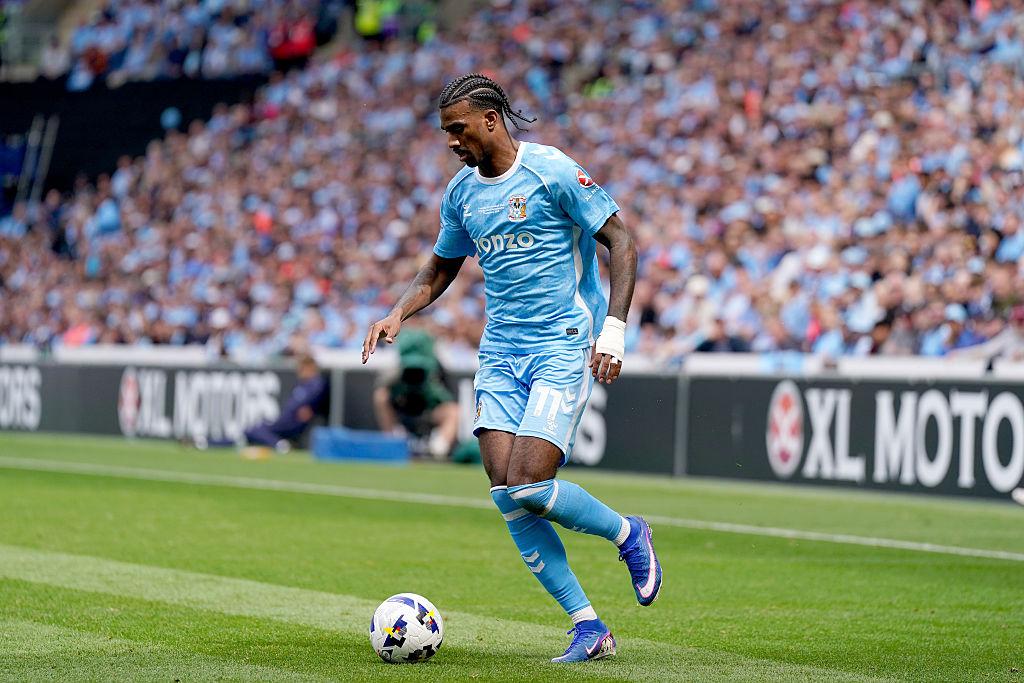
16. Haji Wright
Striker, Coventry City
Wright scored 17 goals this season, tied for second among the entire English Championship, as he led Coventry City to a league title and promotion to the Premier League for the first time since 2001. He is the primary backup striker option for the U.S., as there remains a gap between him and Folarin Balogun in shot and chance generation.
15. Alex Freeman
Right back, Villarreal
If Pochettino opts to play a back three, traditional right back Alex Freeman is one of the primary options to occupy the right side. Freeman’s athleticism and ability to cover a lot of ground could help the Americans advance the ball up the right side of the pitch through attacking dynamo Sergiño Dest. Freeman was deployed as a more traditional right back at the Gold Cup last summer, but that was when Dest was unavailable.
14. Mark McKenzie
Center back, Toulouse
McKenzie was a reserve center back during the Gold Cup last summer, but he played his way into a starting role in multiple pre–World Cup friendlies. He started and played a full 90 minutes in wins against Australia and Uruguay and started against Belgium in the March friendly. If Pochettino opts to use a more defensive back three and play an extra center back, McKenzie’s recovery pace next to the aging Tim Ream could be a valuable asset, as the outside center backs have to cover more ground.
13. Cristian Roldan
Midfielder, Seattle Sounders
With Diego Luna missing the roster, Roldan immediately becomes the player most likely to show emotion and fire on the pitch. He’s a physical, gritty, ball-winning midfielder who has emerged as one of Pochettino’s favorites in a short time. Roldan did not make the Copa Ámerica roster in 2024 under Gregg Berhalter, and he didn’t feature at the Gold Cup last summer. Since then, Roldan has played in all eight USMNT friendlies. That level of commitment from the manager shows that Roldan is in the plans for minutes at the World Cup, even if he’s not a starter.
12. Brenden Aaronson
Attacking midfielder, Leeds United
It’s fitting that Aaronson is the USMNT’s 12th man entering this World Cup given that he was the first sub in all three group matches at the last World Cup in 2022. It’s been a roller coaster for Aaronson in between the two major tournaments, as he barely played at the Copa Ámerica in 2024 and struggled to succeed at the club level for multiple seasons.
Aaronson isn’t likely to start a match at this World Cup, but his pressing abilities and energy off the bench are super valuable, especially in the American summer heat. He had nine goal contributions for Leeds this year in the Premier League, more than double his four in 2022-23, indicating he may have found club form just in time to help the national team.
11. Malik Tillman
Attacking midfielder, Bayer Leverkusen
Tillman had three goals and two assists in a breakout Gold Cup last summer where he established himself as a USMNT regular. He also made a big summer move from PSV Eindhoven up to Bayer Leverkusen in the Bundesliga, but his first season in Germany had mixed results. While six goals and one assist for the season is underwhelming, he pressed effectively and played a lot of minutes for one of the best teams in Germany. He’s right on the fringe of starting for the U.S. team, and whether he does or not will likely depend on the formation and tactical choices Pochettino makes. Poch has always valued off-the-ball work rate, and Tillman and Aaronson both excel in that area.
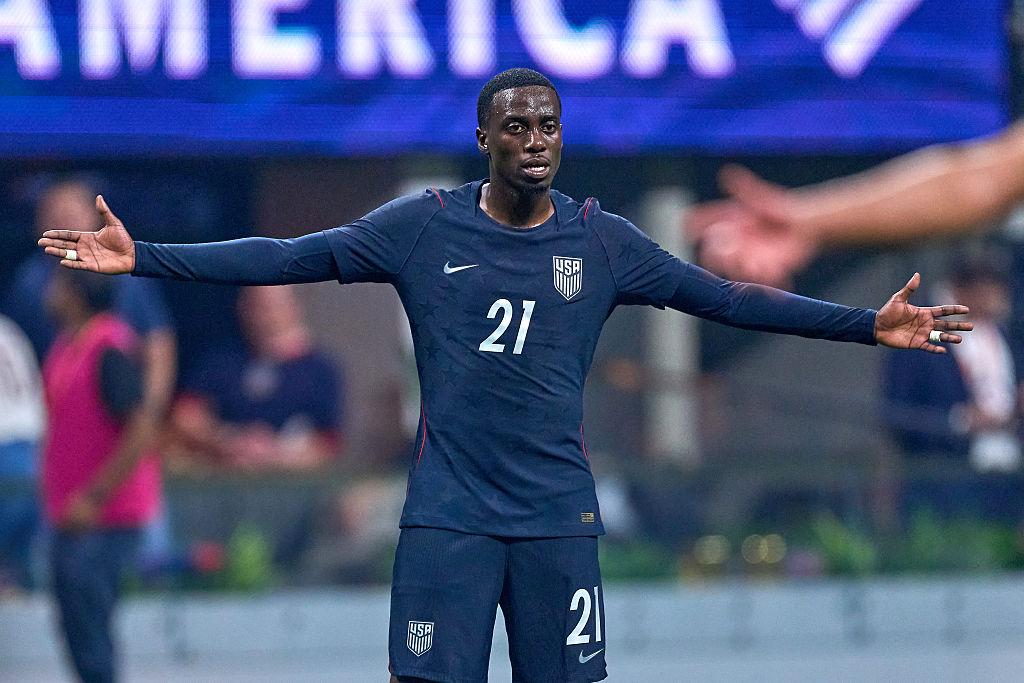
10. Timothy Weah
Wide midfielder/defender, Marseille
It’s difficult to put a positional delegation on Weah. He could play in the midfield. He could be a winger. He could be a wing back. It’s not entirely clear what his best position is, but it is clear that he is one of the best 11 players that Pochettino has to choose from.
His tactical flexibility means that he could be an inside forward next to Pulisic if the Americans play a back three, or he could be a right winger if Pochettino plays a more traditional 4-2-3-1 formation. Since he missed the Gold Cup to play for Juventus at the Club World Cup, Weah has started five of the eight friendlies pre-World Cup.
9. Sergiño Dest
Right back, PSV Eindhoven
Dest’s 2024 ACL injury is an underrated factor in the derailing of the USMNT following the 2022 World Cup. He didn’t play in the Copa Ámerica debacle, and the Americans looked considerably less dangerous when Dest wasn’t on the pitch. He remains a defensive liability—remember the knockout game against the Netherlands?—but his attacking dynamism and ball progression numbers are amongst the best in the Dutch league. Outside of Pulisic and maybe Antonee Robinson, no one on the USMNT is better at moving the ball forward and creating chances.
8. Antonee Robinson
Left back, Fulham
Robinson had his peak season at Fulham in 2024-25 and has struggled to recapture that form following a right knee injury that required surgery. He’s one of the most active and aggressive defenders in the Premier League and had multiple seasons near the top in tackles and interceptions won. He also added 10 assists in that 2024-25 peak season.
He’s barely played for the USMNT under Pochettino, but two starts in March against Belgium and Portugal show that Pochettino still views him as the clear top option when healthy. So much of the attack under Berhalter ran through Robinson’s crossing ability, and that magical left foot remains a top option for the USMNT to produce chances.
7. Tim Ream
Center back, Charlotte
The two biggest question marks from a performance perspective are the next two names on this list. Ream is 38 years old and remains an excellent passer from deep lying areas. However, he’s showing his age and limited range as a central defender and remains a potential liability at the heart of the American defense. His leadership and anticipation match what you’d expect from someone with his veteran status, but every American will be holding their breath if Ream gets isolated in space against a younger and more dynamic attacker. Fortunately for the Americans, Group D is not filled with a lot of these types of players.
6. Matt Freese
Goalkeeper, NYCFC
Four years ago, Matt Freese was the lead goalkeeper for the Philadelphia Union II, a developmental academy team. Fast-forward to 2026, and he’s going to start for the United States in a World Cup on home soil. Freese’s rise is both improbable and meteoric, but the conditions that enabled it should frighten every USMNT fan. The U.S. has always been a proud goalkeeping nation with tremendous history and tradition at the position. But Matt Turner’s dip in form and the failure of any other established candidates to emerge opened the door for Freese. If the U.S. wants to pull an upset or two against superior competition, high-quality shot-stopping will be required at some point.
Freese has penalty shootout experience and did have big moments at the Gold Cup last summer, but he’s largely unproven on a stage this big. Goalkeeping is the team’s biggest red flag entering this tournament.
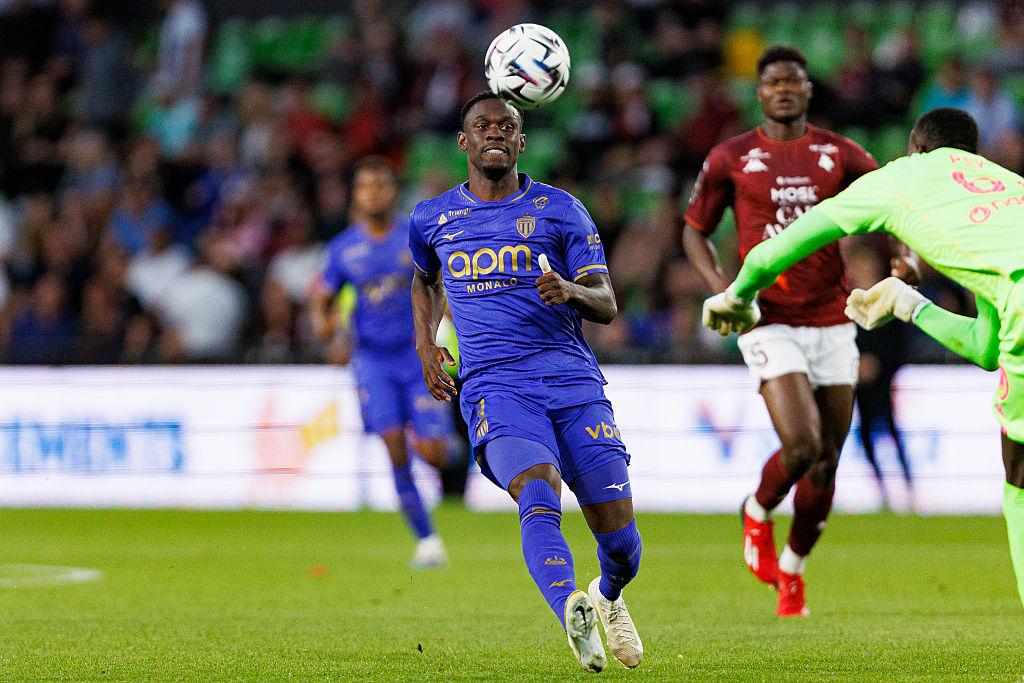
5. Folarin Balogun
Striker, AS Monaco
There are questions about his finishing, but there are no questions about his ability to create chances through his off-ball movement and his ability to operate in tight spaces. He finished fourth in Ligue 1 with 13 goals and averaged more than a goal every other game played.
4. Weston McKennie
Central midfielder, Juventus
McKennie just finished off the best season of his career at Juventus. He started 32 Serie A matches, tallied 10 goal involvements and became a true box-to-box midfielder. McKennie isn’t on the ball a lot and is a low-touch player, but he makes those touches count. He adds a ton of value on set pieces, receives the ball in dangerous areas and has a quality defensive work rate off the ball.
We have not seen the midfield tandem of McKennie and Tyler Adams together often in the 2020s, but both are healthy right now, and that’s probably the biggest reason to be optimistic about the Americans’ chances this summer.
3. Tyler Adams
Defensive midfielder, AFC Bournemouth
Adams is the spine of the USMNT because of his ability to cover ground, put out fires, and stop the ball. Adams has never developed the passing range to become an elite all-around midfielder, and injuries have prevented him from a sustained peak. However, he remains excellent at tackling opponents, winning aerial duals, blocking shots, and intercepting passes. Without Tanner Tessmann on the squad, there’s a ton of pressure on Adams to stay healthy throughout this tournament. Pochettino will need to manage his minutes, but he remains one of the linchpins to this entire system.
2. Christian Pulisic
Attacking midfielder, AC Milan
Christian Pulisic didn’t score for Milan this calendar year. That’s not the ideal form you want for your most important attacking player entering the World Cup. However, it’s not all bad. Goals can be highly volatile. Shots and xG created are much more stable as predictive metrics, and Pulisic improved his quality-shot output and chance-creation numbers throughout this season. When he was on the pitch, he was a more productive attacking player in 2025-26 than he was in basically any other year of his career.
Pulisic played a lot fewer minutes this season due to injuries, but that could also mean he’ll be fresher for this World Cup. He’s healthy now, and couldn’t be lower than second on this list.
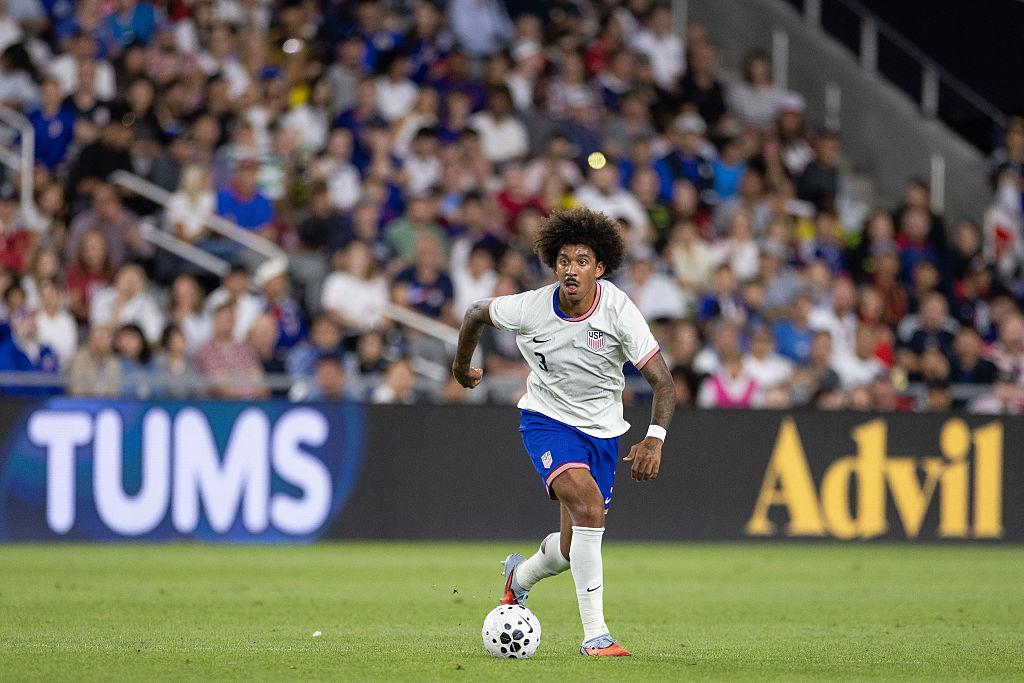
1. Chris Richards
Center back, Crystal Palace
The biggest question for the Americans entering this summer is how well their backline will hold up defensively. Richards’s development into a high-quality all-around Premier League center back at Crystal Palace gives the USMNT one rock-solid starter in otherwise murky waters. The goalkeeper is inexperienced. Richards’s most likely center back partner is showing his age. The right back is known as an attacking dynamo but a defensive liability. Richards is the most important American player because he’ll need to be both a near perfect playmaker and help prevent goals and snuff out attacking opportunities.
Last summer at the Gold Cup he showed that his improved club form could translate to the national team. Now, Richards will have to repeat that kind of performance against tougher competition.