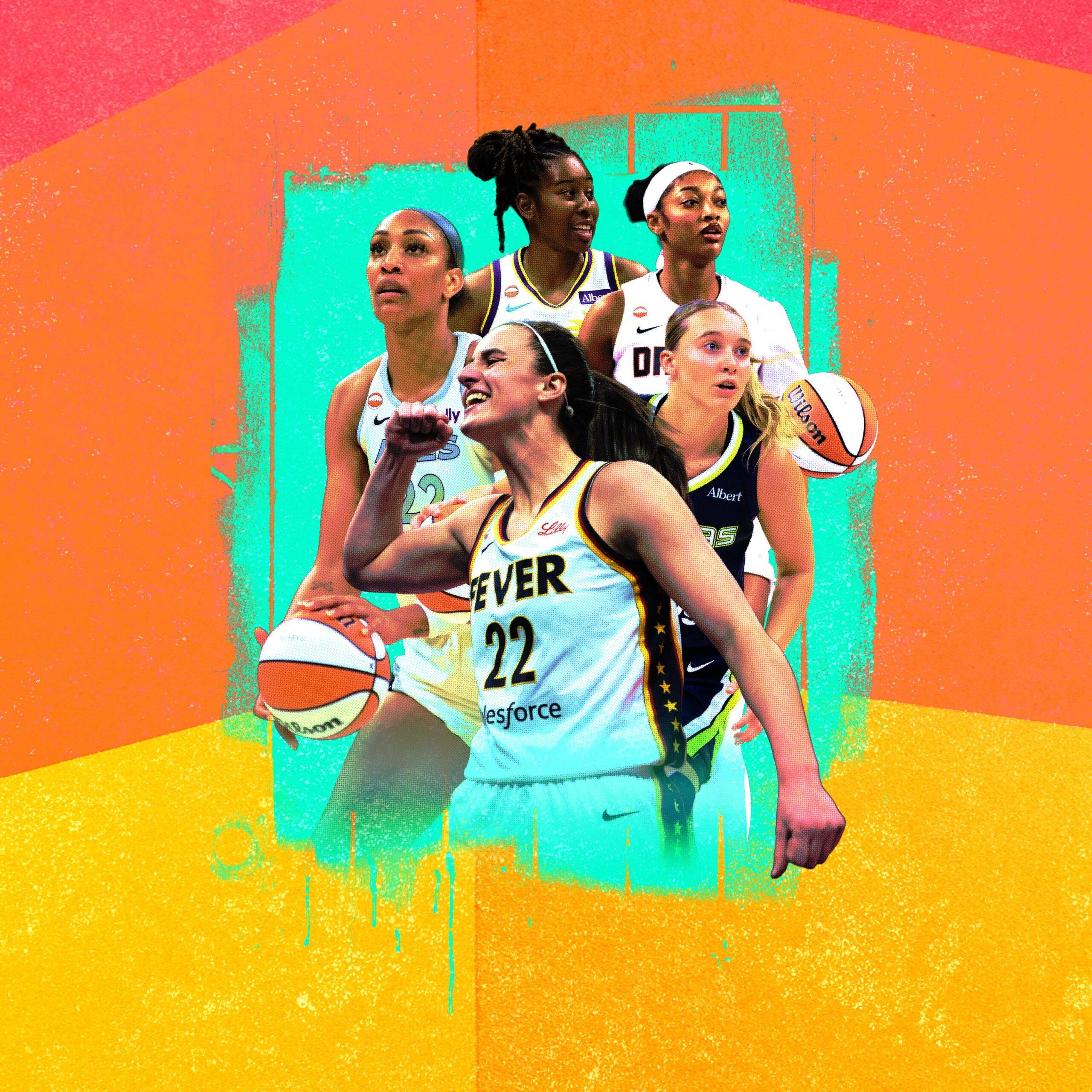

Entering its 30th season, the WNBA is finally aging out of its long adolescence—although, to be clear, it’s been paying its own rent for a while now.
If Caitlin Clark’s rookie season in 2024 was a dry run for the W’s adulthood, this is the real thing. The stars are brighter. The arenas are bigger. The league, with new teams in Toronto and Portland, is getting bigger. The CBA impasse that threatened to impede the league’s momentum was resolved at the buzzer with a new deal. The infrastructure around the sport is catching up to the talent and attention. Player salaries have increased sevenfold and are now into the seven figures, and refereeing reform should be ahead.
The offseason featured big, bold swings. Over $30 million in new contracts was doled out over a frenzied, contracted free agency period. The Sparks completed their rebuild, Angel Reese found a new home in Atlanta, and Satou Sabally joined New York, bolstering its Big Three.
A’ja Wilson, the best to ever do it, is negotiating new avenues to greatness. Clark and Paige Bueckers are waiting in the wings, threatening to make the perimeter the most important area of the W’s game, which had previously been defined by post dominance. The latter has already mastered the game. The former, with every logo bomb and crosscourt pass, is changing its very parameters.
Now that the offseason dust has settled and the season is almost here, it’s time to take stock. Here are 13 things we think will happen this season.
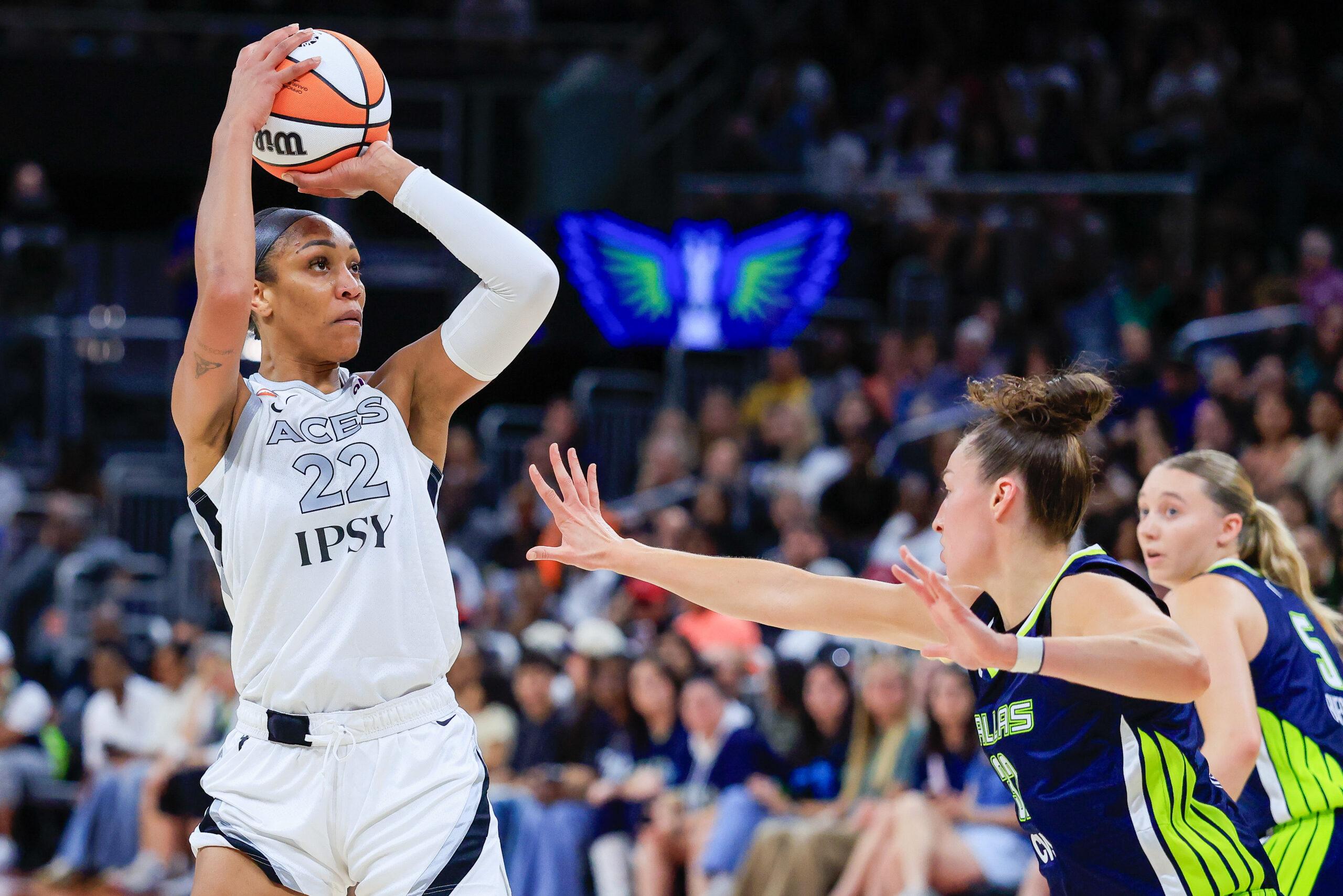
A’ja Wilson takes a shot over Dallas Wings forward Alysha Clark on May 3
1. A’ja Wilson will have the first 20-10-4 season in WNBA history.
This prediction may seem like a big swing since it's never been done—although Candace Parker came close in 2015—but all it would really take is some simple load redistribution for Wilson, who averaged 23.6 points, 10 rebounds, and 3.1 assists last year.
And Wilson has a knack for making the historic feel routine.
It’s not often that you see a GOAT case wrapped up by the time a player’s 29 years old, but watching A’ja now is like watching Michael Jordan during his second three-peat. Or Tiger after the 1997 Masters. Or the Great One during his heyday. The list is short. And Wilson, who has three titles and a record four MVPs and holds three of the top five PER seasons of all time, is on it.
Lately, Wilson has exuded the lightness that comes with having nothing left to accomplish. Now all she needs to play for is the process of renewal and betterment that accompanies her achievements.
Other than a few splashy magazine covers, we haven’t heard from her much this offseason.
She gets away from basketball. In those interviews she talks more about her teammates, about the feeling of being in training camp, than she does about her legacy.
Arguments about her greatness fall away, replaced by appreciation and anticipation for what's to come.
I’m particularly excited for A’ja’s ninth season because her athleticism, skill refinement, and cognitive mastery should all be peaking at the same time.
Every year, Wilson improves something new. After she shot 42 percent on low-volume 3s last year, has she refined that part of her game enough to face up regularly this year? What downstream impact could that have on her foul-drawing ability, which is already tops in the league? After mastering her reads as a stationary playmaker in the post, will she now set her sights on dumping the ball off to teammates on drives? Will she do it all? Could this be the season she notches her first triple-double?


How much should she pass out of doubles at all? Sixty percent of her catch-and-shoot jumpers were contested last year, per Synergy. And she made a solid 45.2 percent of them, just three decimal points below her accuracy on open shots.
Think about the signature shot of her career, her Finals game-winner against Phoenix. She was completely draped by two defenders. It didn’t matter.
The shape of Wilson’s season will depend on her teammates. Because of her combination of versatility and dominance, Wilson has a knack for morphing around her team's needs—not unlike LeBron, who, lest we forget, is also still doin’ it.
Last season, the Aces hovered around the .500 mark before trading for NaLyssa Smith, ripping off 16 straight wins to finish the regular season, and winning the title. As the aggressiveness and consistency of the guard play waxed and waned, Wilson was the one constant, doing what needed to be done.
The truth is that it’s too early to know the particular shape her greatness will take this year—only that she will be great.
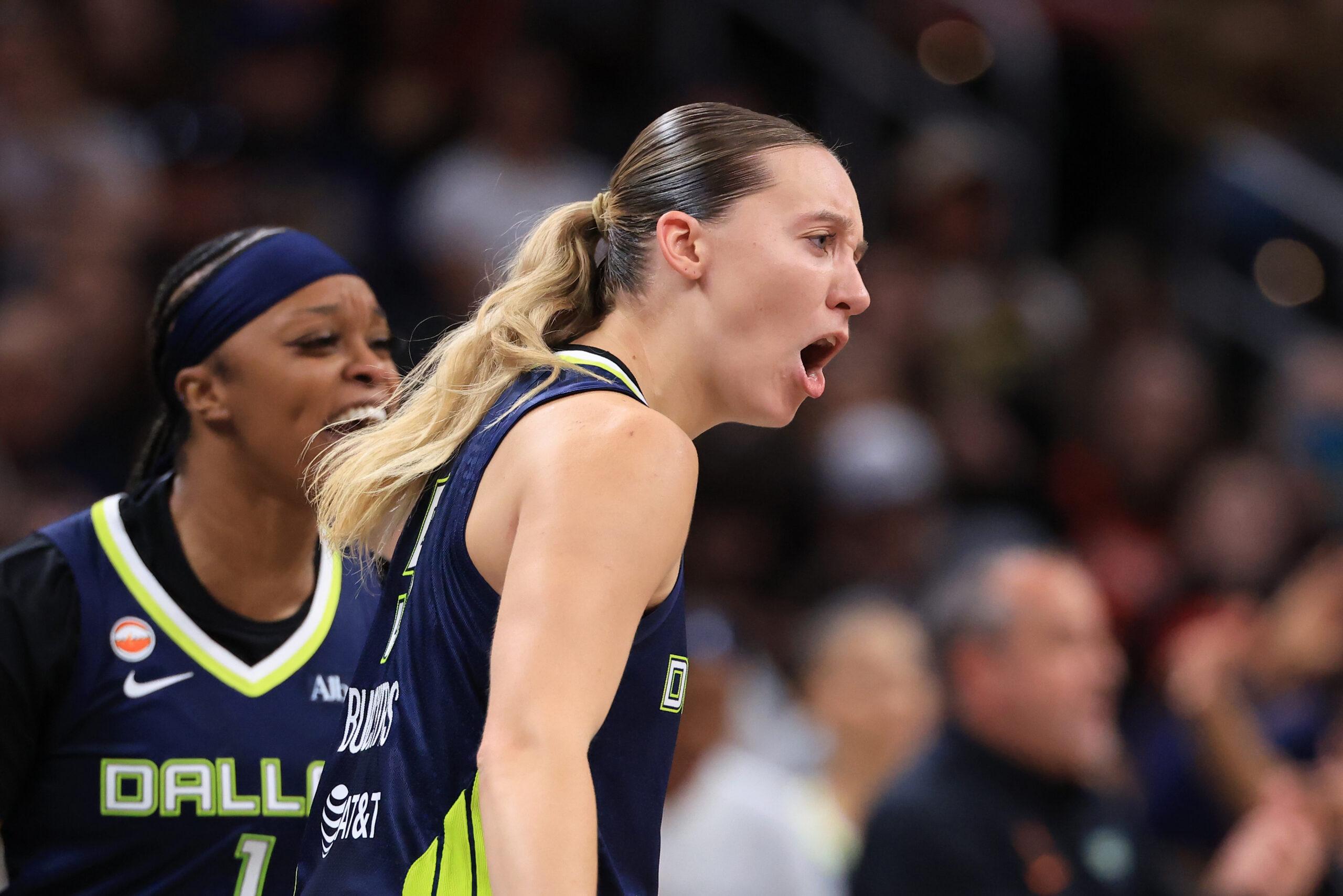
Paige Bueckers during a preseason game against the Fever
2. Paige Bueckers will finish in the top three in MVP voting.
There’s no point in picking against A’ja, but the MVP race still has plenty of intrigue. In the WNBA’s official general manager survey, a third of the executives chose Bueckers as the player they’d build around if they were starting a franchise today, ahead of Clark and Wilson.
When you add up the 24-year-old’s strengths—the technical proficiency, the processing speed, the unselfishness, the IQ, the two-way ability—it’s easy to talk yourself into her MVP case.
That's Bueckers's whole deal: She is exceedingly easy to talk yourself into.
She’s your favorite basketball player’s favorite basketball player. A coach’s dream. She sees everything they see and does everything they’d do, like a supercomputer spitting out expected value basketball decisions. She’s the stable middy to Caitlin’s deep 3.
Her fluency with both hands and her ability to shoot from anywhere on the court, even as a rookie, gave her maximum maneuverability. It’s an advantage she shares with Wilson: When you master the hard stuff, it’s easier to access the easy stuff.
Bueckers’s 19.2 points per game last season ranks sixth of all time among rookies, a decimal point ahead of her teammate Arike Ogunbowale, who is known for letting it fly, and tied with Clark, her less careful foil.
A third of Bueckers’s possessions last year came in the pick-and-roll, where she was one of the most productive creators in the league, even though she didn’t really have a reliable finisher to pass to. Now she’ll be playing alongside Jessica Shepard, who converted 68 percent of her rolls to the rim last season, and Alanna Smith, who can roll and pop.
Her new head coach, Jose Fernandez, will also challenge Bueckers to push down on the accelerator and score even more, while encouraging her to fine-tune her efficiency by taking more 3s.
While Bueckers shot an average of 33 percent from beyond the arc last season, she shot 44 percent on unguarded catch-and-shoot 3s—the kind of look that will be far more available to her on a supercharged Wings roster designed to make the postseason.
Bueckers is already the globe-trotting it girl of the WNBA. There are very few people who can stand in her way in an MVP race.
That said … Caitlin Clark is probably one of them.
3. Playing off ball will transform Caitlin Clark.
There are more technically proficient guitarists than Jimi Hendrix. But none of them had his imagination, feel, or penchant for risk-taking, which made his instrument seem less like an inanimate object and more like a living, evolving thing.
Clark’s the same way: a player whose logo range and playmaking feel have changed the very shape of the game.
And no, despite the insistence of YouTube slop, Fever coach Stephanie White is not a sleeper agent for the WNBA’s old guard, activated to cage Clark’s most exciting qualities. White is, however, a ball knower who had a front-row seat to Clark’s Iowa wizardry as a broadcaster and realizes that sometimes the best way to get her the ball at the end of the possession is to have her give it up in the beginning.
There are times when Indiana taps into the seamless, unencumbered quality of Clark’s Iowa days, but it takes a lot more work than it did then. Whereas Clark looked free at Iowa, in a Fever uniform, she often looks overburdened. There’s a Hawkeyes-in-molasses quality to Fever games. This is often chalked up to the WNBA’s physicality, but it’s not just that.
Clark is indeed overtaxed with offensive responsibilities. Her creation burden has essentially gone up 20 percent as a pro, while her off-ball productivity has gone down 17.5 percent. That leads to a harder shot diet with less fluidity and more predictability. No wonder her efficiency has suffered and her injuries have worsened.
Clark has said so herself: "It is exhausting, bringing the ball up 94 feet versus pressure every single time. So we certainly need to find somebody that can handle the ball a little bit and give me a little bit of a break."
According to Synergy, Clark has scored just six times off cuts in her WNBA career. Skill issue? Come on. Clark was an excellent cutter in Iowa, punishing top-locking defensive schemes and countering defenders who read the play instead of the player:
White wants to play no. 11 pick Raven Johnson at Clark's position so the third-year guard can play off the ball. That change isn't supposed to suppress Clark—it's supposed to unleash her. There's a Steph Curry inside Clark somewhere. So why should she lean into Trae Young–style heliocentric ball dominance, which becomes predictable by the postseason?
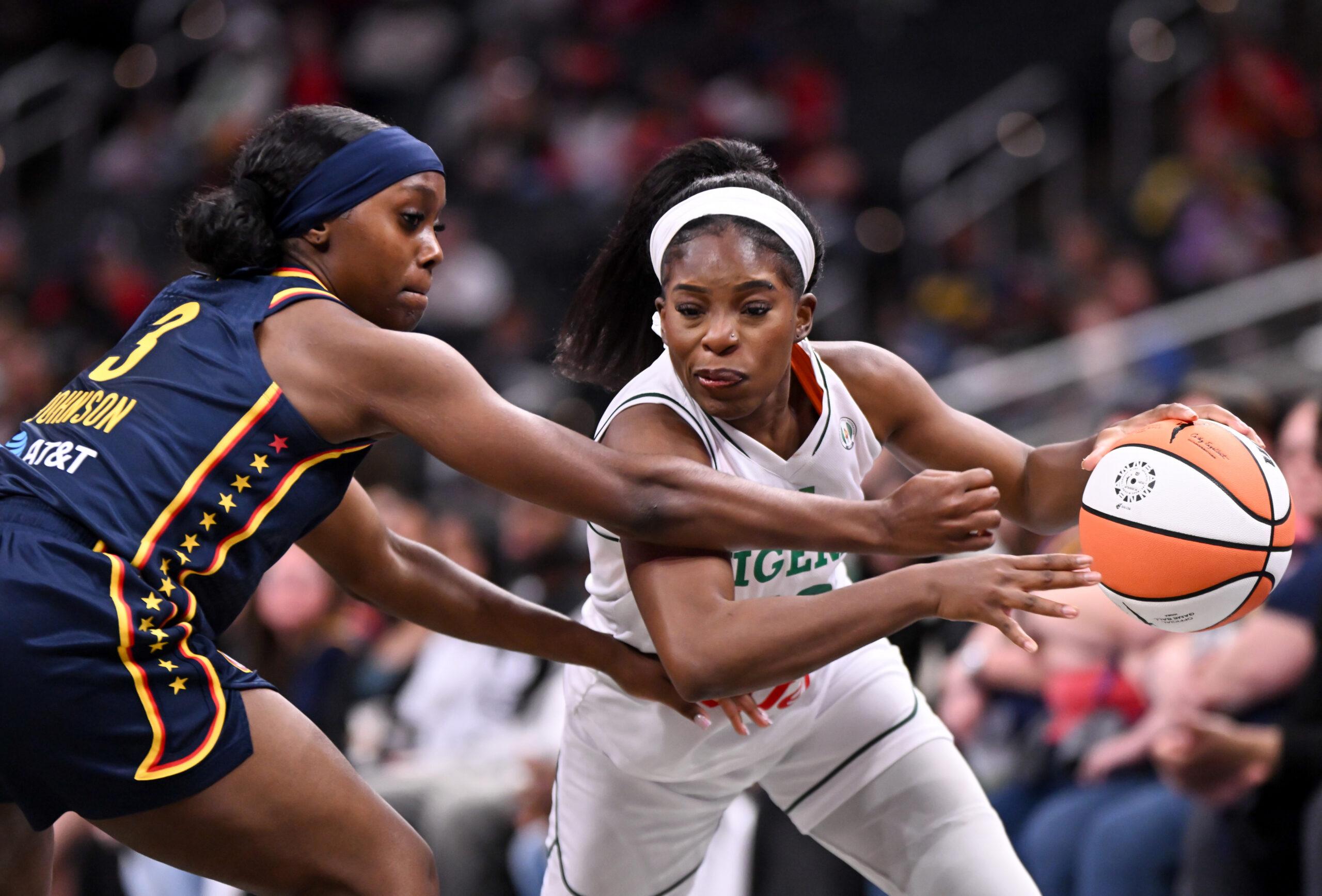
Raven Johnson fouls Promise Amukamara during a game on May 2
4. Raven Johnson will break Tamika Catchings’s rookie steals record.
The Fever’s first-round pick won’t just take the pressure off the offense; she’ll supercharge the defense, too. In fact, she might end up being one of the best rookie defenders ever. Can she break Catchings’s steals record? In fairness, she will have an extra 12 games to do it.
She was already blowing up dribble handoffs, denying cutters, helping on the weak side, and locking opponents down one-on-one in the preseason. She’s a freewheeling nightmare in help and a one-woman blockade in transition. As her time in South Carolina proved, Johnson can guard all kinds of players—from 6-foot power guards like Cotie McMahon to speedy shot creators like Mikayla Blakes to do-it-all wonders like Sarah Strong. Take a look at these early highlights to get a taste of what she can do with the Fever:
Combine Johnson’s versatility and IQ with White’s defensive acumen and creativity, and you’re cooking with gas.
5. Jonquel Jones is going to have an early-30s renaissance.
Last season, Alyssa Thomas was the beneficiary of the Mercury's modern offense, which finally maximized her skill set and gave her a career year at 34. Jonquel Jones, the 32-year-old former MVP, could have a similar renaissance under the guidance of new Liberty head coach Chris DeMarco, a former Golden State disciple who had a front-row seat to the positional revolution the Warriors shaped.
Despite her desirable size and touch, Jones is a good but not great post-up player and roller. Like Thomas, she’s an MVP-caliber player who was cursed by positional convention to play a limited role that didn’t maximize her best qualities.
And look, it’s not like Jones has been relegated to thumping the ball into the floor on the low block, possession after possession. By the numbers, her last two seasons in New York under Sandy Brondello were her best from a playmaking and shooting perspective. But they also left something to be desired. She was used like the W’s greasiest cog, the connector between Breanna Stewart and Sabrina Ionescu as opposed to a hub unto herself. She ended last year as New York’s most efficient yet underused starter. That’s exactly the kind of offensive wrinkle DeMarco was brought in to smooth out.
Jones initiated the pick-and-roll, traditionally a role that’s unusual for her position, a total of 15 times last season. But I’ve already seen her do it multiple times in just two preseason games this year, with Ionescu and Stewart setting screens for her:
Although it’s early on, the results have been predictably blistering. Jones, at 6-foot-6, can see over the competition, and her targets can, too—the Liberty roster has five rotation players over 6-foot-4. DeMarco has a lot of height to play around with, and he hasn’t shied away from experimenting. Han Xu, at 6-foot-11, has shared the floor with Jones and Stewie at different times this postseason. This year’s Liberty offense, which has modern giants roaming the floor, could be downright extraterrestrial.
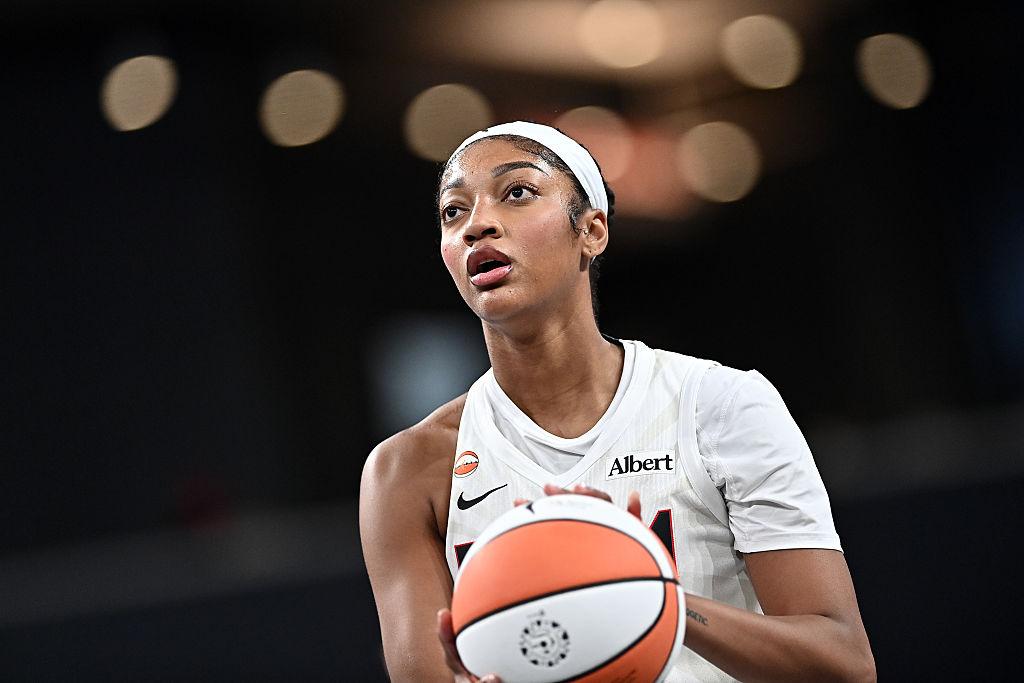
Angel Reese shoots a free throw in a game against the Washington Mystics on May 3
6. Angel Reese is going to have an All-WNBA season.
The EPIC (exceptional performance on initial contract) provision in the new CBA, which allows All-WNBA or MVP players on rookie contracts to sign max extensions in their fourth year, is going to give Dream GM Dan Padover the kinds of problems he used to pray for.
My favorite piece of training camp highlight bait this year has been clips of Karl Smesko working with Angel Reese on her jumper:
Reese’s form still has kinks, including the timing of her release, but it’s significantly cleaner than it was last year, when her feet clicked together, leading her power transference to go all over the place. According to a source close to Reese, part of the reason she was drawn to Atlanta was that she was intrigued by the progress Naz Hillmon made as a 3-point shooter under the tutelage of Smesko.
Hillmon, who hit one 3-pointer in 2024, made 1.2 per game last season and hit 3s at a 32 percent clip. Even if Reese’s trajectory isn’t as dramatic, this is the closest she has come to finding a shooting form that makes sense. The road map is there.
While there’s a dancing-about-architecture quality to reducing Reese’s game to her scoring ability, it’s impossible to ignore: Her weaknesses are visually dramatic and glaring. But if her finishing continues to trend upward—she shot over 50 percent on layups in her final 20 games last season—and she makes any gains on her range, the rest of her game will open up.
Reese is a bit of a basketball curio. She has a wicked motor, she has burgeoning playmaking ability, and she’s a historically talented rebounder. The virtue of that skill is as debated as anything about her. Rebounding is simultaneously vital and perfunctory—the thing that coaches lose sleep over and fans rarely give a second thought to, until it costs their team a game. It is valuable, but it isn’t venerated.
Offensive rebounding, to take it a step further, fell out of favor in the early part of the past decade but has made a comeback with analytically inclined coaches like Joe Mazzulla and Smesko. The math is simple: More 3s mean more missed shots to take advantage of. Draymond Green made defense cool again years ago, and Angel Reese has the potential to do the same thing with rebounding.
7. International scouting will keep the superteam era alive.
The new CBA, which increased the supermax salary to 20 percent of the cap, will make it increasingly difficult for teams like the Fever and Aces to keep their stars together.
But teams like the Liberty, Mercury, Valkyries, and Tempo won’t have nearly as many difficulties from a cap management perspective—and that’s because so many international players are covered by the reserve clause.
Per HerHoopStats, this is what it means to be a reserved player:
If a player’s contract has expired but they have three or fewer years of service in the WNBA, they become “reserved.” That means that they can only negotiate with their previous team and are not allowed to discuss terms or sign with anyone else (unless released).
The reserve clause typically applies to international players who are signed as free agents to short-term deals and players drafted to the league who weren’t offered a qualifying offer to extend their rookie-scale deals to a fourth year.
New York not only kept its Big Three intact but also convinced Satou Sabally to take a pay cut to join them. That left the Liberty with over 62 percent of their cap allocated to four players, a math problem they’ve attacked by signing multiple players from overseas. If Raquel Carrera and Pauline Astier, two 24-year-old guards from Europe, make New York’s final roster, they’ll likely sign team-friendly deals that expire.
That puts international standouts heading into their second contract in a bind: They can either go back overseas or agree to a team-friendly extension with their current WNBA team—which can now offer competitive rates for them to stay stateside.
The Valkyries just re-signed Janelle Salaun and Iliana Rupert, two 24-year-old Most Improved Player candidates from France, to two-year deals this offseason, putting them in a healthy position to pair free agent acquisition Gabby Williams and budding star Veronica Burton with a bona fide star next offseason.
The Tempo, who already have one of the cleanest cap sheets in the league despite doling out two max deals for Marina Mabrey and Brittney Sykes, still have $2 million left over to pay Kitija Laksa, Lexi Held, or Maria Conde—all of whom they’ll have exclusive negotiating rights with.
With the introduction of the EPIC provision and salary increases at the top of the first round, signing international players is one of the few remaining avenues to find cheap talent in the league.
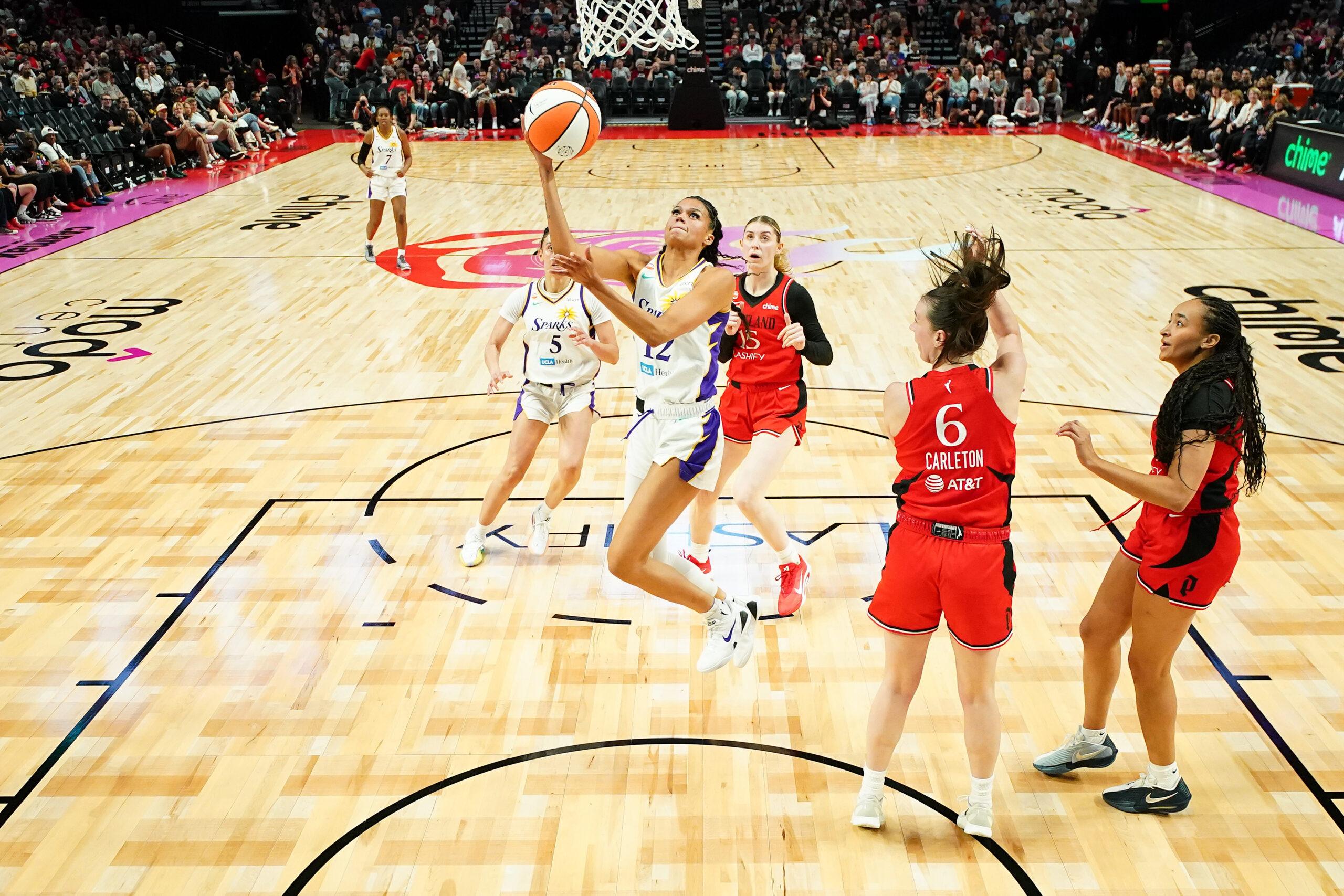
Rae Burrell of the Los Angeles Sparks lays up a shot as Luisa Geiselsoder, Bridget Carleton, and Haley Jones look on during a game on May 3
8. The Portland Fire will have the W’s worst defense.
Sure, Bridget Carleton led the Lynx in charges drawn last season, and a perimeter rotation featuring Carla Leite and Sarah Ashlee Barker can put the brakes on speedier guards. But the Portland Fire, a new expansion team, have so many other holes that can be exploited. Their defense is a buffet platter that should be inviting to just about any kind of player. Movement bigs can set their sights on Luisa Geiselsoder, one of the worst pick-and-roll defenders in the league. Back-to-the-basket bigs will post up Megan Gustafson. Got a Jackie Young or Kahleah Copper type? Great! The Fire have a Karlie Samuelson for them to drive around or through or shoot over. There really is something for everyone!
9. Sonia Raman will win Coach of the Year.
Look, I know this race is jammed with good candidates, and the odds are stacked against a rookie head coach on a rebuilding team. But Raman’s system empowers guard creation, and her coaching style emphasizes building players up. If she turns Lexie Brown, a career floor spacer, into an on-ball threat, and she manages to revive Zia Cooke’s career … I am going to start a conversation about her COTY candidacy.
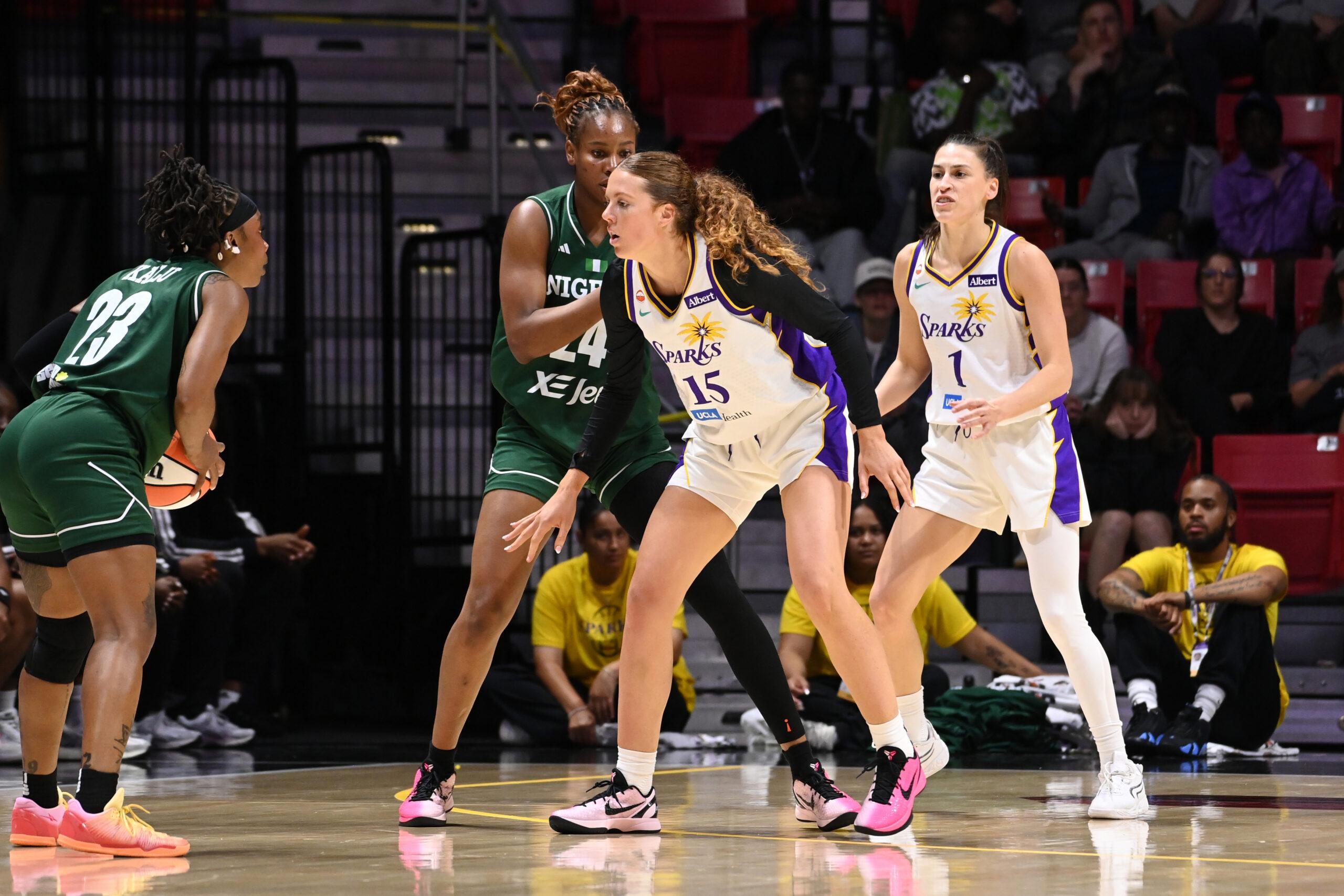
Amelia Hassett plays defense during a game against the Nigeria national team
10. Amelia Hassett will be a steal.
Only two college players on NCAA tournament teams had a block and a 3 in at least 25 games last season. One was Sarah Strong, the do-it-all National Player of the Year. The other was Amelia Hassett, Kentucky’s jack-of-all-trades wing, who was drafted by the Sparks in the third round and subsequently waived two weeks ago.
Role players who can pressure the rim, space the floor, and protect the paint are still a rarity in the WNBA. It’s why Alanna Smith snagged a seven-figure deal from the Dallas Wings this offseason. In college, Hassett shot 80 percent on tips and layups and 36 percent from behind the arc, and she regularly guarded the likes of Madison Booker and Mikayla Blakes. If she can adjust to the physicality of the WNBA, she could turn into a more perimeter-oriented, Dearica Hamby–esque skeleton key who unlocks versatile lineups for a title contender.
11. The Tempo will make a splashy midseason trade.
I can’t say yet whether it’ll make them better or worse.
But for an expansion team, the Tempo have a lot of highly specialized players who fit together on paper. Pairing Brittney Sykes, a north-south driving terror who led WNBA guards in free throw attempts before getting traded to Seattle last year, with Marina Mabrey, one of the league’s best spot-up shooters, makes intuitive sense—even if it cost more than a million dollars to nab each one. Julie Allemand is one of the best pick-and-roll passers in the league, while Nyara Sabally is one of the best rollers. Temi Fagbenle is an excellent post-up player, and Aaliyah Nye is an ace 3-point shooter, especially from the corners.
By the time the deadline rolls around, the Tempo will know whether they’re another frontcourt piece away from making real noise or if the roster just doesn’t have enough talent to compete. At that point, they’ll be well positioned to pivot their focus to increasing their lottery odds in the 2027 JuJu Watkins sweepstakes: flush with the kinds of skilled role players that desperate title teams will give up premium returns for and incentivized to race to the bottom of the standings.
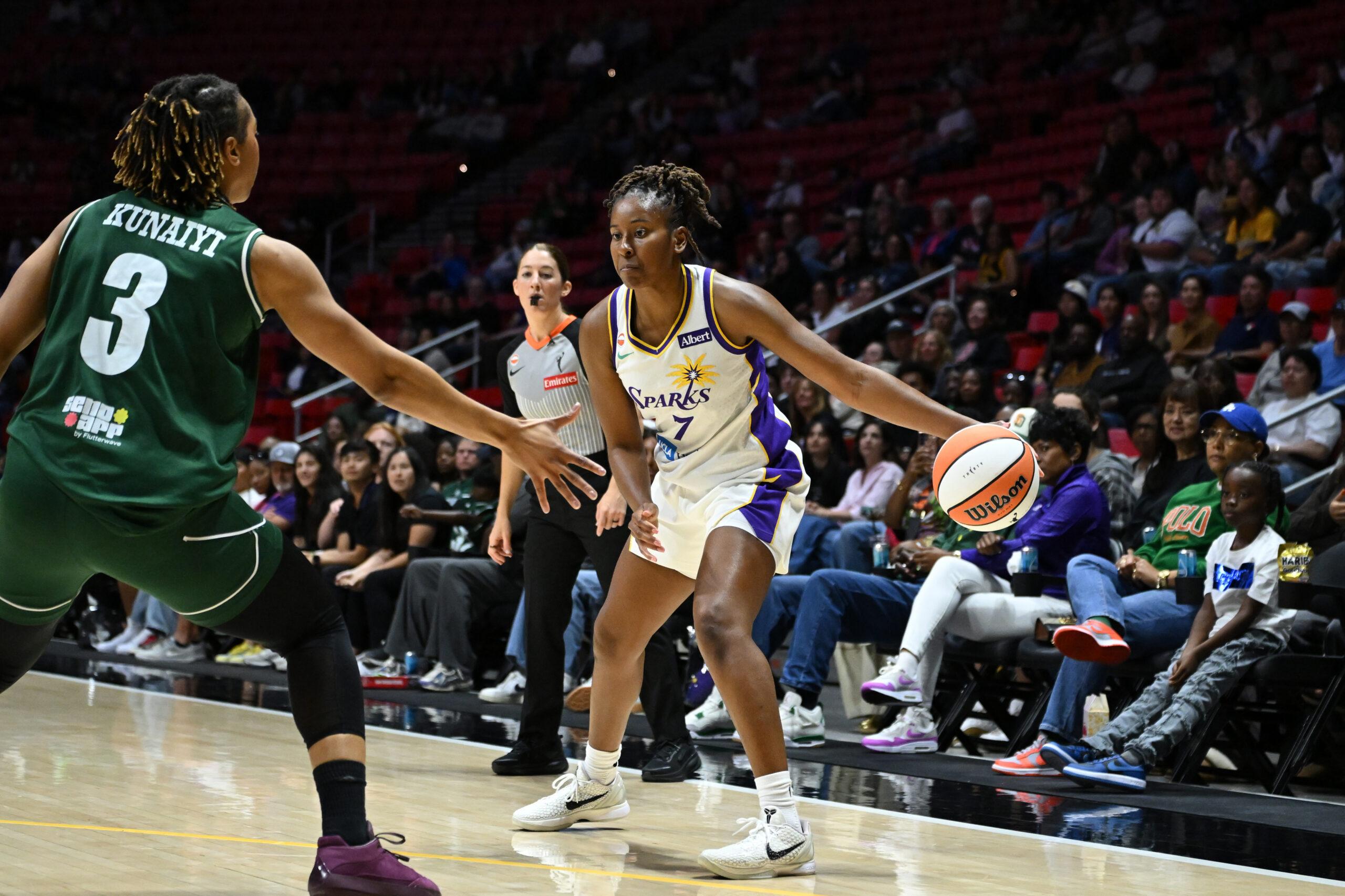
Ariel Atkins dribbles the ball during a game against the Nigeria national team on April 25
12. Ariel Atkins is about to have an “It’s so over, we’re so back” season.
If you have smoke for the Los Angeles Sparks’ reboot, I understand. On its face, the Sparks’ rebuild flies in the face of everything I believe about team building. They have eschewed patience and player development, trading young players on team-friendly deals for aging stars for the sake of win-now mode.
In 2025, the Sparks traded the no. 2 pick that became Dominique Malonga for Kelsey Plum, a player 11 years her senior. So if this era of Sparks basketball returns no titles, they will be judged harshly, and rightfully so.
But if you accept that this is the path that the Sparks have chosen, you also have to acknowledge they’re doing a pretty good job of executing their new vision. Because the more I think about the particulars of this offseason’s Ariel Atkins trade, the more I like it.
The Sparks used advanced stats to justify trading Rickea Jackson, the no. 4 pick in the 2024 draft, for the 29-year-old Atkins—and I’ll do the same. In 2025, the Sky dealt the no. 3 pick—rookie All-Star Sonia Citron—and a 2027 pick swap for Atkins. But Atkins was overburdened and injured in Chicago last season, and she became a punch line in what may go down as one of the worst trades in WNBA history. After one season with the Sky, Atkins is once again the veteran in a deal that traded away a young player. But the situation she’s arriving in should be completely different this time.
In Chicago, a thin point guard rotation was decimated even more by Courtney Vandersloot’s season-ending injury, and Atkins was forced into a primary initiator role after years as a 3-and-D wing. She shot 21 percent on 3s off the dribble and ran more pick-and-rolls than she had since 2021. And in a quixotic attempt to overcome Chicago’s lack of spacing, she shot a career-low 55 percent from within 3 feet—15 percent worse than her prior season in Washington.
But Atkins still shot the ball well on catch-and-shoot 3s (even though 57 percent of them were guarded). And that’s what Lynne Roberts’s analytically inclined offense—with Plum and Nneka Ogwumike as the primary engines—will require from her.
The preseason chemistry and fit have been promising. Atkins can nail 3s, run a touch of pick-and-roll (an aspect of her game that improved in Chicago), dump the ball off to bigs on drives, and attack closeouts—exactly what you want from your third option. For Atkins, who won a title with the Mystics when she was playing a similar role next to Elena Delle Donne and Kristi Toliver, this move is a return to first principles.
13. The Aces will win again and cement their dynasty.
… I’m not overthinking this. I’m going with the best player in WNBA history and the team that just won the title. The Fever, Liberty, and Wings will have their time. If Napheesa Collier recovers well from her ankle surgeries, the Lynx could make some noise, too. But A’ja Wilson isn’t interested in passing the MVP or title torch. The rest of the league will have to pry it away from her.