
The San Antonio Spurs stunned the basketball world in Game 1 of the Western Conference finals, outlasting the defending champs in a double-overtime classic that announced the Spurs as legitimate threats to dethrone the Oklahoma City Thunder. But the Thunder answered in Game 2 the way champions do—by leaning on their defensive identity, their backcourt depth, and one of the most impressive home-court advantages in the NBA. As the series shifts down to the land of Duncan and Manu, let’s check out a handful of early-series trends that will ultimately determine who wins the West.
Stephon Castle’s Turnovers
Here’s a stat. In the history of the NBA conference finals, there have been only 14 instances of a single player recording nine or more turnovers in a single game. Stephon Castle now has two of them.
The Spurs’ second-year guard coughed it up 11 times in Game 1, followed by nine more turnovers in Game 2. His 20 total turnovers in the first two games is unprecedented. No other player has ever done that in two consecutive playoff games in all of NBA history.
Castle’s poor ball security is the biggest reason the Spurs have 19 more giveaways than the Thunder so far in the series. In big-time NBA games, that kind of bloated turnover differential is a massive deal—especially in this matchup, as winning the turnover battle has been a vital part of the Thunder’s success over the past few seasons. The Thunder's defense has long been the team’s signature weapon, and they're at their best when they’re stealing the ball, deflecting passes, and turning live-ball turnovers into buckets on the other end.


Shai Gilgeous-Alexander had five steals by himself in Game 1. Ajay Mitchell and Cason Wallace each had four off the bench in Game 2. The Thunder backcourt is full of thieves, and they are currently feasting on the sloppy playmaking of one of the Spurs’ brightest young stars.
If that continues, San Antonio will have a hard time winning this series. But the Spurs’ biggest adjustment might come down to the injury report more than anything. Castle’s stunning turnover total has a lot to do with the absence of De’Aaron Fox, the team’s starting point guard, who has yet to play in this series due to an ankle sprain. And Dylan Harper’s hamstring injury, which forced him out midway through Game 2, only compounded the issue.
The downstream effect is obvious. Without his usual backcourt mate, Castle has to play more and use more possessions. More touches and higher usage spell more turnovers. That’s reflected here:
Stephon Castle’s Increasing Workload
But the secondary effects of those absences are also important. From OKC’s perspective, the injuries to Fox and Harper enable the best defensive backcourt in the league to zero in on San Antonio’s 21-year-old playmaker. In normal conditions, Spurs coach Mitch Johnson decorates the floor with multiple slashing guards who are capable of making big plays against great defenders, which helped neutralize the Thunder defense throughout their regular-season matchups. But as evidenced by Jordan McLaughlin’s minutes in Game 2, that perimeter attack is far easier to defend without Fox and Harper.
Alex Caruso Cashing In From the Corners
Caruso has been marvelous for OKC in this series—there’s no other way to put it. Of course he’s doing all of the hustle and defensive stuff that’s earned him his reputation as one of the league’s top role players, but in this series, his 3-point shooting has been ridiculous as well. So far in the West finals, Caruso has made 11 of 18 triples, which would be great for literally anyone but is especially great for a guy who made less than 30 percent of his 3s during the regular season. Look at this shot chart. What jumps out?
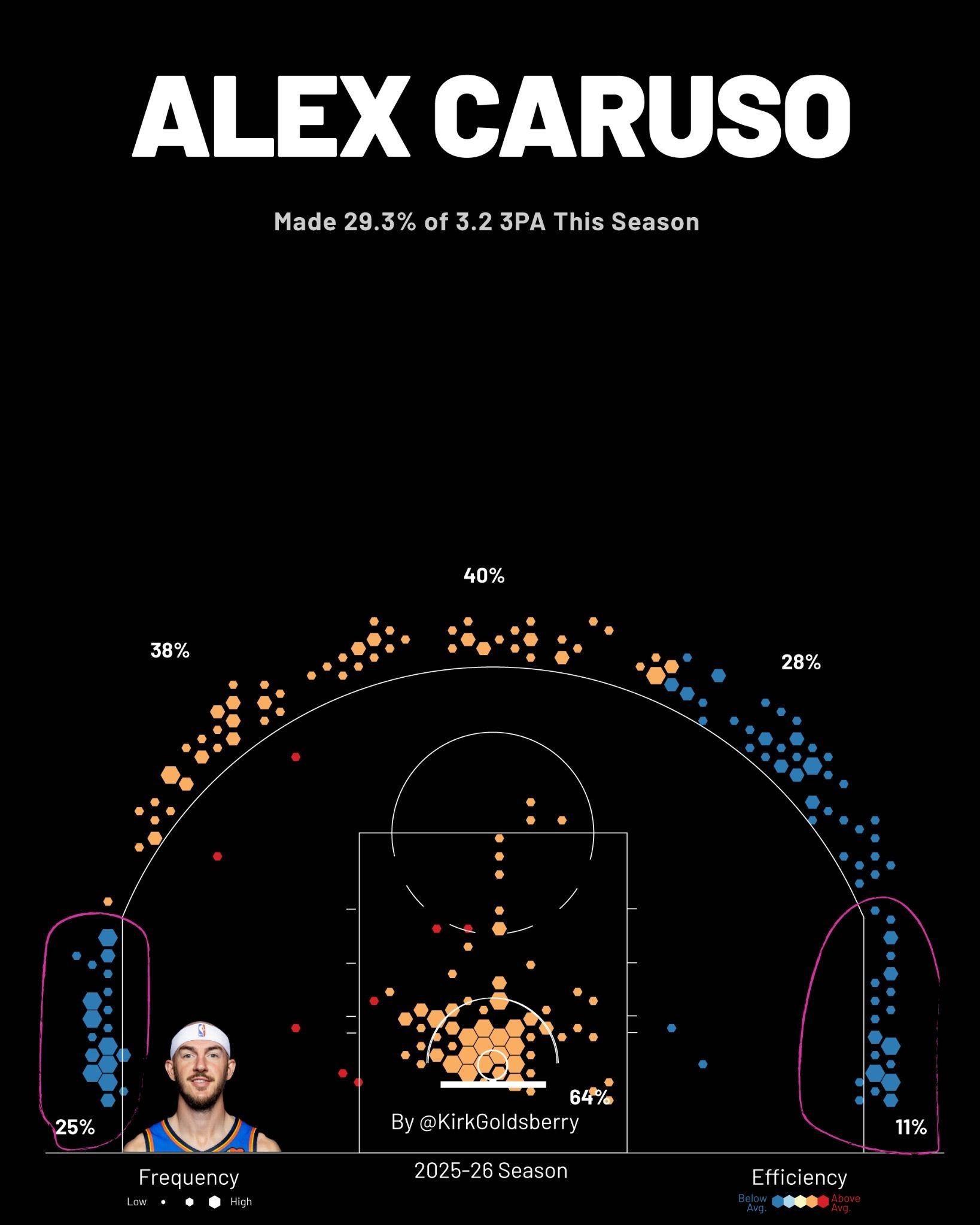
For me, it’s his woeful corner numbers. All season long, Caruso made just 19 of his 82 tries from the short corner areas—that’s just 23.2 percent. But in this series, he’s gone full Klay Thompson, sinking 6 of 9 attempts in this vital area.
Caruso’s shooting limitations normally limit his playing time, but his ability to knock down these looks helps Mark Daigneault keep Caruso on the floor, which helps OKC spread out San Antonio’s defense and bolsters the Thunder defense on the other end. If Caruso continues to shoot like this in San Antonio, he’ll earn more and more playing time. If he cools off or regresses to the mean, the advantage could tilt back toward the Spurs.
The Wemby-less Minutes
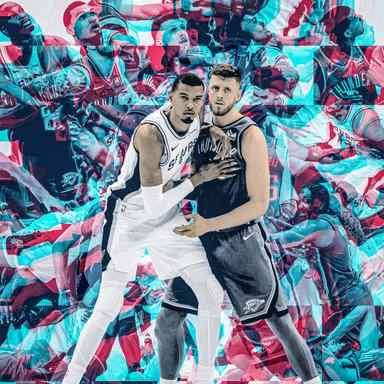
After a face-melting performance in Game 1, Victor Wembanyama was relatively subdued in Game 2, and if you’re looking to identify the single most important performer going forward in this series, you probably need to crane your neck.
The Spurs’ 22-year-old superstar remains their most important force on both ends of the floor—duh—and the data makes that abundantly clear. The Spurs are plus-17 in his 86 minutes and minus-19 in the 20 minutes he’s been off the floor. It’s that simple.
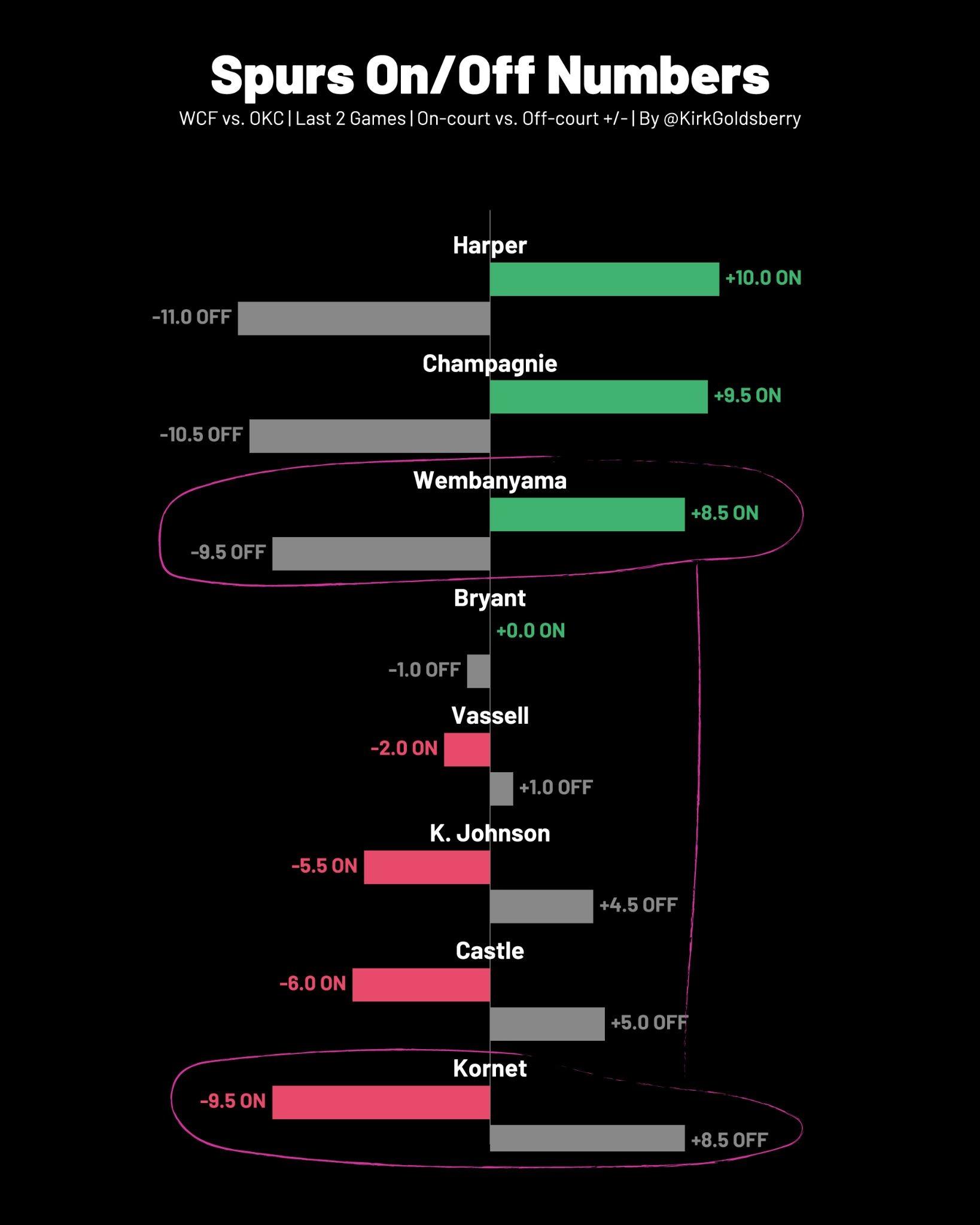
Luke Kornet has been an awesome addition to the Spurs bench this season, but as San Antonio has risen up to face the defending champs in the conference finals, Kornet’s minutes have been dicey. OKC has a net rating of plus-45.1 in Kornet’s 20 minutes in the first two games. When Wemby is out there, that massive figure drops to minus-6.1.
In other words, when the cat’s away, it’s been Magic City for these Thunder bros. If San Antonio wants to win these next two games at home, it must find ways to make the Kornet minutes less of a disaster.
The Leg Plague Continues
Here we come to the saddest part of this series. Both teams are now at risk of losing two critical players for key stretches of this epic matchup. Harper and Fox are dinged up for the Spurs; Jalen Williams and Ajay Mitchell are dinged up for OKC. These injuries arrive as part of a broader trend in basketball.
Last week, I wrote about the league’s growing crisis of lower-body injuries, and now this incredible series is unfortunately turning into another demonstration of why this phenomenon is damaging the NBA product. In Game 2 alone, Mitchell, Williams, and Harper all hobbled off the court. Fox hasn’t made an appearance. These are not random players. Each team is now missing two of its top four scorers.
We should be disappointed, but should we be surprised? That’s the biggest question. Game 1 of this series was an absolute classic, but it was also a double-OT marathon, with multiple players setting season-high marks in minutes and workload. Then, less than 48 hours later, everybody is asked to lace ’em up and do it again.
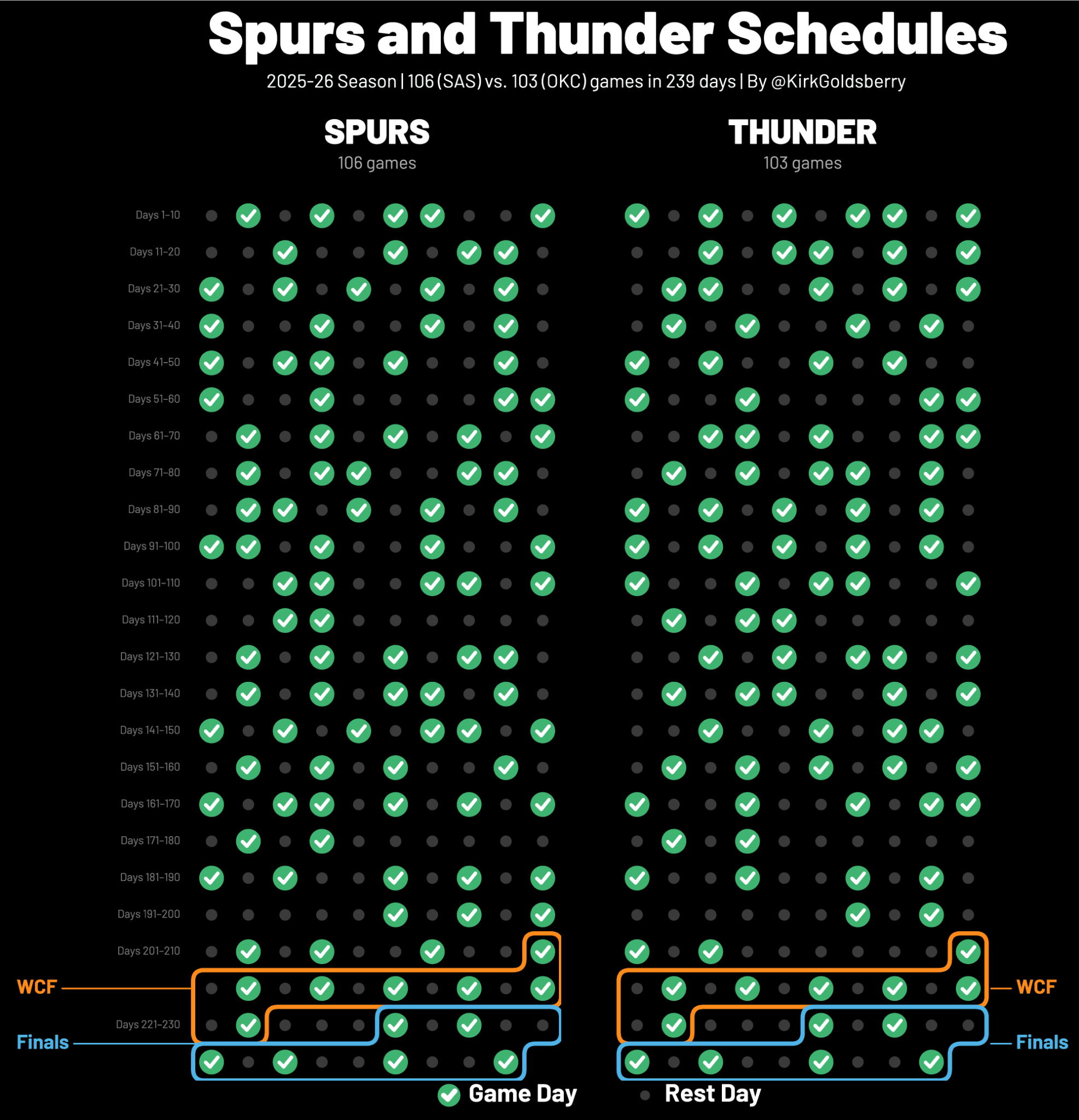
Maybe it’s a coincidence that three dudes left Game 2 with lower-body injuries. Or, hear me out—considering the plague of leg injuries that has marred this entire NBA season, not to mention last year’s playoffs—maybe the league should reconsider how compact the postseason schedule is. The insistence on playing these hyperintense games on an every-other-day basis is a choice. The league puffs out the Finals schedule to 16 days, and five of the seven games in the Finals include two full days of rest beforehand. But this round? Nah.
It’s worth questioning. Is this cadence risky given where we are on the calendar? Game 3 will be the 96th game of the season for both Keldon Johnson and Julian Champagnie. If this series goes to seven and the Spurs make the Finals, both guys would play at least 103 games this year.
Is this too much basketball? I’m no sports scientist, but the evidence is starting to become too painful to ignore. The worst thing that could happen to this tremendous series would be for the biggest reason for victory to simply be lower-body health as opposed to basketball brilliance.
OKC’s Big Choice
Isiah Hartenstein barely played in Game 1. Then he provided a massive boost in Game 2. Meanwhile, Chet Holmgren spent most of crunch time in Game 2 on the bench. As the series migrates to San Antonio, one big question is how Daigneault will deploy the Thunder frontcourt. But the actual answer is less important than the versatility at his disposal.
Holmgren and Hartenstein would each be the best big on a vast majority of NBA teams. But OKC has both, and their vastly different styles provide the team with wildly different strategic options on both ends of the court. In cases where the refs are allowing physical play, Hartenstein is the clear choice. He’s big enough to literally restrain Wembanyama in ways that Holmgren simply cannot. In cases where the whistle is tighter and finesse is required, Holmgren—who can space the floor on offense—is a better option. That brings us to …


The Zebra Effect
Nobody wants to read about the refs, but any column like this would be incomplete without addressing the Hartenstein-Wembanyama dynamic. Tony Brothers and his crew looked the other way while Hartenstein grabbed, held, and yanked Wembanyama throughout Game 2. It was a great game plan by OKC; if they’re not going to call it, why wouldn’t you do this all night?
Still, plenty of observers were shocked to see so much of it go uncalled, especially in the context of the soft contact that this league’s big superstars have turned into fouls for decades. Like it or not, contact allowances are now a major factor in the NBA playoffs, and especially in this series. If OKC is allowed to limit Wemby's mobility with brute force that borders on offensive line play, it will have a great chance to win this series. If the officials call it tighter in San Antonio, the Spurs do.