

Din Djarin introduced himself to the Star Wars–watching world with two quick kills and one killer line: “I can bring you in warm, or I can bring you in cold.” The bounty hunter’s target opted for the former, and so did the Disney+ audience. That tantalizing first scene of The Mandalorian—a cold open, ironically—brought millions of spectators into the Star Wars streaming ecosystem, and they warmed to Mando immediately.
In The Mandalorian and Grogu, Djarin draws a second difficult assignment: Bring the franchise’s fans into theaters for the first time this decade. He recites the same sizzling, chilling line on the big screen, but unlike his grand entrance to TV, Mando’s movie debut will leave a lot of viewers cold. Star Wars still needs movies, but it might not need this one. The Mandalorian and Grogu is a Star Wars stopgap.
On November 12, 2019, The Mandalorian landed on Disney+, and the Mandalorian landed on an ice planet, where his quarry had gone to ground. Six and a half years doesn’t quite qualify as an opening-crawl-caliber “long time,” but Star Wars was in a different place before the pandemic, as was its corporate parent. Disney’s streaming service was brand-new. So was the concept of small-screen, live-action Star Wars, Holiday Special aside. The Skywalker saga was still unresolved, with The Rise of Skywalker—the fifth Star Wars movie in four years—nearing release. Viewers didn’t know the name of the Mandalorian or the snowy setting he raided, let alone the little green guy who debuted in the closing seconds of the series premiere. For a few agonizing months, they couldn’t even buy Baby Yoda merch.
Grogu, then canonically called “the Child,” became a breakout character as The Rise of Skywalker wilted. Amid the fallout from Episode IX, which salted the earth (like the surface of Crait) for any sequels to the sequels, the focus of Star Wars shifted to TV, where Jon Favreau and Dave Filoni’s show had found favor with fans and critics by tapping into a classic sense of Star Wars adventure without treading on territory that felt too familiar. Soon, The Mandalorian was the star of Star Wars—the face (or helmet) of the franchise and the centerpiece of an expanding streaming empire. It’s now possible to spend $600 on a Grogu animatronic toy. And the beskar-clad bounty hunter whose ascendance derailed plans for a Boba Fett film now has a big-screen Star Wars story of his own.
On Friday, The Mandalorian and Grogu will land in theaters, and the Mandalorian (and Grogu) will land on another ice planet. The quarry is different this time, and so are the stakes, in both the Star Wars galaxy and our own. With Mandalore reclaimed, the Darksaber destroyed, and Moff Gideon defeated and presumably (but not definitely) dead, Mando and Grogu lack a grand goal or a notable nemesis. But for Star Wars, the pressure is intense, and the opposition is powerful.
Beyond Bluey, Disney+ has slumped, and so has Star Wars: The streamer, whose subscriber counts are no longer disclosed, had a “bad 2025,” per a recent ratings analysis, thanks in large part to a “superhero/Star Wars viewership slide.” Compounding the problem, the “slowdown” in Star Wars movies that then–Disney CEO Bob Iger forecasted in 2018 turned into a total halt: No new Star Wars movie has hit theaters since December 2019. The Mandalorian nosedived in quality in its third season, which aired more than three years ago, and the constellation of streaming series that the show’s initial success spawned contracted as quickly as it had expanded. Coming more than a year after the franchise’s last live-action release (the finale of Andor), The Mandalorian and Grogu represents Lucasfilm’s lone new, non-animated project in 2026.
All of that backstory is sure to shape the reception to The Mandalorian and Grogu, and it probably played a part in the form the film took. But maybe a Mando movie was inevitable. The day after The Mandalorian launched, Alan Horn, then the cochairman and chief creative officer of Disney Studios, said, “The Mandalorian is already proving to be a big thing, so if that series proves to be so compelling that we reverse engineer it into a theatrical release, a two-hour film or whatever, OK.” Almost seven years later, that theatrical release has arrived, and “OK” is about the best one can say.
Why port Mando to a new medium now? “We all felt like it was time,” Filoni, who cowrote the movie and also serves as Lucasfilm’s president and chief creative officer, told Variety. “Star Wars came to life on the big screen, and I think no matter how good a show we made, you’d always feel like we were missing a dimension of it. I think it’s something we wanted, and these characters have really earned their way. … Fans the world over love these two characters, and it was time to give them their big adventure.”
Mando may have earned a feature film, but the timing of his move to the multiplex leaves a lot to be desired. The movie could be better, too. It’s best for us not to saddle The Mandalorian and Grogu with the blockbuster baggage of being the franchise’s long-awaited return to theaters, but Disney undoubtedly did so by scheduling it to break the box-office ice in advance of next year’s Starfighter. Even if you set aside the expectations that typically accompany marquee Star Wars releases, The Mandalorian and Grogu is a lightweight flick. It’s the inverse of a made-for-TV movie: made-for-movie TV. And what it adds to the series in cinematic polish, it subtracts in story and suspense. The combination of cute puppets, menacing monsters, and whiz-bang battles will satisfy some segments of the fan base that would like to see the baby, but most will miss the mystery and emotion that lent The Mandalorian its all-ages appeal.


When we last saw Din Djarin and, uh, Din Grogu, they were peaceably settled in a new homestead on the outskirts of Nevarro. But they hadn’t hung up their weapons and matching armor for good. In the Season 3 finale, Mando made a “business proposition” to Captain Carson Teva: As an independent contractor, Din would work for the New Republic, helping the overstretched good guys hunt down Imperial fugitives in the Outer Rim “on a case-by-case basis.” “It’ll never get approved,” Teva said, but evidently it did. The movie chronicles a couple of cases that are summarized by Sigourney Weaver’s Ward, a New Republic colonel who hands Mando his missions with a lot less panache than the late Carl Weathers’s Greef Karga. The second case is complicated by interference from the Hutts. To track down one pesky ex-Imperial—known only by a name on a card in a deck akin to the ones distributed to U.S. soldiers during the Iraq War—Mando and his deceptively old, pint-sized apprentice must rescue the imprisoned gladiator Rotta, Jabba’s jacked son.
Mando is more or less an off-the-books ranger of the New Republic—a role that was once slated for Cara Dune, before Disney removed Gina Carano from the planned spinoff faster than Ronda Rousey just removed her from the octagon. (Carano’s lawsuit for discrimination and wrongful termination was settled, and she, Filoni, and Favreau are apparently pals.) In some respects, the movie seems like a compressed season of The Mandalorian, but it’s actually less substantive than that description makes it sound. Favreau, who cowrote and directed the film, previously penned a fourth season, which was seemingly scrapped or backburnered because none of the numerous non-Mandalorian movie projects in development panned out. When the call came down to make movie stars out of Mando and Grogu, Favreau started a script from scratch. Thus, the movie constructs a separate, self-contained story that relies very little on awareness of what transpired in the show.
“It has a different feel than a season of television, which acknowledges that you’ve seen all three coming before,” Favreau told Collider, adding, “We wanted this to be an understandable enough stand-alone experience that if a fan wants to bring somebody who may not be as familiar, they’ll still have a good time.”
This is welcome, in a way; although the second season excelled at integrating The Mandalorian with the wider Star Wars universe, Season 3 arguably got overloaded with lore, as Filoni and Favreau continued to mine animation for material and set the scene for the sequel films. The movie is more of a return to the procedural format of Season 1. Which was fun! But that season’s sightseeing, fetch quests, and combat were complemented and balanced by a load-bearing, full-season superstructure: a memorable big bad in Gideon, Din’s deepening bond with the baby who began as his bounty, and incremental revelations about the leading duo’s backstories, beliefs, and abilities.
The Mandalorian and Grogu doesn’t reveal much of anything, either about the fan-favorite foundlings or about the broader conflicts in which they’ve been embroiled. Mando and Grogu don’t get up to anything that Mandalorian completists haven’t seen them do before. And don’t expect much insight into what they might do next. The movie’s marketing offered no hint of ties to ongoing or upcoming projects, and the film offers few surprises. There’s no stinger and no enticing setup for a sequel, a Season 4, or Ahsoka Season 2 (due out early next year). People mocked Solo’s explanation of how Han got his surname—did we need to know?—but a morsel of fresh info might have made the Mando movie seem more central to the saga. The upside of the movie’s cater-to-all-comers mandate is that no one watching will feel out of their depth. The downside is that there isn’t much depth to be found.
Now, there’s nothing wrong with a low-stakes sugar-rush romp, and that’s essentially what The Mandalorian and Grogu is going for. In that same Collider conversation, Filoni called it “kind of an entry point for kids,” which threatens to reignite the age-old (or age-young) debate about whether Star Wars is primarily for younglings (the greatest thread in the history of forums, etc.). Clearly, Star Wars has historically appealed to younger audiences, but it’s reductive to suggest that the series is exclusively for them. At its peak, its pull is universal.
Take Episode IV, for instance: a late-May release that became a summer sensation and captured kids’ imaginations like few other films. Sure, A New Hope delivers adorable droids, shiny lasers, and speedy starfighters, but it also offers character growth and real loss. Luke Skywalker evolves from farm boy bull’s-eyeing womp rats to rebel bull’s-eyeing the Death Star’s exhaust port; Han Solo goes from smuggler to savior; Obi-Wan Kenobi lays down his life for Luke and Leia after Alderaan is destroyed. A New Hope has existential stakes, an iconic villain and superweapon, an element of mysticism, and even a small, unintentionally incestuous spark of romance. In other words, something for everyone.
The Mandalorian and Grogu is more like what that epochal first film would have looked like if the whole thing had been about rescuing the princess and returning to Tatooine. The Mando movie isn’t, say, Young Jedi Adventures, but it’s squarely in the realm of pure popcorn entertainment that you might enjoy more if you turn off your prefrontal cortex or watch it before you finish developing one.
Favreau and Filoni lack the chops of the Andor writers room (and aren’t big believers in writers rooms in general), so it’s not a huge loss that the movie is fairly light on dialogue. There might be a great, Boys From Brazil–style Star Wars series or movie to be made about the messy aftermath of the Empire, but The Mandalorian and Grogu isn’t trying to be one. The penultimate (and strongest) episode of Season 3 set up the ex-Imperial warlord period that several 1990s novels explored in detail (shout-out to Zsinj), but Grand Admiral Thrawn’s arc is seemingly reserved for Ahsoka. Mando’s movie targets presumably behaved badly during their Imperial phase, but we know nothing about them beyond their former affiliation and current corruption. They’re just faces (or in one case, a name without one) on a card.
Less talking means more time for flying and blasting, and Favreau relentlessly stacks set pieces into a teetering tower. The movie fully manifests its director’s action-figure philosophy of Star Wars storytelling, as Din and Grogu repeatedly journey to a lightly sketched locale; send a series of henchmen, droids, or troopers packing; and depart after something explodes. Victory rarely requires much strategy, stealth, or finesse. In one scene, Mando and Co. case one warlord’s headquarters, which appears to be an impregnable, stormtrooper-patrolled stronghold; next thing we know, he’s breached the bad guy’s inner sanctum.
All in all, this adventure seems less like a precisely plotted tale than a theme-park ride. There’s a reason that those tend to be short: After a while, monotony and motion sickness set in. But The Mandalorian and Grogu runs longer than any of the films from the original trilogy—132 minutes—albeit shorter than any subsequent Star Wars movie.
Return of the Jedi laid the life forms on a little thick, with its menagerie of rancors, Kowakian monkey-lizards, Hutts, sarlaacs, Ewoks, and so on, but The Mandalorian and Grogu is an even more committed creature feature. There’s always a bigger fish … or serpent, lizard, or reptile. The “monster of the week” format from Season 1 was one thing; “countless monsters in one movie” is another. I prefer my monsters in moderation—one dianoga goes a long way—but your monster mileage may vary. If you consider six breasts better than two, then maybe the more monsters the merrier. But the latter half of the movie suffers from diminishing monster returns, and the thrill of watching stunt performers punch puppets wears off along the way. The whole film feels a bit like Rotta’s rigged Dejarik match: Like him, the audience is doomed to be worn down by infinite fights.
So what does The Mandalorian and Grogu do well?
Some of the action sequences are riveting—none more than the snow-planet pursuit that opens the film, a portion of which was added to Disney+ on Star Wars Day. The Mando movie may be a TV transplant, but in terms of looks and sound, it aces the “Should I see it in IMAX?” test. Most of the monsters and creatures look incredible and true to tradition, thanks to Favreau’s respect for practical effects and their storied practitioners, such as original-trilogy veteran Phil Tippett, who returns for some signature stop-motion action. And just as some of John Williams’s best work elevated the inventive but largely lackluster prequels, series composer Ludwig Göransson’s score classes up this cantina. From the remixed main themes to the marching-band brass of “The Pit Fight” to the synths of “Shakari,” The Mandalorian and Göransson goes hard.
The movie’s resolutely stand-alone nature extends to its Easter eggs, which are dialed down from their former frequency. “I love that they’re new characters, they’re not ones that came from the movies before,” Filoni told Variety about the members of Clan Mudhorn. They’re not that new anymore. Mando and Grogu have become legacy characters in their own right, and it’s a testament to The Mandalorian’s stamp on Star Wars that the movie’s callbacks are less often to the trilogies than to the streaming series that birthed the titular twosome.
Naturally, Filoni does draw on his animated oeuvre. Zeb Orrelios, the Rebels hero who made a minor cameo in Season 3 but never met the Mandalorian on-screen, now serves as his sidekick and copilot. Embo, a bounty hunter from The Clone Wars, evokes the mercenary Mando was before he formed a family. Filoni voiced him in the show; he doesn’t have to here because big-screen Embo is the strong, silent type. (Of course, Filoni’s Stetson-sporting X-wing pilot Trapper Wolf does distractingly surface in multiple scenes.) Rotta originated in The Clone Wars, and his relatives the Twins hail from The Book of Boba Fett. Maybe for the better, nobody needs to recognize these names to follow the film. The Mandalorian and Grogu is the Star Wars equivalent of a “Marvel Spotlight” project: It’s not tethered tightly enough to the tapestry of Star Wars for neophytes to feel lost.


Anyone who found Andor too human for their taste will be pleased by the movie’s more exotic cast of characters. I’ve stumped for more prominent roles for nonhuman species in sci-fi broadly and Star Wars specifically, and The Mandalorian and Grogu takes that plea for alien acceptance to heart. In fact, there are few human faces in the film, aside from a few Sigourney sightings, the sneering ex-Imperials, and one proof-of-Pascal scene in which Mando is briefly bareheaded. (Brendan Wayne and Lateef Crowder, the armor’s main occupants, are listed shortly after Pascal in the opening credits.) Between this movie, Ahsoka, and Maul—Shadow Lord, Favreau and Filoni have helped mint a more expansive conception of Star Wars protagonists.
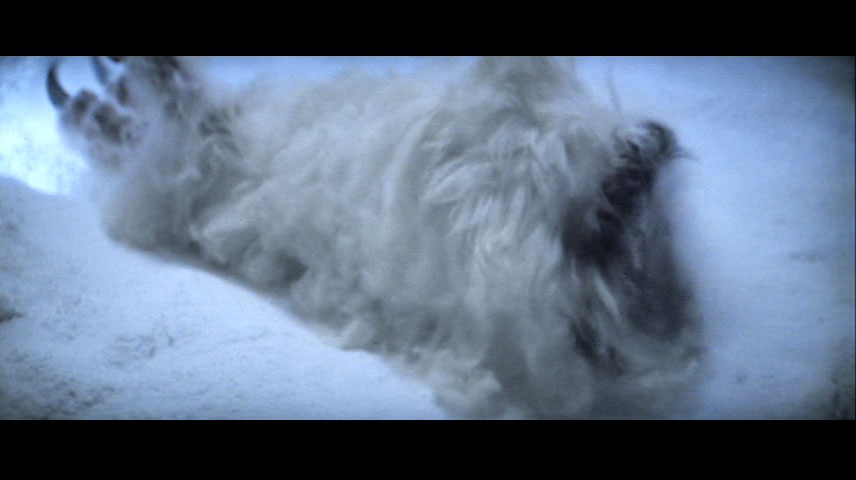
Rotta might be where the wampa’s paw curls. While I love the idea of a Nick Walker–shaped Hutt who rejects his mob-boss background, fights for himself, and sports a six pack and striated pecs, I don’t think the thousand years it takes to be digested by a sarlacc would be long enough for me to embrace the sound of a Hutt speaking Basic in the modulated tones of Jeremy Allen White. (Perhaps surprisingly, Martin Scorsese is a perfect fit for Ardennian shopkeeper Hugo.)
And look, let’s be real. Is Grogu a delightful little fella? We hold that truth to be self-evident. Would I protect his precious person with my life, if he weren’t a fictional character? Of course. But can he carry a conversation? Not yet! Seven years is an eyeblink for his species, but it’s a significant span for Star Wars fans. Absent new tricks, aspirations, or relationships, even Grogu’s antics are liable to lose a little of their charm. There’s a ceiling on how expressive a puppet, paired with an impassive, helmeted man, can be. Grogu may get coequal billing with his adoptive dad, but he’s still an unspeaking partner, and the gag about how hungry he is can’t keep paying off forever. Along the same lines, I sometimes miss the Mando whose morals were dubious and whose paternal impulse was weak; it was more affecting to follow his progression toward this mostly static final form than to see him inhabit it. Also: It’s weird when he orders his 50-something son to “stay” and “heel.”
Happily, Grogu isn’t the movie’s sole source of smol comic relief. Although there’s no pressing story reason for Din and Grogu to team up with several Anzellans—a species whose creation numbers among The Rise of Skywalker’s few wins—the minute mechanics earn many (most?) of the guffaws. One of the movie’s best bits is its allusions to the crowded quarters on the travel-size Anzellans’ to-scale starship, which is almost as small as a Kylothian Class C. Shirley Henderson, who voiced Babu Frik, does award-worthy work as the collective crew.
When kids (and directors) finish playing with toys, they put them back in the box they came from, ideally not too worse for wear. But box-office figures, not action figures, may dictate the future of the Mandoverse, which is murky beyond Ahsoka Season 2. The Mandalorian and Grogu is a far cry from the culmination that then–Lucasfilm president Kathleen Kennedy teased in 2020: a “climactic story event” that was later ticketed for a crossover film from Filoni that may never be made. (The Disney Star Wars era has highlights, but long-term planning hasn’t been its calling card.) Will audiences support this center stage side quest?
Excluding The Clone Wars, the animated, Filoni-directed theatrical flop from 2008, the notion that a Star Wars movie must be a big deal sailed with Solo. An underrated prequel that underperformed financially after its 2018 premiere, Solo definitely didn’t feel like a special event. The Mandalorian and Grogu is tracking for a similar box-office opening (with a more modest budget), and it feels similarly inessential. Other than the exigency of the franchise’s protracted theater drought, it’s unclear why this was the pick to be a big-screen slumpbuster, or whether it was worth the theatrical treatment at all.
I saw the movie one week before release, surrounded by theatergoers who seemed to be struggling to psych themselves up for a formerly sacred ritual. When the Lucasfilm logo luminesced on the screen, it incited a spray of Pavlovian applause. A smattering of fans felt a frisson of excitement, and their muscle memory from past premieres kicked in. At the end, though, there was quiet. The crowd in one theater—even a cavernous IMAX auditorium—is too small a sample from which to safely extrapolate a worldwide reaction. But relative to its predecessors, The Mandalorian and Grogu seems more likely to be greeted with sudden silence than thunderous applause, as audiences unlearn what they have learned about what “Star Wars movie” means. And as for answers about what life after interquels will look like for the franchise? Those will wait until 2027, if not a time far, far away.