
In 2023, Disney CEO Bob Iger announced his plan for his company’s big-budget tentpoles: lower the budgets. Disney’s new approach to high-profile, prolific Marvel and Star Wars IP would be “spending less on what we make, and making less.” Iger’s goal was for less to be more, but thus far, less has simply been less, at least where Star Wars is concerned. When The Mandalorian and Grogu arrives in theaters next month, more than a year will have elapsed since the last live-action Star Wars project, the second and final season of Andor. That’s quite a contrast to the Star Wars assembly line Lucasfilm was overseeing when Iger ordered a slowdown: Five live-action Star Wars series (plus three animated series) aired in the 18 months from February 2022 to August 2023.
Three years on from Iger’s edict, the franchise finds itself in a transitional moment. In January, Kathleen Kennedy stepped down as Lucasfilm’s president, and Dave Filoni and Lynwen Brennan succeeded her on the creative and business sides, respectively. On May 22, The Mandalorian and Grogu will make the leap from Disney+ to the multiplex, putting Star Wars back in theaters for the first time since 2019’s The Rise of Skywalker. That small-screen transplant, coupled with the upcoming second season of Ahsoka, will seemingly wind down the “Mandoverse” that once was the bright center of Star Wars. Beyond that, the franchise’s future is impossible to see: No other live-action streaming series have been revealed, and the future of the film franchise remains murky after next May’s Starfighter.
Starfighter may not spawn sequels—Kennedy said that it was “envisioned as a single film”—but it will break a barrier that’s been all but inviolable in Star Wars storytelling: the Episode IX line. In recent years, Lucasfilm has explored the semi-distant past of Star Wars, via The High Republic and The Acolyte. But any point past the conclusion of the Skywalker saga has abided by the warning HAL issued to humanity in 2010: Attempt no landing there.
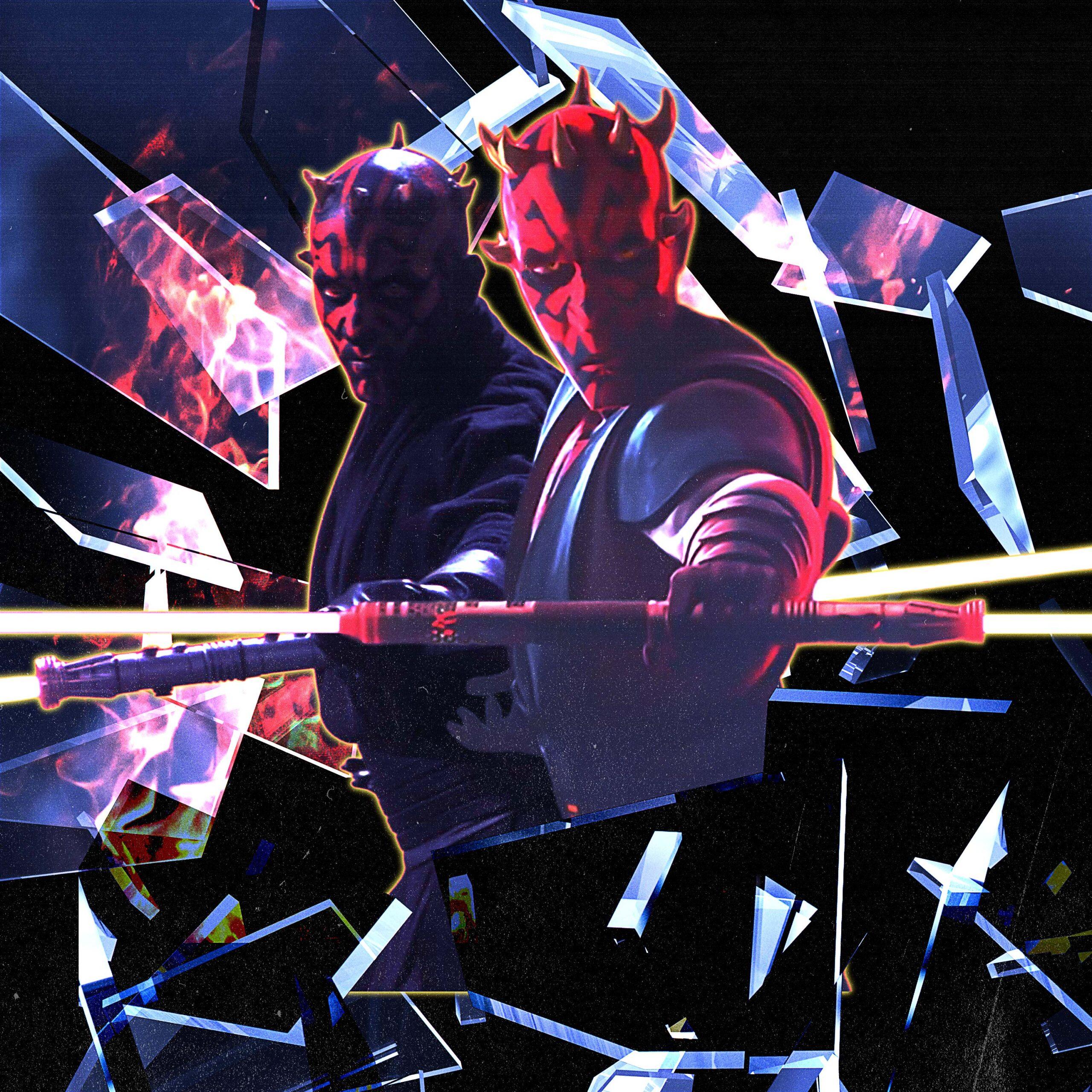
Into this unsettled state of affairs comes a character who abhors a power vacuum and thrives amid chaos: Darth Maul. After being bisected by Obi-Wan Kenobi at the end of Episode I, Maul somehow returned and has subsequently made an improbable number of appearances in print and on-screen, sporting various mechanical-leg looks. Maul plays supporting parts ranging from “recurring role” to “cameo” in The Clone Wars, Rebels, and Solo, voiced in all three projects by Sam Witwer. Now, Maul and Witwer are back as the stars of a new animated series, Maul—Shadow Lord, whose first two episodes aired on Disney+ on Monday. Created by Filoni, Shadow Lord was shepherded by a laundry list of Star Wars animation veterans, including head writer Matt Michnovetz, supervising director Brad Rau, and co–executive producers Athena Yvette Portillo, Carrie Beck, and Josh Rimes.
Through the eight episodes made available to press before the premiere—the final two installments of the 10-episode first season will air on Star Wars Day, May 4—Shadow Lord is the strongest new entry in the animated canon since Rebels. But by virtue of the series’ place in the Star Wars timeline, Shadow Lord’s story suffers from the same superfluity that plagues so many Star Wars projects that take place between trilogies. (Lately, a lot of them.) The Star Wars interquels will continue until morale (and Disney’s planning) improves.
The period between Episode III and Episode IV was once underexplored on-screen, but in recent years, even that narrative real estate has become crowded, thanks to Rebels, The Bad Batch, the Star Wars Tales anthology series, the Jedi games (Fallen Order and Survivor), and Andor. Andor transcended the drawbacks of its setup by being a superlative display of top-tier writing, directing, acting, and design; by offering timely, trenchant commentary on real-life flirtations with fascism; and by providing an unprecedented look at the birth of the Rebellion, featuring foundational characters, such as original creation Luthen Rael, whose stories had previously gone untold. The animated series haven’t seemed so essential. The Bad Batch’s adventures were moderately fun to follow, but the squad of “defective” clone troopers didn’t have much to do, considering they couldn’t take on the whole Empire themselves.


Early on, Shadow Lord could be confused for an animated Andor. (That’s a compliment.) Like Andor, it’s set between Revenge of the Sith and A New Hope, albeit much closer to the beginning of the Imperial era than the end. Its eponymous legacy character is the star of an ensemble cast that often eclipses the headliner’s screen time. Speaking of headliners, both shows pull acting talent from the Narcos TV universe: Andor had Diego Luna, and Shadow Lord has Wagner Moura, who voices civil defense detective Brander Lawson. Andor and Lawson have security droid sidekicks that double as comic relief: K-2SO (Alan Tudyk) and Two-Boots (Richard Ayoade), respectively. Shadow Lord is similarly set on a world that wants to stay free of Imperial occupation—not Ferrix, but Janix—and that features local law enforcement, à la Syril Karn’s Pre-Mor security service. Both series start out gritty, noirish, and street level.
In contrast to Andor, though, there’s no shortage of Force-infused action in Shadow Lord, courtesy of Maul and two Jedi refugees, Mosyk master Eeko-Dio Daki (Dennis Haysbert) and Twi’lek Padawan Devon Izara (Gideon Adlon). Another point of departure: While Cassian’s quest to topple the Empire is destined to succeed (posthumously), Maul’s mission to exact vengeance on his former master, Darth Sidious, isn’t. (Sidious goes down, of course, but as far as we know, Maul has little to do with his demise.) Maul is busy rebuilding the Shadow Collective of gangsters and mercenaries that he used to conquer Mandalore in The Clone Wars, and he’s also eager to recruit Devon as his apprentice. The callbacks to Maul’s past plots are frequent enough to be a bit bewildering for viewers who last saw the horn-headed Sith in Episode I and don’t know Pre Vizsla from Savage Opress.
Belying his limited dialogue in (and early exit from) the prequels, post–Phantom Menace Maul has been a scene-stealer, in no small part because of Witwer’s voice work. Much as Ahsoka Tano is a castoff from the Jedi who adheres to her own Jedi-adjacent philosophy, Maul is a castoff from the Sith who walks his own path—a sinister, self-serving course, to be sure, but one that makes him an appealing ally against the Empire. Those parallels and points of friction made Ahsoka and Maul perfect foils for each other in The Clone Wars. However, although Shadow Lord marks Maul’s first on-screen starring role (after multiple comics miniseries), only odds and ends about him haven’t been revealed. As ever, he’s a Zabrak ball of grievances with a long list of enemies and a tenuous grasp on sanity. He mostly schemes and skulks in the titular shadows, commanding Mandalorian followers and outsmarting and/or outdueling crime lords Nico Deemis (John Carroll Lynch) and Looti Vario (Chris Diamantopoulos).
Through the first eight episodes, the Jedi don’t hold a whole lot of surprises, either. Recent series have spent so much time on Ahsoka, Obi-Wan, Grogu, Cal Kestis, and other members of a growing roster of Order 66 survivors that Daki and Devon seem more like established archetypes than unique characters. (Ever seen a Padawan be seduced by the dark side, much to their master’s dismay?) With Maul up to his typical tricks and the Jedi wrestling with familiar moral dilemmas, Moura’s caf-guzzling Lawson emerges as the most compelling character. As desperate to keep the Empire out as Syril was to usher it in, Lawson is a good cop with a rough-and-tumble background who’s trying to protect his community, as well as a family that’s already been fractured by the Empire’s influence. Impressive as the lightsaber choreography is, the grounded, Heat-inspired, Penguin-esque version of the series that revolves around Lawson doing detective work in the rain-slicked, neon-lit alleys of Gotham-Metropolis mash-up Janix might be better than the actual show, which relies on more of the trappings and tropes of Star Wars.
Part of the problem is that for students of Star Wars, the future isn’t in motion. We know that Maul will lose control of the Shadow Collective (and Crimson Dawn) before losing his life (for real, this time) at the end of Obi-Wan’s blade. We know that Ahsoka will eventually vanquish First Brother and Eleventh Brother, the two Inquisitors who are dispatched to hunt down Maul and the Jedi. We know that the Empire, once welcomed to Janix, will cruelly take control and persecute the good guys. We also know that the Empire will fall and that Sidious will die, and be revived, and die again. There’s just not a lot of suspense here. Which isn’t to say that prequels or interquels can’t be riveting in their own right, but it’s a tall order to overcome canon constraints like these, absent the artistry of Andor or Better Call Saul.

More on ‘Star Wars’
Admittedly, there’s ample artistry in Shadow Lord, from the stacked cast (which also includes Pamela Adlon as Lawson’s femme fatale former associate and informant, Rheena Sul) to the Kiner family’s score to the revamped visuals. Lucasfilm Animation turned 20 last year, and Shadow Lord is the latest in a long line of shows, dating back to The Clone Wars, that employ the same basic, blocky visual template. While a clean break and fresh start could enliven the look of a future series, Shadow Lord is the most eye-catching animated Star Wars series yet, largely because it breaks the mold visually much more than it does narratively, temporally, or thematically. The series incorporates cityscapes that resemble the hand-drawn backgrounds of Teenage Mutant Ninja Turtles: Mutant Mayhem or the Spider-Verse films. These physically created vistas are pleasingly impressionistic and sketch-like, as if the animators stuck concept art into the finished frames. Maul looms enigmatically in the series’ chiaroscuro lighting, and crimson lightsabers have rarely looked so vibrant and deadly. Star Wars animation has never been solely for kids, but Shadow Lord strikes the most mature tone yet seen in a series descended from The Clone Wars.
Thirty years after Shadows of the Empire revved up the Star Wars multimedia machine in advance of the prequels, the franchise has firmly embraced the seedy side of Star Wars that the canceled series Underworld and game 1313—not to mention an Arkham Asylum–aping Maul game—once sought to explore. The Mandalorian, The Book of Boba Fett, Tales of the Underworld, Outlaws, Skeleton Crew, and even, to some extent, The Bad Batch and Andor have explored the unsavory elements that the original trilogy (and early Legends books) teased through Han Solo’s smuggling and the denizens of the Mos Eisley cantina and Jabba’s palace. As a cerebral (if unhinged) gangster, Maul is an heir of sorts to Shadows of the Empire’s Prince Xizor; in fact, Maul’s Shadow Collective absorbed Xizor’s Black Sun. Star Wars may still lack a propulsive story after the Skywalker saga, but at least it’s giving fans plenty of chances to wallow in one of the series’ signature milieus.
Maul was always destined for stardom; had George Lucas made the sequel trilogy, Maul might’ve been the big bad. As a solo vehicle, though, Shadow Lord leaves a bit to be desired, even though it’s already confirmed for a second season. The series doesn’t do much to counter the idea that Filoni’s vision for the franchise hinges heavily on revisiting his own former work. And although it’s tailor-made for devotees of the Filoniverse and Star Wars animation—which tends to draw smaller audiences than live-action releases—it probably won’t be the momentum-restoring hit Lucasfilm has been looking for ahead of the franchise’s big-screen comeback. As a sop to the sickos, it’s great; as a mainstream stopgap, it’s adequate. But Star Wars needs more than a stopgap. It needs a long-term plan. And Disney will be banking on Lucasfilm’s schemes working out better than Maul’s.