
Almost a quarter of the way through the MLB regular season, the ABS challenge system has been confirmed as a correct call. Although the schadenfreude that made the league’s latest innovation a mainstream sensation early on has subsided somewhat, the rollout has proceeded smoothly and, on balance, predictably. A slightly smaller, lower strike zone has boosted walks—and, by extension, scoring—a bit relative to last season. Thanks to those free passes, and the suspenseful, sponsored, on-screen displays on 1.4 percent of pitches, games have gotten a little longer. Popular preseason candidates to be challenge savants, such as Juan Soto (0-for-3) and Patrick Bailey (15-for-28), have been below average so far, but the overall rates are in line with expectations. A little more than half of challenged pitches have been overturned; catchers have been better than batters at second-guessing umps, and both have been better than pitchers, who rarely risk challenging. All of these on-field effects were foreseeable, based on the system’s previous trials.
But there has been one ABS byproduct that wasn’t widely anticipated. Amid the already routine, technological precision of the challenge system, a new human element has emerged: the accidental challenge.
How does this quirk work? Once a challenge is (literally) touched off, the result is out of human hands. The tech takes over, and a video recreation of the pitch’s trajectory reports the ball’s location at the midpoint of the plate to the tenth of an inch. The umpire’s ruling sometimes stands; ABS’s always does. But before the computer can take over, a would-be challenger must use his fallible human hands to tap his head or helmet, thus indicating his appeal to a higher, unquestionable authority. The umpire must then accurately interpret the player’s intention and relay the request to make the challenge official.
Per MLB.com, “The player taps his cap or helmet to alert the umpire to his desire to challenge the call. Players are also encouraged to verbalize their challenge, to leave nothing to doubt, but the cap/helmet tap represents the official challenge.” The vast majority of the time, the simple sequence succeeds. But on occasion, this delightfully low-tech part of the process falls apart. An unintended challenge is lodged, and briefly, confusion reigns.
In retrospect, there was one warning of these miscommunications to come. Last April, Giants outfielder Jung Hoo Lee took a called strike two, appeared exasperated, and tapped his helmet three times.
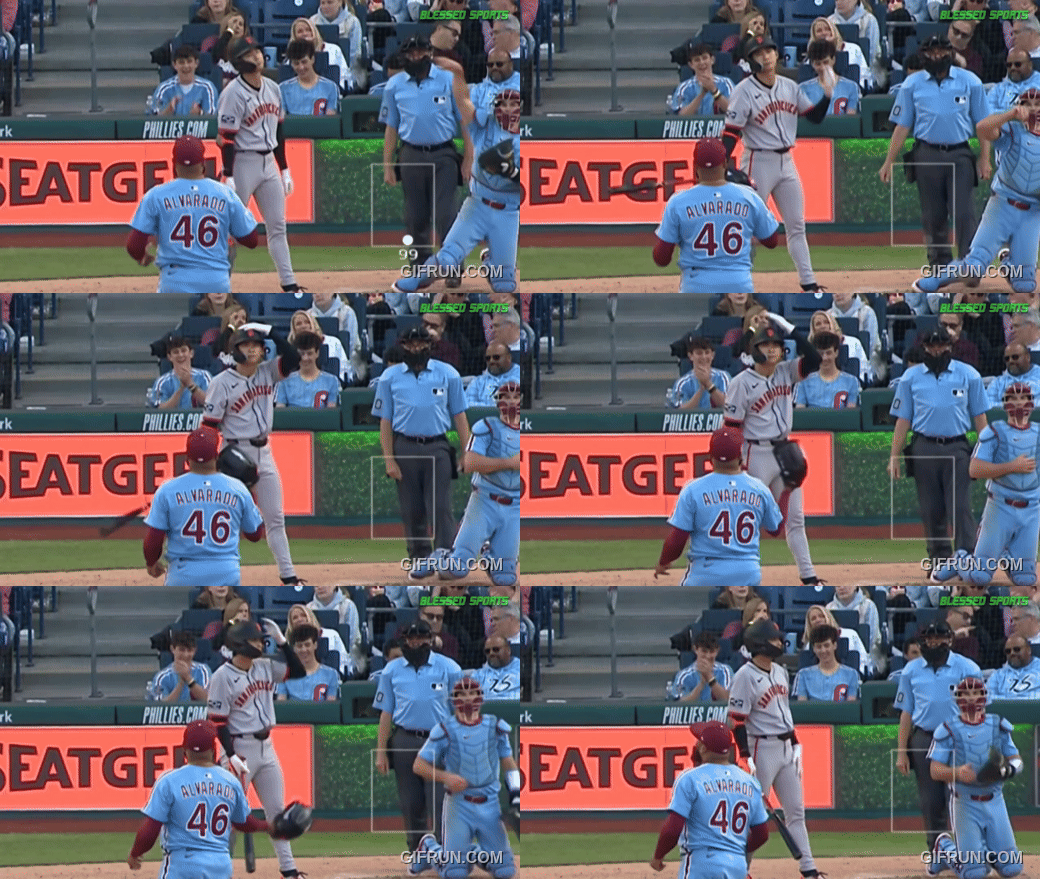
Plate umpire Phil Cuzzi was displeased. Lee’s gesture took place after the challenge system’s debut in big league spring training, but before its introduction to regulation games. At the time, helmet-tapping constituted an ejectable offense: arguing balls and strikes. Rays shortstop Taylor Walls actually did this last June, and paid the price. But through an interpreter, Lee insisted that he hadn’t been trying to question Cuzzi: “Everybody that watches Giants games probably knows that every pitch … I adjust my helmet. It’s every pitch. I told him that I don't speak English and the umpire said something, and I kept saying I don’t speak English. I think that’s what happened. The umpire had a sensitive game.”
With the challenge system in full effect this season, and thousands of legitimate challenges registered, we’ve also seen several examples of inadvertent reviews caused by snafus like Lee and Cuzzi’s. And now, there are (almost) no backsies. So before this charming manifestation of the challenge system’s growing pains gets ironed out, let’s construct a taxonomy of ABS mishaps, starting with supposedly innocent helmet/hat taps along the lines of Lee’s. I give you: the Automated Accidental Ball-Strike System.
The “I just wanted to make sure my hat was still on” challenge
We’ll start with a challenge that probably wasn’t an accident, but appeared to be in the moment. Only twice this season has a player incorrectly challenged the first pitch of a game, a situation so low leverage that anyone who dares risk one of his team’s two challenges had better be right. Angels shortstop Zach Neto, who leads the American League with three leadoff challenges on any count, definitely meant to do this. Dodgers catcher Will Smith—an effective challenger in general—might have meant to also. Or was he swayed by pitcher Shohei Ohtani’s cap adjustment? Some observers assumed Smith was seconding Ohtani’s gesture and dutifully signal-boosting his batterymate when he challenged on April 8. After all, who could say no to Sho?
After the game, Smith said he hadn’t been misled by Ohtani and that he’d thought the pitch was a strike. Then again, that might be what a good catcher would say so as not to pin the blame on the moundsman. Or perhaps Smith was influenced subconsciously by the capward movement of Ohtani’s hand. Ohtani was quite clear about what he saw: “I thought it was a ball,” he said.
Maybe that one wasn’t a pitcher mistake, but this next one was—at least until the verdict came down. On April 12, Pirates starter Bubba Chandler absentmindedly tapped (or purposely adjusted?!) his cap after a borderline ball to the second Cubs batter, Moisés Ballesteros. Umpire Alan Porter took it to be a challenge, despite Chandler’s demonstrative gesticulations and protests. For Chandler, this proved to be a happy accident—the call was overturned, and he went on to strike out Ballesteros.
Hitters have helmet oopsies too. On the same day as Chandler’s fortuitous mistake, Yankees first baseman Ben Rice struck out looking on a full-count pitch from Rays starter Drew Rasmussen. As he watched the ump’s punchout, he fleetingly put his hand to the top of his helmet, then booped his own nose, perhaps trying to play off the helmet touch as something other than a challenge. If so, it didn’t work. The challenge was assessed, the call was confirmed, and Rice still struck out.
Don’t feel too bad for Ben: He leads all qualified hitters in wRC+. Plus, after the confident way in which he tossed his bat and backed toward first base—as if trying to sell a ball call and work a walk—he was morally obligated to challenge anyway. As Sam Miller wrote, “Throwing a bat away on a pitch you won’t challenge makes you look like a frivolous person.”
The “Maybe we should challenge?” challenge
This category belongs solely to Rockies starter Michael Lorenzen, who on April 19 challenged twice, both times unintentionally and for the funniest reason imaginable.
According to Lorenzen, he never wants to initiate a challenge. So how did he end up doing so in back-to-back innings? As he later explained, both reflexive reaches for his hat were poor substitutes for a telepathic conversation with catcher Hunter Goodman.
“I’m looking at Goody, and I’m thinking, ‘Goody, what do you think, is that close?’ I’m not trying to challenge anything. I don’t want to challenge anything. And so it’s just a natural reaction, like, ‘Goody, what do you think, Goody?’ And then the umpire … And I get it. I gotta come up with a different signal, maybe, of, like, ‘Goody, I thought that was good.’ And then I did it again on accident, like, I didn’t even mean to challenge it the next inning … where I’m like, ‘Oh, is that close?’ And then he challenged, I’m like, ‘Ohh …’ I don’t wanna burn a challenge there, I was just asking Goody. So I have to come up with something to where I can communicate with Goody, like, ‘I thought that was good, what do you think?’”
Even more amusingly, the second challenge worked!
It would indeed be good(y) to decide on a better “Should we challenge?” signal than the challenge signal itself. Although according to MLB’s challenge-system explainer, “Challenges must be made immediately after the umpire’s call, without assistance from the dugout or other players.” So even if Lorenzen could consult with Goodman without touching his own head, he technically couldn’t offer his input without breaking the rules.
The check challenge
You’re familiar with the check swing, which occurs when a hitter decides to swing, reconsiders mid-cut, and holds up (or attempts to). Well, meet the check challenge, in which a hitter makes a move toward his helmet and then arrests his rising hand—but not in time to avert the ump’s challenge call.
Pittsburgh’s Nick Gonzales may have pioneered this move on April 10, when he tried to avoid challenging an 0-2 pitch from the Cubs’ Caleb Thielbar. “Just in the moment—nobody on base, we had one challenge left—I wasn’t fully confident,” Gonzales said. “I didn't want to do it, so I didn’t physically touch my helmet or verbally tell [umpire Roberto Ortiz].”
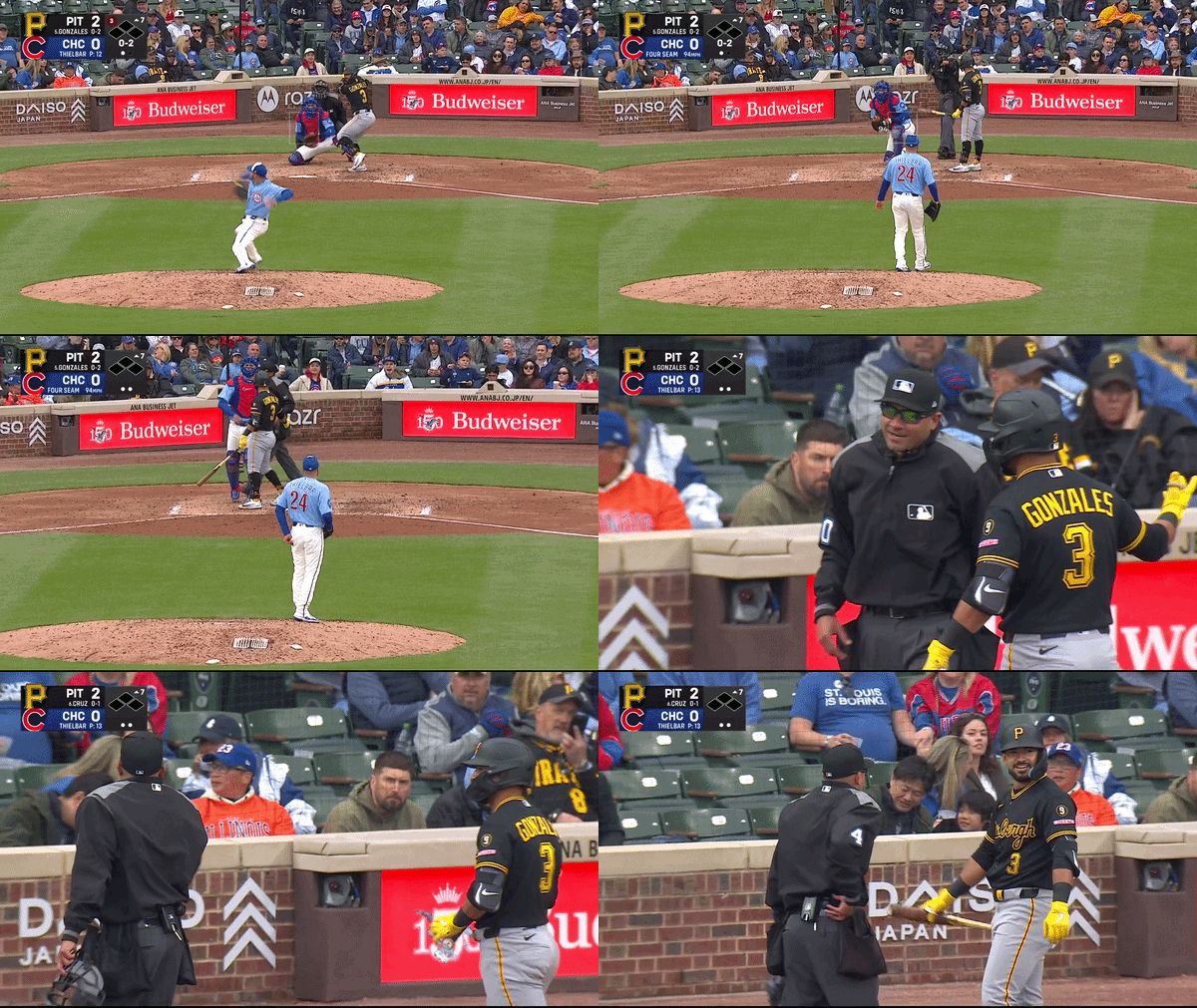
As with his teammate Bubba Chandler’s accidental challenge two days later, Gonzalez’s mistake worked out: The strike call was overturned and the plate appearance continued. And wouldn’t you know it—as soon as the ruling went his way, the heated discussion was defused.
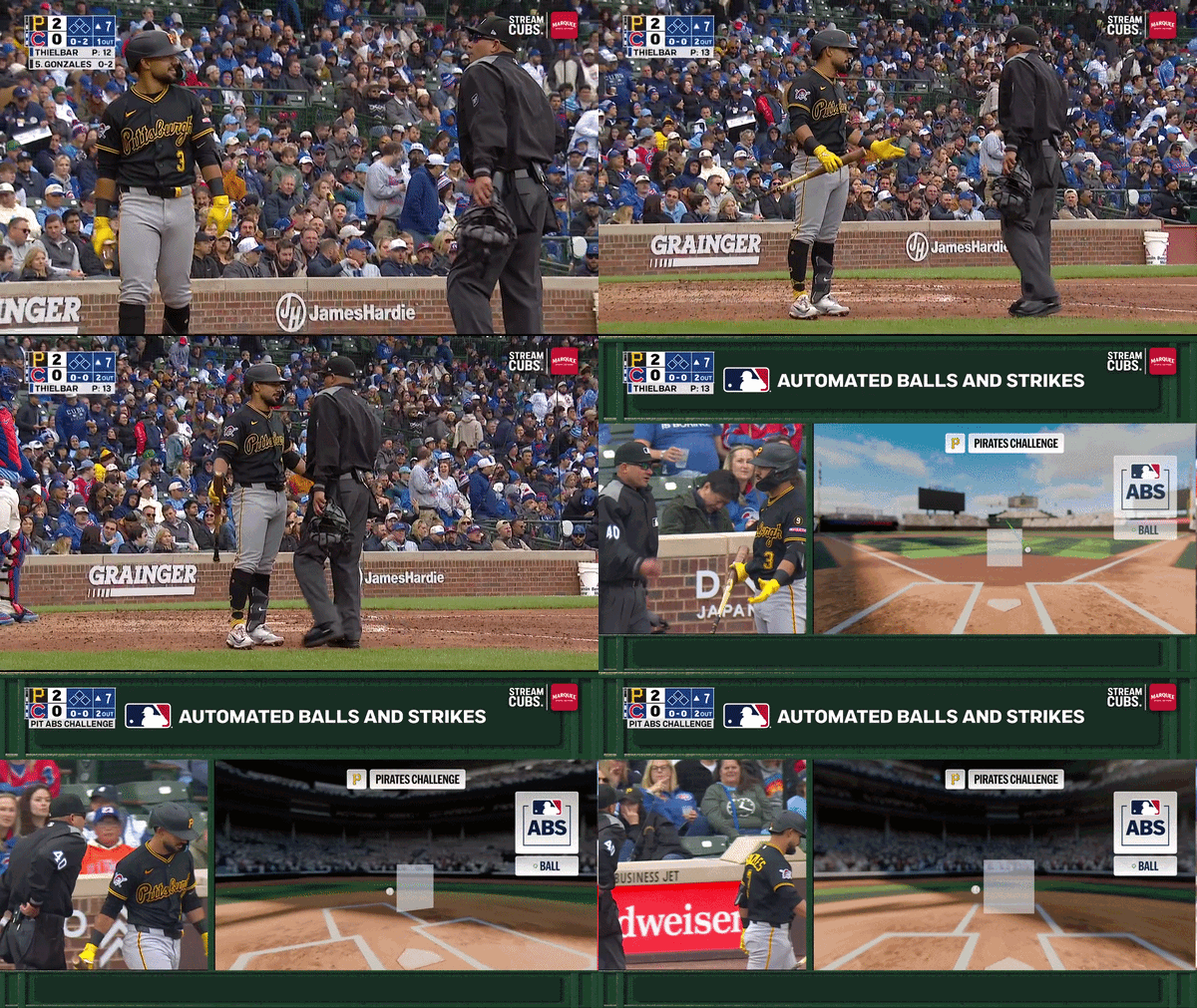
“It’s new to all of us and how we’re going about it, and I think if the umpire deems that you make an intention to challenge, that’s what Roberto went with there,” Pirates skipper Don Kelly explained. Gonzales conceded that his knee-jerk (or, in this case, elbow-jerk) first move “probably hinted that I did want a challenge.” First thought, best thought!
Baltimore’s Coby Mayo did the same thing on April 15, with an even clearer lack of helmet contact, but he didn’t get the call.
Best of all, here’s Arizona’s Ildemaro Vargas pulling an “Olé!” move to avoid going around on a helmet touch against the White Sox on April 23:
Vargas reacted as if he hadn’t even dreamed of challenging, shaking his head with his bat-free arm raised in an Alfred E. Neuman pose.
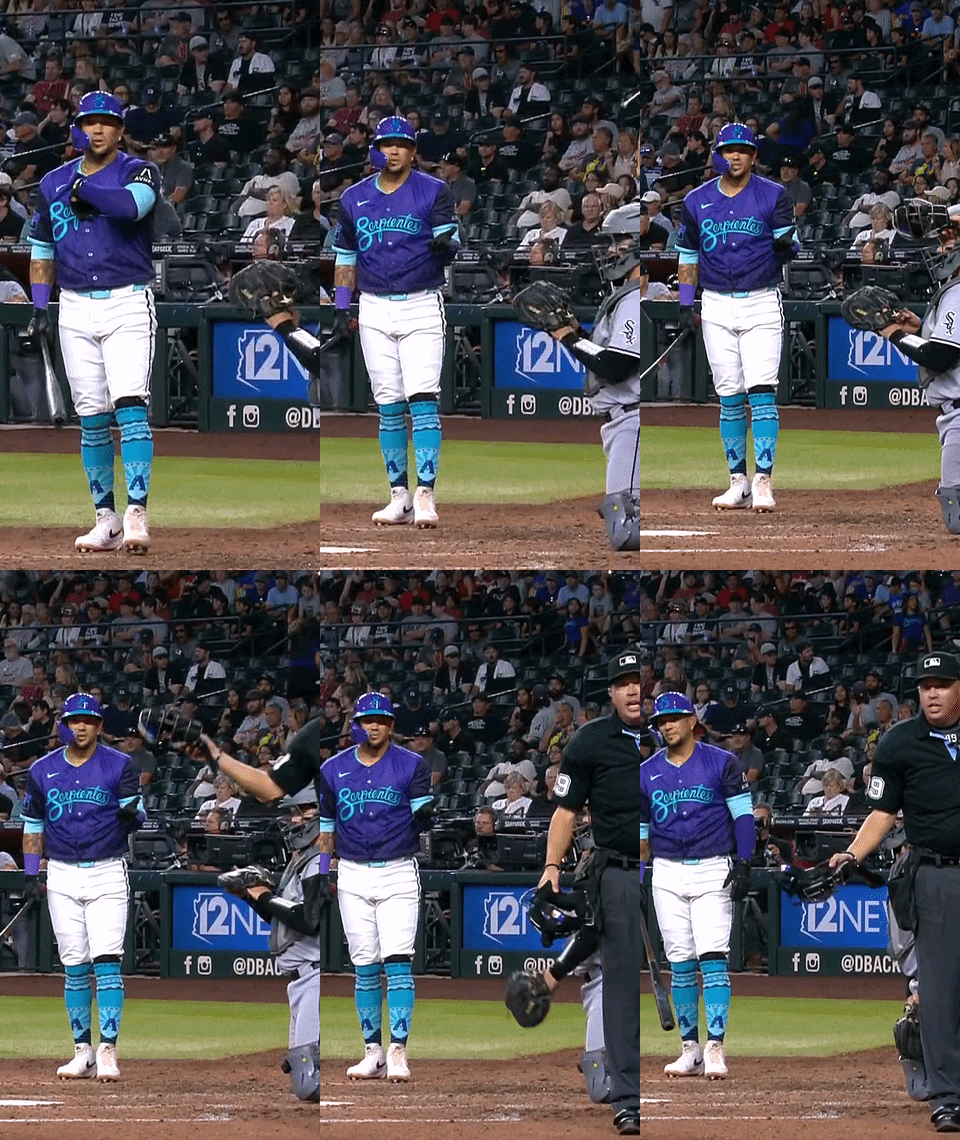
The Diamondbacks’ dugout, backing their boy, jawed at the ump, who had a minor hot-mic moment as he yelled “He went like this!” and touched his own mask to his head.
Because Vargas—a 34-year-old journeyman utility guy who’s hitting .360/.381/.614 with a .365 BABIP (.266 entering this season)—is leading a charmed life, the call was overturned.
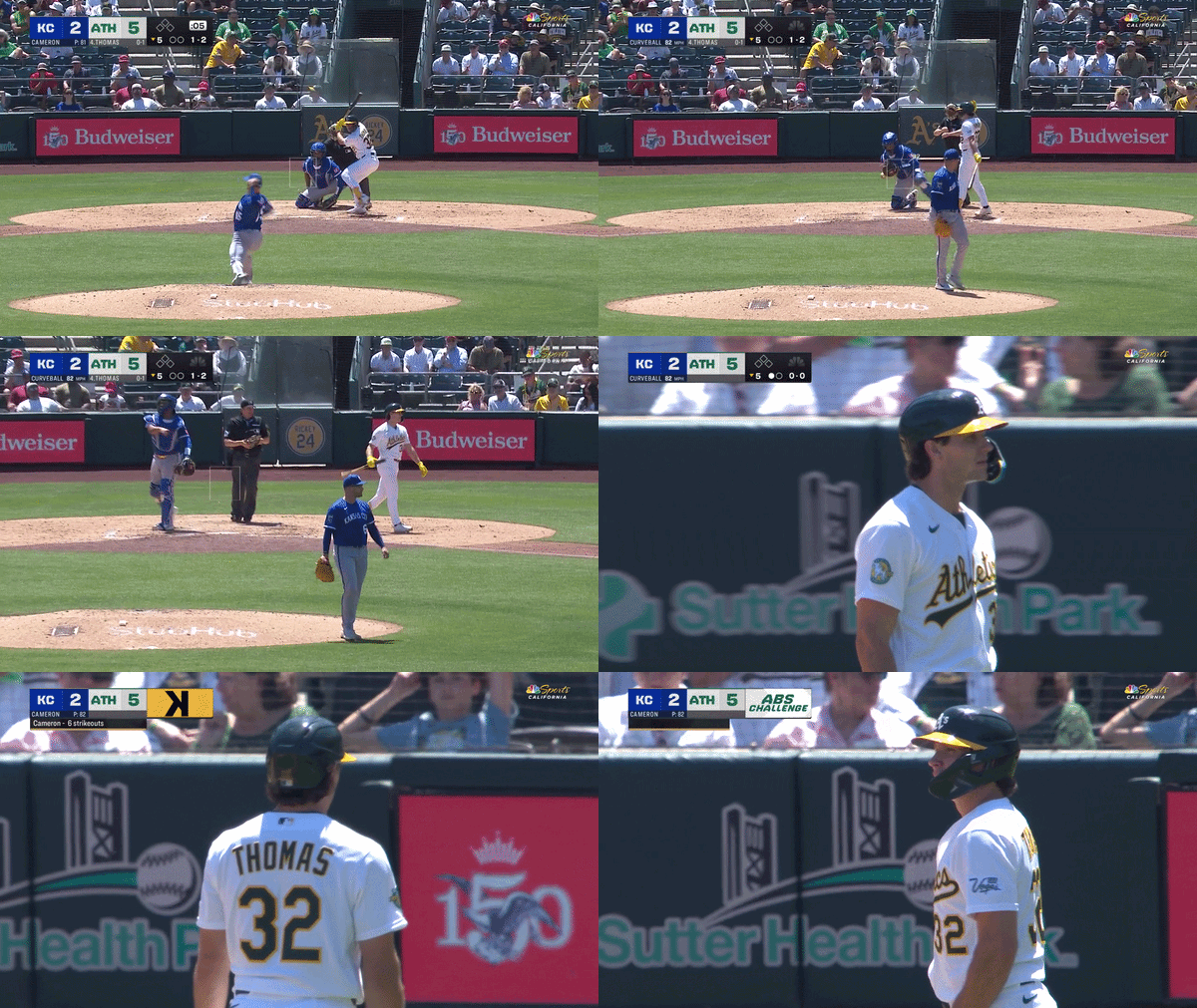
Want one more? Check (no pun intended) out A’s outfielder Colby Thomas, who considered challenging a called strike three in a game against Kansas City on April 30. He raised his hand to the side of his helmet and then past his head, as if he’d gone up for a high five, been left hanging, and tried to play it off as an attempt to brush his hair. He was halfway back to the dugout by the time umpire D.J. Reyburn called him back and forced him to accept a challenge, an overturn, and an at-bat-extending ball. (He grounded out on the next pitch.)
There’s no definition of a check swing, because there’s no definition of a swing. (A strike is a pitch that “is struck at by the batter and is missed,” but nobody knows precisely what that means.) The limits of check challenging are similarly vague. In the minors, MLB has been testing a check-swing challenge system powered by the same Hawk-Eye tech that undergirds Statcast. Maybe it’s only a matter of time until players can call for a review of whether they called for a review.
The “What the hell, might as well” challenge
This is a Dalton Rushing special. The Dodgers’ backup catcher has twice motioned to challenge a pitch that went his team’s way—as the batter sent the same signal. On April 26, Rushing and Cubs batter Nico Hoerner both tapped their helmets simultaneously, which Dodgers broadcaster Joe Davis called “the ultimate ABS strike.”
And on May 3, Rushing and his Cardinals catching counterpart Pedro Pagés both challenged the final pitch of the game, which was called (and confirmed) strike three.
For Rushing, these weren’t so much mistakes as they were precautions. In the first instance, he didn’t hear the ump’s call, so he challenged just to be safe. In the second case, the ump’s call was delayed, so Rushing issued a preemptive challenge, so as not to miss his chance (and potentially, so as to deke the batter into missing his). There was no downside to doing it, because players aren’t actually allowed to challenge (and, perhaps, accidentally overturn) a call in their favor. I just wish they could, for the chaotic, own-goal fun of it.
Batters can pull a Rushing, too. On May 3, umpire Laz Diaz yelled “3-2!” so loudly on a 2-2 ball that Boston’s Wilyer Abreu thought he’d struck out. He tapped his helmet for a challenge, only to be told that he had a full count.
Everyone had a good laugh, spectators included.
The “Hey, he/I challenged!” challenge
Once in a while, an umpire completely whiffs on a lawful challenge. On April 10, Rockies catcher Brett Sullivan signaled for a challenge on a 2-0 pitch that was called a ball by Hunter Wendelstedt. Wendelstedt didn’t see Sullivan’s double tap, but Sullivan talked the ump into correcting his oversight and granting a delayed challenge. (The call was upheld.) “We’re working together back here,” Wendelstedt said over the stadium PA.
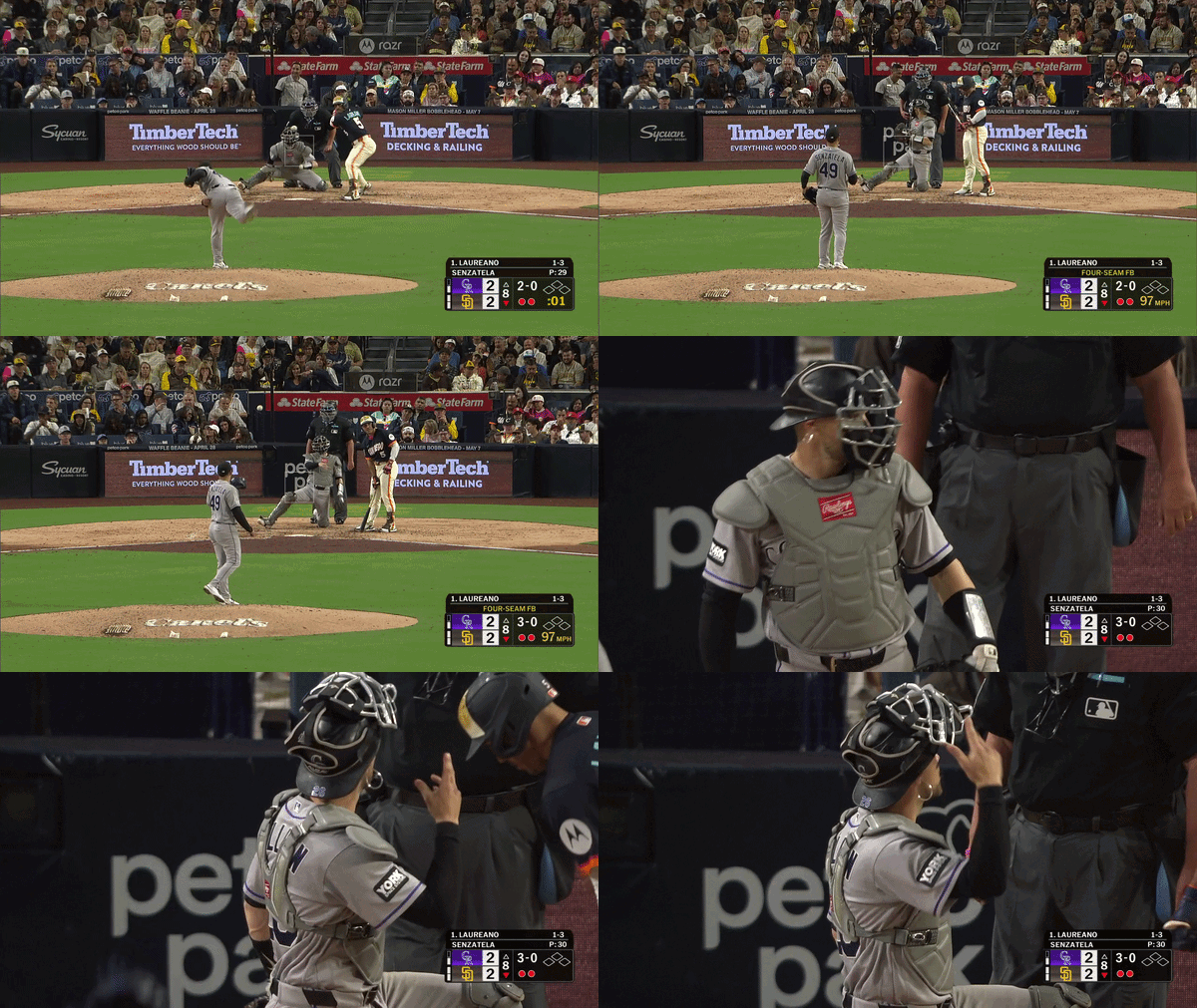
On March 28 at Wrigley Field, the opposite happened. Umpire Jim Wolf thought Nationals catcher Drew Millas had challenged a ball call on a stolen-base attempt, but Wolf had misheard. A conference between Millas and Wolf ensued, and Millas talked himself out of having a challenge assessed. “Cancel that,” Wolf said.
And on April 17 in West Sacramento, White Sox catcher Edgar Quero single tapped an 0-1 ball called on A’s batter Jeff McNeil, and instantly regretted it. Fortunately for Quero, umpire Chad Fairchild missed the move, but McNeil—suspecting that the pitch was indeed outside the strike zone—tattled on Quero, who got caught with his hand on his helmet after Fairchild conferenced with his crew. McNeil’s inkling was correct, and the Sox burned a challenge. Justice was done.
The challenge system has had other hiccups, such as when Braves slugger Matt Olson was (overly strictly) told he’d taken too long to challenge, or when then-Braves backstop Jonah Heim was prevented from challenging because he’d first retrieved a ball that got away with a runner on base. But nothing can compare to the sheer, analog anarchy of the accidental challenge, which adds a quaint, retrofuturistic tinge to MLB’s bold new initiative.
Major League Baseball isn’t stressing about these sporadic miscues, most of which have stemmed from some desire for a challenge on the part of the player. The league believes that all involved will get the hang of how this works, and has stressed that players and umps should, whenever possible, signal and assent to challenge requests verbally in addition to the taps. (Don’t make me tap the “Don’t just tap” sign.) The more farcical situations already seem to be growing scarcer, as players tap not just once, but repeatedly when they want to convey their conviction.
Of course, MLB could adopt a different signal solution from another sport: flags or cards; the NBA’s twirling finger (which could be confused for an umpire’s home run signal); cricket’s “T” sign, or soccer’s VAR rectangle (which could double as a strike zone shape, but might be hard to “draw” with two hands while holding a bat or mitt); volleyball’s “C,” formed with the fingers or hands. But that’s probably premature, given that this wasn’t a pervasive, persistent issue in the minors. There’s precedent for a learning curve that can be overcome quickly after a rule change: In the early days of the pitch clock, hitters would sometimes habitually hold up their hand to the ump as they entered the batter’s box, which was newly treated as a request to use their sole timeout. After several hitters inadvertently lost timeouts, players changed their ways for good.
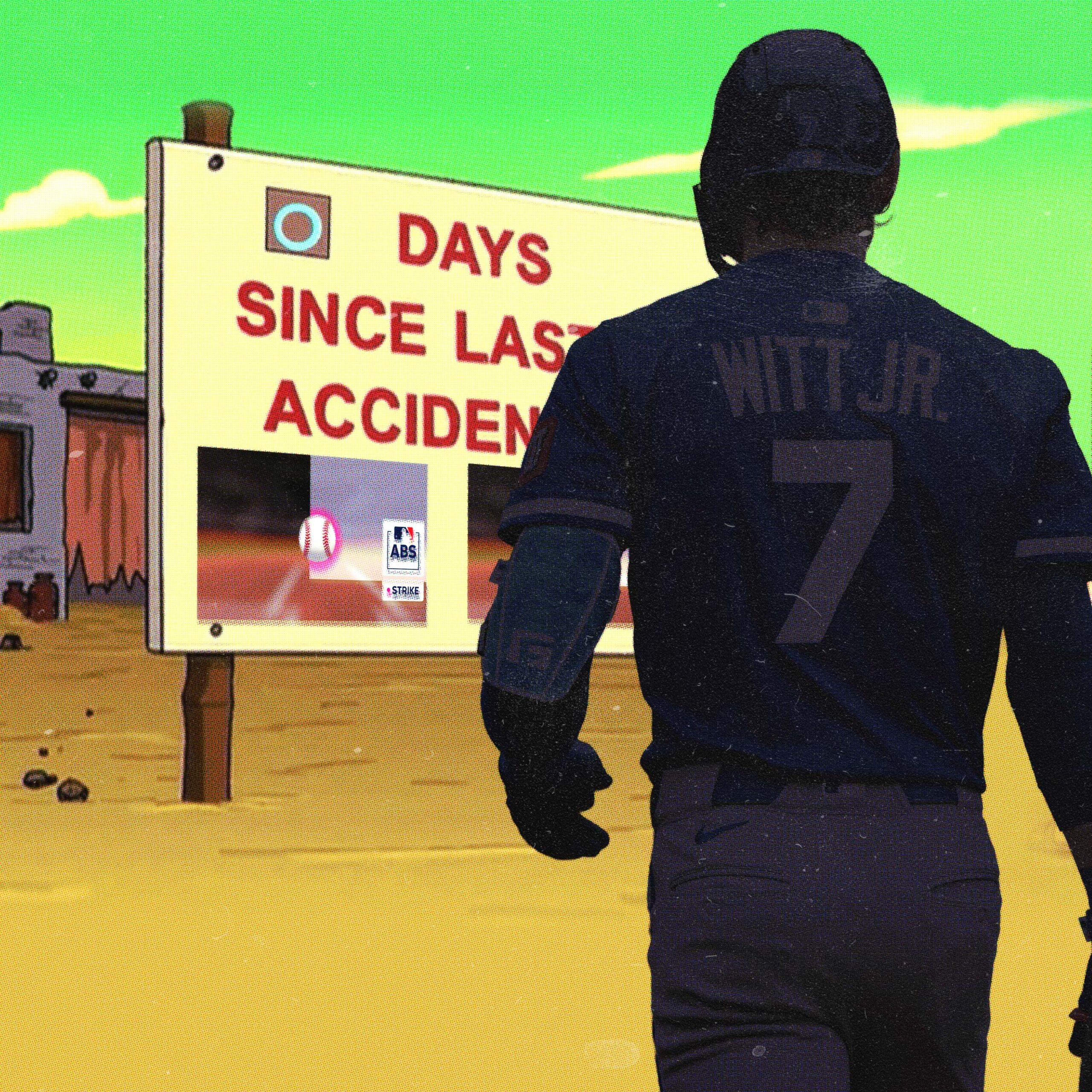
All in all, ABS is a hit. Attendance and TV ratings are up, again. Periodically resetting the “days since last ABS accident” sign to zero is at most a minor nuisance. And maybe it’s more of a plus that the league can automate the challenge adjudication, but not the challenges themselves. As long as the robots aren’t totally running the show, flawed, relatable humans will find diverting ways to get gunk in the gears. As the prison captain in Cool Hand Luke says, “What we’ve got here is ... failure to communicate. Some men you just can’t reach.” In the majors, some men fail to communicate because they can reach—for their hats, their helmets, or a plausible excuse.