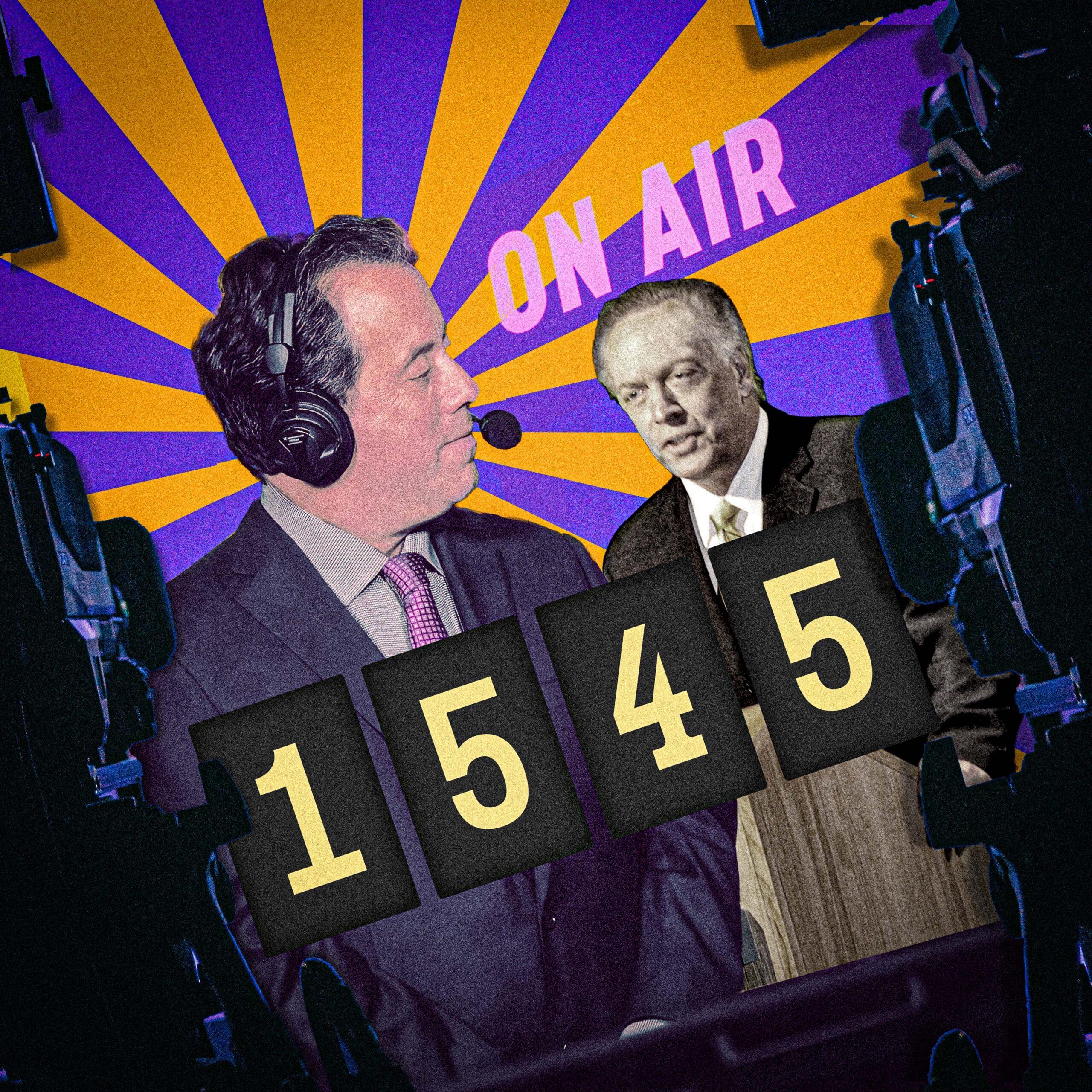
Meet the Man Behind the Men Behind the Mic
Kenny Albert is the new national sportscast king—and he has Tony Miller of the website Unnecessary Sports Research to thank for his coronationMeet the Man Behind the Men Behind the Mic
Kenny Albert is the new national sportscast king—and he has Tony Miller of the website Unnecessary Sports Research to thank for his coronation
About once a year, Kenny Albert’s brain torments him with a vision of no-showing for work. “I have a dream where I’m late, where I’m scrambling and I’m not there,” he says. “And I wake up, and all of a sudden you take a deep breath: ‘OK. It was only a dream.’”
National announcers’ nightmares: They’re just like ours. (Provided we substitute the broadcast booth for our respective places of work.) But Albert’s bad dream is especially far removed from reality. When he’s awake, Albert never misses an assignment: “I always get there like three hours early,” he says. In fact, he’s on the verge of having shown up—early, late, or right on time—for more national broadcast gigs than anyone else in the history of his profession.
On Friday, Albert will be in Montreal to call Game 3 of a first-round Stanley Cup playoffs tilt between the Canadiens and the Lightning. On Saturday, the scenery will change: He’ll travel to Philadelphia for Game 4 between the Flyers and the Pittsburgh Penguins, where the Flyers will try to complete a sweep of the Pens. Albert won’t be the big story in either matchup: He’ll be narrating the story of the Bolts’ and Habs’ 2021 Stanley Cup rematch; Canadiens head coach Martin St. Louis’s attempt to take down the Tampa Bay team he starred for on the ice; the Canadiens’ quest to close out Canada’s Cup drought; and, of course, the Flyers’ and Pens’ pursuit of over-capacity penalty boxes as they deepen their divisional rivalry. But regardless of whether the latter series ends or extends, Albert himself will make history in Philly. He’ll call his 1,545th American national broadcast of a “Big Four” (NFL, MLB, NBA, NHL) professional sports league game—a new high score, breaking the current record, Dick Stockton’s 1,544.
Albert’s milestone game will feature one of the teams that suited up for his national broadcast debut. The 58-year-old’s 33-year national broadcasting career is almost as old as the Canadian (and Canadiens’) Cup drought: Albert got on the national broadcast board on October 28, 1993, when he called a contest between the Penguins and the Quebec Nordiques (now the Colorado Avalanche) on ESPN2. His about-to-be-unmatched total is impressive not only because of how prolific he’s been, and how much hectic travel he’s done, but because he’s such a sports polymath. He’s not just the national voice of one sport; he’s one of the most prominent national voices of three. In addition to thousands of local TV and radio broadcasts, he will have done 569 national NHL broadcasts, 530 for the NFL, and 446 for MLB, which will make him ninth, 10th, and 14th all time in American national broadcasts of those respective sports. Put those totals together, and he’s unequaled.
Kenny is one of those play-by-play announcers that I admire because he’s very consistent and it’s not about him. He’s not trying to [do] anything other than report what he sees, and I respect that.Dick Stockton
“It’s somewhat surreal to see a lot of the other names that are on the list, when you start looking at the numbers and where everybody ranks,” Albert says.
Albert will get his well-deserved plaudits for becoming the new national sportscast king—including congratulations from Stockton, his former Fox Sports colleague. “Kenny is one of those play-by-play announcers that I admire because he’s very consistent and it’s not about him,” says Stockton, who’s retired at age 83. “He’s not trying to [do] anything other than report what he sees, and I respect that. … He’s had a great career, and he’s going to have more of a great career.”
But what won’t be as well-known is how we’re even aware of these broadcast counts. After all, Albert himself has no precise record of how many games he’s worked since he started out with the American Hockey League’s Baltimore Skipjacks in 1990.
“I’ve never actually kept a list myself,” he says. “Way back 36 years ago, when I started broadcasting minor league hockey, those first couple of years, I think I kept a list of the games. And then it just kind of got too hard. I never really continued with an actual list.”
Albert is a man of many networks, so no wonder he hasn’t kept track: The only active play-by-play voice for all four of the Big Four, he does full-time Rangers and part-time Knicks play-by-play for MSG Network, calls NFL and MLB games for Fox, works the NHL for TNT, and somehow squeezes in the Olympics for NBC. If it was too hard for Albert to track his own tally, imagine monitoring the totals for every national announcer, not just in the present but for decades of past broadcasts, too. That’s the Sisyphean task undertaken by the man behind the men behind the mic, whom Albert has to thank for his coronation: Tony Miller, who’s kept tabs on sports broadcasts at the website UnnecessarySportsResearch.com since 2016. And Miller’s labors began before that.
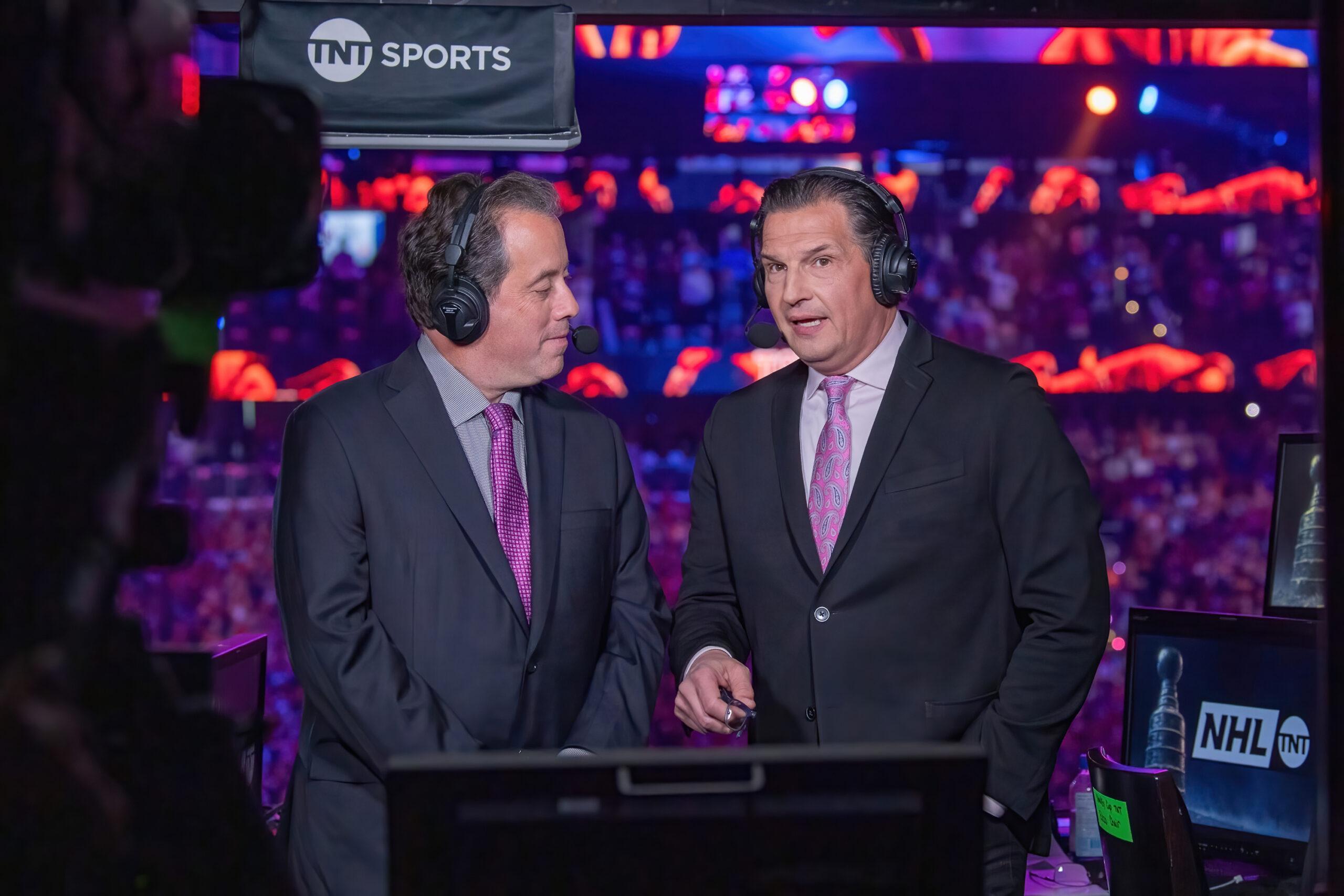
Kenny Albert and Eddie Olczyk at the 2025 Stanley Cup finals
“The actual announcer tabulating would go back to probably 2013 or 2014, but it would have been about Christmas 2015 when I felt like I had all four of those sports under some level of control,” Miller says. “And then it was like, ‘Well, I have this information, what can I do with it?’ And one of the first things was feeling like there should be a central place where that information lives or people look for it.” And thus his TV-broadcast database and leaderboards were born.
Top 10 National “Big Four” Broadcasters (Through 4/23)
It wasn’t long before Miller's work started to get attention worldwide, both from appreciative people and from some who were quizzical. Miller recalls, “One of the first ones I did was, Al Michaels called a Super Bowl for his milestone game where he passed somebody on an NFL list. And I tweeted about that from my personal account because there wasn't an Unnecessary Sports Research account at the time. And somebody responded to it in Italian after it had gotten retweeted and passed around the web a few times. And I wasn't sure what it said, so I ran it through Google Translate or whatever, and it comes back: ‘I don't want to say that Americans are infatuated with statistics, but they even have statistics about their announcers.’ Yep, that's what we do here.”
That’s what Miller does, at least. And he has a fan in Albert, who started seeing Miller's stats on social media around the same time and later mentioned Miller's site in his 2023 memoir, A Mic for All Seasons.
“The first time I saw it, I could tell the numbers were really close, if not exact,” says Albert, who keeps the charts and boards he prepares for every game in a huge file cabinet at home. “Before I started to see Tony's work, whenever I was asked about number of games in each sport or total, I was able to get pretty close, I think, with an approximate number. But … I don't know how there are enough hours in the day for him to keep up with all this stuff with so many different networks and people [in] the various sports. … I have a huge appreciation for what he does. … The work that he’s done is incredible and certainly trustworthy.”
I don't know how there are enough hours in the day for him to keep up with all this stuff with so many different networks and people [in] the various sports. … I have a huge appreciation for what he does. … The work that he’s done is incredible and certainly trustworthy.Kenny Albert on Tony Miller
Much as one might marvel at the time Albert has amassed on the mic, Albert marvels at the time Miller has clocked at the keyboard in compiling his expansive database. “Going back to the 1950s and 1960s, I don’t even know where this information was that he found,” Albert says, adding, “You know, it’s the amount of hours that he’s put in.”
Miller, who lives in Indiana, has a full-time job at a healthcare facility and a long-term part-time gig as the statistician for the athletic department at Goshen College, an NAIA school, so unnecessary sports research is an unpaid project for his spare time. How much time does he devote to it? “Probably more than I should,” he says. “But oddly, how much time I spend on this, for as much time as I spend adding things up, that's one thing I've never tried to add up. There's part of me that doesn't really pay attention to that because I don't want to know. If I had the data, I'd have to start justifying it, right? But there’s only so much time in the day and so much energy to devote to this, in and around the other parts of trying to be a functioning human being.”

Miller's self-appointed task requires him to monitor several sources to keep his stats up to date. “So much of that is stuff that you track down,” he says. “I mean, network press releases, social media posts, tuning in and watching the games themselves, obviously, although that is of limited use when you’re talking about what’s coming up in the next couple of days or weeks because you limit yourself to what got mentioned on the air. And then there’s several very large spreadsheets that have months and weeks out into the future and what games are on and who do we know to be doing them. And this never stops. That’s the part that I probably wasn’t prepared for the most.”
And the same fracturing of the broadcast landscape that fans lament because it makes accessing games more complicated and pricey also adds to Miller's troubles. “It makes it harder,” he says. “I think about now when you’re putting games on Apple TV and Prime Video and whatever other site that we may or may not have heard of yet, there are different places to keep track of and what really qualifies as national television.”
Yet that, Miller says, is the straightforward part. Fleshing out the historical record was the thornier challenge. Miller has done his own delving into video and newspaper archives, but he also built on the existing research of like-minded hobbyists who documented announcer assignments using satellites, libraries, and media guides, and then shared that info on forums and message boards.
This never stops. That’s the part that I probably wasn’t prepared for the most.Tony Miller
“The part that really turned me on to, wait, this could work in a historical sense, came from realizing that there were other people out there that wondered about and thought about, you know, who was doing the Game of the Week in 1960 or 1970?” Miller says. “People like that did a lot of legwork. And I came through and said, ‘What happens if we put all of these things in spreadsheets and put numbers on them?’”
What happened was, people paid attention. Perhaps a surprising number of people. “Before social media, this was a couple of people’s niche hobby that never really would have gone beyond them,” Miller says. “And now I shudder to think at how many followers are out there paying attention to sports announcer counting.”
Despite Miller's best efforts, national announcer stats will probably never be fully verifiable. And although he'd like to expand his purview to other kinds of competition—MLS, women’s leagues, the Olympics—the data gets even tougher to wrangle beyond the Big Four. “There are so many different ways you can break that up and subdivide that,” Miller says. “Trying to think about the Olympics feels like some of those Instagram videos I’ve seen recently where you have a little kitten trying to break the outer shell of a watermelon that’s about the size that they are. There’s so much there that it’s a little hard to chunk out meaningfully.”
Consequently, Miller has chosen to be as comprehensive as he can within his broadcasting bailiwick.
“It reminds me of a disclaimer that I’ve seen at the top of some lists on Wikipedia, which is a site I’ve probably spent a little too much time on in the never-ending quest for information you didn’t know you needed,” he says. “There are some lists that are like, ‘This list will probably never be able to satisfy certain standards for completeness.’ Like, regardless of what we put on here, somebody is going to have some level of doubt about what's on it. Should this be on it? Should this really be here? This work, I think, is very much in that category.”
But Unnecessary Sports Research has become the de facto official record of the industry. Miller has seen his stats cited in network press releases. Stockton gave them a shout-out in a 2018 career retrospective the legendary announcer published on his personal site, which was prompted by a Miller tweet about Stockton’s 600th NFL play-by-play assignment. (“I never even was aware of this thing,” Stockton says now. “And I looked on the list, and lo and behold, there I was.”) Albert’s Fox Sports bio leads with several Unnecessary Sports Research stats. Thanks to Miller’s painstaking tracking, Albert has been hailed by his employers and coworkers when he called his 500th national NFL and NHL games, when he passed his father Marv on the all-time national broadcast list, and when he took over the top spot on Miller's play-by-play leaderboard. And whenever one of his networks bakes him a cake or fetes him on-air, the tribute is based on Unnecessary Sports Research stats.
“Pretty much,” Albert says. “It really is. It’s neat that those of us in the industry on this side of it can check out the numbers and look at some of the other names.”
In a sense, Miller acknowledges, announcer stats are a strange thing for non-announcers to care about.
“It’s not even the people playing the sports,” he says. “It’s the people broadcasting the sports. Which is an important part of how we consume the sports—so many of us grew up listening to Joe Buck and Bob Costas do baseball, Marv Albert do basketball, that sort of thing. They become the conduit that connects us to the actual sports, but it's still a degree removed from the people who actually put the ball in the basket. I’m sure I would talk to some people that I would say, ‘Oh, Kenny Albert’s about to have done more of these games than any other sportscaster in American history.’ And they’d be like, ‘Who’s Kenny Albert?’ And I'm like, ‘Oh yeah, there are 300 million people in this country, and a large percentage of those don’t even watch the Super Bowl.’”
342 million, actually, but who’s counting? (Well, the U.S. Census Bureau is, in theory; we don’t need Miller for that.) But if Miller wasn't tracking announcer assignments, it's likely that no one would be, and we wouldn't know about Albert’s impending milestone, which would be a loss on some level.
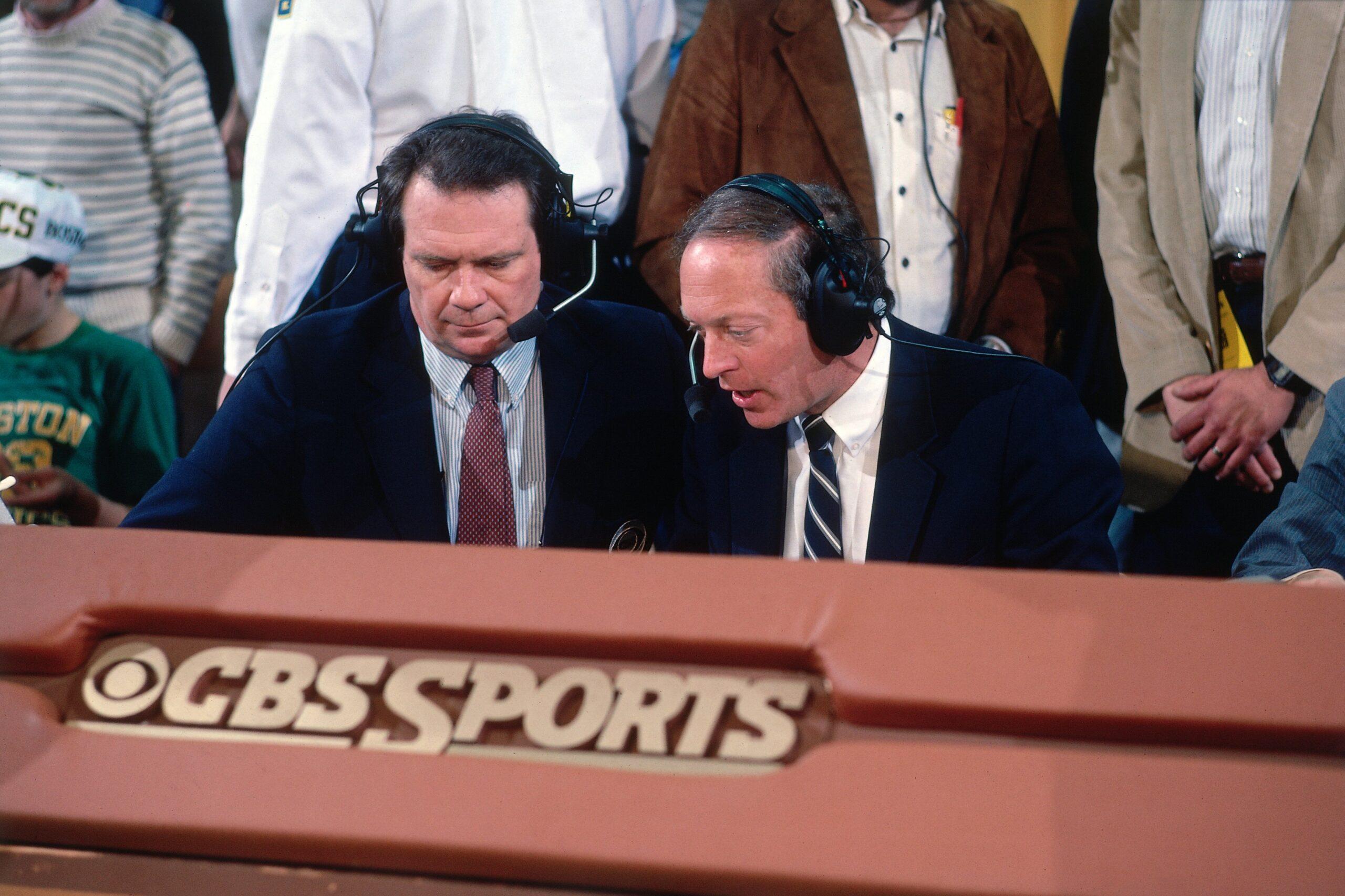
Dick Stockton and Tommy Heinsohn in 1984
Miller styles the title of his site as “Un/Necessary Sports Research,” which he intends to convey a double meaning. “One part is pretty straightforward—it’s unnecessary sports research, not the sort of thing people are generally clamoring to know,” he explains. “Dick Stockton’s 1,544 is not common knowledge in the way that Ruth’s 714 and Aaron’s 755 were.” (Other Miller sports side projects, such as short-lived podcasts about soccer stoppage time and an alphabet-based baseball simulation, were more extraneous than that.) However, he continues, “the other part is more philosophical. Howard Cosell used to talk about sports being the toy department of human life, and we need those things to excite us and have fun in the midst of all the other, ‘important’ parts of life. … And in that sense, it’s necessary sports research.”
Before social media, this was a couple of people’s niche hobby that never really would have gone beyond them. And now I shudder to think at how many followers are out there paying attention to sports announcer counting.Miller
Miller concedes that calling the stats he collects “trivia” is “probably not wrong.” However, he notes that “There’s a George Will quote about how nothing about baseball is really trivial, because everything can become a useful piece of information later. It feels like it’s trivial. Until it isn’t.”
It's not trivial to Albert. It’s his life's work, quantified. And he’s honored to be passing Stockton, whom he’s known and admired since the ’90s. In fact, they go back further than that, though Albert can’t recall their first meeting, for good reason: He was still a baby when Stockton visited Albert’s parents at their New York City apartment. “Kenny was in the crib,” Stockton says. “He was about a year old. And I was playing the piano at Marv’s house after I was with him at a Knicks game. And [Kenny] started to cry. So he really gave me bad reviews early on. … And I never let him forget it.”
Stockton and an adult Albert reconnected after both of them joined Fox Sports for the inception of NFL on Fox in 1994. Years later, Fox flipped its NFL roster around: Albert moved up to the no. 2 spot behind Joe Buck, where he worked with Daryl Johnston and Tony Siragusa. “That had been Dick’s crew,” Albert says. “And I’ll never forget, he left me the nicest message, congratulating me. A lot of people wouldn’t do that. And now that I’ve become one of the veterans, I try to keep that in mind when I’m around younger broadcasters who I’ve met or who I’ve worked with through the years, trying to treat them the same way that Dick treated me when he left that message back in 2007, because it was something he didn’t have to do.”
Stockton says, “I took over when somebody was a veteran and moved up when I was at CBS early on. And that’s what happens. That’s the way the business goes. And I think you have to give the younger broadcasters who have the ability a chance. It’s the way of the world in life, and it’s the way of the world in our business.” And when he was leapfrogged by Albert in the Fox NFL hierarchy, Stockton took solace in his esteem for Albert: “At least he was an outstanding broadcaster.”
Stockton is similarly gracious about ceding the top spot on Miller’s leaderboard. As soon as he came across the stats, Stockton remembers, “I was saying, ‘Well, I’m not going to hold this forever. … Kenny Albert and Kevin Harlan are going to pass me.’” (Harlan, who’s 65, still trails Stockton by 34 games.) Albert doesn’t have to worry about Stockton coming out of retirement to retake his title. Stockton, who hung up his mic in 2021, offered his felicitations from the Maldives, in the midst of a lengthy cruise from Singapore to Cape Town. “Don’t miss a damn thing, I have to tell you,” he says. “I don’t miss doing a game between anyone. I did it as long as I wanted to do it. I loved it. … I had a great 50-plus-year career. I did things that I wanted to do, and I met great people. I covered great events, and I lived a great life. I’m living a better life now.”
Everything can become a useful piece of information later. It feels like it’s trivial. Until it isn’t.Miller
Fox wanted Stockton to continue, “but I really had enough,” he says. “And if you’re not fooling yourself, you know when it’s time. If your ego tells you, ‘I’ve got to continue to do it,’ I mean, that wasn’t me. And I can’t fathom that. So I just think it’s a natural thing. … I would rather travel and get on a cruise for fun and not always have to go to South Orange, New Jersey, to do a Seton Hall game.”
From the sound of it, Albert won’t be joining Stockton on the cruise circuit anytime soon, though he has accrued a wealth of frequent-flier miles, which he and his wife of almost 30 years (plus two kids in their 20s) are able to redeem during his relatively slow summer months. For the foreseeable future, though, he’ll probably be building his broadcasts lead. “I never feel like I’m going to work, even though there’s a lot of work and travel involved,” he says, adding, “At some point we all slow down, but right now I love what I’m doing and [am] very fortunate to have bosses at the various networks that allow the jigsaw puzzle of the schedule to play out as it does.”
That puzzle has a lot of pieces, which has fostered a large body of online literature devoted to Albert’s itinerary. (The spring of 2014, when Albert called both the NHL’s Eastern and Western Conference finals, on opposite coasts, may have been his most frantic time.) He finds Miller’s favorite sport, baseball, to be the most challenging of the sports he calls regularly—there’s “much more airtime to fill,” even post-pitch clock—but only once has he felt out of his depth behind the mic: while calling college wrestling at the ACC Championships in Chapel Hill in the mid-’90s. “Once the actual event started, I felt like I had no idea what I was watching,” he says.
Albert called a Shohei Ohtani home run earlier this month, in a Dodgers–Blue Jays World Series rematch, the day after calling Flyers top prospect Porter Martone’s first NHL goal, an overtime, five-on-three game-winner. Albert doesn’t make headlines like Ohtani—if anything, he blends into the fabric of the broadcast, rather than seizing the spotlight—but he’s also enviably versatile. And as far as he’s concerned, his sportscasting career is at its peak: On the list of his most cherished calls, the golden goals by Megan Keller and Jack Hughes at the Winter Olympics in February were “certainly at the top.”
Kenny Albert’s Favorite Calls (In Chronological Order)
Stockton, whose national broadcastography begins with a Bears-Steelers game on September 17, 1967 and ends with a Texans-Browns game on November 15, 2020, has his own enviable highlight reel: the Villanova-Georgetown NCAA final in 1985; Michael Jordan’s 1989 buzzer-beater to clinch a Bulls playoff victory over the Cavaliers; Dan Jansen’s speed-skating gold in Norway in 1994; the Panthers’ double-overtime playoff win over the Rams in 2004; and, first and foremost, Carlton Fisk’s landmark wave-off homer to win Game 6 of the 1975 World Series. And he has one edge over Albert: He’s one of only six announcers to have called national games in each of the Big Four. Albert estimates that he’s called roughly 300 NBA games, as well as several national college basketball games for Fox, but he hasn’t checked the “national NBA broadcast” box. Not that he’s ruling it out: “You never know what might happen,” he says.
Albert, of course, comes from a rich sportscasting lineage, which includes not just NBA icon Marv, but also Kenny’s uncles Al and Steve. As of Saturday, the Albert clan’s collective corpus will consist of 3,160 national NFL, MLB, NBA, and NHL broadcasts. The youngest of the big four Alberts was groomed for the gig from an early age, though Stockton doesn’t hold the head starts against the many second, third, or fourth-generation broadcasters in the business. “They’ve all studied under their great fathers,” he says, and because of that, “They’re a superior broadcaster.” (This patrilineal tradition speaks to these Big Four broadcasts being mostly a male domain. Miller tracks sideline-reporter appearances—Lisa Salters, in second, trails the late Craig Sager by fewer than 100 broadcasts—but in play-by-play and commentary roles, Doris Burke, A.J. Mleczko, and Jessica Mendoza are the only women with what Miller describes as “sizable totals.”)
Miller may not have gotten the same parental advantage as Albert, but he didn’t fall far from the tree either: His dad was a sportswriter and sports information director, mostly before Tony was born. “I do credit dad with a fair amount of, you watch the game and you think about what counts and what doesn’t count and what can we do with that,” he says.
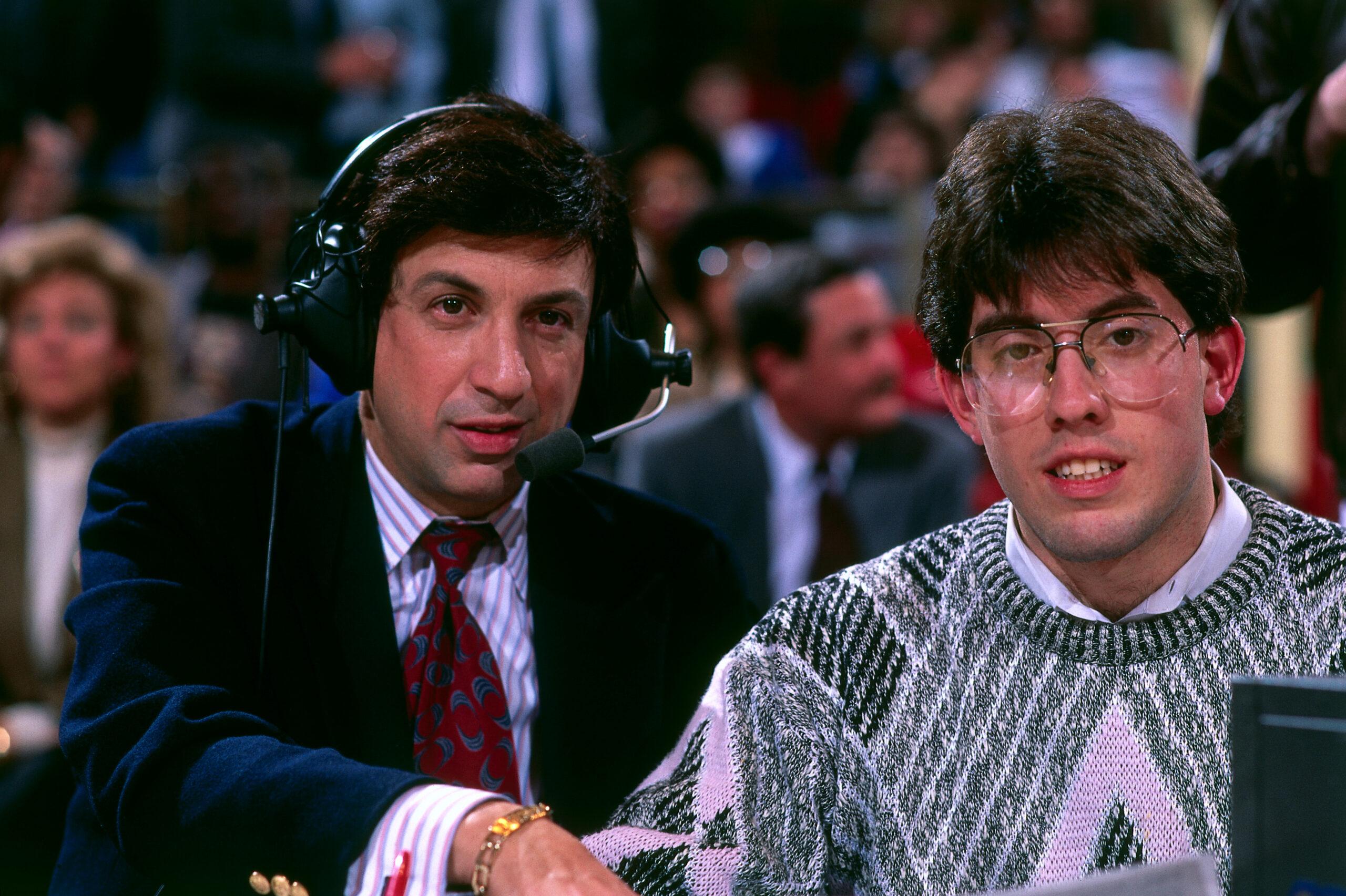
Marv Albert and Kenny Albert at Madison Square Garden in 1991
Miller doesn’t talk much about his sports interests at his day job, but he harnesses some of the same traits there, too. “I put things into categories that quote unquote normal people wouldn’t even really worry about,” he says. “When we’re trying to decide, ‘What row of the spreadsheet do we put this resident’s meal for this day on?,’ that’s pretty small potatoes, pun actually not intended, compared to, ‘We’re trying to track down which game was Dave Hodge hosting for Hockey Night in Canada on this date in 1983?’” But it satisfies the same urge.
Miller, a communications major who has covered and called games for Goshen’s paper and radio station, has long since accepted that his own childhood dreams of athletic or broadcasting stardom wouldn’t come true. But he has put his stamp on the sports world. And in typical self-effacing fashion, the Cubs, Bears, and Pacers fan—he came of age during Jordan’s second retirement and Reggie Miller’s reign, and before Peyton Manning’s prime—prefers not to share his personal rankings of broadcasters, Albert included.
“I think you could make up a sport, and within a couple of weeks, Kenny Albert would be sounding like he had done it for years,” says Miller, who was weaned on Chip Caray and Steve Stone. “Certainly in this capacity, though, I prefer to stay impartial and not take sides about, ‘OK, this guy’s good, this guy’s not so great.’ I don’t think that me adding my voice to that equation helps a lot. Who I like or don’t like doesn’t really make a difference. It’s what’s on that counts. At some level, the numbers speak for themselves. Kenny Albert’s gotten himself on national TV 1,500 times, and I’ve gotten myself on national TV a whopping zero.”
Miller, who watches the watchers, will be tracking tons of national TV in the coming weeks. For him, and for Albert, this is the busiest time of year, barring October. In addition to baseball, Miller says, “We've got three basketball games and four or five hockey games in the same night, and several of those hockey games have two different national broadcasts, one in the U.S., one in Canada. [It’s] a little bit like drinking from a fire hose. Maybe a fire Zamboni.”
That hose, or Zamboni, has helped Albert climb the leaderboard faster than Stockton did. There are more teams, more games, and more networks than there used to be, which means more national broadcast assignments. Just as heightened scoring environments lead to record-breaking performances on the field, the court, and the ice, the proliferation of networks and games can inflate broadcast counts. And if those trends continue, Albert himself could eventually be displaced atop the all-time leaderboard.
I think you could make up a sport, and within a couple of weeks, Kenny Albert would be sounding like he had done it for yearsMiller
“Oh, of course, I’m sure somebody will surpass all of us someday,” the new no. 1 says. “It’s kind of unique when I look at what I’ve been able to do working in so many different sports and for so many different networks. … But they always say records are made to be broken. So I’m sure these will be someday, as well.”
If so, we'll necessarily have Miller’s sports research to thank for filling us in.
“I'm certainly still on the younger side of the spectrum, so I’d like to think I’ve got a few more years or decades of paying attention to this stuff in front of me,” Miller says. “But yes, we’ll be watching. But not everything at once, because we only have two eyes and two ears.”
And as long as Miller is watching the broadcast counts, many other eyes will be trained on them, too.