
The 2026 NBA playoffs have finally arrived! With the first round’s opening weekend in the books, here’s a look at eight things that caught my eye. Some are overreactions, others are early adjustments, and some are general takeaways now that every team has played at least one game. Without further ado, let’s dive in.
The Magic can absolutely pull this off.
After dropping Game 1 on their home court, should the 60-win Detroit Pistons be nervous about losing three more times to the 45-win Orlando Magic? Yes. The Magic aren’t your typical no. 8 seed. Coming into this season, they had realistic NBA Finals ambitions. They were young, extremely talented, ascending, and, with Desmond Bane in tow, suddenly armed with the type of playmaking 3-point threat they badly needed.
Then the injuries came. The vibes soured. The bickering began. The losses mounted. When the Magic humiliated themselves in a regular-season finale against the Maine Celtics, it seemed like they had quit on their coach. Then they lost their first play-in game against the Philadelphia 76ers, who didn’t have Joel Embiid.
Their shocking subsequent blowout victory against the Charlotte Hornets didn’t happen by accident, though. The Magic did things in that game we hadn’t seen from them in weeks. They defended their asses off, moved the ball, and, um, actually cared! Now take a step back. Orlando is healthy, mean, and huge, and it has revived its own interest in competition. And the talent is still there. As he has been in every playoff series of his career, Paolo Banchero was unguardable at all three levels in Game 1, a postseason killer who could suddenly nail every turnaround baseline jumper and pull-up 3 you gave him. His comfort level in the second half was that of an MVP candidate, and he kept overpowering and outthinking one of the most impenetrable defenses in the league.
And then there’s Franz Wagner. Sometimes a basketball team doesn’t live up to the expectations that were thrust upon it because (arguably) its best player was effectively sidelined for four months with a devastating ankle injury. If the Wagner who finished Game 1’s fourth quarter with 11 points and four assists (without missing a shot) is here to stay, the Pistons may be screwed.
Tobias Harris couldn’t stay in front of him on the perimeter, and Cade Cunningham couldn’t stop him in the post. If there was a mismatch involving Wagner, Orlando found it. He lived at the basket and kept finishing over quality contests; he was spry as hell and totally unafraid of the moment, let alone Detroit’s physicality. Wagner may not be able to replicate such a dominant performance, but it should still terrify the Pistons.
The team that beat Detroit in Game 1 is not the same team that scuffled through its hugely disappointing regular season. But none of the past matters now. Today, these Magic might just be the team people thought they could be.


Maybe Kevin Durant should have won MVP.
The ugliest offense on Saturday was puked up by the Houston Rockets, who lost to a Los Angeles Lakers team that they probably should have beaten even without Durant, a last-minute scratch due to a knee injury.
Watching Houston scrounge together a paltry 83.7 points per 100 half-court plays was painful. The Rockets were inelegance personified, somehow managing to shoot 43.5 percent in the restricted area. For any team looking to enjoy its playoff experience, one key ingredient is the ability to space the floor. The Rockets, by contrast, spent most of Game 1 inside an outhouse. The possession below pretty much sums up what that looks like, with lineups in which zero out of five players need to be guarded on the perimeter:
The fairest conclusion to draw is that Houston simply isn’t used to life without Durant—an invaluable 37-year-old who had missed only two games since Thanksgiving. It’s understandable that the Rockets would struggle without him. And not just KD; the Rockets were constructed with the expectation that Fred VanVleet and Steven Adams—both of whom are out with long-term injuries—would streamline everyone else’s nightly assignments in the playoffs.
But without them, Alperen Sengun, Amen Thompson, and everybody else have been forced to bite off more than they can chew against a Lakers defense that had decent success switching most screens and then aggressively helping behind the play. That’s the bad news. The good news is that over the course of 59 possessions with Sengun and Thompson on the court together, Houston’s offensive rating was 120.3. Now, this was a gnarly 120.3, primarily due to the fact that the Rockets grabbed half of their own missed shots—and they missed a ton of shots—but that level of efficiency is still more than enough to beat the less-than-whole Lakers, who drilled over half of their 3s and over 60 percent of their midrange shots in Game 1.
Sans Durant, the simplest course correction for Houston would be to make the open shots Los Angeles is willing to surrender and make better reads on drives into the paint. Thompson spent Game 1 swimming upstream, forcing tough shots at the basket that were well-contested. This photo—captured near the end of a drive into traffic that ended in a turnover—illustrates that. Thompson sees Jaxson Hayes switch out onto Reed Sheppard and thinks the coast is clear. It’s … not.
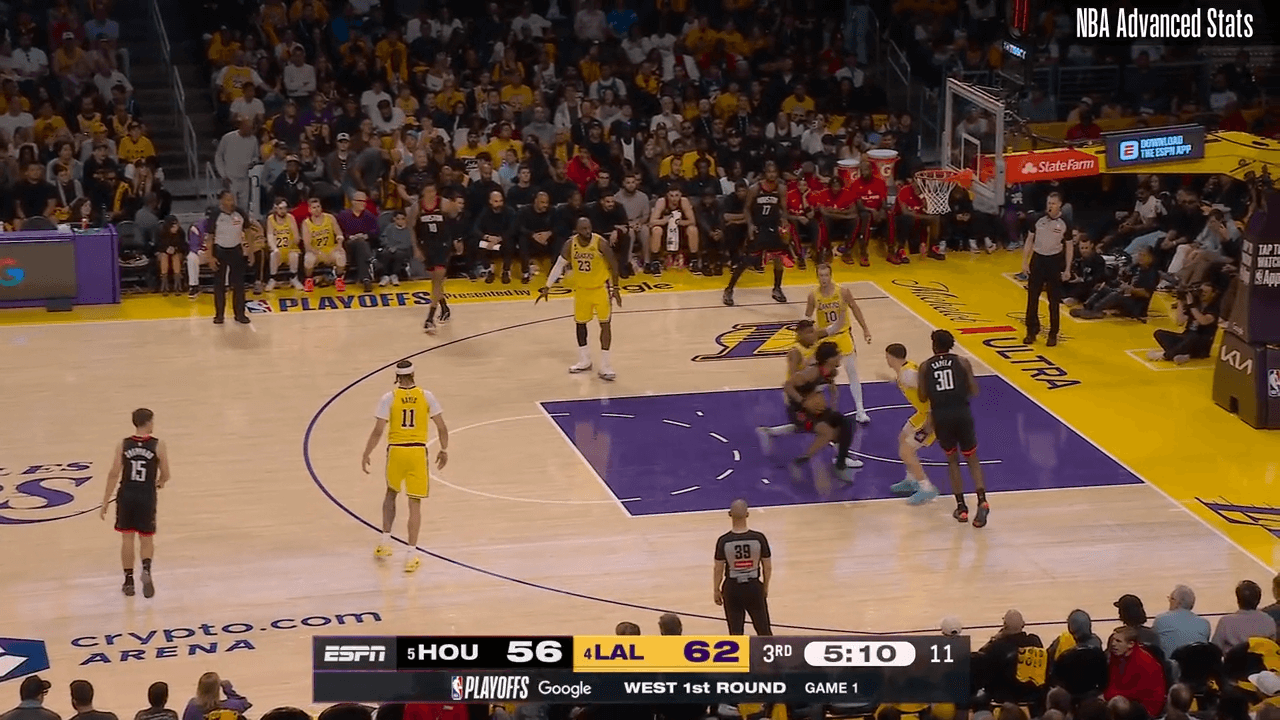
There are ways for the Rockets to loosen things up a bit. They can (and absolutely should) target Luke Kennard in more actions with either Thompson or Sengun as the ball handler. To get ahead of L.A.’s switching, they can slip to the basket or drive toward the pick after it’s set. Anything to create four-on-three or three-on-two advantages.
Easier said than done. I get it. But how about applying even more ball pressure against a Lakers offense that’s down its top two scorers? The Rockets need to be forcing turnovers, running off of misses, and speeding up a game that they should absolutely not want to play in the mud. Maybe none of this will matter if Durant returns to rescue an offense that suffered a disastrous shooting night from both Sheppard and Sengun, who combined to go 12-for-39 from the field. But if the Rockets are left to fend for themselves without their All-NBA Hall of Famer, it’d be nice to see them find ways to deal with the predictable spacing issues that are more creative than “crash the offensive glass and hope for the best.”
The Cavs’ rotation is a beautiful mess.
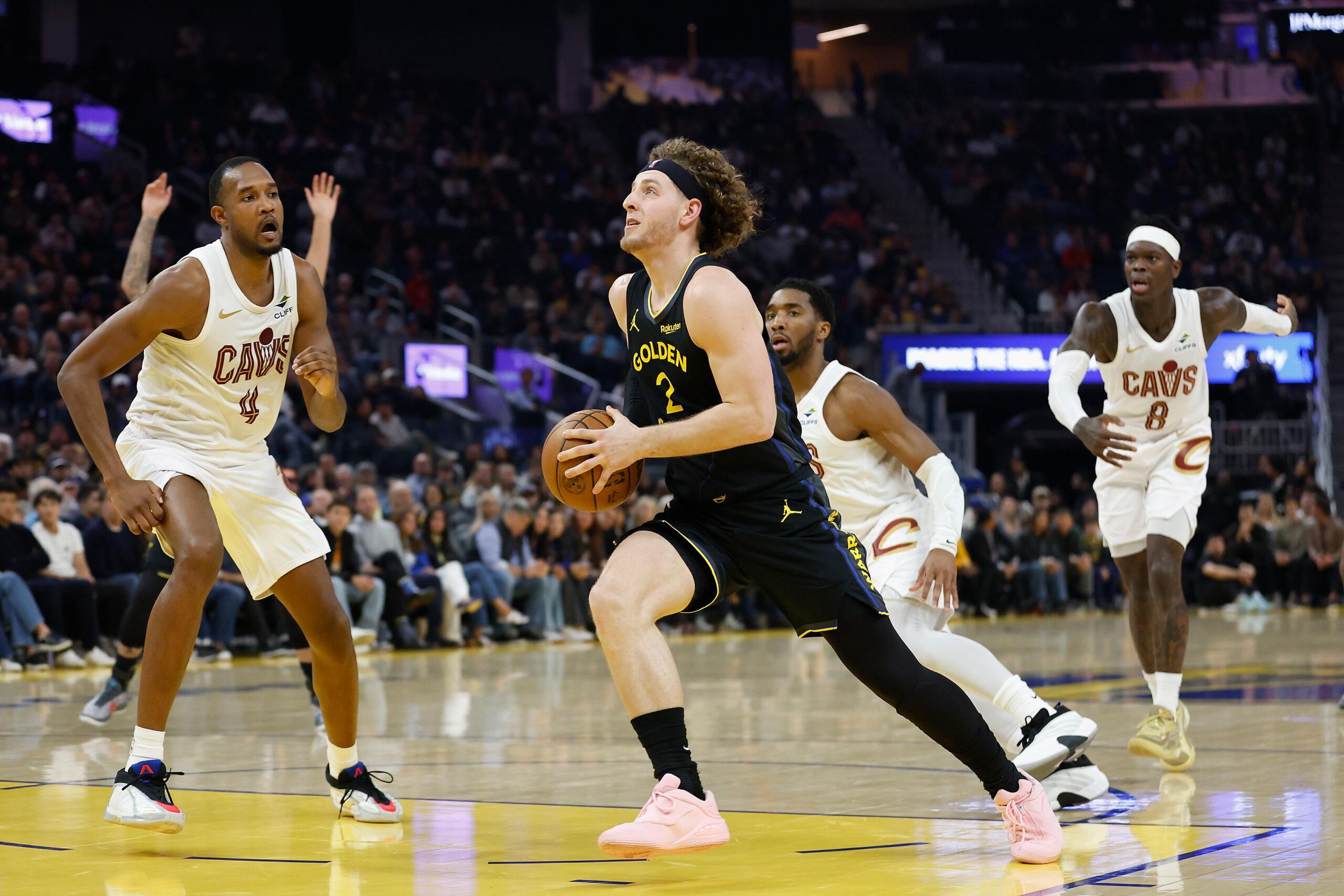
The Cavaliers handled the Raptors for most of their series opener on Saturday afternoon. It was an unsurprising result, but it happened in somewhat surprising fashion. Why? Cleveland built and extended its double-digit lead in the second half by using lineups that had literally never played before. That’s weird!
Game 1 of the postseason isn’t typically an ideal time to test-drive brand-new five-man units, especially on a hyper-expensive roster that underwent midseason surgery to resuscitate its championship aspirations. The fluidity of Cleveland’s rotation is either a recipe for disaster or a spring of untapped potential. It’s a real eye-of-the-beholder situation, but I lean toward the latter because, on paper, the players in these units make a ton of sense together against just about any team.
Kenny Atkinson played 10 guys in the first half. When there was 3:31 left in the third quarter, he went to a lineup we’d never seen before: Donovan Mitchell, Evan Mobley, Jaylon Tyson, Sam Merrill, and Max Strus. And you know what, sign me up! That’s a potent, complementary unit with more movement shooting in its pinky than several playoff teams have on their entire roster.
How about James Harden, Jarrett Allen, Dean Wade, Dennis Schröder, and Keon Ellis early in the fourth quarter? Looks to me like an appropriate blend of size, chaos, and aggression. It features multiple ball handlers, several plus defenders, and one of the most frightening pick-and-roll combinations in the league. A few other units that hadn’t played even 10 minutes together all season were scattered throughout the game.
Cleveland didn’t have enough time to build a consistent substitution pattern during the regular season. It made a couple of significant trades just a few months ago, and between then and now, several key players dealt with injuries that forced them in and out of the lineup. Their starting five, let alone their closing five, is not set in stone. That’s a nightmare for any coach to manage, but it also creates a headache for opponents trying to scout and prepare.
Atkinson has an embarrassment of riches at his disposal—and enough talent to reach the NBA Finals and maybe even win the whole damn thing. But there’s a tremendous amount of pressure on him to repeatedly play the right five guys at the exact right time. We’ll see how long it takes for him to tighten Cleveland’s belt and find a routine that works.
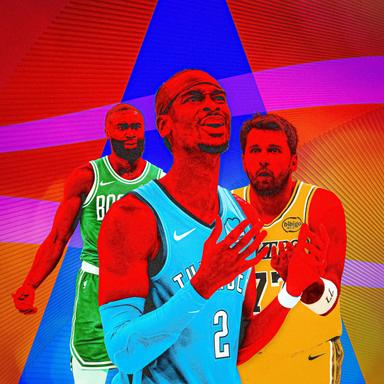
The Celtics defense is second to none.
What Boston’s defense did to Philadelphia’s offense in Game 1 should be illegal. In addition to getting back in transition and cleaning the boards, the Celtics gave their fans a master class in how to cut off penetration, funnel the ball, and then contest every shot. In the half court, Boston held Philly to 83.8 points per 100 plays, a mark that the Sixers have failed to reach in just three regular-season games since 2018 (Joel Embiid’s second year).
It’s corny, but they are the embodiment of what a defense can be when all five players are locked in to stop whoever’s about to score instead of their own man. They give themselves to the team. That level of off-ball awareness forces any offense to, well, work together. The Sixers can’t beat the Celtics if they play one-on-one. They might have a chance, though, if they find and take the looks Boston is willing to surrender. That didn’t happen nearly enough on Sunday.
Look at the gap help before these 3s go up. Boston doesn’t want to leave anyone wide open behind the arc, but when that does happen, it’s in service of the primary goal, which is to take away attempts near the basket. Boston does a better job than any other team in the league of limiting shots in the paint. The plays above illustrate why.
On top of that, the Celtics might force the most “tip your cap” shots, looks that go in despite excellent defensive efforts from areas of the floor that make Joe Mazzulla smile. These two paint jumpers by VJ Edgecombe are a good example. Not only are they 2-point jumpers taken late in the shot clock, but they’re contested by two Celtics.
What could be a devastating gamble for another team is simply a smart read for the Celtics. They know when to help and how far to go. This block by Baylor Scheierman is probably my favorite play of the entire game. He knows Luka Garza is vulnerable in a drop against Paul George, so he dashes off his man to swat the shot out of bounds:
Boston built a sizable lead early in Game 1—the margin was at least 15 points from the 10:37 mark in the second quarter until the final buzzer—which slightly shifted its defensive strategy: Contested 2-point shots were favored over the possibility of a 3-point barrage, meaning help defenders were willing to widen Philly’s driving lanes by staying a step closer to the perimeter. (The paint was still a beehive: Philadelphia shot 55.6 percent at the rim.)
Overall, whether they were peel switching to curb a drive, stunting to make a shooter hesitate, or simply battling to stay in front of the ball, the Celtics showed what a championship-level defense looks like in Game 1.
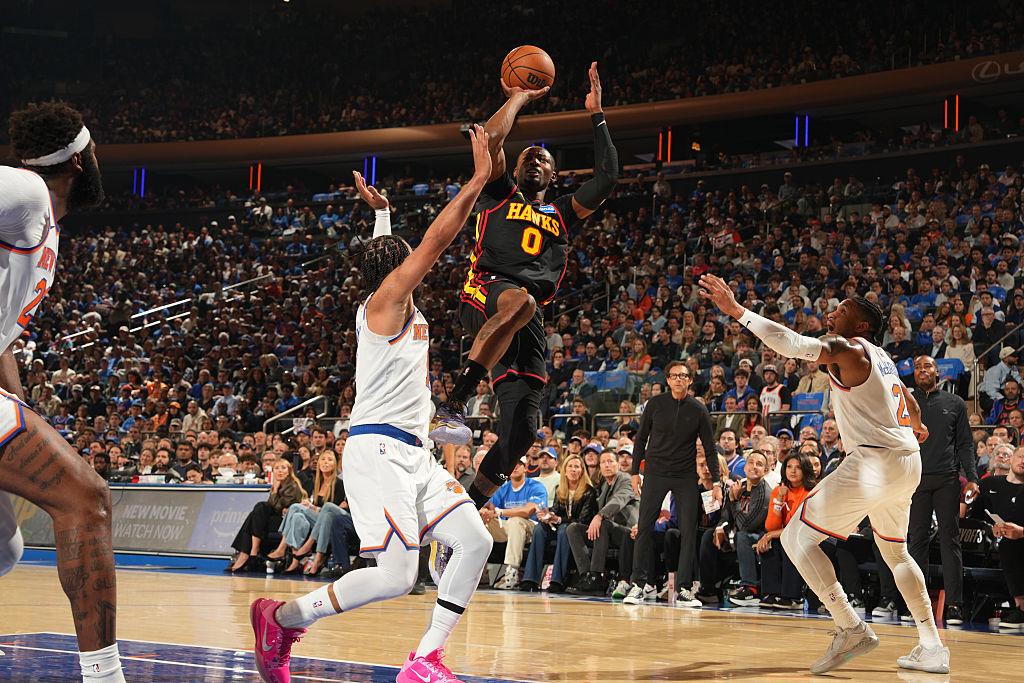
The Hawks have a Jonathan Kuminga problem.
After one loss, it’s too early for Quin Snyder to pull a Steve Kerr and yank Kuminga from his playoff rotation … but should he? The Hawks were pretty good with Kuminga on the floor this year, as the fifth-year forward curbed his worst impulses for a team that needed a jolt of muscled dynamism off its bench.
But their 113-102 loss to the Knicks at Madison Square Garden was a disaster. The tantalizing 23-year-old looked exactly like he did as a Golden State Warrior: the Michael Jordan of short-circuiting his own team’s offense.
Ball movement is the Hawks’ best friend. Quick decisions are paramount to their success against New York’s scrambling defense. Unfortunately, Kuminga is still a record-scratch savant who aggressively makes life harder for himself. In Game 1, he failed to capitalize on several opportunities to go at Jalen Brunson, missed open teammates, and exhibited some questionable shot selection.
On defense, he spent some time on Karl-Anthony Towns—whether New York played KAT with Mitchell Robinson or at the 5—and did an OK job. But it’s hard to forget a bad defensive mistake when you see one, especially when it directly leads to an Onyeka Okongwu foul.
It’s only one afternoon, and (more importantly) there’s no obvious replacement for Kuminga on Atlanta’s woefully thin bench. But would Zaccharie Risacher or Corey Kispert take as much off the table? In 27 minutes, Kuminga recorded eight points and one assist. The juice may not be worth the squeeze.
(Sidebar: The most important stat in this entire series may end up being Okongwu’s personal fouls. With no backup big men on their roster and playing against a team that has Towns and Robinson, the Hawks are basically driving a car, blindfolded, without insurance. If Okongwu can’t average around 40 minutes per game, Atlanta’s climb toward Round 2 will be as slippery as it is steep.)
Anthony Edwards’s defense has to be better.
Throughout Minnesota’s 116-105 loss in Denver, I couldn’t help but notice how intentional the Nuggets were about making Edwards exert himself on the defensive end. Normally, this strategy could fairly be called “bold.” But Game 1’s circumstances weren’t normal.
Edwards is not 100 percent healthy right now. He’s dealing with a sore right knee, and Saturday was just his third game in a month. After the loss, Wolves head coach Chris Finch said he “didn’t see a ton of physical limitations” but thought Edwards was tired in the second half, which explains why he pulled him out of the third quarter a little earlier than usual. “It wasn’t the Ant we're used to seeing,” Finch said. “But it's pretty much as expected [given] where he is and trying to find his rhythm.”
Denver played a role in screwing with said rhythm, too, wisely making Edwards work. With Ant starting out on Cam Johnson, the Nuggets tested him early by running Johnson off a medley of screens: flares, wide pin-downs, and on-ball picks high up the floor. They took advantage of Ant’s tepid pace getting back in transition and got good shots in the third quarter when the Wolves switched Edwards’s matchup and briefly put him on Jamal Murray:
There are some rotational tweaks Finch may make heading into Game 2. (For starters: not sitting Julius Randle and Edwards when Nikola Jokic is off the floor, not sitting Rudy Gobert and Naz Reid when Jokic is on the floor, and limiting Mike Conley’s minutes to when Murray rests.) But little of it will matter if more wind doesn’t fill Ant’s sails.
Phoenix is too small.
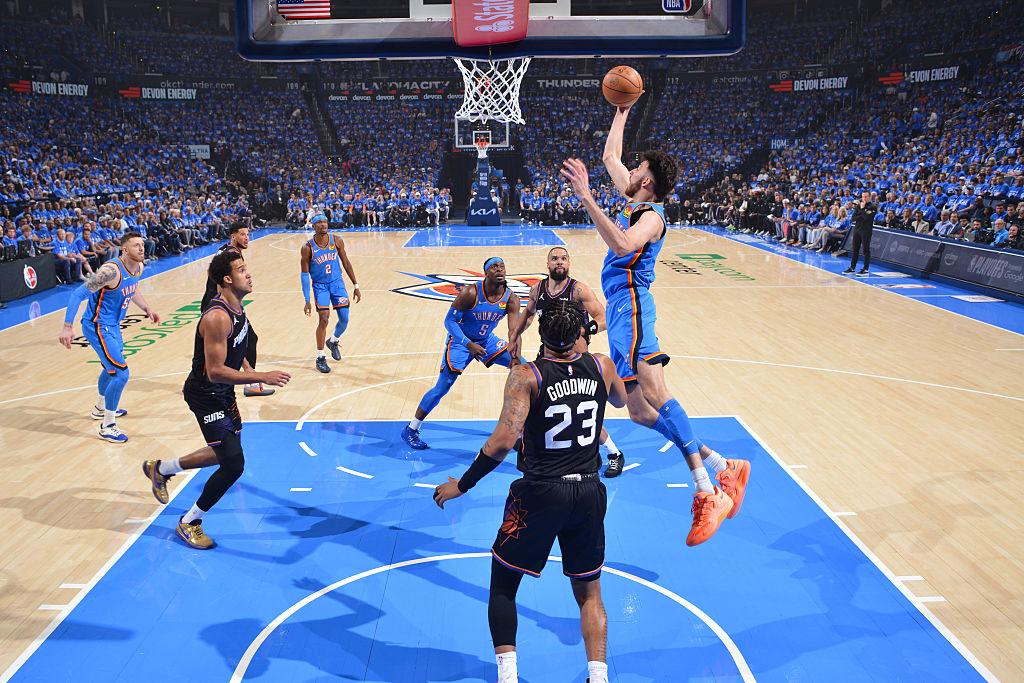
The Suns were extremely undersized before their starting center, Mark Williams, got hurt. Without him, and squaring off against an Oklahoma City Thunder front line that features Chet Holmgren and Isaiah Hartenstein, they spent Sunday’s series opener looking like sad figurines.
Seven members of the Thunder finished Game 1 with at least two offensive rebounds; in the first quarter, Phoenix trotted out a lineup that had Haywood Highsmith at the 5 and a Collin Gillespie–Jalen Green backcourt.
“I know the size is always going to come up,” Suns head coach Jordan Ott said after his team lost by 35 points. He then admitted how hard it was to throw rookie big Khaman Maluach into the fire. “I’m not sure that that was a great solution tonight. We gotta get him experience. We gotta speed him up as fast as possible because we’re injured there at that spot.
“They obviously had a game plan to attack us,” Ott continued. “They’re 28th in offensive rebound percentage, so obviously that was a game plan.”
The Suns are tiny. The Thunder can look like one of the largest teams in the league whenever they want. That matters on the glass but also, um, everywhere else. Everything I wrote about Boston’s defense applies to OKC, and then some. If the Suns had Hakeem Olajuwon in their starting lineup, this matchup would still barely feel like a fair fight.
The playoffs should not have this many fouls.
Maybe the most bothersome observation I had while watching an otherwise enjoyable weekend of playoff basketball was that, for the most part, the refs didn’t realize the regular season was over. Whistles were blown to penalize marginal off-ball contact and did little but disrupt the game’s flow and sideline players everyone wanted to watch. What are we doing?
It’s like the league decided to do a complete 180 from last year, when a few first-round series teetered on the edge of WrestleMania cosplay. This weekend, it seemed like the officials were intentionally going out of their way to penalize physicality.
All of a sudden, every other ball screen is illegal. The Nuggets spent 47.1 percent (!!) of their Game 1 possessions in the bonus. The Thunder needed five minutes to reach it. No one wants to see anybody get hurt, but it’s the playoffs! Give players more leeway to dictate their own fates! Allow some bumping, jostling, and agitation!