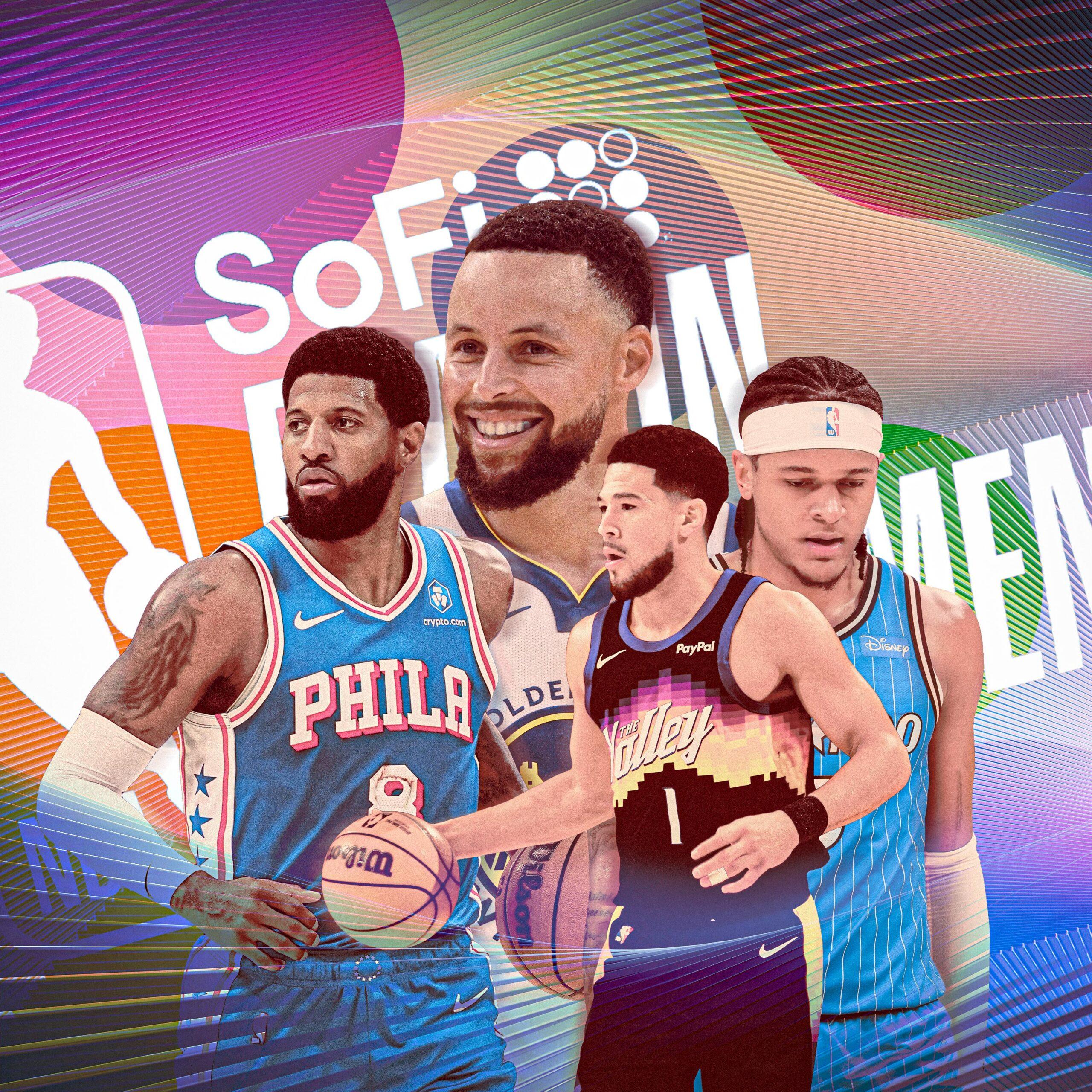

Almost by definition, NBA teams that make the play-in tournament are maddeningly inconsistent: good enough to qualify for a postseason entrance exam, but not good enough to lock themselves into the security of a top-six seed. Each of them is curbed by several questions. Some of those questions are existential. Some are technical. Pretty much none have solid answers. Nonetheless, here’s one for each of the eight play-in teams that will determine whether their season will end this week or whether they’ll survive to compete in the first round of the playoffs. Let’s have a look.
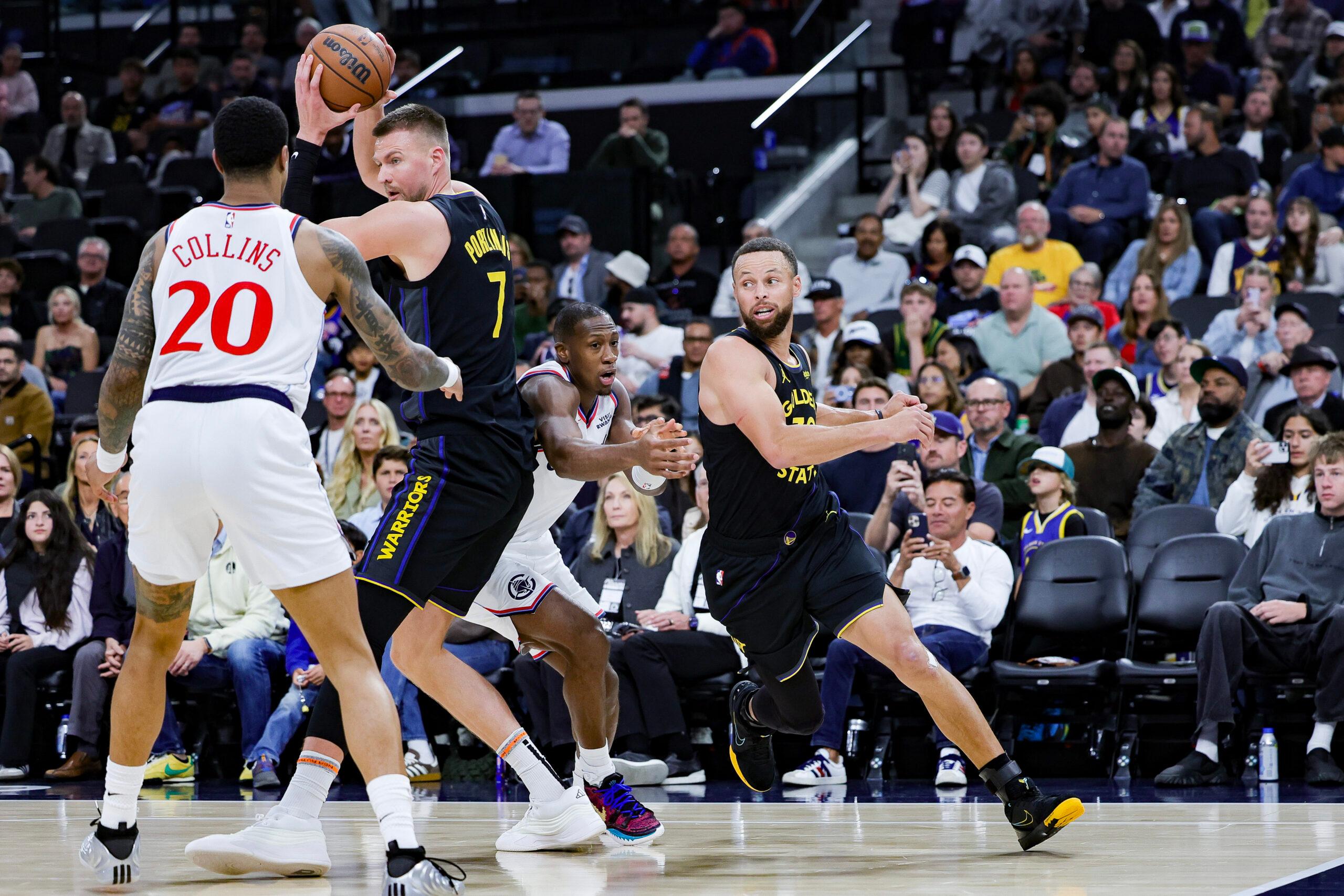
Steph Curry and Kristaps Porzingis on April 12
Golden State Warriors
Can Steph Curry and Kristaps Porzingis build chemistry on the fly?
Nothing about any recent iterations of the Golden State Warriors suggests that they can advance out of the play-in tournament. Can they really win two straight games with genuine stakes? Both on the road? After a humiliating loss against the Sacramento Kings that made Devin Carter look like Tyrese Maxey? And another defeat at the hands of the Kawhi Leonard–less Los Angeles Clippers in their season finale? Unlikely.
The reality is dark. But if Golden State is 100 percent healthy and 100 percent focused, it deserves a thimble of hope. The Warriors' ceiling depends on two new teammates who have zero chemistry.
Curry and Porzingis did not share the floor until April 5, a loss against the Houston Rockets. Curry scored 12 points in the 15 possessions they spent together. A few of them were off direct hookups—fast, intentional actions that might be irrepressible even against defenses that know what’s about to occur.
Curry and Porzingis can play off each other directly in the pick-and-roll or in a variety of off-ball actions that leverage their gravity. Here, Curry sets a wedge screen for Porzingis as the ball gets swung to Draymond Green on the opposite wing. Houston switches it, but there aren’t any defenders below the free throw line who can rotate over to help.
Is there a world where the planets could align and allow this duo to unleash a devastating two-man game, on and off the ball? Curry and Porzingis are the two most formidable shooters at their respective positions. They’re also more than able to create good looks for themselves when granted a mismatch. Time is definitely not on their side. But it would be cool to see what happens if Curry and Porzingis lean into each other’s strengths, even if it’s against the Clippers defense, which should be able to match up with them pretty well.
Charlotte Hornets
Can anyone stop Coby White?
It’s still wild to me that Charlotte was able to get White at the trade deadline without sacrificing anything particularly meaningful. This is someone who averaged 19.1 points two years ago and 20.4 points last season! He’s a professional scorer!
Before the trade deadline, Charlotte went limp whenever LaMelo Ball was subbed out of the game. White changed that. Plugging him in as an overqualified backup point guard has filled a gaping hole that the Hornets needed to address if they wanted to not only make the playoffs, but also win a series. When Ball is off the floor but White is on, Charlotte’s offensive rating is an absurd 9.2 points per 100 possessions above league average.
That’s largely because White’s skill set perfectly equips him to exploit and underline all the spacing offered within one of the league’s most electric ecosystems. White can drill stepback 3s. He can blow by big men on a switch. He can bank in running floaters from seemingly impossible angles. Equally important: He’s interchangeable in the small-small actions that make the Hornets buzz, and he has enough gravity to come off a screen and command the defense’s attention.
White’s minutes have dropped significantly from what they were in Chicago, but his usage percentage and assist rate have leaped to career-high marks. Most of his playmaking simply rolls off the pressure he puts on drives into the paint, forcing rotations and then finding the open man, but he’s also more than capable of running a high pick-and-roll with Moussa Diabaté or Ryan Kalkbrenner, eating up drop coverage with the right amount of aggression and patience:
And yes, I already mentioned this at the top, but I can’t really overstate how explosive his scoring has been. Here’s every leaderboard-qualifying player who averaged more than the 39.3 points per 100 possessions that White generated in a Hornets jersey: Luka Doncic, Shai Gilgeous-Alexander, Kawhi Leonard, Jaylen Brown, Victor Wembanyama, and Donovan Mitchell.
Add all this up, and there’s a nonzero chance that we’ll look back at February’s trade deadline and view Charlotte’s acquisition of White as the most pivotal move any team made this season.

Portland Trail Blazers
How does anyone score on the Blazers?
Let’s start here: Since March 1, Portland has had the second-best defense in the NBA. And when you take stock of who’s in some of those five-man units, it’s actually kind of surprising that they don’t rank even higher.
Jrue Holiday, Toumani Camara, Scoot Henderson, Matisse Thybulle, Donovan Clingan, Robert Williams III, Jerami Grant, and Deni Avdija all range from “dependably solid” to “maybe the very best at what they’re asked to do.” It’s a complementary bunch, featuring mean rim protectors; switchable guards, wings, and forwards; relentless off-ball chasers; and turnover-generating machines.
They do an excellent job of limiting 3s (no other team has been better at limiting 3s since March 1) and have enjoyed some luck on the looks that opponents do get off. The Blazers are committed to running shooters off the line, knowing that elite shot blockers will be there to protect the rim.
In the play below, there are even instances when those elite shot blockers will basically do everything all by themselves. (Remember, we’re only four years removed from Time Lord nearly winning Defensive Player of the Year.)
Portland is also smart about allowing the “right” shooters to shoot. Clingan and Time Lord in particular will often roam off a forward or wing and allow them to launch a few open 3s. It helps explain how the Blazers are also fourth in opposing field goal percentage at the rim.
Portland’s versatility and size force precise offensive execution from its opponents. Mismatch hunting is a waste of time and energy. In the play below, most defenses wouldn’t even consider switching a guard onto Zion Williamson—let alone one who’d fight for position and deny him the ball, like Holiday does—even if there’s help coming from the backside.
They’re smart and physical. If the game plan requires Holiday, Camara, or Scoot to top-lock their assignment and funnel back cuts at Clingan or Time Lord, they’ll do it. If Tiago Splitter wants Camara or Holiday to spend one stint hounding the opposing point guard up and down the floor and then the next moonlighting as the primary defender on a center, he has that luxury.
Shaedon Sharpe’s reintroduction into the rotation could create a defensive soft spot—the Clippers went at him repeatedly on Friday night—but right now, the Blazers are still a brainteaser that can punch you in the face. Good luck to the Suns offense, which hasn’t been able to shoot straight for about a month.
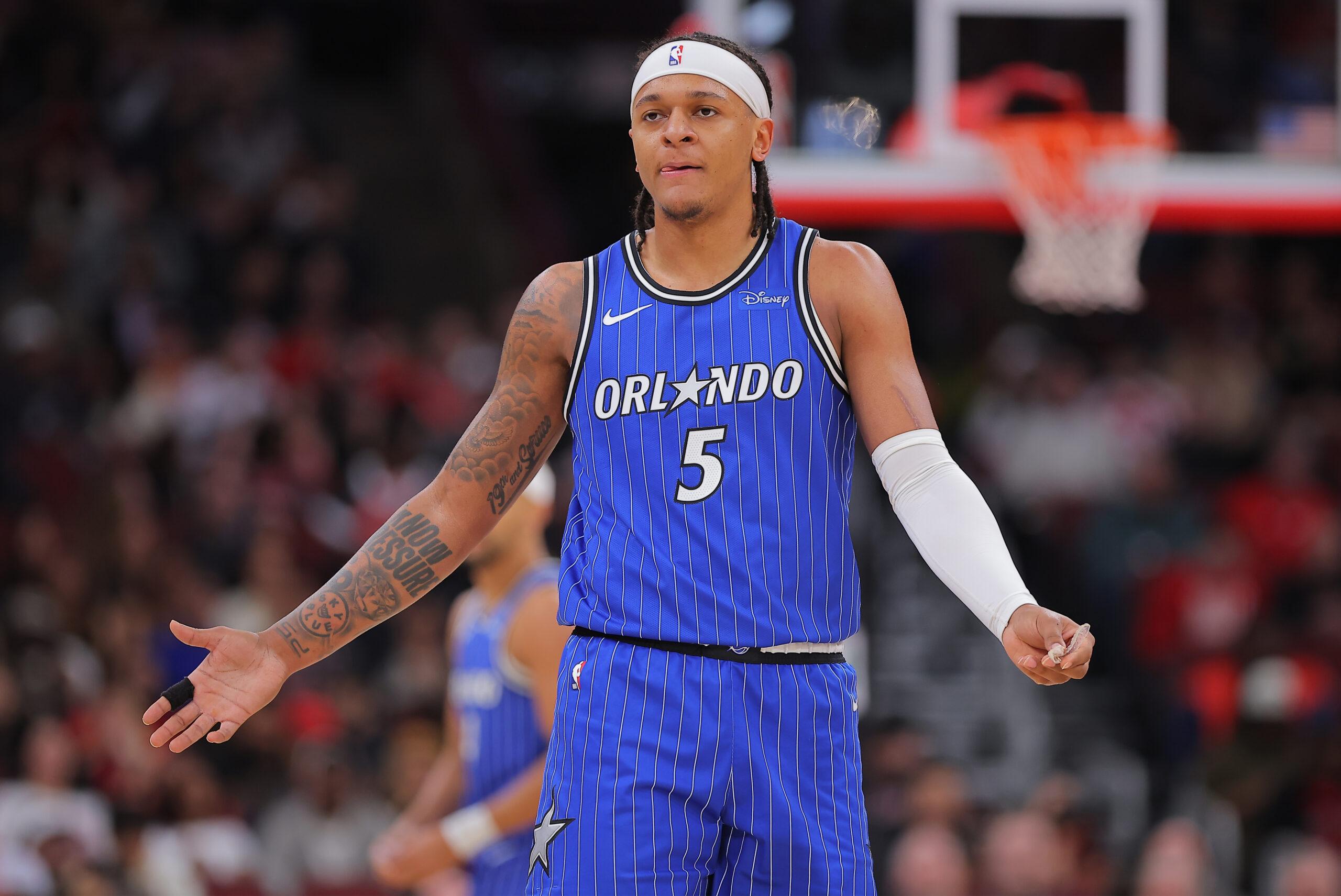
Paolo Banchero during a game against the Chicago Bulls on April 10
Orlando Magic
Do the Magic even care?
A bleak, albeit reasonable point of concern about the Magic is their occasional disinterest in trying as hard as they can. After a humiliating two-point loss against the Indiana Pacers on March 23, Jamahl Mosley pleaded for his squad to start games with the urgency of a team that’s down by 10 points.
Not even one week later in Toronto, Orlando stumbled into its nadir, when the Raptors went on a record-breaking 31-0 run that turned everyone watching it live into a “Michael Jackson eats popcorn” meme. The boat race wasn’t just about silly turnovers or an unwillingness to hustle back in transition—although, to be fair, there was a 5-on-1 fast break.
It was also a strategic blackout, full of nonsensical decisions on both ends. One of several examples can be seen in the play below: Why did Tristan da Silva chase RJ Barrett over the top on this dribble handoff 30 feet from the basket? Meanwhile, Goga Bitadze confuses Jakob Poeltl for Kristaps Porzingis:
It’s stunning that they’re here in the first place, having me write a blurb about their chances in the play-in. On the last day of the season, they suffered one last humiliation, falling to the Maine Celtics in a game that meant nothing to their opponent and so much to them.
This isn’t just about hustle. In a broader sense, it also applies to mental focus: sloppy shot selection, missed rotations, and avoidable self-owns. When their transition defense is bad, it’s abhorrent. When they take contested pull-up jumpers with 16 on the shot clock—looks that they can get anytime they want against defenses that will roll out a red carpet to allow them—you wonder why Mosley’s brain matter is not leaking out of his nose.
The critical injuries up and down this roster shouldn’t be ignored, Orlando's spacing is what it is, and Paolo Banchero's disappointing trajectory can’t be argued. But there’s still no excuse for so many spells of apathy for a roster that entered this season with a spine made of steel. Great teams have a firm handle on everything they can control. The Magic have been willing to let most of those controllables eat them alive.


Miami Heat
Do the Heat have another gear to tap into?
This is a broad question, but it’s one I’ve asked myself approximately 250 times this season. Maybe it’s a me thing. I like the Heat’s depth, admire their style of play, and believe that Erik Spoelstra is still one of the best basketball coaches on the planet.
I’m also aware that Miami’s ability to get stops has been nonexistent for weeks. Since Bam Adebayo’s 83-point game, it’s gone 7-10 and ranked 27th in defensive rating. To get a little more specific: Last week, Miami gave up 249 points in back-to-back losses against the Raptors. Even with Adebayo on the court, they looked like a frazzled bunch of Walmart employees getting trampled at the front door on Black Friday. In the past month, the Cavaliers dropped 149, the Celtics dropped 147, the Spurs and Hornets dropped 136, and, disgracefully, the Pacers dropped 135.
Still! There’s something to like and/or trust about pretty much everyone in Spo’s rotation. Since the All-Star break, Tyler Herro and Andrew Wiggins have both flirted with 50/40/90 splits. Jaime Jaquez Jr. continues to be a downhill wrecking ball off the bench. Norm Powell’s strained groin has put a damper on his first All-Star season, but if he can run around and knock down shots, it adds a different layer to Miami’s attack. Pelle Larsson is a timely cutter who, on the other end, habitually invades his man’s personal space and brings the competitive spirit Spoelstra loves to talk about every time he steps on the floor. Trying to score on the zone that’s deployed when Bam and Kel’el Ware share the floor is extremely unpleasant. (Lineups featuring these two bigs have been excellent—the issue is more about limiting groups that have only Ware in them.)
But for whatever reason, there’s a general malaise in the air. Just speculating, but maybe this team hasn’t coalesced because some people on it are thinking ahead to the highly likely shake-up that’s coming this summer. Whether that’s the long shadow of Giannis Antetokounmpo, Powell’s unresolved contract situation, a looming extension for Herro that may never come, or the trickle-down effect of Nikola Jovic being arguably the most disappointing player in the league, who knows.
“We can score with anybody,” Wiggins, who has a player option to deal with this summer, recently said. “We can defend like anybody. We’ve just got to put it together.”
The sentiment makes enough sense to me, yet, at the same time, Miami’s inability to “put it together” has made the Heat one of this season’s most frustrating enigmas. Something is infecting this team from the inside out. Unfortunately, basketball teams can’t be diagnosed with an MRI. If there is a cure, Miami has only 24 hours to find it—against a Hornets team that can score 125 points in their sleep.


Phoenix Suns
Will Devin Booker look like the star he’s purported to be?
Watching Booker this season—the best player on the Western Conference’s most pleasant surprise—I toggle between underestimating and exaggerating his impact. How weird is it that Booker, who was an All-Star, is rarely cited as the primary reason for Phoenix’s miraculous U-turn?
Some of that is the perception that he’s overpaid. (Booker’s estimated salary based on his DPM is $20.6 million less than the $52.6 million he’s making.) Some of it’s because he’s a holdover from last season’s embarrassing campaign, ceding credit for the turnaround to new faces like Jordan Ott and Dillon Brooks. And some of it’s thanks to how iffy his jumper has been this season. Booker is dead last in pull-up 3-point percentage among all 23 players who’ve attempted at least 200 of them this season. His true shooting percentage is league average, and his long 2s haven’t been this inaccurate since 2020.
Booker didn’t play enough games to qualify for All-NBA and, for me, would’ve had next to no shot at cracking any of the three teams even if he did. That’s not great considering how many other stars—Cade Cunningham, Anthony Edwards, Luka Doncic, etc.—did not meet the 65-game threshold. This is not an attempt to besmirch Booker’s ability. I’m bringing all this up because I’m curious about how great he can be on the type of stage that may demand a fireworks display against one of the very best defenses in the league.
Aside from Booker, I want to quickly shout out my favorite Sun, Oso Ighodaro. Whether he’s sprinting into a ball screen, applying an unreasonable amount of defensive pressure, or moonlighting as Phoenix’s point guard, Ighodaro absolutely rules. He thinks the game at a speed that keeps the Suns offense one step ahead of the opponent:
He’s reason no. 23,987,397 why no one will ever convince me that the NBA draft is not a crapshoot. How did nobody draft him in the first round last year?
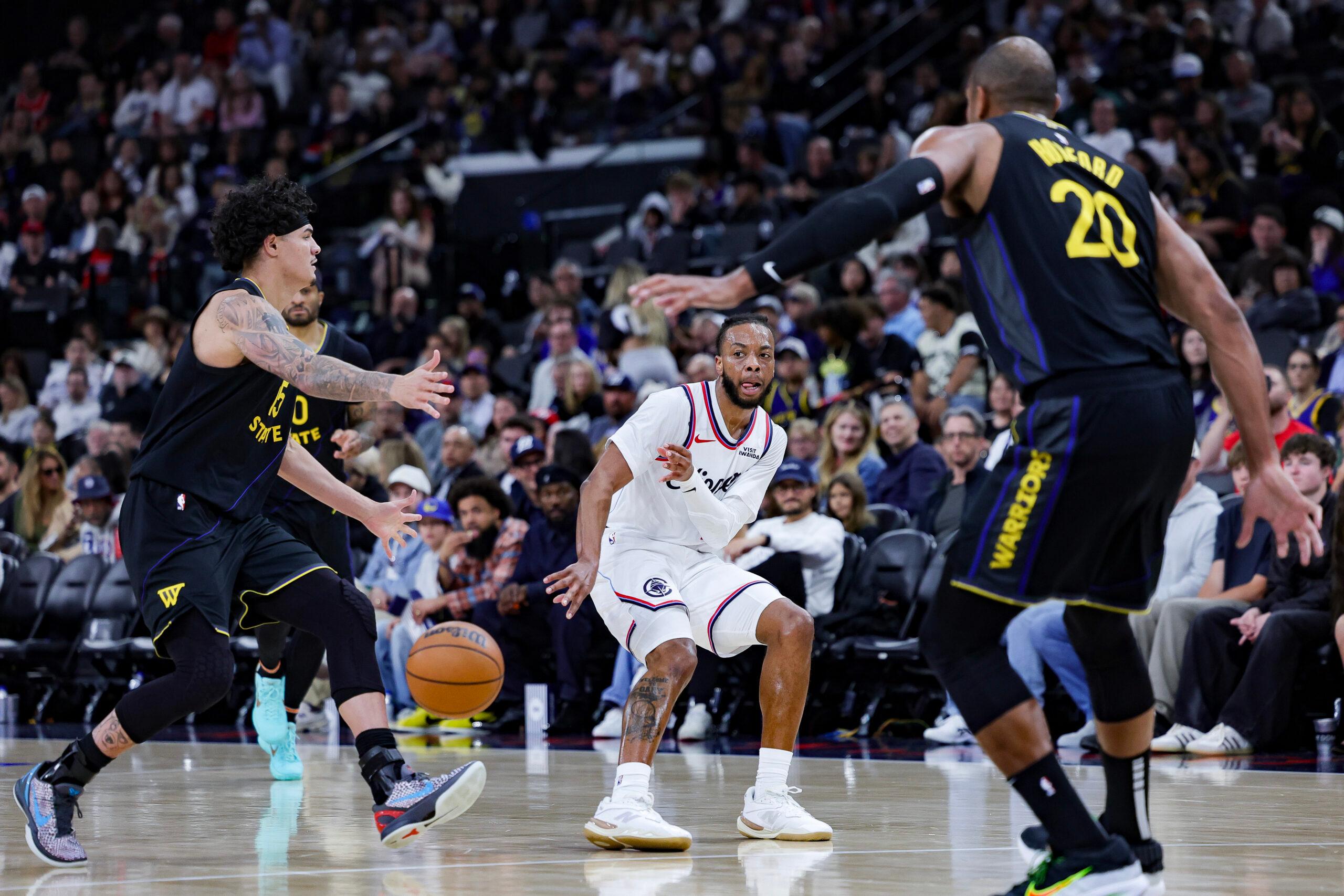
Darius Garland passes the ball past Gui Santos and Al Horford during a game on April 12
Los Angeles Clippers
Are the Clippers more dangerous with Darius Garland?
The blockbuster trade that swapped James Harden for Garland has kinda gone swimmingly for the Clippers. Not to say they wouldn’t have remained pretty good had they done nothing at all, but L.A. is 10-6 when Garland starts—a stretch that’s seen the two-time All-Star reestablish himself as an enticing spark plug. With the Clippers, he’s averaging 21.5 points and 6.5 assists, making 46.7 percent of his 3s and 51.2 percent of his 2s.
It’s a step too far to say that Garland is “better” than Harden, but he plays with a zip that better suits a roster that’s gotten younger and more dynamic over the past few months. His release is quicker than Harden’s, and he’s more of a headache when he’s fading off a flare screen or sprinting to his spot in transition. Want to force the ball out of Garland’s hands? Easier said than done!
Since April 1, the Clippers have tweaked their rotation to ramp Kawhi Leonard up for the playoffs. Instead of subbing out of the game a little over halfway through the first and third quarters, he’s gone the distance in each frame. That puts Leonard on the bench at the start of the second and fourth quarters, when Garland, too, has sat. It’ll be interesting to see whether Ty Lue staggers his two leading scorers in the play-in, eliminating five-man units that have neither guy on the court.
The case against making any change is, well, that the Clippers have decimated everything in their path when Leonard and Garland share the floor. Those lineups boast an offensive rating that’s 16.5 percentage points above league average. That is the dead center of a pizza oven. (Even if you “pad” the numbers to account for the small sample size, the Clippers are still charring your crust.)
Maximizing their time together makes sense. Unlike Harden, Garland can run a more sensible two-man game with Leonard because the opponent is less likely to switch when they come together—it’s not always the case, but Harden and Leonard tend to be guarded by like-sized defenders, whereas Garland’s man is typically going to be a smaller, quicker guard (i.e., someone Kawhi will annihilate in 0.4 seconds). The tandem is still developing chemistry, but we have examples of how they can push their opponents’ pressure points on and off the ball:
Garland’s slight frame makes him a perennial target on defense, but L.A. may have an easier time tolerating the weak spot he presents than Cleveland did. (Kris Dunn, Leonard, and Derrick Jones Jr. are not Donovan Mitchell.) The best way to mitigate those issues in a two-game playoff? Score a bunch of points.
Philadelphia 76ers
Is Paul George … back?
It’s spring, which means that the Sixers are sad. Joel Embiid’s appendectomy all but ended a season that was part hopeful passage, part depressing hamster wheel. Even if Philly makes it out of the play-in, its ceiling is threatening to collapse. Unless …
Since George returned from his 25-game suspension, there have been glimpses of the confident, assertive two-way star who, once upon a time, was obviously worth the max contract Philadelphia gave him. Hot 3-point shooting—42.3 percent on 8.7 attempts per game!—can explain part of the surge, but most of the optimism still attached to this nine-time All-Star springs from how confident he’s looked hunting his own shot.
George is just above 50 percent from the midrange (in non–garbage time minutes), and for the season, he’s 16.2 percentage points (!) more accurate at the rim when Embiid is not on the floor. (It could be a coincidence, but it is worth monitoring.) Whether he’s curling off wide pindowns, isolating at the elbow, or running a pick-and-roll, George’s playmaking instincts are intact. He can still upshift from secondary (or tertiary) option to the lead guy.
The Sixers aren’t going to accomplish anything meaningful without Embiid, but it’ll be fascinating to see whether George can go at least a week or two masquerading as the template-setting wing he used to be. If the answer is yes, in a faster tempo that relieves pressure from Tyrese Maxey and lets VJ Edgecombe detonate on defenses that are suddenly preoccupied, Philly may beat Orlando and rise to the proverbial “team nobody wants to play!” standing that’s seemed like its destiny for the past couple of weeks.