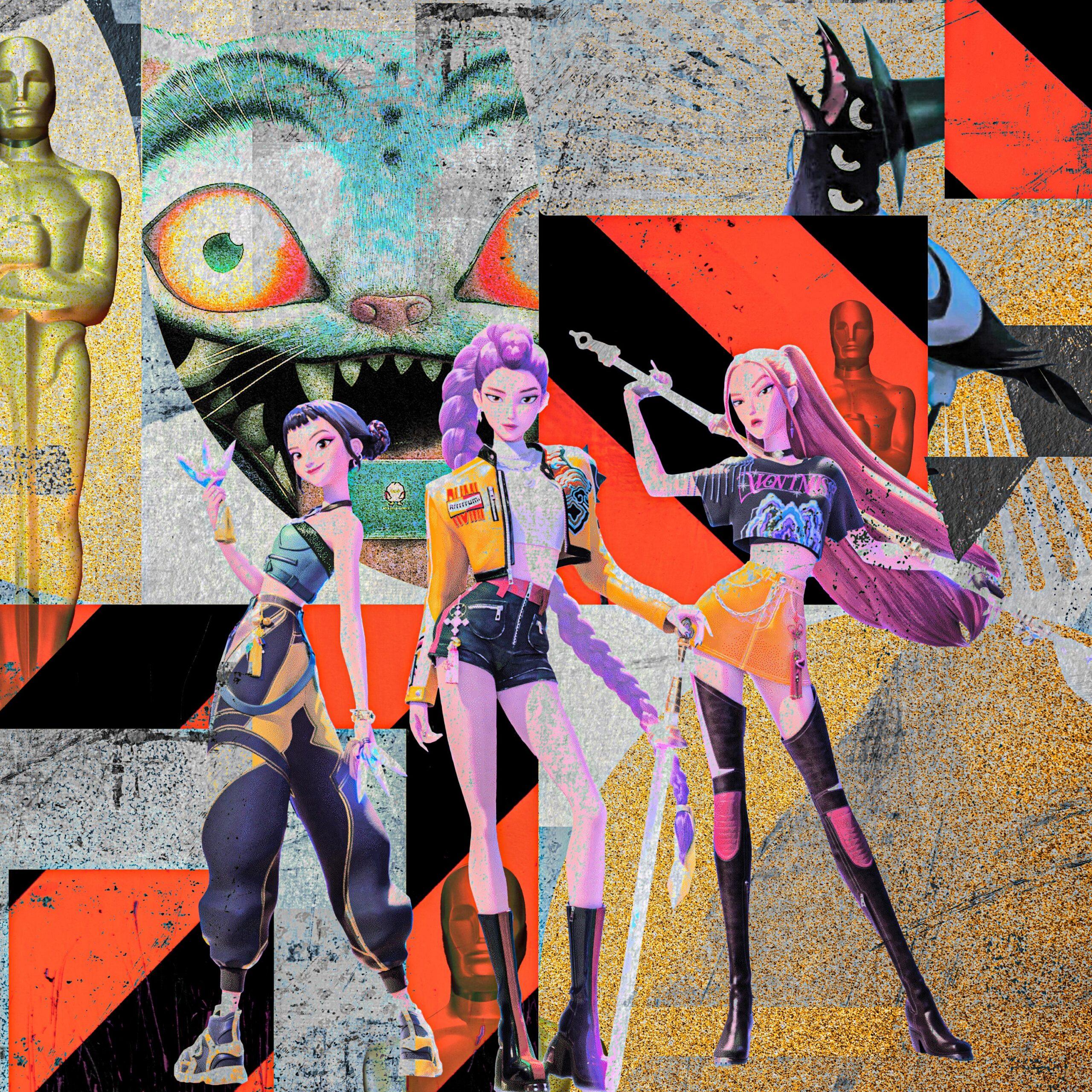

KPop Demon Hunters rules. That’s my whole argument here. Sometimes the best thing you can do as a writer is get out of your own way. If being fun and cool is a crime, the first thing I’ll do after I break myself out of jail is go back and break KPop Demon Hunters out, too. It’s so fun and cool. I’m not saying it’s not worthy of serious critical examination—it’s a smart movie, and there are a lot of smart things that could be said about it by people less attuned to the radness of the swords than I am—but ... sorry, I lost my train of thought. I was too busy bopping my head to “Takedown” and picturing excellent flying kicks.
My job today is to make the case for something that’s almost definitely going to happen whether I make the case for it or not. KPop Demon Hunters is a heavy favorite to win the Oscar for Best Animated Feature Film on Sunday night. It’s already won the Golden Globe and Critics Choice awards in the same category. It absolutely crushed the field at the Annies, the most prestigious animation awards in the business, where it won every category in which it was nominated, taking home 10 honestly very dope Annie statuettes. (They look like little zoetropes.) What’s more, the film is a cultural phenomenon, its characters imprinted on the brains of kids and parents, its outfits adorning cosplayers, its dances proliferating across TikTok, its songs multiplying on the charts. ("Golden," the movie's biggest song, was a cultural phenomenon unto itself, topping the charts in 30 countries; it's a mortal lock to win Best Original Song on Sunday night.) Oscar voters probably aren’t supposed to care whether the art they judge is a cultural phenomenon or not. A Volkswagen Jetta isn’t supposed to get swept away by a tsunami, either, but park one near a beach with a 100-foot wave coming, and see what happens.
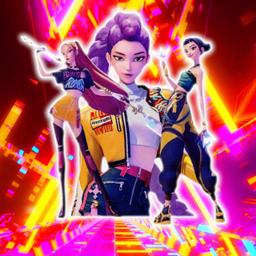
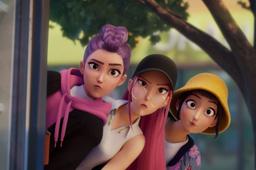
And to all this I say: Good. Good. Do it. Give KPop Demon Hunters the Oscar. Give HUNTR/X their golden moment. HUNTR/X is the megastar K-pop girl group that the movie is about. It has three members: Rumi, Zoey, and Mira. They’re global K-pop idols. They also hunt demons. Perhaps the title of the film begins to make a certain kind of sense to you, if you belong to the tiny, benighted sliver of humanity—almost certainly childless, likely joyless as well—that hasn't seen it yet.
Look at this tiger. Look how fucking cool it is. Its name is Derpy. Try telling me KPop Demon Hunters doesn’t deserve an Oscar just for having this tiger in it.
Anyway. For reasons that are not really explained, because who cares, the world is eternally menaced by the king of demons, Gwi-Ma. Gwi-Ma looks like a massive purple floodlight. Let me tell you Gwi-Ma’s deal: He likes to eat human souls. He commands large hordes of scary-looking but, it must be said, largely incompetent demons whose job is to trawl the mortal realm harvesting souls for Gwi-Ma to eat. Imagine ruling over an army of hideous, servile DoorDash drivers who are constantly showing up without your dinner. No wonder Gwi-Ma is a little crusty, mood-wise. He put in his order at 6:15, it’s still not here at 8:30, and the help button in the app is useless!


Make the Oscars Case
From time immemorial, humanity’s main protectors against Gwi-Ma’s evil designs have been a trio of female pop stars. I don’t know why. That’s just how it works. Each generation produces its own trio of demon-hunting pop idols. I'm a little dubious about whether "pop stars" existed in any recognizable sense in 1735, but I would watch the hell out of that movie. These pop stars possess elite fighting abilities—duh—but more important is this: The gift of their song, as it unites and inspires their fans, weaves a mystic shield called the Honmoon, which blocks Gwi-Ma from entering the mortal realm. If the pop stars can achieve the highest form of this shield, the so-called Golden Honmoon, they will create an everlasting barrier that will block Gwi-Ma and his monstrous startup of satanic gig-economy couriers forever.
What if I told you that, as KPop Demon Hunters opens, the members of HUNTR/X are this close to achieving the Golden Honmoon? What if I then told you that the unofficial leader of HUNTR/X, Rumi, is starting to lose her voice, possibly because, unbeknownst to her bandmates, she is half demon herself?
Quick break while you process this information. Take a look at this cool-ass magpie. It hangs out with Derpy. It has several glowing eyes. What more do you want?!
Rumi’s mom was one of the last generation’s demon-hunter pop stars. She had a thing with a demon at some point before she died, leaving Rumi an orphan. Rumi has these frankly awesome-looking shimmery patterns on her arms. All demons have such patterns, which, in the film’s world, are called “patterns.” Rumi is worried that her friends and fellow HUNTR/Xes—Zoey, who’s fun and quirky and an excellent rapper, and Mira, who’s edgy and moody and a great dancer-choreographer—will reject her when they learn her true background. Achieving the Golden Honmoon will make her patterns disappear. In the meantime, long sleeves help.
Well! Things happen. A disconcertingly dreamy demon called Jinu, who used to be a human, disguises himself and some other demons as a boy band to steal HUNTR/X's fandom and weaken the Honmoon. Their single is called "Soda Pop." It's catchy. When "Soda Pop" goes viral, HUNTR/X's members try to fight back by writing a diss track, but it's hard, partly because hate-based music isn't really their style and partly because they keep getting distracted by how hot the members of the demon boy band are. When Mira and Zoey look at their abs, popcorn comes out of their eyes. I realize I sound like I have a 106-degree fever right now. Trust me when I say that this is all very funny and good. In the time-honored teen-movie tradition of secret, doomed quasi-romantic relationships, Rumi and Jinu develop a secret, doomed quasi-romantic relationship. Jinu’s a demon ... but he seems kind of nice? But maybe untrustworthy? But so hot? They're often joined in their secret meetings by the tiger and magpie above, who are friends of Jinu's, and who rule (this is obvious).
And OK, yes, fine, pop stars with double lives and young women chosen to save the world from supernatural threats are well-worn pop-culture tropes at this point. Recall that KPop Demon Hunters is a kids’ movie. For its intended audience, Buffy the Vampire Slayer might as well be Beowulf. And KPop’s writer-directors, Maggie Kang and Chris Appelhans, deftly use the familiarity of the plot to keep the pacing brisk. By leaving out most of the stuff that reads as off-the-shelf world-building in your typical genre production (Where did the demon king come from? Why does the nature of the universe dictate that humanity’s defenders must be pop stars specifically? How exactly do their powers work?), Kang and Appelhans create a universe that’s slightly lore light but that skips along without being bogged down in exposition. And some of the time that might have gone to fleshing out the movie’s cosmology gets devoted to stuff like humor and characterization instead, which I will take over a fully articulated spell-crafting system nine billion times out of nine billion.

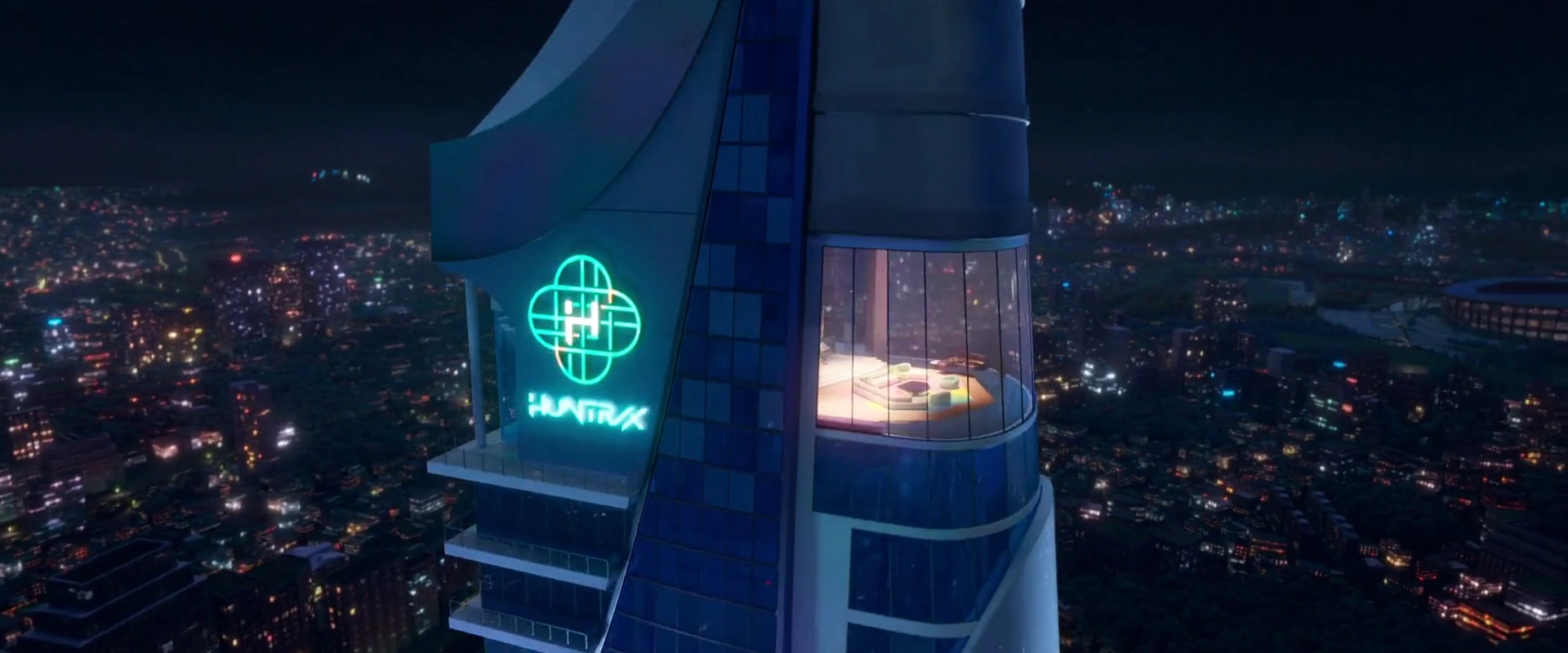
Two things really elevate KPop Demon Hunters above the level of the Netflix filler it could so easily have been. First: how smartly it grounds its story in a deep understanding of both Korean folklore and the culture of K-pop. Second: how delightful it is at the level of specific detail. This is such a lovingly crafted movie. Its narrative is way more predictable than what you’d find in, say, a Studio Ghibli film, but it’s made with a similar degree of fine-grained care. And it illustrates that world-building, at its best, is less about big, abstract concepts and more about the small stuff. The snacks our heroines chow down on before a big show. The way their magical blue melee weapons materialize in their hands in mid-swing when they launch into battle against a gang of demons. Their unbelievably fun penthouse apartment atop a skyscraper with the HUNTR/X logo emblazoned across it.
More on ‘KPop Demon Hunters’
Nothing is treated as boilerplate; every detail gets the filmmakers’ full attention, so that wherever you look, there’s something extra charming or thrilling or funny. I don’t know about you, but when I first heard the title KPop Demon Hunters, my brain went “ugh, algorithm mad libs.” But this isn’t that at all. It’s a movie made by people who cared about what they were making, with genuine imaginative commitment.
The best example of this? The musical numbers. Would you have expected them to be better than adequate? They’re phenomenal. Writing, performance, choreography, all of it. Each one is unique. They appear at every big moment of narrative transition, and they make K-pop—which could have been cynical window dressing in a movie like this—integral to both character development and plot.
So yes! Give KPop Demon Hunters the Oscar. There’s no need to overthink this. What are the alternatives? A third-rate Pixar movie? Zootopia 2 is fine, funny, well-made, and massively successful, but it's a corporate product all the way through; even its quirks feel obligatory. KPop Demon Hunters is more personal and more surprising. It’s made with more integrity than half the highbrow art films I’ve seen this year, and its flying kicks are just so excellent. I’m kind of amazed it exists. Reward it!