Wild-Card Weekend QB Notebook: The Caleb Williams Rorschach Test
Welcome to the QB Notebook, a column covering the most interesting passers, plays, and story lines from the week in NFL quarterbacking. In this edition: Williams shines, Justin Herbert stinks, and the Eagles’ brain trust fails again.

Welcome to The Ringer’s quarterback notebook, where I’ll cover the past week in NFL quarterbacking—from the most interesting passers, plays, and story lines, to some other stuff that caught my eye when I was watching film. In this week’s wild-card edition, we’ll be looking at Caleb Williams’s sack numbers, admitting that Justin Herbert played poorly, breaking down the final play of the Eagles’ season, and more. Let’s talk quarterbacks.
The Caleb Williams Rorschach Test
When you watch this Caleb Williams dropback from Chicago’s comeback against the Packers on Saturday, what do you see?
Do you see a quarterback passing up an open Luther Burden III for no good reason and making things more difficult than they had to be?
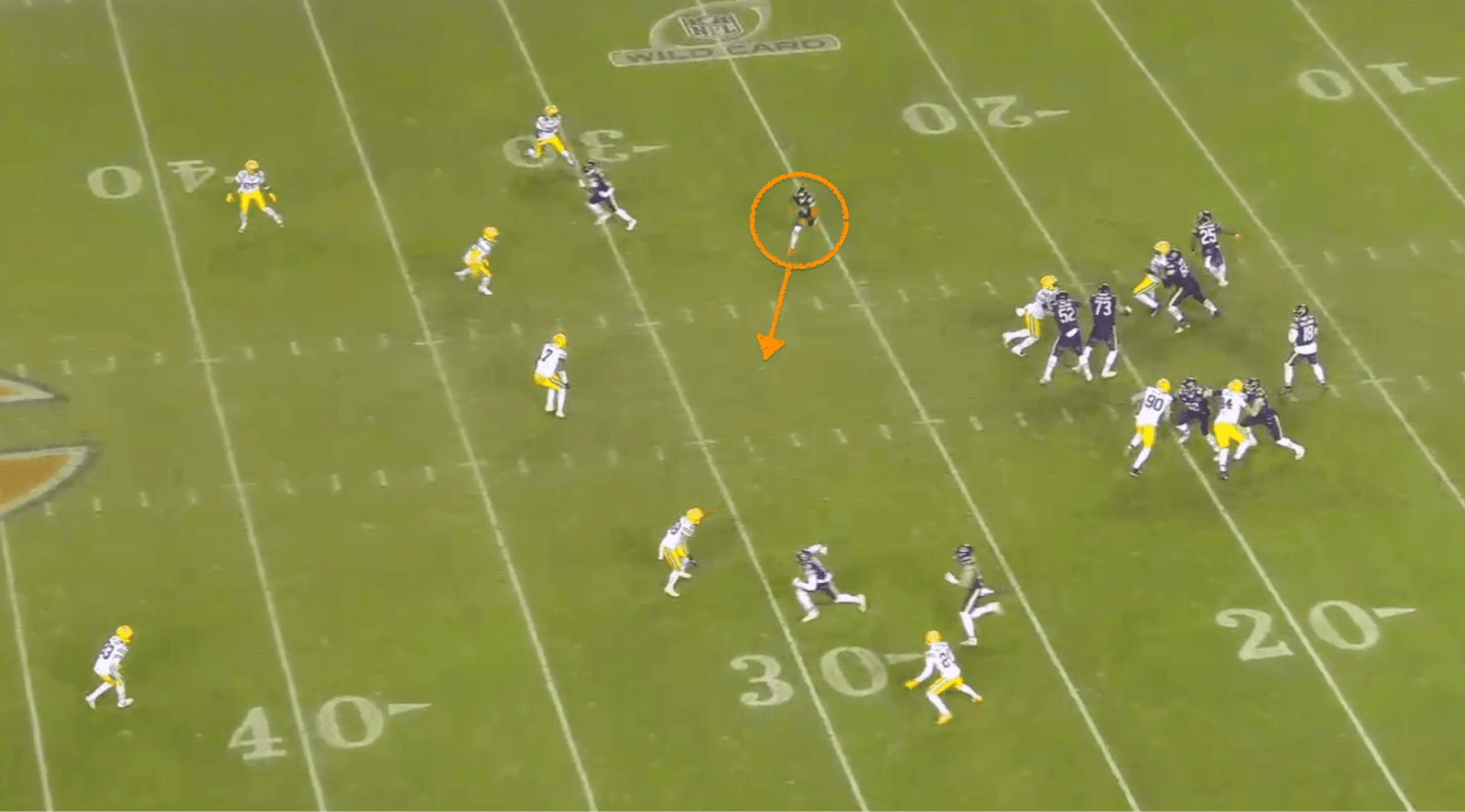
Or do you see a quarterback passing up a short completion to a receiver who was running straight into a vice tackle for a better opportunity downfield—and eventually creating a 15-yard play with a ridiculously athletic throw?
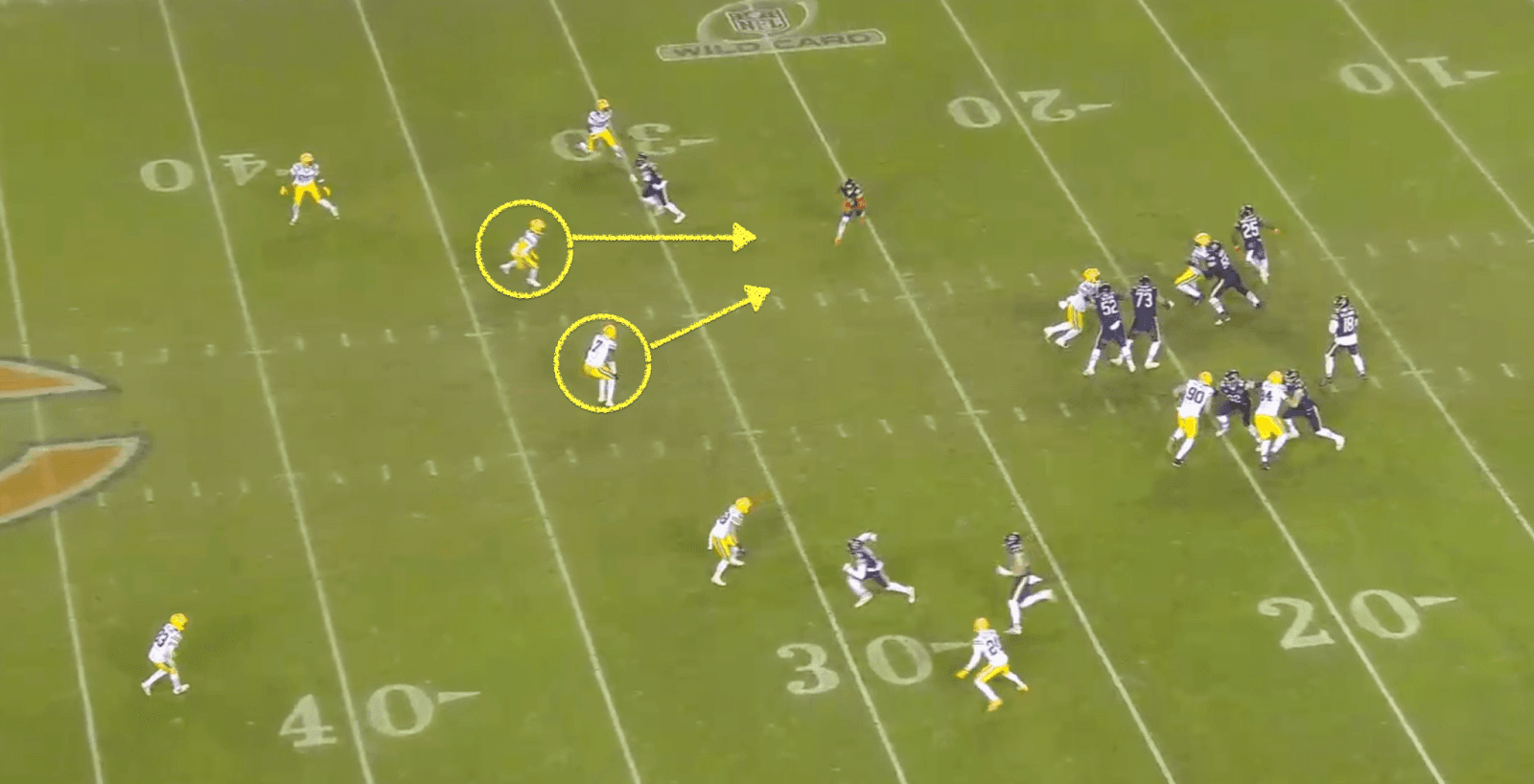
Let’s do another one. What do you see here?
Do you see a quarterback passing up an open checkdown on a first-and-10, which could have kept his offense ahead of the chains for second down?
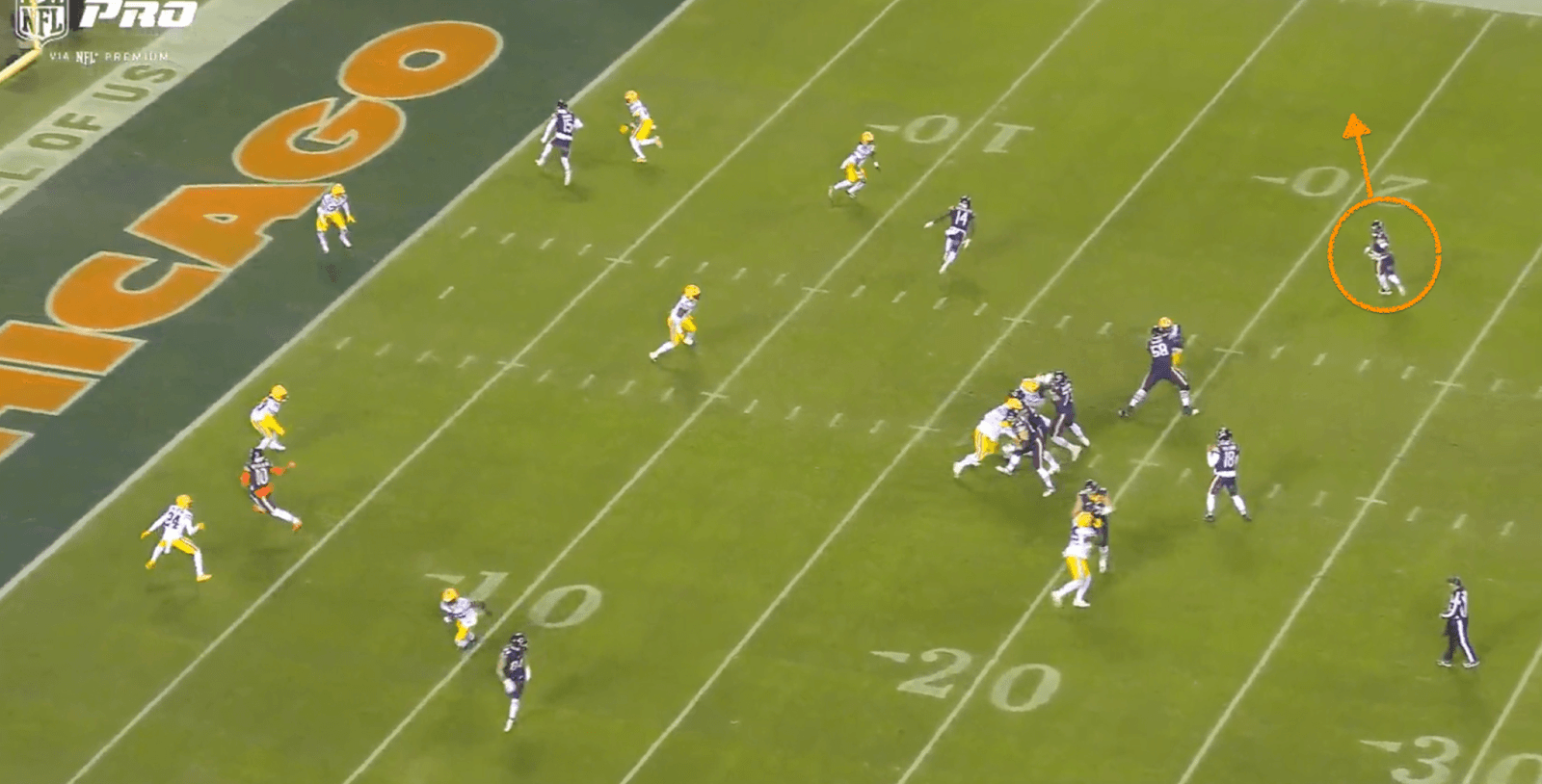
Or do you see a quarterback attempting to end the drive with a touchdown on one play and missing the chance by only a couple of feet?
How you answer those questions speaks to how you probably feel about Williams two years into his NFL career. And there aren’t “correct” answers in either case. In the first example, Williams’s approach works out and leads to a chunk play. In the second, his aggression sets the Bears back, and they eventually settle for a field goal. No matter what side of the debate you fall on, you can point to those two plays and say, See, this is why Williams has a bright/concerning future!
I lean toward the more optimistic view, and I think that Bears coach Ben Johnson is with me. Detractors will point to Williams’s season-long completion percentage (58.1 percent), which fell way short of Johnson’s preseason goal of 70 percent, as evidence that the coach and QB don’t mesh well. That idea is based on Johnson’s time with Jared Goff in Detroit. Goff is a quarterback who will always take underneath options if the alternative is holding on to the ball beyond the designed timing of a play—for better or for worse. So some assume that Johnson is teaching Williams to play the same way and his declining sack numbers are proof of that progress. Based on the statistical evidence, I actually believe that the opposite is true. Williams isn’t taking fewer sacks this season because he’s more dutifully sticking to the script. He’s taking fewer sacks because he’s abandoning the script more quickly and more often than he did as a rookie.
As a rookie, Williams took 56 sacks inside the pocket. That number is down to 13 this season! And his sack numbers outside the pocket have remained about the same.
Caleb Williams Sacks, 2024 vs. 2025
While Williams’s average time to throw is up over last season, he’s not spending nearly as much time in the pocket before breaking structure and doing his own thing. He finished the 2024 season with 51 long dropbacks (at least 3.5 seconds) that stayed in the pocket. That number fell to 16 in 2025, while his “scramble drill” dropbacks increased by a significant margin, going from 47 to 66.
This evolution in Williams’s game explains why his completion percentage is down in an offense that should have, theoretically, led to improvement in that area. Instead of taking sacks (which have no negative effect on completion percentage but obviously hurt the offense) or throwing checkdowns (which boost a QB’s completion rate but are generally inefficient plays), Williams is extending plays and taking out-of-structure chances downfield, which are harder to complete (hurting his completion percentage) but come with a bigger reward if they hit.
Generally, when a quarterback holds on to the ball, it’s an issue because it leads to sacks. But only three quarterbacks had a lower sack rate than Williams in 2025. He’s not merely holding on to the ball; he’s extending plays. And right now, there are few passers who do it better. Fortunately for those of us who appreciate Williams’s ambitious approach at quarterback, his coach seems to understand this.
“That’s part of what makes him special as a player,” Johnson said in October. “You don’t want to neuter him. You don’t. That’s a dangerous road to go down ’cause he’s got this natural ability to feel the pocket.”
Justin Herbert Was Bad, and It’s Fine to Admit It
To my fellow Herb-verts, don’t fight it. This was not a good showing for our boy, whose career playoff record fell to 0-3 after the Chargers lost 16-3 on Sunday night in New England. There’s plenty of blame to go around for the pathetic output from Los Angeles’s offense—the pass protection was predictably bad, the run game wasn’t useful, and the receiving corps couldn’t find open space—but Herbert, for once, was one of the biggest culprits.
He started the game well enough, but he eventually lost faith in his protection and his receivers. He ran himself into sacks, which doesn’t usually happen, and passed up on numerous open opportunities downfield. When Herbert did try to give his receivers a chance to make a play downfield—typically after evading the rush—his throws missed the mark.
The stat line won’t show it, but Herbert may have been better in last year’s postseason stinker against the Texans, when the Chargers star threw four interceptions. He didn’t throw any picks this time around, but he squandered almost every opportunity he had to make a big play to pull Los Angeles back into the game.
Herbert taking another playoff L in embarrassing fashion feels like a “gotcha” moment for his film-addicted fanboys (including me). But how this game played out is also confirmation of what we’ve been saying all season: The Chargers’ play calling stinks, and the offensive line is unviable, giving Herbert no margin for error. He has to be nearly perfect to drag the team to competence, and when he plays poorly, the offense doesn’t stand a chance. As evidenced by L.A.’s 11-6 record, Herbert doesn’t play poorly often. He just happened to, once again, pick a bad time to play his worst game of the season.
Despite his poor performance, Herbert was the only thing the Chargers offense had going for it. His seven scrambles were the only source of productive offense against New England.
Chargers Offense vs. New England, Split by Play Type (TruMedia)
Herbert didn’t get his elusive playoff win this season, but he did take a significant step forward, adding a new layer of creativity to his game. He scrambled more than ever and proved to be damn good at it. I don’t know whether the Chargers would have made the playoffs without him taking on a bigger role as a runner, which should carry over to 2026. At least we’re leaving this season with something, Herb-verts.


The Next Gen Stats Passing Map That Makes Me Want to Change the Subject
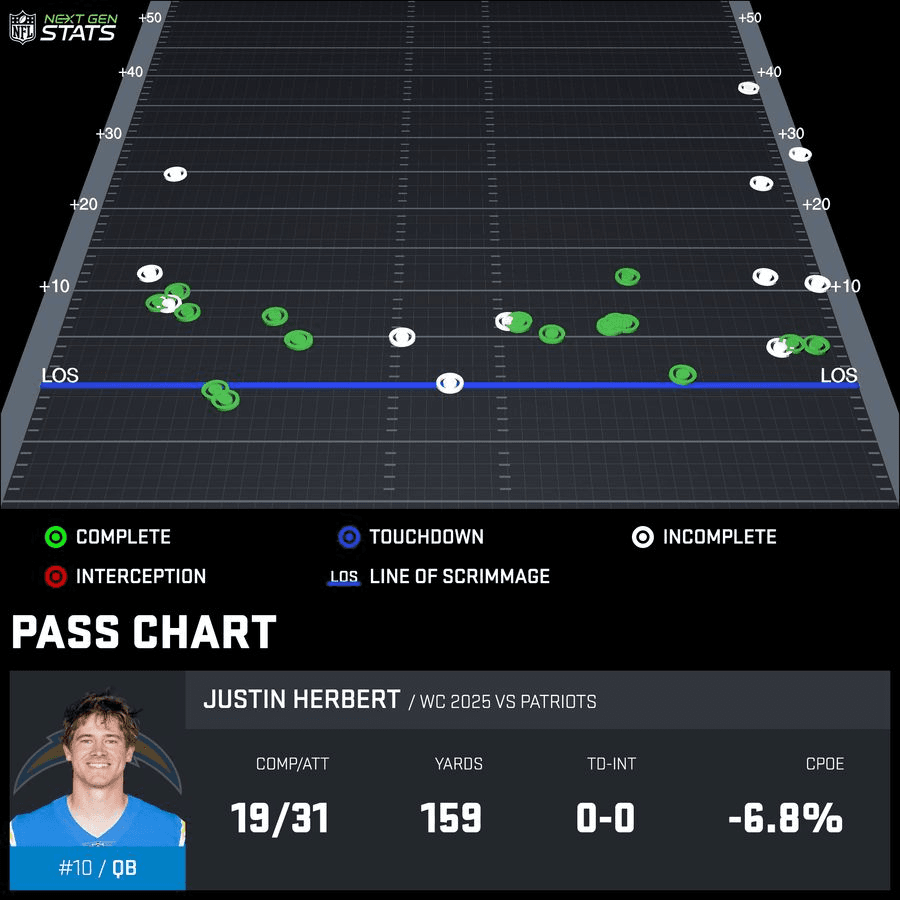
Goddamn it, Justin. Anyway …
The Worst Play Design I Saw This Week
Nick Sirianni, Kevin Patullo, and Jalen Hurts considered their options before a fourth-down play with the season hanging in the balance. Patullo scanned his play sheet for a call that could get Philly the 11 yards it needed to extend a drive, down 23-19 to San Francisco late in the fourth quarter. He made his suggestion. And while Sirianni and Hurts didn’t object, neither looked confident about the choice.
I can see why! The Eagles ended up running a basic “four verts” concept from a four-wide formation. San Francisco showed a blitz look—which it had done before the timeout—but its alignment should have told Hurts that he was getting some kind of zone coverage. The 49ers had safety Malik Mustapha lined up across from A.J. Brown. That’s not a matchup they’d opt into if they were actually playing one-on-one man coverage across the field.
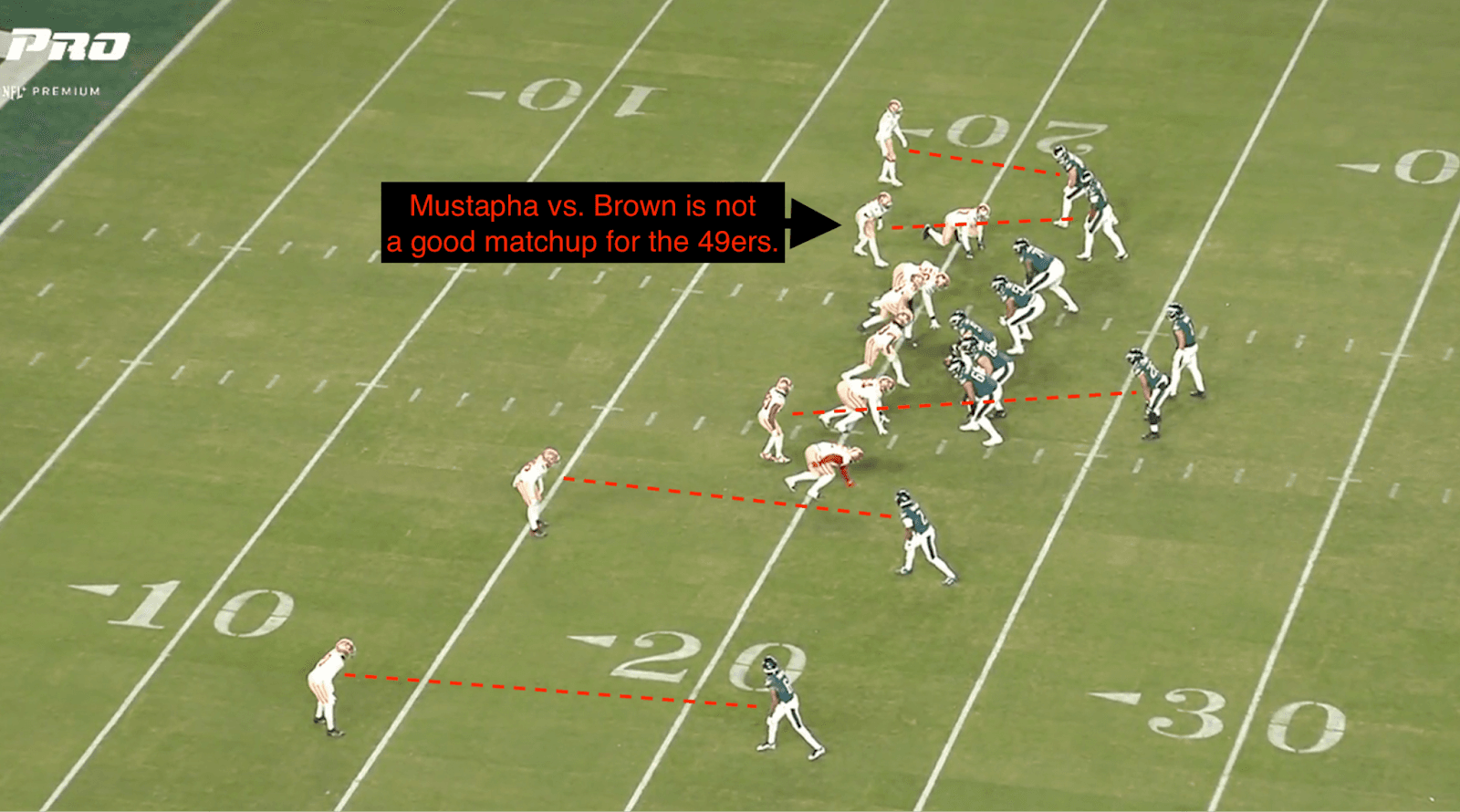
The Niners confirmed this when Brown motioned outside and their secondary players retreated into a zone coverage shell.
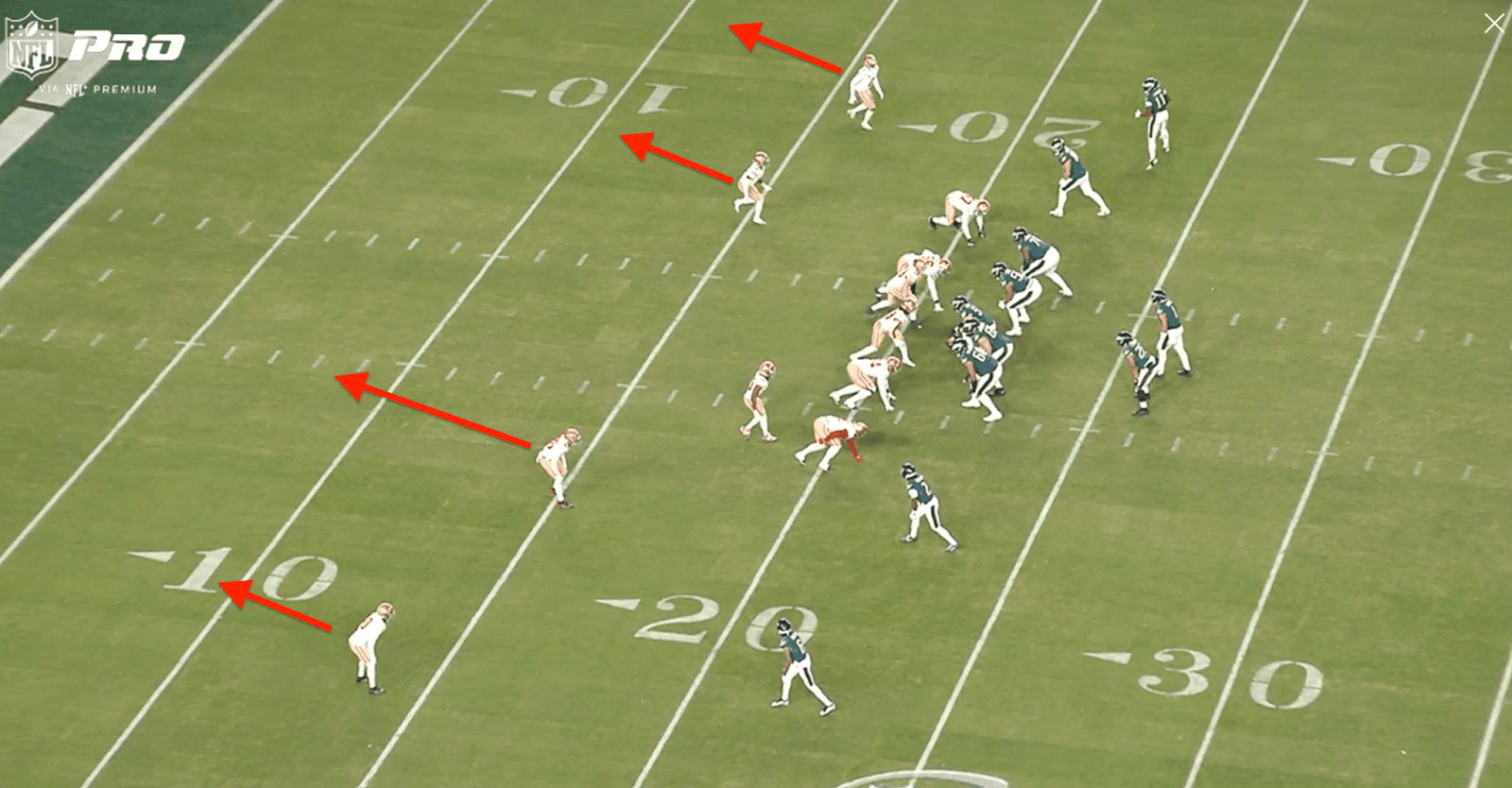
At this point, Sirianni, Patullo, and Hurts should have realized they were screwed. The Eagles were running four vertical routes into a four-deep coverage. Making matters worse, Philly kept Saquon Barkley in to block to help pick up a blitz that wasn’t coming, so there were no short options to keep the three underneath defenders from sinking with the vertical routes. That gave San Francisco a seven-on-four advantage in coverage.
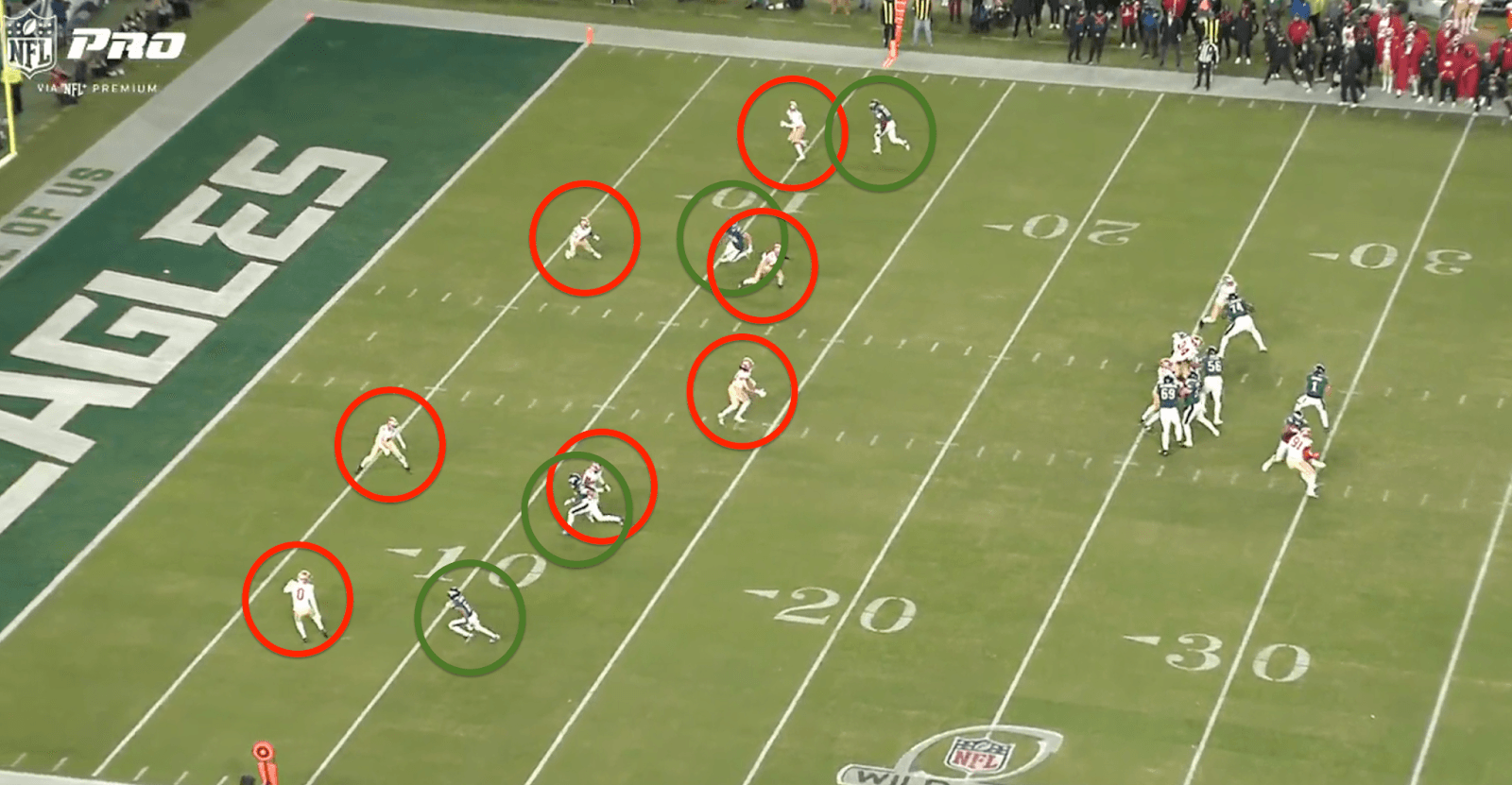
Hurts tried to fit the ball in to tight end Dallas Goedert, who bent his route in front of the safety, but linebacker Eric Kendricks floated into the window and knocked away the pass. Had Barkley released into a route underneath, it might have pulled Kendricks closer to the line and opened up that window for Goedert.
That was a fitting conclusion to the 2025 season for this Eagles offense and its three-headed brain trust. Hurts, whose influence on the offense has grown over the past two seasons, seems to prefer simple concepts. Last year, the quarterback said “the offense is going to look how Jalen Hurts wants it to look.” And on Sunday, former Eagles running back LeSean McCoy said people in the building have told him the offense has been kept basic to benefit Hurts. We probably shouldn’t put too much stock in the reporting of Shady McCoy, but similar things have been said by more reputable sources, and the core of the passing game hasn’t really changed over the past few seasons despite annual changes at offensive coordinator.
But Philly’s final play call also shows how little help Hurts is getting from Sirianni and Patullo. We’ve seen past Eagles coordinators disguise those simple pass concepts with pre-snap window dressing and design tweaks to prevent opposing defenses from catching on to their tactics. I’m not sure I’ve ever seen a team repeat plays from the same formations as often as the Eagles did this season. In theory, simpler pass concepts are easier to defend, and Philly’s coaches make the defense’s job even easier with their lack of creativity and attention to detail.
Fans in Philadelphia have spent the entire season debating which party deserves the most blame for the state of the Eagles passing game while overlooking a very obvious truth: Sirianni, Patullo, and Hurts all deserve an equal share of it.
The Best Throw I Saw This Week
This one’s a no-brainer. It’s the throw everybody has been raving about since Saturday night. Caleb Williams kept the Bears’ season alive with an off-platform throw, which he made while moving to his left, that traveled 35 yards through the air.
The throw itself is great, but I don’t want to overlook the escape that allowed it to happen. Watch how Williams, while shuffling horizontally, separates from the unblocked pass rusher. And keep an eye on his helmet.
Notice how his eyes never drop to look at the rush? Williams makes a remarkable escape while tracking Rome Odunze’s crossing route the entire time.
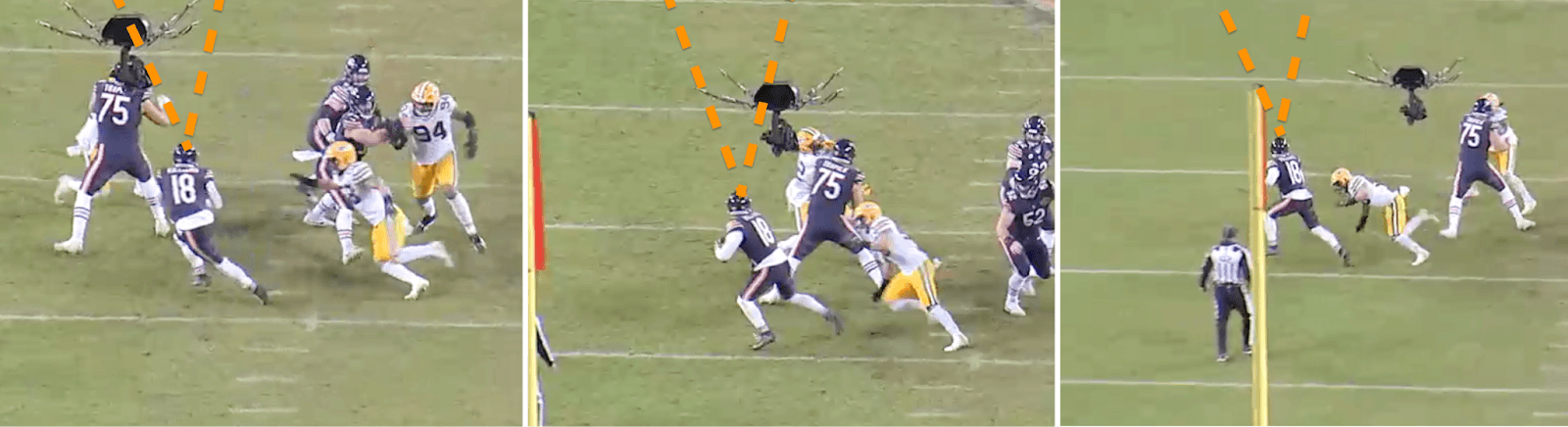
He doesn’t have to just throw up a prayer, hoping Odunze is down there somewhere. He knows exactly where his receiver will be—as well as the defender and coverage—which allows him to throw Odunze open. It’s a jaw-dropping pass, but the process leading up to it was just as special.
The Worst Throw I Saw This Week
Credit to Sean McDermott and his defensive staff for putting together a plan that confused Trevor Lawrence and the Jaguars passing game. After the 27-24 Buffalo win, Jacksonville coach Liam Coen cited the Bills’ use of pre-snap disguise as a key factor in his team’s loss. But the Bills trickery had nothing to do with this awful decision by Lawrence. Buffalo does start out in single-high coverage before the snap, but it gives away the disguise early and Lawrence should’ve known he was getting a Tampa 2 look.
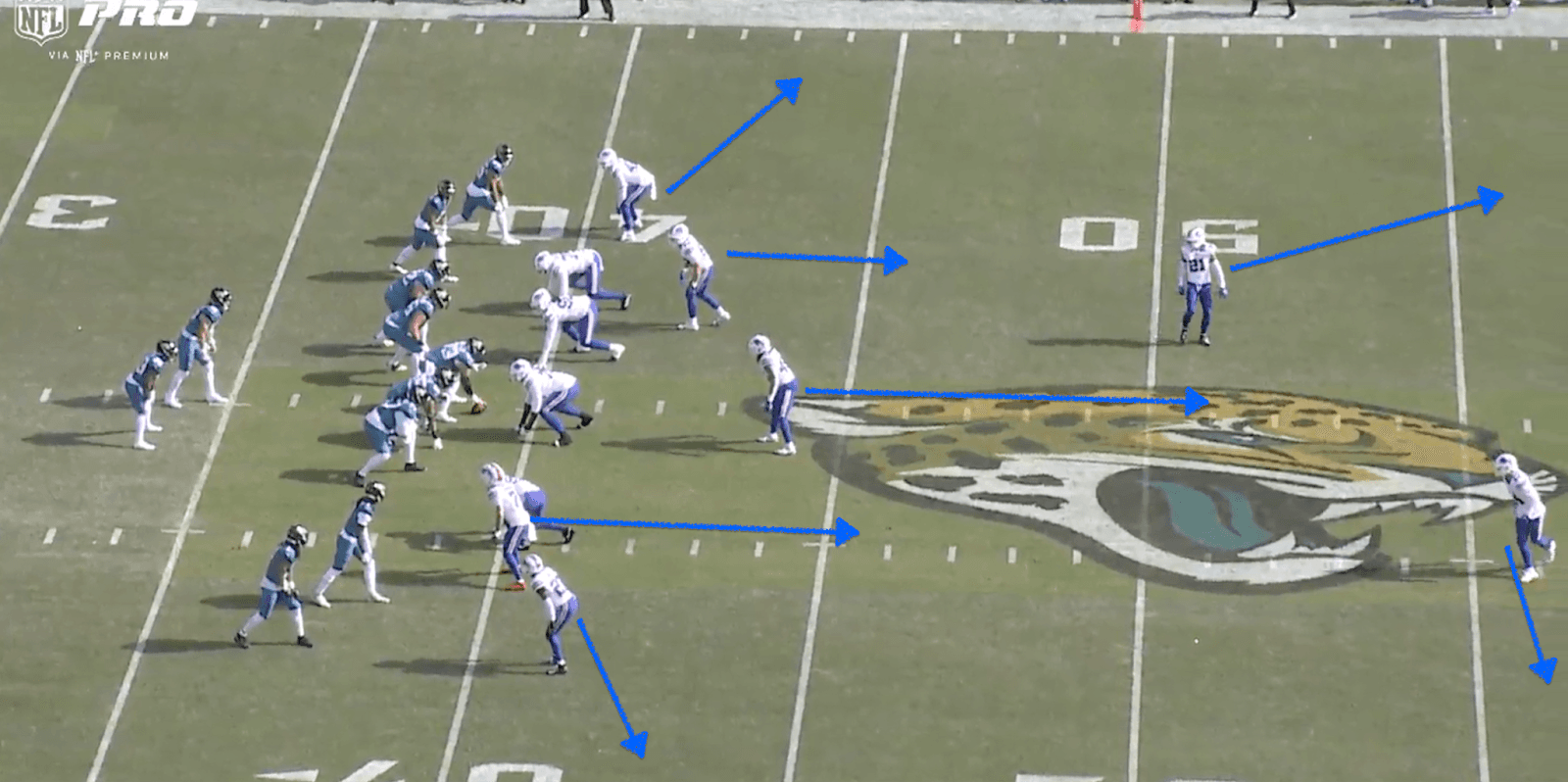
Lawrence has to know that the middle linebacker will be dropping deep into the window of the dig route he eventually throws. He tracks the ’backer after getting the snap, sees him drop straight back, and then, inexplicably, throws it to him anyway.