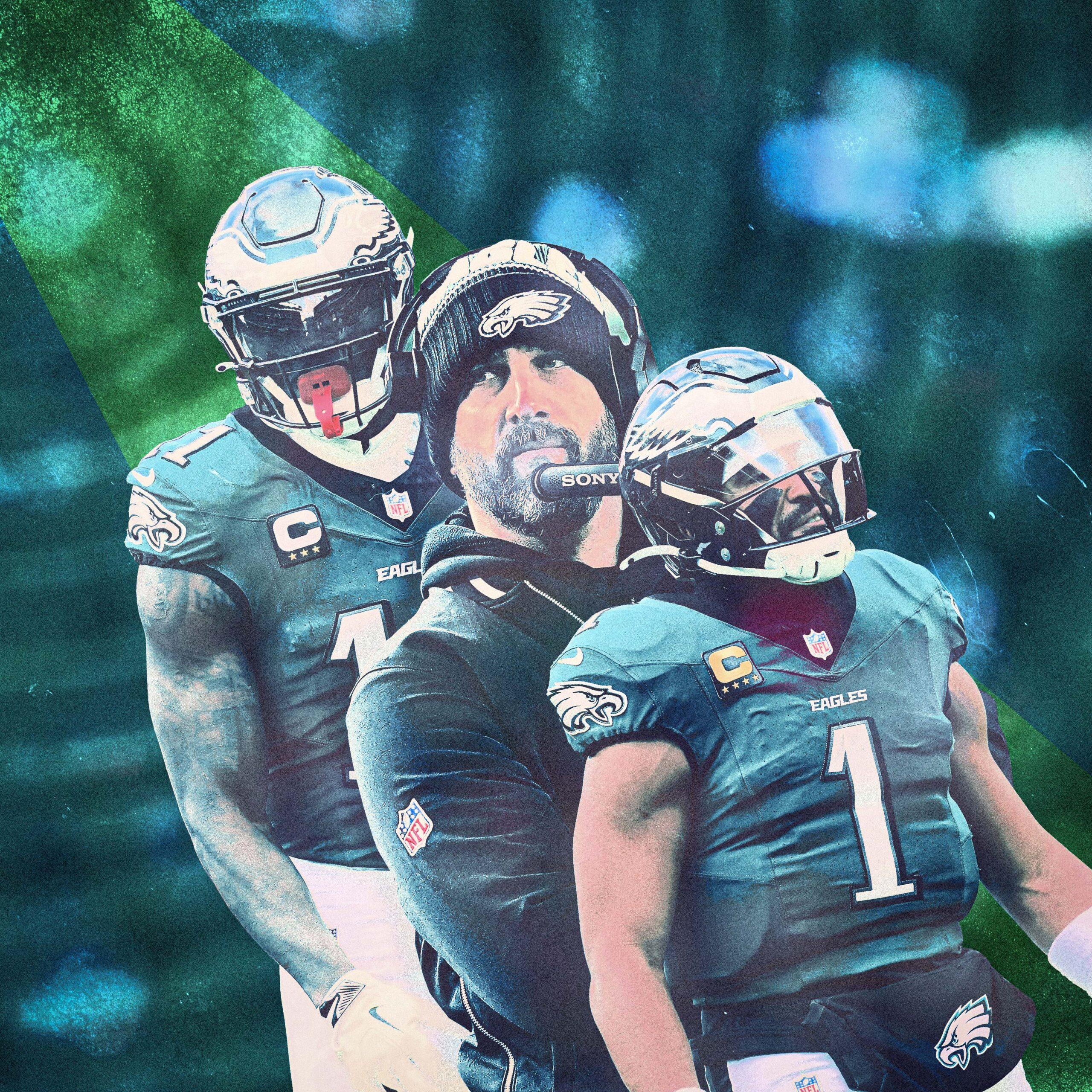

Just 11 months after one of the biggest ass kickings in Super Bowl history, and with most of last season’s championship roster still intact, the Philadelphia Eagles lost to the San Francisco 49ers on Sunday. Head coach Nick Sirianni and his play calling offensive coordinator, Kevin Patullo, have no one to blame but themselves for the Eagles' early playoff exit. Scoring just 19 points in a home playoff loss is a tough look for the defending champs, but especially because this meager showing came against the San Francisco 49ers defense—an injury-depleted group that finished the season 30th in defensive success rate and is clearly the least talented single unit to have made the postseason. And when you consider that Philadelphia forced two turnovers, won the time of possession battle by more than 10 minutes, and was still outgained and outscored by the 49ers, there’s nowhere else to point but the coaching.
I’ve spent the entire season trying to understand how a Philadelphia offense with this much talent can make everything look so hard. But the answer has been there all along: The coaching staff doesn’t have a philosophy that feeds into a scheme, and that shows up in how the team plays. Philadelphia might find success with a particular formation or concept, but the coaches fail to build on it with complementary play calls. Pre-snap motions lead to no matchup advantages, receivers run to open spots on the field and don’t get targeted, and quarterback Jalen Hurts tries to direct traffic for plays that, more often than not, go nowhere.
If you wanted to know how much influence a good coach has on a high-leverage game, all you had to do was watch San Francisco’s offense. Against Philadelphia’s defense, one of the league’s best, the 49ers tied for the best passing success rate through the first five games of wild-card weekend. There was never a moment when I wondered when running back Christian McCaffrey would get his next touch, whether quarterback Brock Purdy would get enough time in the pocket to push the ball downfield, or whether head coach Kyle Shanahan would have a good enough play call to get the better of Eagles defensive coordinator Vic Fangio.
And sure enough, Shanahan dialed this up:
If we were keeping score strictly based on the quality of the offensive play calling, San Francisco won by a million. “[San Francisco] made more plays than we did; they coached better than we did,” Sirianni said after the game, “and that’s why they won.”
While Sirianni’s analysis is correct, it's insufficient. San Francisco’s coaches didn’t just have the better game plan; they had a keen eye for the small tweaks their team needed to maximize every snap. The 49ers are in the playoffs only because Shanahan’s system was built to adapt when Purdy or tackle Trent Williams got hurt and because defensive coordinator Robert Saleh was prepared to work around injuries to star defenders like Nick Bosa and Fred Warner. The entire system was built to change gears and sustain itself if playmakers like Brandon Aiyuk or Ricky Pearsall weren’t available.
That’s why Shanahan could be bold enough to call a reverse pass in the fourth quarter, while Sirianni was content to kick a field goal shortly after. The 49ers spent all year responding to adversity, and the Eagles spent 19 weeks hoping that their talented roster would plaster over the schematic problems. And now that the season’s come to an end, it's fair to ask whether Sirianni can pull this team back into the elite class of contenders, where it deserves to be.
If you were watching their wild-card loss to the 49ers on Sunday and thinking that the Eagles don’t seem difficult to defend, it’s because they aren’t—and that’s the biggest indictment of the Sirianni-Patullo brain trust. This offense isn’t predictable because it's rigid, but because it's simple and disjointed. When the Eagles actually designed some plays for Hurts to use his legs against the Rams early on in the season, it was basically a one-and-done. And Philadelphia seemingly discovered that it was allowed to run play-action from under center in a game against Minnesota near the midseason point, putting up 121 passing yards and a touchdown in just four attempts. But it rarely tried that again. Remember when the Eagles called a bunch of early-down passes against the Broncos and Giants in October? The offense moved the ball well in both contests, but because the team lost those games, the approach was scrapped. The Eagles offense went through many phases this season, not to innovate but to survive. By the time the playoffs arrived, it still did not have an identity.
The offense underperformed by every metric. Hurts finished the season with his lowest ever yards per attempt. Receiver A.J. Brown had his fewest receiving yards in a season since 2021; receiver DeVonta Smith had to play snaps in a meaningless Week 18 game to get across the 1,000-yard threshold. Running back Saquon Barkley’s rushing production fell off a cliff.
If an offense lacks a clearly defined philosophy, it's almost impossible to troubleshoot when things go wrong. This problem showed up most after halftime, when opposing defenses could adjust to whatever new looks the Eagles had and expose how shallow Patullo’s game plans were. The Eagles were 11th in EPA on passes in first halves—and dropped to 24th in the second. That happened again on Sunday, with Hurts going 9-of-19 for just 75 yards across six possessions in the second half. Those paltry numbers have been the story of Philadelphia’s season.
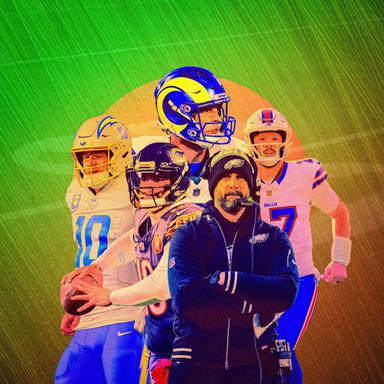
So now that this miserable Eagles season is over, what comes next? Step 1 is hiring a new offensive coordinator, and it’ll likely have to come from outside Sirianni’s typical network. Patullo could never get the most out of his quarterback’s unique play style and didn't seem like he could ever become an elite play caller. Other than his decision to elevate former offensive coordinator Shane Steichen, Sirianni’s in-house promotions have done more harm than good to his offense.
And figuring out what to do with this pass game won’t be easy, despite the offense's talent. Former play caller Kellen Moore put together a much better rushing attack in 2024 than Patullo did this year, but Moore had a difficult time building a consistent passing attack with Hurts as well. Hurts has taken some small steps forward overall as a passer in the past two years, but he still prefers to hold the ball longer than the play design calls for, and he likes to throw it deep and outside the numbers. It’s hard to build a comprehensive dropback passing game around those tendencies, but this season’s design made Hurts look even worse. Candidates like Kliff Kingsbury or Mike McDaniel could probably step in and supercharge the offense, as long as neither one lands a head coaching gig elsewhere in the league.
But let’s assume that Philadelphia does land an elite play caller—would that actually solve all its offensive issues? Brown was unhappy (and vocal) about his role in the offense and the team’s quality of play, and there was speculation that his relationship with Hurts had frayed this season. He’s more valuable to the Eagles as a part of the roster than as a trade chip, but it’d be hard to bring him back if he makes noise about wanting out or disapproving of Sirianni this offseason.
According to Spotrac, trading Brown would accelerate $20 million onto the cap this offseason and create $43 million in dead cap charges, which means that he’d have to net the Eagles a first-rounder and then some to make it financially worthwhile. So the market would be pretty tight on suitors. And if GM Howie Roseman is choosing between future cap flexibility and hitting the reset button at head coach, I wonder whether the guy who constructed this roster—or team owner Jeffrey Lurie—would side with a coach over a star player, especially while the championship window is still open.
Firing Sirianni seems a bit dramatic (and he received a contract extension last offseason), even though you could make the argument that there are better coaches who are currently looking for work. Sirianni won a Super Bowl, made it to another, and has won 69 percent of his games as head coach. Sunday was just his first home playoff loss. If we’re judging his first five years against his peers, it's hard to say that he’s fallen short of any reasonable expectations. So the most likely outcome here is that the Eagles will keep Sirianni and Brown and take one last swing at reworking the offense around this core next season. Significant turnover this offseason would signal a panic that we don’t typically see from Lurie or Roseman.


But Sirianni should be aware that there’s a gulf between his approach and that of the Eagles organization, which tends to be on the forefront of analytics and is meticulous in scouting and building the roster from the inside out. He reminds me of former MLB manager Joe Maddon, who coined the phrase “do simple better” when he took over the Cubs in 2015. Like Maddon, Sirianni is less focused on the minutiae of the offense and defense and more on vibes. And like Maddon, that vibes-first philosophy led an extremely talented team to a championship.
But what happens when a coach has done simple as well as he can and his competitors are doing the complex and difficult—and more effectively because their teams are better prepared? Maddon’s Cubs slowly decayed each year after that 2016 title and eventually lost their grip on the National League. The Eagles are at risk of the same. Sunday’s loss to the 49ers might have been an upset according to the betting market and because Philadelphia won the Super Bowl so recently. But in many ways, it was entirely predictable—a fitting end to a disappointing season in which it was clear that the offensive coaching staff never had a plan to evolve when adversity hit. If Sirianni wants to build this team back into a champion, simplicity just won’t cut it anymore.