How ‘Call of Duty’ Got Dethroned in 2025
‘Battlefield,’ ‘ARC Raiders,’ and the juggernaut franchise’s own failings knocked ‘Black Ops 7’ off the series’ perennial top perch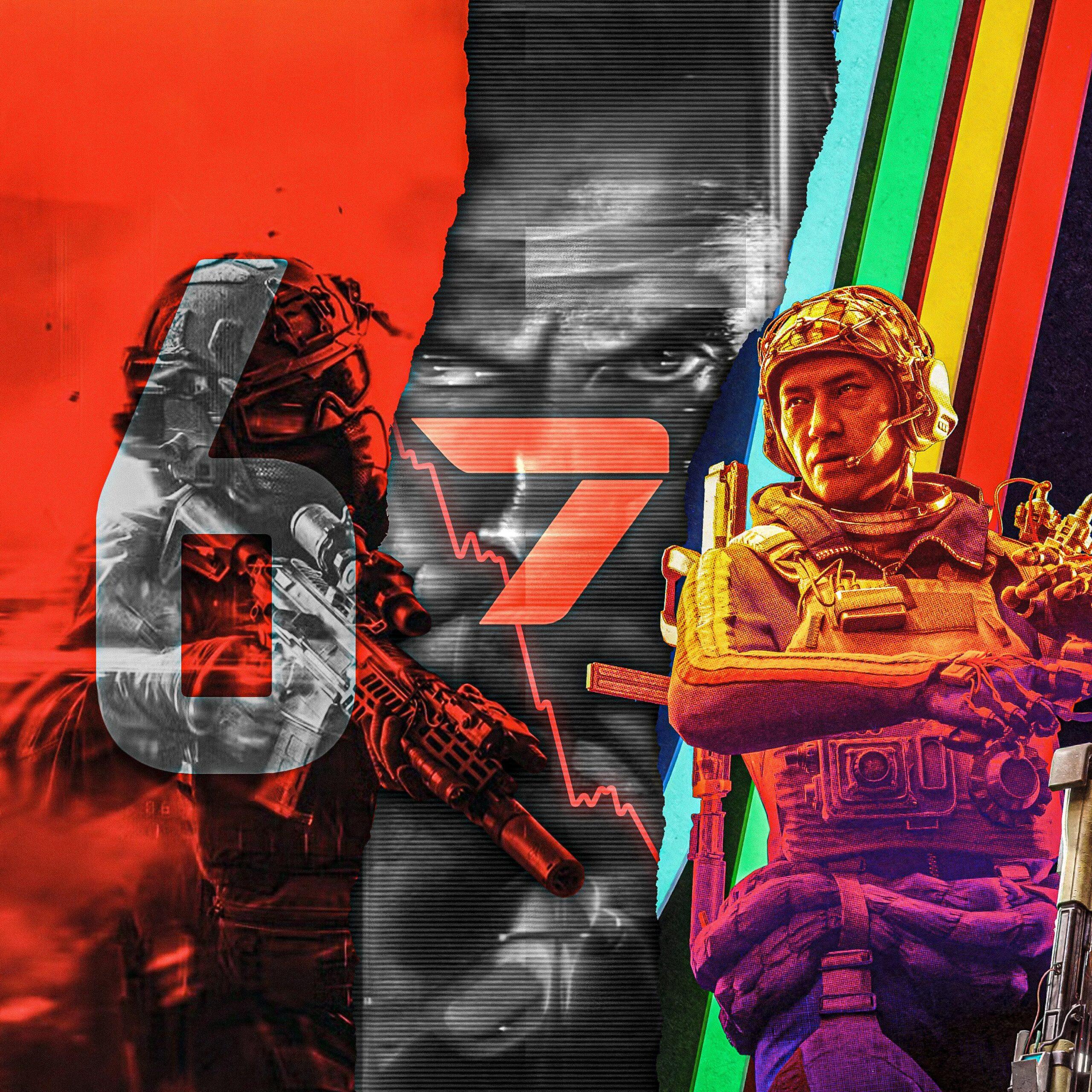

There are very few constants in the video game industry. The decades-long console wars waged by PlayStation, Xbox, and Nintendo are winding down. Business models are evolving to prioritize subscription services, free-to-play games, and microtransactions. And our gaming libraries are increasingly digital, with physical copies becoming collector’s items. But if there’s one thing that you could always count on amid the upheaval, it was Call of Duty’s overwhelming dominance. That is, until 2025, when the shortcomings of the online shooter’s latest incarnation, combined with a concerted attack by two rival games, conspired to take Call of Duty down.
Call of Duty debuted in 2003, and starting with 2007’s Call of Duty 4: Modern Warfare, publisher Activision has pumped out a new entry in the series every year. A Call of Duty title was the bestselling game in 13 of the 16 years from 2009 through 2024, with only Hogwarts Legacy and Rockstar Games blockbusters Grand Theft Auto V and Red Dead Redemption II temporarily knocking the franchise from its perch. As of October 2023, Call of Duty had sold more than 500 million copies worldwide, putting it behind only two iconic creations of the 1980s, Tetris and Mario, among the bestselling video game franchises of all time.
However, this year’s iteration, Call of Duty: Black Ops 7 (released on November 14), left a sour taste in many gamers’ mouths. On Metacritic, its critic score is the second lowest in Call of Duty history (behind 2023’s Modern Warfare 3), and its user score is the lowest. Rolling Stone called the game “the largest and messiest Call of Duty ever.”
The game’s single-player campaign was heavily derided: One Forbes contributor wrote that Black Ops 7 has the “worst Call of Duty campaign ever.” The campaign’s story was so nonsensical that players mocked its characters and boss fights, and in a first for Call of Duty, the campaign mode was entirely online only: Not only was a steady internet connection required to play it, but there were also no traditional mid-mission checkpoints. If a player lost their power or internet connection, they’d have to restart the level.
Granted, players generally enjoyed Black Ops 7’s polished multiplayer and zombies modes. And according to American market research company Circana, it was still the bestselling game of November 2025, extending the series’ streak to 18 years of being the top-selling game in its release month. Some things never change, right?
Actually, sometimes they do. Black Ops 6 was considered one of the best Call of Duty entries in recent years. It was praised for its engaging campaign, set during the Gulf War, and for the introduction of mechanics such as “omnimovement,” which allowed players to feel more fluid and versatile when sprinting, sliding, and diving. Black Ops 7 couldn’t measure up.
“Full-game dollar sales of Call of Duty: Black Ops 7 were down by a double-digit percentage when compared to Call of Duty: Black Ops 6 in November a year ago,” Circana senior director Mat Piscatella tells The Ringer. The comparison seemingly gets even worse for the newer game. As Simon Carless of GameDiscoverCo pointed out, Black Ops 6 was released on October 25, 2024. This means that November sales of Black Ops 7 were down more than 10 percent relative to those of Black Ops 6, even though the earlier game’s first (and, presumably, best) week on the market predated November and thus wouldn’t count toward the comparison.
Black Ops 7 didn’t simply fumble its lead. The game also faced fierce competition from other online games, including its closest first-person shooter competition, Electronic Arts’ Battlefield 6 (released on October 10), and Embark Studios’ surprise hit, the third-person extraction shooter ARC Raiders (released on October 30).

“According to Circana’s Player Engagement Tracker, Battlefield 6 and ARC Raiders most directly competed for players on a head-to-head basis, as these games shared the highest cross-play rates,” Piscatella explains. “But it has been a much more crowded FPS space this year than it has recently. Battlefield 6 was launched earlier and received strong player and critical acclaim and is currently the bestselling game of 2025 year to date in the U.S. market in terms of full-game dollar sales.”
Industry analyst Christopher Dring, founder of The Game Business, says that ARC Raiders was able to draw in more “casual” Call of Duty fans even though it offers a different shooter experience. Additionally, although Battlefield 6 was a more direct competitor to Call of Duty, Battlefield’s postlaunch updates, such as the free-to-play REDSEC battle royale mode, haven’t been as well regarded as the base game.
“Regardless, these were two well-received big shooters that arrived weeks before a disappointing Call of Duty,” Dring explains. “I would also point out Fortnite’s The Simpsons collaboration. Fortnite’s player base skews younger than Call of Duty. However, The Simpsons is an IP that speaks to an older audience. I imagine that had an impact, too.”
I’ll Meet You on the Battlefield
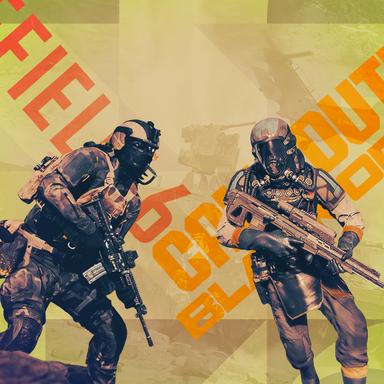
The Battlefield franchise has mainly played second fiddle to Call of Duty, even though the former debuted a year before the latter. To stand out, most of the modern Battlefield entries have experimented with settings and time periods, such as Battlefield 1’s (2016) World War I focus, Battlefield V’s (2018) return to World War II, and Battlefield 2042’s (2021) shift to the near future. In contrast to Battlefield’s massive maps, destructible structures, and controllable vehicles, Call of Duty kept a “boots on the ground” mentality, emphasizing smaller-scale infantry combat.
Ironically, what made Battlefield 6 such a hit was its grounded, back-to-basics approach. The late Vince Zampella, who died earlier this month, took control of the franchise after 2042’s rough launch. Zampella, who had cofounded Call of Duty decades earlier as a competitor to another World War II shooter franchise he’d worked on, Medal of Honor, was now charged once again with taking on a juggernaut whose success he’d helped foster. The marketing for Battlefield 6 took direct aim at Call of Duty, which (for good reason) seemed to spook Call of Duty’s creators. Battlefield 6 developers DICE and Ripple Effect Studios also banked on nostalgia, taking cues from what was arguably Battlefield’s heyday to recapture the hearts of FPS fans.
“We've taken inspiration from games like Battlefield 3 and 4 and remastered maps such as Operation Firestorm from Battlefield 3 to bring back a fan favorite,” says DICE producer Alexia Christofi. “We knew we needed to nail gunplay, too, so we looked back at our titles which we felt had the best gunplay and tried to find the magic in what made them special.”
Battlefield 6’s campaign wasn’t entirely well received, either. It was online only as well, but at least it had checkpoints to save progress. The story wasn’t nearly as widely mocked as Call of Duty’s, but it was criticized for playing it too safe. Still, the explosive multiplayer completely overshadowed whatever negative sentiment the campaign had engendered.
“For Battlefield 6, we've focused on the things that make Battlefield feel like Battlefield, which means excellent gunplay, class and squad play, and the All-Out Warfare that people know and love. So that’s jets, tanks, destruction, and our classic modes like Conquest, Breakthrough, and Rush,” says Christofi.
Battlefield prides itself on its destructible environments, which allow players to level entire buildings and reshape maps, turning the entire (ahem) battlefield into a playful demolition sandbox. Call of Duty focuses on much smaller-scale engagements, with drastically scaled-back destruction mechanics.
“Players have been eager for a Battlefield that feels like ‘classic’ Battlefield to them, and it's been a few years since we've delivered that,” Christofi explains. “So this time, we really wanted to incorporate all those things that make the franchise great, and in doing so, we've brought in a new audience of Battlefield fans who may not have had as much experience with our previous titles.”
She continues, “For those folks, I think it’s a breath of fresh air and gives them a kind of fun in the FPS genre that feels new and exciting, whilst giving our veteran players what they want when it comes to the series.”
One of the biggest differences between Call of Duty’s development and Battlefield’s is that the latter isn’t annualized. EA and DICE can take time between Battlefield games to make more meaningful changes to new entries, while Call of Duty always runs the risk of its next game seeming iterative and repetitive.
Historically, this risk was mitigated by having three separate Call of Duty development studios under Activision’s umbrella rotate from year to year, effectively providing a three-year development cycle for each game and minimizing potential burnout. Treyarch’s Call of Duty games are known for the Black Ops subseries and zombies mode, while Sledgehammer Games (which made two World War II–themed games back-to-back) typically leans into historical settings. Infinity Ward primarily makes the Modern Warfare subseries and focuses on dynamic multiplayer.
But the last four Call of Duty games were part of the Modern Warfare or Black Ops subseries, which resulted in some players being underwhelmed by their incremental changes. Battlefield has a similar three-to-four-year development cycle, but DICE has more breathing room to innovate.
“Having the time to really get things right and test them both within the studios and with our community has been incredibly valuable to us,” Christofi explains. “It is no small feat delivering a game of this size, and having more time allowed us to play the game every day, make tweaks, see how it all plays, and make more changes over and over again.”
Another secret to Battlefield 6’s success is the introduction of Battlefield Labs. Revealed this past February, it’s a new community-driven program for members of the Battlefield community to test out new mechanics against real opponents. What makes Battlefield Labs different from a standard online alpha or beta test is that it allows EA and DICE to continually iterate on new features while games are still in development.
Alpha and beta tests are usually conducted to measure online stability close to a game’s launch and are available only during a limited time window. Games in late alpha or beta are also usually nearly feature complete, which means that if there are any glaring issues—for example, players not enjoying the progression system—then the development team might not have enough time to overhaul those aspects before the game is released. This can lead to players feeling like their feedback was ignored.
As such, Battlefield Labs is more akin to an early-access release, which lets players interact with an unfinished game while it’s still being developed. It enabled players to feel more intimately involved in the development process, and it made it easier for changes to the game’s core structure and features to be implemented quickly.
“The introduction of Battlefield Labs was also hugely important in how we've taken learnings from previous titles,” Christofi explains. “Having the community on board every step of the way was important for us to make sure we are on the right track and help us test stuff ahead of release.”
Dring adds, “Betas, play tests, server tests, they're all important ways to get feedback, but they’re also marketing beats. ARC Raiders and Battlefield 6 did these tests that were both useful in terms of feedback, but also very useful in generating hype and delivering a big launch.”
An Unexpected Challenger
As if Battlefield 6 weren’t enough for Call of Duty to contend with, ARC Raiders captured everyone’s attention. It garnered glowing reviews from critics, with IGN raving, “ARC Raiders raises the bar for extraction shooters pretty much across the board.”
ARC Raiders is a different beast than Call of Duty and Battlefield. While the incumbents focus on first-person violence, ARC Raiders is a third-person game, with a strong emphasis on survival, crafting, and player interactions (which are often, although not always, cooperative). The game drops players into a hostile world for 30-minute sessions, and they have to search for items to bring back to their underground base.
Extraction shooters aren’t a new genre; Escape From Tarkov, which helped popularize the genre, received a full release last month after almost a decade in various publicly playable forms. What made ARC Raiders stand out from the pack was its approachability. Extraction shooters are (in)famous for their hardcore nature—in particular, how punishing it can be when you die and lose any items you’ve gathered. While that certainly happens in ARC Raiders, the game offers multiple ways to advance despite a death, like unlocking more story tidbits or gaining experience. So even when you die, you don’t feel like you’ve totally wasted your time.
This approach resonated with players and brought in many who normally wouldn’t play an extraction shooter. “[ARC Raiders] has an accessible tone throughout. Its basic mechanics are deceptively simple. Gear up, go topside, get stuff, go back in,” says Embark Studios art director Robert Sammelin. “But what happens during each session is very nondeterministic. Almost anything can happen in terms of meeting other players. You get all these unpredictable, almost cinematic moments, and you feel like the main character almost in every session that you run.”
Gamers are known for behaving toxically toward one another online, as anyone who’s been called every derogatory name under the sun in a Call of Duty lobby can attest. But the ARC Raiders community has been surprisingly nice, primarily thanks to the game’s PvPvE (player vs. player vs. environment) foundation. In ARC Raiders, giant robots called ARCs threaten to exterminate humanity. Instead of fighting one another, players tend to band together to defeat these metal menaces. Many other extraction shooters focus primarily on the PvP aspect, which can result in less skilled players feeling resentful and dropping the game. Escape From Tarkov’s PvE component, for instance, is locked away as a separate purchase, but PvPvE is part of the core experience of ARC Raiders. Thus, the game has seemingly done the impossible: cultivated a supportive community.
ARC Raiders also makes for great content on platforms like Twitch, YouTube, TikTok, and Twitter. Viewers are drawn to its emergent, organic moments, which prompt them to check out the game. “I think the watchability of the game is one of the keys to its mass appeal,” Sammeline says.


Many new online multiplayer games struggle to steal market share from the established heavy hitters. If you’re not Fortnite, PUBG: Battlegrounds, League of Legends, Dota 2, or Counter-Strike 2, you may not have a big enough player base to support costs like keeping servers active. Developers have tried many methods of monetizing games without repelling players, from free-to-play games with microtransactions to premium-priced games without aggressive post-purchase monetization.
ARC Raiders was originally envisioned as a free-to-play game, but its price was eventually set at $40, which Sammeline says was the correct choice. ARC Raiders incorporates microtransactions, but they’re only cosmetic. Players cannot pay their way to victory, which levels the playing field. Sammeline notes, “It only made sense to make it a more premium product, which means that the avenues for making revenue and such [do] not damage the gameplay.”
Battlefield and Call of Duty games are set long ago, in the modern day, or in the near future (Infinite Warfare aside). ARC Raiders takes place on a far-future Earth, in the year 2180, but its aesthetics are inspired by 1980s retro-futurism. This melding of past and future in the art direction reinforces the game’s tonal contrast. “It’s striking this balance between the dark premise of ARC Raiders’ world [and] this postapocalyptic uplifting,” explains Sammeline.
The Future
While Dring says that REDSEC hasn’t unseated Call of Duty’s own battle royale, Warzone, Christofi notes that Battlefield 6 will continue to receive new seasonal content, including additional maps. “Gauntlet and REDSEC being free to play has allowed us to reach a wider audience of Battlefield players that may not have thought about trying the franchise before, leading to them experiencing what sets Battlefield apart from our contemporaries,” she says.
Embark Studios, meanwhile, intends to support ARC Raiders for a decade, even though the studio is also still operating its own free-to-play FPS, 2023’s The Finals. “Developing games and keeping a live service is always challenging, but there are two separate large teams with very centralized support for both,” Sammeline explains. “We use a lot of the same sort of tooling and pipelines between the projects.”
As for Call of Duty, alarms have been sounding internally. Earlier this month, Activision (which declined an interview request) announced that it would no longer release back-to-back entries in a Call of Duty subseries, as it did with the past two Modern Warfare and Black Ops games, in order to "provide absolutely unique experience each and every year.” The publisher’s statement continued, “We will drive innovation that is meaningful, not incremental. While we aren’t sharing those plans today, we look forward to doing so when the time is right.” Sales and player counts don’t lie, and Activision appears to have taken notice of Call of Duty’s diminishment.
At the Game Awards in mid-December, ARC Raiders took home the award for Best Multiplayer Game, while Battlefield 6 handed Clair Obscur: Expedition 33 its only loss in a non–Players’ Voice category when Battlefield won Best Audio Design. Black Ops 7 wasn’t nominated for an award.
Even with the doom and gloom surrounding Black Ops 7 and more competition coming in 2026 from the likes of Bungie’s Marathon, Call of Duty still seems too big to fail. Dring believes that all the franchise needs to get back on its feet is to deliver the strong FPS gameplay that fans expect, while also offering new wrinkles on that familiar formula. It won’t be easy to reignite the audience’s passion, but if there’s one franchise that’s survived and thrived over time, it’s Call of Duty.
“There’s no need to panic,” Dring says. “CoD has had low points before, albeit not quite this low. And for tens of millions of people, it’s their home game. It’s something people have devoted a lot of time and money [to].”
Piscatella concludes, “Black Ops 7 has still been a success when compared to the rest of the video game market, but it is down compared to recent years. Battlefield 6 looks to be on track toward becoming the bestselling game of 2025 in U.S. full-game dollar sales and will likely break Call of Duty’s lengthy streak as the bestselling video game franchise in the U.S. Can it reclaim the top spot next year? It’s possible, although perhaps not likely with Grand Theft Auto VI on the horizon.”
It wouldn't be surprising to see Grand Theft Auto VI get delayed once again, perhaps into 2027. Whenever it arrives, it will be a sensation, provided it’s worth the wait. Maybe Activision could learn from the deliberate pace of Rockstar or mega-publisher Ubisoft, which recently revitalized its Assassin’s Creed series after taking a break from its formerly frenetic release schedule. Call of Duty isn’t done as a blockbuster series, but it could use some extra time to regroup from a rare defeat.