How ‘Clair Obscur: Expedition 33’ Revitalized the RPG and Won Game of the Year
A French turn-based RPG made for under $10 million somehow managed to be the defining game of 2025. Now, Hollywood is calling.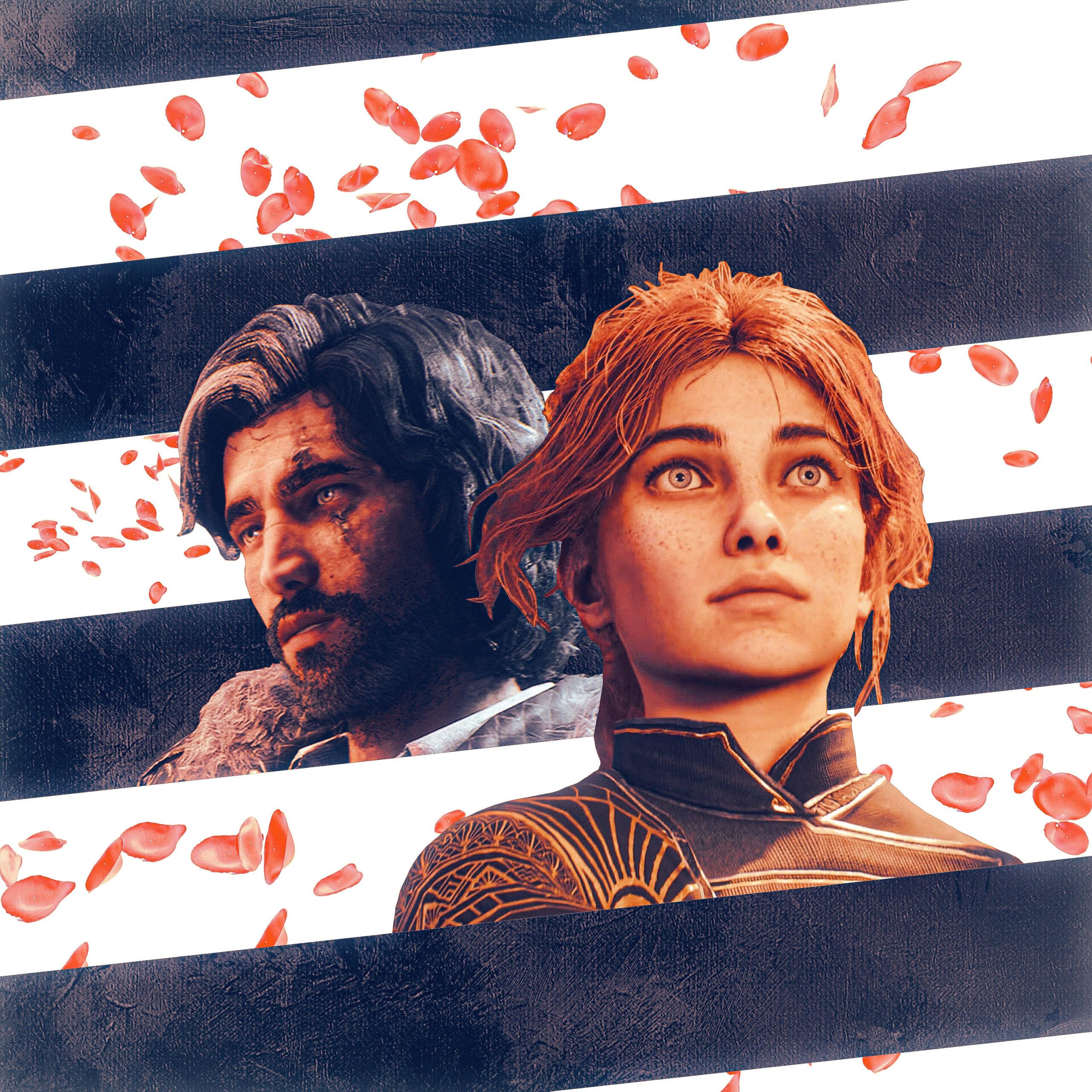


This year, gamers beheld the strangest of success stories: (1) A French video game publisher (2) that isn’t Ubisoft (3) partnered with a rookie studio (4) that is also French (5) to release a turn-based role-playing game (6) with a decidedly Parisian flamboyance (7) that would commercially outperform every other single-player title out this year by a mile.
The game was Clair Obscur: Expedition 33. Its developer, Sandfall Interactive, and its publisher, Kepler Interactive, were hardly household names upon the game’s release in April 2025; both companies were founded in just the past couple of years, during COVID, and while Kepler already had one hit to its credit in Sifu, Clair Obscur was, in fact, the debut title for Sandfall Interactive. This was a less than $10 million project in a world of $200 million franchise titles. Yet Clair Obscur was a blockbuster in scope and a marvel in several aspects of its execution—in its wonderfully tense combat, in its immense musical score, in its gorgeous art direction, in its remarkably mature writing. It was shockingly on par with Final Fantasy. It was, in fact, something bigger.
Clair Obscur: Expedition 33 sold 1 million copies in three days and more than 6 million copies by the end of the year. It’s become the year’s defining video game release, and it’s slated to become a full franchise, from a studio that is only getting started. The Hollywood production company Story Kitchen, which specializes in video game adaptations, is already handling a live-action film adaptation of Clair Obscur. Earlier this month, the French president, Emmanuel Macron, publicly congratulated Sandfall after Clair Obscur swept the Game Awards in Los Angeles, beating Death Stranding 2 and Hollow Knight: Silksong for Game of the Year.
Beginning in the dreamy island town of Lumière—conspicuously evocative of Paris circa the Belle Époque—Clair Obscur is the story of a defiant humanity staring down the threat of extinction.
Lumière is haunted by a distant figure known as the Paintress, who oversees an ominous countdown that’s displayed on the face of a monolith that looms over the horizon. The countdown drops by one each year, and the number represents an age: Anyone at or over the age that’s currently displayed is erased from existence, in an annual phenomenon known as the gommage. These heartless erasures leave the survivors ever more desperate to vanquish the Paintress. The beleaguered people of Lumière send waves of armed expeditions to the monolith across the sea. The dozens of expeditions to date have all failed, littering the landscape with withered corpses, ruined campsites, and scattered logs of each team’s discoveries in the treacherous world beyond Lumière.
A young soldier named Gustave leads Expedition 33, the latest, fateful voyage to defeat the Paintress. So we follow Gustave, Maelle, Lune, Sciel, and a few other stragglers through a series of uncomfortable subversions of the genre’s standard sentimental journey to save the world. In so many ways, Clair Obscur ends in a place very different from where it began, after a series of profound revelations and existential reckonings straight from Sartre and Descartes. The game’s director, Guillaume Broche, thus pitched Clair Obscur to its composer, Lorien Testard: “You arrive at the beginning of the game after the heroes have already lost.”
Chiefly, Clair Obscur tends to draw comparisons to Final Fantasy X, a game that’s similarly concerned with a world-saving pilgrimage that was secretly doomed from the very start. The comparison is still more striking at the historical level: FFX is widely seen as both the technical and commercial peak of the triple-A turn-based RPG, preceding a couple of decades of agonizing among some players about the inventiveness and the fashionability of these sorts of games.


More on ‘Clair Obscur: Expedition 33’
On the one hand, games like Persona 5, Octopath Traveler, Metaphor: ReFantazio, and now Clair Obscur: Expedition 33 are some of the bestselling single-player titles of the past decade, and they’re all turn-based RPGs. Still, the heyday of the turn-based RPG was squarely in the late ’90s through the early 2000s, with their popularity having since waned in favor of real-time, action-based RPGs such as Elden Ring. Square Enix, the longtime publisher of Final Fantasy, has for the past several years struggled to adapt its banner franchise to these shifting sensibilities; Final Fantasy XV and the most recent Final Fantasy XVI both implemented purely action-based combat systems, to the widespread displeasure of many longtime fans of the series. (The ongoing remake trilogy for Final Fantasy VII, a turn-based classic, uses a peculiar hybrid system for its combat: free, real-time movement with turn-based actions.)
Sandfall opted to integrate real-time prompts into the turn-based combat of Clair Obscur. Here, the player selects a move for a character in battle—a basic attack, a healing spell, a party buff, etc.—and then executes quick time inputs during the move’s animation in order to increase its effectiveness. More importantly, Clair Obscur lets players respond to incoming attacks by dodging, parrying, or jumping, depending on the type of attack. These defensive options, varying in execution difficulty, give the player opportunities to avoid taking any damage from a hit, with a successful parry of an entire combo also unleashing an instant counterattack. So here we have a system of turn-based combat that tests a player’s real-time reflexes, akin to a rhythm game, rewarding a mix of savviness in weapon selection, stat management, and party composition, as in classic turn-based RPGs.
Clair Obscur feels like a distinct breakthrough, though not for a lack of creative effort by the industry in previous years to reinvent the turn-based RPG. The cult classic Lost Odyssey, for instance, experimented with timed, reflex-based elements in turn-based combat to divisive effect in the era of its release. This is the typical conundrum for developers hoping to reinvigorate or revolutionize the turn-based RPG: how to improve upon the old mechanics rather than distort them in the hands of their most loyal fan bases. Broche has cited Lost Odyssey as a major influence in the development of Clair Obscur. He approached his game’s release date with a certain mischievous daring, a willingness to treat experimental features as unquestionably ready—no, destined—for prime time.
In beautifully provocative ways, Clair Obscur explores some heavy subjects: the perils of grief, the limits of escapism, the nature of godhood, the meaning of life, the value of life.
Gustave is killed at the end of the first act, and at the start of the second he’s swiftly succeeded as the leader of Expedition 33 by the mysterious interloper Verso. We eventually learn that this whole world is an artwork on a magical canvas, painted by Verso’s mother, Aline, who inhabits this world as the Paintress. She means to protect the canvas from destruction by Verso’s father, Renoir, who means to extract his wife from the painting in order to save her from languishing to death in reality. (I will eventually write about the persistent influence of Inception on a generation of video games—a reflection for another day.) Verso’s fellow expeditioner Maelle turns out to be his youngest sister, Alicia, who was, in reality, disfigured in a house fire. The Verso who leads Expedition 33 is but an echo of the Verso who, in reality, died after rescuing his sister from those flames. The canvas, then, is a surreal stage for the wild grief of this godlike family. The expeditioners Lune and Sciel are left to process the implication that their lives, as ephemeral figures in a painting, are meaningless.
Clair Obscur: Expedition 33 ends with the player choosing between two dire options: to destroy the canvas and thus forcibly return the Dessendre family to reality, in accordance with Verso’s wishes for his family to properly grieve him and move on, or to preserve the canvas, at the insistence of Maelle, who, like her mother, wishes to remain—perhaps indefinitely—among the people of Lumière.
Video games—so-called “moral choice” games such as Mass Effect, specifically—are full of such drastic decisions, gesturing at the philosophical quandaries of an undergraduate who’s just been introduced to Immanuel Kant and John Stuart Mill. But the final reckoning in Clair Obscur is such a uniquely and powerfully fraught choice, drawing tension between your thoughts and your emotions, playing on the effects of your own immersion in the canvas. It’s a distinctly distressing resolution, either way, of such a gorgeously disorienting story. It deprives players of the one choice that we might not always take but generally expect: the good ending. With such a rousing start as a series, however, Clair Obscur closes the year on the most optimistic of notes.