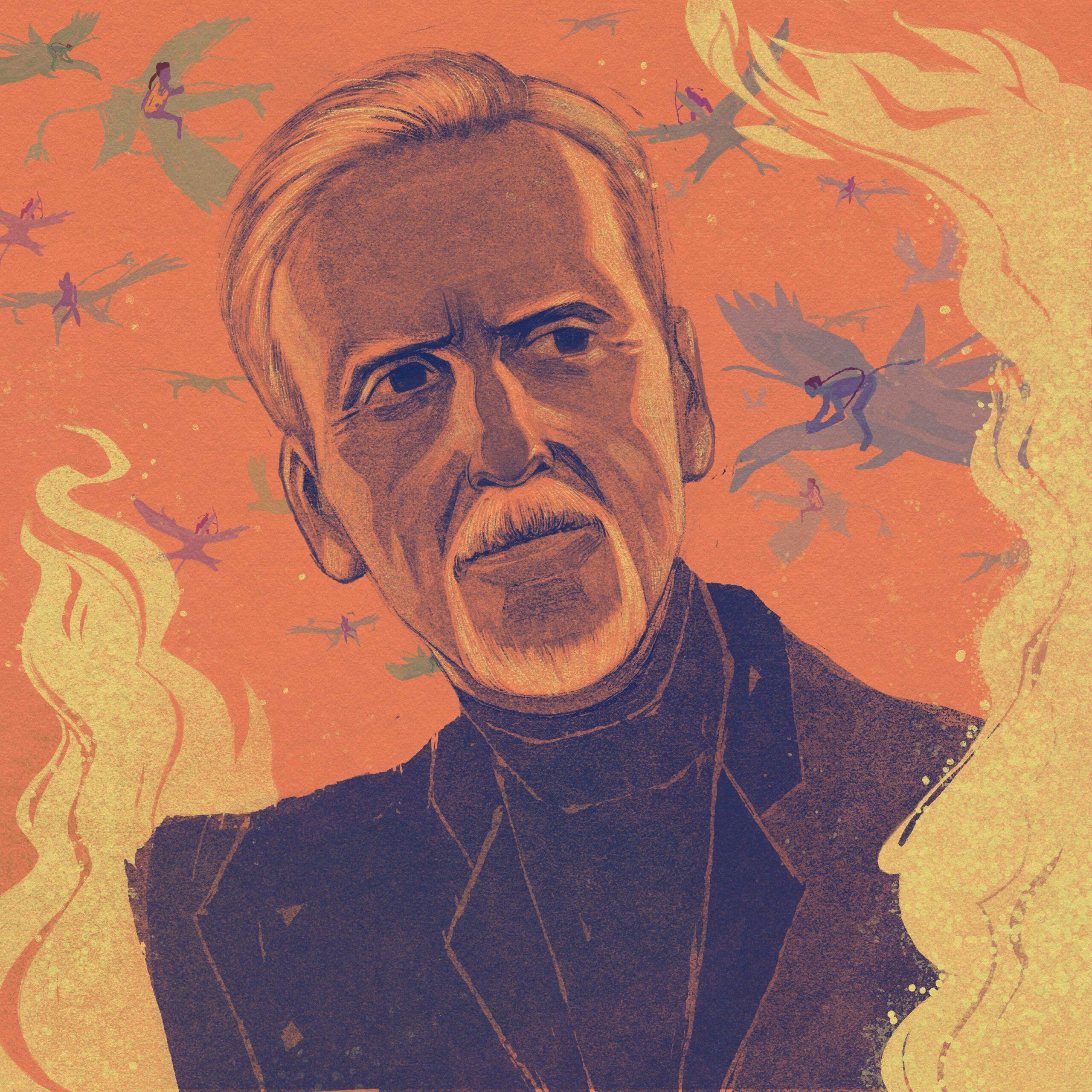
James Cameron Doesn’t Care About a “Cultural Footprint”
Cameron has spent the last 25 years bringing Pandora to life. As ‘Avatar: Fire and Ash’ hits the big screen, he’s thinking about what that means.James Cameron Doesn’t Care About a “Cultural Footprint”
Cameron has spent the last 25 years bringing Pandora to life. As ‘Avatar: Fire and Ash’ hits the big screen, he’s thinking about what that means.
When James Cameron was making the first Avatar, he met with a marketing executive who had ideas about how to turn the movie into a merchandising gold mine. “Here’s what you need,” the director recalls him saying. “You’ve got to have a young, male, aspirational character with a signature weapon.”
When the presentation ended, Cameron weighed in bluntly. “We don’t have any of that,” he said. “Sorry.”
Cameron wasn’t gunning for the kind of ubiquity that action figures can bring. “Look, Star Wars has got the ultimate cultural footprint because you can role-play,” he says. “You can wear a Darth Vader mask. You can play with Star Wars Lego. There’s so many toys and games and lightsabers.” But he knew that Avatar wasn’t Star Wars. He also had a hunch that even if kids never dreamed of becoming a 9-foot-tall blue alien like Jake Sully, they’d at least want to get lost in his world for a while. Adults, too. The film, shot using motion-capture and 3D technology, was transportive in a completely new way.
“You come and sit your ass in a movie theater seat, and nothing can touch it,” Cameron says. “There’s nothing out there that impacts you like that in the moment. It’s not pervasive, coming at you in all media from all directions. It’s a singular experience. And that’s by design. That’s what we do. We’re not building Priuses; we’re building Ferraris here, OK?”

James Cameron Talks ‘Avatar,’ the Movie Industry, and Much More
With the third installment in the series, Fire and Ash, coming out on Friday, Cameron is well aware that there are still questions about Avatar’s cultural influence. He could cite the fact that there are indeed Avatar Legos, that people wait in long lines to ride Avatar Flight of Passage at Disney World, and that Saturday Night Live has made fun of Avatar’s signature font twice. “There is the whole Paypyrus controversy,” Cameron says with a smile. There’s also the $5 billion in box office receipts.
Instead, though, Cameron points out what he believes the Avatar movies do best: They make the audience feel something in the moment—and hopefully beyond. That’s why, at 71 years old and surely set for life financially, he’s still committed to the franchise. “There’s this connection to something that’s big and feels right,” Cameron says. “Maybe it’s a memory from childhood of being in the woods. Maybe it’s some kind of cultural memory going way back to our Indigenous times. Who knows what that is? They feel it in the moment and they walk out, but then do they take action? Do they do something about ocean conservation or the plight of the whales and endangered species? One in 1,000, I think, do. I’m happy with one in 1,000 if they go out and become warriors for the things that are important.”
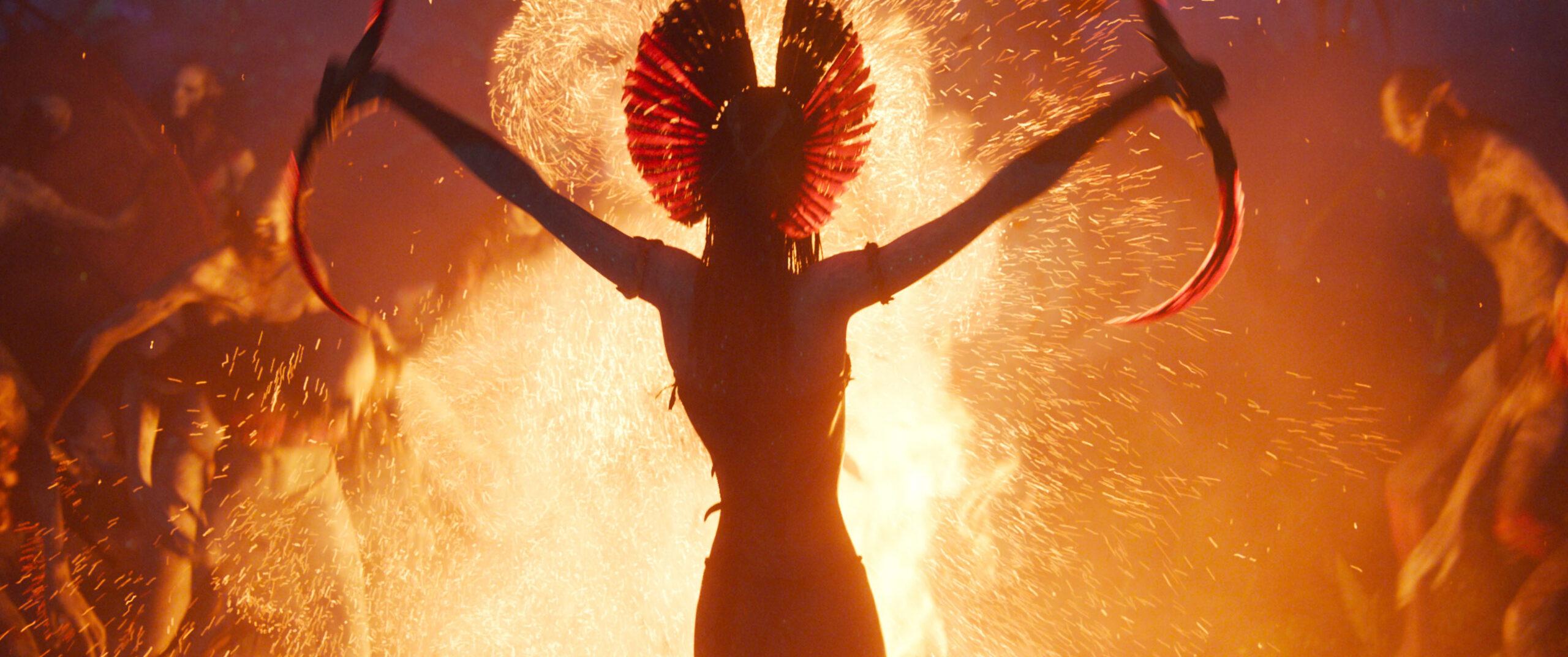
Cameron, a longtime undersea explorer and environmentalist, always envisioned the movie series as an ideological project about human colonizers draining an alien planet’s natural resources and brutalizing its Indigenous population. But at the beginning, his high-minded thoughts about Avatar’s themes often took a back seat to creative obstacles. “There were some pretty low moments on the first film because it was just all experimental,” Cameron says. “It was like the Manhattan Project. We were creating new physics of how you make a movie, and there was a lot of uncertainty.”
Cameron says that there was one person he worked with back then who was never uncertain: his producing partner Jon Landau. “He always said, ‘This is going to work. It’s going to be great. We’re going to revolutionize stuff.’ And I was like, ‘Well, man, I hope you’re right because it sure doesn’t feel like that right now.’ We were three years in before we got one shot that we could actually put in a movie.”
In 2024, Landau died of cancer at 63. When I interviewed him for an oral history of Cameron’s career three years ago, he remembered turning over an early Avatar sequence to the visual effects studio Weta and not getting it back for nine months. “Literally a gestation process,” Landau told me. “And then we saw the birth of Neytiri. It was this scene where she sees Jake in the woods, pulls back her bow, and decides not to shoot him. There wasn’t a spoken word in that scene. But we felt we knew what she was thinking without her speaking. Her character was alive, the world was alive. Jim and I watched it together in the Lightstorm screening room and it was like, ‘OK!’”
Then they realized there were 2,000 more shots to go.
We’re not building Priuses; we’re building Ferraris here, OK?James Cameron
“There will never be a challenge in my life, I think, as great as that,” says Cameron, a man who once reconstructed the most famous ocean liner in history for Titanic and then a few years later plunged 12,000 feet deep into the ocean to visit the wreckage. He claims he had no clue whether Avatar would spawn sequels. “I don’t think we thought, ‘What are we going to do next if it’s a hit?’” Cameron says. “You can’t think that far. It’s like, ‘I’m going to deliver this, and I’m going to die.’ Because it took everything we had. It’s like rowing across the Atlantic on a log and then getting to the other side and then, ‘What do you want to do next?’ It’s like, ‘Nothing.’”
Even after Avatar hit theaters in December 2009 and became the highest-grossing movie ever, Cameron needed a break. “There were even a couple years of even thinking about if I even wanted to tackle that world again,” he says.
Not surprisingly, he came around to the idea.
“It’s like, ‘All right, so we’ve created this little creative society that has all this momentum. Let’s set ourselves an even bigger challenge,’” Cameron says. “Avatar won. We basically created a new form of cinema. Now what are we going to do with that?”
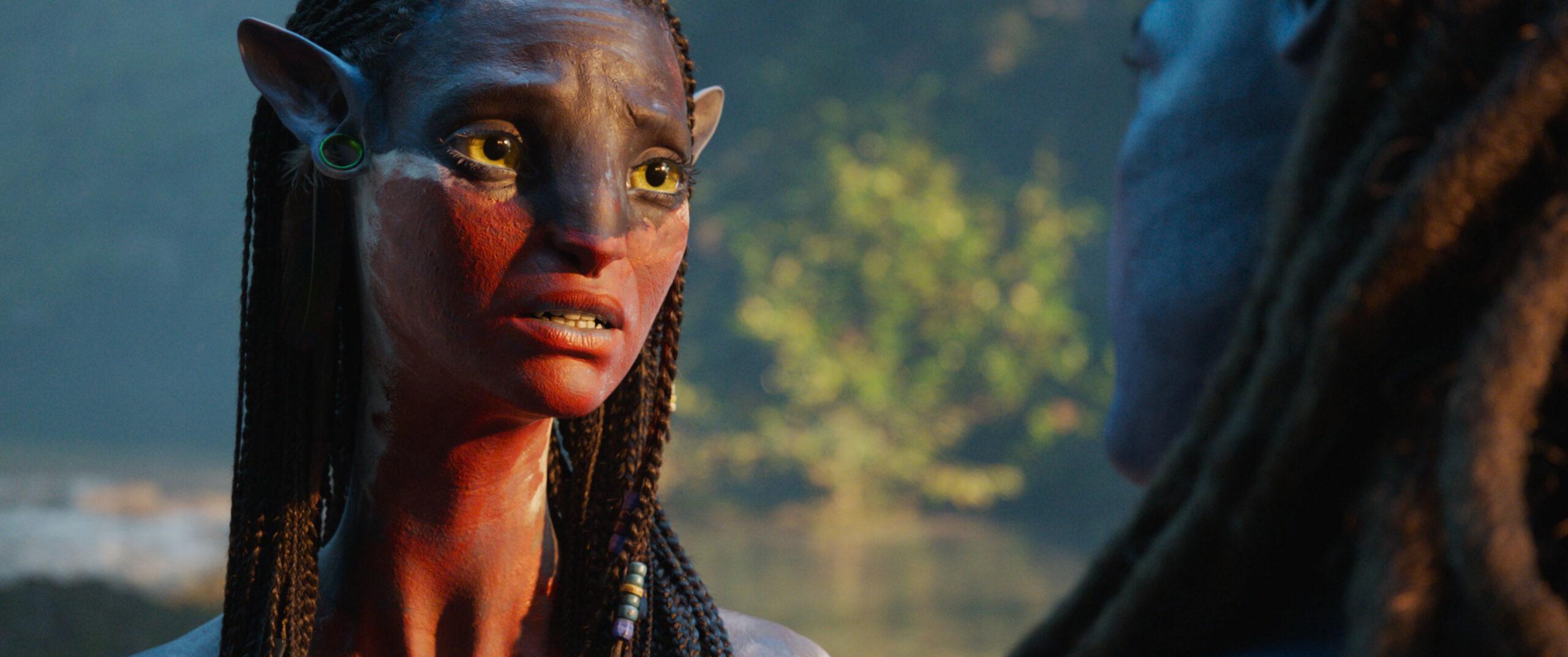
What drew Cameron back to Pandora—beyond the money—was family. “Not the on-screen family,” he clarifies. “The behind-the-scenes family that we created, the respect and trust that I had with my cast and with my artists. And also that knowledge that we had done something extraordinary that the average person wouldn’t understand, even if we spent two hours trying to explain it. I can show you a picture and you’ll quickly get it, but it’s very hard to explain.”
Over the past 20 or so years, hundreds of people have decamped to New Zealand to work on Avatar movies. For Fire and Ash, the challenge has been dramatic, not technical. “How do I play these characters off against each other in a way that’s constantly evolving and constantly intriguing?” Cameron says. “So The Way of Water is the first part of a much greater arc that completes at the end of Fire and Ash. … And there is a culmination, there is a completion.”
Fire and Ash picks up where The Way of Water left off, with Jake and Neytiri still struggling to move on after the death of their oldest son. To Cameron, Avatar is just as much an earnest family drama as it is an action epic. “I was in a phase of my life where I was the father of five kids that ranged from early teens through early 20s,” the director says. “I was like, ‘All right, I want to make a story about the difficult years in our lives.’ Because you’re either a teen and you’re going through it and you’re living it and you’ll recognize it, or you’ve been that age. And I thought as a parent, well, maybe it’s good for a young demo that goes to a movie thinking it’s just action and lightweight entertainment to get a glimpse of what the parents are going through and get a glimpse of what other kids are going through and universalize a lot of those feelings of alienation and anxiety and not being seen.”
In interviews lately, Cameron has been trying to emphasize that there’s more to Avatar than trippy landscapes and set pieces. “I’ve been asked a lot of questions, and it causes me to reflect,” he says. “To me, the scenes I’m most proud of in this film are not the big battle scenes. … It’s the two-handers. It’s Jake and Neytiri talking about how their marriage is disintegrating right before our eyes. That’s a four-page, two-character scene.”
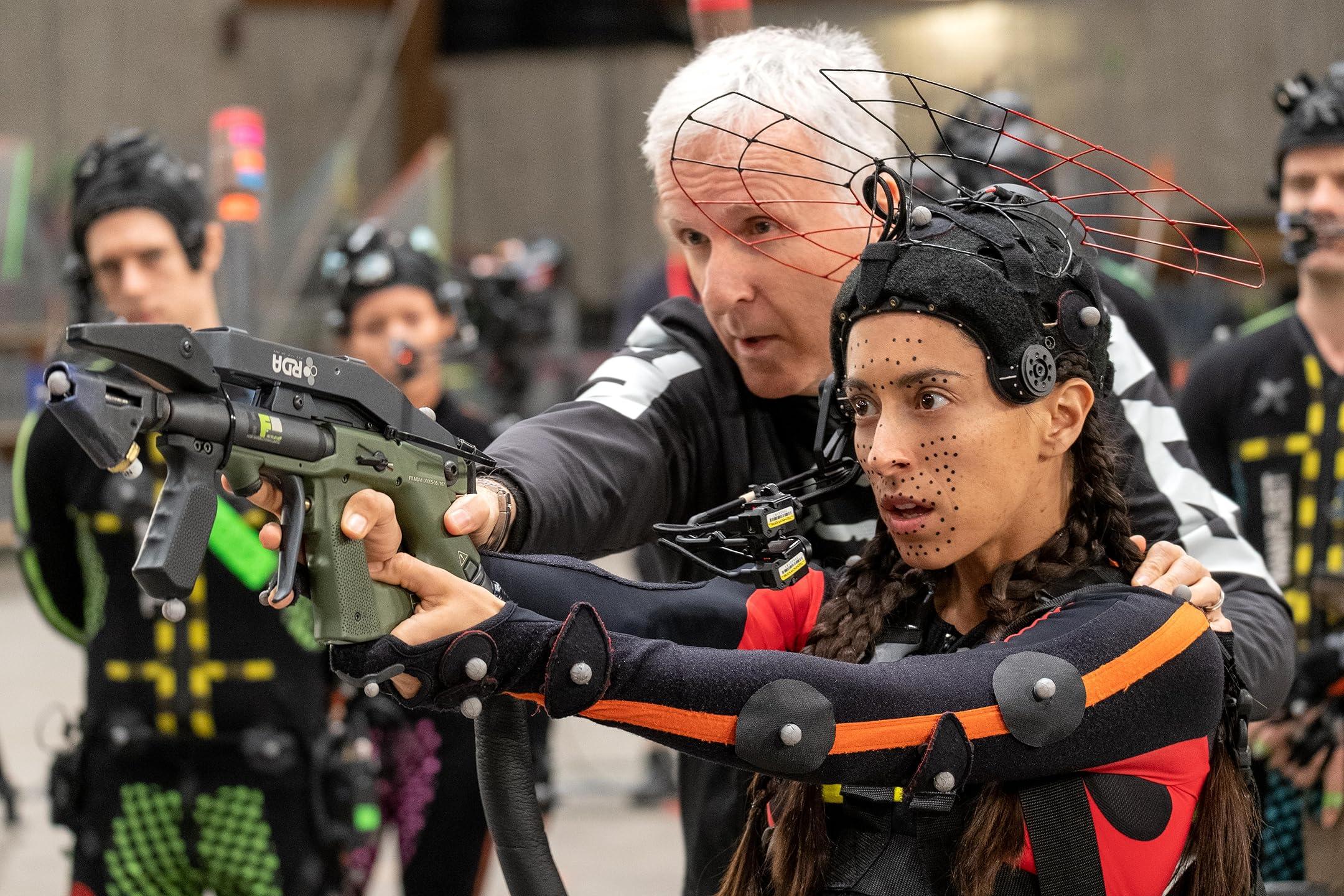
The director wants the world to know that his actors aren’t just voicing their characters—they’re full-on performing. To remind critics of that fact, he even made a preshow featurette with footage of his cast in motion-capture suits. It also includes a message from Cameron about how the film was made by humans and not AI.
A futurist like Cameron doesn’t look backward very much, but ask him questions about the sequels he’s directed over the years, and nostalgia starts to creep in just a little. How could it not? His first $100 million blockbuster, the flick that made him a true A-lister, was Aliens.
“I love the character of Ripley,” Cameron says. “I love the conceit that you can put people into a reality that’s not really possible. You’re on an interstellar vehicle, and you’re going to stop at this planet, and you’re going to pick up this parasite. It always felt real. What Ridley [Scott] created, it blew my mind, and it got me very excited creatively. So I took my urge to do things kinetically and to move the camera, and I put it with this sort of quieter, darker tension building. And those two styles kind of merged in Aliens, and there was hybrid vigor in that.” Plus, he adds, “I got to work with Sigourney [Weaver].”
Cameron’s next sequel gave him the chance to both reinvent a franchise and mess with the audience’s expectations of it. “Terminator 2 was ambitious. And I don’t mean the $100 million budget,” he says. “What I mean is that I’m going to take the baddest-ass motherfucker terrifying killer in history, and I’m going to make you cry for him at the end of the movie. If I can do that, that’s the power of cinema, right? Then I will feel, ‘OK, I’m a director. I’m in command of my medium.’ I’d already done three films at that point, the first Terminator, Aliens, and The Abyss. I had a lot of craft. But there’s craft, and then there’s shaping an experience for the audience. An emotional experience. And I was still working on that. I feel like I didn’t stick the landing on The Abyss quite the way I wanted to. It’s a solid film. But I knew I had to stick it this time. You’re going to cry for the Terminator, damn it.”
Terminator 2: Judgement Day was the highest-grossing movie of 1991—and probably the most influential. When one of Paul Thomas Anderson’s NYU film school professors bashed it, he took it as a sign that he should drop out. It’s probably no coincidence that there are shades of T2 in One Battle After Another. “The setup of two rival warriors—one good, one evil, both relentless—logging mutual mileage in pursuit of a leather-jacket-clad rebel who represents a future that is not yet set owes at least as much to James Cameron as Thomas Pynchon,” Adam Nayman wrote for The Ringer.
It’s like rowing across the Atlantic on a log and then getting to the other side and then, "What do you want to do next?" It’s like, "Nothing."Cameron
Cameron says that he “didn’t immediately make that connection” when he saw Anderson’s latest film. But he loved Chase Infiniti’s performance as Willa, who he thinks follows in the footsteps of Ripley, Sarah Connor, and Neytiri. “She’s my kind of female character,” Cameron says. “When she pops that guy at the end, it’s like she’s all business. She is all business. I trained with a grandmaster shooter, the best shooter in America, a guy named Taran Butler, and her double taps were pretty good.”
Alas, Cameron has no plans to return to making gritty road movies. He has recently vowed to adapt Ghosts of Hiroshima, Charles Pellegrino’s book about America’s atomic bombing of Japan. But right now, his feet seem firmly planted in Pandora. He acknowledges that whether the two additional Avatar movies he has planned go ahead as scheduled depends on how well Fire and Ash does at the box office. But at this point, you can’t bet against him.
It’s been 16 years since the original Avatar, one more than it took Cameron to release his first seven films. He sees the first stretch of his career as training for the second. “If you think about the journey, it’s live-action production going into virtual production,” he says. “I don’t think I’d be any good at virtual production if I hadn’t done live-action first.”
These days, Cameron is something of an evangelist for motion capture, which he sees as boundless. “Why am I doing this damn performance capture?” he says. “Is it because I want some kind of diabolical control over the actor’s data? No, not at all, because we try to make ourselves utterly transparent creatively. We don’t try to impose anything on what the actors do in the moment. It’s because I’m also a writer. I wrote these characters. Now I’m passing the baton to the actors, and we’re creating something together that we’re satisfied with, that we think is cool.”
But in the end, Cameron is still chasing something that can’t be earned with technical wizardry alone: intimacy. “Certainly up until Titanic, everybody said, ‘Do you ever want to do a small movie?’” he says. “I said, ‘I do a small movie every time I make a movie.’”
Cameron knows that he’ll probably inspire only a tiny percentage of the Avatar audience to become activists, but that’s not all he’s trying to reach. “Everybody else, I think for a moment, They feel something. And maybe that has a subconscious impact on them,” he says.
“I don’t want this to be pop culture. I want it to be something deeper.”