Breaking Down the 2026 Men’s NCAA Tournament Bracket
Who should you trust this March? Which teams could destroy your bracket? We’ve got it all covered.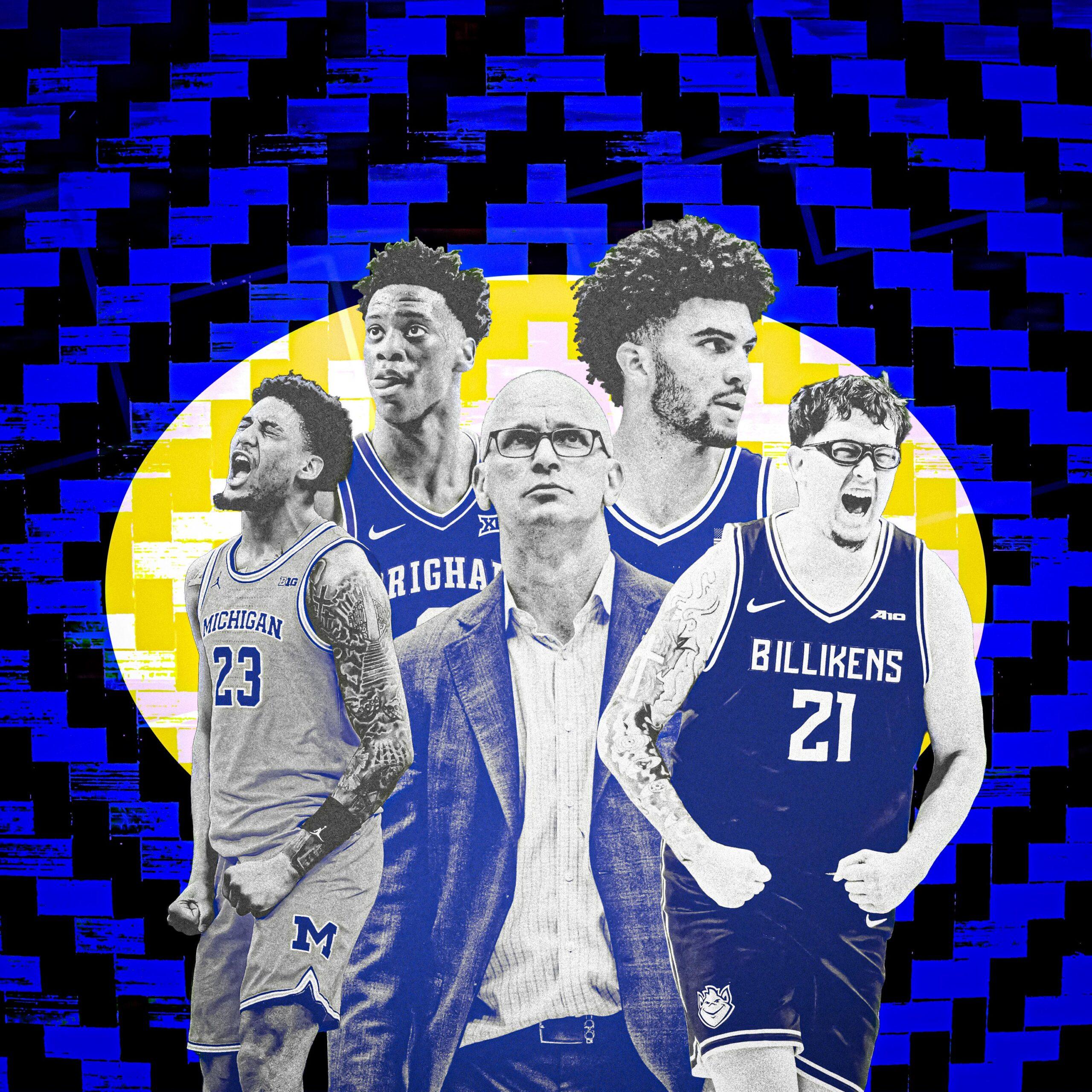

The men’s March Madness bracket has dropped, and if you need help filling yours out before the first full day of action tips off on Thursday, we’ve got you covered. We’ll work backward through the bracket, starting with the smartest championship picks, then look at some other options to fill out your Final Four, before covering the teams that could bust your brackets. Finally, we’ll offer up one thought on every first-round matchup. Let’s get started with the title contenders.
Pick One of These Teams to Win It All
Michigan (1-Seed, Midwest Region)
Do not fall victim to recency bias. While it’s true that Michigan hasn’t looked its best in March—and turned in a concerning performance against Purdue in the Big Ten final on Sunday—we can’t ignore the four months of games in which the Wolverines looked like clear favorites to win it all. Losing sophomore guard L.J. Cason, who led the Big Ten in 3-point shooting, to a torn ACL has put a dent in the team’s offensive efficiency, but we shouldn’t overstate his impact. Seven players were ahead of Cason in Dusty May’s rotation based on minutes played. And even without Cason, these Wolverines can still go eight deep. May will miss Cason’s energy off the bench, but Michigan otherwise doesn’t have any scoring issues and owns the country’s most efficient defense.
May built his lineup like an NBA team. Aday Mara anchors the defense with his 7-foot-7 wingspan. He’s a shot-blocking pterodactyl who rarely has to leave the paint. Morez Johnson Jr. is a strong power forward with surprisingly quick feet, which allows the Wolverines to switch him onto guards. Yaxel Lendeborg, the team’s best player, can also guard anyone. At 6-foot-9, Lendeborg’s size creates matchup problems on the offensive end, as defenders just bounce off him when he plays in transition. He’s a “small forward” in title only. This team has size across the roster. Point guard Elliot Cadeau is the only player in the rotation who stands under 6-foot-4.
The backcourt is the one weak spot that could ultimately derail this team. Cadeau is a fine playmaker who can throw a flashy pass, but he turns the ball over at a high rate. That sets the tone for the rest of the players, who never shy away from trying a tricky pass. Even Mara will try a behind-the-back pass every once in a while. Michigan assists on over 60 percent of its made baskets, but all of that passing comes with a side effect of being one of the most turnover-prone teams in the country, ranking 179th in turnover rate. When the Wolverines have lost or just haven’t been at their best this season, turnovers have been the reason why. An Elite Eight matchup with Iowa State’s defense, which ranks third in turnover rate, could be a significant hurdle down the road.
Arizona (1-Seed, West Region)
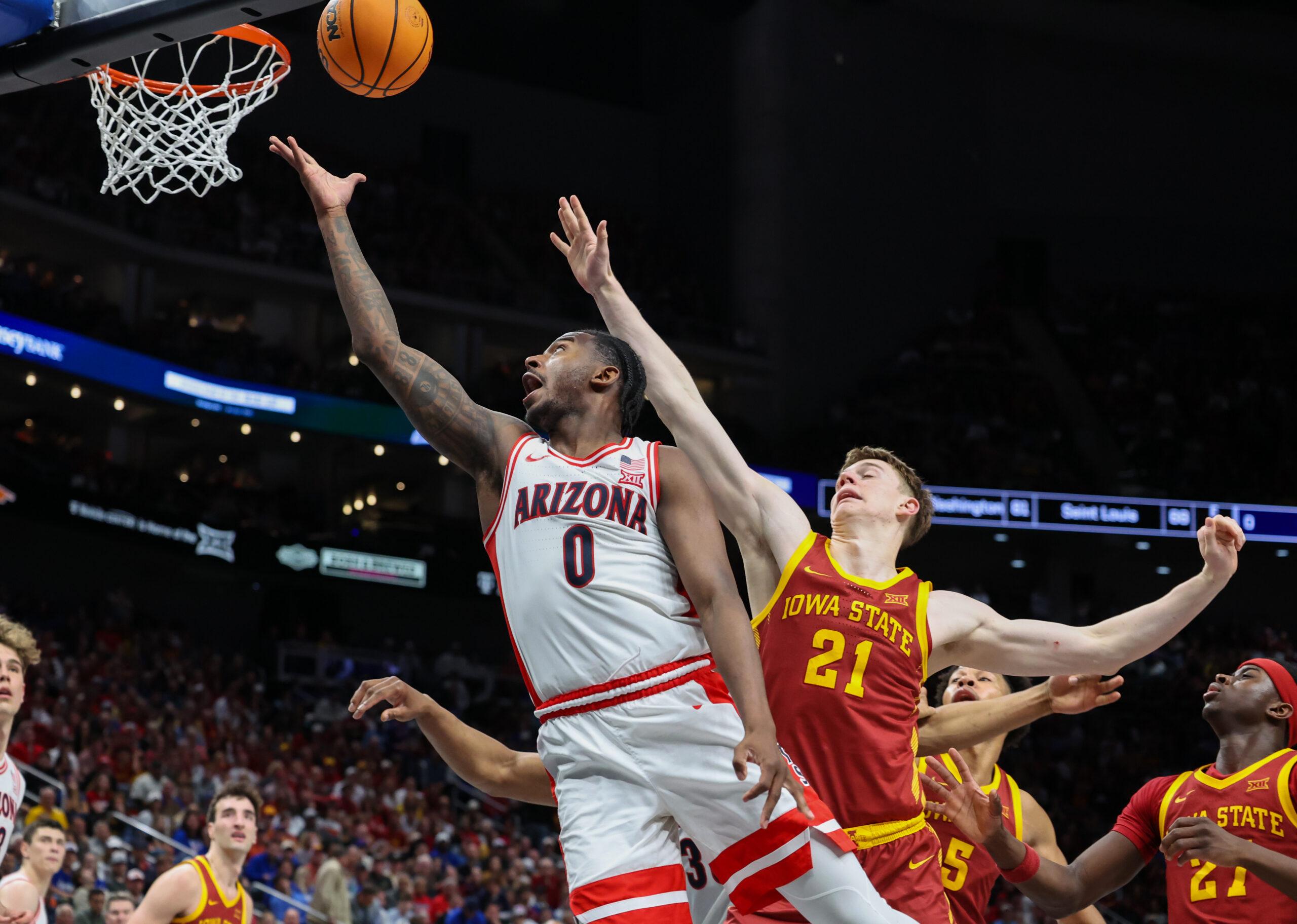
Fans of ’90s basketball will appreciate this Arizona team. The Wildcats play with two classic bigs, they can play through the post, and they don’t shoot many 3s. That formula isn’t typically conducive for efficient offense, but the Wildcats have the talent to make it work. They’re led in scoring by freshman guard Brayden Burries, whose game was built for March. He can get to any spot on the court whenever he pleases, he’s a tough finisher around the basket, he can hit a dribble pull-up, and he’s a reliable shooter when spotting up from 3. Burries is Arizona’s most prolific scorer, but this team still plays through its bigs. Freshman Koa Peat is a legit power forward, and center Motiejus Krivas is a very large human who can move his feet on defense and make a hook shot with both hands on the offensive end. And if either of those two gets stuck in foul trouble, Arizona has former starter and Big 12 Sixth Man Award winner Tobe Awaka coming off the bench. I’ve already named four players and haven’t even gotten to Jaden Bradley, who won Big 12 Player of the Year. Head coach Tommy Lloyd has built a deeply talented roster.
The Wildcats seemingly have it all—including elite defense—but there are reasons to be wary of the West region’s top seed. Arizona hasn’t gotten past the Sweet 16 in its four tournament appearances under Lloyd. His Wildcats were eliminated by a lower seed in his first three tourney appearances before getting rolled out of the 2025 tournament by a superior Duke team. The lack of 3-point shooting, while refreshing to watch, is also a concern. It’s not that the Wildcats can’t shoot the 3—they rank 64th nationally in 3-point accuracy—but only three teams generated 3-point attempts at a lower rate, per KenPom. Can we trust Lloyd to get the most out of this team? In the modern game, can we trust a team that doesn’t shoot the most efficient shot?
Arizona’s path to a Final Four looks relatively clear. The 2-seed in their region, Purdue, got hot in the Big Ten tournament but underachieved during the regular season, and has had trouble when facing scoring guards like Burries and Bradley. John Calipari’s fourth-seeded Arkansas team could provide some resistance in the Sweet 16, but the Razorbacks lack depth after losing Karter Knox for the season. The West might be the weakest region in this year’s bracket, which just raises expectations for Lloyd to finally make a deep run.
Florida (1-Seed, South Region)
The defending national champs dropped a stinker in the SEC tournament semis, but before that loss to Vanderbilt, the Gators were the nation’s hottest team. Florida was mowing teams down during its 12-game win streak prior to meeting Vandy, including a 23-point win over Alabama and a 34-point win over Arkansas. The Gators ran away with the SEC regular-season title after a somewhat shaky start to the season, when they lost a bunch of coin-flip games to some really good teams. They lost to Arizona by six in the season opener, by one point to Duke in a thriller at Cameron, and lost by four to UConn at Madison Square Garden. Outside of a random home loss to Auburn in late January, Florida hasn’t had a bad loss all season.
Still, this team did have its issues. Florida wasn’t shooting well over the first three months of the season. They ranked 349th (out of 356 teams) in 3-point shooting percentage entering February. They’ve ranked 65th since then. Guards Boogie Fland and Xaivian Lee have shown the most improvement down the stretch. The two transfers combined to shoot 23.4 percent from deep through January. They’re shooting 32.6 percent over the last six weeks. Sixth man Urban Klavzar was shooting a solid 37.1 percent from 3 going into February, but has hit 47.2 percent of his deep attempts since. There’s certainly a concern that the Gators could revert back to their bricklaying ways at any moment—which sort of happened in the loss to Vandy but wasn’t the main reason they lost—but we can’t forget that this team was hanging with their highly ranked opponents even before the shooting turnaround.
Florida might be able to survive a poor shooting night thanks to the front line featuring three returning starters from last year’s team that cut down the nets. Thomas Haugh does a little bit of everything but is at his best when he’s sprinting the court and beating his defender to the rim. Alex Condon, the mulleted Aussie, isn’t much of a threat from 3 but can handle the ball and make slick passes from the high post, so he doesn’t cramp the team’s floor spacing. Center Rueben Chinyelu is mostly a rim projector and lob threat, but he’s also a master of screens, taking out opposing defenders who want to stop Florida’s drives to the basket. All three of those bigs bombard the glass on both sides of the floor and make the Gators one of the best rebounding teams in this field.

The Other Final Four Contenders
Duke (1-Seed, East Region)
Leaving the tournament’s top overall seed off the list of top title contenders is probably a little disrespectful, but I have my reasons. I’m not just hating on Duke here. The ACC champs would have been included in the previous section if not for injuries to two key starters. Center Patrick Ngongba II, who missed the regular-season finale against North Carolina and all of the ACC tournament with foot soreness, is expected back during the early rounds of the NCAA tournament, but Duke will likely have to make the Final Four to provide lead guard Caleb Foster enough time to recover from surgery on a broken foot. If Ngongba can get over his foot issues soon, the Blue Devils can make a run to Indianapolis. Cameron Boozer is the best big man in the nation and might be the best passer in this field regardless of position. The freshman instantly recognizes double-teams and can fire accurate passes all over the court. There aren’t many bigs who can defend Boozer one-on-one, so opponents are screwed no matter how they choose to play the Duke star.
If Duke coach Jon Scheyer had a guard who could create his own offense, the Blue Devils would be the title favorites. I still trust Scheyer to lead Duke back to the Final Four, but there’s just a little too much playmaking pressure on Boozer to fully trust this Duke team to cut down the nets.
Houston (2-Seed, South Region)
The Cougars brought back three-fifths of their starting lineup from the team that lost in last year’s national title game. They filled the two openings with players who are now projected to go in the first round of this year’s NBA draft. But coach Kelvin Sampson doesn’t have the depth on this roster that he typically enjoys, especially on the front line. If either Joseph Tugler or Chris Cenac Jr., those NBA-bound freshmen, get in foul trouble, Houston could be in danger.
The backcourt trio of Kingston Flemings, Emanuel Sharp, and Milos Uzan give the offense a championship-level ceiling, but the Cougars don’t play defense or rebound at the level you expect out of a Houston team, which makes it difficult to pick this team as the one that finally gets Sampson, who’s been to three Final Fours without winning a championship, over the hump. With that said, the Cougars got a good draw going to the South region, where the final will be played at Houston’s Toyota Center.
Iowa State (2-Seed, Midwest Region)
Head coach T.J. Otzelberger has had a lot of good teams at Iowa State, but this is his first with enough scoring options to actually make a Final Four run. Joshua Jefferson is the star. He’s listed as a forward but he’s more of a big wing who can bully smaller defenders around the rim and dribble around slower opponents. Defenses can’t hone in on Jefferson with Milan Momcilovic, the best 3-point shooter in the field, hanging out on the perimeter. Iowa State’s guards aren’t big scorers but both are on-ball pests who can create offense by jumping passing lanes and starting fast breaks after steals. These Cyclones can score, and the defense is as stingy as ever, ranking fourth in KenPom’s adjusted defensive efficiency metric. Getting dropped in Michigan’s region was a bad break and there could be a tough matchup with Virginia or Tennessee waiting in the Sweet 16, but Iowa State should make it out of the first weekend with ease.
Illinois (3-Seed, South Region)
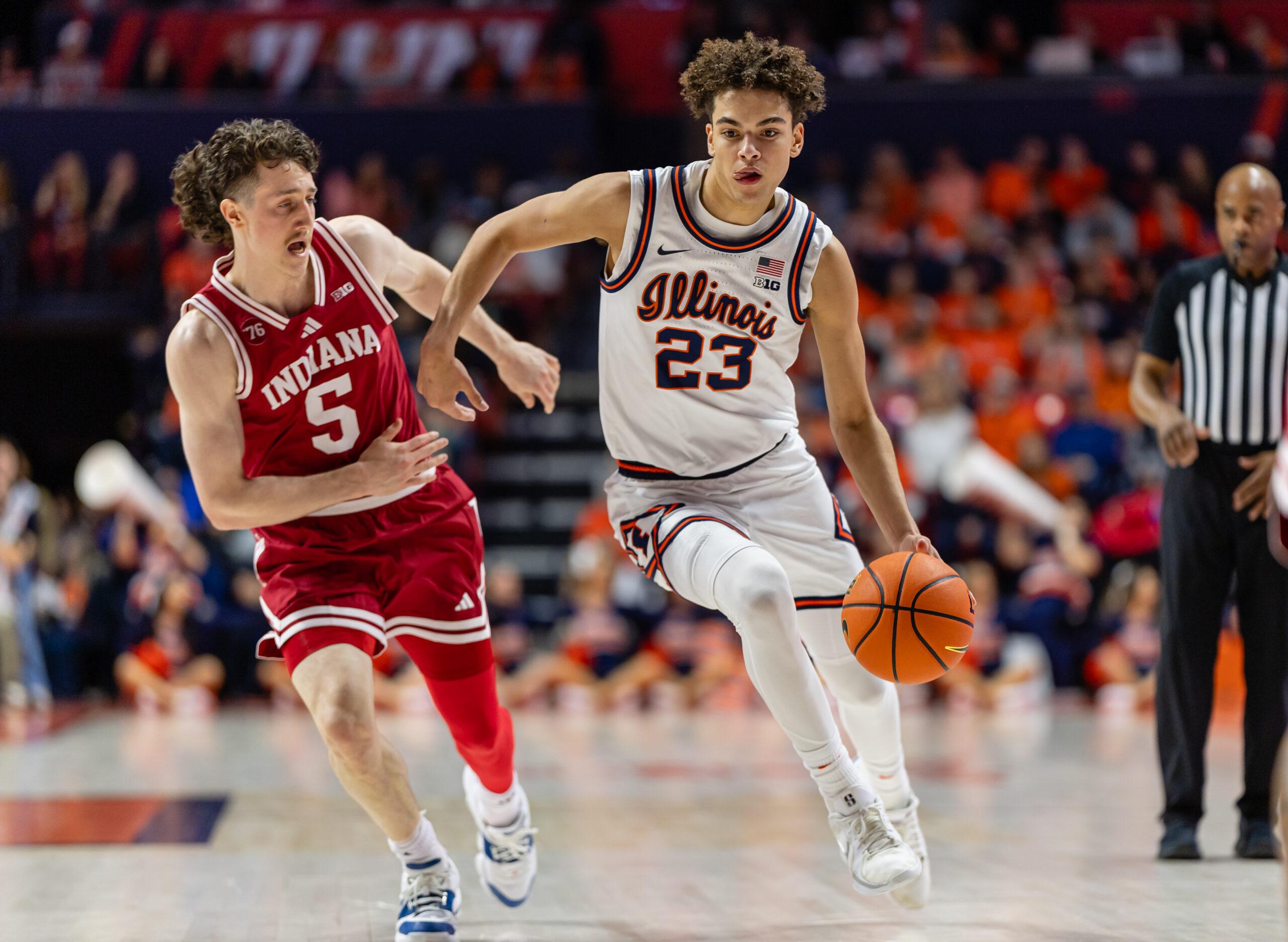
Four of Illinois’s eight losses this season have come in overtime. There are two ways to interpret that information: (1) This team has some fundamental flaw preventing it from closing out tight games, which could be a problem in March, or (2) they’ve had some rotten luck this season and are much better than their record implies. The nerd sites want you to believe it’s the latter; they love the Illini. KenPom and Evan Miya rank them seventh overall, and Torvik has them a spot higher. Advanced metrics say this is one of the best offensive teams of all time, and the defense ranks in the top 25 this season. That’s a formula that can get this team to a Final Four. Illinois may have to get past both Houston and Florida—the two teams that played in last year’s national title game—to make it to Indianapolis, but they have more scoring options than both of those teams. Freshman Keaton Wagler, a projected lottery pick, could go on a Walter Clayton Jr.–like run of shot-making over the next few weeks and take the Illini on a deep run. And Illinois has two seven-footers, brothers Tomislav and Zvonimir Ivisic, who can step out and knock down a 3. David Mirkovic and Andrej Stojakovic provide scoring and size on the wings. Kylan Boswell and Jake Davis are veteran guards who can space the floor. This is a 3-seed with 1-seed talent.
Michigan State (3-Seed, East Region)
This is a classic Tom Izzo team. The Spartans are led by a heady, pass-first point guard in Jeremy Fears Jr., who leads the nation in assist rate. In Jaxon Kohler and Carson Cooper, they’ve got two big men who rebound like their NIL paychecks depend on it. And they have wings who can run the court and play above the rim, including the nation’s best dunker, Coen Carr. Izzo may be inching toward retirement, but these past few seasons show he’s still one of the best coaches in the country. If he’s still got some March magic left, the Spartans can make a deep run. If it turns out Duke can’t get healthy, the East region isn’t as daunting as it looks on paper.
Teams That Can’t Be Trusted
Connecticut (2-Seed, East Region)
UConn is still running the same style of free-flowing offense that won the Huskies back-to-back national titles in 2023 and 2024, but it just doesn’t hit the same. The layered screen actions and quick ball movement still lead to plenty of open shots—the Huskies just aren’t making them at a very high clip. Solo Ball, who in theory is the team’s best scorer, seems to have lost his shooting touch from last season. Alex Karaban, who played on both title-winning teams, hasn’t really evolved since the last time UConn cut down the nets and can disappear from games. Connecticut can play with any team in the nation when it is at its best, but when Ball and Karaban aren’t hitting, this team can go into long shooting droughts. It only takes one of those down nights to end a tournament run.
Purdue (2-Seed, West Region)
I might be sleeping on the Big Ten tournament champs here. Purdue currently has the best offensive efficiency of the KenPom era, which dates back to 1997. Point guard Braden Smith is about to break Bobby Hurley’s NCAA record for career assists. Trey Kaufman-Renn is an elite big man. Fletcher Loyer is an elite shooter. And that trio has played in a lot of big games under coach Matt Painter, so March pressure shouldn’t be an issue. So why shouldn’t you trust Purdue? Well, they can’t guard the ball, which feels like it could cause some issues in the tournament. Talented perimeter scorers have punished the Boilermakers all season, and their region is filled with that style of team. Miami or Missouri will give Purdue a tough game no matter who comes out of the West’s 7-10 matchup, and AJ Dybantsa could be waiting in the Sweet 16 if BYU can get through the first weekend.
Miami (Ohio) (11-Seed, Midwest Region)
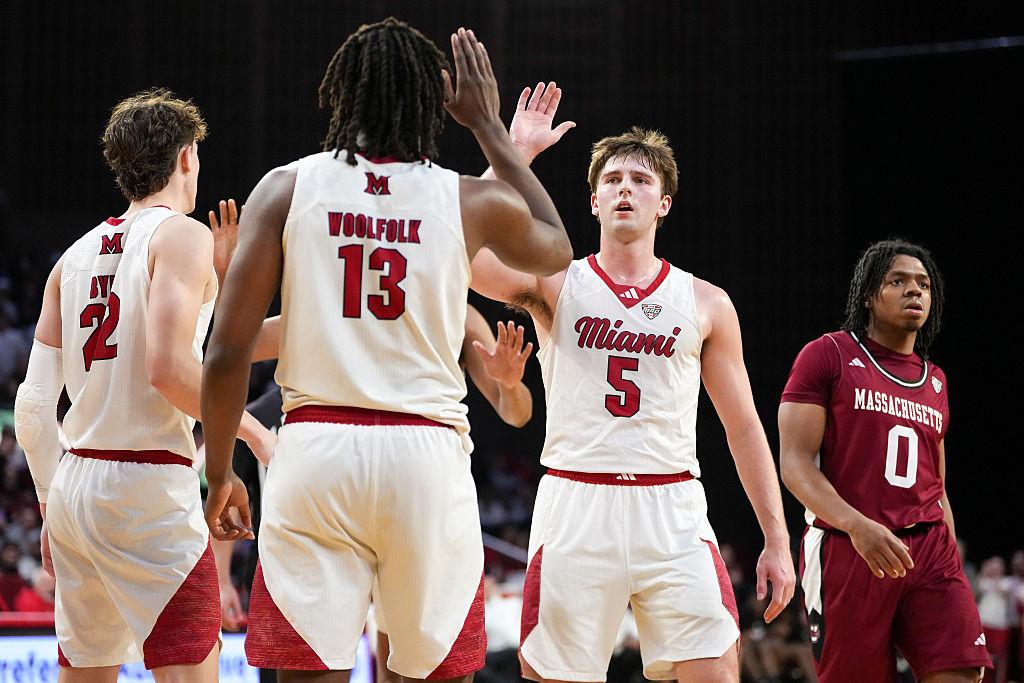
Miami finished the regular season with a perfect record before getting bounced by a bad UMass team in the first round of the MAC tournament. You may look at that 31-1 record and think the committee did the RedHawks dirty by dropping them down to the 11 line, but that seeding may be too high. This is the worst at-large team in the field. All four 12-seeds are ranked higher by KenPom. Even 13-seed Hofstra ranks higher. Miami plays attractive basketball on the offensive end and can really shoot the ball, but Travis Steele’s team hasn’t been tested all season. These are never-seen-before levels of “Ain’t played nobody.” The RedHawks’ best win was a 3-point nail-biter at home against Akron. They padded their record with 25 Quad 3 and 4 wins and had only three double-digit wins over top-150 opponents, per KenPom. If you want an upset pick, look elsewhere.
Kansas (4-Seed, East Region)
We don’t have nearly enough time to cover all the drama from Darryn Peterson’s freshman season at Kansas. The presumptive first overall pick in this year’s NBA draft has missed several games—and has left several others early—with various injuries. Since tapping out against Oklahoma State in February, a move which seemed to catch Jayhawks coach Bill Self by surprise, Peterson has been on the court and it appears he’s finally shaken the injury bug. But Kansas hasn’t been any better with their star playing more consistent minutes. Even if Peterson is as good as they say—yes, the Kobe comps are justified—it’s been difficult for Kansas to make up for all that time he missed, time that could have been used to build on-court chemistry that could be critical in the tournament.
These Teams Could Ruin Your Bracket (Complimentary)
Northern Iowa (12-Seed, East Region)
Northern Iowa’s win-loss record paints them as a team that struggled in the Missouri Valley Conference and had to claw its way into the tournament. And while that’s partially true—the Panthers did need to win their conference tournament as a 4-seed to make the dance—the advanced metrics paint them as one of the most dangerous double-digit seeds in the bracket. This group has played a lot of basketball together, and it shows on both ends of the court. They cut and pass the ball until they find a quality shot on offense. On the other end, they help and cover for one another without any hesitation, making it very difficult to crack their defensive shell. I’d still lean toward picking St. John’s in the Round of 64, but that’s going to be an uncomfortably close game for the Big East champs.
South Florida (11-Seed, East Region)
This team wasn’t even on the bubble a couple months ago and now they’re riding into the tournament as one of the nation’s hottest teams, having won 12 in a row. The Bulls just needed some time to adjust to Bryan Hodgson’s system in his first year on the job. Hodgson was on Nate Oats’s staff at Alabama before spending two years as Arkansas State’s head coach. He’s brought the Crimson Tide’s pace-and-space style to USF, and it’s made the offense just efficient enough to be dangerous. The Bulls are a better team on the defensive end, where they force a bunch of turnovers and generate transition opportunities. If they were any better at shooting, a Sweet 16 run wouldn’t be out of the question.
BYU (6-Seed, West Region)
The last month of BYU’s season won’t inspire much hope, but AJ Dybantsa’s presence on the court should. He’s the best player in the tournament, and should be the first player taken in the NBA draft after Peterson’s underwhelming second half of the season. Dybantsa is a gifted scorer who’s already mastered the midrange game and attacks the rim with impunity. It’s impressive how hard he plays on the other end of the floor given how much responsibility he shoulders on the offensive end. If Robert Wright, a big-money transfer from Baylor, has a big tournament and gives Dybantsa some help, BYU will win a game or two.
One Thought on Every First-Round Matchup
East Region
(1) Duke vs. (16) Siena
Former Syracuse star Gerry McNamara is coaching at Siena and has that program on the rise, but his team doesn’t shoot the ball well enough to give Duke a scare.
(8) Ohio State vs. (9) TCU
Ohio State will have the two best scorers on the court in Bruce Thornton and John Mobley Jr., and TCU has trouble putting the ball in the basket.
(4) Kansas vs. (13) Cal Baptist
I don’t trust Kansas, but this isn’t a bad matchup for the Jayhawks. Cal Baptist wants to stay tight to shooters to take away spot-up opportunities. That strategy was effective in the WAC but won’t hold up against Peterson, Melvin Council Jr., and Tre White.
(5) St. John’s vs. (12) Northern Iowa
St. John’s wants to play fast, and Northern Iowa will want to turn the game into a tedious, half-court affair. I think the Panthers win the battle for tempo but I don’t know if they have enough size to keep Big East Player of the Year Zuby Ejiofor out of the paint.
(6) Louisville vs. (11) South Florida
Louisville's star freshman Mikel Brown Jr. missed the ACC tournament with a back injury, and his availability could ultimately decide this game. Both teams want to turn it into a 3-point contest.
(3) Michigan State vs. (14) North Dakota State
Field goal attempts will be the key metric in this one. North Dakota State typically has a rebounding edge over its opponents, but Michigan State is the best rebounding team in the field. Without those second-shot opportunities, the Bison won’t keep up with the Spartans.
(7) UCLA vs. (10) UCF
UCLA’s two best players, Tyler Bilodeau and Donovan Dent, missed the Bruins’ loss to Purdue in the Big Ten tournament because of injuries, and their availability for the Round of 64 matchup is still in question. The Bruins will need both at full strength to overcome an under-seeded UCF team that will have an advantage on the glass thanks to John Bol, the 7-foot-2 center with the strangest free throw shooting form you’ve ever seen.
(2) Connecticut vs. (15) Furman
Connecticut has its issues making perimeter shots, but Furman throws up even more bricks. The Paladins struggled defensively in the SoCon. Danny Hurley’s offense is going to pick Furman apart before UConn goes on upset watch in the Round of 32.
West Region
(1) Arizona vs. (16) LIU
Former NBA point guard Rod Strickland has LIU in the tournament in just his fourth year as head coach. Strickland’s team can put the ball in the basket but turnovers have sabotaged the offense all season. Arizona could be up 30 by the half.
(8) Villanova vs. (9) Utah State
Utah State has the type of offense that tends to give Kevin Willard’s teams problems. If you get Villanova’s defense moving and into rotation, Willard’s group struggles to keep teams off the offensive glass. You can’t give this Aggies team second chances; but they don’t usually need them with how well they shoot it.
(4) Arkansas vs. (13) Hawaii
This is an ideal matchup for Arkansas, whose coach, John Calipari never runs the most creative offense. He prefers to just let his talented players penetrate and create kickout opportunities. Hawaii plays a unique brand of defense that doesn’t feature a lot of built-in help. When an opponent drives, the defender is typically on his own. The kickout opportunities might not be there, but Arkansas star Darius Acuff Jr., the best point guard in the country, might go for 40 points in this one.
(5) Wisconsin vs. (12) High Point
Wisconsin doesn’t turn the ball over and High Point can be overly reliant on forcing teams into mistakes. The Panthers are the hottest team in the bracket, having won 14 in a row, but they haven’t beaten a team that ranks in KenPom’s top 150 during that streak.
(6) BYU vs. (11) Texas/NC State
BYU should be rooting for NC State to come out of this First Four matchup. NC State doesn’t have anyone who can guard AJ Dybantsa, but Texas has the length and athleticism to bother him some.
(3) Gonzaga vs. (14) Kennesaw State
Injuries have lowered this Gonzaga team’s ceiling considerably and forced Mark Few to tinker with his lineup over the last month or so. I’m not sure the longtime Gonzaga coach has found the right combination just yet, but it shouldn’t matter in the first round. Kennesaw State won’t have an answer for Graham I ke on the low block.
(7) Miami (Fla.) vs. (10) Missouri
This is one of the most watchable games of the round. Both teams want to run the court and get shots up quickly. First-year Miami coach Jai Lucas, a former Duke assistant, has more scoring options offensively—and enough backcourt scoring to give 2-seed Purdue a game if the Canes can make it past the Tigers.
(2) Purdue vs. (15) Queens
I would be shocked if Purdue didn’t score at least 100 against a Queens team that ranks outside of the top 300 in defensive efficiency, per KenPom. The Royals allowed an opposing player to go for 49 points in the ASUN finals. The floor is yours, Braden Smith.
South Region
(1) Florida vs. (16) Prairie View A&M/Lehigh
Lehigh and Prairie View A&M are the two worst teams in the field according to KenPom, and C.J. McCollum and Zelmo “Big Z” Beaty aren’t walking through that door.
(8) Clemson vs. (9) Iowa
First one to 50 points wins. That’s not even a joke. Both of these teams want to slow down the pace. Clemson wants to do it because it can’t score. Iowa is just really picky when it comes to shot selection. The Hawkeyes should win the race to the half-century mark and take this one.
(4) Nebraska vs. (13) Troy
Nebraska is going to prey on Troy’s ballhandling issues with an attacking defense. The Huskers have a tough offense to prepare for in a matter of days.
(5) Vanderbilt vs. (12) McNeese
With Duke Miles back on the court for Vandy, the ’Dores have returned to their early-season form that had them looking like a Sweet 16 contender. McNeese will be a popular upset pick, but their pressing defense won’t bother the SEC runners-up.
(6) North Carolina vs. (11) VCU
This is a dangerous matchup for North Carolina, which has become more reliant on big man Henri Veesaar since the season-ending injury to future lottery pick Caleb Wilson. If VCU’s Lazar Djokovic, who stands 6-foot-11 and averages over a block a game, can handle Veesaar one-on-one in the post, the Heels will have a tough time scoring.
(3) Illinois vs. (14) Penn
Former Iowa coach Fran McCaffery is leading the Quakers into the tournament in his first year on the job. Whatever familiarity McCaffery has with Illinois from his time in the Big Ten won’t make up for the talent disparity between these two teams. Illinois will run Penn off the court if this game is played at the up-tempo pace McCaffrey typically prefers.
(7) Saint Mary’s vs. (10) Texas A&M
This is an extreme clash of styles. Texas A&M is playing “Bucky Ball” under first-year head coach Bucky McMillan. That entails a lot of pressing and fast-break basketball. The Aggies want to play a 75-possession game. St. Mary’s, meanwhile, wants to keep that number down in the low 60s. This is a young Gaels team that may be drawn into the chaotic nature of Bucky Ball.
(2) Houston vs. (15) Idaho
I always feel sorry for the 16- and 15-seeds that get subjected to Houston’s intense defense. It’s like the Cougars are playing defense with rakes in their hands with how they cover the passing lanes. Idaho won’t stand a chance on the offensive end and there isn’t a player on the roster who can stay in front of Kingston Flemings.
Midwest Region
(1) Michigan vs. (16) UMBC/Howard
That UMBC-Howard game is a sneaky good matchup for a battle of 16-seeds, but neither team is going to be able to give Michigan a game. Not even the program that gave us our first 16-over-1 upset.
(8) Georgia vs. (9) Saint Louis
I have to give the committee credit. This matchup’s another banger and should turn into a high-scoring track meet. Georgia was scoring in the 80s and 90s in the SEC. Saint Louis has shooters all over the court and bespectacled playmaking big man in Robbie Avila, whose highlights have gone viral and earned him the nickname “Cream Abdul-Jabbar.” I have no clue who to pick in this game, but I suggest you tune in for it.
(4) Alabama vs. (13) Hofstra
This will be a trendy upset pick, but I don’t like the matchup for Hofstra on paper. The Pride gives up a lot of 3-point attempts. Alabama takes and makes a bunch of 3s. Unless the Tide goes cold from beyond the arc, this will be a blowout.
(5) Texas Tech vs. (12) Akron
It’s important to note that Texas Tech will be playing without star big man JT Toppin after he tore his ACL last month. Guard Christian Anderson is an amazing shot-maker on the perimeter, but the Red Raiders don’t have an inside threat to draw defenders away from the arc.
(6) Tennessee vs. (11) Miami (Ohio)/SMU
Tennessee is better than either of their potential opponents. But SMU has Boopie Miller, a combo guard who can create his own shot and could lead an upset bid over the Vols.
(3) Virginia vs. (14) Wright State
Virginia is going to guard Wright State full court and attempt to take the mid-major out of its offense. Horizon League opponents were able to do that at times, so staying on track against the ACC’s second-place team will be challenging.
(7) Kentucky vs. (10) Santa Clara
Kentucky spent a lot of money—$22 million, according to reports—on this roster, and yet it can’t score in the half court. Santa Clara is too sharp of a team to let this turn into a high-tempo game. I think the West Coast Conference team pulls the upset and gives this Kentucky season the underwhelming ending it deserves.
(2) Iowa State vs. (15) Tennessee State
Tennessee State is a cool story with first-year coach Nolan Smith, a former Duke star, taking over the program in July and leading it to its first NCAA tournament appearance ever. The story will almost certainly end here, with a first-round matchup against a Cyclones team that preys on the Tigers’ sloppy ballhandling.