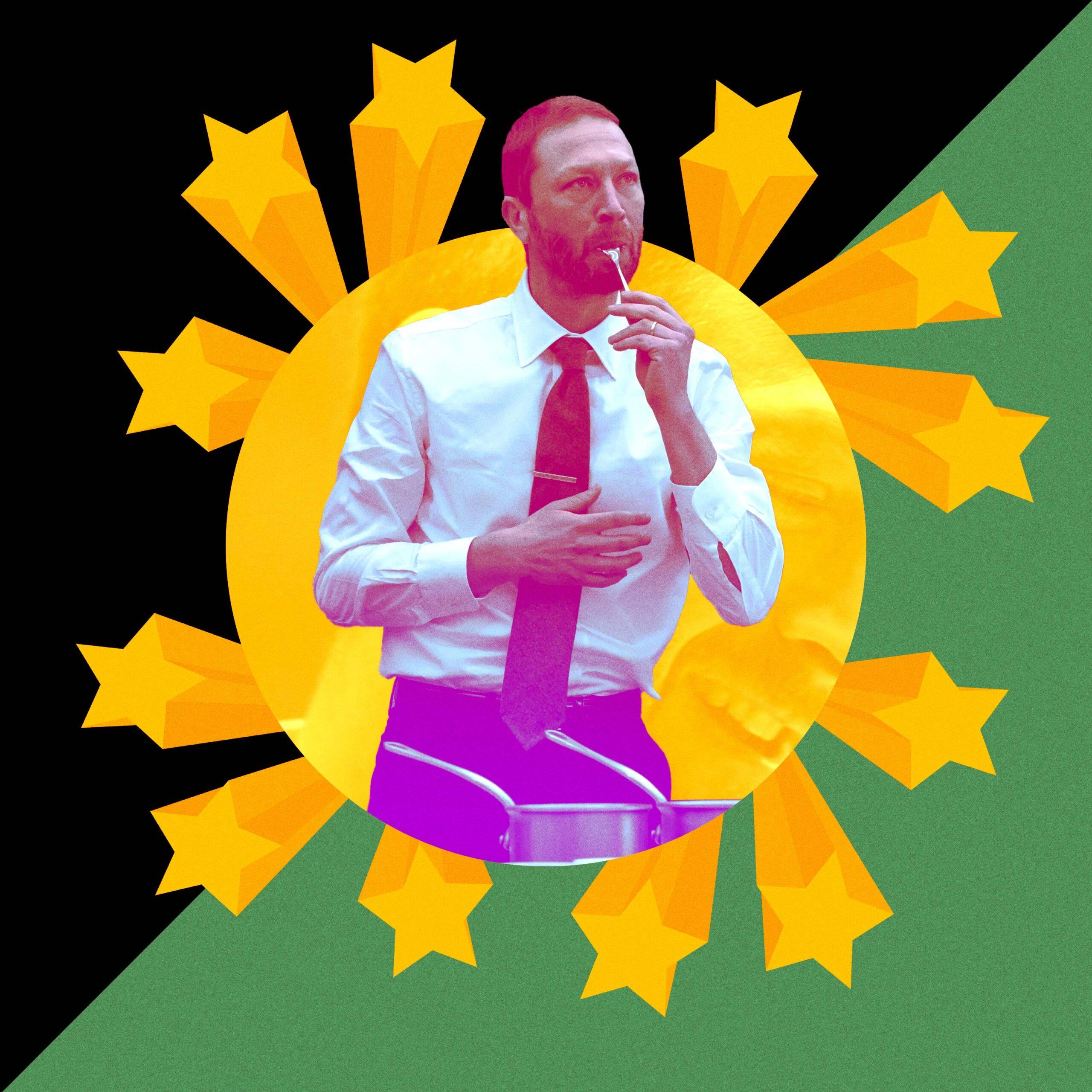
The Rebirth of Richie Jerimovich
Writer Alex Russell and Co. discuss “Forks,” one of the best TV episodes of the century, and the joy of finding peace and redemption amid the chaos of ‘The Bear’The Rebirth of Richie Jerimovich
Writer Alex Russell and Co. discuss “Forks,” one of the best TV episodes of the century, and the joy of finding peace and redemption amid the chaos of ‘The Bear’At the beginning of “Forks,” the seventh episode of The Bear’s second season, Richie Jerimovich (Ebon Moss-Bachrach) steps through an unmarked entrance into what might as well be a spaceship. The lobby of Ever—the three-Michelin-star restaurant where he’s been sent to clean utensils—seems like it exists outside normal time. It’s quiet, empty, and windowless, shrouded in dark blue light and pulsating with the kind of faint, eerie music that belongs in an Alien movie. “Jesus fucking Christ,” he mutters to himself in disbelief. “You’ve got to be kidding me.”
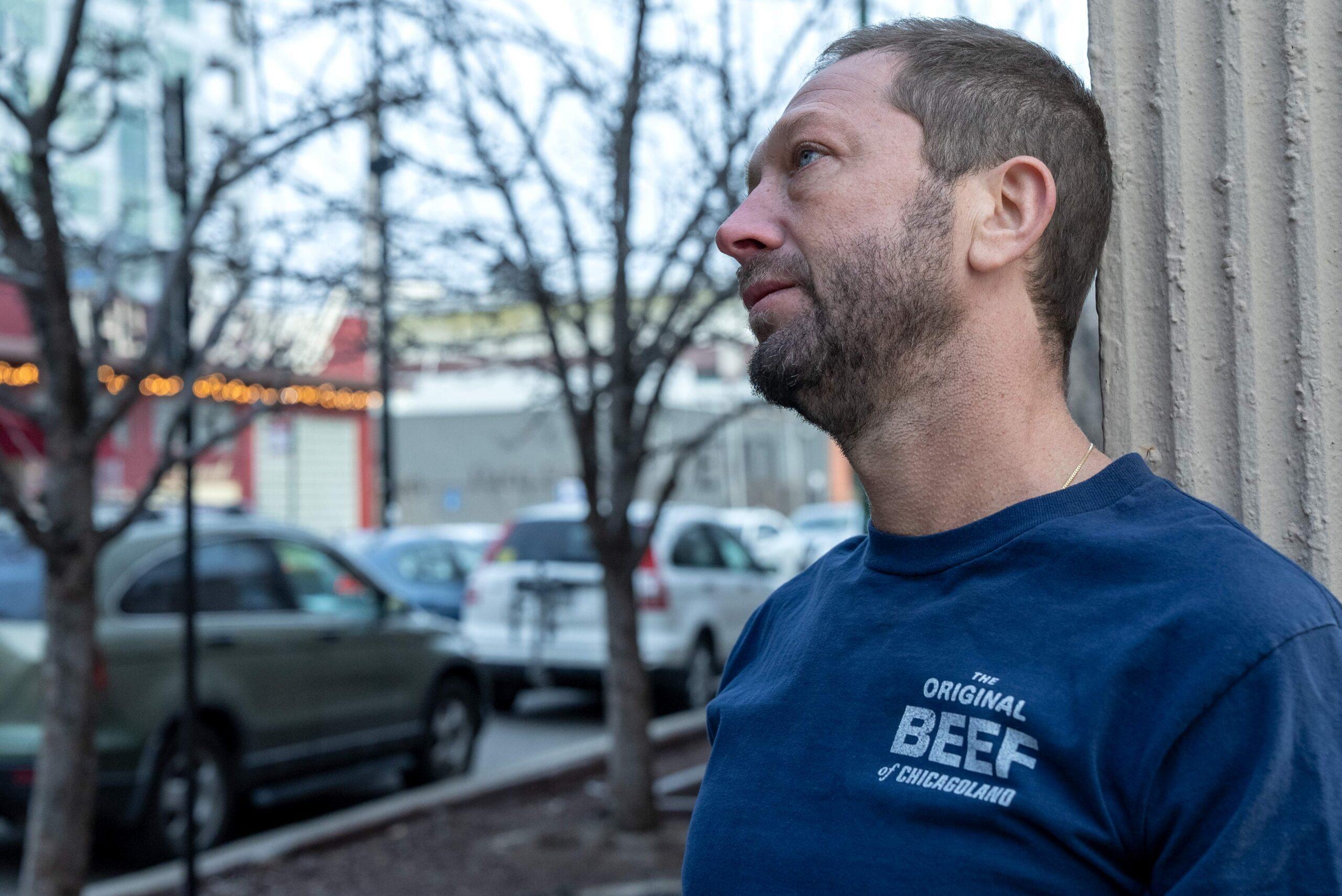
In one long point-of-view take, Richie inches down a cavernous hallway, unconvinced that this hermetically sealed place is real. He bats away strings of dried fruit and vegetables hanging from the ceiling, then pauses inside a dimmed dining room haunted by empty tables and wineglasses. When he reaches the grand, sparkling-white kitchen, he glides his hand over the smooth, sterile countertops where nightly dishes turn into artwork. It all seems more like an installation than a restaurant—and a far cry from the loud, cramped, chaotic vibe of The Original Beef of Chicagoland.
Andrew Wehde remembers feeling a similar uneasy jolt the first time he walked into Ever. When he was scouting it out before shooting, the space’s quiet, dreamlike intensity, its sense of ritual and spectacle, hit the show’s cinematographer. This is so fucking cool, he thought. He later learned that was by design. “I needed people to have a palate cleanse. I needed them to have a moment to release and forget about everything,” Curtis Duffy, Ever’s owner, explained to him during a stroll through the lobby. Wehde carried that philosophy into the episode’s look and feel, mimicking the transitional power of Goodfellas’ Copacabana scene with a simple goal: “I want to make his first time in there feel like he’s going into Dune,” Wehde says. “I need him to feel like he's transported to another world.”




The Best TV Episodes of the Century
“Forks” also feels like a palate cleanse. The Bear’s previous 14 episodes took on all the qualities of its head chef, Carmen Berzatto (Jeremy Allen White): It was loud and erratic, but also collaborative, aspirational, in search of perfection. Carmy spent the show’s first season building out a feverish, quixotic sandwich shop—then, in Season 2, he turned it into a demolition zone in the name of fine dining. At the center of The Beef’s (now The Bear’s) dysfunction was Richie, Carmy’s “cousin” and resident jagoff, manning the cash register with a big heart and a manic temper, still reeling from Mikey Berzatto’s (Jon Bernthal) suicide. Without his best friend, the 45-year-old divorced dad is rudderless, underutilized, and in search of purpose inside a calamitous, disorganized rebrand.
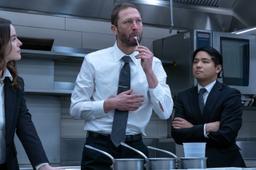
So it’s a relief when creator Christopher Storer takes Richie—and the series—on a late-season field trip to the upscale culinary world where Carmy cut his teeth. Set primarily inside Ever, “Forks,” written by Alex Russell and directed by Storer, charts Richie’s rapid journey to finding purpose. He starts the week as a stubborn stage resigned to polishing silverware, a task he sees as “punishment for being ancillary.” But as the days progress and he starts absorbing lessons from smoke breaks, preservice meetings, and an efficient, functional kitchen, he ends his training with a deep appreciation and respect for hospitality—and the role he can serve in Carmy's new restaurant.
In the immediate aftermath of “Fishes,” a noisy, hour-long flashback to a Christmas meltdown, “Forks” feels like a minor miracle, a transformative, redemptive balm, swapping abrasiveness for tenderness and stretching out the show’s emotional capacity. After so much previous hostility, writing Richie’s cathartic arc—and later punctuating it with a Taylor Swift anthem—was “kind of like a cheat code,” Russell says. But bringing it to life, capturing the beauty and rigidity inside a Michelin-star machine, required something extra. “This was our first real moment as filmmakers,” Wehde says. “This is really the team hitting at max level.”
When executive producer Joanna Calo tasked Russell with writing “Forks,” he didn’t receive much direction beyond a vague story beat: Richie would learn hospitality. Russell perked up at the challenge. He had The Bear’s first season as a foundation. Plus, the episode’s contained structure meant that he didn’t need to worry about holding various plot strands together. “It is kind of the dream to get a bottle-type episode because you get to cook within a constraint,” Russell says. “You also have some freedom within that.”
That was the real gift of “Forks”—“being able to dive into some world I’m only a tiny bit familiar with and to fill out the rest of it,” Russell says. He began his odyssey by reading Anthony Bourdain books and watching Duffy’s 2015 documentary, For Grace, about the owner’s restaurant Grace and his turbulent background. Storer even invited various restaurateurs to visit the writers room and field questions, giving Russell more insight into Richie’s training. “One of the questions that I asked them was ‘Did you ever have someone on staff who’s kind of an asshole but then is explicitly just really good using their personality and their quirks and shines facing customers?’” Russell says. “And almost everyone had someone immediately come to mind.”
But things didn’t fully unlock until Storer took him to Chicago to see these operations up close. Over a few days, the pair got a crash course in luxury dining thanks to One Off Hospitality owner Donnie Madia, who allowed the entire Bear staff full access to his James Beard Award–winning restaurants. That included Avec, where Russell immersed himself with the waitstaff, running food to and interfacing with “clients” (the house vernacular for guests). He learned the systems, the rules, the hand signals—“stuff I never could have imagined,” he says. “That was the cool thing about running food, was being like, ‘Oh, this is what it feels like to bring a plate to someone and overhear a snippet of a table's conversation.’ Or, ‘This table is going through a tense argument right now? I should feel that out.’”
Russell still remembers sitting beside Storer, listening in on a preservice meeting with the entire front-of-house waitstaff, when a manager chewed out the team for serving a dish with a smudge. As the manager addressed the mistake, Russell and Storer glanced at each other with silent recognition. This was going into the script. (Indeed, halfway through “Forks,” Richie shadows a preservice meeting at Ever and learns that a smudge cost the kitchen 47 seconds of valuable time.) “It was kind of perfect,” Russell says. “You very rarely get to put a specific experience into an episode that you're writing for a serialized TV show if you're not the creator of the show.”
The cast and crew had similar hands-on experiences. Andrew Lopez, who plays Garrett, a back-of-house waiter, spent time staging at Ever and The Publican. Along with actor Sarah Ramos, he cleaned forks, washed dishes, and learned how to fold napkins. “It was so intense,” Lopez remembers. “I felt like Richie in a way.” After some initial training, The Publican threw him and Ramos aprons and turned them into regular waitstaff, responsible for running food and taking orders. Within the first hour, Lopez dropped a fork and knew the stakes. “Everybody looked at me—and it was, like, silent,” he says. “People were asking me to do things as if I had worked there for two months.”
Lopez, a self-described “emo kid,” slowly developed into an Ever regular, but he still needed constant direction. “I'm like a wired headphone, focus-on-the-ground-when-I-walk sad boy,” he says. Every time he began to slump, another Filipino waiter on staff would quickly correct his posture with reminders: Eyes up. Shoulders back. Hands in front. “I think he recognized that that's how I always operated outside of shooting,” Lopez says. “He was just getting me to live in that environment.”
As a fly on the wall, Wehde marveled at the nightly precision on display at Ever, the dozens of waitstaff intersecting with 12 to 15 immaculately timed courses. But the real thrill came when producer Tyson Bidner told Wehde that production had bought out Ever for an entire week—not just the space, but the staff, the cooks, and the menu. Duffy knew that this was an opportunity to peel back the curtain on his restaurant’s carefully curated aesthetic and share how a Michelin-ranked restaurant really functioned. “It wasn't like, ‘Oh, we're going to take over your place, get the fuck out,’” Wehde says. “It was like, Curtis and the Ever team are part of The Bear team now.”
More on “Forks”
On his first day of training, Richie crawls out of bed at 5:38 a.m., worn down before the sun has even risen. He’s groggy, irritated, and convinced that Carmy has shoved him aside. So he enters Ever full of self-pity and with a chip on his shoulder. That outlook became a key thread for Russell, who wanted to lean into Richie’s misunderstanding—specifically, the irony of a man who believes he’s been banished when, in reality, he’s getting groomed for a larger role. He laughs: “It’s the biggest favor to him.”
Conflict eventually emerges. After a couple of days polishing forks, Richie acquires a bored, flippant attitude—like he’s just remembered he’s a 45-year-old intern. Garrett notices his lackadaisical approach and reprimands him. “That was not clean,” he tells Richie, who rolls his eyes. “They’re goddamn forks,” he replies. Garrett takes him outside and explains why this shit matters. “At any given moment, one of those people that is waiting in line gets to eat here,” Garrett tells him. “I’m sorry, bro, but we need to have some forks without streaks in them. Every day here is the freaking Super Bowl.”
The metaphor felt apt. When Lopez integrated with Ever’s real waitstaff, his primary takeaway centered on the restaurant’s military-grade passion and regimen. He could sense the room tense up ahead of service, the way everyone homed in on their collective mission. “It felt like I was in the locker room and everybody's putting on pads. And then it was predinner, and it immediately turned into Friday Night Lights. I don't think I saw anyone blink,” Lopez says.
“They're treating this like going into battle,” Russell adds. “And the battle is against everything that can go wrong.” But he also tapped into more than his experiential observations. As he wrote Garrett’s impassioned manifesto, his raison d'être for committing to this cult of perfection, Russell considered his own situation as a young Hollywood writer. “Here's this guy who just really wants to be here and kind of romanticizes this world in the way,” he says. “I was still reminding myself of how much I wanted to be a TV writer in the first place. And it takes constant pinching of one's own arm to be like, ‘Hey, we're doing this. We're doing the thing.’”
Lopez could relate to Garrett’s intense dedication, sobriety, and acts of service, but the comedy actor initially struggled with the character. He knew how pivotal he was to Richie’s transformation. It spooked him a bit. “There's a couple ways to see that role, where he's a cool guy that's really intense or like a nebbishy guy that's intense,” he says. “I didn't know if Garrett was more like Mickey Rourke or Joseph Gordon-Levitt.” Ahead of shooting, Storer told his actor to let go of those blueprints, encouraging him to improvise if he felt the need. Lopez obliged, even trying out the “Super Bowl” line after seeing it used to describe a later scene in the script. Storer loved the decision. “There was a synergy happening every day,” Lopez says.
To finish the interaction, Garrett eventually demands a few nonnegotiables. “You don’t have to drink the Kool-Aid,” he says. “I just need you to respect me. I need you to respect the staff. I need you to respect the diners. And I need you to respect yourself.”
“I can do respect,” Richie says.
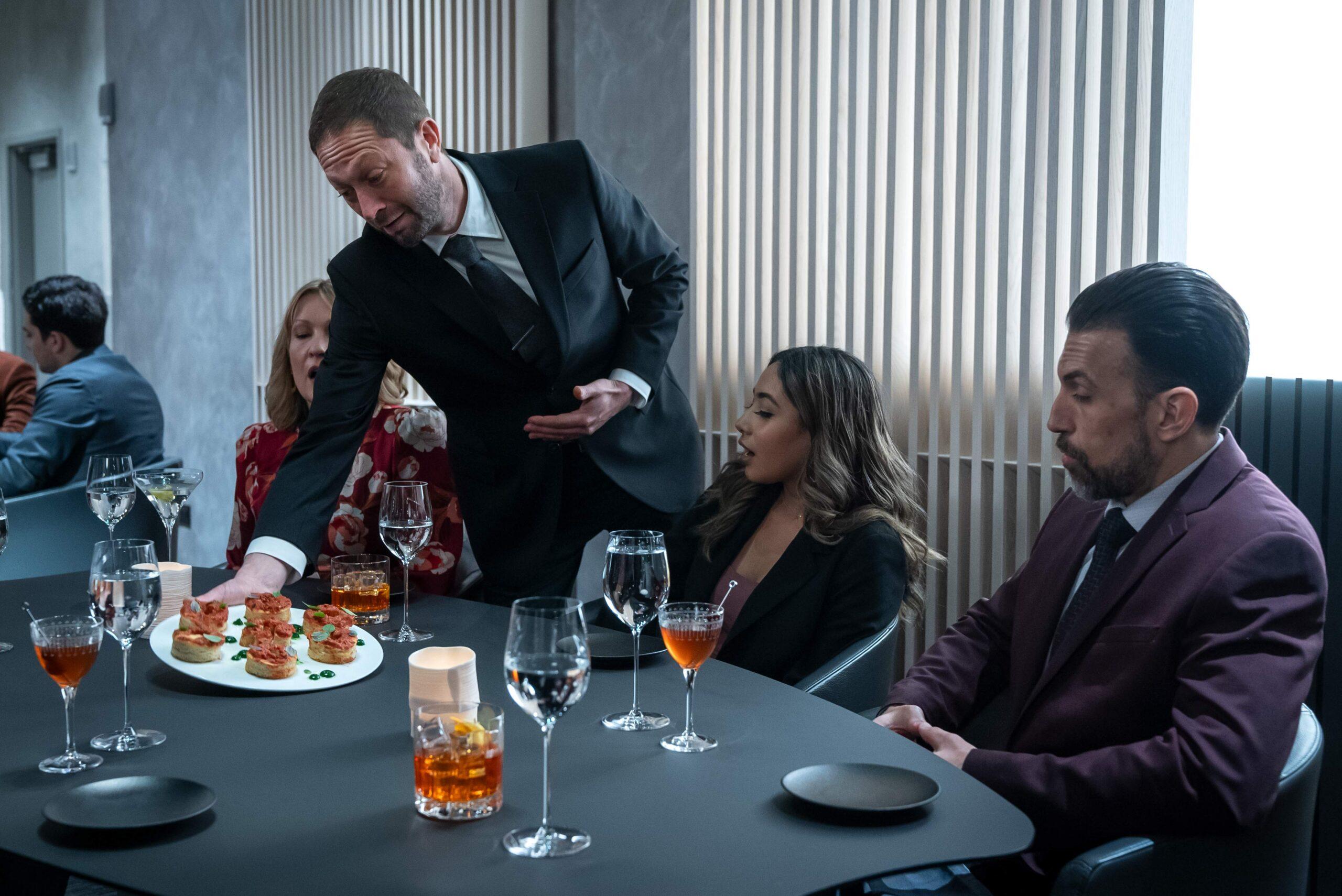
Later that day, Richie sees Ever through a new lens. At a preservice meeting, he perks up when a manager shares each guest’s background and history, along with the mandate to “blow their fucking minds.” At dinner, he watches it happen in person, when a waiter delights a table by telling them their check has been picked up by the restaurant. It inspires a call to his ex-wife, Tiffany (Gillian Jacobs). Richie lets her know that he’s bought Taylor Swift tickets for their daughter. He also learns she’s engaged. The day’s events pile up into an illuminating thought. “This is a time where he begins to take not just himself seriously, but he takes his life with his daughter seriously, he takes his job seriously,” Wehde says. “This is kind of the big pivot point.”
Until that pivot, Wehde had shot “Forks” with a deliberate and precise style, a direct contrast to the show’s previous guerilla-style episodes, which were “designed both to be filmed chaotically and to be acted and written chaotically,” he says. Here, he wanted the camera (and haunting drone shots above the city) to mirror Ever’s calm, exacting rhythm. It helped that Wehde and his team had already spent a couple of days inside the kitchen before production began, documenting service, capturing inserts, and familiarizing themselves with its geography. But when Richie begins the next day rejuvenated and refocused, Wehde knew that he needed to change his approach again. Against Tangerine Dream’s Thief score, he announces Richie’s arrival with a series of exaggerated zooms. Invigorated by his new responsibility, Richie starts gleaning kitchen rituals, observing the expo station chef, and asking questions about her detailed process. “We really started to do more dynamic dolly moves at that point,” Wehde says. “The camera's really becoming a lot more slick, a lot more cinematic.”
It also leans heavily on Moss-Bachrach, whose depressive features light up in reaction to various revelations on the floor. At one point, Richie learns how the waitstaff communicates with the kitchen about clients by passing off written notes behind their backs—an intricate, swift relay of discretion. “It requires such a commitment to craft and ritual, and the team-effort nature of it is so important,” Russell says. In Wehde’s eyes, the mesmerized reaction shots of Richie “trying to understand this world that he doesn't understand” further distinguished the episode from the rest of the series. “Half that episode is unspoken word,” Wehde says. “It's observation, it's camera movement, trying to match his energy and finding moments.”
Russell loved the way Storer and Wehde captured those flourishes, specifically during Richie’s most triumphant moment. After relaying a note back to the expo station, he learns that one table had never tried deep dish pizza. Without hesitating, he sprints over to Pequod’s for a pie, then rushes back for the head chef to plate it like a real menu item—micro-basil and all. When Richie receives permission to deliver the surprise himself, he goes full showman, revealing the dish from behind his back. It’s a small gesture with a lasting effect, a reminder that the restaurant provides much more than food. “That's one of the smarter things about the show,” Russell says. “It treats these things like action.”
It’s not long before Richie is drinking the Kool-Aid himself. He learns the restaurant’s history. He starts identifying ingredients with waitstaff. He reads Will Guardia’s Unreasonable Hospitality. He cleans up his apartment and rises before his alarm. He’s motivated, inspired, locked in. He’s found his lane. It all builds to a soaring, cathartic climax—a kind of shameless, private celebration in which he belts out the lyrics to Swift’s “Love Story (Taylor’s Version)” on his drive home. His car hits a bump and even jumps for joy, too.
The song and scene were late additions by Storer. As Russell notes, “it would be insane” to have written a scene devoted to a Swift song without knowing whether they could get the licensing. According to Wehde, Swift was a fan of the show and had wanted to visit The Bear’s set earlier that season, but Storer couldn’t find an optimal time for a meetup. As an olive branch, Storer asked whether he could use her name and likeness in an episode. At the eleventh hour, she obliged and cleared the song at a price point that fit their budget. Moss-Bachrach, the father of two Swifties, hustled to learn it. “I did have to have some of the lyrics right next to me,” he told Rolling Stone. “But now they’re burned into my heart and burned into my head. I don’t think I’ll ever get those lyrics out of me.”
Throughout the episode, Wehde’s camera occasionally zeroes in on a small blue kitchen sign carrying a clear directive: “Every Second Counts.” The phrase has since become the show’s unofficial mantra, a fraternal echo of Thomas Keller’s own kitchen creed, “Sense of Urgency.”
Russell didn’t think it was sharp enough when he wrote the first draft. “I remember bringing it up to Chris in a really uncertain way,” he says. “I was like, ‘It's just a placeholder.’” Storer scoffed. He thought it was perfect, an ideal punctuation for the show’s (and the production’s) time-sensitive ethos and a testament to everyone’s collaborative creative process. “More and more, TV shows are authorial and auteur driven, such that people will just write the whole thing themselves,” Russell says. “Chris could probably do that. But this was an experience where it felt like everyone got to help out.”
The motto also caps off the episode’s coda. To this point, Richie still thinks his stint at Ever is just an excuse for Carmy to get rid of him. After a whirlwind week of learning and higher calling, all Richie really wants is his cousin’s acceptance—and Russell knew he could deliver it with one more scene. He’d already established Ever’s “kind of larger-than-life, legendary type of chef behind the scenes, whose absence is felt throughout the episode,” he says. Why not pair Chef Terry and Richie together for a final drop of wisdom? “No matter what was written in the initial monologue, they were supposed to deliver that idea of: ‘You're not here because he doesn't care about you, you're here because he does,’” Russell says.
To give the scene a quiet gravitas, Storer brought in Olivia Colman to play Terry, “an incredible casting choice because she holds a calm intensity that is very real to the world,” Lopez says. Richie finds her alone in the kitchen, gently peeling mushrooms (a skill Colman learned from Duffy before shooting). The two bond over their fathers’ military backgrounds. Terry explains why taking a scalpel to fungus is about respect and “time well spent.” That it’s never too late to find yourself. Then she delivers the validation Richie has been craving. “He believes in you,” she tells him, referring to Carmy. “He told me—he said you’re good with people. He’s not wrong.”
Wehde spent only two hours shooting the scene, but he remembers the entire crew feeling the weight of the moment, the air change, when Colman walked onto set. “I think that was the first time we were just like, ‘Oh my God, there's a movie star here,” he says. When Storer wrapped the scene after a couple of takes, Colman was surprised by how quickly the director had gotten what he needed. “She's like, ‘I just got off the airplane,’” Wehde laughs. “Chris has this kind of idea that you already know your character, you already know your performance. So whatever you do the first or second time is what it should be.”
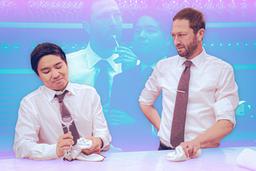
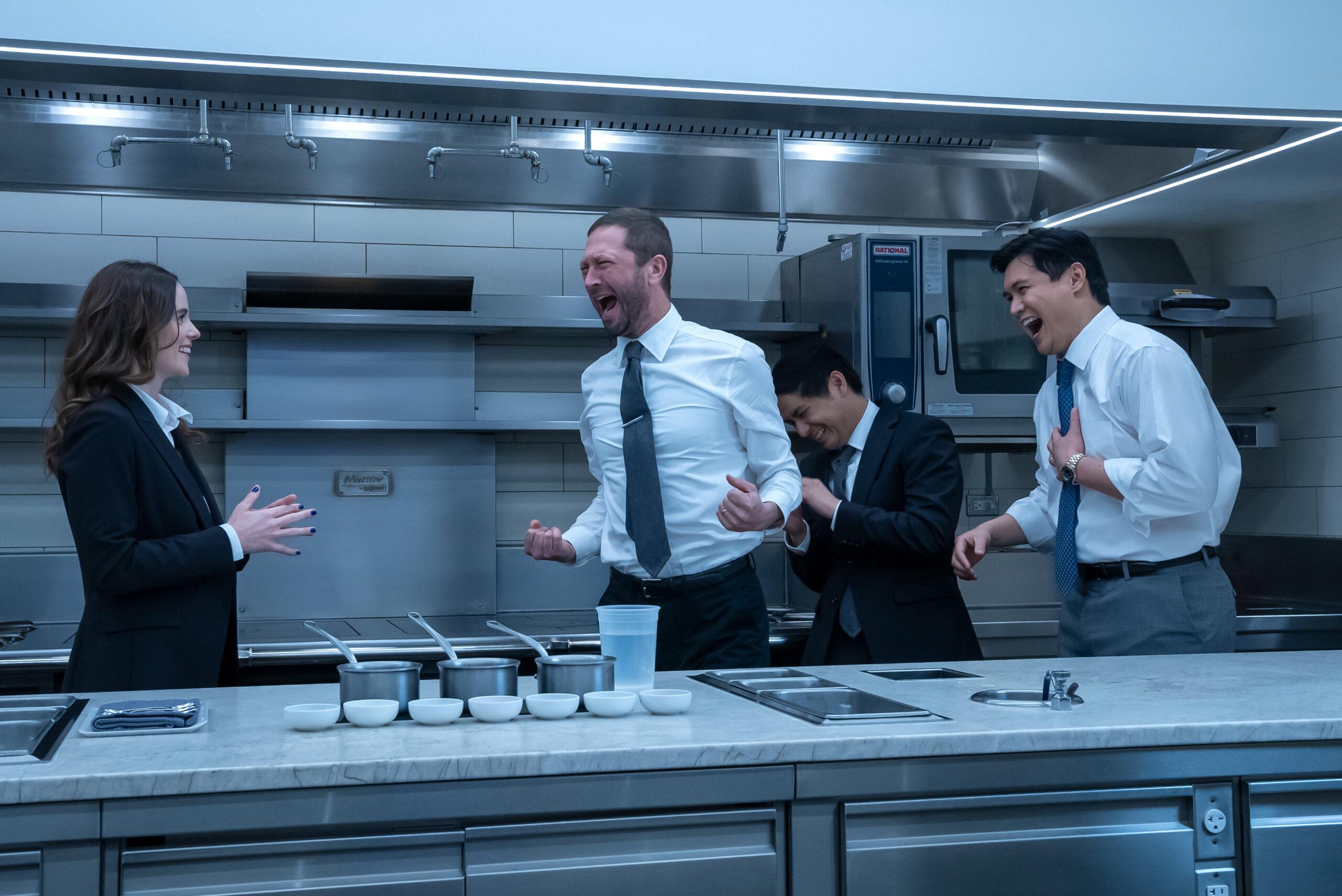
In some ways, Colman’s gentle cameo is the perfect grace note for an episode that stylistically opposes the entire series yet crystallizes its long-standing themes of ambition, purpose, hospitality, and time. It also foregrounds how present and perceptive Moss-Bachrach can be as an actor. Often relegated to playing a screaming, cursing hothead, he taps into a new wavelength—donning a suit and tie as armor and translating wonder with just his blue eyes.
“Forks” gained four nominations at that year’s Emmys, including for Colman’s guest appearance and Moss-Bachrach’s supporting role. But its underdog spirit, its light, tender touch, and its sublime denouement resonate throughout the rest of the series. A reminder that it’s never too late to reinvent yourself—even at 45. “The whole show is about redemption,” Russell says. “The whole show is about this question of can these flawed characters transcend their flaws? Can they make something beautiful? And the answer in that particular episode is: Yes.”