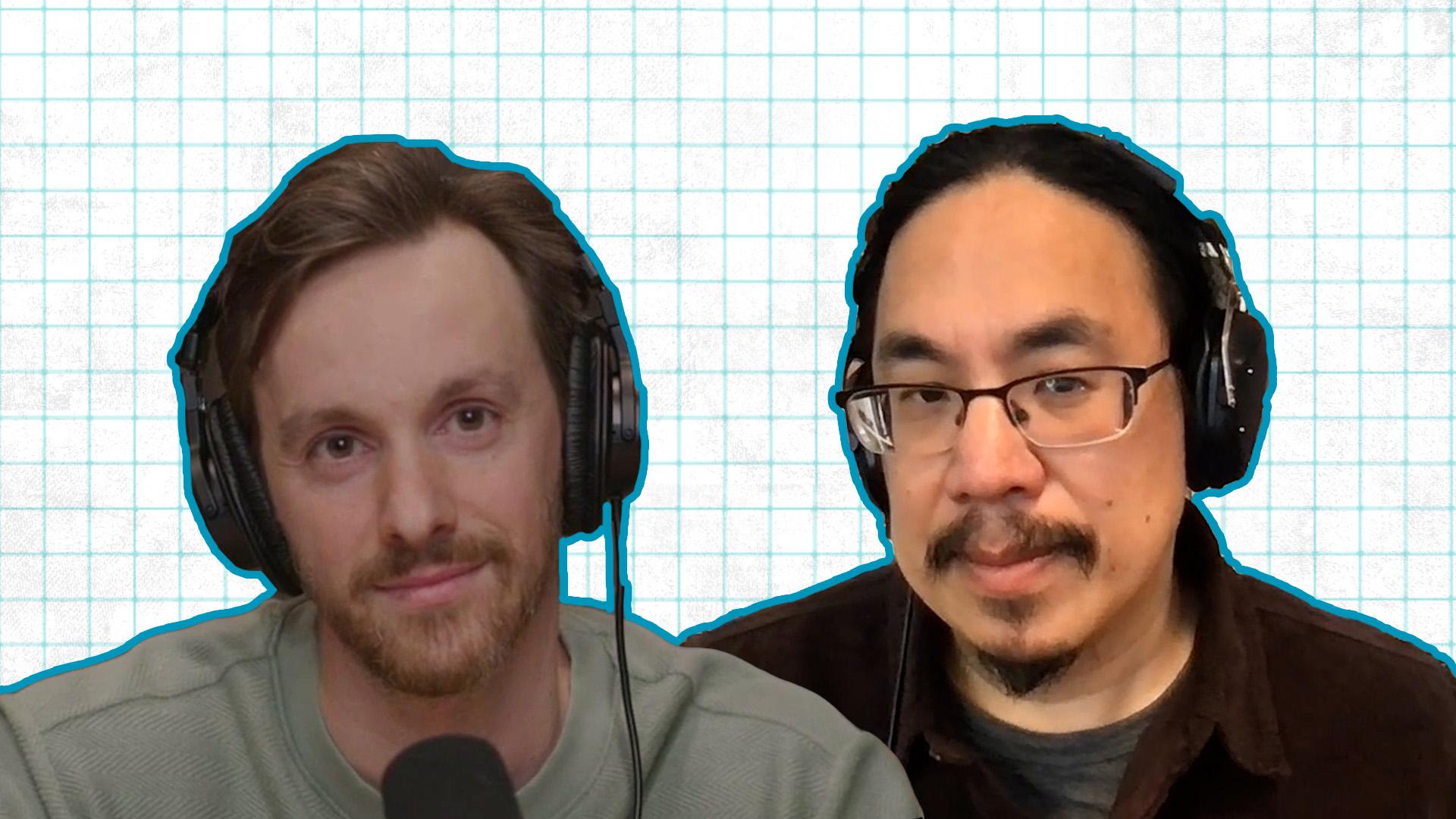

Plain English With Derek Thompson
“American Democracy as We Know It Might Not Survive This Technology”
Hosts
 Derek Thompson
 Derek Thompson
About the episode
What happens when the two biggest stories in the world—the Trump White House and the development of advanced artificial intelligence—collide? Well, nothing good, apparently. When contract negotiations broke down between the Pentagon and Anthropic, a leading AI lab, the Department of War took the extraordinary step of labeling Anthropic a “supply chain risk,” a designation typically reserved for Chinese companies suspected of spying on American technology.
It’s not just liberals like me who found this announcement jarring. The technology writer Dean Ball—who served as senior policy adviser for AI at the White House as recently as last summer—said that the decision amounted to a nearly tyrannical attack on private property. (After all, if the government can walk up to your company, make you a deal, and destroy your company if you say no, that certainly sounds like a world in which the state can destroy whatever it trains its eyes on.)
So I wanted to talk to Dean about what he sees—and why he thinks this episode is so important, and so terrifying. Today, we talk about the difference between Biden’s and Trump’s approach to artificial intelligence before diving into the Anthropic mess and pulling out of it the bigger story, according to Dean: that Trump’s scattershot AI policy is just the latest sign that AI’s capabilities are growing faster than many people want to admit—this technology is going somewhere fast, and the the American government simply is not prepared for where it’s taking us.
Subscribe to our YouTube channel here.
If you have questions, observations, or ideas for future episodes, email us at PlainEnglish@Spotify.com.
In the following excerpt, Derek talks to Dean Ball about the Trump administration’s approach to AI.
Derek Thompson: Tell me a little bit about your time with the Trump administration. When did you join? What did you do there? And why did you leave?
Dean Ball: So I joined in April of 2025, and basically I was a senior policy adviser for artificial intelligence and emerging technology at the White House Office of Science and Technology Policy. White House staff roles are very capacious, and the day-to-day changes radically depending on what’s going on. And so I did quite a bit of stuff, but the main thrust of my work was to play a role in the drafting of the administration’s AI action plan and some of the other policy moves that were attached to the action plan, such as the executive orders that the president signed when he announced the action plan. So those were the things I worked on. I worked on them, of course, with many other people. So a lot of what I did was shepherding these documents through the interagency approval processes that these kinds of things must go through.
And then I left in August of 2025, and principally I left because I feel like my primary value add is as an independent writer and thinker, and the action plan had been completed at that point. It was sort of rolling downhill, in the sense that the bureaucracy liked it, the bureaucracy was excited about implementing it. And so I felt like the sales and communications job was largely done, and I said, “OK, well, my value add is probably doing other things now.”
Thompson: To give people a sense of the substance of the action plan and the substance of the executive orders, maybe talk about it this way: What are the most important differences between the way that the Biden administration and the Trump administration thought about artificial intelligence?
Ball: The Biden administration, I would say, took a far more, I would say an ominous approach from a regulatory perspective. There was way more foreshadowing of regulation to come. I think it’s exaggerated, sometimes, how much they themselves actually regulated. But if you go back and look at what they did, they were clearly putting the scaffolding in place for a significant regulatory regime to come, probably in Joe Biden’s second term or Kamala Harris’s first. So the Trump administration, first of all, dismantled large portions of that. Second of all, I think thematically, the big difference is there’s sort of a vibe-based difference of “We want to embrace this technology, we want to let it grow, innovation,” etc.
But one other one that I think is really important is this issue of adoption and diffusion. So I think the action plan, if you look at it, one of the things you’ll see that’s laced throughout it is this emphasis on transformative adoption of AI throughout the economy and in government. And I think the Biden folks were, on the other hand, much more interested in this idea of very, very large models trained on huge amounts of compute in these giant data centers, the development of those things, and where those data centers would be. They’d be on federal lands with big military installations.
And again, the Trump administration wants to build those data centers and train the big models and all that stuff. It’s not about that. It’s more about this idea that what we’re doing is, we’re racing toward this development of some big model, after which everything is different. So way more of a Manhattan Project kind of vibe. Whereas I think the folks in the Trump administration, certainly myself, don’t see it that way, see it much more as like, this is about the challenging issue of diffusing this technology and transforming the way that work is done, the way that organizations are structured, etc, etc.
Thompson: One difference that I’ve observed is that Trump’s economic centerpiece is his tariff policy, and I don’t think people appreciate just how many carve-outs and exemptions there are for artificial intelligence and the computer parts that go into the building of artificial intelligence in that tariff policy. It is billions and billions of dollars, tens of billions of dollars of carve-outs. So AI isn’t just exempt from the tariffs. We are also, and you mentioned this at the end of your last answer, actively promoting the sale of AI chips in other countries, including, in some cases, China, in a way that the Biden administration wasn’t. Because, to your point, there was a little bit more forward-looking fear about what would happen if we sold these chips all over the world. In a strange way, is it too cheeky of me to suggest that Trump’s AI policy is slightly more globalist and neoliberal than the Biden administration’s, given how much they care about the diffusion of, the sale of, AI chips all over the world, including into China, which is something the Biden administration was specifically worried about and trying to block?
Ball: Yeah. I think the way that they would put it, the way that people in the Trump administration would put it, would be that they come at this from the perspective of Silicon Valley. And they come at this from the perspective of we need to build global ecosystems around our chip technology—and in the case of the export controls, things like NVIDIA’s CUDA development environment for AI applications and AI models and whatnot—and that these types of things are really important parts of how you establish tech dominance in the long run. I think that’s kind of the idea. And so, in that sense, though, I said “global ecosystems,” you said “globalist.” Tomato, tomahto, a little bit.
This excerpt has been edited and condensed.
Host: Derek Thompson
Guest: Dean Ball
Producer: Devon Baroldi
More on Tech