

Want to learn about the hottest thing in gambling? Do you enjoy obsessing over regulatory frameworks, contemplating the finer points of derivatives markets, and keeping track of the precise differences between the Securities and Exchange Commission and the Commodity Futures Trading Commission? Would it thrill you to hear a CEO say his long-term vision is “to financialize everything”? Generally speaking, do you like feeling your brain spin around in your head like Skittles in a high-torque blender? Perfect. Let me tell you about prediction markets, the bold new frontier in online betting—though the people who are getting rich off them insist they aren’t actually about betting at all.
Here is a list of true statements about prediction markets, the best known of which, at least for the moment, are Polymarket and Kalshi:
1. They are platforms that allow you to wager on the outcome of almost any future event. The winner of the Denver-Buffalo game? Yes. The price that a rare Pokémon card owned by Logan Paul will fetch at auction? Absolutely. Whether a 10-kiloton meteor will strike Earth before 2030? Break out your lucky rabbit’s foot, friend; it’s gambling time.
2. They are absolutely blowing up. Kalshi’s transaction volume was around 1,680 percent higher in 2025 than it was in 2024. Billions of dollars flow through them every month; they can oversee hundreds of millions of dollars in wagers in a single day.
3. They are becoming inescapable in the culture. In December, Kalshi signed deals making it the “official prediction market partner” of both CNN and CNBC, which are now using data from the gambling platform to inform their coverage of the news.
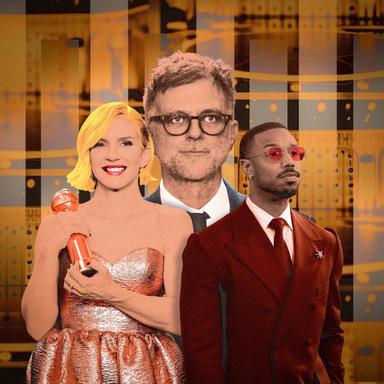
In the same way, Sunday’s Golden Globes broadcast incorporated “real-time, market-driven insights” from Polymarket, which has signed on as “the exclusive prediction market partner” for the awards show. (Thank God it finally has one.)
4. They are regulated differently from other gambling platforms. In fact, they aren’t even regulated as gambling platforms. They’ve persuaded the government to classify them as financial markets, which means they aren’t subject to the same limitations as other betting firms. For the moment, they can operate legally even in states where gambling is prohibited.
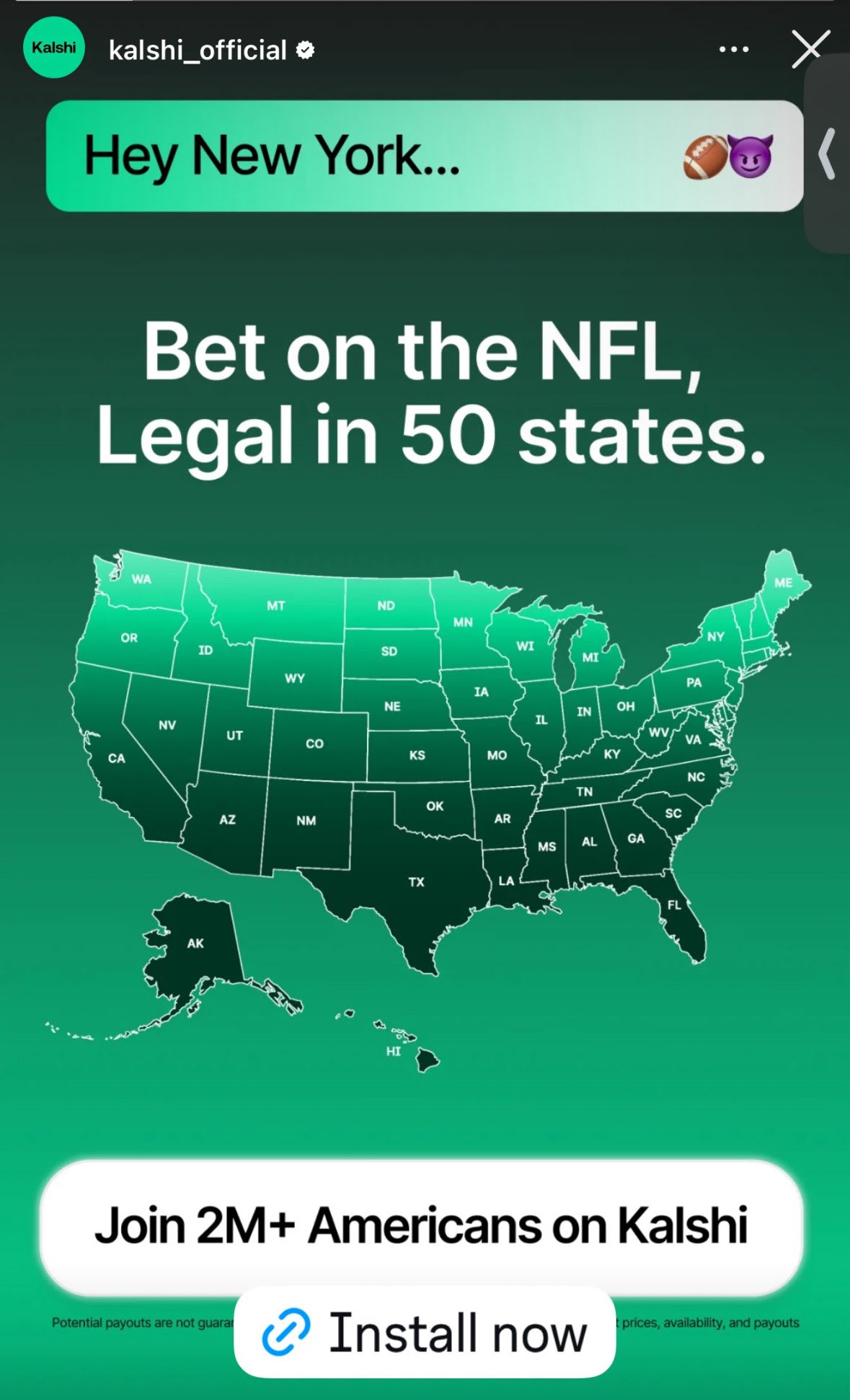
5. For this reason, they have a slightly ridiculous dual personality. Their advertisements scream that they’re betting sites, but their official nomenclature parrots the stock market. Clients are “traders” who buy “shares,” even if the shares are in things like “The Tampa Bay Lightning will win the Stanley Cup.”
6. But they’re not just regulated as financial markets! They’re regulated specifically as derivatives markets, a specific type of financial market that doesn’t prohibit insider trading. This means that it’s very easy for people to place bets on events whose outcomes they can directly influence. For instance: Last week, Karoline Leavitt, Donald Trump’s press secretary, suddenly ended a briefing seconds shy of the 65-minute mark, after appearing to glance at the clock. There was rampant speculation that she did so due to a Kalshi wager about the length of her next press conference.
7. They are thus, for pretty obvious reasons, staggeringly rife with the potential for both corruption and grift. Hours before the U.S. raid in Venezuela this month, an anonymous gambler—sorry, trader—on Polymarket placed large wagers on Nicolás Maduro falling from power in the near future; this trader wound up pocketing more than $400,000. The markets do take steps to discourage insider trading, particularly when it comes to sports, but in practice, they don’t do much to prevent it; Polymarket accepts wagers in crypto and doesn’t verify users’ identities.
8. They’ve been so successful that the biggest fish in the gambling space are copying them: FanDuel and DraftKings, the sports betting behemoths, both launched their own prediction markets in December. (Disclosure: FanDuel has a sponsored partnership with The Ringer.)
9. They have therefore created a multibillion-dollar industry in which anyone can bet on anything, without the protections normally afforded to either gamblers or stock traders, without any constraints from state laws, and without functional checks to prevent outcomes from being manipulated, all while exposing politics, news media, and government to the same pressures high-stakes gambling has brought to sports.
10. Nothing can possibly go wrong!

To look at the front page of either Kalshi or Polymarket is to see a fun-house-mirror reflection of the contemporary world, one in which sports and entertainment are deliriously jumbled together with global horror and societal collapse. Last year, Kalshi took bets on whether there would be mass starvation in Gaza; this year, Polymarket has taken in nearly $2 million in bets on whether Israel will start a nuclear war with Iran. Will the ICE agent who killed Renee Nicole Good be charged by March 31? Put up 28 cents to win a dollar. Will Elon Musk tweet more than 580 times from January 9 to January 16? Put up 34 cents. There’s a 9 percent chance the U.S. will invade Greenland this year, and a 74 percent chance MrBeast’s next video will attract from 70 million to 80 million views in its first week. Gambling on elections used to be illegal, but Kalshi won a lawsuit reversing the restriction in 2024; both sites now let you bet on the identity of the next president, along with a full suite of other election wagers.
The prediction markets like to claim that, as prognosticating tools, they’re more accurate than other means of seeing the future. Prediction market odds, they say, do a better job of forecasting what will happen than polls or news analysis. The argument behind this claim is that people don’t let their biases interfere with their money: You may be a furious crusader against climate-change legislation, but you’re still going to think twice before betting that temperatures will come down. And for this reason, the markets say they offer positive social value. They can help us make sense of a seemingly unpredictable world. This may be true, but it’s hard to square with the large discrepancies among the different markets on certain key questions of our age. Polymarket, for instance, thinks there’s only an 8 percent chance that the U.S. will confirm the existence of alien life before 2027. Kalshi thinks there’s a 12.9 percent chance.
Prediction markets aren’t new, and for years, their potential for wisdom-of-the-crowd accuracy was their primary reason to exist. The not-for-profit Iowa Electronic Markets, which is affiliated with the University of Iowa, was founded in 1988 as a means of studying whether betting patterns could predict the results of presidential elections, among other events, more accurately than traditional methods like polling. Because of the IEM’s research focus, and because bets were capped at small amounts, the Commodity Futures Trading Commission allowed it to operate without oversight. Unlike Kalshi and Polymarket, the IEM was never intended to operate as a big business, but it created a regulatory paradigm that its for-profit successors were eventually able to exploit under the generally anti-oversight and grift-tolerant Trump administrations.
For a real deep dive into the regulatory framework around prediction markets, which is incredibly boring but also fascinating in a sort of “Humanity was given a world full of waterfalls and rainbows, and this is what we did with it” sort of way, I recommend Molly White’s indispensable newsletter. The TL;DR, which is frankly still going to be pretty L, is that Kalshi, which spearheaded its own campaign to be regulated by the government before launching publicly in 2021, managed to lodge itself under the same CFTC umbrella as the IEM. The CFTC oversees futures markets, which allow investors to enter into contracts to buy or sell stuff at a set price on a set date in the future. Kalshi structures its wagers more or less in the same way, only instead of buying a physical commodity (say, oil or rhinoceros food), you’re buying a concept (say, nuclear war or Indiana beating Miami).
This isn’t gambling, according to Kalshi, because you’re not betting against the house; you’re betting against the person on the other side of the contract. Kalshi, acting as a broker, takes a cut of the total transaction as a fee. (By this logic, most card games aren’t gambling, but OK; the borderland between investing and betting is mist-shrouded on the clearest day.) By convincing the government it was a futures market, Kalshi sidestepped a whole slew of onerous regulations and—because federal CFTC rules preempt state law—ducked anti-gambling provisions in the 11 states that ban traditional sportsbooks. Polymarket, which initially tried to avoid being regulated at all, and which was banned in the U.S. under the Biden administration before returning last month, followed suit.
The problem—well, one of them—is that traditional futures markets, unlike Kalshi and Polymarket, don’t post a lot of Instagram ads trumpeting the idea that they represent a fun and easy form of legal gambling. Kalshi and Polymarket are doing everything in their power to convince regular people to place wagers on their platforms. The more regular people sign up, the more important you’d think it would be to have safeguards protecting regular people from being ripped off by insiders. But that’s where CFTC regulation falls short; where its sister commission, the SEC, which oversees stock trading, prioritizes protecting retail investors, the CFTC does not, in part because dudes who hang out on r/wallstreetbets don't tend to plow a lot of cash into, say, pork futures. And the hands-off approach that made sense for the tiny Iowa Electronic Markets doesn’t necessarily scale up for a multibillion-dollar cultural juggernaut that can afford to splash its product all over the Golden Globes.
To understand the potential for abuse here, consider the CNN deal. The purported accuracy of the prediction markets is one of the few journalistic justifications CNN can fall back on in defending its deal: It’s not climbing into bed with online gambling; it’s using data that brings insight to the news. But the accuracy of the prediction markets is a function of the knowledge of their users; it’s sensitive to public perception. Users of a prediction market in the year 1200 might have predicted, inaccurately, that the Earth would someday be proved flat; after people started sailing around the globe, perceptions changed, and later markets would have been more accurate.
And CNN’s news coverage is in a position to shape public perception. If the network runs 10 stories a day suggesting that the U.S. is about to invade Canada, it will convince many people that this invasion is likely to happen. The prediction markets will shift to reflect this conviction. And CNN, when it puts Kalshi data on-screen as a source of supposed insight, will seem to have evidence that the invasion is in fact imminent, when the “data” is really just a reflection of CNN’s reporting in the first place. What’s more, Kalshi’s data isn’t just data; it also represents real money, sometimes large sums of it.
With large sums of money at stake, no practical barrier to keep people with power over the situation from buying shares in the outcome, and no practical barrier to keep CNN or its sources from manipulating the story, there’s a dizzying possibility that the geopolitical situation will be driven by gambling markets functioning to extract money from regular people and transfer it to insiders. Even some Republicans are worried about the danger: Arizona Representative Abe Hamadeh recently sent a letter to the chair of the CFTC, Caroline D. Pham, expressing concern that the CNN-Kalshi deal “would allow the potential for foreign governments, domestic political groups, or adversarial actors to escalate tensions, manipulate narratives, and pressure institutions in order to profit through Kalshi’s event-contract platform.”
Looking through the prediction market sites, I keep getting lost trying to think through the layers of alienation and exploitation they represent. You’re sitting in your living room trying to make a few bucks by guessing the date Israel will next strike Lebanon. Meanwhile, someone with inside knowledge of that date is planning to use it to take your money. Meanwhile, the prediction markets are taking a cut of the transaction and using it to buy lobbyists to keep oversight down, brand partnerships to make them look legitimate, and advertising to keep you gambling. Meanwhile, someone in Lebanon is sitting in their apartment hoping their building doesn’t explode.
On its Middle East market pages, Polymarket has appended a note beginning, “The promise of prediction markets is to harness the wisdom of the crowd to create accurate, unbiased forecasts for the most important events to society.” On the other hand, Kalshi’s CEO and cofounder, Tarek Mansour, told a securities conference in November that the promise of prediction markets “is to financialize everything and create a tradable asset out of any difference in opinion.” I can’t see the future, but I bet I know which of these quotes will turn out to be more accurate.