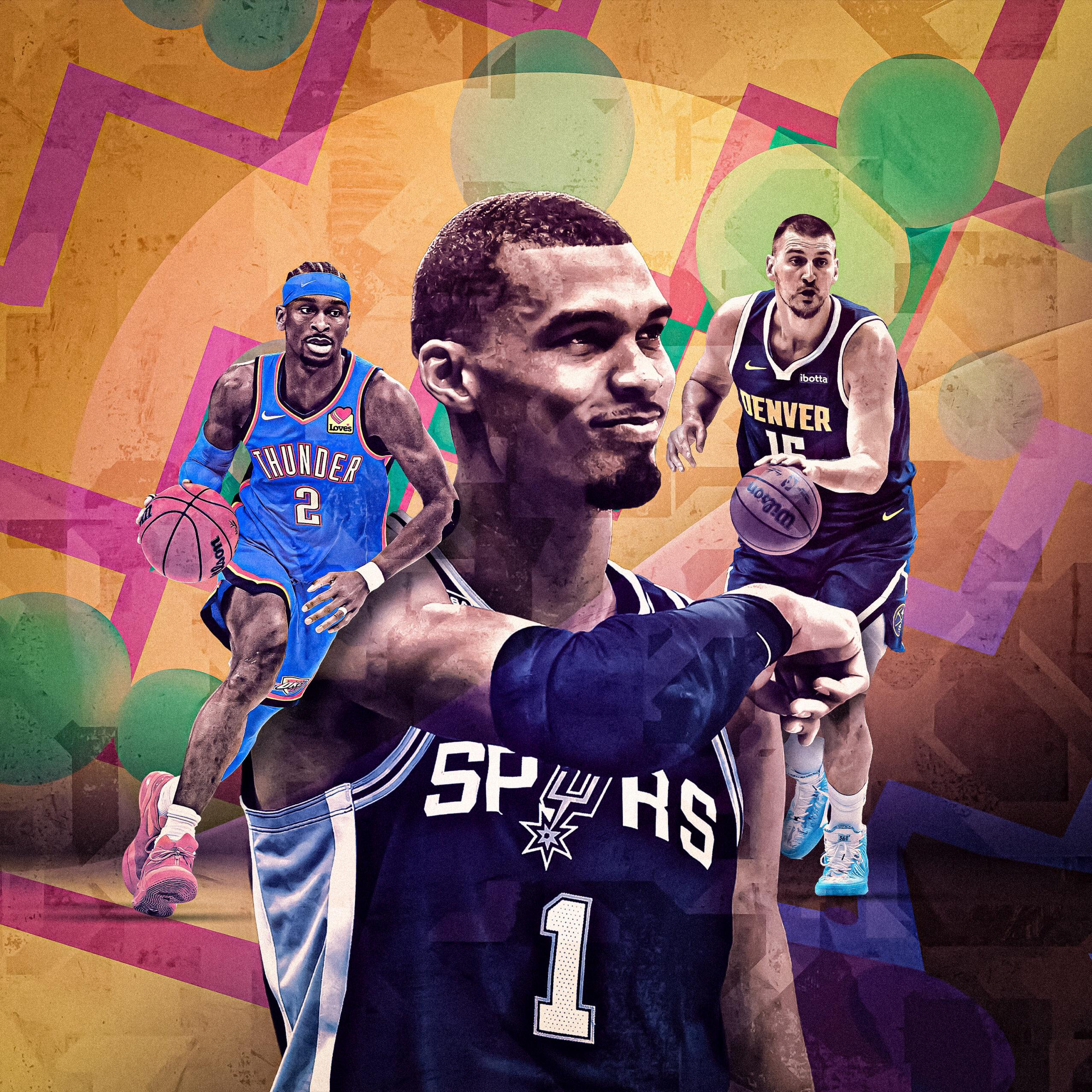

A new NBA season is officially here, which means it’s time to do what we do best: make wildly confident predictions about things that won’t be decided for another six months.
Who will take home MVP? Which rookie will emerge from a loaded draft class? And can anyone not named Victor Wembanyama win Defensive Player of the Year? (Spoiler: Nope. Sorry for even asking.)
We asked The Ringer’s NBA staff to predict the winners of the league’s biggest individual awards. And because picking the obvious favorites is no fun, we added a twist for the MVP race: Each writer had to make one smart pick and one sicko pick. Some played it safe. Others got a little carried away.
Here are our predictions for the 2026-27 NBA awards.
Most Valuable Player (Smart and Sicko)
Rob Mahoney: Smart: Victor Wembanyama, Sicko: Scottie Barnes
When it comes to the MVP debate (and superstars more broadly), we tend to grade defense on a curve. They hold down their spot! They put in effort! Look at all the little things they bring to the table! It’s cute but fair, given the enormous responsibilities MVP-caliber players tend to shoulder on offense. No star can do everything—but Wemby comes close. The fact that he’s the hands-down favorite to win Defensive Player of the Year for the foreseeable future and the most important offensive player on one of the best teams in the league makes for a pretty airtight candidacy. And weirdly enough, a similar case could be made by the end of this season for Scottie Barnes. We raved about Barnes on an episode of Group Chat as we wondered if he was the best no. 2 option in the league. Maybe he’s not—because by the end of the season he overtakes Kawhi Leonard entirely. Barnes is already an All-World defender and a do-it-all hub on offense, and every second he played in the 2026 playoffs seemed to burst with possibility. There’s another leap in Barnes, and it could put him among the best players in the sport.
J. Kyle Mann: Smart: Victor Wembanyama, Sicko: Kawhi Leonard
After watching his rookie season, I thought there was a real chance that Wemby could challenge Derrick Rose for the youngest MVP win in league history at 22 years old. (LeBron should’ve won that MVP, but we’ll table that for another time.) He’s already missed that mark, but the argument for Wemby as the best player in the world really became legitimate by the beginning of 2026, and with him heading into this season having learned some harrowing lessons on the biggest possible stage, I think we’re going to see an informed and infuriated player who’ll still only be 23 years old by the time the voting happens.
It’s one thing to slow his glass activity, to find a way to keep him away from the rim as a roller or hope that he’s being resigned in his shot selection, and if he’s not, pray that he’s not making them—but that doesn’t even cover the 100-sided Rubik’s Cube that comes with trying to score on him. I’m running the risk of being struck by lightning because we’re treading in blasphemous territory in terms of the all-time discussion, but there have been three seasons in NBA history where a player won both the Defensive Player of the Year and MVP awards—Michael Jordan did it in 1987-88, Hakeem Olajuwon did it in 1993-94 and Giannis Antetokounmpo did it in 2019-20. At this age, he’s already the most dominant defensive anchor in the world: 32 players in the NBA defended over 1,000 ball screens as the screener defender in 2025-26, and Wembanyama was the most efficiency-stifling force, and the only player to allow less than a point-per-possession on those actions. Coaches across the league were like the collective of scientists in Project Hail Mary trying to figure out how to solve this problem that concerns everyone.
My sicko pick here would be Kawhi. I know, I know, I know. Don’t point your finger at me! (I know he has to play.) But somewhat lost in all of the wreckage of Hurricane Pablo is the fact that Uncle Dennis’s nephew was unbelievably good last season and did manage to hit the 65-game mark, and he basically propped up a 42-win Clippers team by himself on offense. He was in the conversation for best all-around scorer in the league last season—devastating from literally everywhere (no exaggeration) and in essentially every mode possible. He wrecked defenses in pick-and-roll, he’s still a monster getting to the rim, he’s an ISO terror, and he’s just as effective playing off the ball. I doubt it happens, but Kawhi is, inexplicably, as good as ever.
Michael Pina: Smart: Victor Wembanyama, Sicko: Nikola Jokic
I don’t see any other answer to this question. Assuming he plays at least 65 games, Wemby will be the best defender on the planet and the leading scorer on a title contender that’s significantly better when he’s on the floor than off. Everything about his game will be more refined and advanced than it was last season, when his massive leap ushered in a new era of NBA basketball. No individual looms over every possession on both sides of the ball quite like Victor, and, assuming his three-point percentage ticks up a bit, his playmaking improves, and even easier opportunities present themselves in light of some growth out of San Antonio’s supporting cast, this will be an obvious choice.
For my sicko pick, I’m going with Jokic. I think he’s the best player in the league, the best passer of all time, and someone who could somewhat easily average a 30-point triple-double if doing so were his goal. His value is unquestionable and, this season, he’ll be tasked with more responsibility than ever. And that’s the reason I’ve got him down as my sicko pick: Voters tend to shrug aside players on teams that aren’t at or near the top of the standings. This isn’t a hard rule, but if the Denver Nuggets are barely clinging to the fifth or sixth seed, Jokic’s steep climb towards a fourth MVP will be slippery.
Howard Beck: Smart: Victor Wembanyama, Sicko: Giannis Antetokounmpo
Wemby is going to check all the key boxes: We know he’ll be dominant at both ends. We know the Spurs will be among the best teams in the league. And we can pretty confidently predict he’ll only improve on his performance last season, when he finished third in the balloting. Because if there’s one thing we’ve learned about Wemby, it’s that the dude genuinely cares. He wants to be an all-time great. He wants to win it all, now. The freakish size and skill set matter. His competitive drive matters more. And that loss in the Finals stung. He won’t lack for motivation. He probably won’t match the gaudy stats of, say, Luka Doncic or Shai Gilgeous-Alexander, but his defensive impact should more than offset any gap in points and assists.
I’m skeptical that the Heat can be a legit force in the East this season, given their lack of playmaking, depth, and backcourt dynamism. If Miami can’t crack 50 wins, it’s hard to see Giannis taking his third MVP award (and first since 2020). But could Giannis put up an MVP-worthy line of, say, 30/10/6? Yes. Could he and Bam Adebayo turn the Heat into a top-5 defense? Surely. Can Erik Spoelstra’s tactical wizardry turn the Heat into a surprise contender—and Giannis, thus, into a legit MVP candidate? Possible!
Danny Chau: Smart: Victor Wembanyama, Sicko: Luka Doncic
If Wemby is indeed on the potential GOAT trajectory, he will be the smart choice for at least the next 10 years, health permitting. For reference, LeBron James was a top-five MVP vote-getter for 13 consecutive years from his age-21 to age-33 seasons. It’s only natural to pencil in Wembanyama for the foreseeable future. This is a player who was the driving force behind a surprise Finals run from one of the youngest cores in the league, a player who already figures to be one of the greatest defenders the sport has ever seen, and who is already a 25-points-a-game scorer despite playing almost exclusively on intuition rather than accumulated knowledge. What happens when a generational talent with all the tools in the galaxy internalizes what it takes to go all the way? That’s the season that’s potentially in store for us.
My non-Wemby pick would be Luka. It’s been a few seasons since we’ve seen Doncic at the height of his powers, with a team construction fully catered to Doncic’s logical preferences. The Lakers have been retooled within that framework, and these days there aren’t nearly as many concerns about Doncic’s conditioning. Luka is in the exact situation that we’ve all wondered about for years. It’s been a few dormant seasons, but Doncic is in a great position to rejoin the best in the world discussions.
Logan Murdock: Smart: Victor Wembanyama, Sicko: Anthony Edwards
These days, every superlative is within reach for Wemby. He’s already scored more points than any other NBA player at this age of his career. He’s already gobbled up a Defensive Player of the Year trophy, a few first team offensive and defensive selections, and three All-Star appearances in his short NBA career.
Now, it’s time to cement himself among the greats like Kareem, Wilt, and Hakeem by having an all-time season. He has all of ingredients on his side: youth, an all-time disappointing Finals performance, and the potential for an all-time “fuck you” season from the Spurs. Though weird to consider, Wemby is already chasing ghosts, and his first MVP will put him on the path to the immortality we were promised.
On the other hand, it would be soooo much more fun to see Anthony Edwards take the crown. Over the last three seasons, he’s taken a range of Timberwolves teams to heights they had no business reaching. So much is made of Edwards’s funny quotes, press conference hubris, and made-for-social award shows, but underneath that all is a galvanizing, winning player who is genuinely driven to be the best. If he can carry the new-look Wolves, while maintaining his unworldly nightly stat lines, the award will be within reach.
Matt Dollinger: Smart: Shai Gilgeous-Alexander, Sicko: Jayson Tatum
Only Larry Bird, Bill Russell, and Wilt Chamberlain have ever won back-to-back-to-back MVPs. Not LeBron. Not Magic. Not even Michael. So it's going to take a truly transcendent year for voters to award it to Shai for a third straight year. The thing is, it’ll probably happen. Shai's otherworldly scoring prowess and OKC’s sky-high floor makes him almost a lock to be top-three. To get over the hump again, he'll probably need to lead the league in scoring while averaging career highs in efficiency ... which is essentially what he did last season, shy of a few decimal points. Voter fatigue is real, but Oklahoma City’s postseason exit and offseason shuffling could spawn a deadly second win for Shai. At 28 years old, SGA is in the heart of his prime. LeBron and Michael won MVP and a title when they were 28, too. Just saying.
But if voters get bored (we do) and Oklahoma City feels boring (it will), then I like Tatum to make a run at the award while the Celtics lead from the front all season. Boston looked pretty incredible last season when Jaylen Brown got his shot to be the Solo J … I’m guessing Tatum will be dead-set on proving Brad Stevens picked the right one this summer. For voters interested in narrative, Tatum’s potential story arc hits all the right beats.



Most Improved Player
Chau: Kel’el Ware. My optimism has been documented, but the case is simple. Ware is an abundantly skilled floor-spacing rim protector, one of the most coveted archetypes in basketball, with a runway for consistent playing time in Milwaukee that wasn’t always there under the exacting auspices of Erik Spoelstra in Miami. If Ware’s per-minute production remains as it has throughout his career with steadier minutes, he’ll produce numbers that will make for an undeniable campaign come awards season.
Murdock: LaMelo Ball. The 25-year-old has a rare change for reinvention in Minnesota. LaMelo wasn’t going to win this award putting up big stats on a play-in team. But in Minnesota he has his best chance yet to contribute to winning basketball. Ball’s career has been defined by injuries, (often) empty stats, and unsafe roads across Mecklenburg County. But the move to Minny provides Ball with the stage to display all of his incredible offensive gifts on a team with real stakes alongside a generational talent he complements well. It's anyone’s guess how this will go, but an improved Melo would be an awesome metamorphosis to watch.
Beck: Cason Wallace. Quick aside: Preseason awards predictions are, by definition, just semi-logical guesses. And MIP is annually the toughest one. We have no idea how much offseason work a player put in, or whether that work will pay dividends when the games begin. But Wallace, who will fill the void left by Lu Dort, certainly seems primed for a breakout season in OKC. His defense is already elite, and the added responsibility (and minutes) alongside the Thunder’s stars should only enhance his scoring and playmaking.
Pina: Wallace. He averaged 8.4 points per game two years ago and 8.6 points per game last year. Now he’s pencilled in as a full-time starter on a championship contender that may have a few more shots to go around. He’s sustained stretches that show he’s so much more than a spot-up shooter or simply a hawk who creates fast-break opportunities with those quick hands. Wallace is fast with the ball, can change speeds and directions, and reads the floor well. The Thunder have Ajay Mitchell and Jared McCain to score off the bench, let alone SGA, J-Dub, and Chet Holmgren in the starting five, but, to the benefit of OKC’s offense, Wallace deserves more chances to make decisions with the ball in his hands. He turns 23 next month and has plenty of room to grow. If that simply means upping his scoring output to 13-15 points per game, then this award could be his.
Mahoney: Amen Thompson. Houston’s injuries last season forced Thompson into a ball-handling role he wasn’t quite ready for, but getting Fred VanVleet back (among Houston’s other returns and additions) should weaponize Thompson to be his best, most devastating self. Thompson isn’t quite a point guard, and maybe will never be. A more free-form role suits him better anyway. Let him be the threat in transition, the killer from the weak side, the explosion that a defense has no hope to contain. Thompson is set up now to focus less on the stuffy logistics of running a team and more on everything else.
Murdock: Payton Pritchard. Jaylen Brown’s exit provides even more scoring opportunities for Pritchard, who will provide a much needed punch in Mazzula’s equal opportunity long-range assault offense. If he plays his cards right, Pritchard could win this in a landslide.
Dollinger: Dylan Harper. I believe in Dylan Harper so much that I sound foolish when I start talking about him. So I’ll try to stay grounded here. By the end of the season, I think it’ll be clear he’s the Spurs’ second-best player. We should all be so lucky as to play basketball with Wemby, but Harper is a true dream pairing.
Mann: Baylor Scheierman. My fascination with Scheierman is long-running and unwavering, so it brings me great joy to pick him in an NBA awards survey. In researching the draft, one of the more enjoyable crate-diving activities (depending on who you are, I guess) is in the hunt for the overlooked. There are lots of ways to do that, but a main one is to thumb through box scores and stat filters in hopes of finding a hidden gem. Scheierman was the Adrian Veidt of the Summit League before bouncing to Creighton, both in appearance (with that purple headband) and in dynamism—he could shoot the ever-loving shit out of it, his passing was deft, he was a menace on the glass, among many other superlatives. He’s scaled into a role player for the Celtics since joining the league, but those skills haven’t gone anywhere. They’re waiting for their moment, and I suspect that said moment has come. He’ll be a member of an aggregate looking to patch together the minutes that Jaylen Brown left behind, but I think we’ll see him become crucial to this Boston squad.
Rookie of the Year
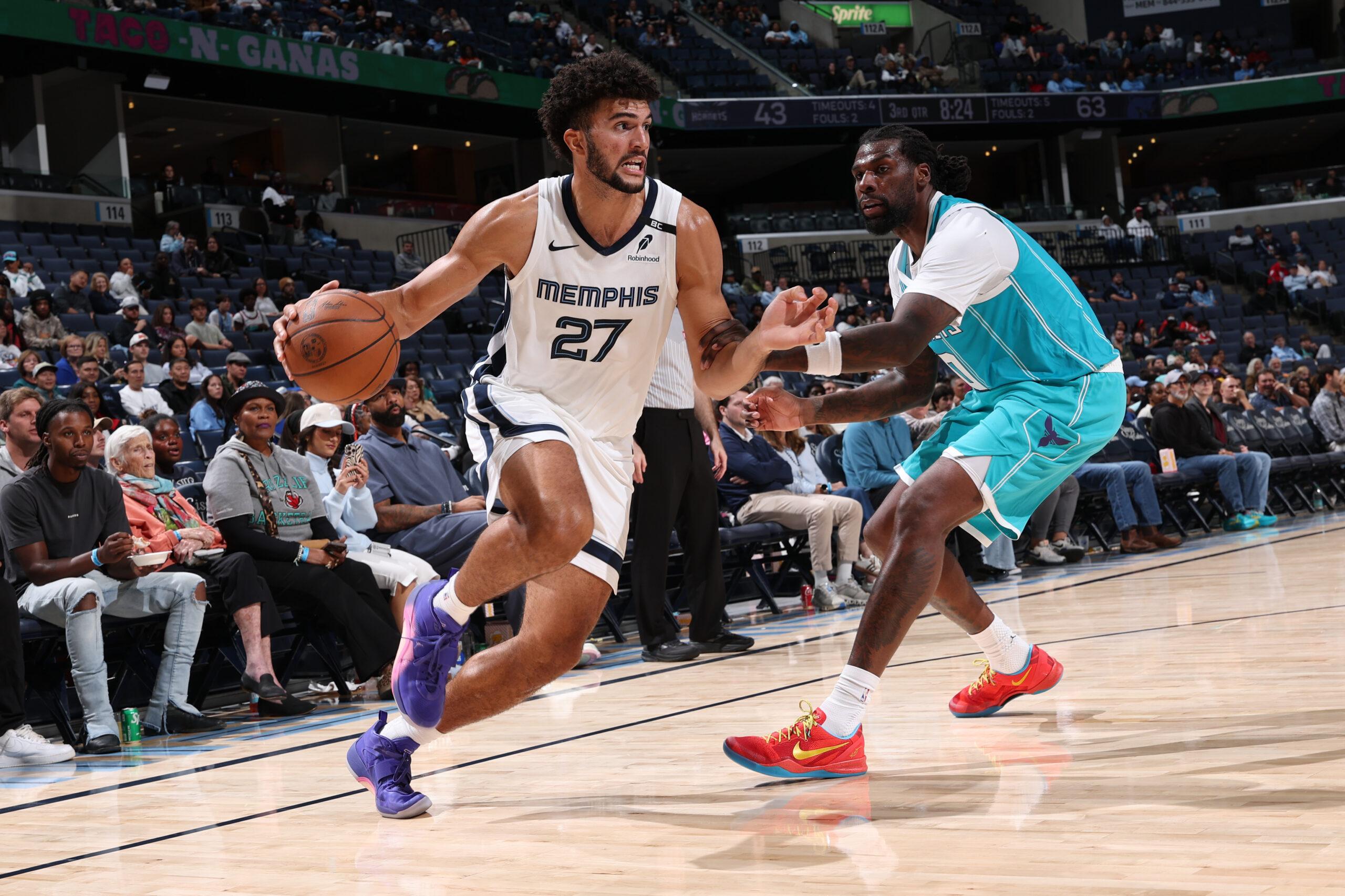
Chau: Cam Boozer. This could be one of the greatest ROY races in history; my early nod would go to Boozer, who already appears to be involved in every Grizzlies action while he’s on the floor. He’s been a distribution hub as a post player, a double-sided pick-and-roll agent, and an absolutely-as-promised boulder of a man that head coach Tuomas Iisalo has created downhill looks for as a driver. Memphis plays within a flow that it’s already tasked their 19-year-old rookie with managing. It’s an impressive burden; Boozer has handled it with rare grace.
Pina: Darryn Peterson. The myriad of ways in which he’s already able to attack NBA defenses should make him the prohibitive favorite to win this award. He’ll score a ton of points on moderate efficiency in a creative offensive system that can space the floor, surrounded by shooters and big men who can pass. The Jazz can be pretty competitive, too, playing meaningful games that Peterson helps decide. With all due respect to a crowded field, it’ll be hard for anyone to top Peterson’s numbers and winning impact.
Mann: Darius Acuff Jr. It stands to reason that, in a phenomenal draft class, we would see a lot of conceivably strong candidates for Rookie of the Year. But like every award, at the end of the day it’s a question of opportunity. Darryn Peterson and AJ Dybantsa will likely have terrific rookie seasons, but see their output compressed by the fact that they are sharing primacy with established NBA players. Is there a world in which the absence of Jimmy Butler in the Warriors’ rotation creates an opportunity for the supremely well-rounded Yaxel Lendeborg to really stretch his legs and put up impressive numbers on both sides of the ball? I think there is.
But our NBA editor Matt Dollinger currently has a switch blade (editors carry switch blades) to my neck as I’m typing this, so I’ll make an actual detailed prediction. I think that this will come down to a heated race between two very different player archetypes, who are backed by vocal subsections of the basketball community with a strong history of argument. The departure of DeMar DeRozan and Russell Westbrook is going to put the ball in Darius Acuff Jr.’s very capable and confident hands, and he’s going to score a lot of points and rack up a hearty assist total. The Kings aren’t going anywhere meaningful, but Acuff has never played with anyone approaching Domantas Sabonis’s quality as a screener, and in the preseason you could already see him enjoying the lateral space that was becoming available to him as a result of that.
His competition here will be Cam Boozer, who I think will ultimately bring home the award. Boozer is infuriatingly steady for the opposition. He’s a right-play machine and should add something to literally every facet of Memphis’s approach. He’ll be critically central to what Memphis does, and I think he’s going to drive winning more than any other rookie. Possibly as much as any in recent memory. However, sometimes you can just see this shit coming: this will probably be a debate where Boozer Bros nitpick Acuff’s efficiency as a scorer and his defensive shortcomings, and the Acuff Acolytes will roll their eyes at the subtlety of Boozer’s (seemingly boring) game on both sides of the ball and point to how his burden is lesser than that of their no. 1 boy. As arguments go, it’s not a tale as old as time, but it’s a tale as old as blog-era basketball writing. Admittedly a little clunkier—can’t hear Angela Lansbury singing that—but it’s a tune Grizzlies fans will happily sing nonetheless.
Mahoney: Caleb Wilson. A first-year player needs the numbers and the recognition to win Rookie of the Year, but they also need a story. And Wilson will have quite the story to tell if he can manage to make the Bulls compelling again—a real feat after years of the franchise walking circles through irrelevance. Wilson’s game is antithetical to that kind of mired blandness. He’ll make jaw-dropping plays in transition. He’ll dazzle from the perimeter at times. He’ll even make defense fun, by blowing up plays with a kind of athleticism that is just so distinctly watchable. Wilson should have every opportunity to prove he’s the best rookie going this season, but he’ll also impress in a way that makes people want to vote for him.
Murdock: Caleb Wilson. Caleb is going to get the lion’s share of offensive responsibility that it may be his award to lose.
Beck: Cam Boozer. His intuitive playmaking and all-around game will give the Grizzlies exactly what they need in Year 1 of the post-Ja era: reliability. Boozer’s highlight reel might not be as glitzy as Peterson’s or Dybantsa’s, but he’ll probably get more consistent opportunities than his rivals, who are both playing with established stars. Peterson will have to earn his shots alongside Lauri Markkanen and Keyonte George; Dybantsa will have to fight for shots between Trae Young and Anthony Davis. Boozer will be the Grizzlies’ top option on Day 1.
Dollinger: Cam Boozer. Assuming Ivica Zubac doesn’t technically count (sorry, scorned Pacers fan here). He’s the perfect extension and next installment for the Grizzlies. We can debate long-term upside among this season’s loaded prospect group, but Boozer is a ready-made franchise player for a city in desperate need of one. There will be the customary growing pains for a teenager, but he has the potential and polish to be a star from day one.
Defensive Player of the Year
[Editor’s note: My bad, we didn’t need this one.]
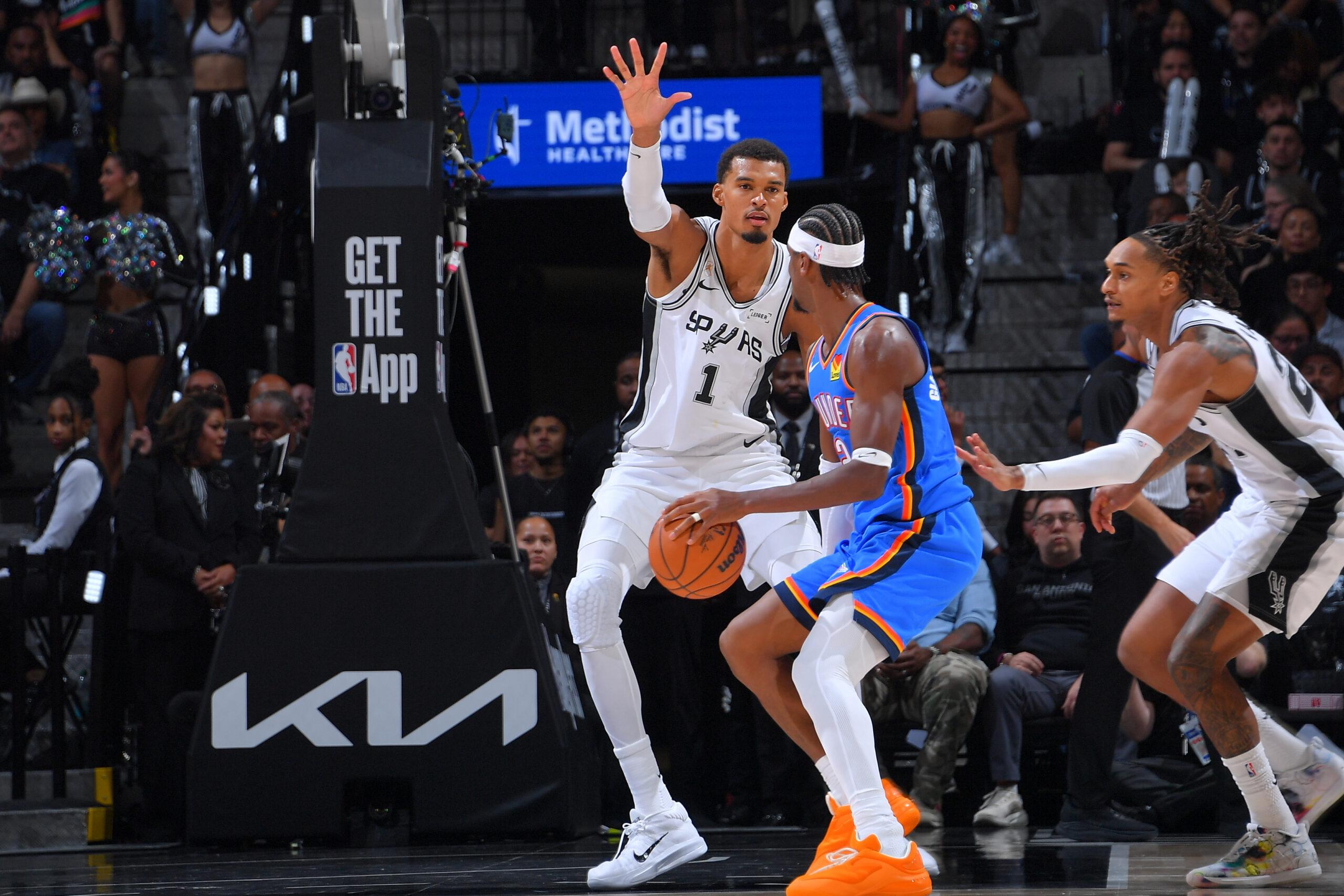
Beck: Wembanyama. I mean, dude won it unanimously last season, so he could lose 30 votes and still win in a landslide. He’s not surrendering this title any time soon.
Pina: Wembanyama. I don’t think this needs further explanation. Copy and paste it in here for the next 10 years.
Mann: Wembanyama. He is the most impactful defensive player that I’ve ever seen, and what’s wild is the juxtaposition between how strong a statement that is and how freezing cold a take it also happens to be. He’s that special and it’s that obvious.
Dollinger: Wembanyama. Although Rudy Gobert deserves consideration for a fifth trophy if he can negate LaMelo.
Mahoney: Wembanyama. Come on.
Murdock: Wembanyama. The league might name the award after him by 2030.
Chau: Victor Wembanyama. From ’23 till Infinity.
Sixth Man of the Year
Beck: DeMar DeRozan. We love a sixth man who can score! And DeRozan, still a maestro of the midrange, remains both productive and efficient (18 points per game last season in Sacramento). The Nuggets desperately need bench scoring and playmaking, so he’ll get plenty of burn. And despite his age (37), DeRozan has proved durable, playing at least 74 games in each of the past five seasons.
(I was tempted to pick Dylan Harper here, but I’m not sure the Spurs can deny him a starting spot for the entire season. In which case … hello, Sixth Man of the Year candidate De’Aaron Fox!)
Chau: Reed Sheppard. The return of Fred VanVleet, however diminished from his ACL recovery, is a boon for a Rockets offense that was badly in need of a caretaker last season. That newfound stability ought to allow Sheppard to lean into becoming the unrepentant rocket launcher he’s meant to be. Sheppard attempted more than 13 3s per 100 possessions in more than 2,000 regular-season minutes played; there have been only 10 players in league history who have done the same in multiple seasons. Sheppard’s already an unbelievable shooter, but if he continues at his current rate of volume with even a slight uptick in efficiency, he could be in line for a 2024-25 Payton Pritchard success story.
Pina: Devin Vassell. It’s a strange pick, but I’m going off my own potentially off-base assumption that San Antonio’s permanent starting five will eventually be De’Aaron Fox, Stephon Castle, Dylan Harper, Julian Champagnie, and Victor Wembanyama. (Spurs coach Mitch Johnson said that the lineup will start on opening night!) And if/when that happens, Vassell will cook off the pine as the versatile scorer he is. No other Spur has sacrificed more than he has, tapering his role to fit Fox, Castle, and Harper. Last season, his on-ball percentage (10.4 percent) was a far cry from the 17.2 percent he enjoyed in 2024-25. For the sake of maximizing different units and balancing out a rotation that’s ridiculously loaded, letting Vassell be a fireball off the pine makes sense.
Mahoney: Ajay Mitchell. Mitchell fits the mold in every respect: He puts numbers on the board, he makes a self-evident splash, he’s so good coming off the bench for OKC that he often winds up closing games anyway. The fact that he plays for a truly elite team is almost beside the point for this particular award, but it certainly can’t hurt; if anything, the widespread appreciation of the Thunder’s depth only makes Mitchell that much more of a standard bearer.
Dollinger: Payton Pritchard. I have coworkers who might throw things at me for saying this, but the Celtics are bringing their second-best player off the bench this season. Then again, that’s the kind of strategic advantage that makes Joe Mazzulla foam at the mouth. Pritchard will lead the league in bench scoring and should supercharge one of the best second units in the league.
Mann: Dylan Harper. As a second-year player who’s wholly worthy of being at the center of his own superstar developmental experiment, Dylan Harper is not your typical sixth man. (He also may end up starting, rendering this take moot.) He is instead flanked by fantastic players and channeling his usage into on-court situations that he’s frankly overqualified for. Harper has played well in that responsive role—he hit on 34.5 percent of his catch-and-shoot 3s in the playoffs. It’s one thing to try to slow down a driver of his quality, but when he’s working off of Wembanyama, Fox, and Castle, among others, and catching the ball with closeout paths out in front of him, containing Harper is is like trying to catch a moussed-up bison with your bare hands while you’re in flip-flops. He’s just too quick and too powerful to deal with from a rotating position. As he expands on what he’s shown thus far and dabbles in further initiating opportunities, the production should be substantial. And if the overlap within the Spurs rotation doesn’t change for another season, I could see this situation continuing to follow a Kobe-esque arc in which he flirts with All-Star status even when he’s not starting for his own team. That hasn’t happened since 1998, and yet I still wouldn’t rule it out.
Coach of the Year
Pina: JJ Redick. Choosing from a pool of about 20 candidates, I’ll go with Redick. There are plenty of great coaches, but many of them are leading teams with great expectations that are based on a meaningful offseason move or two. The Los Angeles Lakers have plenty of talent, but are also positioned to exceed expectations in a way that allows their head coach to take credit. If the Sixers, Wolves, Raptors, or Heat are incredible, how much will voters attribute their success to new stars who’re joining the team? Same goes for the Pacers, Celtics, and Rockets. The Lakers will face a lot of skepticism, but if everything goes better than expected, there’s a decent chance Redick will earn a heap of praise.
Beck: Darko Rajakovic. There’s a chance (as Zach Lowe mentioned when we podded about this), that any credit for a Raptors leap will go to Kawhi Leonard instead of the coach. But close observers should see that breakthrough as a culmination. Toronto has improved its win total every season under Rajakovic—from 25 wins in 2023-24 to 46 last season—while becoming one of the best defensive teams in the league, with a young-ish roster. Scottie Barnes has blossomed into an All-Star and a DPOY candidate. And the Raptors have become a force without any real star power around him. If anything, Rajakovic is arguably overdue for some recognition. If the Raptors crack the 50-win plateau, he’ll get it.
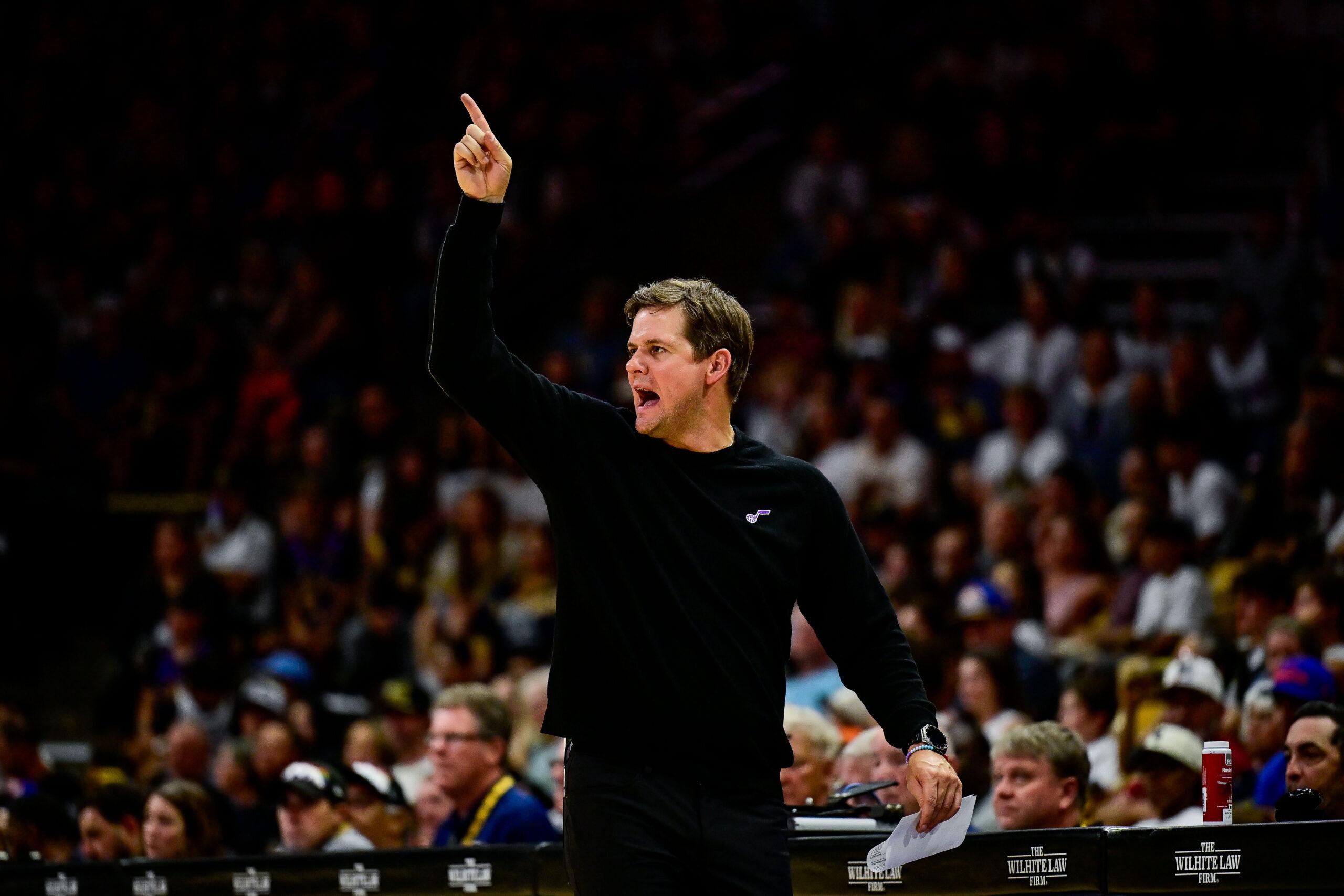
Mann: Will Hardy. My guess is that the recently (finally) liberated Hardy—no longer accommodating larger, underperforming agendas—has been looking at the rest of the Western Conference the way that Hannibal Lecter looked at the mocking Dr. Chilton. The moment I get out of these restraints I’m gonna do some heinous things to you. I suspect that this Jazz team could have some issues containing at the point of attack on defense, which could have some negative ripple effects for their block-chasing bigs, but this is quite the offensive unit to come back to. They might, legitimately, have the best 1-through-5 shooting lineup in the league and they don’t sacrifice athleticism as a result. Thinking about the possibilities of how that can be weaponized, Hardy’s got to be doing that thing where you skip every other stride like you’re in a musical. Let the good times roll.
Chau: Hardy. He was the youngest coach in the NBA when he was hired by Utah in 2022; he’s still only 38. And for the first time in his head coaching career, Hardy will be at the helm of a team with legitimate postseason aspirations. After years of experimentation and refining his unorthodox schemes under the cover of putridity, it’s time to see the fruits of the Jazz’s patience. Utah suddenly has a preponderance of scoring talent across multiple positions, and intriguing defensive centerpieces. Jaren Jackson Jr. brings DPOY-credentialed versatility as a roaming interior helper; no. 2 overall pick Darryn Peterson could very well ease into the rigors of NBA life by focusing on being one of the best point-of-attack defenders in the game. The pieces are all in place for Utah to make a splash out West. If it happens, Hardy’s anointment would be logical.
Matt Dollinger: Rick Carlisle. The Pacers could win 30-40 more games this season than they did during last season’s 19-victory campaign. On the one hand, this pick is blatant cheating. Tyrese Haliburton’s absence and now presence shouldn’t swing Coach of the Year. On the other hand, everyone inside that franchise is still, somewhat, dealing with the fallout of losing Game 7 of the 2025 NBA Finals in such devastating fashion. The hurt lingers. It was hard to even watch the Pacers last season without feeling debilitating ghost pains. Carlisle deserves credit for keeping Indiana intact amid such brutal wreckage. If Indiana hits the ground running this season, it’ll be because of the work he’s put in since Haliburton’s injury.
Murdock: Joe Mazzulla. Last season, Mazzula earned this award in a nail-biter over J.B. Bickerstaff after guiding a team held together by duct tape and superglue. Now, with Jaylen Brown in Philly, Mazzula can run back the same formula around Jayson Tatum, Beantown’s chosen one.
Mahoney: Hardy. It’ll be nice to see Hardy finally get to coach without having one hand tied behind his back. The Jazz are ready for the next step—and that means the smart, movement-heavy stuff Hardy has been implementing for years should finally get its due, in large part because Utah finally has enough actual NBA players to run it.