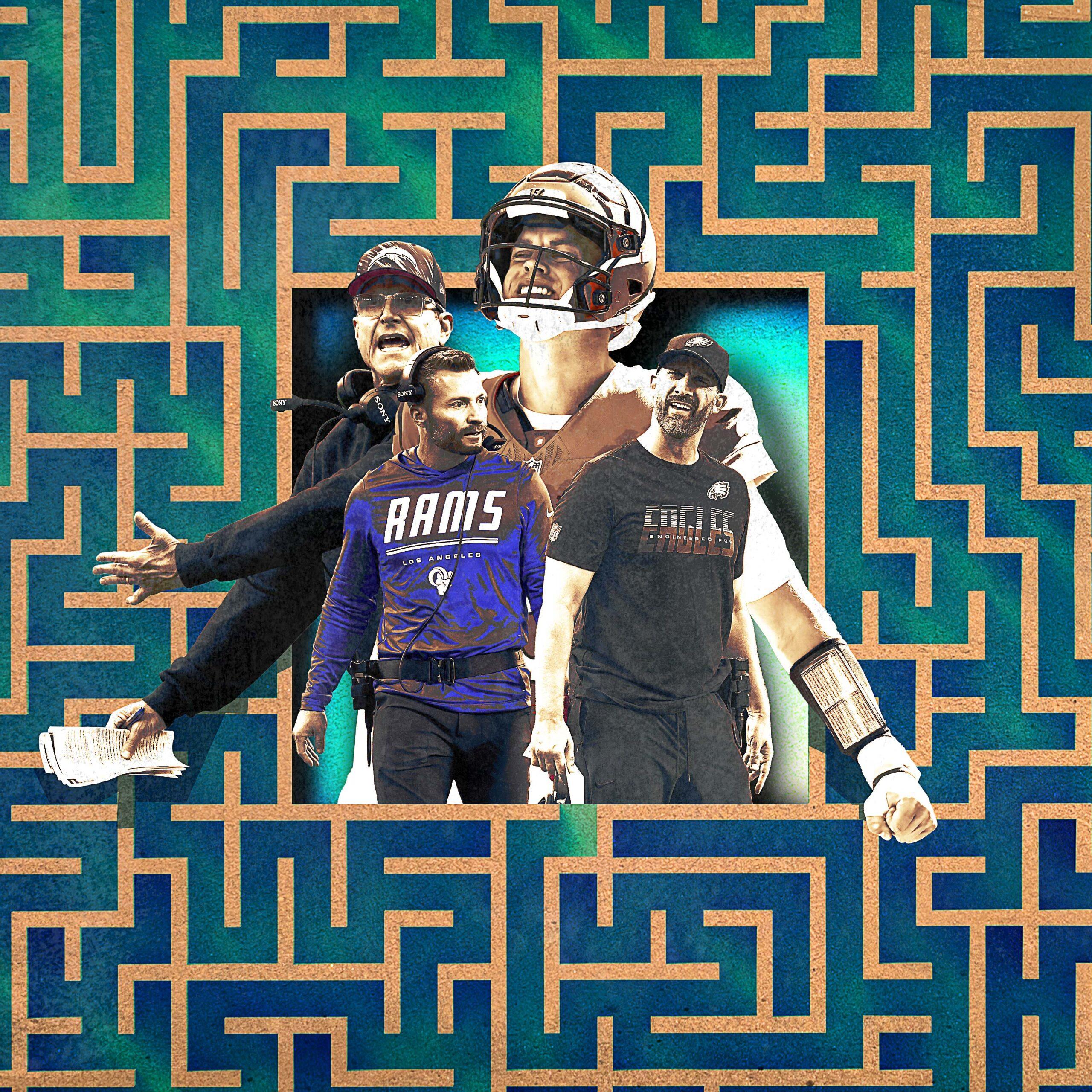

A month ago, hope sprang eternal across the NFL. But now, five games in, a sobering reality is setting in for several teams, including a select few who entered the season with high expectations only to now find themselves in a full-blown crisis of confidence.
That brings us to today’s exercise, where we’re diagnosing why these teams have gotten off to a rocky start, and buying or selling whether they have a chance to right the ship. Let’s start with the team that seems worst off:
1. Los Angeles Chargers (0-5): Selling So Hard It Hurts
At this point, aren’t we all just watching to see how bad things get in Los Angeles? The Chargers don’t just have the worst record in football; they’re bottom five in scoring margin and turnover margin and the second-most penalized team in the NFL. I’ve watched them lose all kinds of ways this season: via red zone blunders, poor fourth-down decision-making, coverage busts, and inexplicably bad decisions from quarterback Justin Herbert. If you can name it, we’ve probably seen the Chargers do it en route to a loss.
Nothing has gone worse so far than Los Angeles’s new offense. After making the highest-profile coordinator hire last offseason in Mike McDaniel, the team now has rumors swirling about whether he’ll keep play calling duties if things continue to trend the wrong way. Through five weeks, every part of this passing game is less productive than it was last year under former coordinator Greg Roman, and almost all of the issues come down to McDaniel’s inability to match his scheme with Herbert’s skill set. Herbert’s current 70.2 passer rating is his career worst through five games and significantly below last year’s 91.2 mark. His explosive passing rate and yards per attempt are both the second lowest they’ve ever been, and even his scrambles aren’t as impactful as they used to be—only 37 percent are resulting in successful plays, far below his 62 percent career average. Plus, Herbert’s been hit, a lot—a career-high 21 percent of his dropbacks—in spite of this system supposedly being built to get the ball out of the quarterback’s hands quickly.
McDaniel isn’t the only person at fault, though. General manager Joe Hortiz has to own some of this offense’s failures as well, because the Chargers again trotted out a unit that lacked a star receiver or a viable offensive line. Guards Kayode Awosika and Cole Strange would not start on the majority of NFL teams, nor would rookie center Jake Slaughter. The Chargers’ belief in bargain-bin shopping and trust in their coaches to make chicken salad out of chicken you-know-what have played a major role in upending this season. And it’s not just that this group can’t protect Herbert well enough in the pocket; they also rank 20th in yards before contact this year—quite an accomplishment for a team whose running game is specifically designed to rush away from the teeth of a defense.
All of these failures are a reflection of how this team has whiffed in its approach to the season. The offensive system asks the quarterback to make throws into tight windows, which has led to more interceptions for Herbert. The lack of a run game stems from their inferior offensive line. Receiver Quentin Johnston has only seven receptions through five games, which is a reminder of how poorly constructed this receiver room is. And all of this reflects poorly on head coach Jim Harbaugh, whose greatest strengths are supposed to be culture-building and problem-solving.
We can talk all day about how far off the rails this season’s gone already or argue about who’s most at fault. But with the Chargers at 0-5—and an upcoming stretch against the Chiefs, Rams, Texans, and Ravens—it’s too late for any of those conversations to matter. The season is effectively over, and we’ll be spending the next three months talking more about job preservation than the playoff picture for the Chargers.


2. Philadelphia Eagles (2-3): Sell It All, and Run for the Hills!
I promise this is not (totally) me being a fatalistic Eagles fan, but this season already feels over for Philadelphia. The Eagles have lost three straight, the team is banged up, and they aren’t even close to the toughest stretch of their schedule. And now, quarterback Jalen Hurts is out this week as he gets treatment for a blood clot. What optimism is there to cling to?
The only thing worse than their current vibes is their offense. Right tackle Lane Johnson retired abruptly, center Cam Jurgens was traded to the Ravens, and guard Landon Dickerson could soon be heading down one of those two pathways himself. When the Eagles won the Super Bowl in the 2024 season, the offensive line was the engine, creating humongous holes for running back Saquon Barkley to sprint through. Now, some of those same runs are going nowhere because defenses are crushing Philadelphia in the trenches. The Eagles have the league’s second-highest stuff rate (plays gaining zero or negative yards) on designed runs. The next closest teams are the Texans, Packers, and Raiders, who all have offensive lines that desperately need retooling. If Barkley isn’t creating a play with his athletic gifts (and that’s happened less this season due to his injuries), then this offense has no foundation and can’t sustain its drives. The lack of space in the run game is a major reason why the Eagles are going three-and-out on an unconscionable 45 percent of their drives.
With all that going on, Philadelphia needs Hurts and offensive coordinator Sean Mannion to do the heavy lifting, but that’s just not happening. The Eagles rank 24th in the league in passer rating and 29th in first downs gained on passes. Their current success rate on passes is just 36 percent, which is lower than the Broncos’ success rate on rushing attempts—and Denver isn’t even good at running the ball!
Mannion was hired to incorporate the Shanahan-McVay system into the Eagles offense, which was supposed to add play-action passing under center and more easy completions with yards-after-the-catch opportunities in shotgun. This is another facet of the offense that hasn’t come to fruition. The Eagles are tied for 27th in under-center play-action passes per game (with just under five dropbacks) and last in success rate on those dropbacks. In shotgun, the Eagles are bottom 10 in yards after the catch, completion rate, and air yards per attempt. What hasn’t been poorly designed has been poorly executed this season, and Philly can’t explain all that away with the fact that it traded away receiver A.J. Brown in the offseason or that DeVonta Smith has missed two games.
When the Eagles struggled to find a passing rhythm in the past, Hurts was always there to bail them out with his legs—but not this season. Hurts has more sacks (13) than designed runs (five) and more interceptions (three) than rushing touchdowns (one). From 2022 to 2024, Hurts averaged at least six scrambles and designed shotgun runs per game. He’s down to 3.4 so far this year. And the difference in his play when he’s not involved as a runner is palpable. He’s sitting in the pocket for the fifth-longest average time of any quarterback, and it’s not paying off with deep throws, scrambles, or chain-moving completions. And now that he’s out for an indeterminate amount of time, this offense will be in the hands of Tanner McKee, who I just don’t think is as good or interesting a backup as he was a couple of seasons ago.
Were it not for the depth of the Chargers’ terribleness right now, Philadelphia would rank first in this list. I don’t think the defense is good enough to make up for where this offense is struggling, so I’m already bailing on this Eagles season.
3. Cincinnati Bengals (3-2): Finger Hovering Over the Sell Button
At 3-2 and just a game behind Baltimore in the AFC North, Cincinnati should be feeling energized entering its bye week. But after the Bengals escaped a late-game Dolphins rally in last week’s 31-24 win, fans are feeling down and looking for reasons to be optimistic about their contention chances this year.
For better or worse, the Bengals still are who they are: a team with a dynamite offense and a defense you can’t trust for more than a quarter at a time. Even after trading for defensive tackle Dexter Lawrence II—who’s off to an excellent start, top 10 among defensive linemen in sacks and tackles for a loss—the Bengals still allow the ninth-most yards before contact on runs and the third-most runs of 10 or more yards. And in spite of how well Lawrence and the Bengals’ defensive front are doing at rushing the passer (with the 10th-highest pressure rate in the league), they still rank sixth lowest in success rate against the pass. The data suggests a significant disconnect between Cincinnati’s best players’ production and their actual impact.
When I watch the Bengals, their defensive problems come down to their play calling tendencies—and how offenses are targeting their weak links, linebackers Barrett Carter and Demetrius Knight Jr. Cincinnati plays man coverage on 28 percent of its snaps, the sixth-highest rate in the NFL through five weeks. That choice makes sense with speedy corners like DJ Turner II and Dax Hill, but more man coverage means more defenders’ backs turned to the ball and less help for the players who need it most. We won’t get too deep into the all-22 weeds (you can read my Ball Knower’s Notebook for that), but all it takes is a passing glance at the Bengals defense to see that Carter and Knight are often caught in bad spots or matched up against better players. As a result, they miss tackles, and there are no other defenders in the vicinity to fix their mistakes. That hurts Cincinnati in both the run and pass games, as the Bengals’ opponents are averaging 6.2 yards after the catch (third highest allowed) and 3.4 yards after contact on runs (fourth highest).
If the Bengals were pairing their reliance on man coverage with either more dime personnel (using six defensive backs) or more blitzes, I’d feel more inclined to say that things will improve. Using dime more often would at least pull one of their linebackers off the field and give the Bengals better matchups—but they’ve been putting six defensive backs on the field for only four snaps per game, which ranks just 13th in the league. And if they were blitzing Carter or Knight more often, that would at least mitigate the problems those two have in coverage and stopping the run—but the Bengals are dead last in blitz rate at just 17 percent.
High man coverage rates, limited use of dime personnel, and a reliance on a four-man rush mean the Bengals are trying to establish a “We’re better than you” brand of football. They clearly aren’t good enough to play that way. And after giving up 217 rushing yards to the damn Dolphins of all teams, the Bengals now have to face the Ravens, Falcons, and Steelers—all three rank in the top 12 in runs of 10 or more yards. Things might get bleak for the Bengals defense over the next month, and their fans might find themselves even more frustrated with this team over the coming stretch—even if they continue winning.
As long as quarterback Joe Burrow and receivers Ja’Marr Chase and Tee Higgins are healthy, the Bengals have a shot to make the playoffs. But this is not a fun team to watch right now. They don’t feel appreciably better or different than they were the last three years, and all their one-score games suggest that they’re one unlucky stretch away from playing themselves out of contention.


4. Houston Texans (1-4): If You Don’t Want ’Em, I’ll Take ’Em
Yes, I recognize how it looks to be confident in a team whose only win came against the Titans. But (a) I’m shameless, and (b) if you’ve watched the games this year, you have to feel certain that this team is much better than its 1-4 record indicates. Houston’s had some bad fortune in games, poor clock management in others, and a difficult schedule overall, but I think this team is as likely as any to bounce back from a slow start.
We’ve covered Houston’s defensive issues in depth in the Ball Knower’s Notebook. And with head coach DeMeco Ryans stepping in as Houston’s defensive play caller, I’m confident that any coverage or communication issues this team had will be ironed out going forward. Plus, quarterback C.J. Stroud is playing some of his best football, so Houston’s defense knows it has scoring support even if it isn’t operating at its best.
The interesting question about the Texans isn’t whether they can rescue this season, because I feel pretty secure in that, but whether they can recapture a position among the league’s championship contenders. For that to happen, Stroud and receiver Nico Collins need to be at their best the rest of the year. To date, Collins ranks in the top 15 in EPA per route run, and Houston’s passing success rate ranks second in the league when he’s on the field. A hamstring injury cost him two games this year, but he’s played like an elite receiver when he’s been available, and his impact on Houston’s passing game has helped cover for another year of their run game being one of the league’s worst.
This week’s game against the Jaguars will be a significant barometer for where Houston ranks against the AFC’s best, but after that, the schedule gives them a shot to stack up wins against the Giants, Chargers, Browns, and Colts. If Houston can get to its November 29 matchup against the Ravens at .500 or better, this rough start to the year will be forgotten, and we’ll be back to debating whether Stroud and this defense can do enough to win the Texans their first title.
5. Los Angeles Rams (2-3): Holding On for Dear Life
You’ll have to pry my Rams stock out of my cold, dead hands. Los Angeles has suffered some crushing last-second losses to start the year and has been without edge rusher Myles Garrett since Week 1, but I know that I’m watching a great team every week and that they’ll be even better once they stop beating themselves.
By EPA per game, the Rams are currently ninth offensively and 11th defensively, and that data matches the eye test. L.A. is still a contender and a potentially elite team on a play-to-play basis, but it’s being dragged down by bad special teams, penalties, and turnovers. They rank bottom 10 in each of those categories. And with how difficult the Rams’ schedule has been to start the year, it’s no surprise that fellow contenders like Denver and Buffalo pounced on every opportunity Los Angeles handed them. All it takes is cleaning up their special teams—a process already underway after kicker Harrison Mevis was cut and replaced by Blake Grupe—and reining in the undisciplined play that leads to penalties.
Aside from those (what I believe to be) simple fixes, I am a bit interested in how quarterback Matthew Stafford will play the rest of the season. His interception rate is sixth highest in the league right now, yet he’s been sacked or knocked down on only 14 percent of his dropbacks so far, which is just below the league average. The mistakes don’t seem to stem from him being under more duress than usual, so it’s fair to wonder whether the 38-year-old is simply showing his age and mileage. If his interception issues continue, I’ll be curious to see whether head coach Sean McVay is willing to lean more on the run game and take the ball out of Stafford’s hands unless he’s absolutely needed. The good news there is how efficient their run game has been this year, ranking second in yards before contact and fifth in success rate.
The first month of the season has been a reminder that the Rams’ path to winning is controlling the line of scrimmage with the run game, trusting their defense (which has been better than expected without Garrett), and making fewer mistakes. And their upcoming schedule is a golden opportunity to get their issues ironed out, as they’ll see the Raiders, Chargers, Commanders, and Cardinals (twice) from this Sunday to November 15. Don’t be surprised if some of the same folks who are calling the Rams frauds today are calling them front-runners next month.