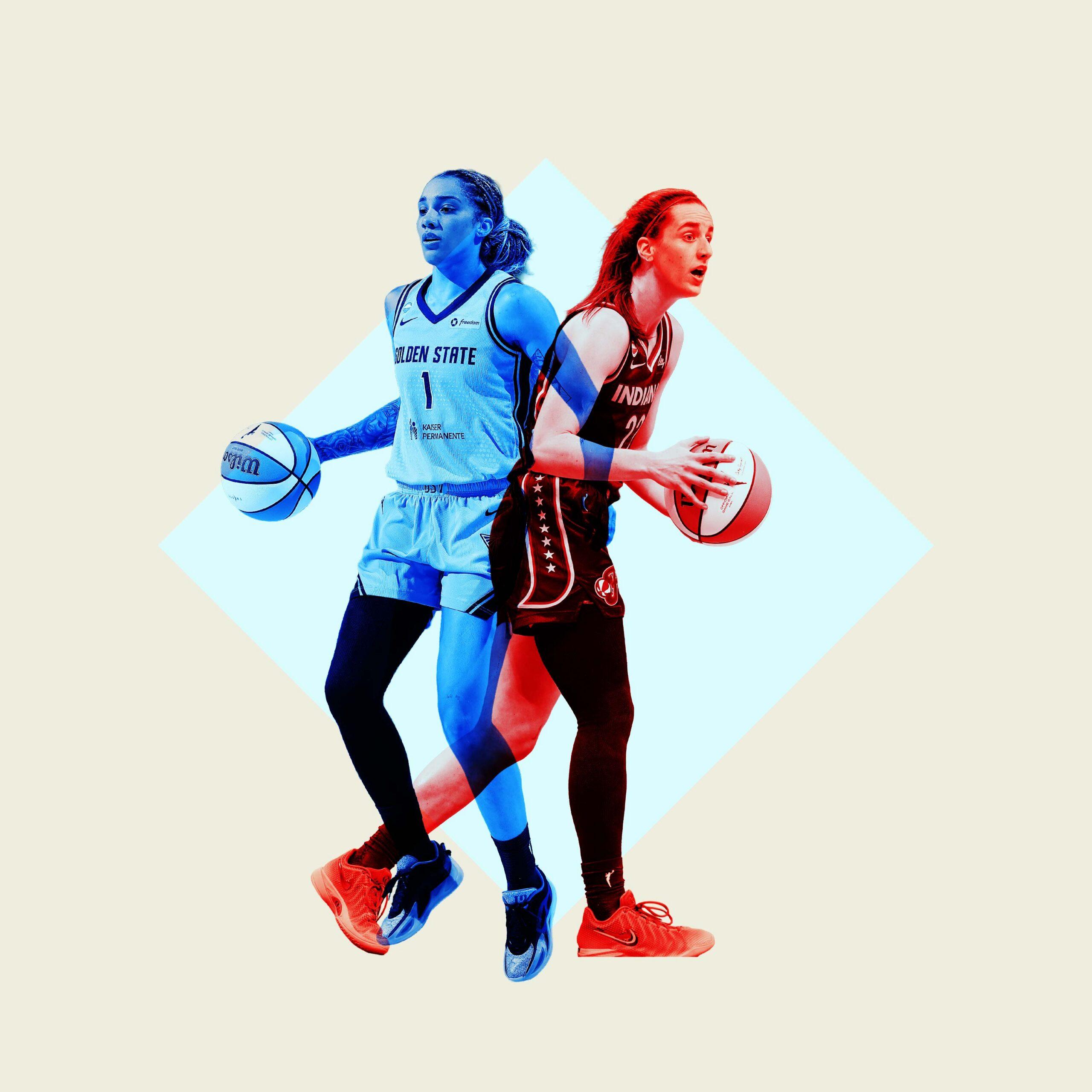

There are times when I am astounded by the scope of the forces the WNBA (and, more specifically, Caitlin Clark) has unleashed. This past week was one of those times, with the Golden State Valkyries—the WNBA’s central queer utopia—taking a 2-0 series lead over the Las Vegas Aces while the Indiana Fever simultaneously underwent a public racial reckoning via the team’s exit interviews.
This is the whiplash of being a WNBA fan. One of the league’s best stories—an expansion franchise is on the verge of making the WNBA Finals in year two—is occurring concurrently with one of its worst, an ugly reminder of the racism, resentment, and division that have accompanied the league’s explosive growth.
There is, of course, much geographical and ideological distance between Golden State and Indiana. That the league has tried to contain these two competing visions is one of the many ways it reflects American polarization—and why it’s become such a potent vessel for America to argue with itself. I used to wonder whether the WNBA would find itself perpetually trapped in an endless loop of conflict. On Wednesday night, I experienced the sensory onslaught of “Ballhalla”—what fans call the deafening lavender cauldron of the Chase Center—for myself. The next morning, I watched former Fever guard Sydney Colson shed tears while describing the league’s past activism. After witnessing and wrestling with both, I believe a settling force is on its way: free agency and a wealth of new options, on teams with cultures that no longer force players to navigate these contradictions.
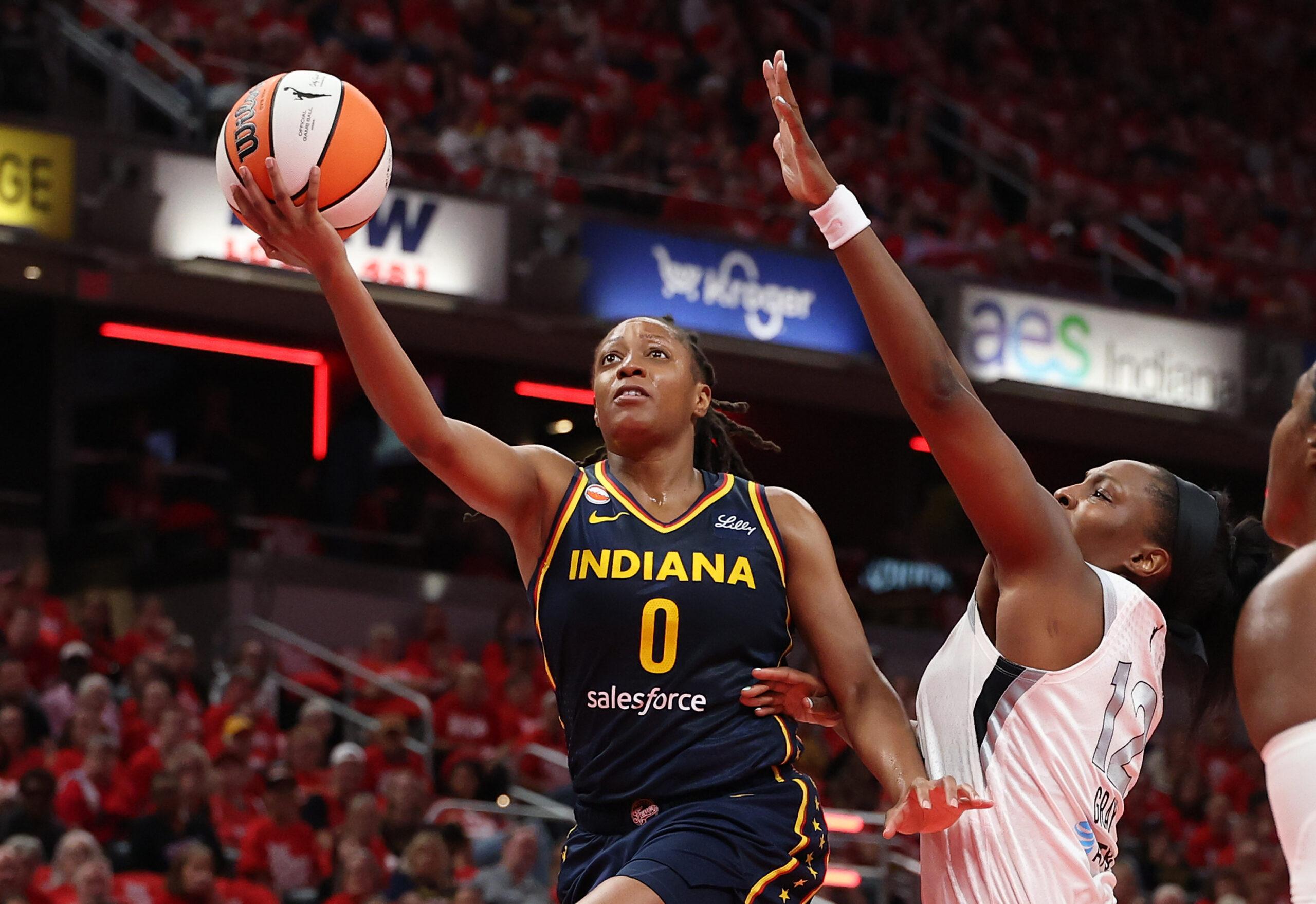
Kelsey Mitchell shoots during Game 2 of the first round of the WNBA playoffs
“Balhalla’s been my safe place. That’s what gives me confidence. It gives us all confidence because we get to be our authentic selves here. … There’s some magic in this building. I swear there is.” —Gabby Williams, after the Valkyries eliminated the Wings in Round 1
“Showing up every day to compete for fans that may or may not like you is hard. … I think this organization is unbelievable, man, but I think that when it comes to really trying to be yourself, it hasn’t always been easy.” —Kelsey Mitchell, during her Indiana Fever exit interview
These quotes were delivered within 24 hours of each other, from the lips of All-Stars in the same league who are going through vastly different lived experiences right now.
The Valkyries are the platonic ideal of what some WNBA fans have always thought was possible: an inclusive, vibrant, queer utopia where sports and community intersect. On Wednesday night, when they took a 2-0 lead over the Aces, it felt like a mix between a pride parade and a playoff game—mostly because that’s what it was. The dreams of members of the old guard like Colson, who have always hoped that the WNBA would be more than a league but a tool for activism and expression, don’t feel so unrealistic when you enter Ballhalla. In fact, that activist spirit of inclusion is an organic and inextricable part of being there, and its reverberations not only are felt through the stands but also extend to the players themselves. It’s not some abstract marketing gimmick. It’s effervescent, felt, and worth nourishing and protecting. It’s also lucrative. The Valkyries are the first women's sports franchise to be valued at a billion dollars, and they generated $100 million in revenue this regular season alone. Not only has authenticity been profitable for them, but it’s also a potential advantage in free agency, where they’re in a position to create space for two max contracts this offseason.


Mitchell’s comments, on the other hand, awkwardly came after Fever COO Amber Cox’s impassioned (and somewhat forced) defense of the fans at Gainbridge Fieldhouse, reminding reporters that no fan inside the arena has ever been found to have violated the code of conduct. “The attacks on our fan base have no basis in reality,” Cox said, “and they need to stop, especially with members of the media.” It felt like an attempt to separate the online trolls from the real-life fans, who understandably bristle at being lumped in with racists.
I understand that instinct. I am one of the fans for whom Clark was an WNBA gateway drug. Some people just want to watch basketball, and their attachment to Clark has nothing to do with her race or sexuality and everything to do with how it feels when a human being performs the extended miracle of putting a round ball into a cylinder from far away, over and over again.
But Cox’s timing couldn’t have been worse, and it suggests she’s out of step with the feelings of Mitchell, her star free agent. That she’s disconnected, at best, or indifferent, at worst. Multiple former Fever players, including Bri Turner and Colson, have spoken out in response to that press conference. Natasha Harris, the wife of Fever assistant coach Briann January—the latter of whom felt the wrath of the internet when she got into a public argument with Clark—posted an Instagram story saying, “The allegations can’t be beat and the receipts have been kept!” Ultimately, after a year in which the Fever’s team-building abilities have justifiably come into question, the entire press conference felt like an attempt to save Cox’s job. Ironically, it might be the final nail.
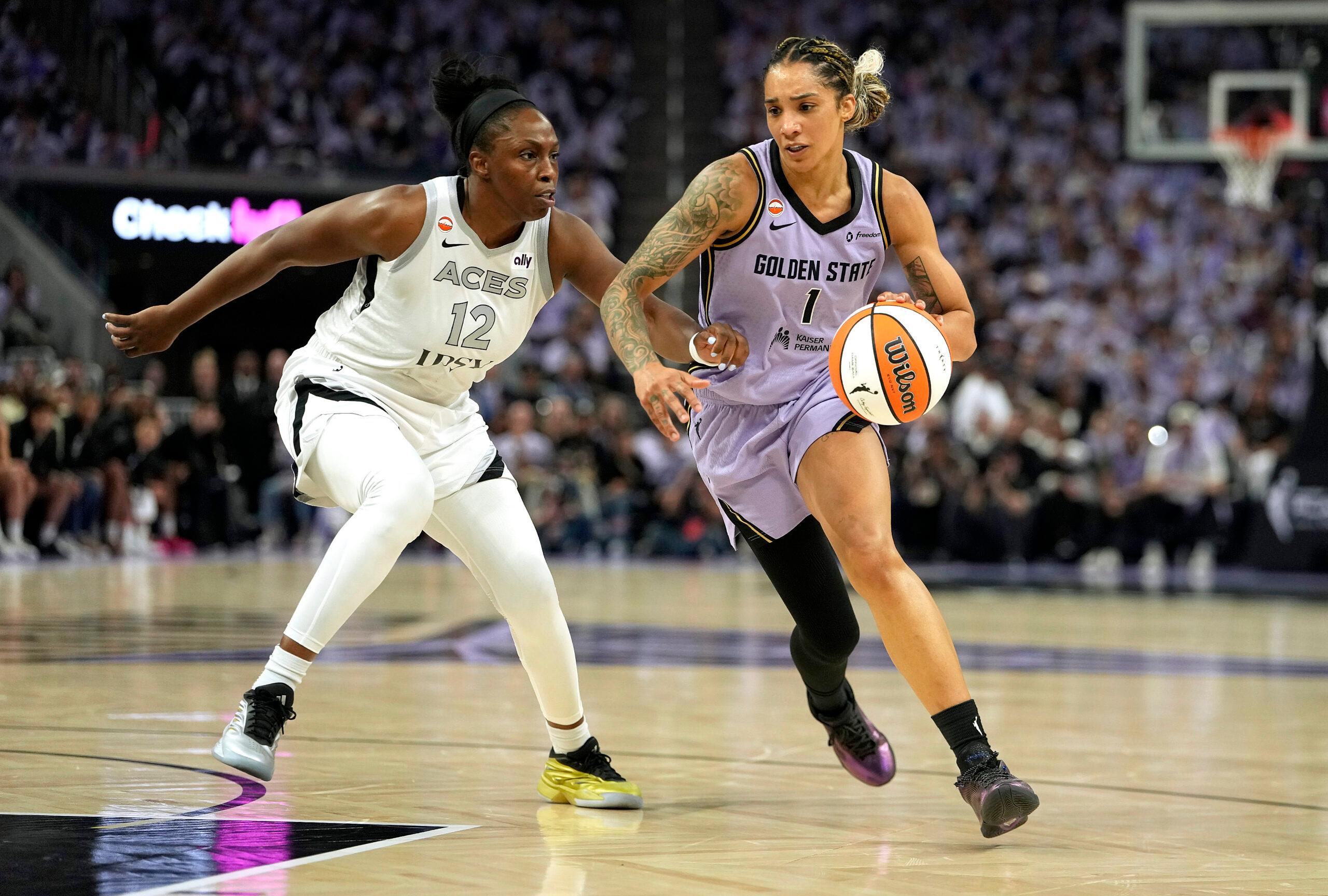
Gabby Williams in Game 2 of the semifinals
In the WNBA, the line between the online and the offline experience has never felt more porous. Mitchell can hear MVP chants at the arena and then go home to find Fever fans harassing her in her DMs. If you’ve been subject to online harassment, you know how easily it can seep into your offline life. The internet is not real life until it is. The more nebulous a potential threat, the more ubiquitous. Years of this is long enough for perceptions to calcify.
To be fair, Fever players have also faced harassment at the hands of other fan bases. Myisha Hines-Allen has been called a race traitor (and worse) for doing what any enforcer would do. Raven Johnson, after being shamed by fans online, apologized for simply laughing along beside Hines-Allen in a press conference. Either way, being Black on the Fever has proved complicated.
With a new CBA set to reshape the league’s financial landscape, players are poised to have more money, more options, and more leverage than ever before. For years, WNBA players had to make compromises about where they played and what they were willing to tolerate. But as salaries rise and expansion creates more opportunities, the calculus changes. Teams won't just be competing to offer players the best basketball situation. They'll also have to convince them that their culture is worth being a part of.
Mitchell is now at that crossroads as an unrestricted free agent for the first time in her career. I can understand why, after three years of experiencing the highs and lows of being in Clark’s orbit, Mitchell could simply be exhausted and want to go elsewhere. She has gained a lot from her proximity to Clark, including endorsements and fame, but the WNBA’s new salary cap has evened the playing field for the other teams. To boot, while the league may be less popular without Clark, her absence is no longer an existential threat.
Mitchell, or any other free agent, could conceivably go elsewhere without sacrificing what they've gained. The concessions asked of players in fraught team situations—from compartmentalizing their feelings to shutting off parts of themselves—are compromises that make sense only when there are no other options. For free agents like Mitchell, the options are plentiful, especially with more expansion teams incoming.
For the Fever, this is both a human problem and a recruiting problem. The Valkyries are not a one-off. Other teams, like the Toronto Tempo and Portland Fire, are trying to follow their blueprint of institutional competence and organic fan engagement. Golden State itself is a spinoff of what the Liberty have built. From a purely Machiavellian perspective, in an era of more empowered free agency and less restricted movement around the league, teams should be protecting their players and creating an atmosphere where they feel safe and welcomed.
It’s absurd and fascinating, one of those ripple effects you couldn’t script, that the same logo 3 that convinced Joe Lacob to pay the Valkyries’ expansion fee could also inspire the racist, homophobic, and misogynistic insults lobbed at some WNBA players. The same shot garners very different responses, some magical and some poisonous. Three seasons into Clark’s WNBA career, nobody really knows what to do with any of it.
It’s hard not to wonder what Clark makes of all of it. From very early on, it was clear to me that she cherished the opportunity to use her talent to spread the gospel of women’s basketball. In her final season at Iowa, it gave her a clear sense of purpose beyond the highs and lows of winning and losing. It became her North Star, and I think that to stay true to that mission, she tried early on to appeal to as many people as possible. She was also young, still finding her voice. In that time, her personality became a blank canvas on which bad-faith actors projected their racist, homophobic, and misogynistic beliefs. Now, it seems like no matter how many times she tries to wipe it—she has condemned people using her name to spread racist agendas multiple times just this season, including in her exit interview on Thursday—it’s become a stain she can’t get off.
“It makes you upset because you care about your teammates so much and you don’t want any of them to go through something like that,” Clark said in her exit interview. “As far as people that have used me to demonstrate racist rhetoric or hate or discrimination, that’s not something I stand for. That’s never been something I’ve stood for. … It’s not how I was raised, so that’s really disappointing when people do that. … It makes me upset, makes me sad, makes me really disappointed because that’s not who I am.”
The irony: The WNBA looks more fun than ever. This season, the Washington Mystics were making TikToks by night and drawing charges by day. Olivia Miles and Gabby Williams have become folk heroes for their respective cities. Natisha Hiedeman, one of the StudBudz, has been organizing run clubs in Seattle. ATL Barbie just won Defensive Player of the Year. The Fever, meanwhile, remain bogged down by the very culture-war noise they’ve tried to block out. Until they reckon with it, the greatest beneficiaries of the Caitlin Clark effect may be elsewhere in the WNBA.