The NFL’s Quarterback Rooms, Ranked
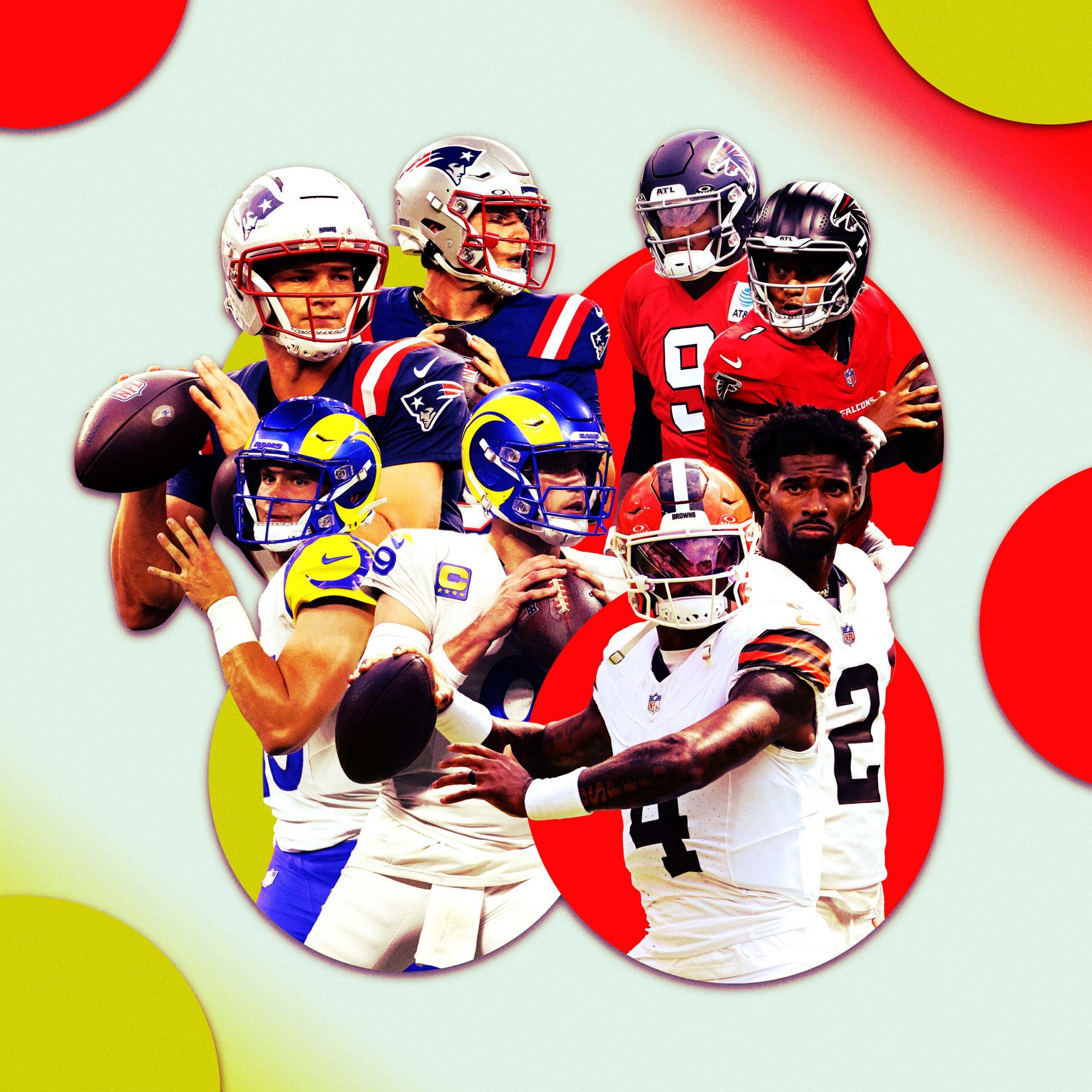
Only a handful of teams will be lucky enough to have their starting QB play the entire season. Which teams have invested in a backup and are built for long-term success at the most important position in football?The NFL’s Quarterback Rooms, Ranked
Only a handful of teams will be lucky enough to have their starting QB play the entire season. Which teams have invested in a backup and are built for long-term success at the most important position in football?
In today’s NFL, it simply isn’t enough to invest only in a starting quarterback. But there is no one-size-fits-all approach to building a quarterback room. Some teams value young players. Some teams prefer the experience of a veteran former starter. Some prioritize a QB2’s skill set so that the offense won’t have to change if the starter goes down. And of course, some teams seem like they have no backup plan at all. But the reality is, in the modern day, backups are going to play. The Josh Allens—the elite starters who never miss a game—are exceedingly rare.
Last season, 67 quarterbacks took at least 20 dropbacks during the regular season. Three teams—the Chiefs, Colts, and Vikings—had four quarterbacks take at least one dropback!
Just 11 teams had the same starting quarterback the entire regular season, and one of those, the Broncos, lost their starter to a broken ankle before the AFC championship game. Jarrett Stidham seemed like a great QB2 until he wasn’t when it mattered most.
So rather than simply ranking the league’s starters ahead of the 2026 season, The Ringer has gone deeper and looked at entire quarterback rooms, taking into account the quality of the starter, the contracts, the players’ ages, and their injury histories to assess every team’s overall investment in the most important position in sports. Which teams have spent their quarterback money wisely? Which simply have no plan? These are the best and worst QB rooms in the NFL.

1
New England Patriots
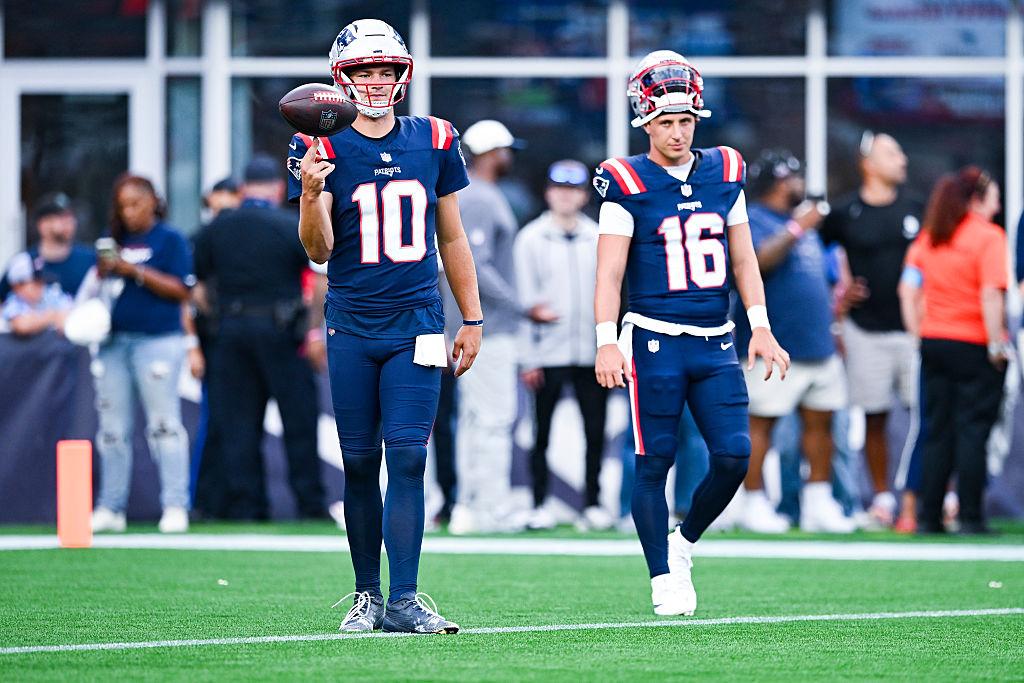
Drake Maye and Tommy DeVito
Starter: Drake Maye, $9.2 million APY, three years remaining
Backup: Tommy DeVito, $2.2 million APY, two years remaining
The Patriots struck gold when they drafted Maye in 2024. In his second season, he was an MVP finalist and led his team to an AFC championship. (Maybe we shouldn’t talk about his performance in the Super Bowl.) Last season, Maye led the league in passer rating (at 113.5, well above the 92.4 league average since he was drafted), completion rate, and yards per attempt. He was simultaneously efficient and explosive—and that doesn’t take into consideration how devastating he was as a scrambler, ranking fourth in expected points added when he tucked and ran. Anytime the Patriots needed a play last regular season, Maye made it. Even if he never reaches a near-MVP level again, he’s playing on a rookie deal with a cap hit under $10 million in 2026 and is under team control for at least three more years (assuming New England exercises his fifth-year option).
Now, as Maye heads into year three, New England has built the ideal quarterback room: It has an elite, young starter on a rookie deal and a quality, experienced backup making less than market rate.
That backup plan is what puts the Patriots at the top of this list. DeVito is on a relatively cheap deal; he will earn a total of $4.4 million over the next two years. That’s less than backups like Kenny Pickett, Carson Wentz, and Trey Lance are making this year—and I’d argue that DeVito has been as good as or better than those three when he’s been on the field. DeVito isn’t a special talent, but in his time with the Giants, he proved that he can be a relatively efficient decision-maker and an accurate passer, particularly on underneath routes. He should be able to at least keep the offense afloat if Maye misses time. If New England’s top two quarterbacks play good football in 2026 for less than $15 million, this will be the best deal in the league.
2
Los Angeles Rams
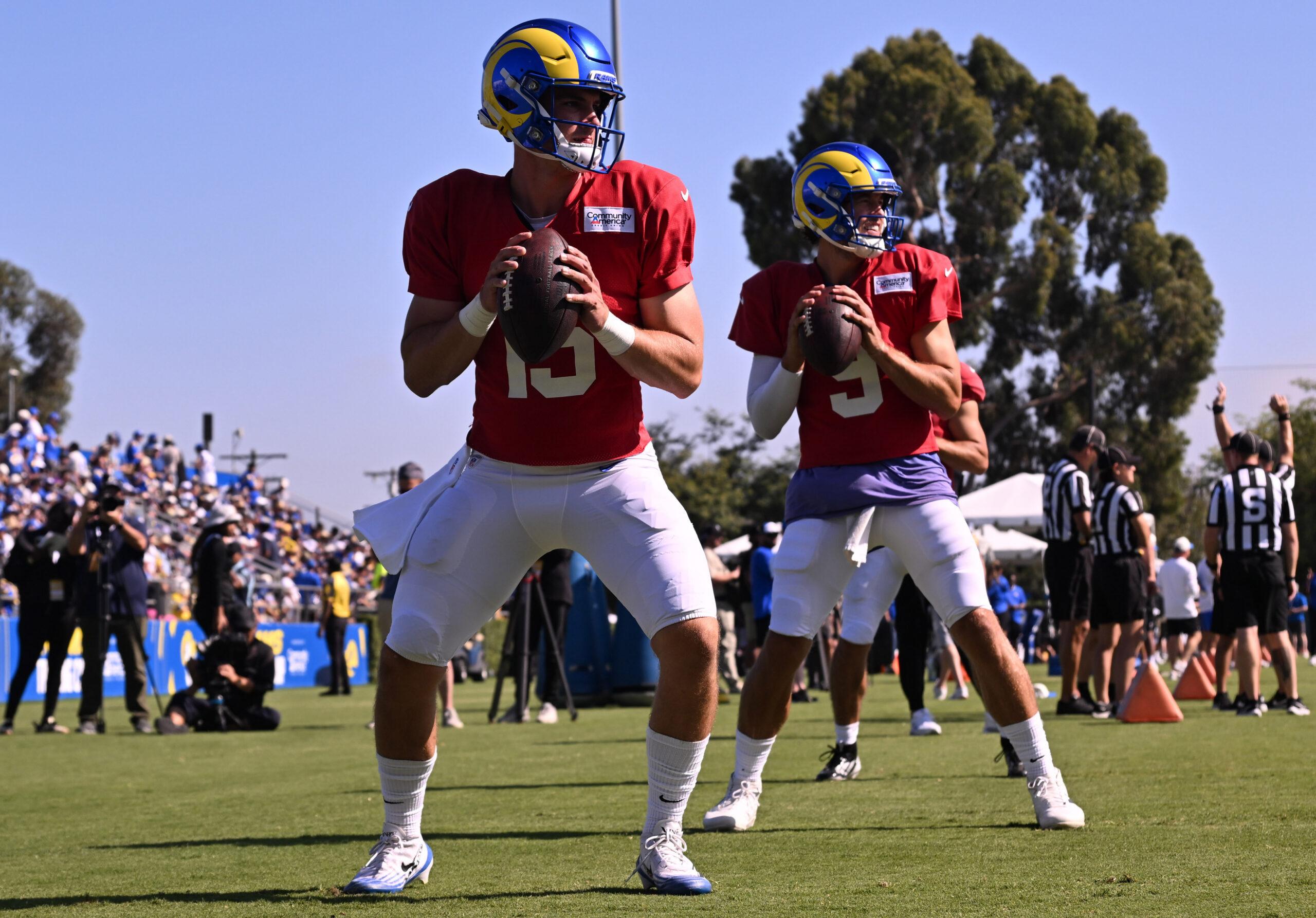
Ty Simpson and Matthew Stafford
Starter: Matthew Stafford, $55 million APY, one year remaining
Backups: Stetson Bennett, $1.1 million APY, one year remaining; Ty Simpson, $6 million APY, five years remaining (including a fifth-year option)
We don’t have to relitigate whether the Rams made the right move in using a first-round pick on Simpson, but if we’re evaluating the pure talent the Rams have at quarterback and what they’ve invested in the position, no team is better prepared to transition from one era to the next.
Of course, the biggest reason the Rams are ranked this high is because of reigning NFL MVP Matthew Stafford, who ranked third in EPA and led the league in explosive pass rate last season. Stafford is now near the top of the QB market following his recent contract extension. He’s making $40 million in cash in 2026, and his cap hit of $48.2 million is the highest in the league this season. But his track record indicates he’s worth the investment, even at age 38. If the Rams are champions again, this year-by-year approach to paying him will have been worth every penny.
Simpson will serve as insurance against injuries or an age cliff for Stafford, and he’ll do so at cost-controlled rates for several years. Even if Simpson doesn’t see the field until 2027 (or later), his $6 million average annual salary ranks outside the top 30 in quarterback earnings. And Los Angeles seems to be taking the longest view possible with Simpson, giving the backup job to Bennett and allowing Simpson to spend potentially the whole year learning Sean McVay’s offense from the sideline.
Using the 13th pick on Simpson may have precluded the Rams from adding more present-day help to the offensive line, but it solidified the quarterback room for now and beyond. It could turn into a genius choice if Simpson becomes an above-average starter down the line.
3
Buffalo Bills
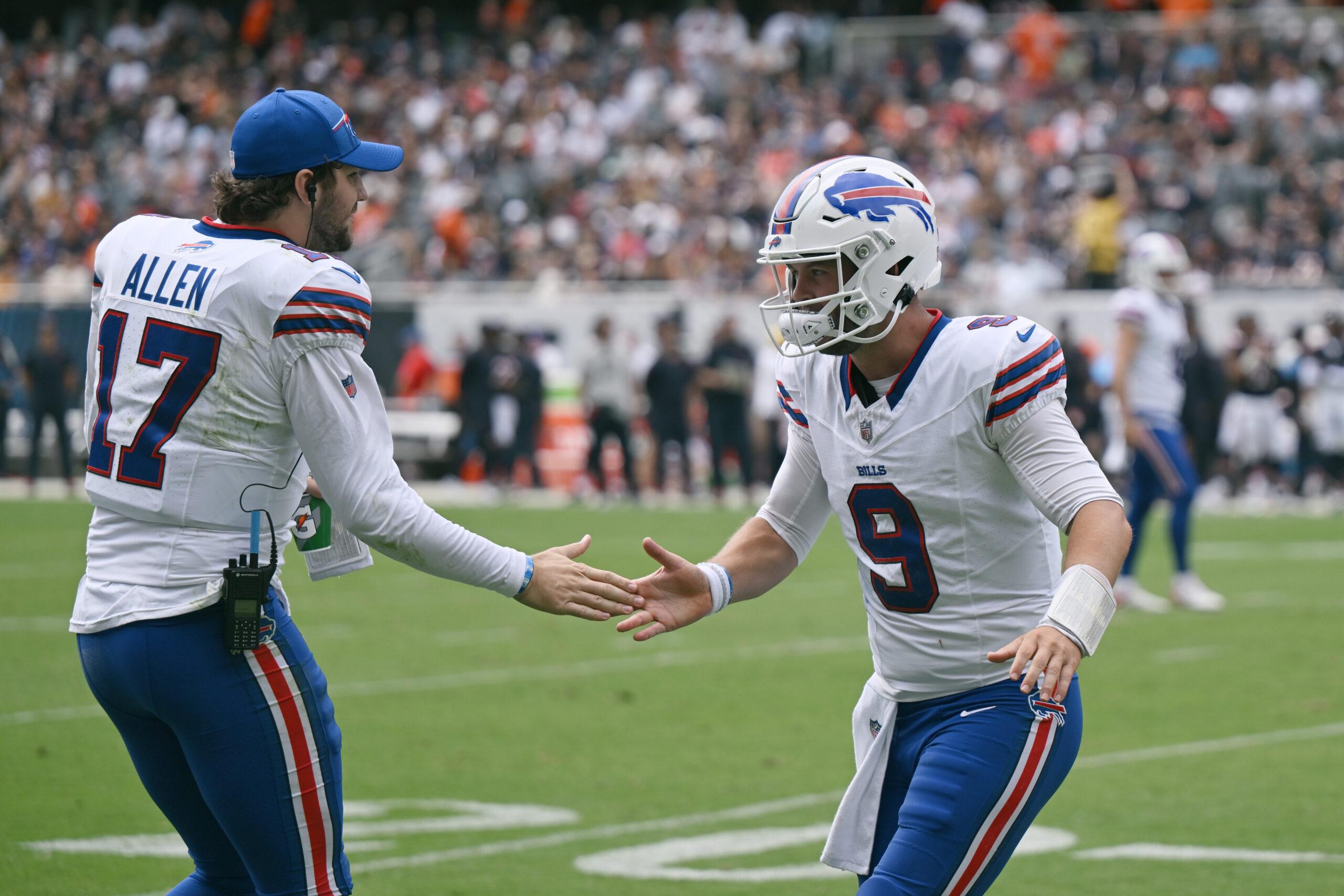
Josh Allen and Kyle Allen
Starter: Josh Allen, $55 million APY, five years remaining
Backup: Kyle Allen, $2 million APY, two years remaining
If your team is paying at the top of the market for a quarterback, you’d hope he can perform at an MVP level or at least have the team in Super Bowl contention every year. Buffalo quarterback Josh Allen does exactly that.
Allen is making $55 million this year, which is essentially tied with four other quarterbacks for the second-highest annual earnings in the league. But when other quarterbacks like Lamar Jackson, Joe Burrow, Jordan Love, and Caleb Williams reset the market in the next couple of years, Allen will be even more valuable relative to his peers, and Buffalo will enjoy the cost certainty that comes with him being under contract through 2031.
Allen has been remarkably durable during his NFL career, missing only five games—and none since 2022. That consistency has made it easy to overlook the backup position. This year, the Bills don’t have much money or experience in that spot. Kyle Allen is back for a two-year stint in Buffalo as QB2, replacing Mitchell Trubisky (who’s now in Tennessee). Kyle has been in the league since 2018 but hasn’t made meaningful appearances since 2022, and his career passer rating is just 82.1—the NFL average in 2025 was 91.4. The gap here between the two Allens feels massive.
4
Kansas City Chiefs
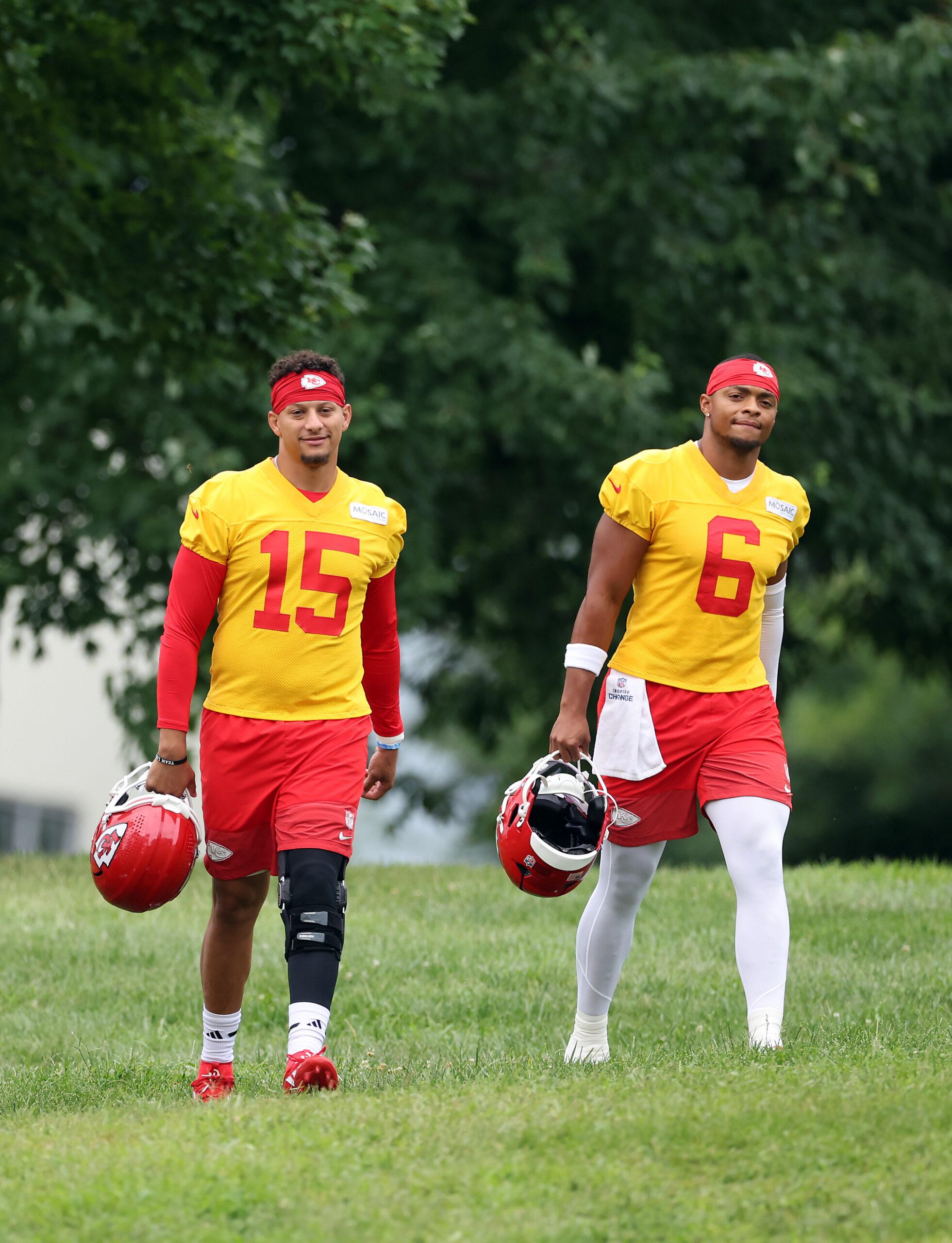
Patrick Mahomes and Justin Fields
Starter: Patrick Mahomes, $63 million APY, eight years remaining
Backup: Justin Fields, $3 million APY (the Jets are paying the rest of his $20 million salary), one year remaining
If this were a ranking based only on the starting talent, I might have convinced myself to put Kansas City in the top three. But until I see new evidence in the regular season that Mahomes is back to his old self after his return from a torn ACL and that the Chiefs offense can rediscover a consistently dynamic element, I’m going to exercise some restraint.
That doesn’t mean I don’t recognize how incredible Mahomes is when he’s healthy. The team has done little to help him lately. Over the past two seasons, the Chiefs’ offensive line has been shaky, he’s gotten little to no support from the run game, and the defense has regressed. Mahomes was special enough during the 2024 season to drag his team to a Super Bowl appearance. Even when the team’s results were more mixed last season, he played like a top-10 quarterback before injuring his knee in December.
Mahomes agreed to a contract extension this summer that will effectively ensure he plays his entire career in Kansas City. The sticker shock of the totality of Mahomes’s $504.75 million contract—yes, that’s half a billion dollars—doesn’t shake me. He’s the league’s highest-paid player this season, with a salary of $64 million, and the next few seasons of the deal are effectively guaranteed. Plus, he has a no-trade clause. This is a hefty price for Kansas City to pay, and this deal is not nearly as team-friendly as his last mega-extension, which paid him $45 million annually. But Kansas City has gotten ahead of what could be a drastic shift in the market after this season as Lamar Jackson and Joe Burrow look for new contracts and young stars like Caleb Williams and Drake Maye become eligible for their first major extensions.
The Chiefs went 0-3 (and were completely uncompetitive) with Gardner Minshew and Chris Oladokun at quarterback after Mahomes’s injury last season. They’re going into this season with a new but uninspiring backup plan in Justin Fields. The 2021 first-round pick averaged just 6.2 yards per attempt for the Jets last season and took a sack or knockdown on 21.4 percent of his dropbacks. The Jets couldn’t build a coherent passing game around him and received no positive returns on their $40 million investment. The Chiefs might be getting Fields on a steep discount (they’re paying just $3 million of his $11 million salary after trading for him), but Fields hasn’t put anything on tape to convince me that a team with aspirations to contend should have him as a backup. While the Chiefs seem confident in Mahomes’s health heading into Week 1, this still feels like a pretty big risk to take at the most important position.
5
Baltimore Ravens
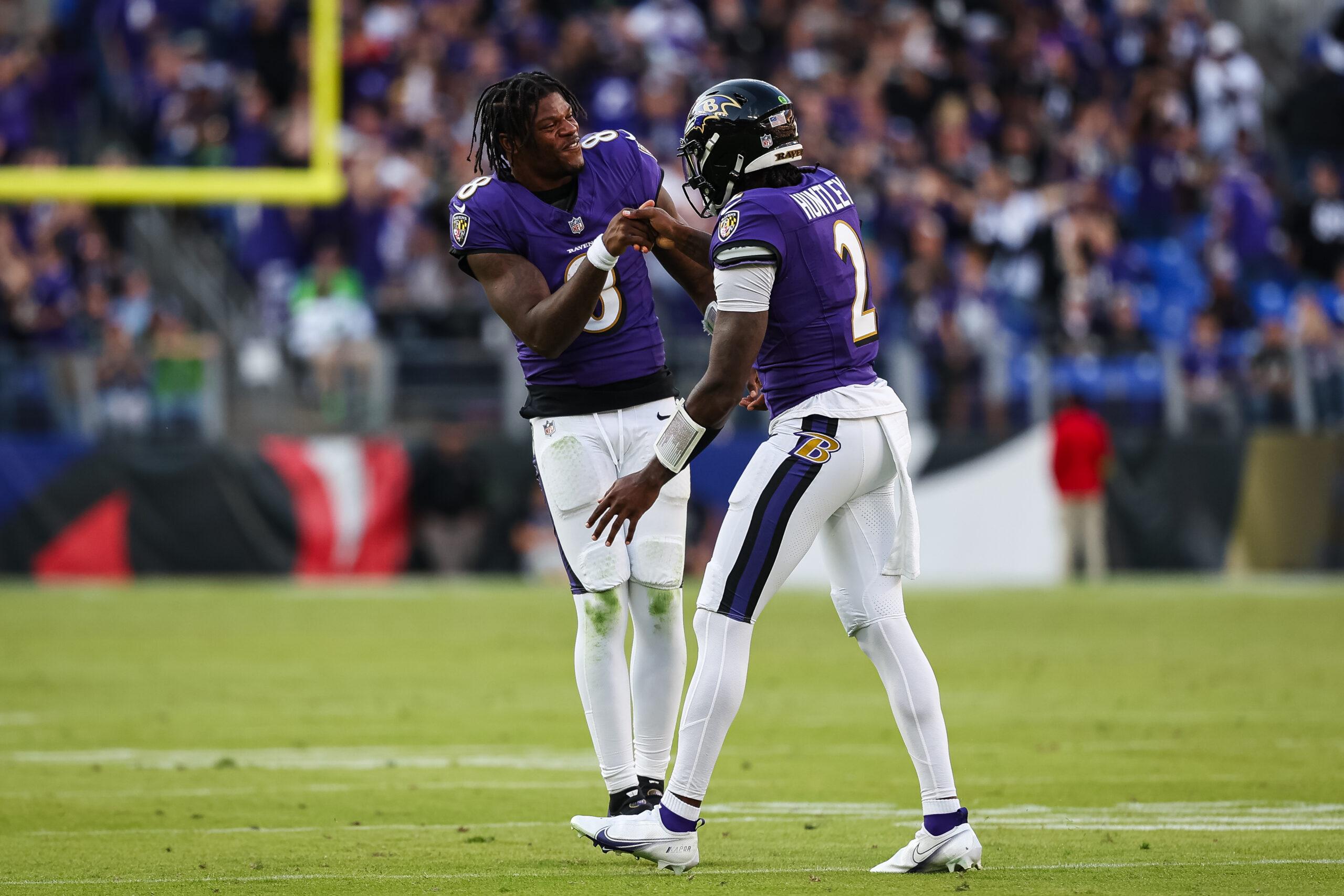
Lamar Jackson and Tyler Huntley
Starter: Lamar Jackson, $52 million APY, two years remaining
Backup: Tyler Huntley, $2.5 million APY, two years remaining
Jackson’s on-field résumé requires no defending. He’s a two-time MVP (and he nearly won a third) and is as singular a quarterback talent as we’ve ever seen. He has yet to turn 30, and he’s already the best dual-threat passer in NFL history.
But when we’re considering the overall value and composition of the QB room here, we need to acknowledge that Jackson could reset the market in the not-too-distant future. Jackson is currently playing on a contract that pays him an average of $52 million per year. That deal runs through the 2027 season, but with an $84 million cap hit next season, there should be urgency to get an extension done. And because Jackson has no-trade and no-tag clauses on his current deal, Baltimore doesn’t have nearly as much leverage against him as it did when he got the franchise tag in 2023, when drawn-out and dramatic negotiations led Jackson to request a trade. It’s unclear exactly what Jackson’s contract demands will be, but he has enough leverage to push for a deal worth $70 million annually, which would totally reshape the quarterback market.
But for 2026, the Ravens have a two-time MVP who is currently making less than Trevor Lawrence and Jared Goff. That’s a huge win for Baltimore. Backup Tyler Huntley has had plenty of experience filling in for Jackson—he’s gone 5-6 in 11 starts for the Ravens since 2000—and he’s making just $2.5 million per year. Baltimore is getting as good a return on investment on its QBs as any team in the league.
6
Green Bay Packers
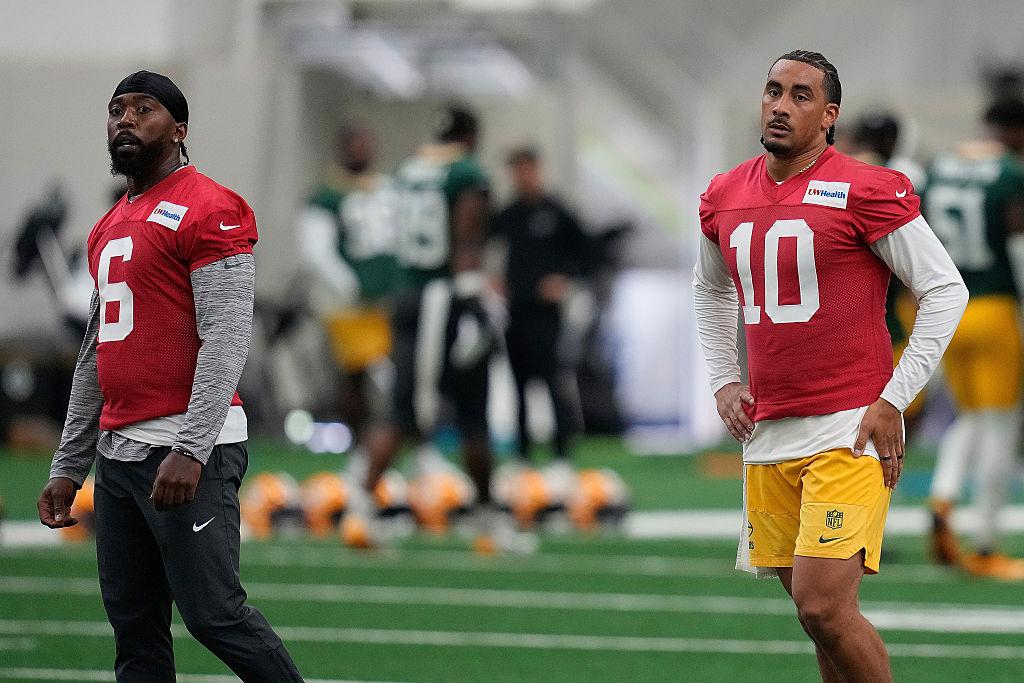
Tyrod Taylor and Jordan Love
Starter: Jordan Love, $55 million APY, three years remaining
Backup: Tyrod Taylor, $2.5 million APY, one year remaining
If this were a ranking based just on which starting quarterback I’d most want to build a franchise around, the Packers would be even higher. Jordan Love is just 27 years old, has as much raw arm talent as any quarterback in the league, and should be in position to take a major leap forward in his third year as Green Bay’s starter. Love has all the makings of a star. He’s making $55 million per year, right in line with peers like Trevor Lawrence, Justin Herbert, and Brock Purdy.
Had we done this ranking in the middle of last season (when quarterback Malik Willis was still on the roster), the Packers’ QB room would have had a good case for a top-three spot. Now, Love’s backup is veteran Tyrod Taylor, a signal that Green Bay wants a more traditional pocket passer at QB2. Taylor doesn’t have Willis’s dynamic playmaking potential, but he’s a savvy veteran with 15 years of experience as both a starter and a backup. And on a $1.3 million veteran minimum salary, he also brings great value.
7
Los Angeles Chargers
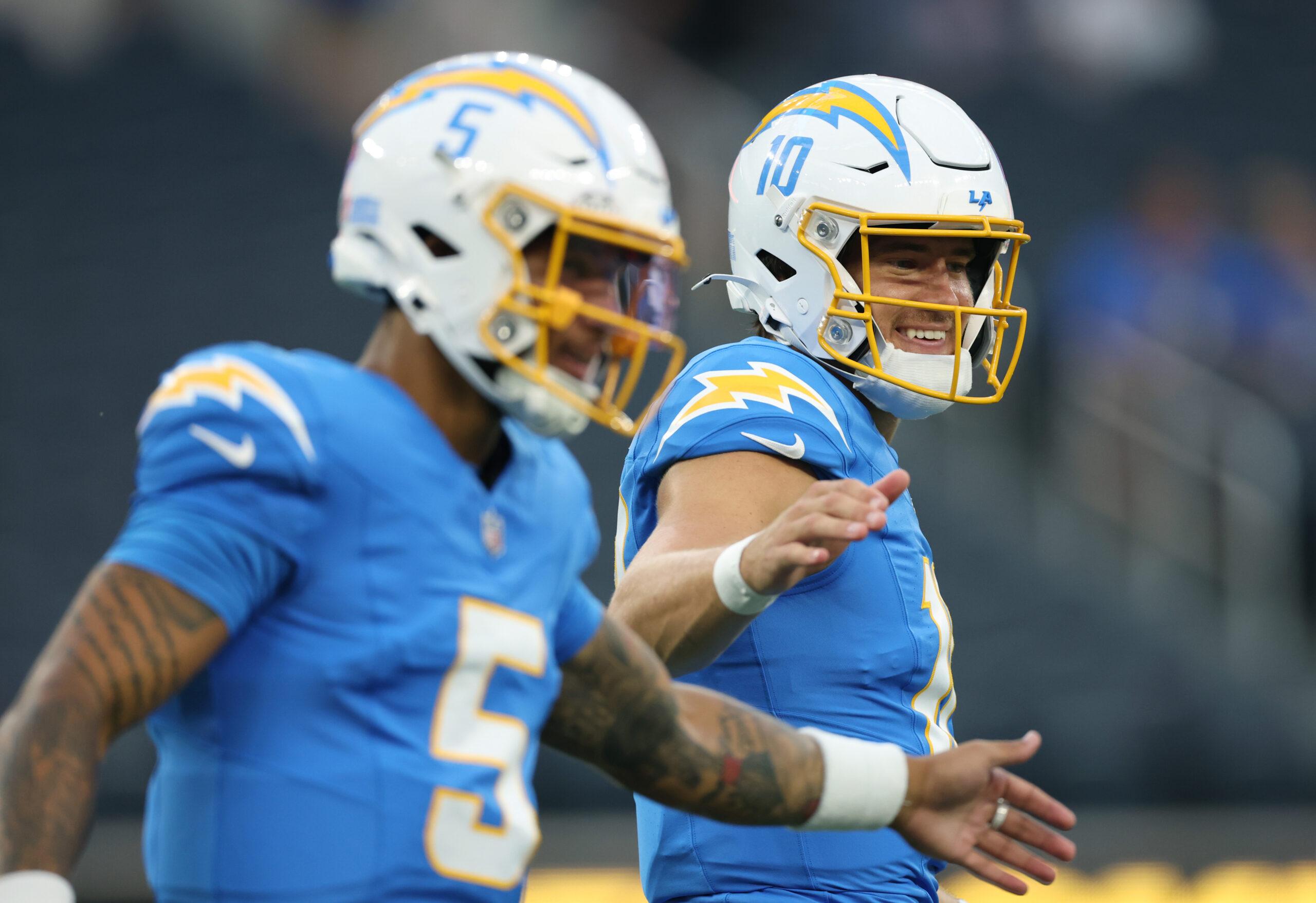
Trey Lance and Justin Herbert
Starter: Justin Herbert, $52.5 million APY, four years remaining
Backup: Trey Lance, $2.5 million APY, one year remaining
Herbert is one of the NFL’s most physically gifted passers, and he’s often been asked to do more with less over the first six years of his career with the Chargers. He’s making an average annual salary of $52.5 million, right in line with the top passers of his generation, and he’s under contract through 2029. With less guaranteed money owed to Herbert later in that deal, his salary might actually seem like a bargain in a few years.
The overall QB plan is questionable, though. 2021 first-round pick Trey Lance, who has bounced from San Francisco to Dallas to L.A., has been a project for head coach Jim Harbaugh, but in limited preseason work, we haven’t seen much evidence that Lance is developing as a pocket passer. Lance is probably a low-risk, high-reward investment, and he’s making less than Carson Wentz is as the Vikings’ QB3, but having Lance (and raw practice-squad QB DJ Uiagalelei) as the backup plan feels like a major risk considering how often Herbert takes a beating.
8
San Francisco 49ers
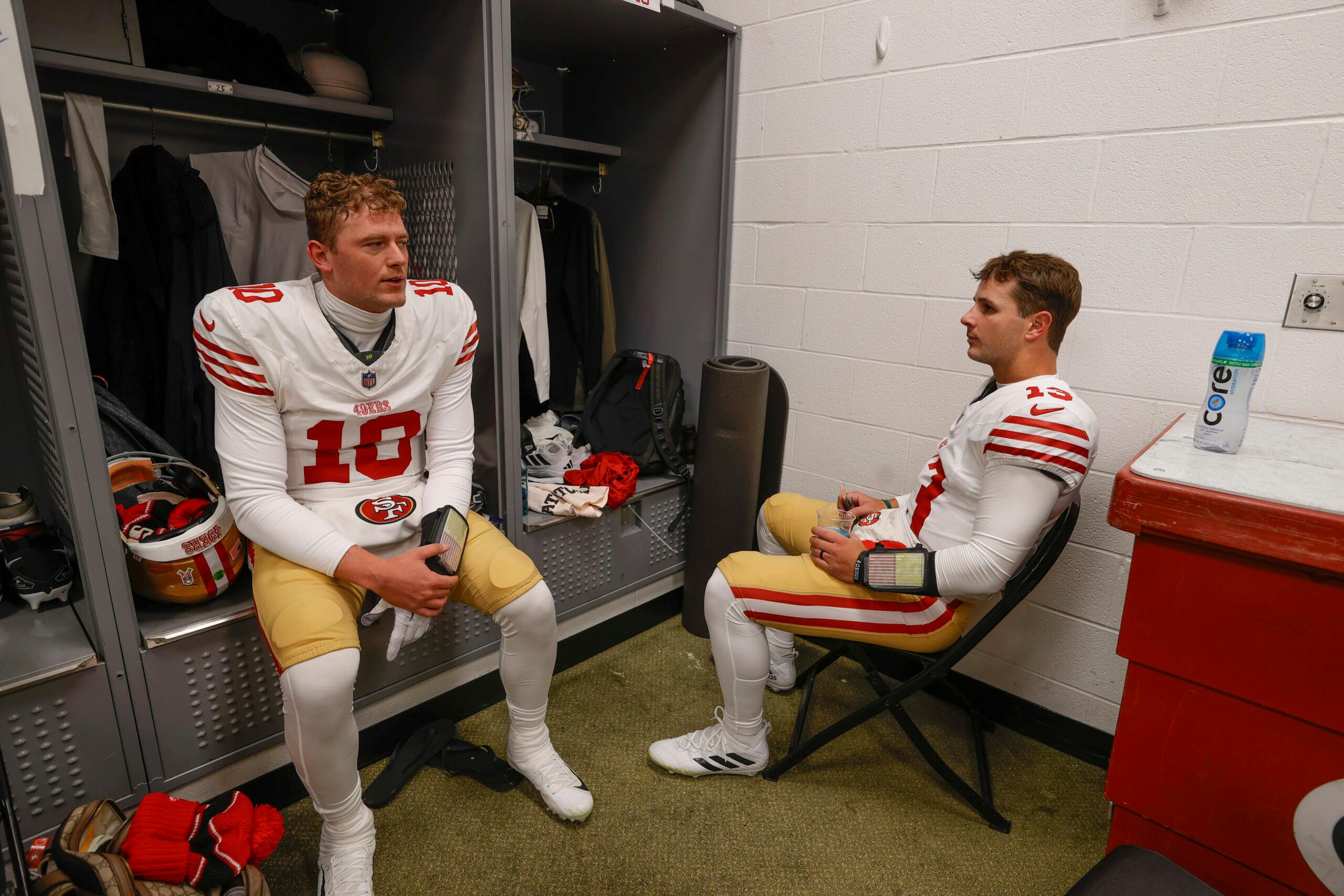
Mac Jones and Brock Purdy
Starter: Brock Purdy, $53 million APY, five years remaining
Backup: Mac Jones, $4.2 million APY, one year remaining
For the vast majority of franchises, the failed transition from Jimmy Garoppolo to Trey Lance would’ve gotten the head coach and/or general manager fired. San Francisco kept both, and somehow, the franchise came out of that wasteland with a better starter than either of them: Brock Purdy. Now, they have an even more talented quarterback depth chart after the addition of backup Mac Jones in 2025.
Purdy has been an efficient player within Kyle Shanahan’s scheme, getting the ball out quickly and extending plays to find explosive gains when receivers aren’t immediately open. Purdy is not a superstar-level talent (and Shanahan is certainly doing the heavy lifting to set his QB up for success), but Purdy is as good a scheme-dependent quarterback as you can find.
When Purdy was on his rookie deal, he offered the best value in football. Now, on the extension he signed in 2025, he has an annual contract value of $53 million (sixth highest among quarterbacks), right in line with the guys you expect to have their teams in playoff contention every year. Jones, meanwhile, has settled into a new role as arguably the best backup in the league, which he proved last year when he went 5-3 and kept the 49ers offense afloat while filling in for an injured Purdy. For just a $3 million cap hit, San Francisco has a passer it can trust to get the ball out quickly and play within the structure of Shanahan’s scheme. San Francisco is set to make another playoff push in 2026 and has one of the best insurance plans behind its starter if injuries plague this roster again.
9
Chicago Bears
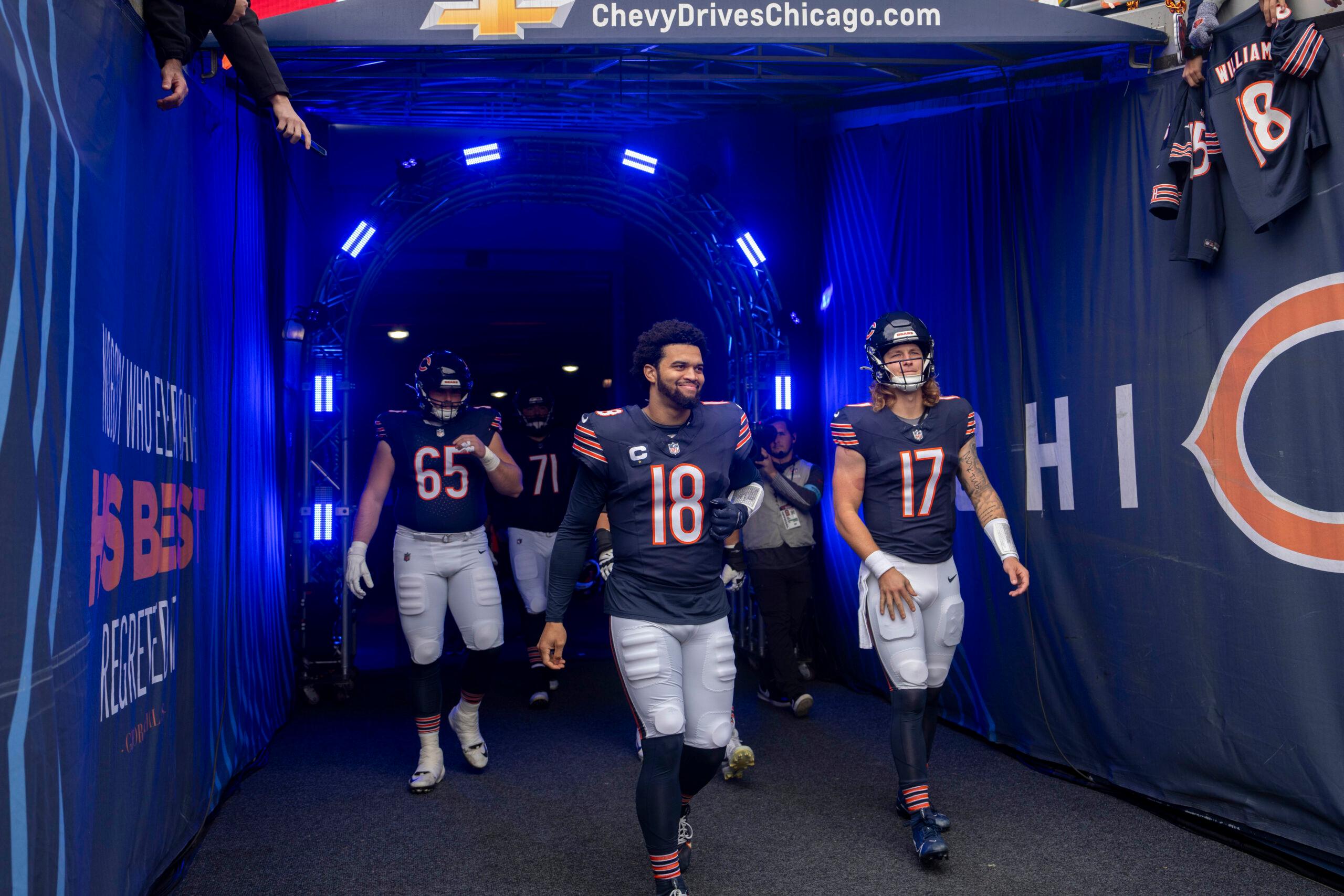
Caleb Williams and Tyson Bagent
Starter: Caleb Williams, $9.9 million APY, three years remaining (including a fifth-year option)
Backup: Tyson Bagent, $5 million APY, two years remaining
My heart tells me to watch Williams’s sizzle reel and trust that with Ben Johnson, Williams’s best days are in front of him. But my head won’t let me forget his inaccurate passes, the inconsistent decision-making, and how much heavy lifting Chicago’s run game did for the offense last season before Williams’s hot streak began.
Heading into the third year of his rookie deal, Williams counts for just over $10 million against the Bears’ cap and ranks 24th in quarterback salary. And after proving himself as a big-time clutch performer and winner in the postseason, he’s bought himself some extra time to develop and fix some of those nagging down-to-down issues.
Behind Williams is Bagent, who might be good enough to become an average starter later in his career. I wouldn’t be surprised if he lands on my watch list of candidates who could get dealt at the trade deadline. He’s shown good accuracy and pocket management in the preseason, and he is under contract with the Bears through 2027. If another team is able to acquire Bagent, it’d be adding a young and promising quarterback who has only $4 million in contract guarantees and a cap hit below $5 million in each of the next two seasons.
Chicago fans should feel great about the QB room as long as Williams and Bagent are on this roster together.
10
Cincinnati Bengals
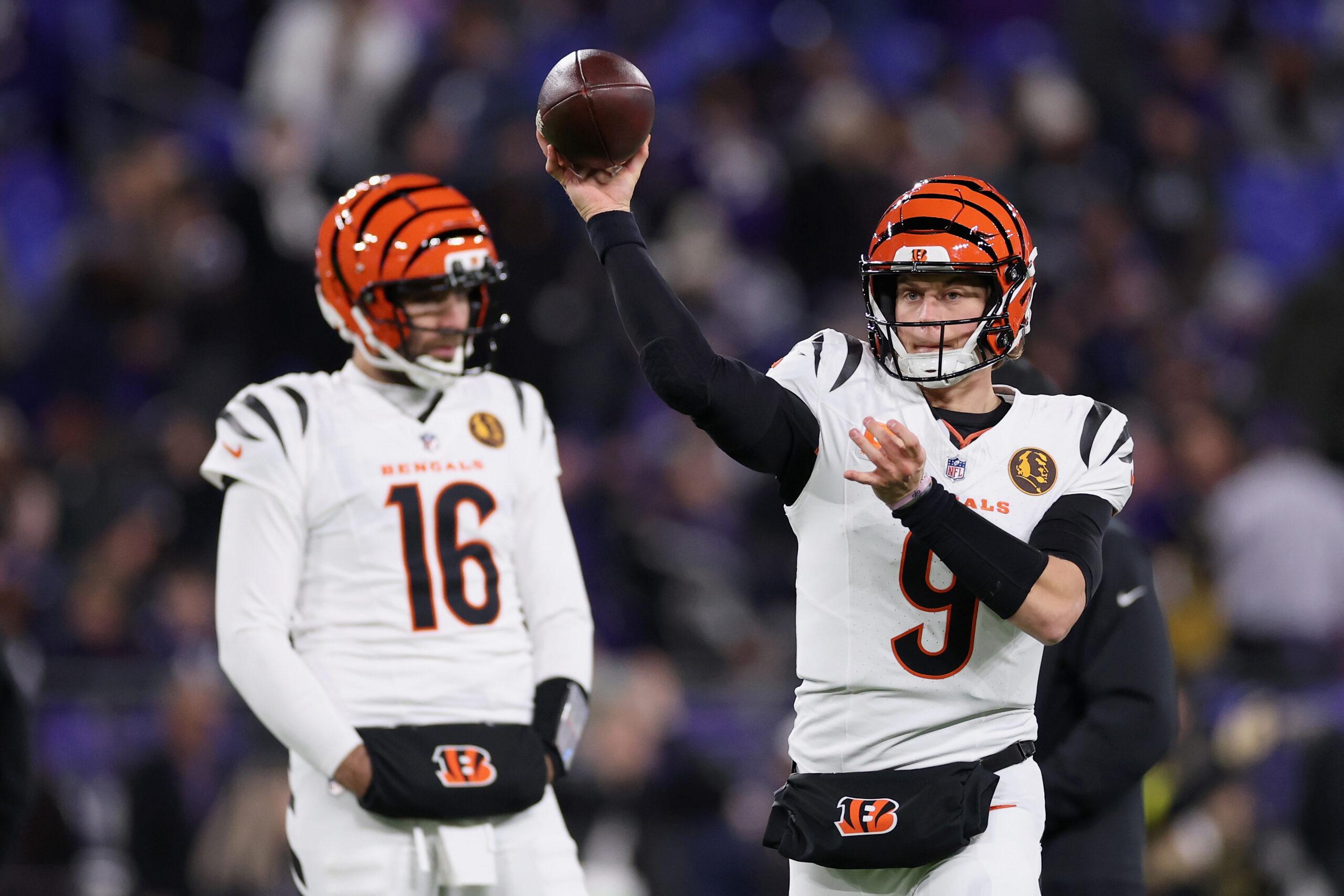
Joe Flacco and Joe Burrow
Starter: Joe Burrow, $55 million APY, four years remaining
Backup: Joe Flacco, $6 million APY, one year remaining
Burrow is an established postseason force, but he hasn’t ever seriously factored into the MVP or All-Pro conversation. And after three consecutive seasons of missing the playoffs (including two in which Burrow suffered injuries), it's fair to wonder whether he’ll deliver a return on his current $275 million deal.
Cincinnati’s backup plan is confusing. The Bengals have wisely put veteran pocket passers behind Burrow, himself a pocket passer, for the sake of scheme continuity, but the 41-year-old Flacco no longer provides much upside. He was a sack and turnover machine at times last season. And Cincinnati’s third quarterback, 40-year-old Josh Johnson, puts the “journey” in journeyman. Flacco’s $6 million salary is a huge overpay relative to his performance on the field, and the $1.5 million for Johnson’s veteran minimum deal could’ve been spent on a younger, more interesting developmental option that the Bengals could keep behind Burrow long term.
11
Philadelphia Eagles
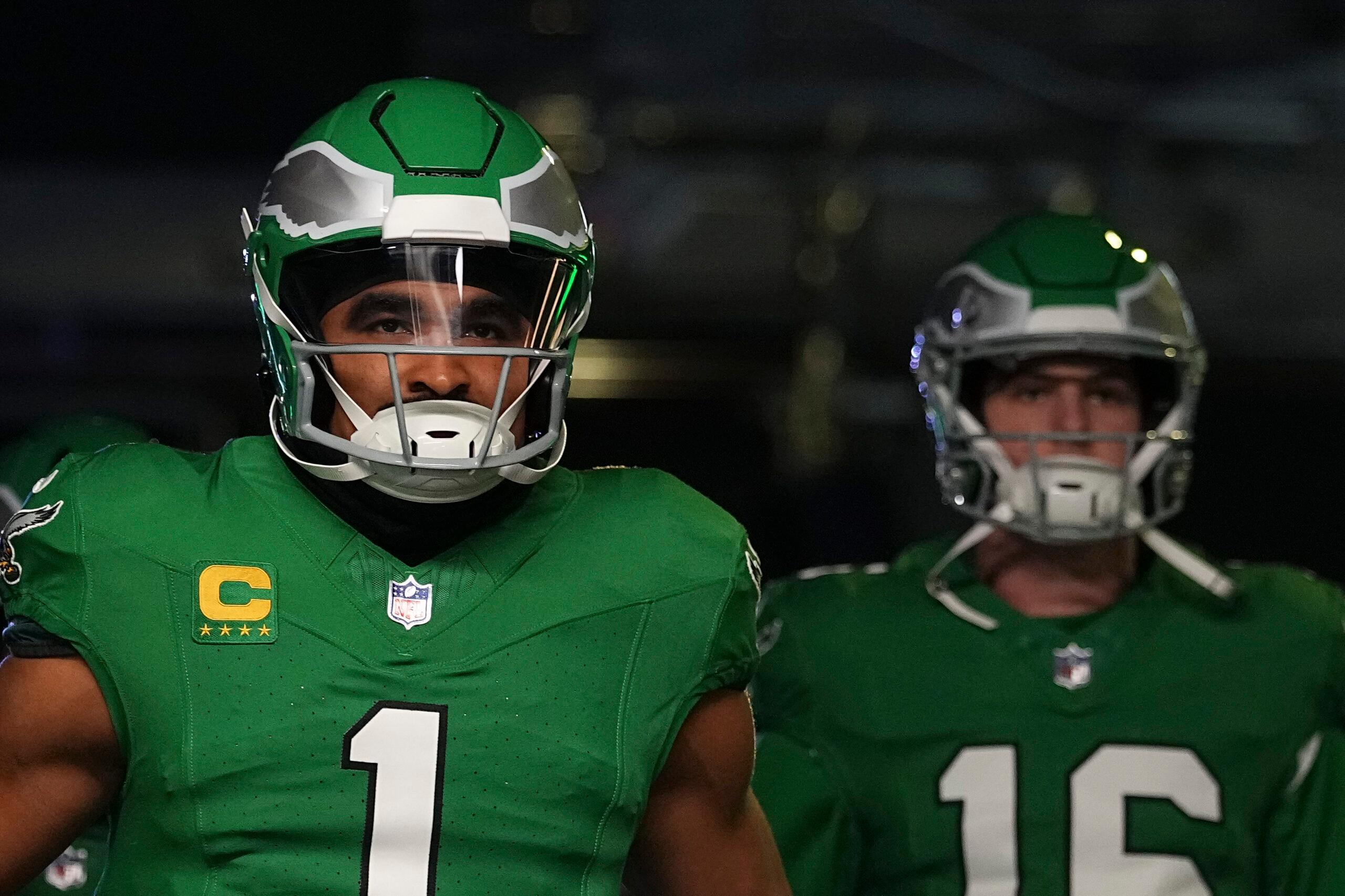
Jalen Hurts and Tanner McKee
Starter: Jalen Hurts, $51 million APY, three years remaining (not including a void year)
Backup: Tanner McKee, $1 million APY, one year remaining
If we’re looking at EPA, Jalen Hurts is coming off the worst season of his career—yes, even worse than his middling 2021 campaign and the 2023 Super Bowl hangover season. We can certainly blame at least some of Hurts’s issues in 2025 on a poorly designed offense that was too simple and predictable. Now he’s got a new offensive coordinator, Sean Mannion, who is installing pieces of the Shanahan-McVay style of offense in the hope of getting the most out of Hurts while his salary is a relative bargain.
Financially, the Eagles’ quarterback room is healthy—for now. Hurts will make $51 million this year, which ranks 12th among quarterbacks. The best part about Hurts’s deal is that it won’t carry a cap hit of more than $47 million in any of the remaining years. This is all part of Philadelphia’s plan to utilize every salary cap trick it can for its most expensive contracts, keeping present-day costs down and trusting that the cap will keep rising year over year as cap hits balloon down the line. GM Howie Roseman has prioritized depth, including at quarterback, where McKee has been this team’s backup for the past three seasons. He has flashed fringe starter potential during limited preseason work, and he could potentially be a trade target for rebuilding teams this season. The Eagles’ quarterback room is well positioned, especially for a team without an elite individual talent.
12
Seattle Seahawks
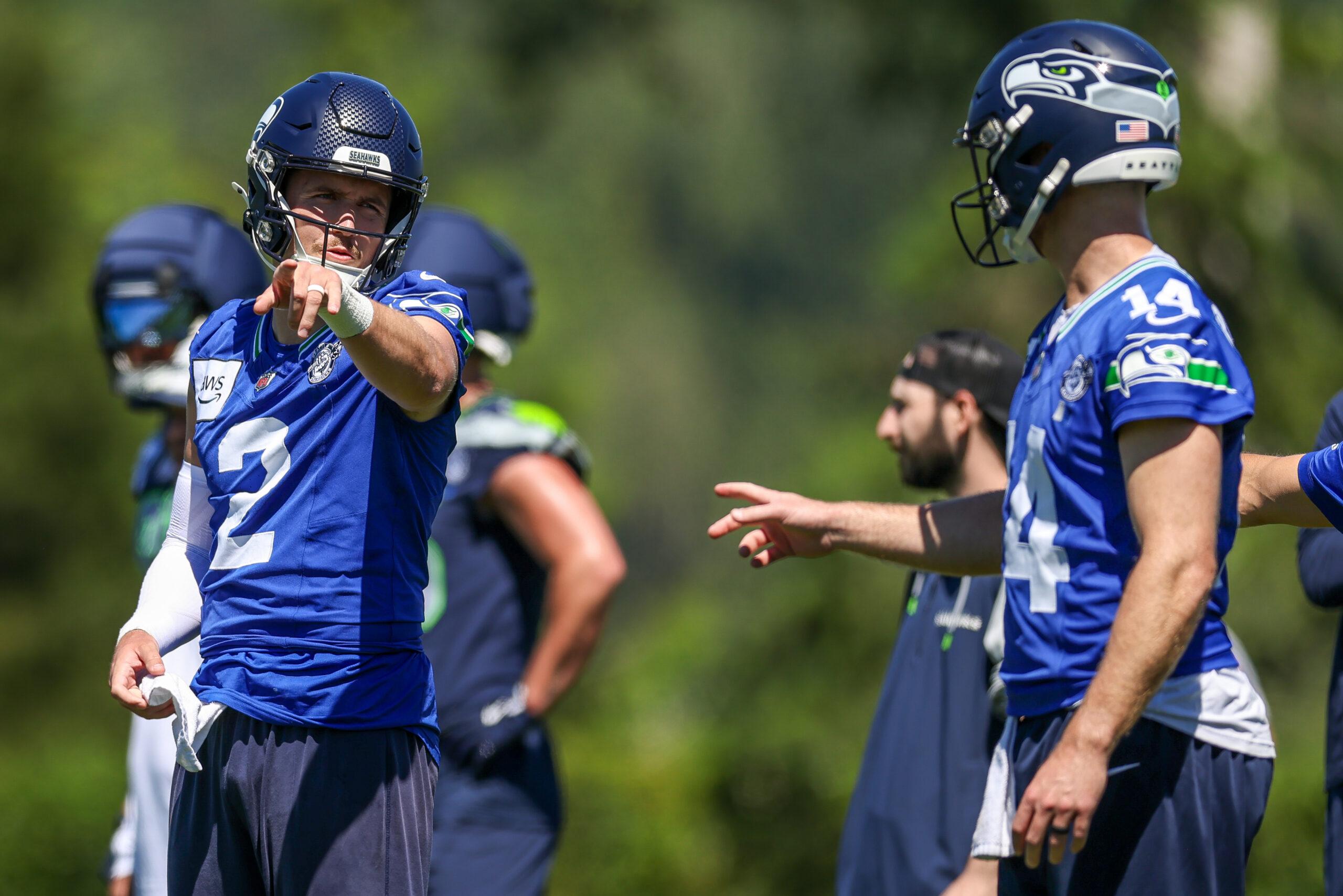
Drew Lock and Sam Darnold
Starter: Sam Darnold, $33.5 million APY, two years remaining
Backup: Drew Lock, $2.5 million APY, one year remaining
The reigning Super Bowl champs don’t have a top-10 QB room? Landing here should feel like a win considering the bet the Seahawks made at quarterback last offseason and how well that’s positioned them for the long term.
Darnold has revitalized his career, going from a bust to a Super Bowl champ. Darnold didn’t add anything new to his game in Seattle, but by cutting down on his backbreaking plays, he became good enough to build an offense around. Now, he’s an above-average quarterback and earning just $33.5 million a year. That ranks 16th among quarterbacks this season.
Seattle’s investments at backup quarterback are a mixed bag but not a net negative. While Lock’s cap hit is just $2.75 million, he hasn’t been reliable over the course of his career, and it’s hard to trust that he’d be a viable starter if Darnold goes down. But behind Lock is a developmental QB, 2025 third-rounder Jalen Milroe. The former Alabama player is inexperienced but has some tantalizing raw talent.
13
Dallas Cowboys
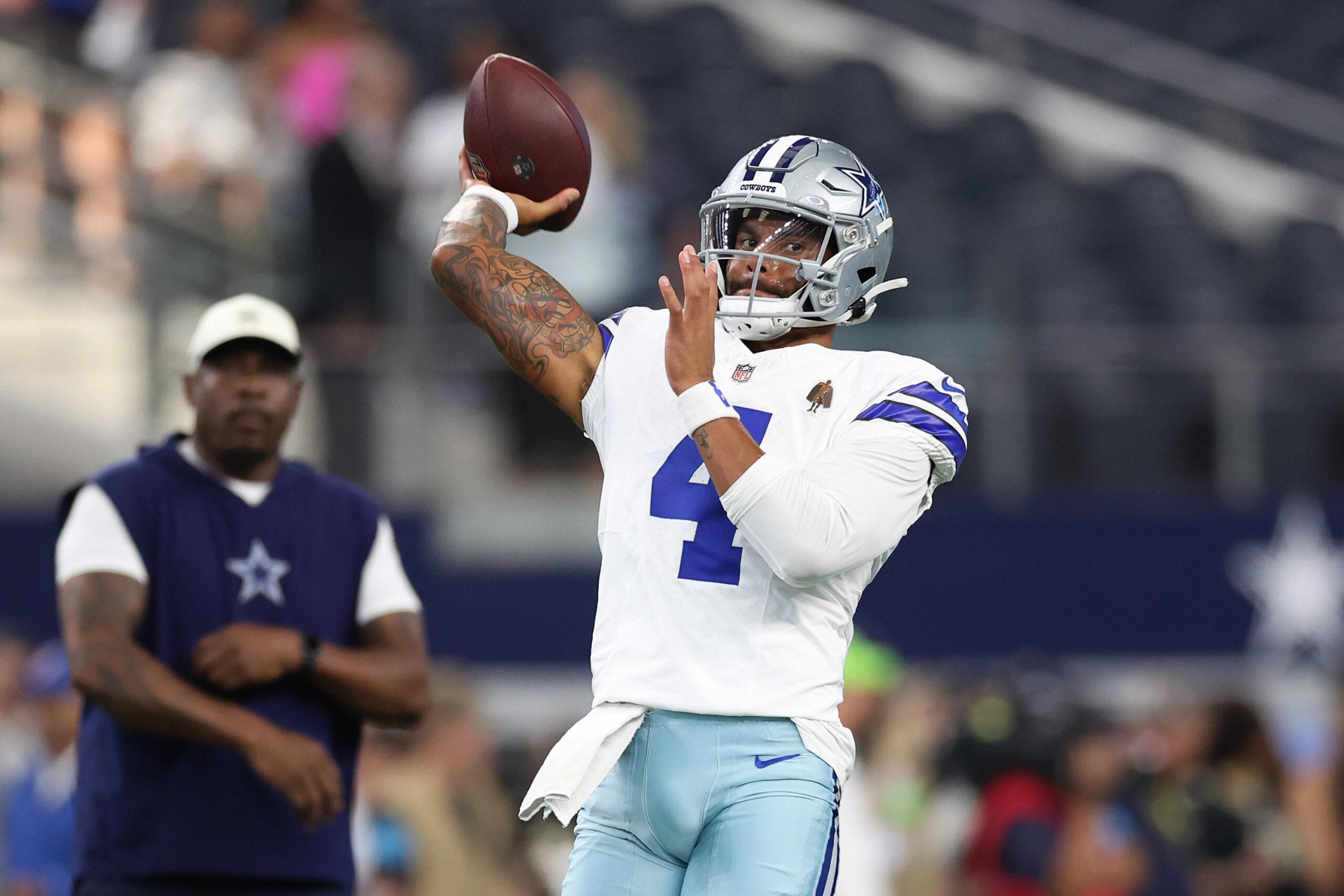
Dak Prescott
Starter: Dak Prescott, $60 million APY, three years remaining
Backup: Sam Howell, $2.5 million APY, one year remaining
With an annual salary of $60 million, Cowboys quarterback Dak Prescott is currently the second-highest-paid player in NFL history, behind Patrick Mahomes. As long as he’s been healthy, he’s been excellent in the regular season, and Dallas should feel good about its chances to make the playoffs as long as he’s on the field for the majority of the year. He’s thrown for 4,000 or more yards four times in his career—that number would probably be higher if he hadn’t gotten hurt in 2022 and 2024—but paying this amount for a quarterback with his injury history (and lack of playoff success) is a less than ideal position for the Cowboys to be in.
Dallas might not be prepared to contend for a title right now because of its defense (which isn’t Prescott’s fault), but he’s being paid NFL-record money to make those roster issues matter less. I’m not positive that Prescott can be the MVP-caliber passer he’d need to be to make me feel better about his contract.
Dallas has a good backup quarterback strategy, but I’m not too jazzed about the player. Howell, who was cut by Washington at the end of the preseason and picked up by division rival Dallas, is next in line behind Prescott. Howell played decently in spurts during the 2023 season, but his production was inflated by Washington’s high-volume passing game. With a $2.5 million annual salary, he’s making “hope you never have to play” money, but that’s not a safe bet given Prescott’s injury history.
14
Houston Texans
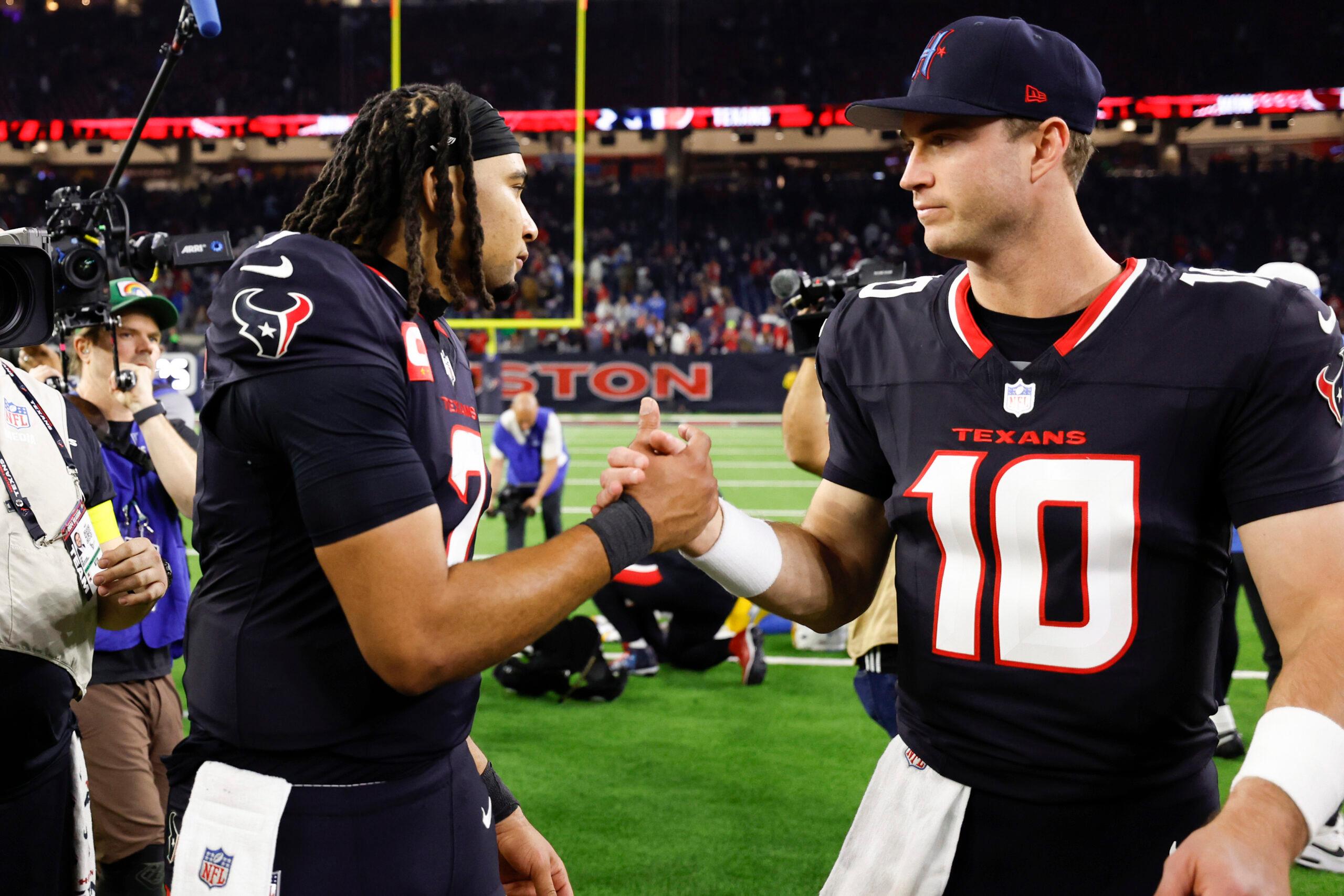
C.J. Stroud and Davis Mills
Starter: C.J. Stroud, $9 million APY, two years remaining
Backup: Davis Mills, $7 million APY, one year remaining
Stroud has been haunted by the ghost of 2023 for the past two seasons, and there were times early last year when it seemed like he might have finally returned to his rookie form. Were it not for his awful pair of playoff performances against the Steelers and Patriots in January, he’d probably be back in consideration as one of the top young quarterbacks in the league. He hasn’t been the driving force of Houston’s success the past three years—that honor goes to the defense—but he’s probably good enough to keep Houston in the mix to be the top team in the AFC, especially while he’s still on his relatively cheap rookie deal. (He is eligible for an extension, but there does not seem to be any urgency from either side to get a deal done before the start of the season.)
Backup Davis Mills is set to make $7 million this season and is one of the better second options in the league. Mills helped Houston transition to the Stroud era to begin with, and he helped keep Houston afloat while Stroud was recovering from a concussion last season. That stability—on top of Stroud’s improved play—is important.
15
Jacksonville Jaguars
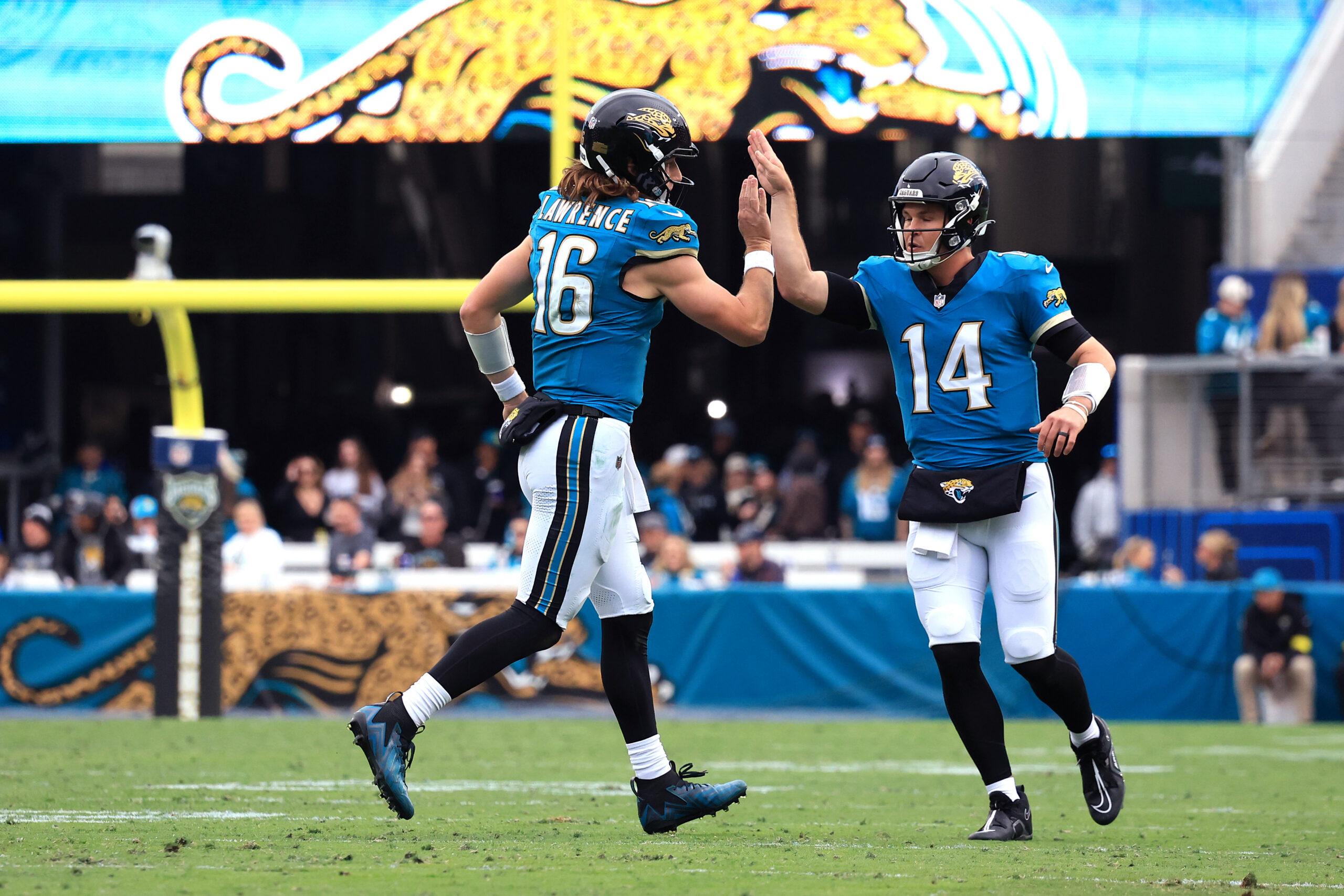
Trevor Lawrence and Nick Mullens
Starter: Trevor Lawrence, $55 million APY, five years remaining
Backup: Nick Mullens, $2.25 million APY, one year remaining
The Jaguars have invested a lot in Lawrence—using the no. 1 pick on him in 2021 and then signing him to a $275 million contract in 2024—but what have they gotten in return? Two playoff appearances, but nowhere close to sniffing a Super Bowl. General manager James Gladstone isn’t the one who gave Lawrence his current deal, so I’m not blaming him or this coaching regime for the meager returns, and there were times last year when Lawrence was playing like one of the best quarterbacks in the league. He is also early in his big contract, so the cap hits aren’t cost-prohibitive for Jacksonville’s roster building just yet ($24 million in 2026, $35 million in 2027).
But Jacksonville is pot-committed to the idea that Lawrence can eventually be an MVP-caliber quarterback over an entire season. And with Mullens behind him—another meh quarterback, in terms of both pay and performance history—I’m not totally in love with how Jacksonville has allocated its resources at the position.
16
Detroit Lions
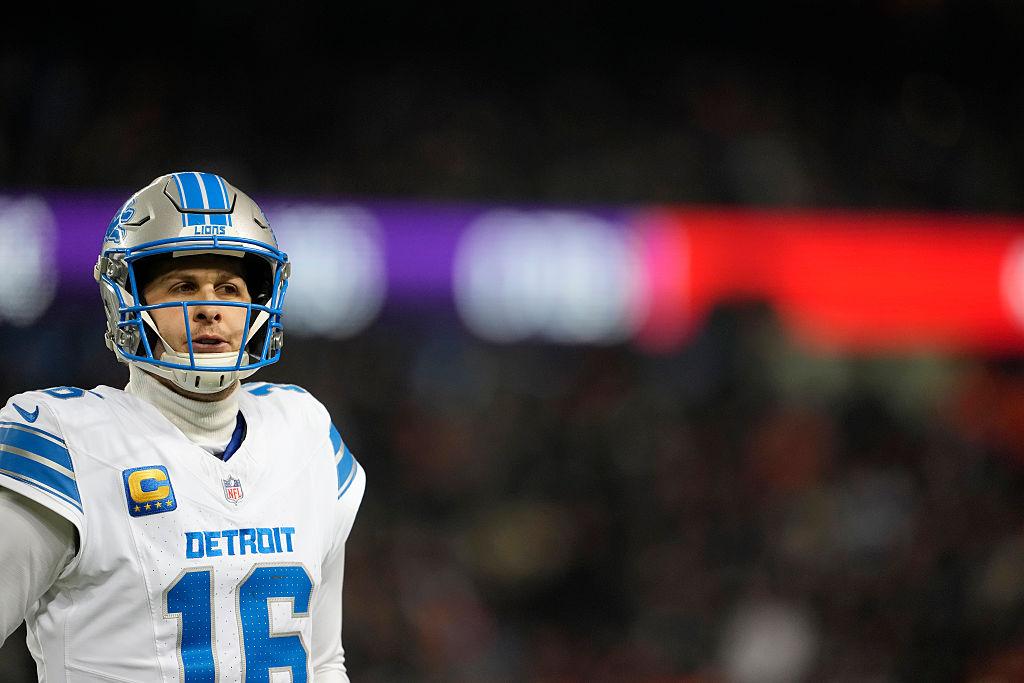
Jared Goff
Starter: Jared Goff, $53 million APY, three years remaining
Backup: Josh Dobbs, $1.4 million APY, one year remaining
Goff revived his career in Detroit and has been at the helm of one of the NFL’s most explosive offenses over the past half decade. Even in a relatively disappointing 2025 campaign, he still finished with a blistering 105.5 passer rating.
Goff’s set to make $53 million this year—a pretty rich deal for a 32-year-old QB lacking elite physical traits. If his arm strength falters at all as he ages, Detroit may not stay ranked this high. And with a 31-year-old Dobbs as the only backup, Detroit doesn’t seem to be doing any long-term planning at the position.
17
Washington Commanders
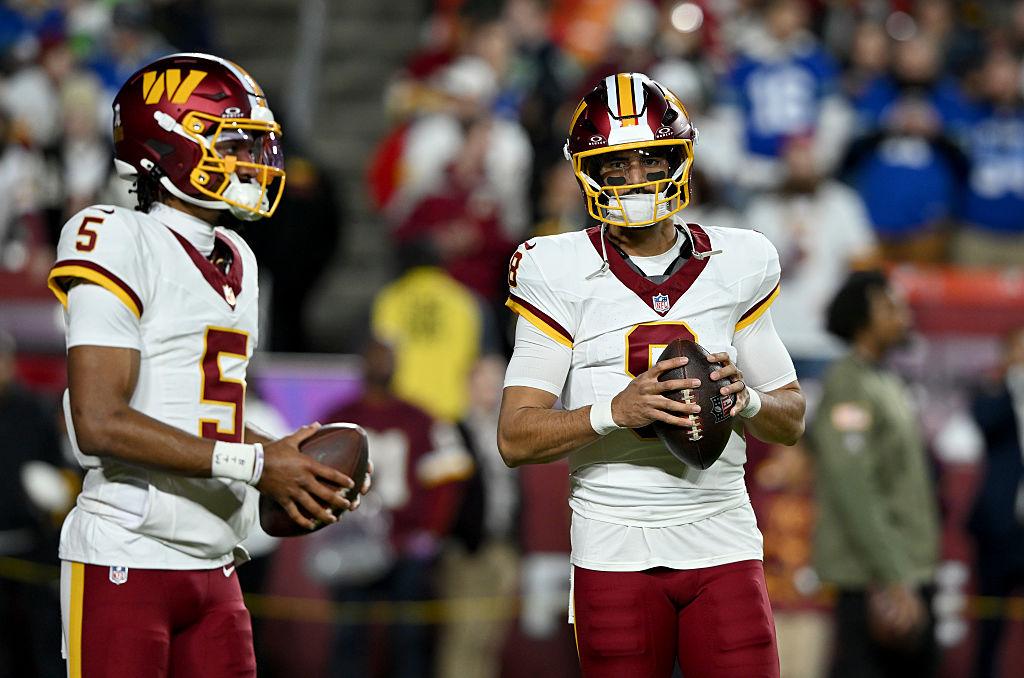
Jayden Daniels and Marcus Mariota
Starter: Jayden Daniels, $9.4 million APY, three years remaining (including a fifth-year option)
Backup: Marcus Mariota, $7 million APY, one year remaining
The difference in production between Daniels’s stellar rookie year in 2024 and his injury-plagued 2025 is stark, making it tough to project where Washington’s QB room should be ranked heading into this season. In year three of his rookie contract, Daniels ranks 27th out of 121 active quarterbacks in annual salary, and his $10 million cap hit is just 3 percent of Washington’s cap space. That the Commanders already got a deep playoff run out of Daniels should be a major win, and there’s certainly still a chance he can stay healthy and make Washington relevant once again.
Mariota should be a trusty, albeit expensive (at $7 million), backup. But he threw too many interceptions last season when he played in relief of Daniels, and he missed time this preseason with an MCL injury. I’m not sure how long the 32-year-old former first-round pick will be good enough to justify his current pay.
18
Denver Broncos
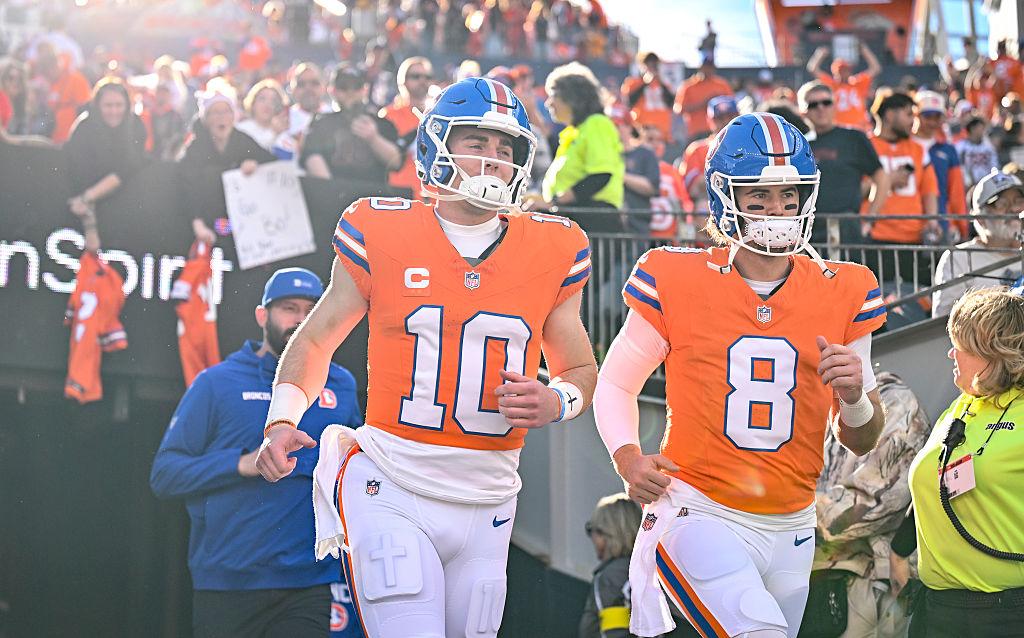
Bo Nix and Jarrett Stidham
Starter: Bo Nix, $4.7 million APY, three years remaining (including fifth-year option)
Backup: Jarrett Stidham, $6 million APY, one year remaining
Bo Nix is the platonic ideal of a quarterback who plays above replacement level. He’s safe, often using quick passes underneath to avoid risking turnovers, which keeps Denver’s offense on schedule. His best skill is sack avoidance, which has gone a long way toward minimizing drive-killing mistakes. Those two things alone helped Denver get into the playoffs in each of the past two seasons, and the Broncos should be a Super Bowl contender this season if he keeps playing that way.
He lacks some of the dynamic playmaking ability you’d like to see in a budding star, and that’s what keeps the Broncos in the bottom half of these rankings. Frankly, he plays exactly how you’d expect a $4.6 million quarterback to. While Nix has proved himself to be worth the first-round pick the Broncos used on him in 2024, my trust in Denver is directly tied to the strength of the roster around Nix while he’s making relatively little (he currently ranks 40th among quarterbacks in annual salary).
Jarrett Stidham, who has a $6 million contract, is one of the higher-paid backups in the NFL. And now that we’ve seen Stidham in real action—albeit in a tough spot, making his first start in years in the AFC championship game (and in a blizzard)—it’s hard to feel great about Denver’s odds if Nix gets hurt once again.
19
New Orleans Saints
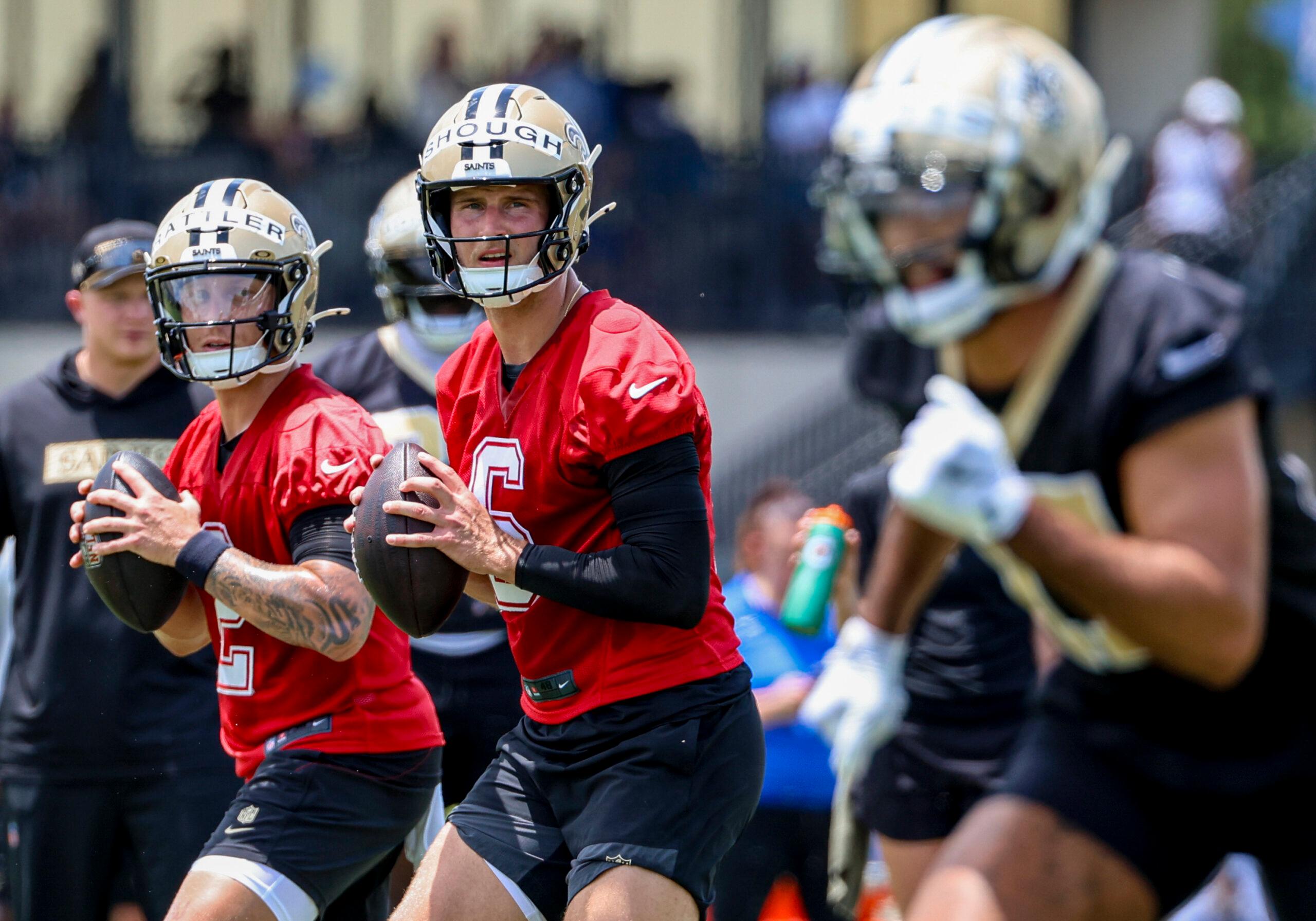
Spencer Rattler and Tyler Shough
Starter: Tyler Shough, $2.7 million APY, three years remaining
Backup: Spencer Rattler, $1.1 million APY, two years remaining
The more distance I’ve gotten from the 2025 season, the more I feel like I underrated quarterback Tyler Shough’s rookie year. He exceeded the expectations placed on a second-round pick and flashed enough talent to merit intrigue in 2026 and beyond. Shough was a quick decision-maker, and that laid the foundation for his success. It enabled him to keep his completion percentage high (67.6 percent) and his turnovers low. If 2025 proves to be his baseline, it shouldn’t be hard for New Orleans to build a sustainable offense around him.
Because of Shough’s surprising 2025, the Saints might be getting the best value from their quarterback investments among the league’s rebuilding teams. Shough’s annual contract value is just $2.7 million, and that’s only a hair more than the combined salaries of his backups, Spencer Rattler ($1.1 million) and Zach Wilson ($1.4 million). This team has done well with navigating its quarterback situation in spite of what should’ve been crippling dead cap charges.
20
Tampa Bay Buccaneers
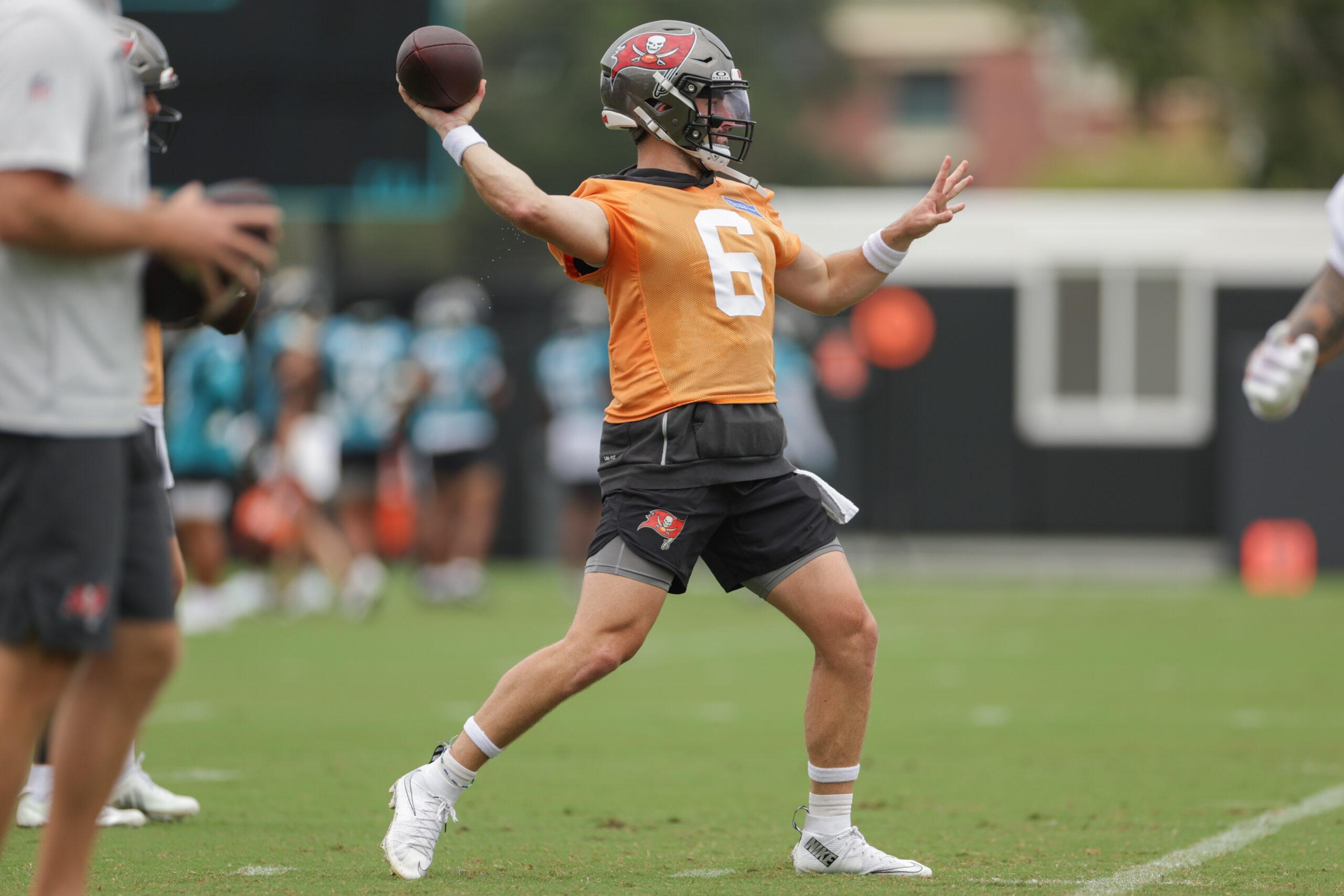
Baker Mayfield
Starter: Baker Mayfield, $55 million APY, four years remaining
Backup: Jalon Daniels, $1.04 million APY, three years remaining
On the eve of Week 1, Mayfield agreed to a $165 million extension that runs through the 2029 season. This takes his full contract value to a hair below $200 million over the next four seasons. This move should keep the Bucs in playoff contention—and is the reason why the Bucs find themselves ranked here, in the bottom half of the league’s QB situations.
Mayfield is a good quarterback and has delivered good offenses more often than not since landing in Tampa. But as of right now, he joins Deshaun Watson and Dak Prescott as the only quarterbacks over 30 years old making north of $40 million annually without an MVP or Super Bowl appearance. That’s a hefty price to pay for a quarterback who didn’t turn a corner in his development until he was in his late 20s, and it was only possible for Mayfield because he was patient enough to wait for an offer he was pleased with—and the Bucs couldn’t risk the future uncertainty without him.
While the price tag on Mayfield’s deal drops them in these rankings, I will give the Bucs credit for giving undrafted rookie Jalon Daniels a shot this preseason—and rewarding his play with a spot as the backup to start the year. Daniels beat out veteran Jake Browning to earn the job and looked like an intriguing (though undersized) quarterback prospect this preseason. He’s not so athletically gifted that I’d presume his backup role is safe for the long term, but he’ll probably factor into Tampa Bay’s plans for its quarterback room the next couple of seasons.
21
Las Vegas Raiders
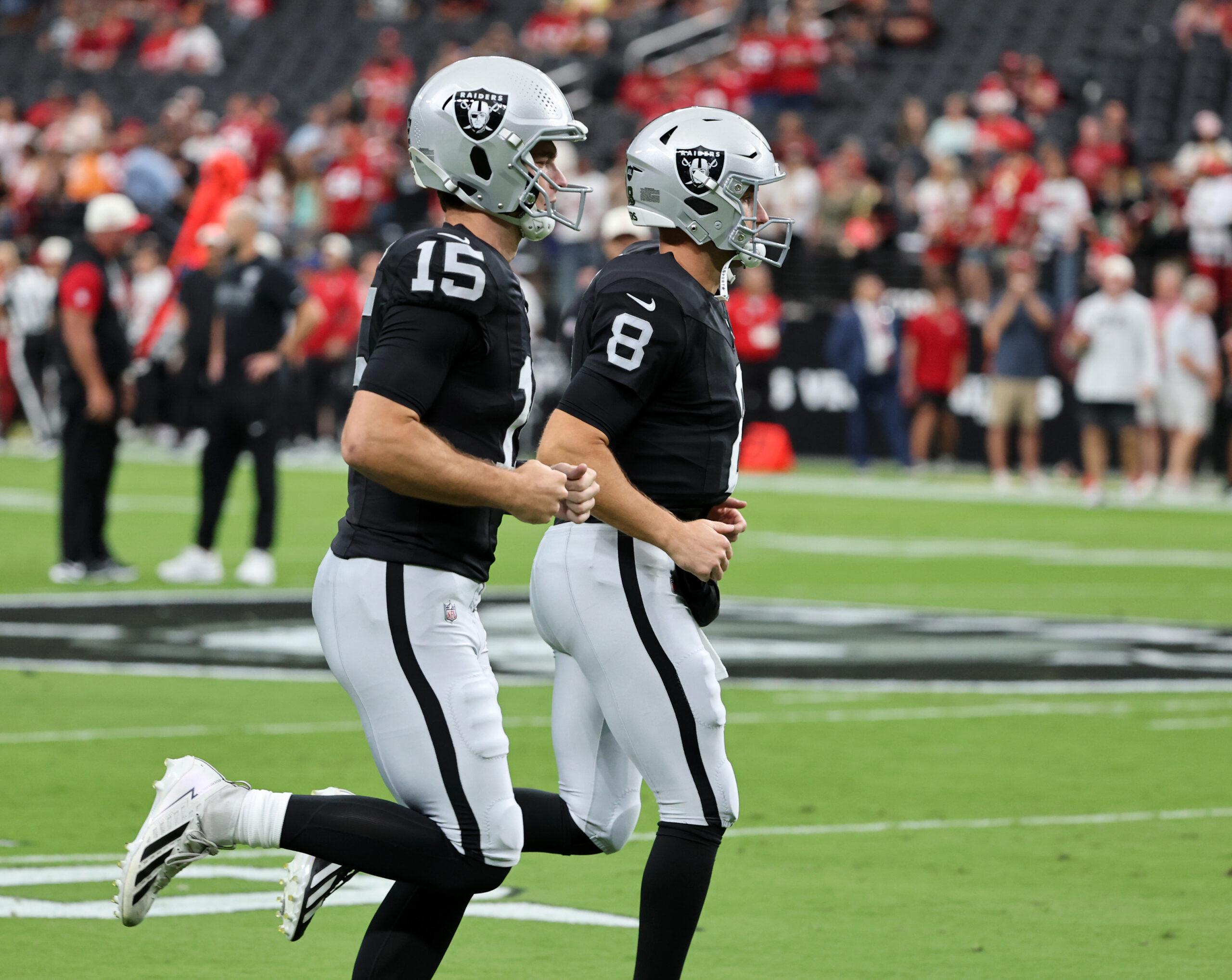
Fernando Mendoza and Kirk Cousins
Starter: Kirk Cousins, $11.3 million APY, one year remaining
Backups: Fernando Mendoza, $14.3 million APY, five years remaining; Aidan O’Connell, $1.1 million APY, four years remaining
In recent years, Las Vegas has been where passing efficiency goes to die. The last time the Raiders had a quarterback with a passer rating above 90 was in 2021, when Jon Gruden was still this team’s coach and Derek Carr was still its quarterback. After half a decade in the QB wilderness, the Raiders are hoping to finally achieve competency with the duo of veteran Kirk Cousins and no. 1 pick Fernando Mendoza.
Cousins will start Week 1, which is both a risk-averse decision for the Raiders in the short term and in Mendoza’s best interest for 2027 and beyond. Essentially, Cousins is buying Mendoza time to work out his growing pains. And with Cousins playing on what is, for Las Vegas, effectively a veteran minimum salary after being traded from Atlanta, the Raiders get all the benefits of having a bridge quarterback without making any real financial commitment.
The Raiders are on the hook for only $1.3 million of his salary in 2026 as well as a $10 million roster bonus that won’t hit the Raiders’ cap until next year. Atlanta is paying the rest of Cousins’s salary. If Cousins is a serviceable starter this season, we’ll look back on this as an excellent strategy from GM John Spytek and the Raiders.
As for Mendoza, his first preseason was encouraging—enough to make plenty of us wonder whether he should simply be the starter now—but I won’t complain about Las Vegas taking its time with him. I still have some questions about his overall arm talent and mobility, but he was sharp as a decision-maker in his preseason appearances, so there’s reason to believe he’ll be ready when Klint Kubiak decides it is time to hand over the reins. If the Raiders are right about taking a slow development approach with Mendoza, he will lead this franchise out of the wilderness.
22
New York Giants
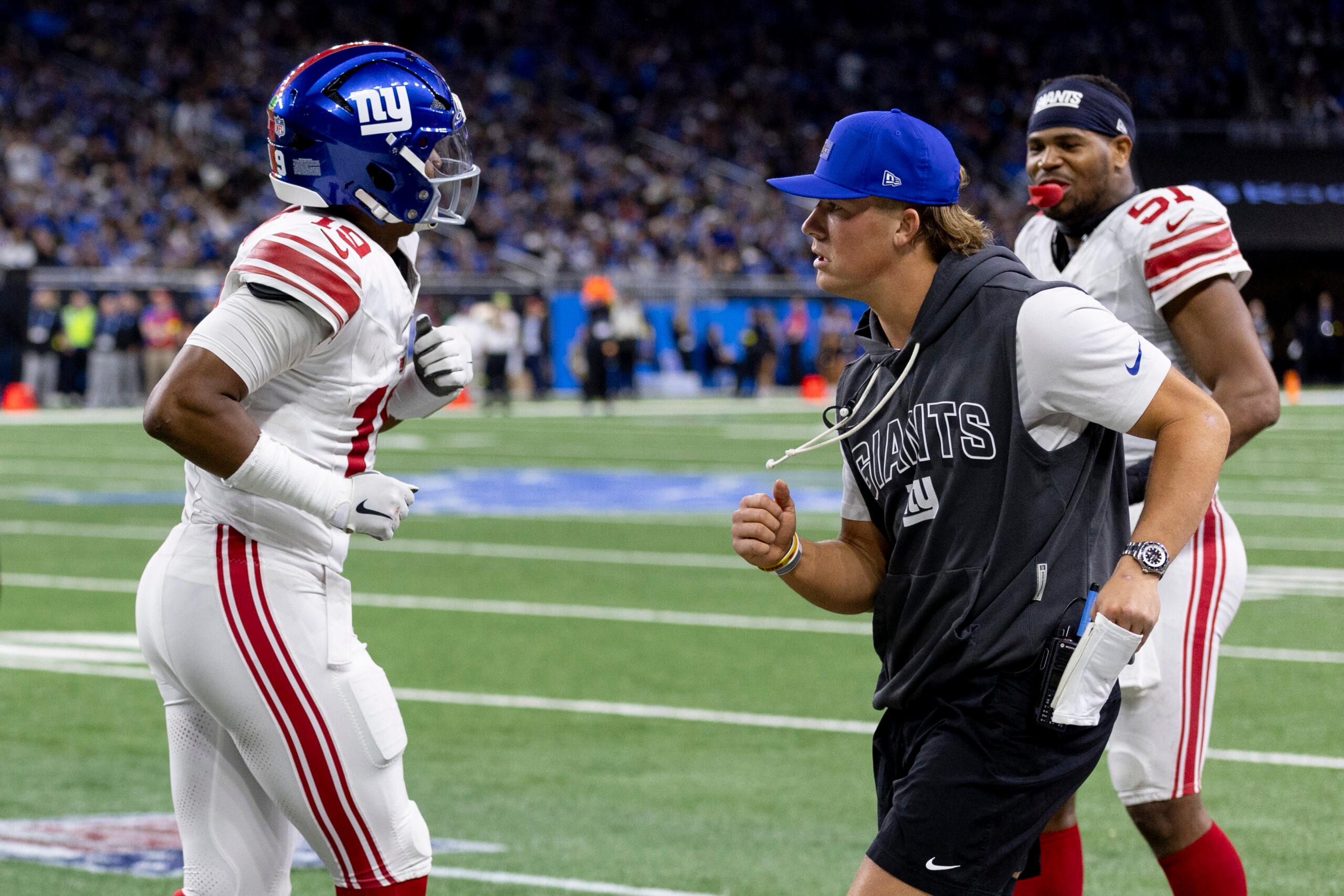
Jameis Winston and Jaxson Dart
Starter: Jaxson Dart, $4.2 million APY, four years remaining
Backup: Jameis Winston, $6 million APY, three years remaining
It’s hard to know exactly what to make of Dart’s rookie year. He struggled at times to run the offense as designed last season but flashed some impressive burst as a scrambler and found some explosive plays by hanging on to the ball.
When it comes to money, Dart provides a better value for the Giants than his predecessor, Daniel Jones, did. But simply having him on a rookie deal might not be enough unless he can prove that he can stay on the field. Step one is learning to avoid big hits. Dart was sacked or knocked down on 18 percent of his dropbacks last year, ranking 34th of 45 quarterbacks with 100 or more dropbacks, and his pressure-to-sack ratio ranked 40th, at an alarming 27 percent. It’s hard to feel great about the long-term future of a quarterback who can’t stay out of the blue medical tent.
Backup Jameis Winston signed an extension worth $13 million over two years, giving his current deal a total value of $18 million through the 2028 season. Even with the new money on his deal, he’s still earning less than backups like Marcus Mariota in Washington and Justin Fields in Kansas City, and he might be a better option than either of them. Dart would need a big breakout in 2026 to convince me that New York deserves a higher ranking here, but at least this is a cost-effective quarterback room.
23
Carolina Panthers
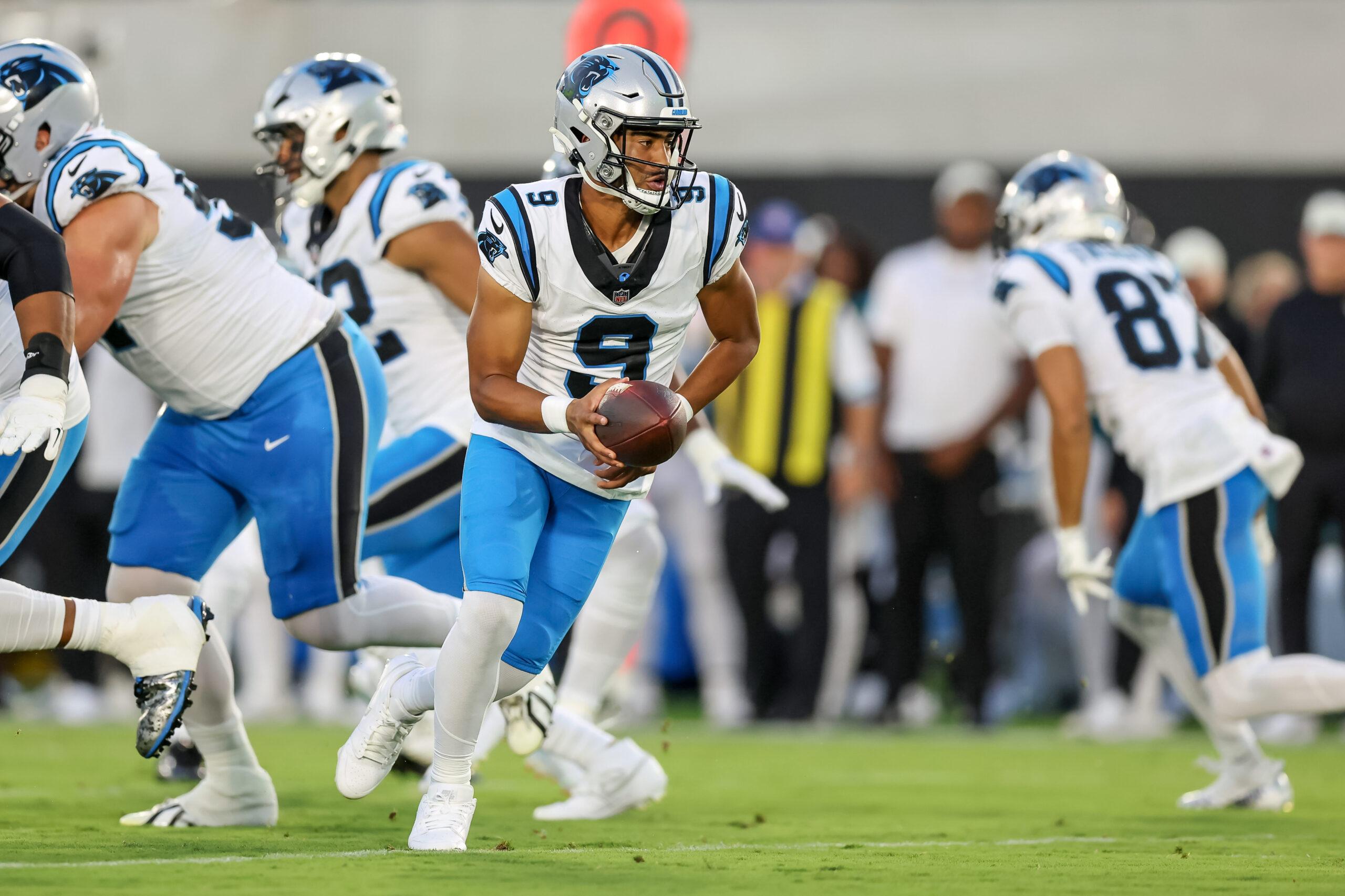
Bryce Young
Starter: Bryce Young, $9 million APY, two years remaining
Backup: Kenny Pickett, $4 million APY, one year remaining
Just two years ago, you could argue that Bryce Young was the league’s worst starter. More recently, the Panthers have found success by getting the ball out of Young’s hands quickly, which has helped him handle pressure better, cut down on mistakes, and at least temporarily shed the “bust” label. Still, questions remain about Young’s viability as the Panthers’ long-term QB plan.
This is the final season in which the Panthers are getting decent value relative to Young’s $12 million cap hit. His salary balloons to $25 million next season under his fifth-year option. We could expect that any long-term extension for Young would pay him in the range of $30 million to $35 million, close to what Buccaneers quarterback Baker Mayfield is making on his current deal. The problem for Carolina is that it doesn’t appear to be positioned to quickly pivot away from Young and find a better player or better contract value in the near future.
The Panthers aren’t spending much money at quarterback. But overall, the QB room is uninspiring. Carolina’s new QB2, Kenny Pickett, has now had multiple chances, in Philadelphia, Cleveland, and Las Vegas, to show that he could be the NFL’s next reclamation project. But in his limited action since leaving Pittsburgh, he hasn’t shown much improvement. Carolina’s undrafted rookie Haynes King is an intriguing raw prospect, probably with more potential as an overall athlete than a passer, although his performance in the Hall of Fame Game was a fun way to start the football year.
24
Indianapolis Colts
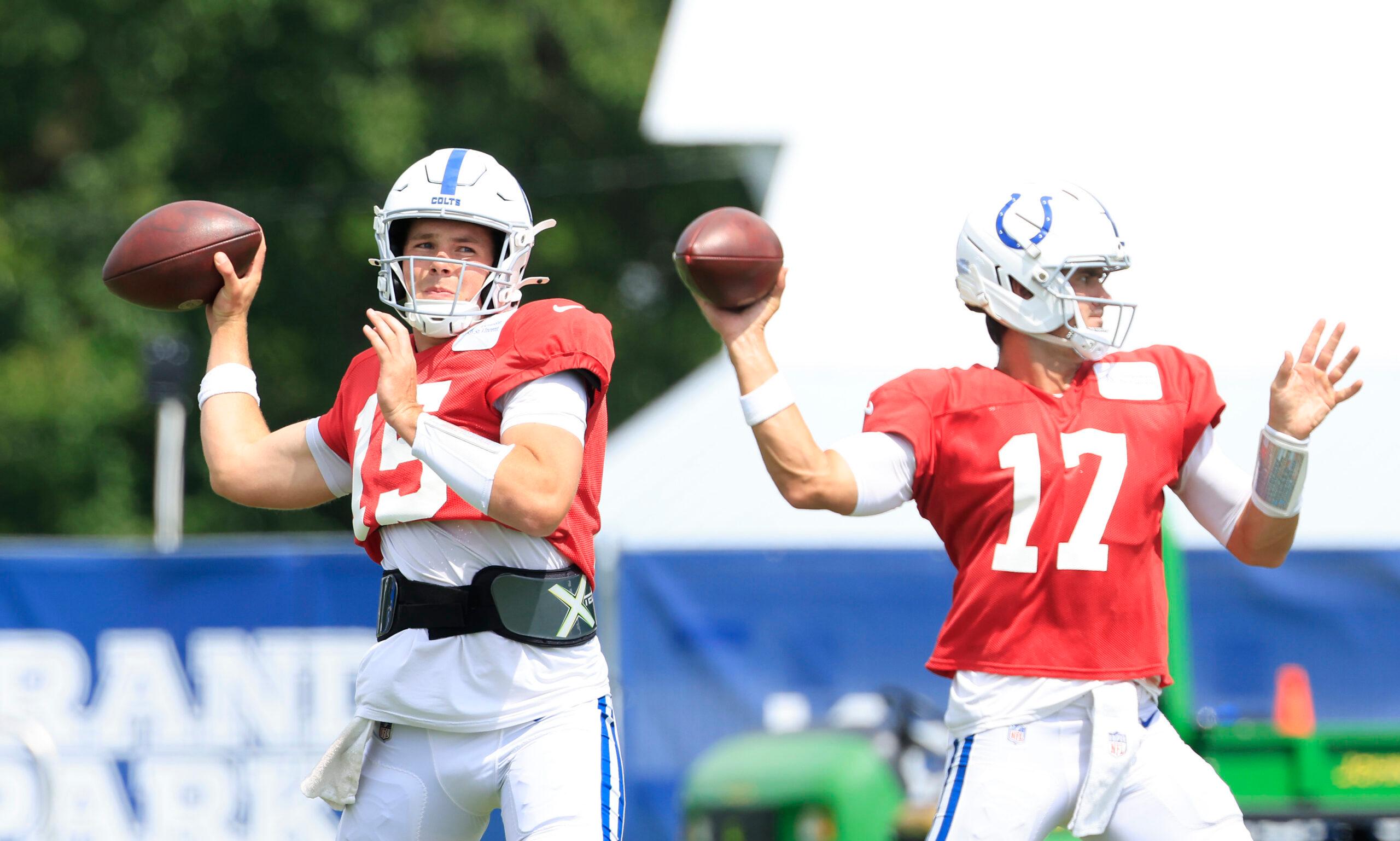
Riley Leonard and Daniel Jones
Starter: Daniel Jones, $44 million APY, two years remaining
Backup: Anthony Richardson, $8.5 million APY, one year remaining
The idea of Daniel Jones returning from a torn Achilles tendon and playing on a pricey new deal should make Colts fans nervous.
For eight games last season, Jones gave the Colts offense a jolt. Indianapolis had the best rushing attack in the league, so all Jones had to do was identify where blitzes were coming from and throw deep against one-on-one coverage. But once November rolled around, he started taking more sacks (13 of his 22 sacks came in four games in Weeks 9-14), and his turnovers went up (eight in that same span). He didn’t play after Week 14 because of a broken leg and torn Achilles.
Still, Jones’s 2025 season was a massive success for the Colts, and they doubled down on him for 2026. The Colts first placed the transition tag on Jones before signing him to a contract that will pay him $88 million over the next two years. Jones got half of that money up front, and he’s owed $14 million if he’s on the roster at the start of the new league year next spring. That essentially makes this another prove-it year for Jones and the entire Colts offense, but he’s doing it while coming off a major surgery.
The Colts can’t afford for Jones to have any setbacks or new injuries. His backup is former top-five pick Anthony Richardson Sr., whose career in Indianapolis has been a roller coaster, featuring a benching, questions about his maturity and work ethic, and a bizarre injury to his orbital bone as the result of an accident in the weight room. Behind Richardson is second-year QB Riley Leonard, who threw two touchdowns and three picks in his only start last season.
Simply put: We shouldn’t trust the Colts quarterback room in 2026.
25
Pittsburgh Steelers
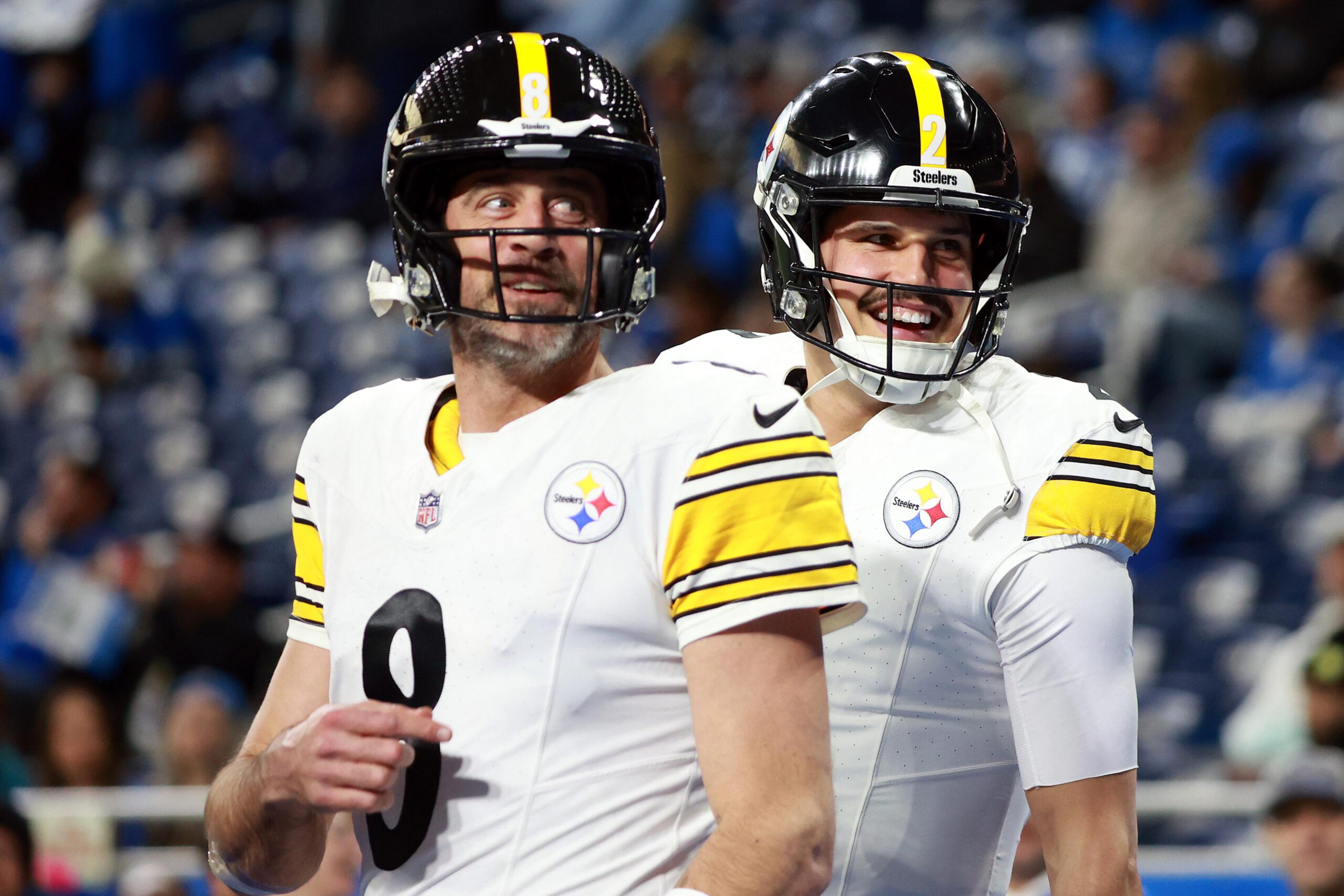
Aaron Rodgers and Mason Rudolph
Starter: Aaron Rodgers, $22.5 million APY, one year remaining
Backups: Mason Rudolph, $3.7 million APY, one year remaining; Will Howard, $1.1 million APY, three years remaining; Drew Allar, $1.7 million APY, four years remaining
Rodgers is back for one last ride. Pittsburgh must be ecstatic to have him donning its uniform in the twilight of his career, because there was never a hint this offseason that the Steelers were trying to find his immediate or eventual replacement. His first season in the black and gold was a mediocre one: By yards per attempt, passer rating, and EPA, Rodgers hovered around the league average. That’s not terrible production for the league’s oldest passer, but he can no longer elevate an offense. Rodgers is content to aim quick passes to the perimeter and throw checkdowns when his first read isn’t open, even if that leaves potential explosive plays on the table.
He’s set to make $22.5 million this year, the same as Dolphins quarterback Malik Willis—a salary that signals that Rodgers is just here to play out the rest of his Hall of Fame career.
The depth chart behind him doesn’t provide many answers to the team’s long-term quarterback question. Rudolph once again won the QB2 job, beating out second-year player Will Howard and rookie Drew Allar. The Steelers kept all three backups on the 53-man roster to start the season.
26
Tennessee Titans
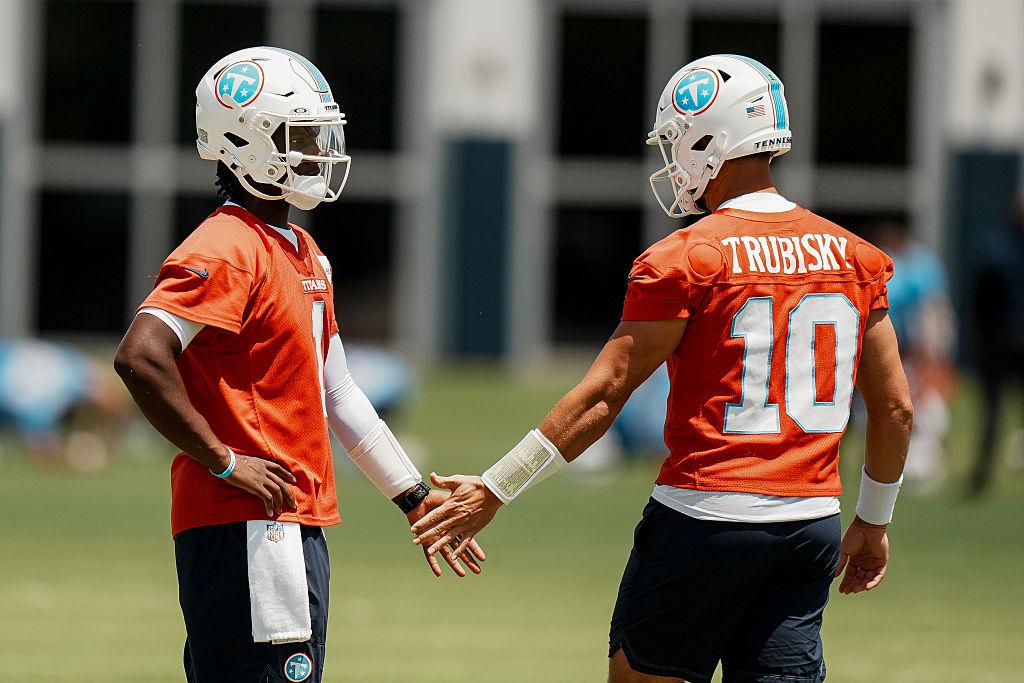
Cam Ward and Mitchell Trubisky
Starter: Cam Ward, $12.2 million APY, four years remaining
Backup: Mitchell Trubisky, $5.2 million APY, two years remaining
Were it not for the rookie wage scale, I’d be concerned about the future for the Titans. Last year’s no. 1 pick, Cam Ward, had a rough rookie campaign. He did little to raise his teammates’ play and made the kinds of mistakes in the pocket that make you wonder whether he’ll ever calm down and allow the game to come to him. Of the 45 quarterbacks with 100 or more dropbacks last season, Ward finished 38th in passer rating and 41st in passing success rate. He held the ball too long and took too many sacks, and the Titans offense rarely benefited from his attempts to extend plays and make things happen late in plays. And even after a coaching and scheme change, it was more of the same from Ward in the preseason. The worst-case scenario for the Titans—that this offense craters behind the mistake-prone Ward—is in play here, especially since they haven’t surrounded him with much offensive talent.
That said, Ward’s contract counts for only $11 million against the cap, or just over 3 percent of Tennessee’s total space. And he’s been given a vote of confidence from the organization, which didn’t try to add someone to compete with him in year two. The only addition Tennessee made at quarterback was veteran Mitchell Trubisky, a former first-round pick who has turned into a reliable backup. He’s making only $10.5 million over the next two years. In my eyes, Trubisky is in Tennessee for two reasons: to help teach Ward a new offense (Trubisky played for new OC Brian Daboll in Buffalo) and to give this team a good enough backup option that it could waive failed draft pick Will Levis.
27
Minnesota Vikings
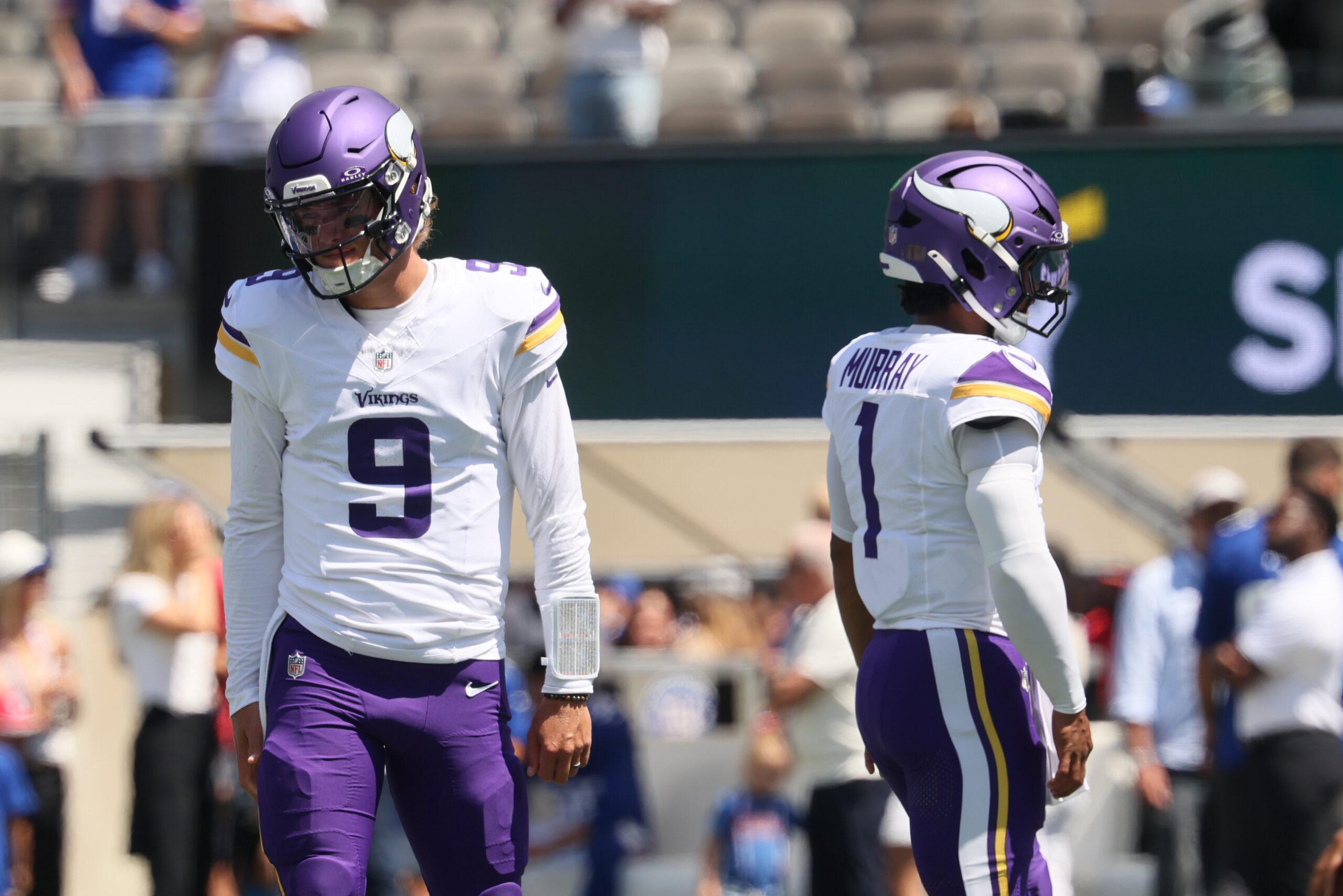
J.J. McCarthy and Kyler Murray
Starter: Kyler Murray, $1.3 million APY, one year remaining
Backup: J.J. McCarthy, $5.4 million APY, three years remaining
It might not be realistic to expect a breakthrough season from Murray at this point in his career. He has an above-average skill set, but he’s never quite been able to put it all together in one season. We’ve seen him be an untouchably agile scrambler out of the backfield, and we’ve seen him use his incredible raw arm talent to make impressive downfield throws. But it's rare to see him excel as a runner and a passer at the same time. Meanwhile, injuries have cost him during his best seasons, when things were finally beginning to coalesce. Now he’s playing on a minimum deal in Minnesota, making this a no-risk, all-reward investment for both Murray and the Vikings. Minnesota is the one team in the bottom 10 of these rankings I could see making a major leap if the quarterback stays healthy.
Murray takes over the starting job from McCarthy, who was one of the most disappointing starters in the league last year. McCarthy finished 42nd of 45 quarterbacks in passer rating, 40th in EPA, and 31st in success rate. His play over the last month of his rookie year suggested an upward trend—he played pretty well and won four consecutive starts—but you could argue that the Vikings were just beating up on some bad defenses (the Giants, Cowboys, and Commanders). McCarthy’s accuracy was clearly improved over that stretch, but it was not a surprise that he lost this competition to Murray.
28
Atlanta Falcons
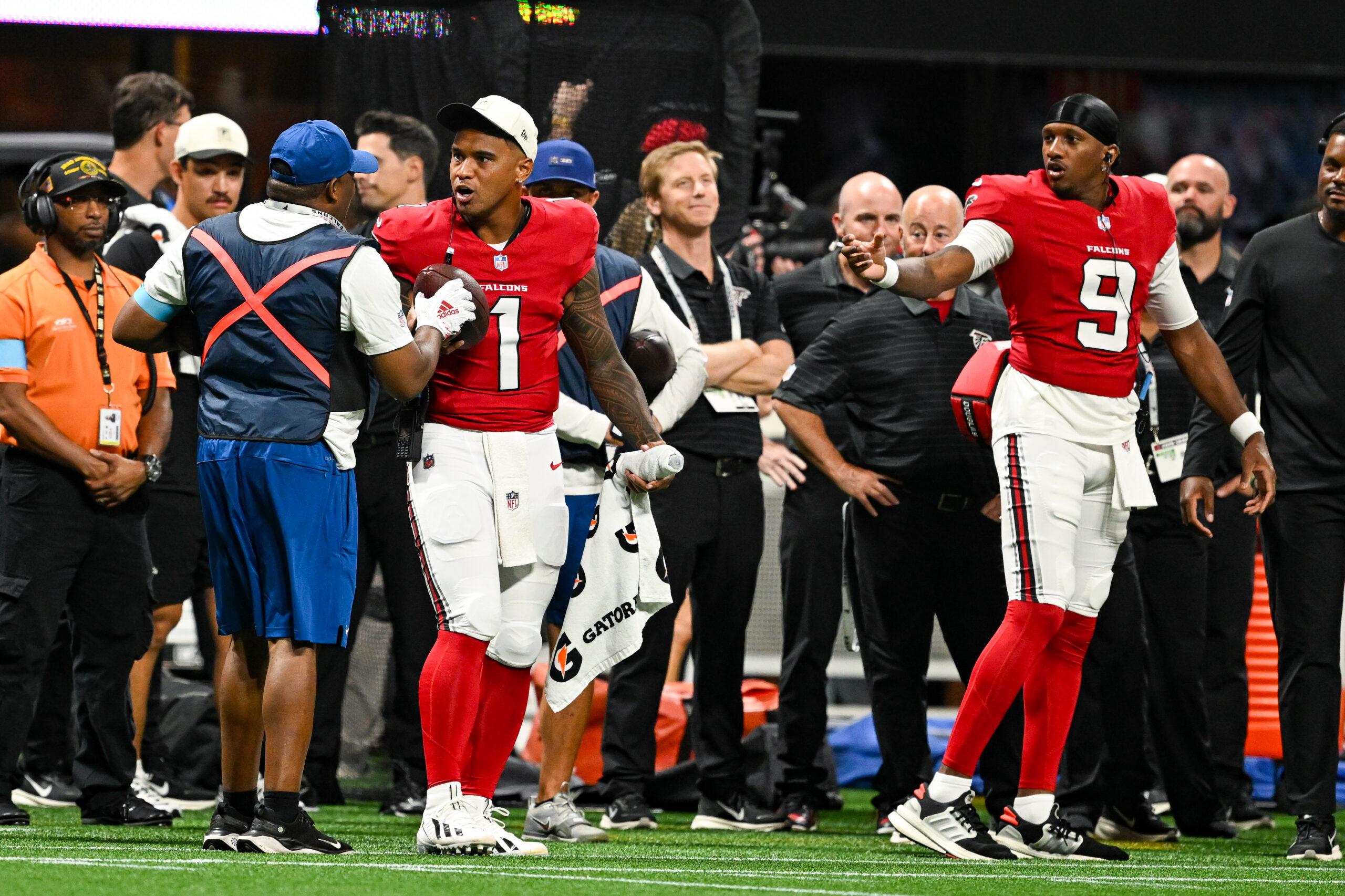
Tua Tagovailoa and Michael Penix Jr.
Starter: Tua Tagovailoa, $1.2 million APY, one year remaining
Backup: Michael Penix Jr., $5.7 million APY, three years remaining
Tua Tagovailoa “won” (to the extent we can call it winning) the Falcons starting job over Michael Penix Jr.—for Week 1, at least—in an anticlimactic end to the most boring quarterback competition of the preseason.
Ultimately, Penix’s health was the determining factor. The 2024 first-round pick is still recovering from ACL surgery and just wasn’t quite ready. So that left the Falcons with no other choice but Tagovailoa, who was too inconsistent during spring practices and played so poorly early in the preseason that it seemed impossible that he’d win the job outright.
Now, Atlanta is likely caught between the two quarterbacks, neither of whom was very good last season. I’d expect the same issues that got Tagovailoa benched in Miami last year to resurface, and, unfortunately, we should probably expect injury concerns to linger throughout Penix’s career.
The Falcons aren’t paying much for their quarterbacks—just $7 million in combined salary. That would be great value if it seemed like either of them could be a competent starter. Instead, the Falcons are getting exactly what they’re paying for in a cheap quarterback room—two options that may need replacing before long.
29
Miami Dolphins
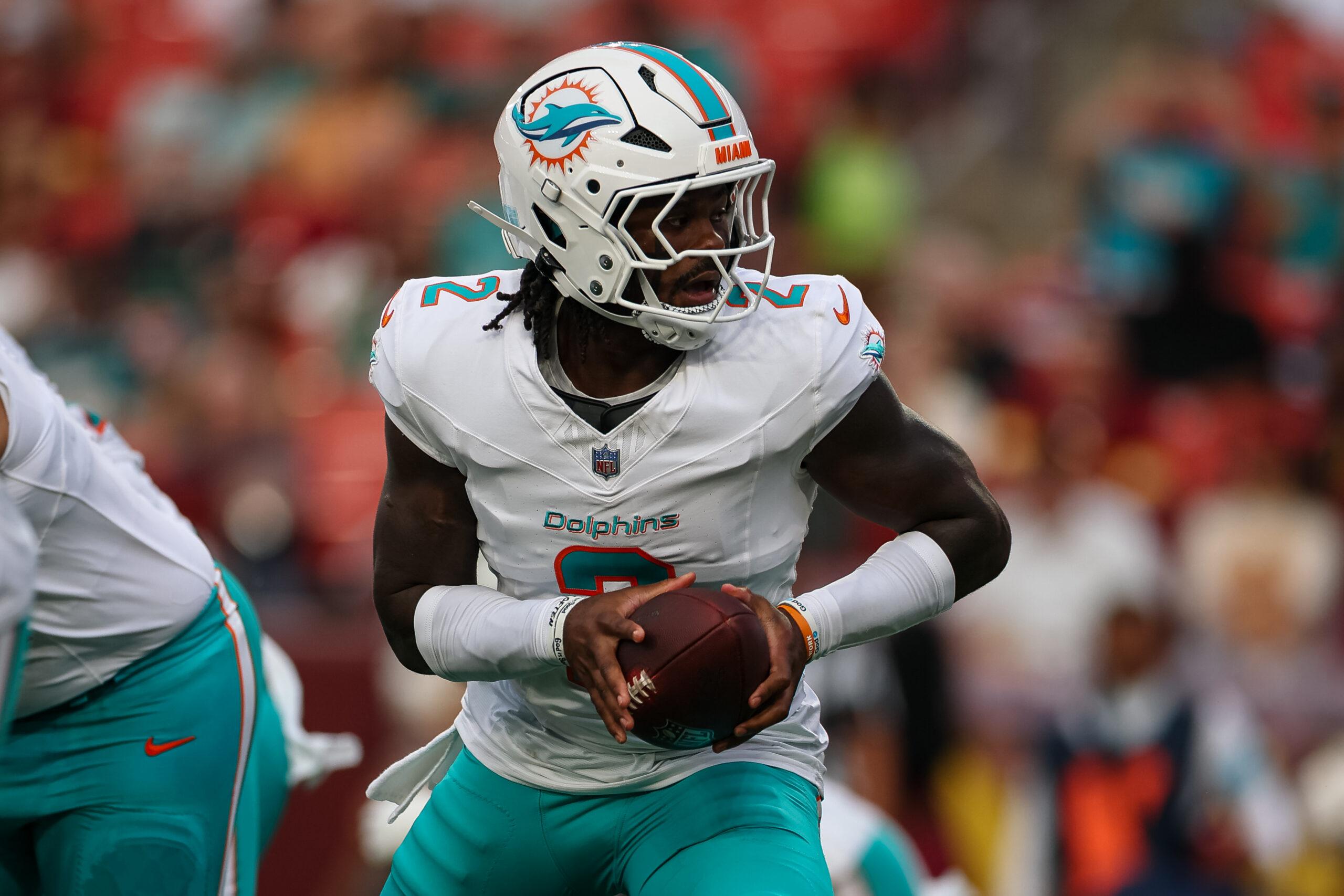
Malik Willis
Starter: Malik Willis, $22.5 million APY, three years remaining
Backup: Kyle McCord, $885,000 APY, one year remaining
If only we could have seen Willis play for Mike McDaniel in a Dolphins offense that had real talent at the skill positions. Would we have seen Willis use his speed to extend plays and his improved accuracy to push the ball to speedy, wide-open teammates?
We’ll just have to imagine it. Willis’s current situation as he becomes a full-time starter for the first time is bleak given the lack of talent around him. He made only three starts (11 total appearances) in his two years as the Packers backup—and his best work came mostly against banged-up or inferior opponents. And for $22.5 million this season (the 17th-highest pay at the position), the Dolphins are taking a chance that a former backup might deliver league-average production for the next two years.
Maybe if you squint, you can see Willis impacting this Dolphins team like quarterback Jalen Hurts impacted Philadelphia’s offense in 2021; he’s not quite transformational but is a good enough athlete to build an offense around. If Miami gets Hurts-esque production from Willis, his contract will become one of the best values in football. Otherwise, this will be a placeholder deal for Miami to get through the teardown portion of this long-term rebuild and start over at QB.
Behind Willis is McCord, who arrived in Miami in a trade with Green Bay at the end of the preseason. McCord looked like a decent enough backup in August, but there’s little else to go on to predict how he’ll play if Willis goes down.
30
Arizona Cardinals
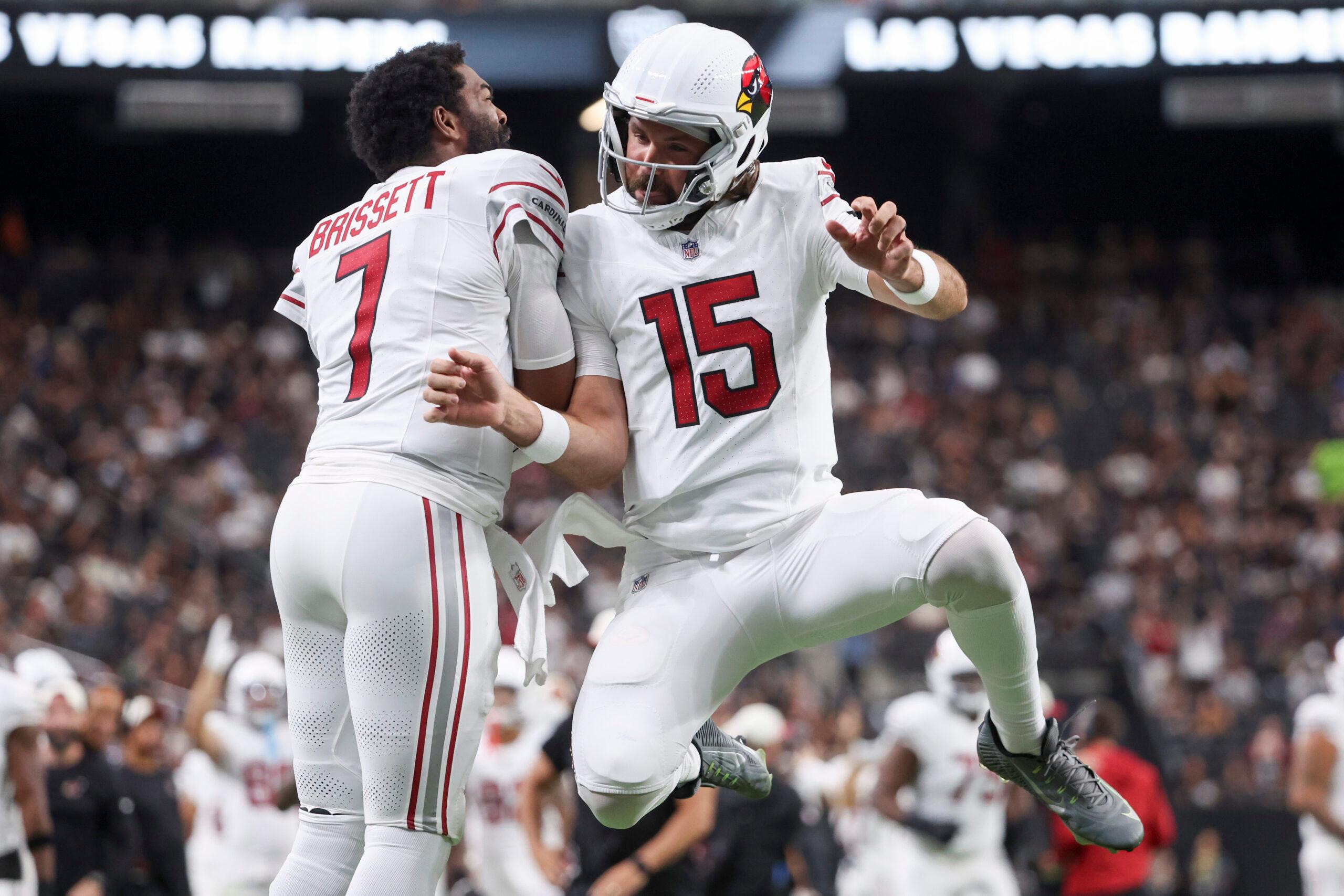
Jacoby Brissett and Gardner Minshew
Starter: Jacoby Brissett, $15.5 million APY, one year remaining
Backups: Gardner Minshew II, $5.75 million APY, one year remaining; Carson Beck, $1.85 million APY, four years remaining
How bad is the Cardinals’ quarterback situation that Brissett was able to exert his leverage, hold out from the offseason program, and get a pay raise before this season?
Brissett wasn’t terrible for Arizona last year, but the fact that this team could be cornered in negotiations by a replacement-level quarterback is a reflection of how poorly prepared it was to pivot out of the Kyler Murray era. And with a backup journeyman like Gardner Minshew II sitting behind Brissett—with underwhelming rookie Carson Beck on the 53-man roster as QB3—it’s hard to find anything positive about this overall group. We should expect the Cardinals to once again be looking for a new quarterback next spring.
31
New York Jets
Geno Smith and Cade Klubnik
Starter: Geno Smith, $3.3 million APY, one year remaining
Backup: Cade Klubnik, $1.4 million APY, four years remaining
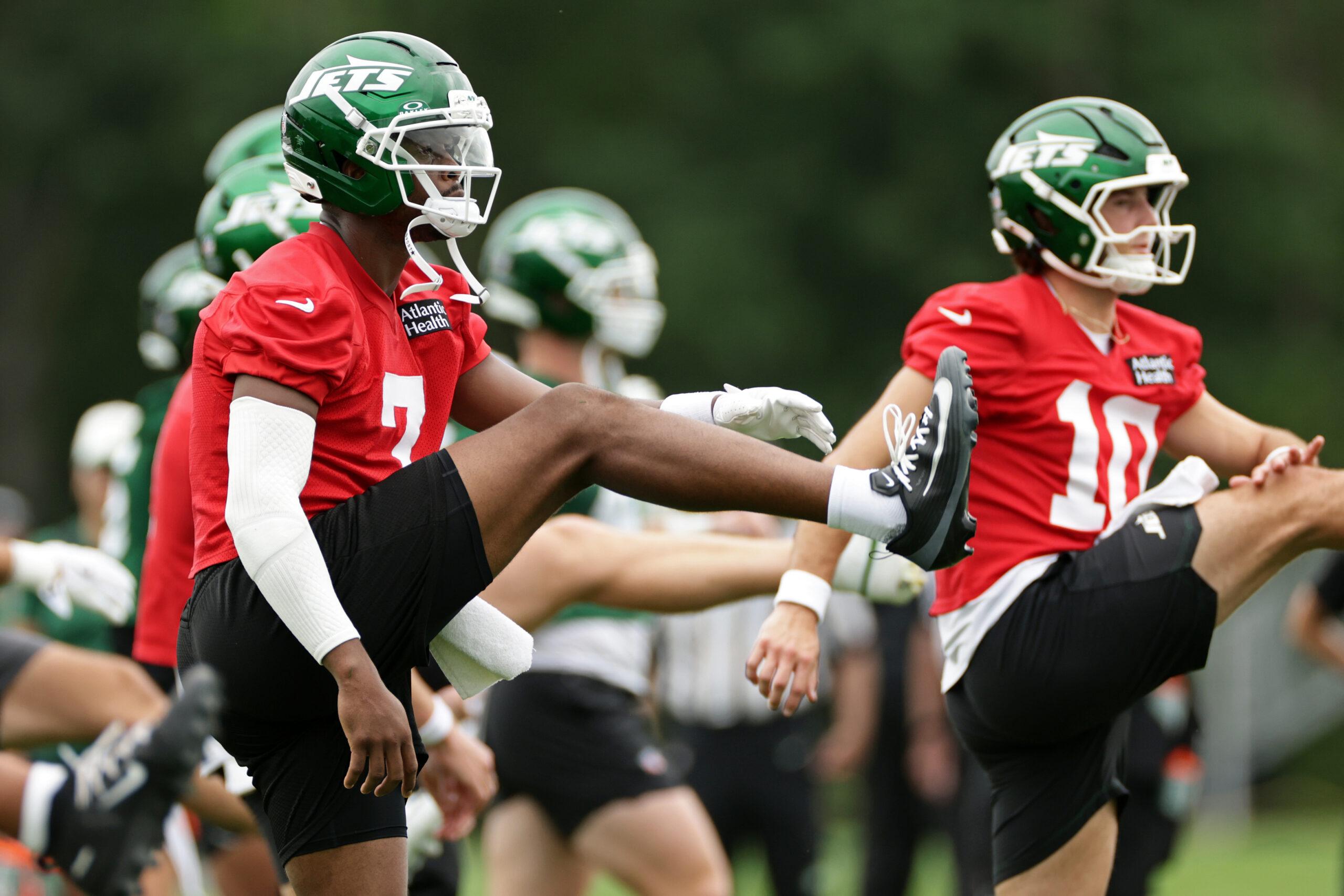
Smith is back in a Jets jersey and will be this team’s starter a decade after his first New York stint’s unceremonious end. The move to bring Smith back was billed as a heartwarming reunion after he revived his career in Seattle. But I think we’re about two years too late to have warm-and-fuzzy “welcome home” feelings. Smith’s been sacked 105 times and thrown 32 interceptions since 2024—both the most of any starting quarterback in the league—and his down-to-down play for the Raiders in 2025 was among the worst in the league. Even though he counts for only $3.3 million against the Jets’ cap after being traded by the Raiders, his age and declining play have lowered the expectations for how much value the Jets can reasonably get from him.
Rookie Cade Klubnik is the only backup on the active roster. Klubnik wasn’t impressive in the preseason (he threw for under 200 yards on more than 30 attempts), so it feels like an odd decision for the Jets to hand him the job of QB2 (beating out Brady Cook). This entire quarterback situation feels dire and ripe for a complete overhaul in 2027.
32
Cleveland Browns
Deshaun Watson and Shedeur Sanders
Starter: Deshaun Watson, $46 million APY, one year remaining
Backup: Shedeur Sanders, $1.1 million APY, three years remaining
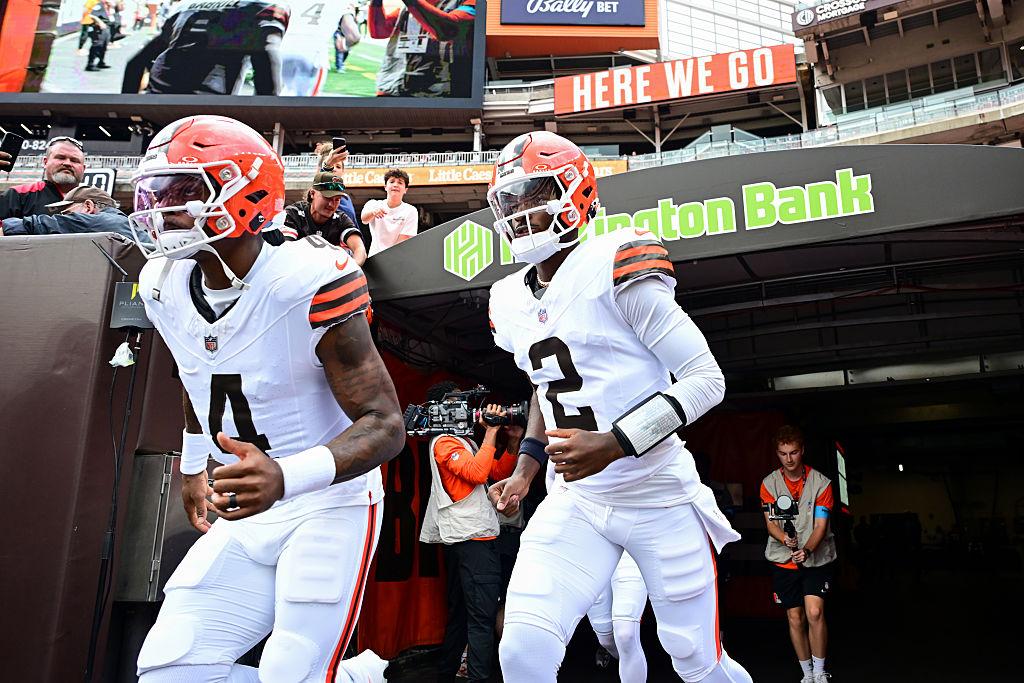
There’s no team in the league that’s gotten a worse return on its investments at quarterback than the Browns. Cleveland named Watson the starter over loud objections from the team’s fan base and despite little evidence since his arrival in Cleveland in 2022 that he can be competent in the role. He hasn’t won a game since Week 2 of the 2024 season, and during his three-year stretch as the Browns’ starter from late 2022 into 2024, he ranked ahead of only Zach Wilson in EPA.
Looking for a silver lining? Sorry, Cleveland has none. Among quarterbacks with at least five starts, backup Shedeur Sanders had the league’s worst touchdown-to-interception ratio last season. He was sacked or knocked down on a league-worst 26 percent of his dropbacks and held the ball for a league-leading 3.2 seconds on average. He managed the pocket poorly, completed just 59 percent of his passes (league average was 65 percent), and regularly came apart under pressure. If Sanders had looked like a viable starter last year, his $1 million cap hit could’ve gone a long way toward salvaging a terrible quarterback room. He doesn’t look to be much better this year based on his preseason action.
Ironically, Watson is probably the best option of the quarterbacks on this roster, and he’ll probably be bad enough to give his team a good chance of securing the no. 1 pick in next year’s draft, where Cleveland can yet again start over at quarterback.