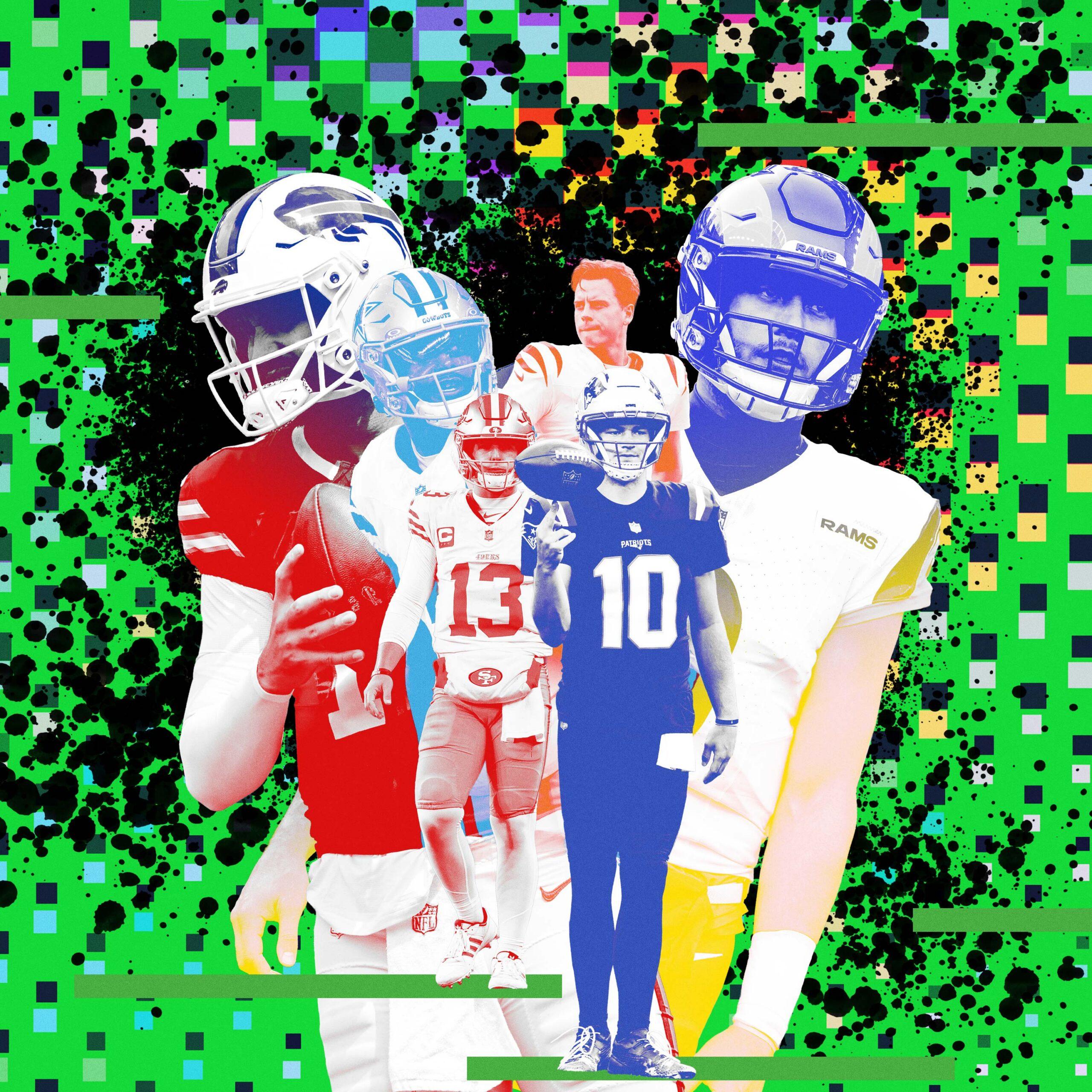

After years of the NFL being run by its top offenses and quarterbacks, 2025 saw the top defenses control the flow of the sport. We head into the 2026 season with the offensive hierarchy as jumbled as it has been in years. No longer can you simply pencil in the teams quarterbacked by Patrick Mahomes, Josh Allen, and Lamar Jackson at the top.
These rankings are based on three primary components: the quarterback and play caller combination, the offensive line, and the skill-position group. Last year’s efficiency and PFF grades matter, but this is not simply a list of last season’s DVOA or EPA standings. Personnel changes, coaching transitions, and the sustainability of last year’s production are all somewhat baked into the projections.
Several of the league’s best offenses are aging or replacing key pieces, and more than half of these teams enter the new season with a different offensive play caller from last year.
The result is a league with a handful of trustworthy offenses and a large middle class whose success will ultimately be determined by health, coaching, and play caller volatility. Here is how all 32 offenses stack up entering the 2026 season.
32
Cleveland Browns
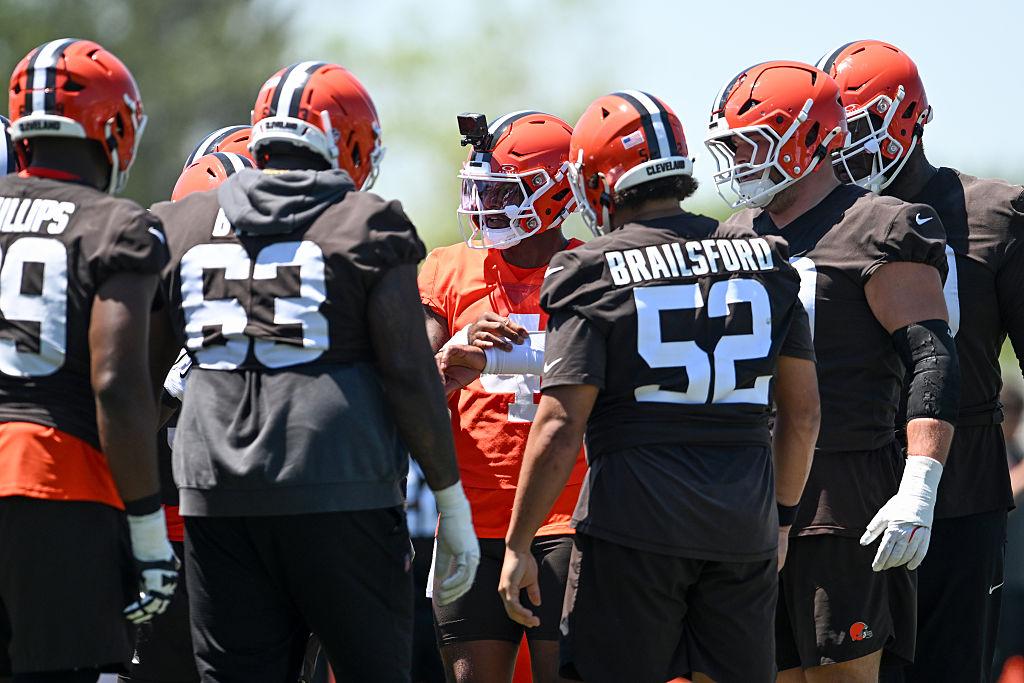
Deshaun Watson delivers a play call to the offense during offseason workouts
There are 49 quarterbacks with at least 200 pass attempts over the past two seasons. Among them, Deshaun Watson and Shedeur Sanders rank 48th and 49th, respectively, in EPA per dropback. That makes it difficult to generate much enthusiasm about anything else Cleveland has built.
I’m interested in how effectively new head coach Todd Monken can scheme around the rebuilt offensive line and get the ball to the young, talented skill-position group led by rookie receivers KC Concepcion and Denzel Boston, who have earned rave reviews in camp. But again: Have you looked at the quarterback numbers? And what does it say about Dillon Gabriel, a third-round pick just last year, that he doesn’t appear to be meaningfully involved in the competition?
It’s always darkest before the dawn of a new quarterback, and Cleveland is already waiting for the next one. Monken should raise the floor through scheme alone, but there is no meaningful ceiling here until the Browns find someone capable of playing the position.
31
Tennessee Titans
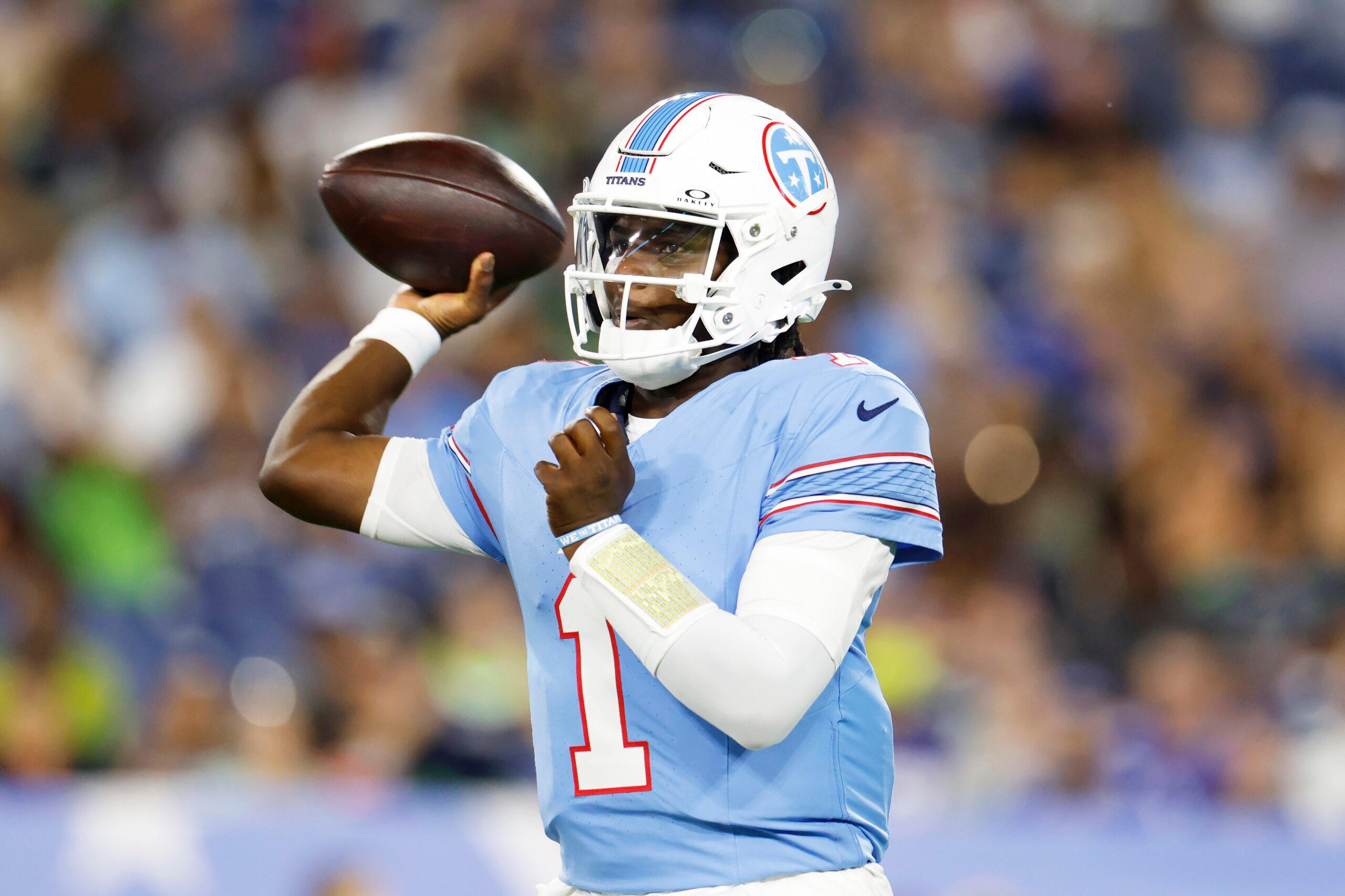
Cam Ward drops back to pass during a preseason game against the Seattle Seahawks
Cam Ward’s rookie season lands in the basement of recent first-year quarterback performances. When we’re looking at success rate, Ward had one of the worst rookie seasons in recent memory, sandwiched between Zach Wilson’s rookie year in 2021 and Bryce Young’s disastrous 2023 campaign.
I’m willing to accept that the environment for Ward under former head coach Brian Callahan was unworkable and that Brian Daboll could hit the reset button in 2026. But there is little evidence that a massive leap is imminent for Ward and the Titans offense as a whole. The offensive line and running game remain major questions, and while first-round receiver Carnell Tate is an exciting addition, Tennessee looks to be a long way from fielding a consistent offense. Daboll should make Ward’s life easier. The Titans need Ward to prove he can do something with that help.
30
New York Jets
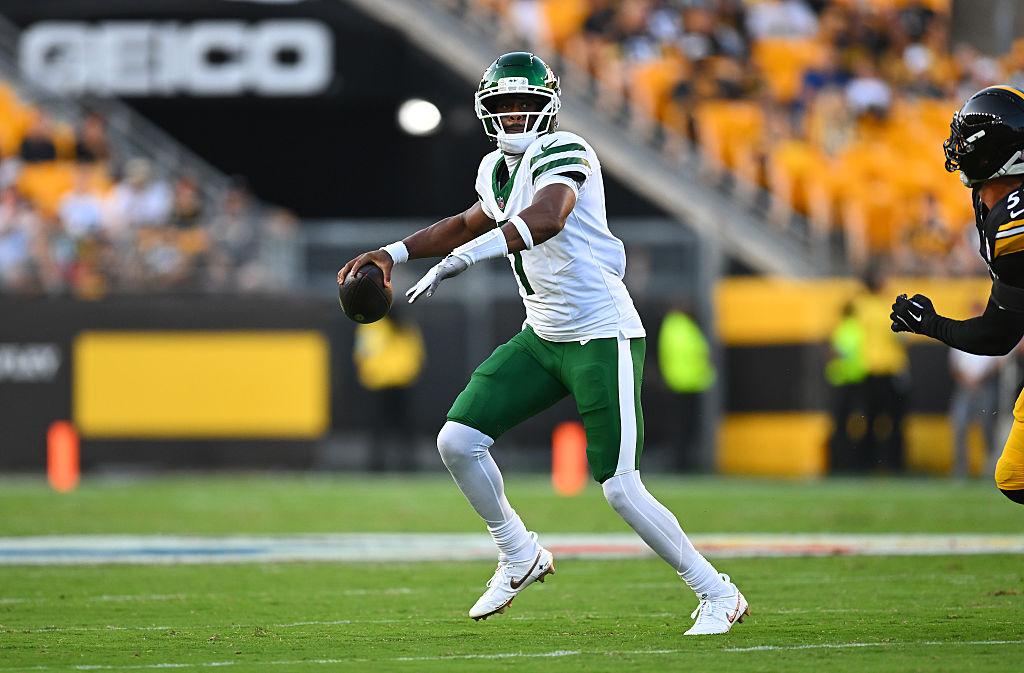
Geno Smith during a game against the Pittsburgh Steelers
Geno Smith never had much of a chance last year in Las Vegas behind the league’s worst offensive line and a schematically limited offensive coordinator in Chip Kelly; he averaged under 7 yards per attempt and led the league in interceptions (17). Now that he’s 35, with yet another retread offensive coordinator (Frank Reich) and questions about the quality of the offensive line, it’s hard to imagine Smith being anything more than just a placeholder quarterback for the Jets this season.
Reich had plenty of offensive success as a coordinator in Philadelphia nearly a decade ago and early in his tenure as the Colts’ head coach, but that era is in the rearview mirror. In 2022, he was fired after leading a dismal offense in Indianapolis. And then in 2023, the Panthers fired him after 11 games of offensive struggles. Both of those offenses finished in the bottom two in DVOA those seasons. Maybe Reich has new ideas that no one is expecting, but the more likely scenario is that the Jets will be looking for a new quarterback, offensive coordinator, and maybe even coach in 2027.
29
Miami Dolphins
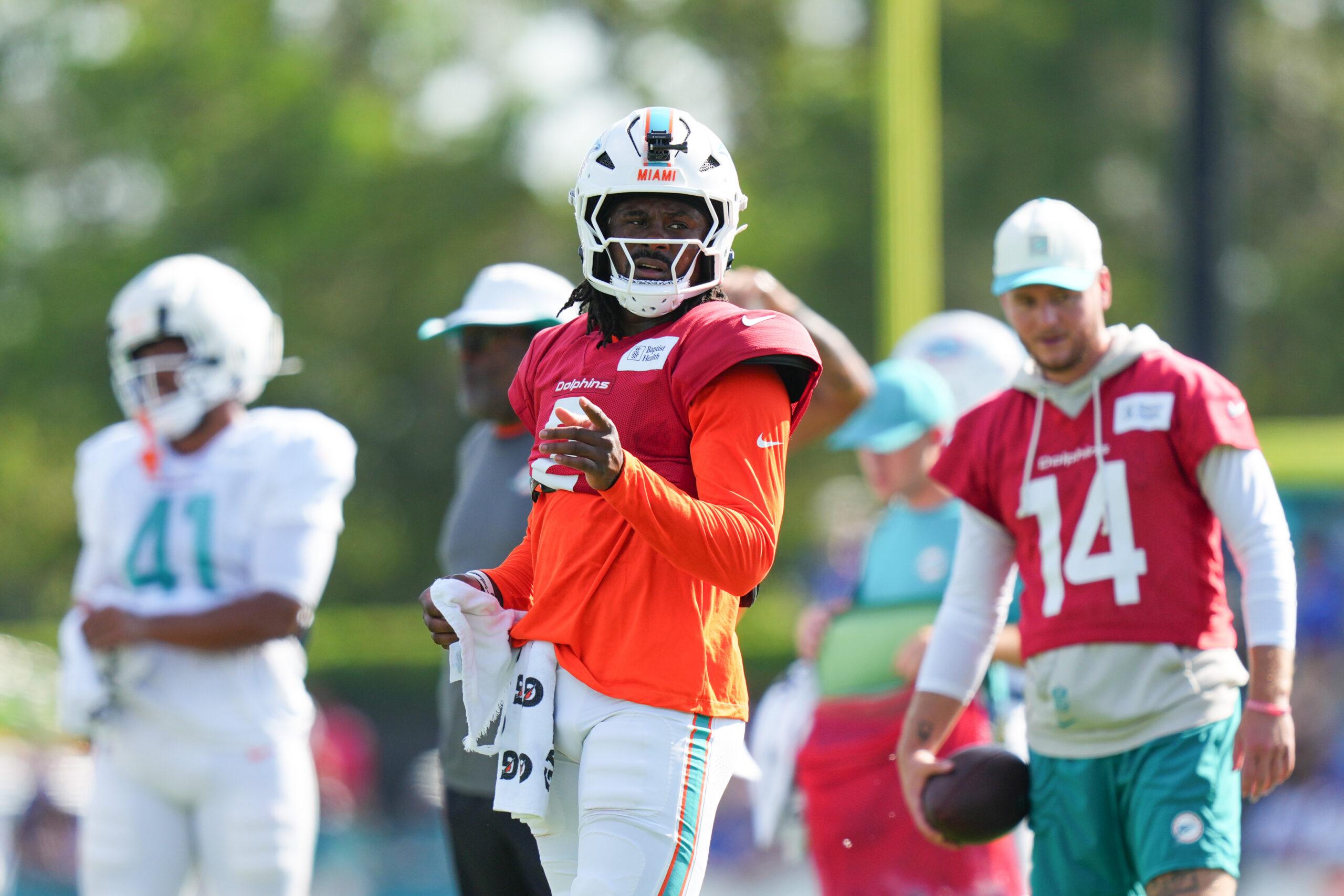
Malik Willis during joint practice with the New York Giants
Miami offensive coordinator Bobby Slowik received plenty of criticism during his time in Houston for his overzealous commitment to the running game. But his determination to establish it could produce better results in Miami, where he has a competent offensive line, an explosive running back, and a quarterback who can be deployed efficiently as a runner. The Dolphins may not have a single proven NFL starter in their receiving corps, but they possess the personnel and scheme to build a functional offense on the ground.
It’s easy to see how this could go terribly—especially if Miami’s defense can’t stop anyone and the offense finds itself having to play catch-up and move into pass-heavy comeback scripts. But in neutral game situations, the Dolphins could develop exactly the kind of physical, option-heavy offense that is deeply annoying to face.
28
New York Giants
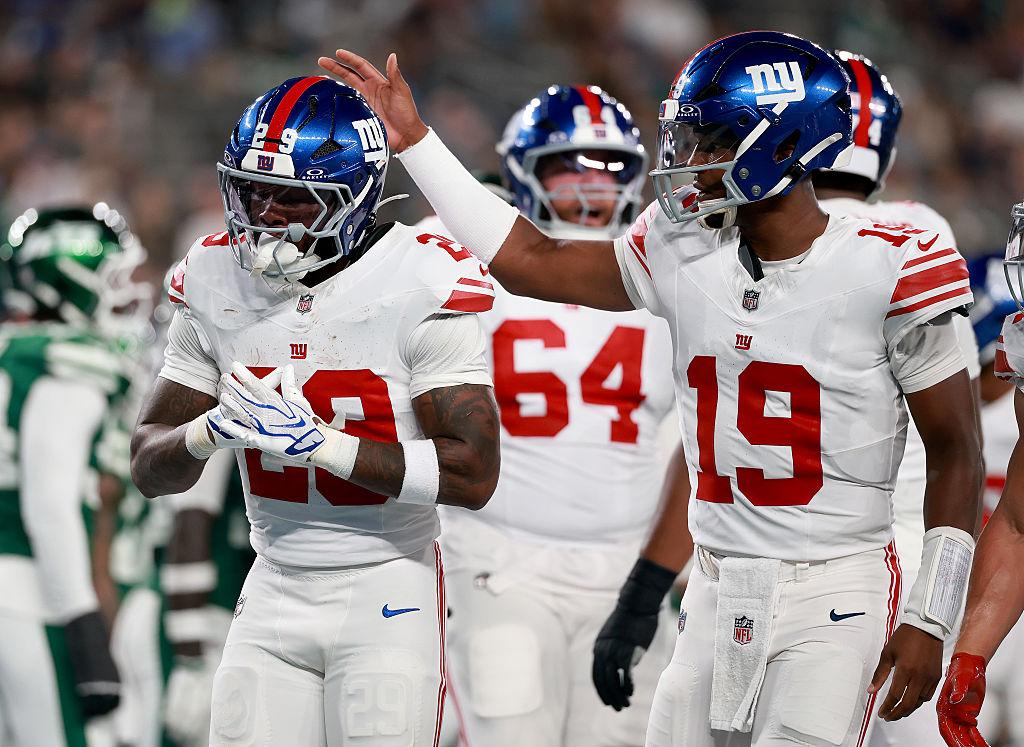
Tyrone Tracy Jr. and Jameis Winston during a preseason game against the New York Jets
Jaxson Dart added a ton of value to the Giants offense with his legs last year. The only quarterback who was more efficient as a runner was Josh Allen. But there’s a real give-and-take with the Giants’ reliance on scrambles and designed runs because they put Dart in consistent danger. The Giants will need Dart to be better in structure. He is excellent as a deep-ball thrower, but he has struggled to find consistency working underneath and in the quick passing game. New York has real potential to have an excellent rushing attack with its improving offensive line, Cam Skattebo’s hard-nosed running, and Dart’s legs. But the viability of the passing game will likely depend on the health of Malik Nabers as he returns from a torn ACL.
27
Arizona Cardinals
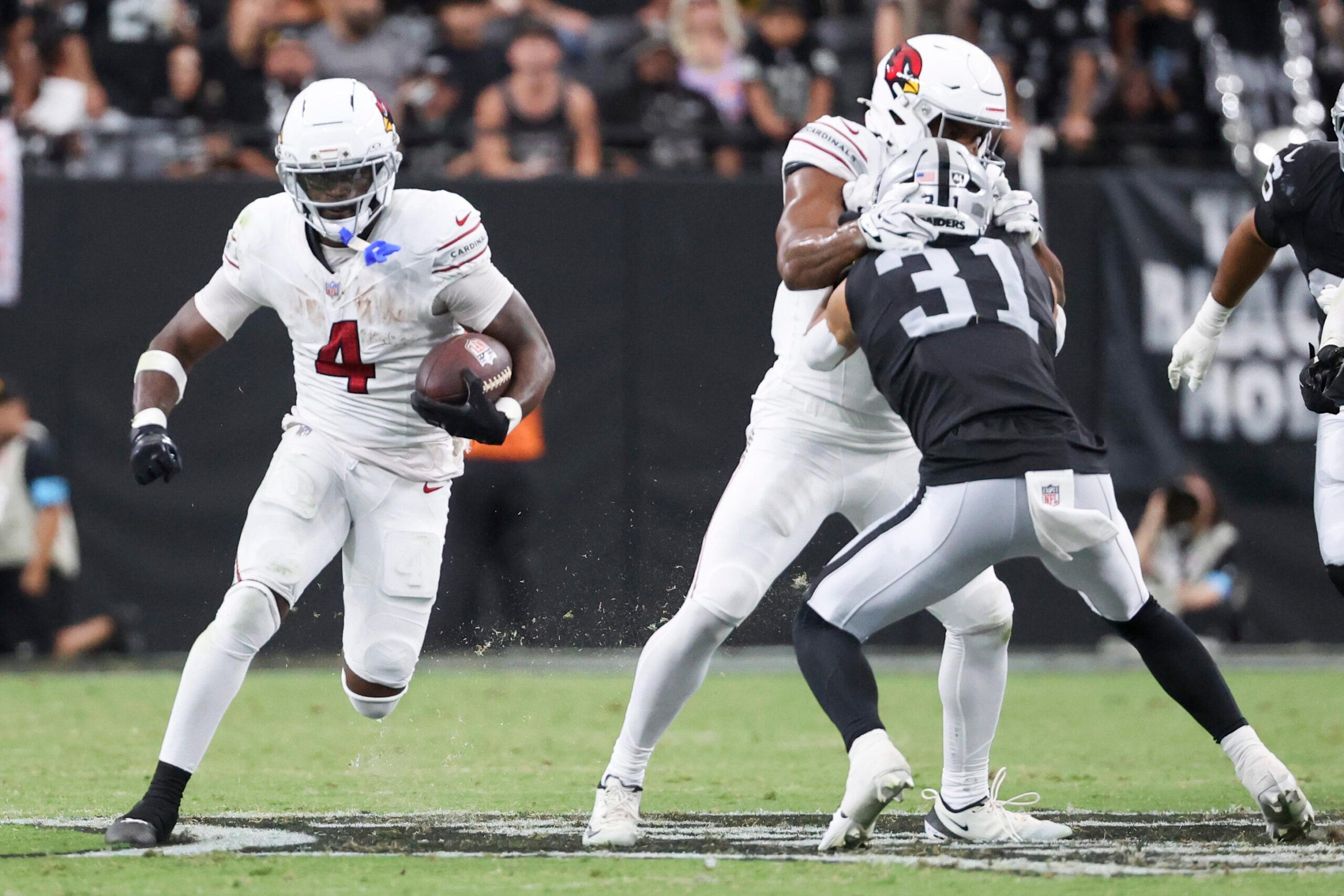
Jeremiyah Love runs the ball against the Las Vegas Raiders
Arizona’s most productive offense last season came in garbage time of meaningless games down the stretch. It enters this season with a talented offensive skill-position group and a new head coach who will also call the plays. The betting markets predict that the Cardinals will be the worst team in the NFL, but their offense has a chance to be at least functional. Jacoby Brissett gave the Cardinals competent quarterback play last year at times, and first-round rookie running back Jeremiyah Love plus Marvin Harrison Jr., Trey McBride, and underrated no. 2 wideout Michael Wilson create a semblance of a quality offense.
We’ll see whether first-year head coach Mike LaFleur can copy the success his brother has had in Green Bay in dialing up explosive plays and covering for offensive line deficiencies. LaFleur can probably make Arizona’s post–Kyler Murray offense look decent, but even if it’s functional, the team will be a long way from successful given the state of the defense.
26
Carolina Panthers
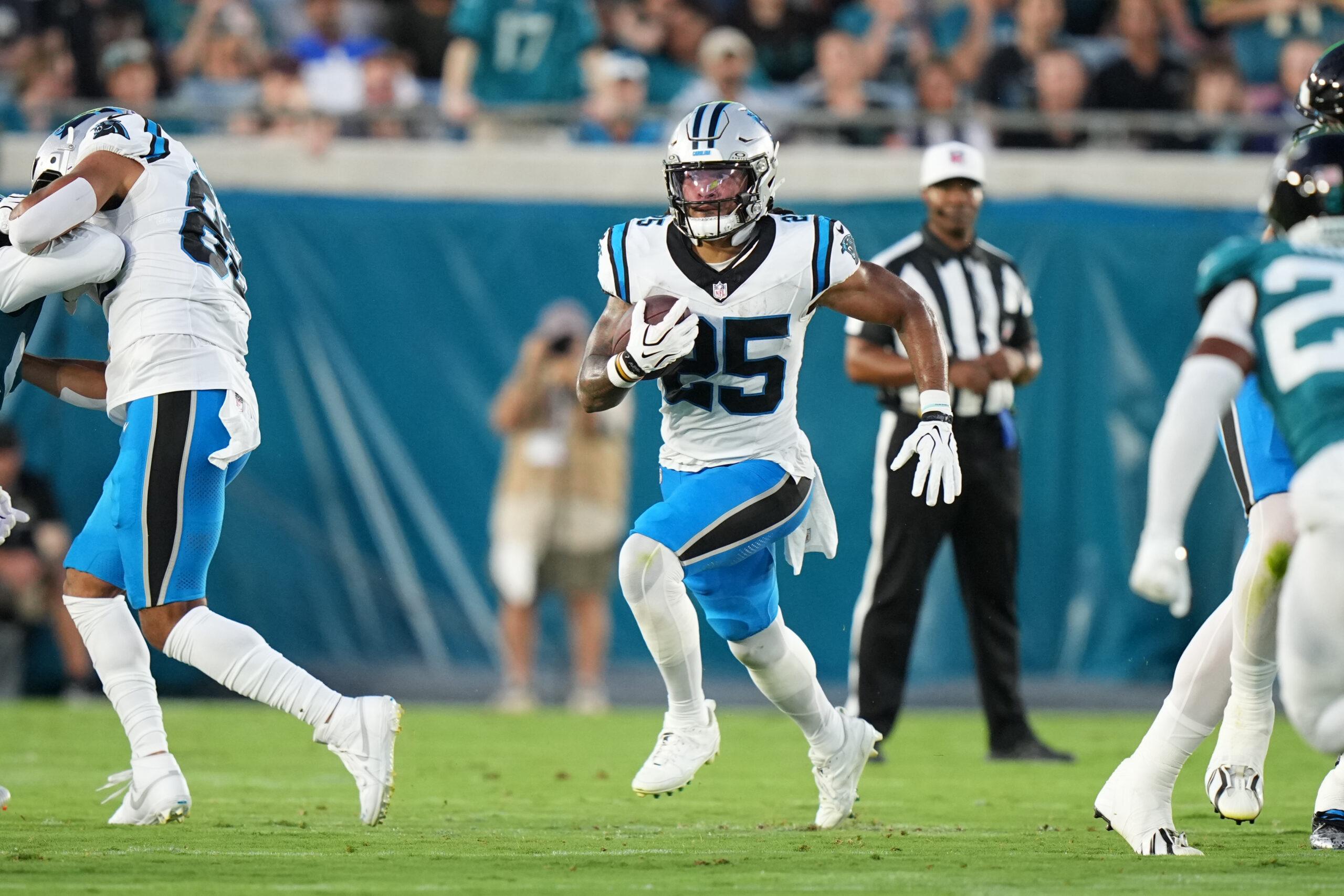
Carolina Panthers running back Jonathon Brooks rushes with the ball during a preseason game against the Jacksonville Jaguars
Bryce Young set career highs in completion percentage, passing yards, and touchdowns and led Carolina to the NFC South title (albeit at 8-9) last season, and the Panthers rewarded his improvement by picking up his fifth-year option. That is real progress for a quarterback who looked like a bust over his first few seasons, even if winning the worst division in football does not automatically make Carolina’s offense good. Especially because it wasn’t very efficient. Based on adjusted EPA per play (garbage time excluded), Young’s numbers were worse than Tua Tagovailoa’s, Aaron Rodgers’s, and Jacoby Brissett’s last year.
The return of young running back Jonathon Brooks, who missed all of last season while recovering from a torn ACL, gives Dave Canales a potentially explosive backfield piece and should prevent Carolina from asking Young to carry every obvious passing situation. But the Panthers need the good stretches to last longer than a couple of weeks at a time. Young has proved he belongs in the league. Now his challenge is to show he’s better than average.
25
New Orleans Saints
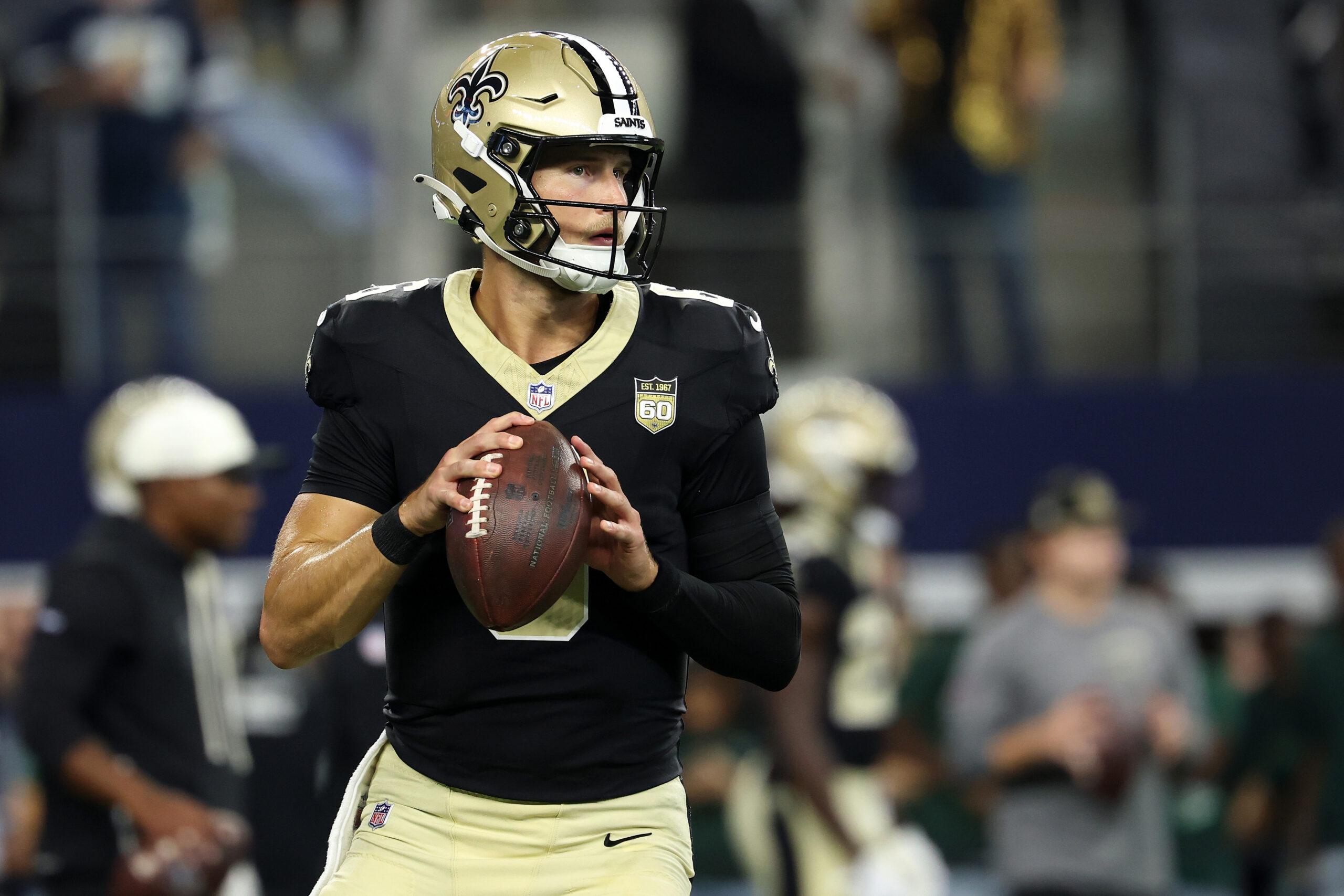
Tyler Shough during warmups
The first question to answer when evaluating the Saints is how much of their offensive improvement in the second half of 2025 was real and how much was schedule driven. If we’re looking at weighted DVOA, which emphasizes the most recent games, the Saints finished the season 28th, a sign that the offensive improvements likely weren’t anything more than a product of playing a lot of really bad pass defenses down the stretch. Indeed, Tyler Shough’s most impressive games came against the Panthers, Jets, and Titans.
In 2026, New Orleans will try to lean more on the running game after adding Travis Etienne Jr. in free agency. Receiver depth is also a question after first-round pick Jordyn Tyson suffered a serious hamstring injury in the preseason.
Shough finished last season in the middle of the pack in overall quarterback efficiency, and it’s not out of the question for him to take a major step forward in his first full year as the starter, but it seems just as likely that New Orleans will be looking for its next quarterback in the spring.

NFL Season Previews
24
Las Vegas Raiders
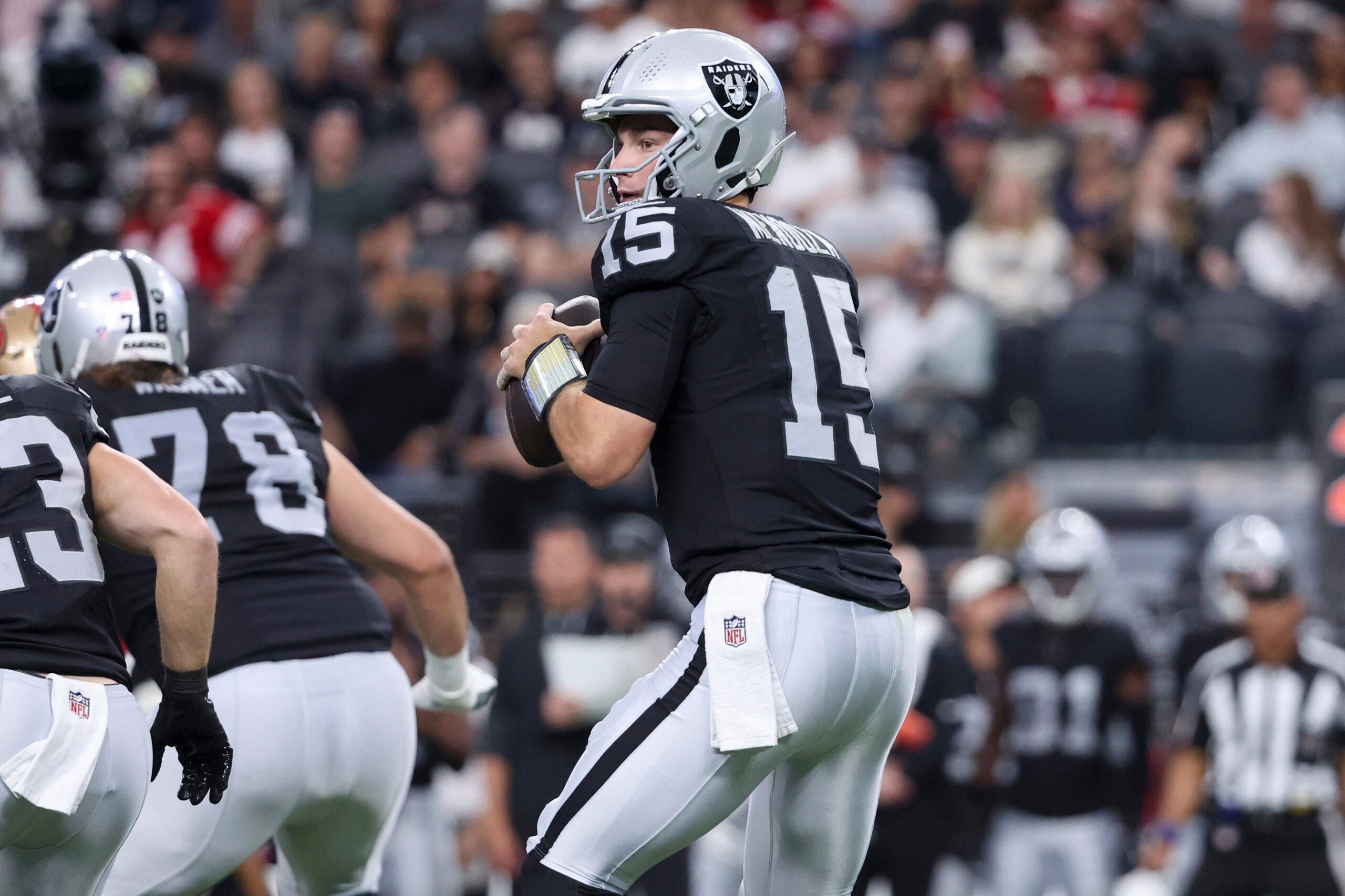
Fernando Mendoza during a preseason game
Of all the teams in the bottom 12 of these rankings, the Raiders have the most intriguing combination of quarterbacks and a new head coach. In his first time calling plays, for the Saints in 2024, Klint Kubiak resurrected the New Orleans offense for a few weeks before everyone got hurt, and then last year, he turned the Seahawks into an inconsistent yet explosive juggernaut that hoisted the Lombardi Trophy. Pair him with a respectable veteran in Kirk Cousins and an enticing rookie in Fernando Mendoza, and the Raiders have an offense with lots of room to blossom. The better Cousins plays, the longer the wait until Mendoza makes his debut. Meanwhile, if Cousins is giving the offense little hope, it could force Mendoza into the game sooner than minority owner Tom Brady would probably prefer.
The issue for Las Vegas is that, other than Miami, it might have the worst collection of receivers in the league. But Kubiak may be able to mitigate that by using plenty of heavy formations featuring multiple tight ends. This approach would play into Las Vegas’s strength with Brock Bowers and Michael Mayer.
The offensive line was at the bottom of the league in 2025, but the return of Kolton Miller at left tackle and the addition of top free agent center Tyler Linderbaum will give Kubiak multiple pieces to build his scheme around. Remember, the Seahawks were not projected to have a competitive offensive line last preseason, and Kubiak helped develop it into one.
The overall ceiling might be relatively low, but this Raiders offense has some real “a rising tide lifts all boats” vibes.
23
Atlanta Falcons
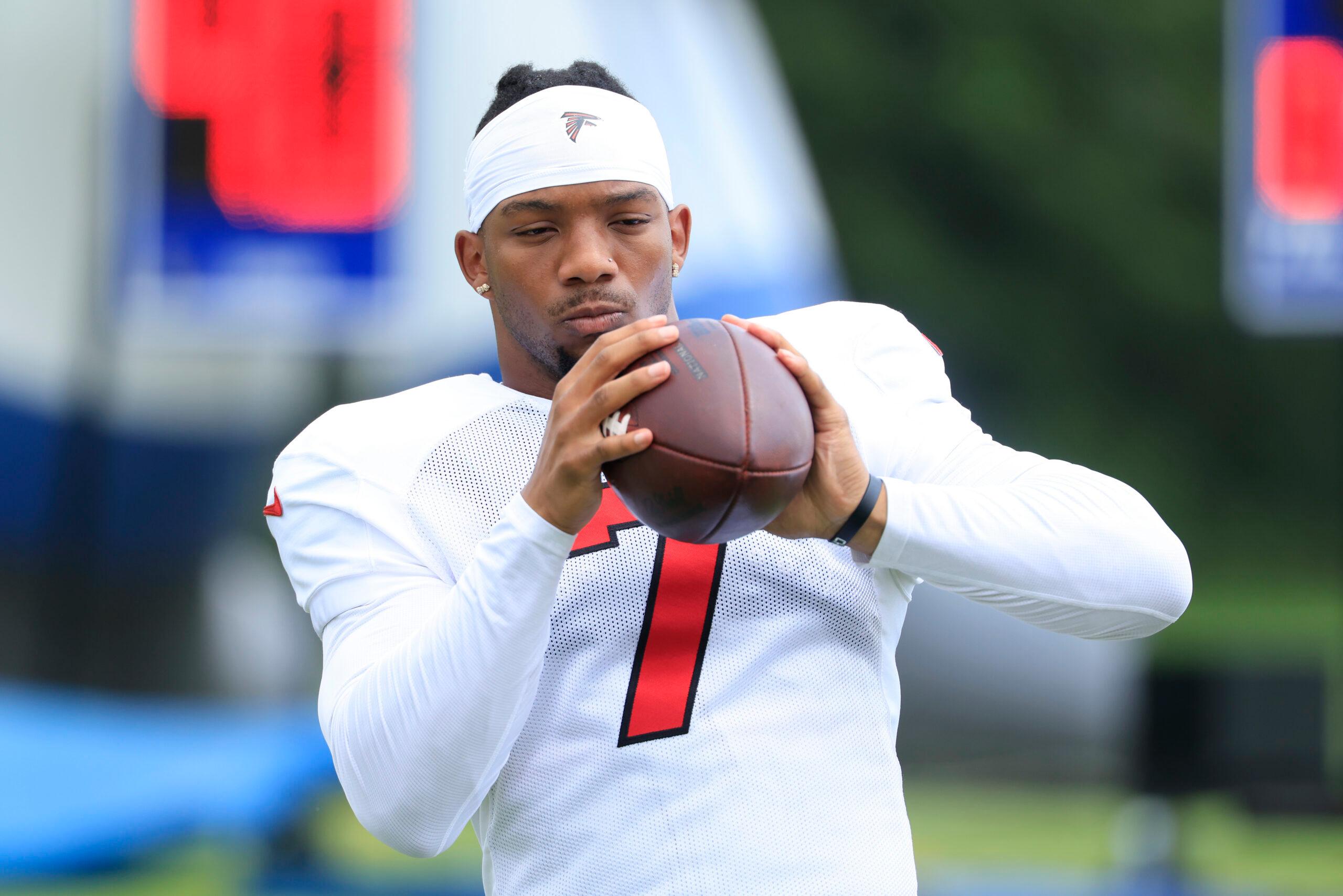
Bijan Robinson warms up during a joint practice with the Indianapolis Colts
No offense better encapsulates the difference between talent and production than Atlanta’s. Bijan Robinson is one of the best offensive players in football, Drake London is a legitimate no. 1 receiver, and the offensive line is good enough to support a great run game. Yet the Falcons are entering another season without knowing exactly what they have at quarterback. Michael Penix Jr. missed most of training camp while still recovering from a torn ACL, and the apparent bridge plan with Tua Tagovailoa has become much less appealing after a dreadful preseason.
We know that Kevin Stefanski typically uses an under-center, run-heavy offense with a passing game built on play-action. But we don’t know whether he has a quarterback who can properly execute that. The league is trending toward this style of offense, but most teams are also positioned to do it better than Stefanski’s Falcons right now.
The Falcons have considerably more skill-position talent than the offenses around them in these rankings. But the quarterback situation is so dire that even a two-time Coach of the Year and a top-five fantasy mainstay (Robinson) won’t keep them from wasting yet another year.
22
Tampa Bay Buccaneers
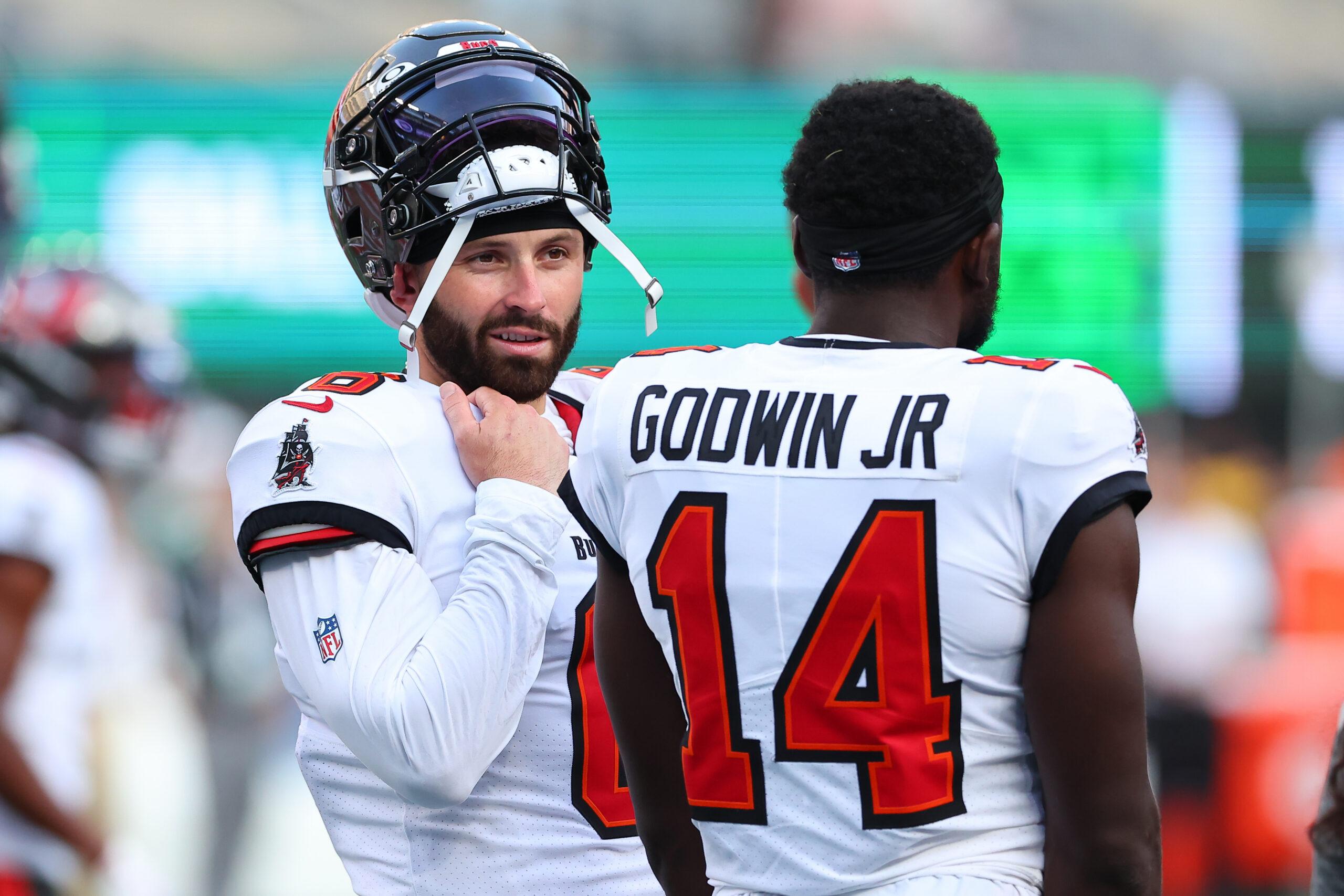
Baker Mayfield and Chris Godwin Jr. before the game against the New York Jets
Baker Mayfield’s production dropped significantly in 2025 after he reached career highs the season before. His completion percentage fell from 71.4 percent to 63.2 percent, his yards per attempt dropped from 7.9 to 6.8, and Tampa Bay went from having a top-five offense to missing the playoffs in the final week of the regular season. If anything, all of this should be a ringing endorsement of the quality of former offensive coordinator Liam Coen, who took the Jacksonville head coaching job after the 2024 season.
But the most concerning part of the 2025 Bucs offense was its run game. Bucky Irving averaged just 3.4 yards per carry, and the Buccaneers became far too dependent on Mayfield escaping pressure and creating something out of thin air.
Tampa Bay is now on its fourth offensive coordinator in four seasons. Zac Robinson arrives after two years of calling plays in Atlanta with limited success, and he should bring more motion and play-action to an offense that badly needs to give Mayfield some easier throws. But Mike Evans is gone, Emeka Egbuka is being asked to become the clear no. 1 receiver after an encouraging rookie season, and Mayfield is entering the final year of his contract.
If this season goes poorly, the Bucs could be looking at a major reset with a new quarterback and head coach.
21
Houston Texans
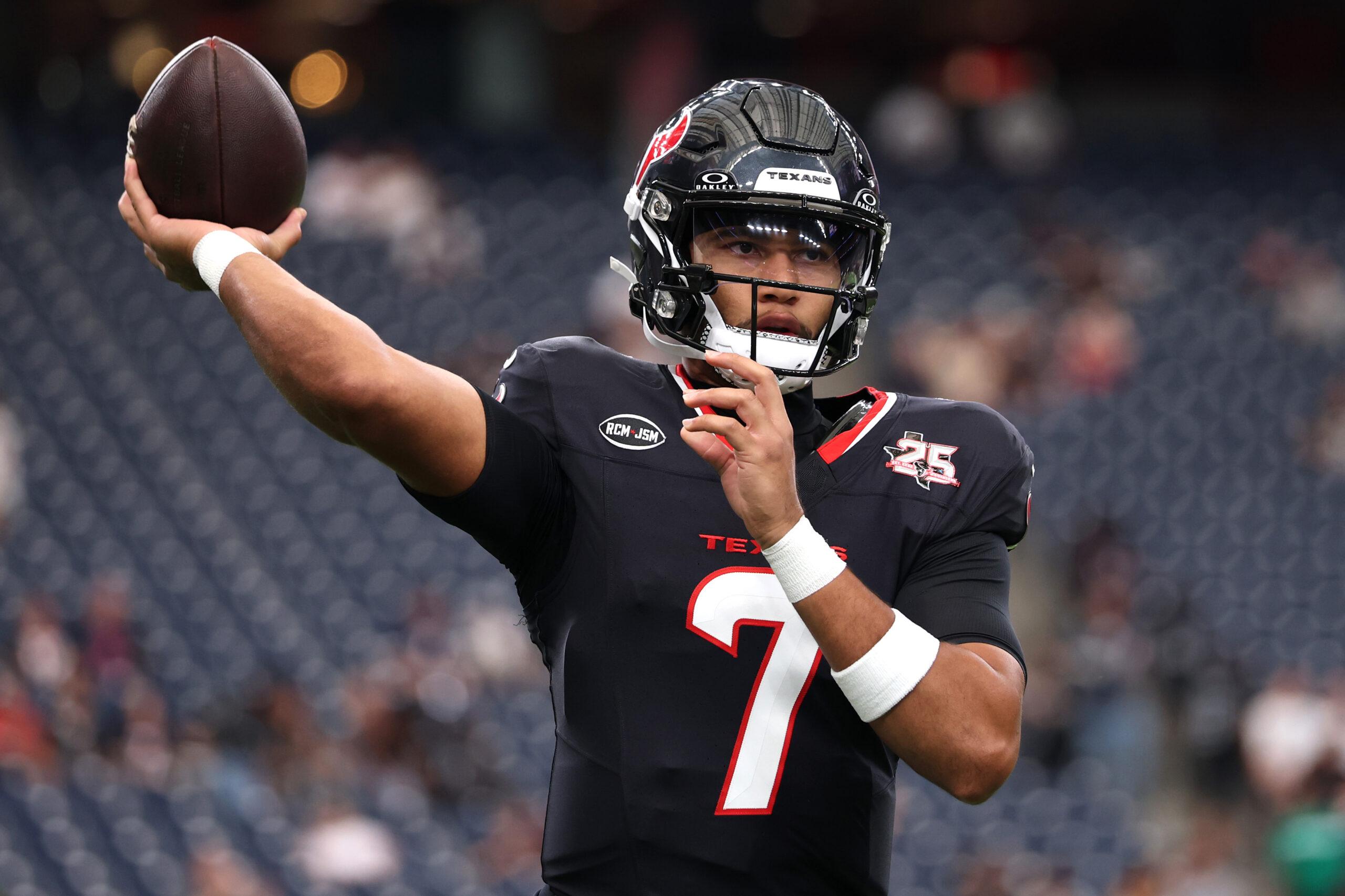
C.J. Stroud makes a pass during warmups
There’s a wide range of forecasts for this offense entering a massive prove-it year for both offensive coordinator Nick Caley and quarterback C.J. Stroud. Stroud is entering year four as the Texans’ starter without a contract extension. The Texans brought in David Montgomery to try to rescue an ineffective running game, but I’m most interested in whether Houston will switch up its play calling tendencies to get better performance on the ground. The Texans had the seventh-highest rush rate on first down last year and ranked 29th in efficiency on those runs. As a result, they got stuck behind the chains on second down more than all but three teams. By the end of the year, Houston’s red zone offense ranked 30th in the league.
There are reasons to be optimistic that the offense will improve in 2026. The trade for receiver Kayshon Boutte became necessary after Jayden Higgins’s season-ending injury, and it gives Stroud a proven vertical receiver opposite Nico Collins. Boutte can punish defenses for crowding the box against Montgomery and create some of the downfield explosive plays that have been missing since Stroud’s rookie season.
But Stroud cannot solve the structural problems by himself. Unless Caley becomes less predictable on early downs and the offensive line does a better job in pass protection, Houston will once again ask Stroud to rescue too many drives on his own.
20
Washington Commanders
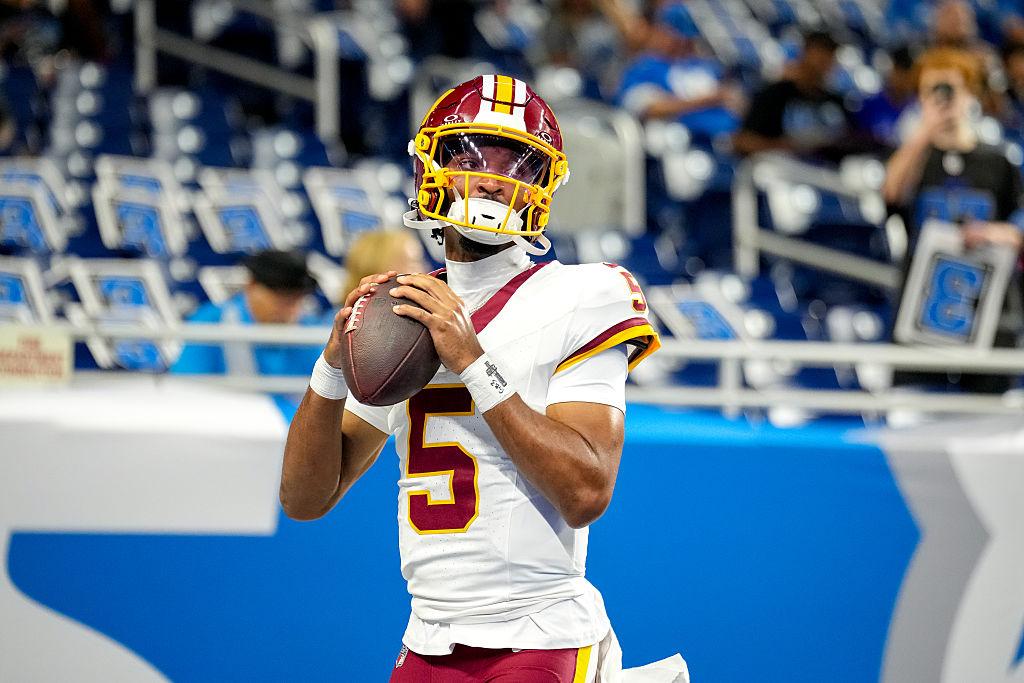
Jayden Daniels warms up before a preseason game against the Detroit Lions
Some regression was inevitable last season after everything broke right in 2024, but the Commanders’ collapse was accelerated because of injuries to starting QB Jayden Daniels, who missed 10 games, and top receiver Terry McLaurin. Without Daniels’s explosiveness as both a runner and a deep passer, the Commanders offense became completely ordinary and lacked the timing and rhythm that defined the magical 2024 season.
The challenge in 2026 is not just keeping Daniels healthy. Kliff Kingsbury is gone, replaced by first-time coordinator David Blough, and a triceps injury to left tackle Laremy Tunsil has already forced Washington to reshuffle its line.
Daniels is talented enough to single-handedly make Washington outperform this ranking, and Washington could have a top-10 offense if he’s healthy. But last season demonstrated how little infrastructure exists when he’s out and how fragile the roster is around him when he’s in.
19
Minnesota Vikings
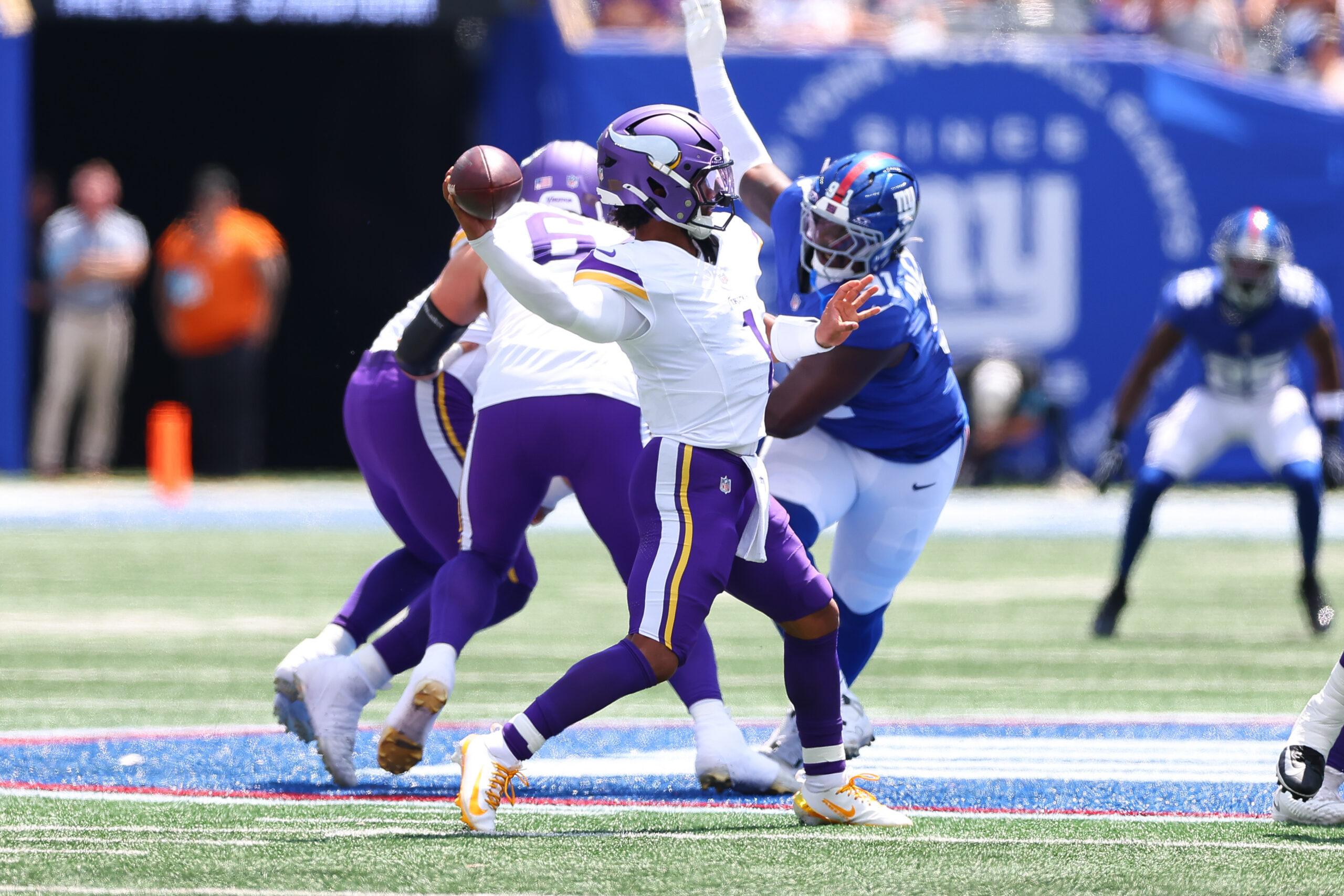
Kyler Murray drops back during a preseason game against the New York Giants
J.J. McCarthy completed just 57.6 percent of his passes, threw more interceptions than touchdowns, and missed time with injuries last year in his first season as Minnesota’s starter. That’s why Kevin O’Connell brought in Kyler Murray and named him the starter in August.
This is probably the best possible environment for Murray to rehabilitate his career. O’Connell has gotten functional quarterback play from just about everyone he has coached, and Murray should benefit from playing with arguably the best receiving corps in the league, which includes Justin Jefferson, Jordan Addison, and new addition Jauan Jennings. Murray also adds a rushing element that O’Connell has never had before in Minnesota. But Murray played only five games last season in Arizona and has completed just one full season since 2021. After spending his entire career in Arizona playing in a spread, shotgun-heavy scheme, he’s now learning O’Connell’s timing-based offense, which puts the quarterback under center and uses play-action. The upside here is obvious. Given how little Minnesota got from the QB position last year, it should be considerably improved as long as Murray can stay healthy. But even so, the Vikings have a long way to go to be as effective as they were with Sam Darnold in 2024.
18
Seattle Seahawks
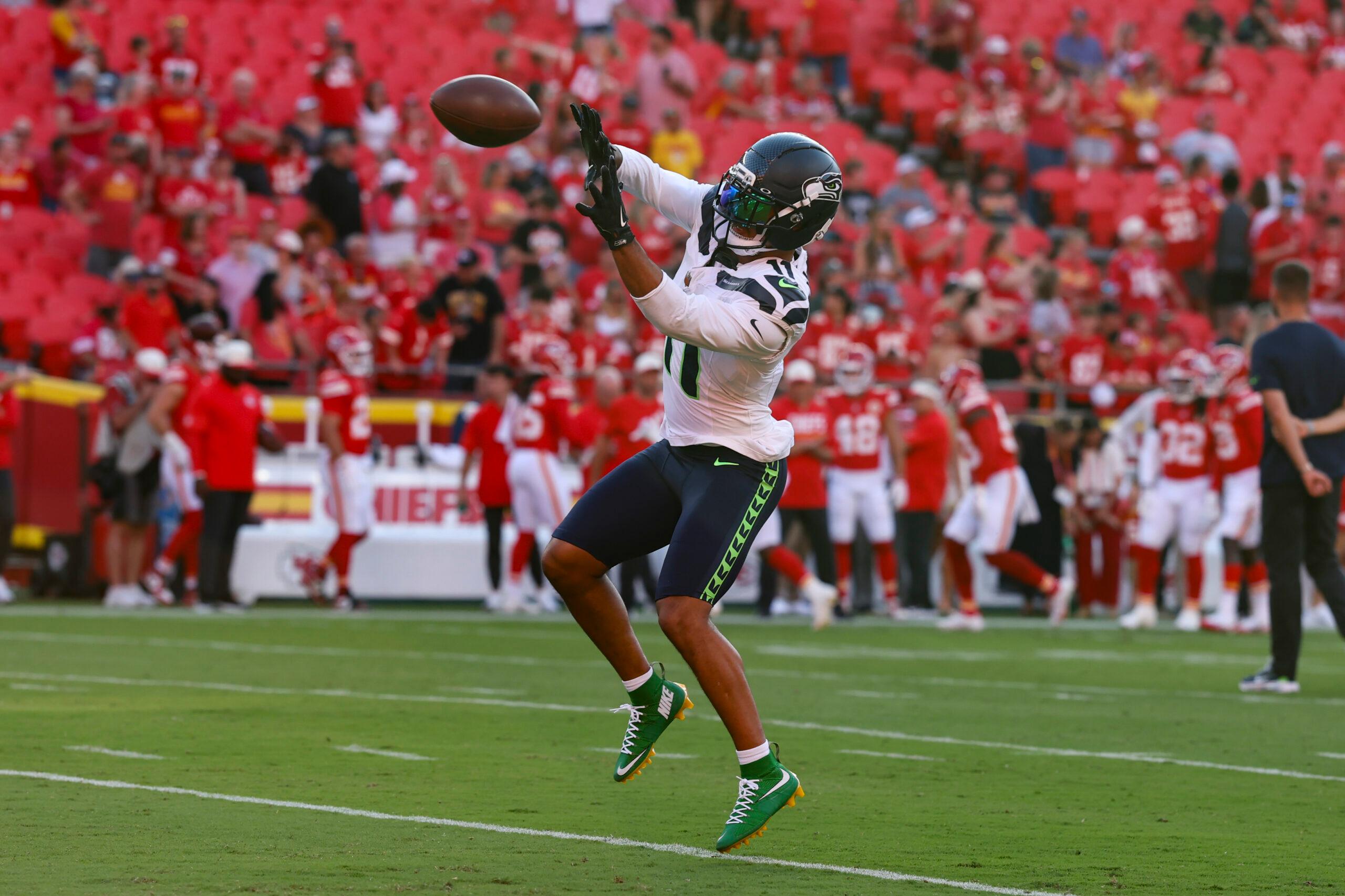
Jaxon Smith-Njigba catches a ball before a preseason game between the Seattle Seahawks and Kansas City Chiefs
Seattle’s offense romped its way through the playoffs, but this unit was inconsistent for much of last year, finishing 14th in offensive success rate and 18th in EPA per drive during the regular season. Because of the quality of the defense and the fact that they often found themselves in blowouts, the Seahawks and quarterback Sam Darnold played with the hand brake on at times in second halves. Still, the Seahawks were sloppy offensively. They were below average in the red zone and had consistent turnover issues before the playoffs. Now, Seattle faces major questions about its running game. Super Bowl MVP Kenneth Walker III is gone, and RB1 Zach Charbonnet is recovering from a knee injury. That puts a lot of weight on rookie running back Jadarian Price, as well as any receiver not named Jaxon Smith-Njigba, to make this offense less reliant on one player like it was with Smith-Njigba last season.
Mike Macdonald has made three offensive coordinator hires so far. His first one, Ryan Grubb, barely survived year one and was let go after it. His second, Klint Kubiak, helped him win the Super Bowl by providing an explosive offensive scheme. We are about to get our first look at the third, Brian Fleury, who was the run game coordinator under Kyle Shanahan in San Francisco. The offense has proved it can be explosive with Darnold, but more down-to-down consistency should be the goal as the Seahawks shift from the hunters to the hunted.
17
Pittsburgh Steelers
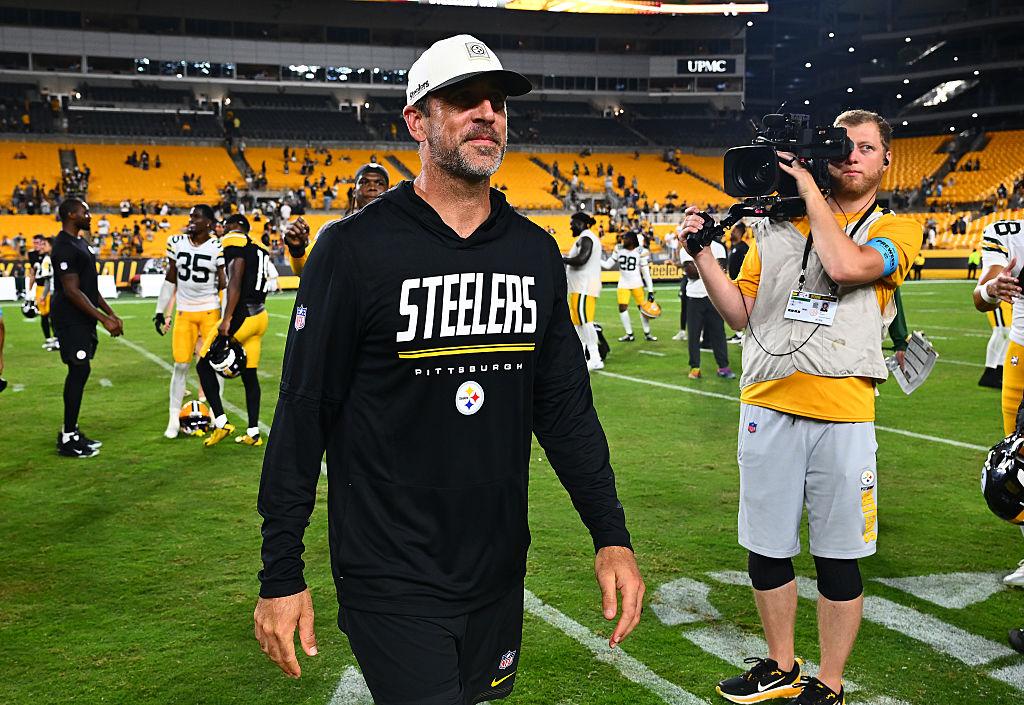
Aaron Rodgers after the preseason game against the Green Bay Packers
The reunion of Mike McCarthy and Aaron Rodgers certainly won’t be 2011 all over again, but this does look like a better scheme fit for Rodgers than he had with Arthur Smith last year. The 42-year-old QB will be expected to get the ball out quickly, and Michael Pittman Jr. is the perfect type of receiver for those targets. Pittsburgh will also likely lean on a run game that finished in the top 10 by EPA last season behind an offensive line that quietly improved.
But the Steelers’ ceiling remains low because Rodgers cannot take hits and will do anything he can to avoid contact. He also offers no scrambling ability at this point in his career. But Rodgers can still provide middling quarterback play, which should be enough for the Steelers to assemble another good, but not great, season, ensuring they’ll remain stuck in the NFL’s middle class for at least another year.
16
Philadelphia Eagles
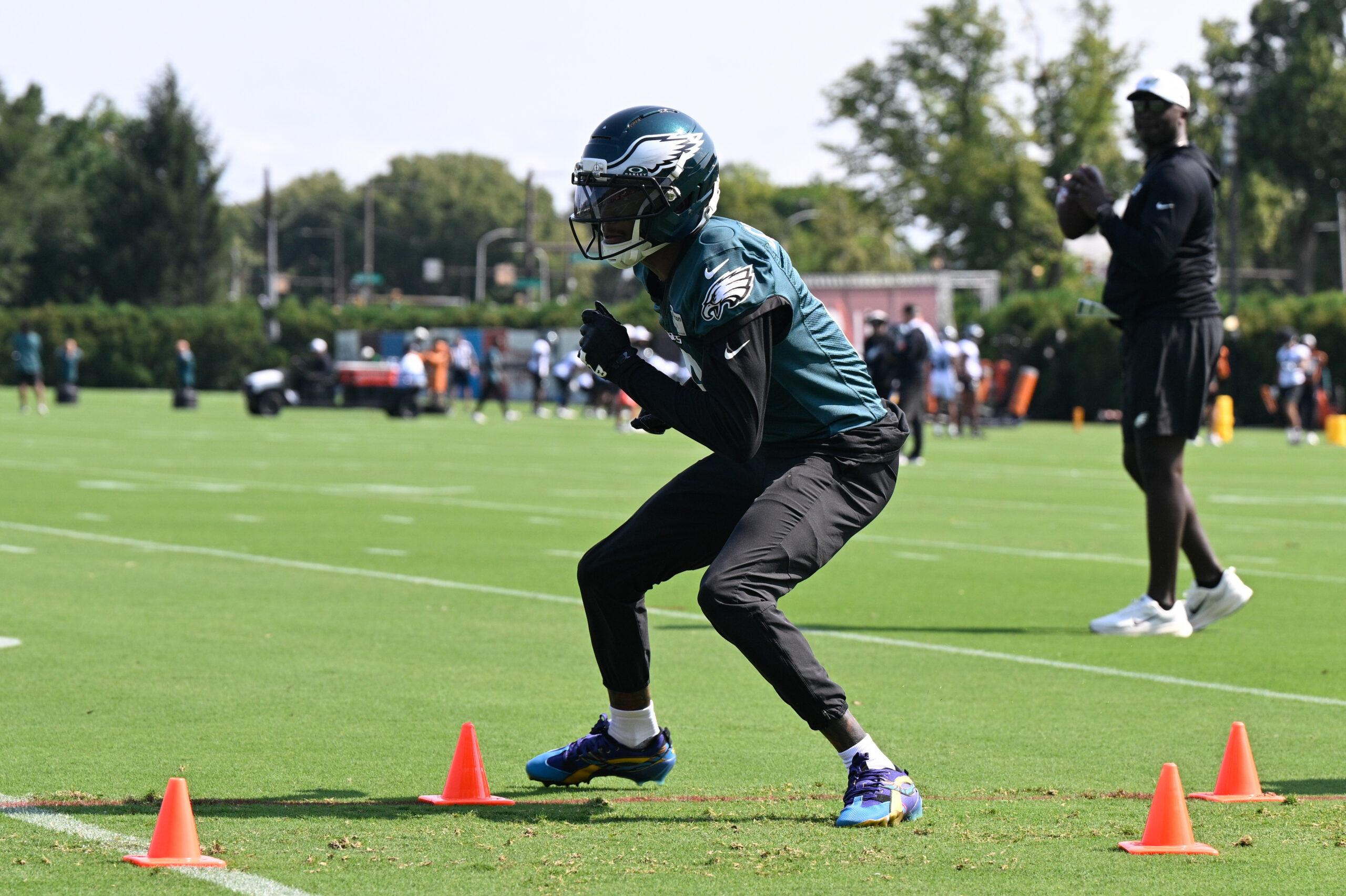
DeVonta Smith runs a drill during training camp
The bottom fell out of the Eagles offense last year under former coordinator Kevin Patullo. It finished 19th in EPA per drive and had the fifth-highest three-and-out rate in the NFL. A combination of run blocking regression and a failure to provide any surprises in the passing game culminated in a wild-card exit and one of the most miserable 11-win seasons in NFL history. The offense will look entirely different under new offensive coordinator and first-time play caller Sean Mannion, who most recently coached under Matt LaFleur in Green Bay. The Eagles have to replace A.J. Brown, which they’ll attempt to do in the aggregate through Dontayvion Wicks and rookie Makai Lemon. There will be more snaps under center and more throws over the middle. They’ll ask Jalen Hurts to throw with anticipation more frequently, and how well he adapts to these changes will determine how the Eagles offense fares this season.
It could be a breakout year for DeVonta Smith if things break right—and he’s been elite without Brown on the field—but there may well be growing pains for the Eagles as they attempt to adjust to a new offensive scheme and face sky-high expectations.
15
Jacksonville Jaguars
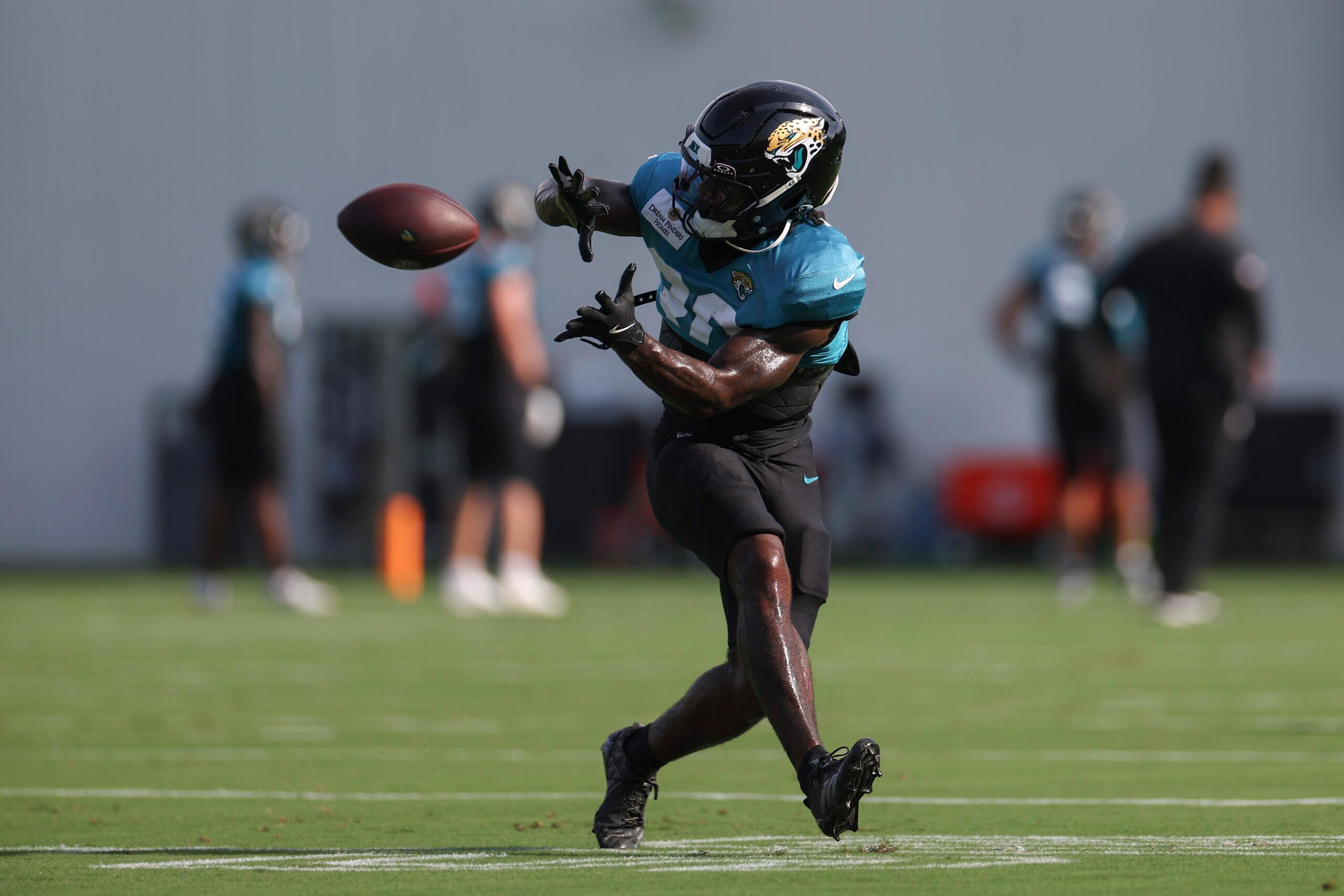
Bhayshul Tuten catches a pass during training camp
The Jaguars offense took off in the second half of last season under new head coach Liam Coen, but it is difficult to determine whether that late-season success was a fluke or something that can carry over into 2026. Jacksonville faced some truly terrible pass rushes and bad defenses down the stretch, with games against the Colts and Titans (twice each), the Cardinals, and the Jets. But the Jaguars also played Denver, with its elite pass rush, in December and had arguably their most impressive offensive performance of the entire season without much of a rushing attack. While the Jaguars’ passing game took off down the stretch, its run game tanked:
Jaguars 2025 Offensive Efficiency by Week
Last year’s primary tailback, Travis Etienne Jr., departed this offseason, leaving Bhayshul Tuten as the expected starter. Tuten brings explosiveness to the backfield, but the uncertainty along the offensive line makes it difficult to assume the running game will simply rebound. Coen’s challenge is to preserve the aggressive, efficient passing attack that emerged during the second half without allowing Jacksonville to become one-dimensional. Trevor Lawrence’s late-season surge offers a real reason for optimism, but until the Jaguars prove they can throw efficiently against better defenses and rediscover a functional running game, their offensive breakout deserves some skepticism.
14
Indianapolis Colts
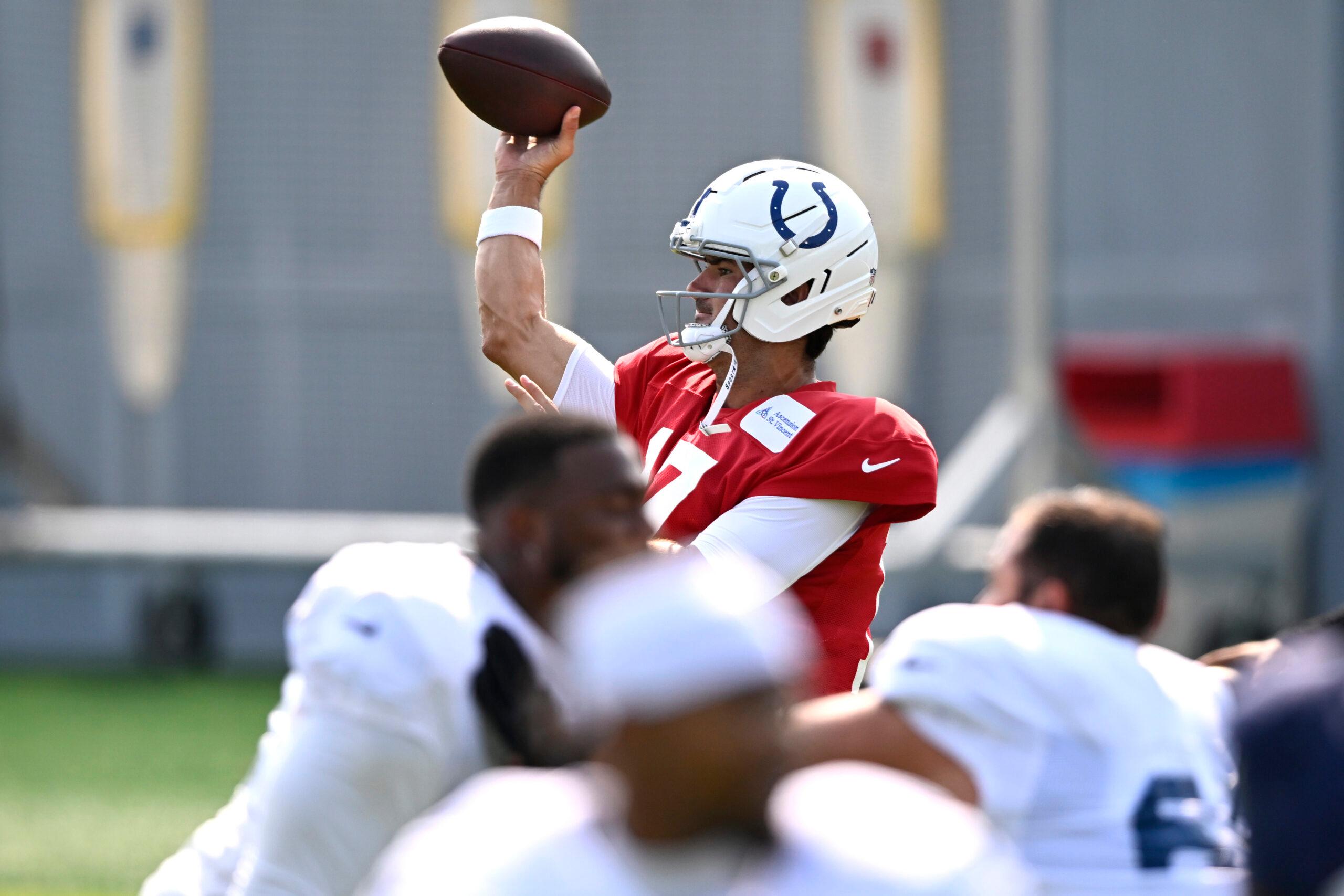
Daniel Jones at a joint practice with the New England Patriots
The Colts are one of the most difficult offenses to project because the unit we saw when Daniel Jones was healthy last season was legitimately excellent. Indianapolis had an explosive rushing attack with Jonathan Taylor, which was set up by a dominant early-down passing attack loaded with downfield throws.
The question is whether we’ll see that version of Jones after his surgery to repair a torn Achilles tendon. His legs were a valuable tool last season, especially on third downs. If Jones returns as a viable runner, Shane Steichen can construct a top-10 unit around him. If lingering effects of the injury remove that element from his game and push Jones to play like the hesitant pocket passer we saw when he was with the Giants, Indianapolis would become far more dependent on Taylor to carry the offense. Ranking the Colts here at 14 is largely a way to split the difference between the offense we watched before Jones’s injury and the uncertainty of what he’ll look like after it. It also doesn’t help that WR1 Alec Pierce missed most of the preseason recovering from an ankle injury but will be counted on to be an even bigger part of the offense following the offseason trade of Michael Pittman Jr. to Pittsburgh.
Even though Steichen was dealt an objectively bad hand of quarterbacks before Jones—Anthony Richardson, Gardner Minshew, Riley Leonard, Joe Flacco, and Philip Rivers—the Colts rank tied for 13th in EPA per drive since he became head coach in 2023.
13
Denver Broncos
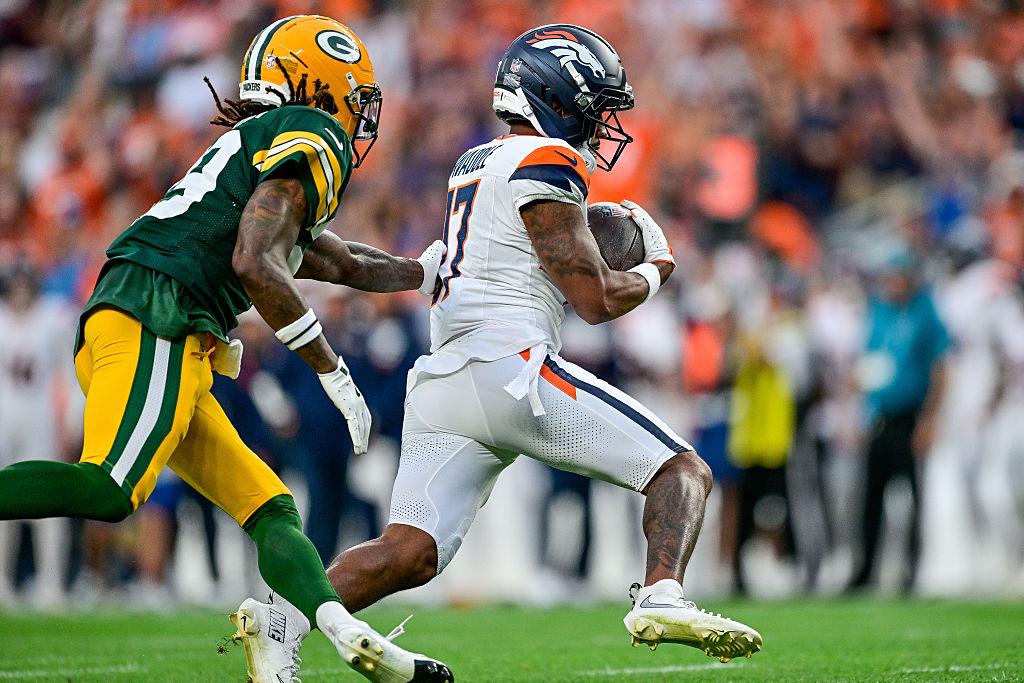
Jaylen Waddle runs after a catch during a preseason game between the Green Bay Packers and the Denver Broncos
The Broncos offense was functional last season, but it was not especially explosive. Bo Nix and Sean Payton produced a unit that stayed out of obvious passing situations, protected the football, and gave Denver’s elite defense enough support to win games. Nix avoided negative plays most of the season, and while that formula has value, the Broncos needed a receiver who could change the geometry of the field. Enter Jaylen Waddle. The Broncos now have a wideout who can stretch the field vertically and, maybe more importantly, use the middle of the field to become more explosive.
Waddle gives Denver genuine speed opposite Courtland Sutton and should create more room underneath for a passing game that was often too condensed near the line of scrimmage. A bet on the Broncos’ ability to jump into the top 10 by the end of the season is a bet on new offensive play caller Davis Webb having the goods. It’s a bet on Nix channeling more of a “Backyard Bo” persona. Nix excelled in scramble drills and fourth-quarter situations last season, but he needs to become better in structure.
Given the quality of the offensive line and the one-two punch at the top of the skill-position group, there are no more excuses for this offense. After finishing 12th in EPA per drive last season, they should want to see themselves in the top 10. Whether they get there is another question.
12
Detroit Lions
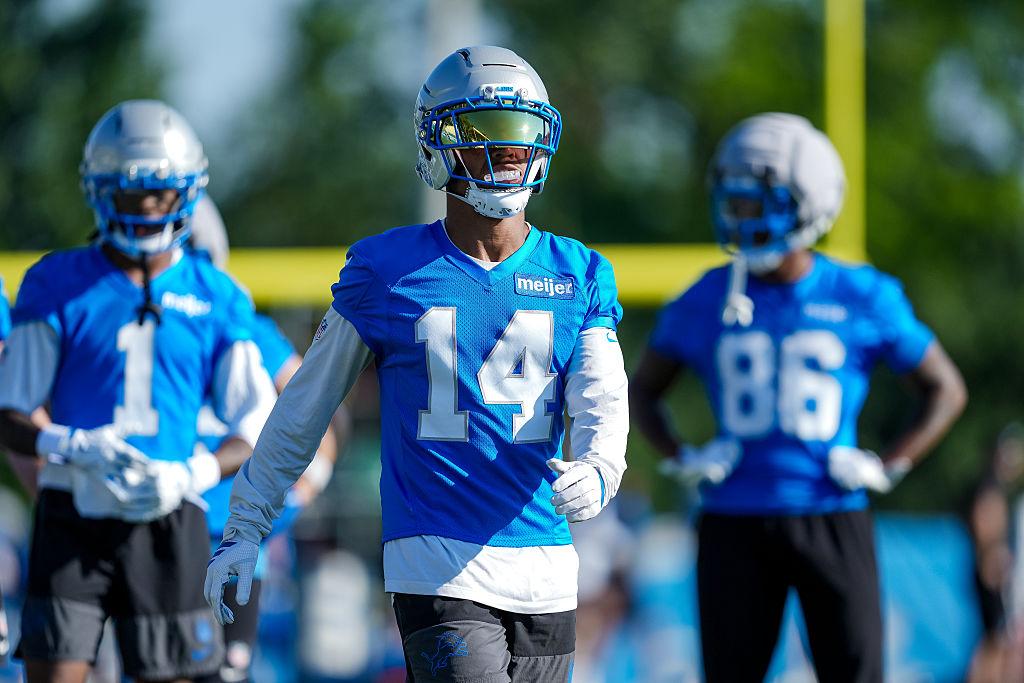
Amon-Ra St. Brown during Detroit Lions training camp
No stat better encapsulates the Lions’ offensive decline after losing play caller Ben Johnson than this one: They fell from first in offensive success rate in 2024 to 17th last season. Detroit still produced plenty of explosive plays last year and ran up the score against overmatched defenses like Chicago and Washington, and that helped the offense finish seventh in DVOA. But the Lions could no longer consistently replicate the machinelike efficiency that defined them in 2024, when Johnson was calling the shots. Instead of methodically staying ahead of the chains and generating answers against every defensive look, Detroit became more reliant on its stars to create chunk plays.
Another step backward is possible in 2026 if the offense continues to struggle to replicate the magic and consistency of the Johnson era. Center Cade Mays just broke his wrist, further weakening an interior offensive line that became increasingly vulnerable to pressure as last season progressed. That is especially concerning for Jared Goff, who is far less effective when defenses collapse the pocket from the inside and force him to operate off schedule. The play-action game is less convincing when the Lions cannot consistently control the line of scrimmage, and forcing the offense into obvious passing situations removes many of the protections that once made Goff’s job look simple.
Detroit still has three terrifying open-field threats in running back Jahmyr Gibbs and receivers Amon-Ra St. Brown and Jameson Williams. There is still far too much talent here for the Lions to collapse. But the margin for error has narrowed considerably. Detroit can no longer assume that its offense will cover for the defense’s frailties.
11
Kansas City Chiefs
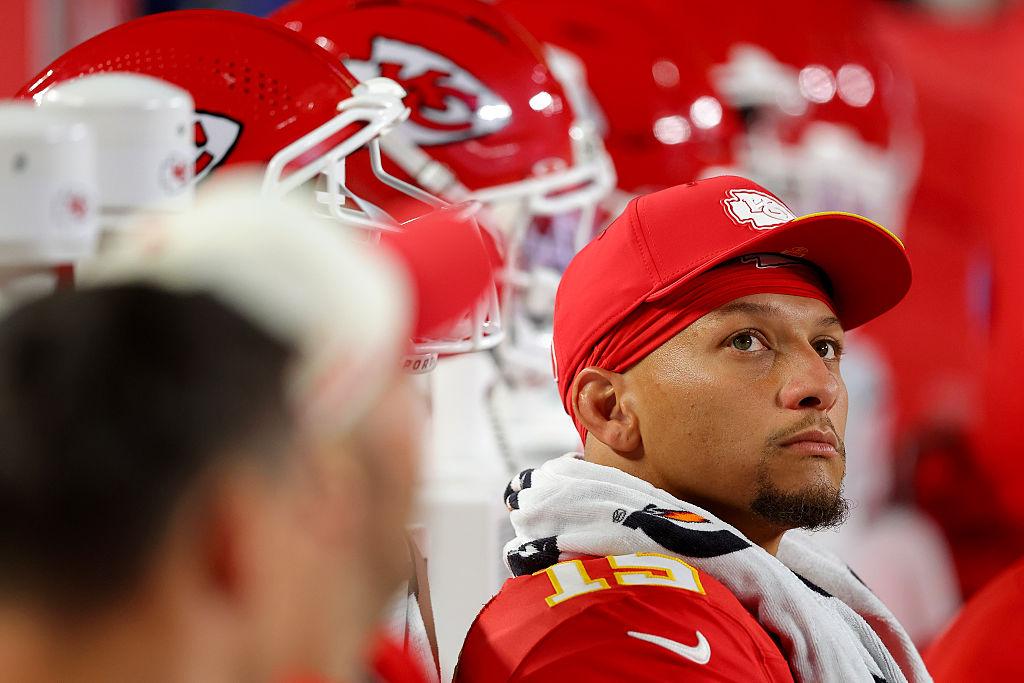
Patrick Mahomes watches NFL preseason game action against the Seattle Seahawks
Ranking a Patrick Mahomes offense 11th feels like an invitation to look stupid by October. But the Chiefs have now spent multiple seasons asking Mahomes to compensate for problems around him, and last year (before he suffered a season-ending ACL injury in mid-December), the offense finally slipped beyond the point where his late-down brilliance could conceal all of them.
Kansas City struggled to create any explosive plays. The protection was inconsistent. Too many drives required Mahomes to convert one difficult third down after another. The addition of running back Kenneth Walker III in free agency could help an offense that finished in the bottom three in explosive run rate each of the past three years.
But even if the Chiefs become a run-first offense in 2026, it still won’t fix the lacking receiver talent around Mahomes. And any projection of this offense must account for the fact that Mahomes is returning from a knee injury that could impact his escapability.
Mahomes remains the league’s best problem solver, and Andy Reid remains one of the best offensive designers. A return to the top five would surprise no one. But this ranking reflects how much faith is required to assume they’ll be a great offense in 2026.
10
Green Bay Packers
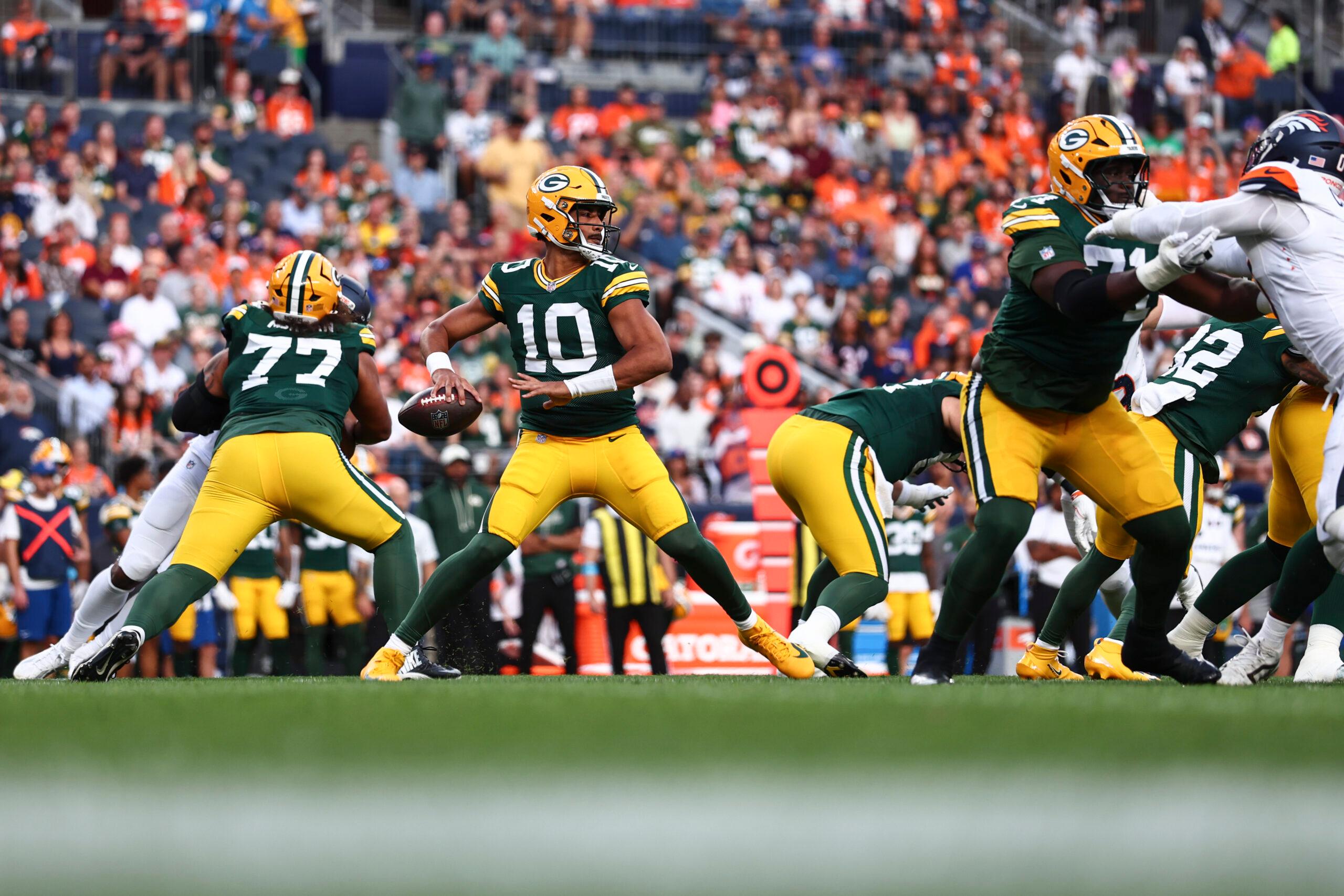
Jordan Love looks to pass during a preseason game against the Denver Broncos
The Packers remain one of the league’s easiest offenses to believe in because Matt LaFleur is able to consistently manufacture a good attack and doesn’t need Jordan Love, one of the league’s most aggressive passers, to play perfect football to do it. Still, the offense has spent the past few seasons looking like it’s one step away from becoming truly elite. It got close early in 2025 before Tucker Kraft’s ACL injury. It looked that way toward the end of 2024, before Christian Watson went down. In the aggregate, Love has engineered one of the most efficient passing attacks in the NFL across the past five seasons. No one schemes open more explosive play opportunities than LaFleur. Yet while Love’s aggression produces spectacular stretches, it also creates volatility. The offense has a tendency to rely heavily on big plays when the run game isn’t consistent. Meanwhile, the pass catching corps has been deep but not often dominant. The departures of Romeo Doubs and Dontayvion Wicks in free agency should alleviate some of the bloat, but it also means that there’s more pressure on Watson, Kraft, and Jayden Reed to stay healthy.
Green Bay had issues with its run game last year (although it still finished sixth in offensive DVOA). And the team will be without starting RB Josh Jacobs for an indefinite amount of time after he was placed on the commissioner’s exempt list while the league investigates his two misdemeanor charges stemming from a May arrest related to domestic abuse.
Still, having a healthy Love operating within LaFleur’s scheme gives Green Bay one of the best starting points in football.
9
Los Angeles Chargers
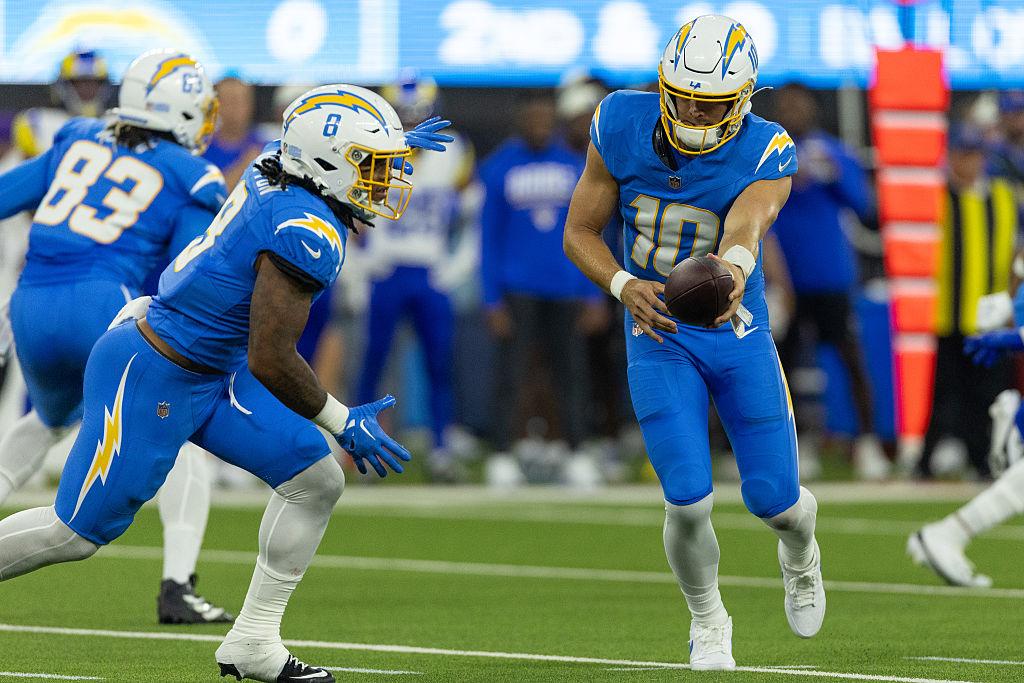
Justin Herbert hands the ball off to Omarion Hampton during an NFL preseason game between the Los Angeles Rams and the Los Angeles Chargers
The Chargers finished 12th in offensive DVOA in 2024 and fell to 21st in 2025 as an injury crisis along the offensive line made it nearly impossible for Justin Herbert to run a functional offense. Herbert was under constant duress and took a career-high 54 sacks; he was sacked six times in the Chargers’ wild-card loss to the Patriots.
Los Angeles hasn’t fielded a top-10 offense since 2021, but that should change with Mike McDaniel now serving as its primary architect. The season-ending injury to center Tyler Biadasz, one of the Chargers’ big free agent additions, may feel like déjà vu for Chargers fans, but the line should benefit from the return of tackles Joe Alt and Rashawn Slater.
McDaniel engineered top-10 offenses in Miami in both 2022 and 2023 with a quarterback who is significantly more physically limited than Herbert. Now he gets Herbert’s arm talent, mobility, and ability to create outside of structure, along with a roster built to execute the outside-zone and play-action concepts that are the foundation of his offense. There are still questions about the interior line and the depth of the receiving corps, but the Herbert-McDaniel partnership gives the Chargers one of the league’s clearest paths to a major offensive leap.
8
Chicago Bears
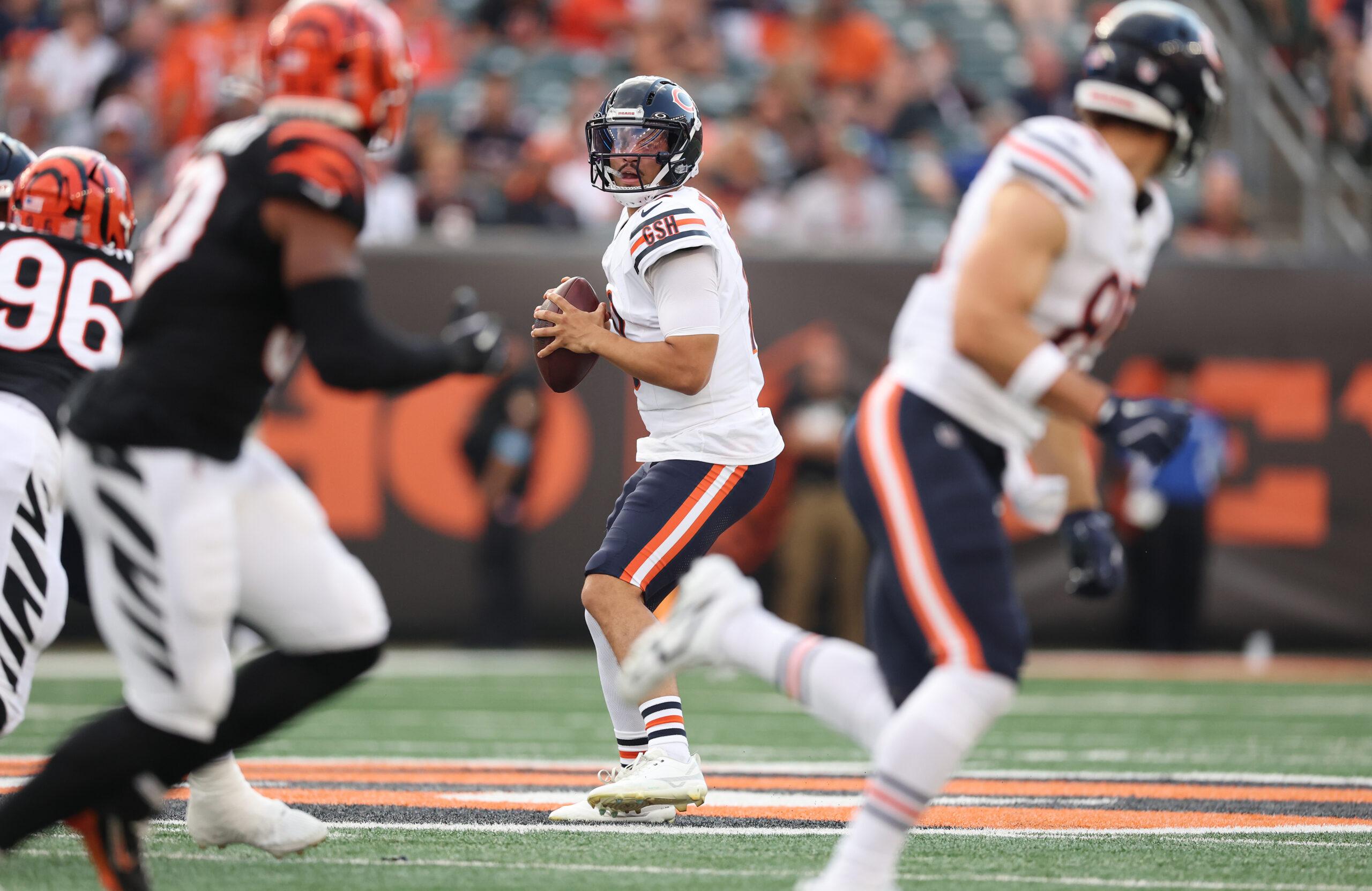
Caleb Williams looks to pass the ball during a preseason game against the Bengals
The Bears offense is primed for a breakout in year two under head coach and play caller Ben Johnson. Much of the team’s offensive core is under age 25 and heading into their athletic primes. Tight end Colston Loveland (22), receivers Luther Burden III (22) and Rome Odunze (24), and quarterback Caleb Williams (24) could see significant steps forward in their production in 2026.
The backbone of the offense is a controlled and consistent rushing attack that ranked fifth in EPA per rush last year. The sizzle comes from explosive plays, which the Bears produced at the seventh-best rate in the league last season. The ceiling for this offense is high, and it could wind up as a top-five unit, but Williams will need to improve his accuracy for that to happen. Ben Johnson is talking a big game in training camp about the lofty goals of his offense, and his young group will need to score a lot to win.
7
Baltimore Ravens
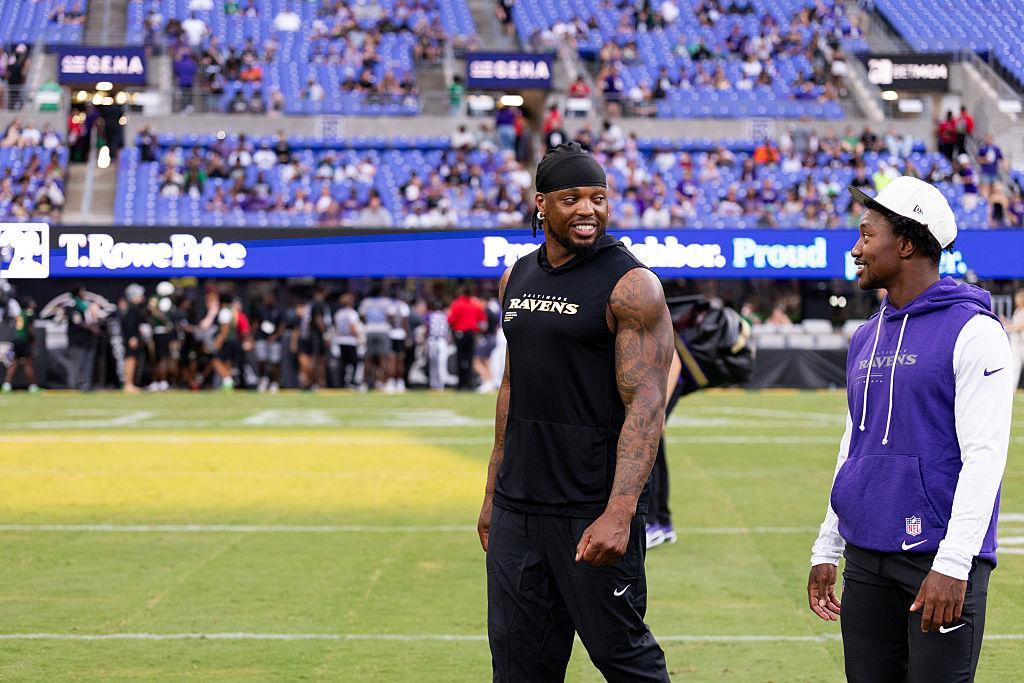
Derrick Henry and Zay Flowers during a preseason game against the Philadelphia Eagles
You used to be able to ink Baltimore into the top five of any preseason offensive rankings, but the Ravens are entering this season with more questions than usual. They scored 40 points in a thrilling Week 1 loss to Buffalo last year, but for the rest of the season, Baltimore ranked only 13th in EPA per drive. Quarterback Lamar Jackson missed four games with a hamstring injury and never looked as explosive as a runner after returning. His 2025 pressure-to-sack rate was the highest of his career and one of the highest in the entire league. Will a healthier Jackson resemble his pre-2025 self? Or was last season’s decline in his rushing efficiency the beginning of an age-related trend? That question will become increasingly prevalent this season and beyond. Jackson’s mobility has always helped Baltimore’s line perform better than the sum of its parts, but having a less explosive version of him would place more pressure on the offensive line in protection and on Jackson to operate the traditional passing game.
The uncertainty does not end there. The Ravens have to replace longtime center Tyler Linderbaum, who departed for Las Vegas, while Declan Doyle takes over for Todd Monken as offensive coordinator. This will be Doyle’s first time calling plays after spending last year working as OC under Ben Johnson in Chicago—so this will also be the first test of Johnson’s coaching tentacles.
The Ravens still have a solid rushing infrastructure with Derrick Henry and one of the league’s most uniquely talented quarterbacks. But for the first time in years, ranking Baltimore among the NFL’s elite offenses requires projecting a rebound rather than relying on recent evidence.
6
New England Patriots
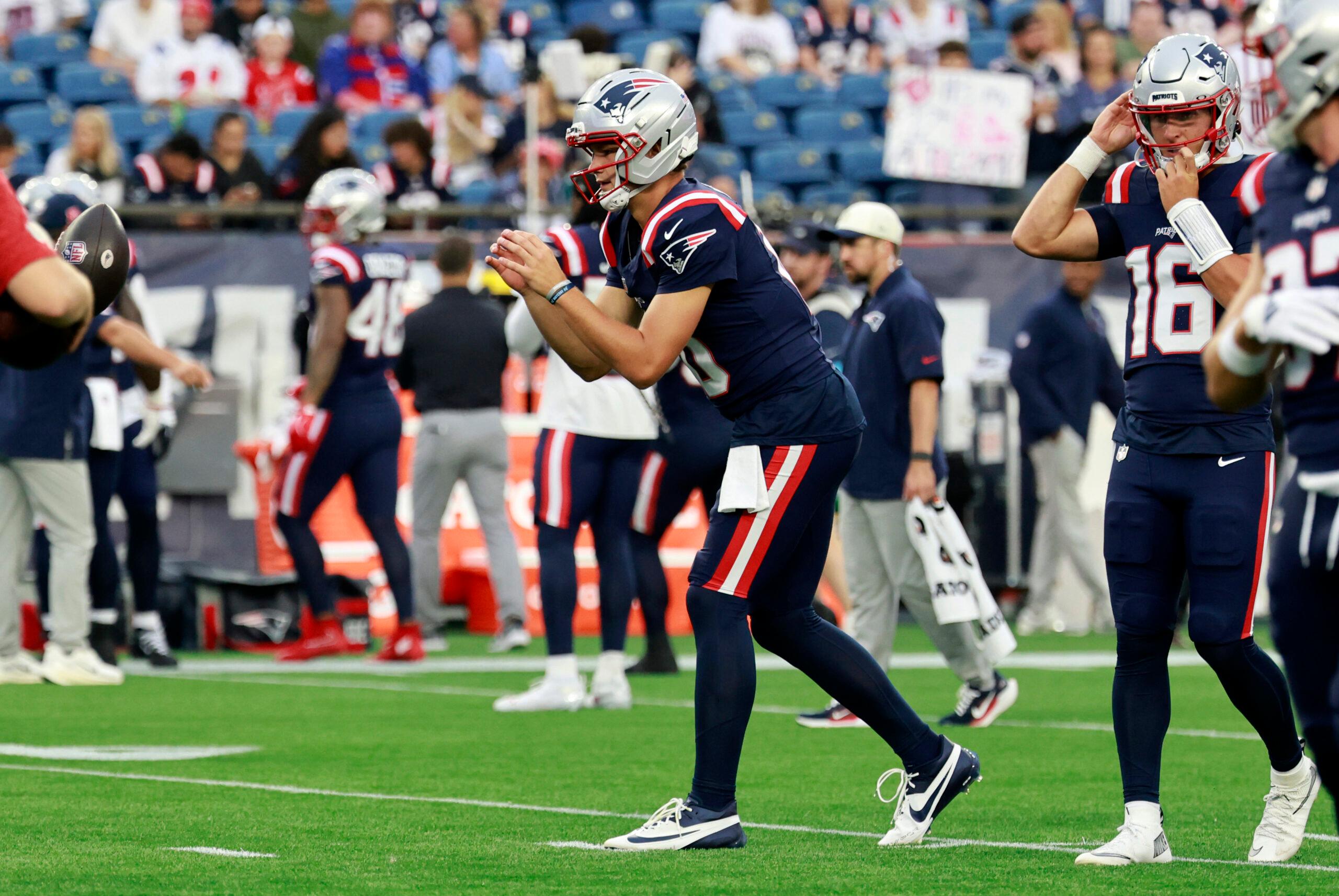
Drake Maye before a preseason game between the New England Patriots and the Philadelphia Eagles
Drake Maye went on an absolute deep-ball heater last season, finishing with the league’s highest dropback EPA on passes over 15 air yards. It might not be fair to expect him to maintain that effectiveness on those high-variance throws, but he heads into 2026 with a revamped receiver room. The additions of A.J. Brown and Romeo Doubs give New England as deep a pass catching group as any in the NFL now.
The place where the Patriots offense can improve most this season is on the ground. New England finished sixth in rushing yards but just 24th in rushing EPA in 2025, as TreVeyon Henderson’s sporadic explosive runs masked an inconsistent down-to-down operation. The Patriots added veteran guard Alijah Vera-Tucker, moved Jared Wilson back to his natural position at center, and brought in fullback Reggie Gilliam to give OC Josh McDaniels the flexibility to use heavier personnel. With left tackle Will Campbell getting healthy in year two and Mike Onwenu still anchoring the interior, this should be the best offensive line Maye has played behind. If the Patriots can turn their rushing volume into actual efficiency, the offense won’t need another top-ranked deep-passing season. For all of the talk of the Patriots having a more difficult schedule in 2026, New England has beefed up enough key areas to stay among the league’s best offenses.
5
San Francisco 49ers
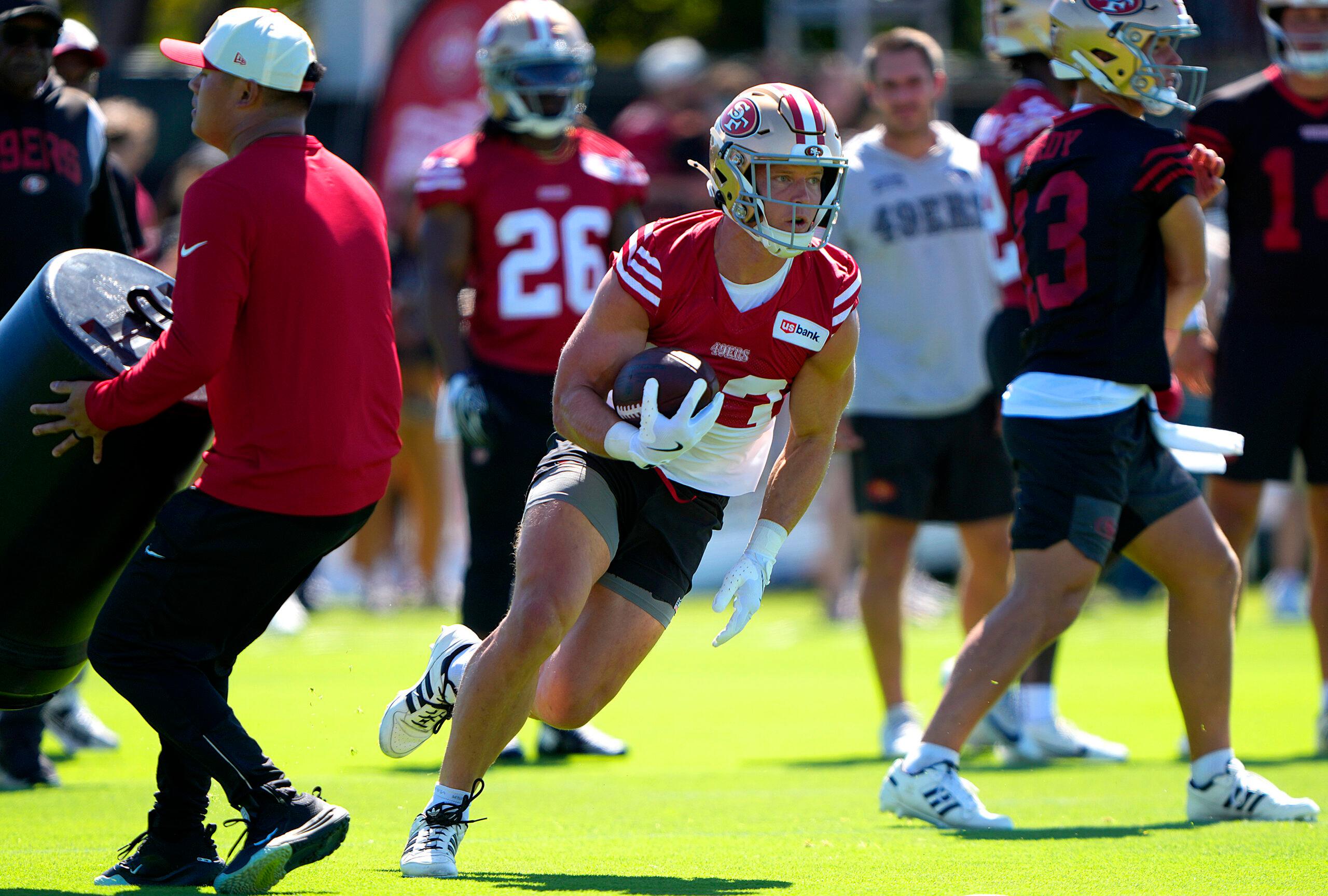
Christian McCaffrey works out during training camp practice
It’s a testament to the system Kyle Shanahan has built in San Francisco that Brock Purdy and Mac Jones posted almost identical stat lines last season. Jones completed 69.6 percent of his passes in his 11 games of relief duty, compared with 69.4 percent for Purdy in nine games. Both quarterbacks threw roughly twice as many touchdowns as interceptions, and their yards per attempt were nearly identical. Even as the legend of the 49ers’ electrical substation grows and the injuries continue to mount during the preseason, doubting a Shanahan offense remains a foolish proposition.
There are legitimate reasons for concern. San Francisco’s skill-position core is aging, including 33-year-old receiver Mike Evans (a free agent addition), and the run game slipped from third in EPA per rush in 2023 to 16th last season. The 49ers had no answers in either of their late-season meetings with Mike Macdonald’s Seahawks, whose defense took away the middle of the field from Purdy and Co. and forced Shanahan’s offense out of its comfort zone. But with Purdy, Christian McCaffrey, and one of the league’s greatest offensive architects still in place, San Francisco enters the season as one of the NFL’s best offenses yet again.
4
Cincinnati Bengals
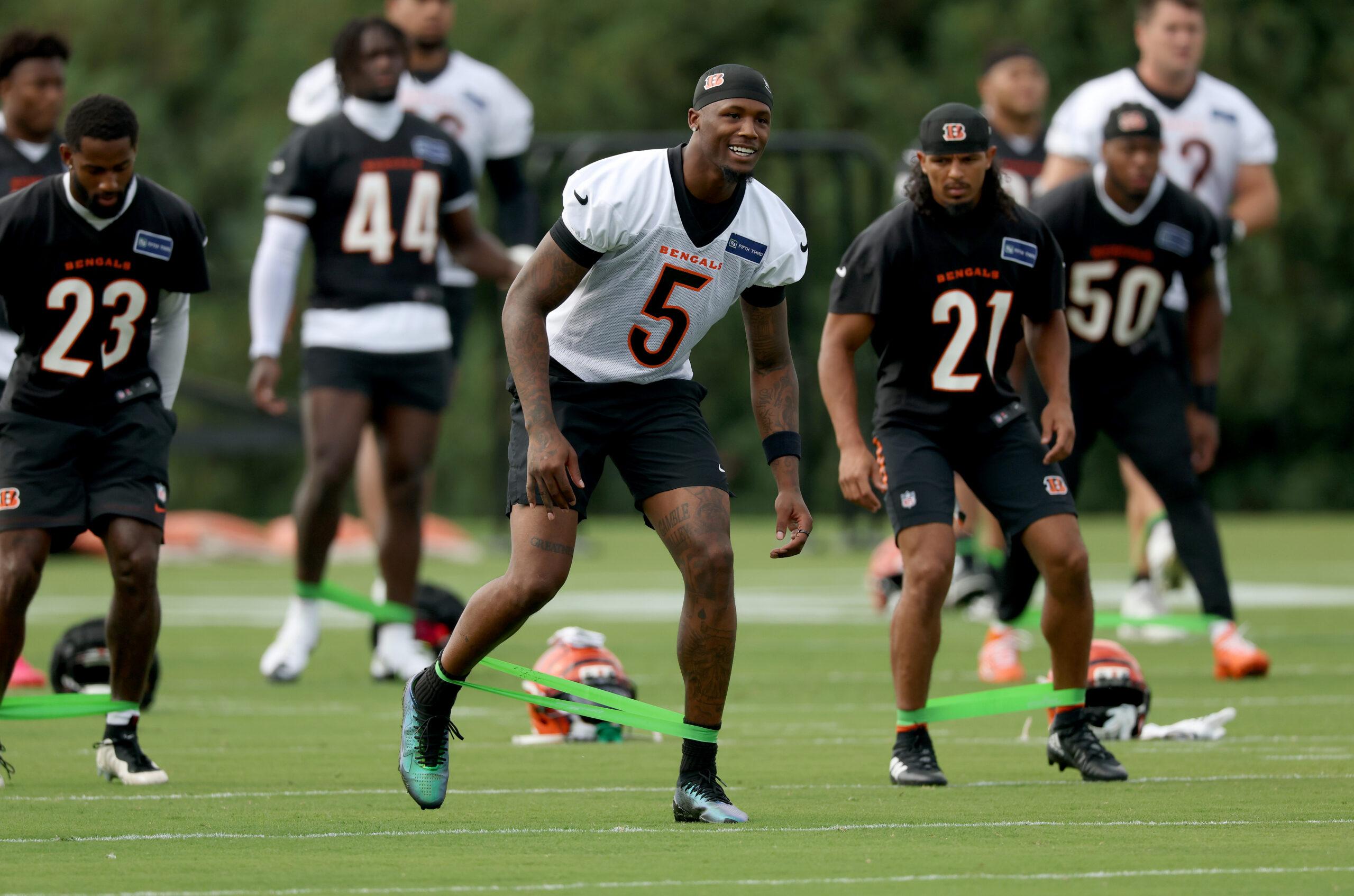
Tee Higgins during training camp
The last two times Joe Burrow played a full season, the Bengals were among the league’s most efficient offenses, finishing fourth in offensive DVOA in 2022 and fifth in 2024. I am not a soothsayer capable of predicting the health of Cincinnati’s oft-injured maestro. But now that there’s finally some continuity along the offensive line, this might be the best offense Burrow has ever had around him.
Cincinnati is attempting to diversify an offense that has traditionally lived out of the shotgun. The Bengals want to incorporate more under-center runs and play-action passes, both to improve their rushing efficiency and to generate more explosive plays. But I wonder how much of this shift is about protecting Burrow, who has missed 16 games in the past three seasons. More condensed formations can help slow down opposing pass rushers and reduce the number of obvious dropback situations.
Of course, there is some risk in tinkering with an offense that already works at an elite level. Burrow is one of the league’s best shotgun quarterbacks, and Cincinnati shouldn’t totally sacrifice the empty formations and quick-game concepts that allow him to diagnose defenses before the snap. But regardless of the formation, having Ja'Marr Chase, Tee Higgins, and Burrow is a simple yet excellent formula.
3
Dallas Cowboys
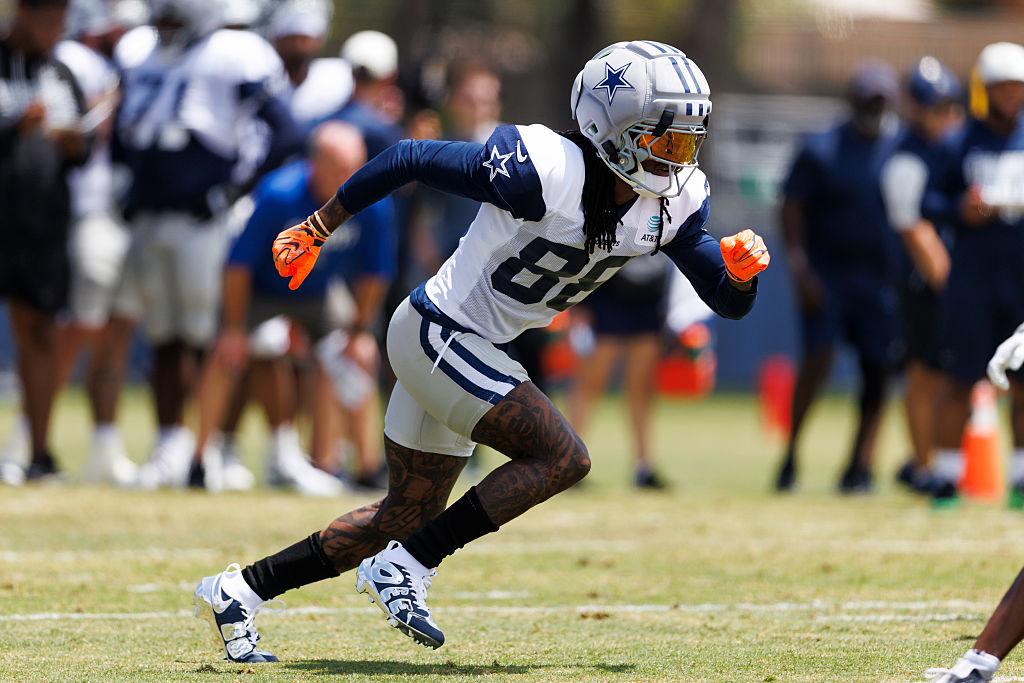
CeeDee Lamb runs a route during training camp
Dallas’s offense made a massive leap in rushing efficiency last season, climbing from 27th in EPA per rush in 2024 to seventh in 2025 following the additions of running back Javonte Williams and offensive coordinator Klayton Adams. The improved running game reduced the burden on Dak Prescott, who no longer had to operate what had been one of the league’s most pass-heavy offenses under former head coach Mike McCarthy.
Prescott-led offenses have consistently been underrated. Since 2021, excluding garbage time, Prescott ranks fourth among qualified quarterbacks in adjusted EPA per play, behind only Brock Purdy, Jordan Love, and Patrick Mahomes.
The Cowboys finished eighth in offensive DVOA last season and have all the ingredients to climb even higher in 2026. WR1 CeeDee Lamb missed time with an ankle injury last year and returned before he looked fully healthy, limiting his effectiveness. Even so, Lamb and George Pickens both ranked in the top 15 in yards per route run. Add in Ryan Flournoy, an ascending third receiver who would be a quality WR2 on many other teams, and Dallas has the personnel to pair a strong rushing attack with one of the NFL’s most dangerous passing games. If they succeed, the Cowboys could make the leap from a very good offense to one of the league’s best.
2
Buffalo Bills
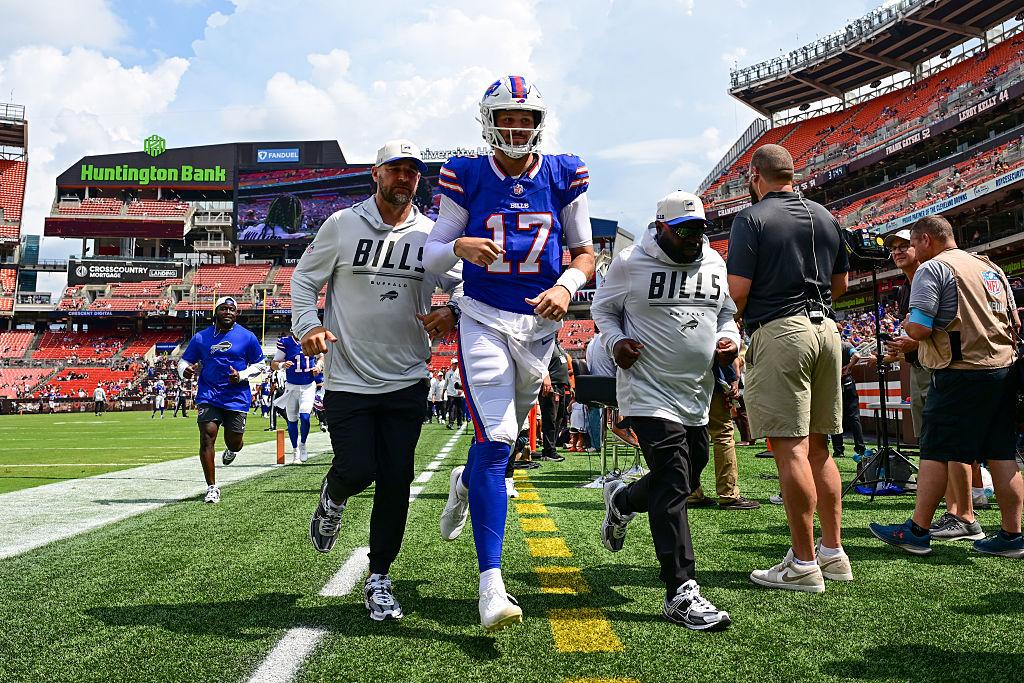
Josh Allen runs off the field before a preseason game against the Cleveland Browns
There’s a refreshing simplicity to Buffalo’s offense that makes it one of the easiest units in the league to project. Josh Allen doesn’t miss games. The offensive line rarely misses games. And when those two stalwarts are together on the field, Buffalo will have a top-five offense.
But simply plugging in the Bills near the top of these rankings and saying “same old, same old” would undersell the transformation this offense has undergone in recent seasons. Buffalo has become a more run-heavy team—and has been more efficient on the ground than in the air. Last year, the Bills actually finished below league average in pass rate.
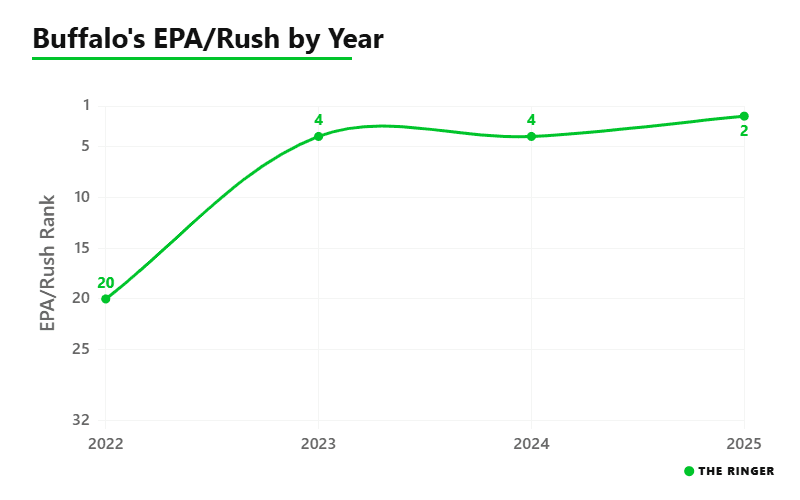
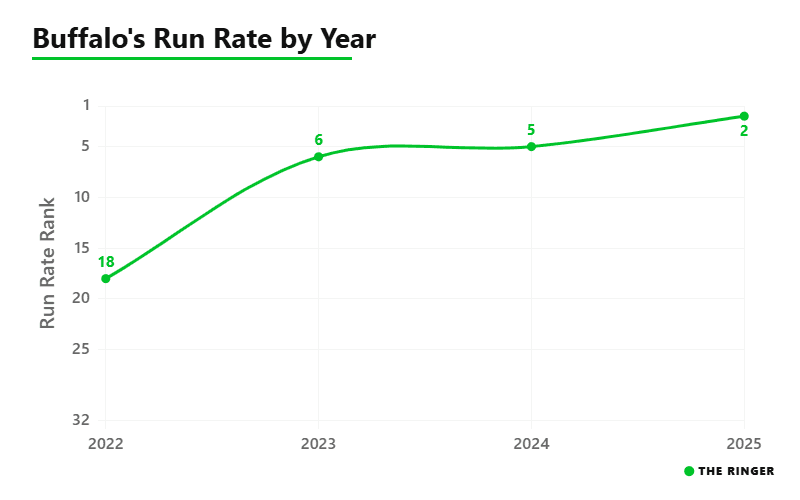
That evolution has made Buffalo less dependent on Allen to create magic on every dropback. But along the way, the passing game developed a notable weakness against man coverage last season. That could be the result of a general lack of receiving talent in 2025, and that group should be better this year after an offseason trade for DJ Moore. Moore gives Allen a proven separator who can punish defenses for playing aggressively on the outside. They’ll get an immediate Week 1 test on the road against the Texans and their stingy secondary.
Buffalo has the highest-floor offense in the NFL, and the Moore addition has raised its ceiling. I am interested in whether new head coach Joe Brady, who was promoted from offensive coordinator, will have Allen throwing more now that he’s fully in charge of this team and not working for a more conservative, defensive-minded head coach.
1
Los Angeles Rams
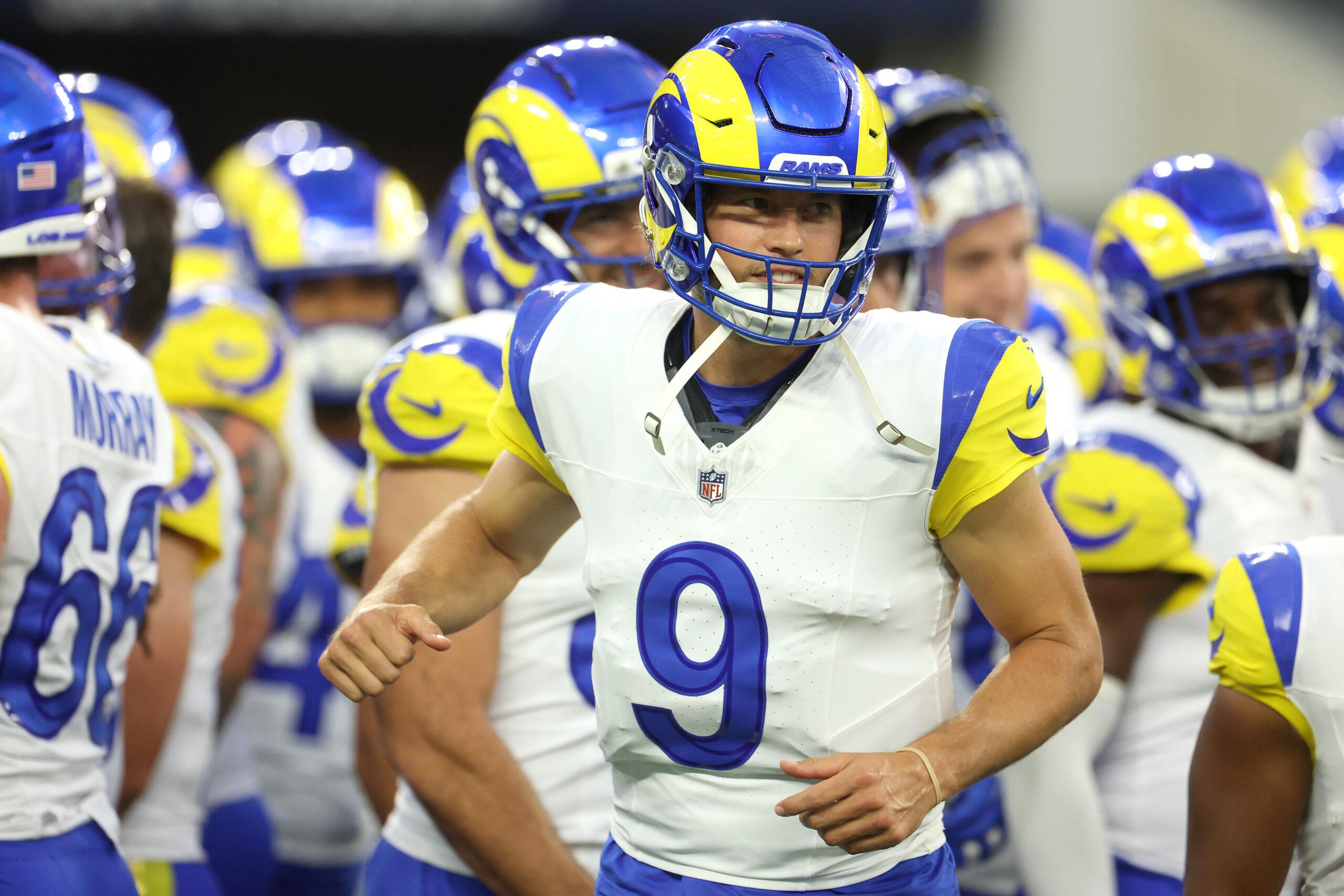
Matthew Stafford before a preseason game against the Los Angeles Chargers
Last season, the Rams had one of the 20 best offenses of all time by DVOA. So even if Los Angeles experiences some regression in the run game and in its red zone efficiency, both of which were elite last season, it’s impossible to put anyone else in the top spot. Even though quarterback Matthew Stafford offers zero threat as a runner, the Rams still finished second in rushing success rate last season. That’s a testament to both the quality of their starting offensive line and the schematic brilliance of Sean McVay.
The Rams lack depth at receiver and along the offensive line, but McVay has been at the forefront of the NFL’s shift toward heavier personnel packages. By using three tight ends, the Rams can manufacture favorable matchups and minimize their need for a traditional WR3 behind Puka Nacua and Davante Adams. If those two are healthy for the majority of the season, there will be no better duo in football.
Still, Stafford’s age and the thin margin for injury make the Rams more vulnerable than their no. 1 ranking might suggest. But no other unit combines this level of quarterback play, schematic flexibility, rushing efficiency, and high-end receiving talent. Until someone knocks McVay and Stafford off the top, the Rams are the standard.