Welcome to the Latest Chapter of the Buss Family Circus
The Lakers and the Busses have been inseparable since 1979. But in recent decades, that relationship has been defined by sibling squabbles and legal battles—and now a contested sale that could end the family’s claim on the franchise once and for all.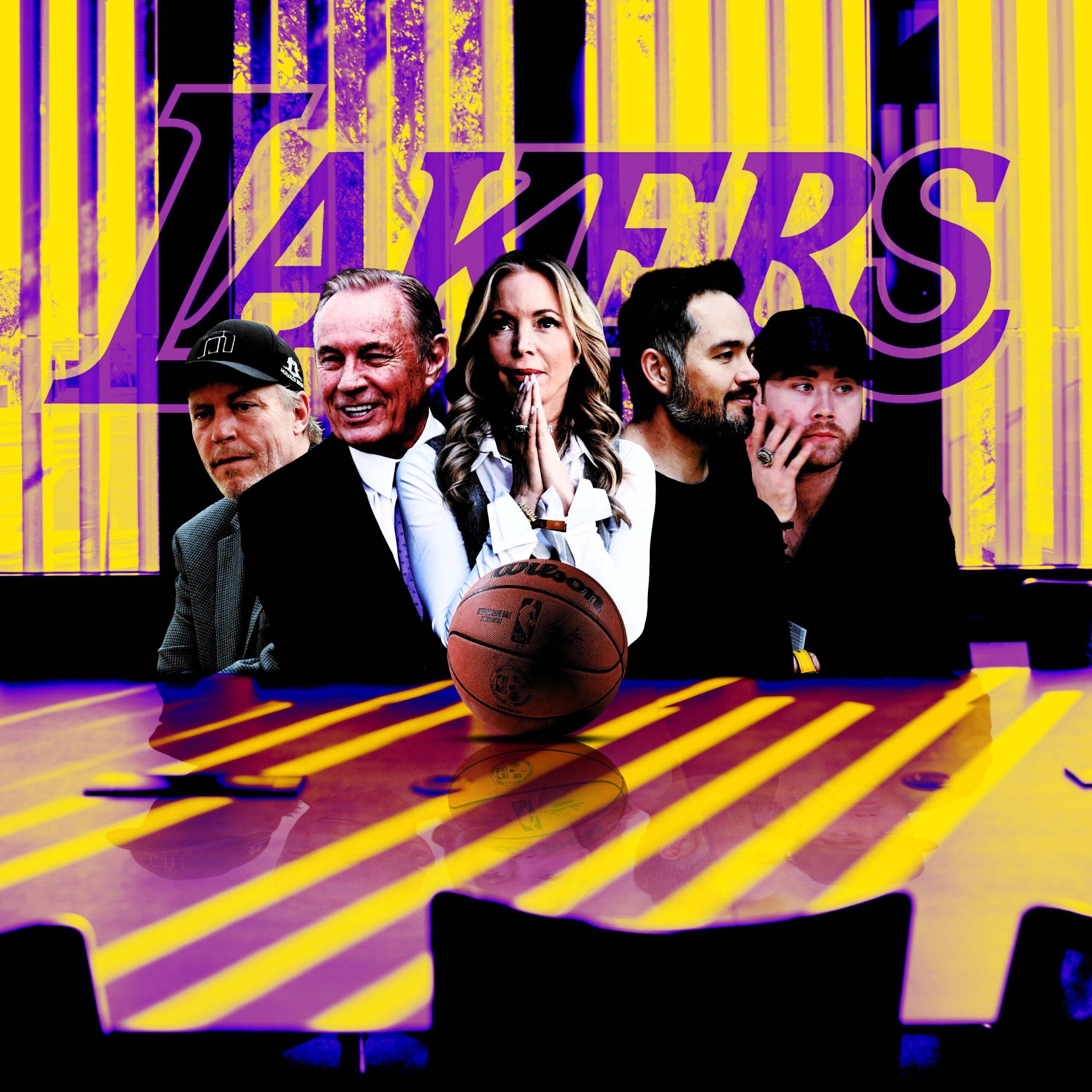

In the fall of 1998, in an article headlined “She’s Got Balls,” Sports Illustrated wondered whether Jeanie Buss might one day take over her family business. That business being the Los Angeles Lakers, the NBA franchise that Jeanie’s dad, Jerry Buss, had acquired for $67.5 million in 1979. (That purchase price also included the Great Western Forum, the NHL’s L.A. Kings, and a 13,000-acre estate.) The opening line of the article, written by Franz Lidz, set the stage: “You all remember King Lear, Shakespeare's play about a dysfunctional 12th-century family.”
For any SI readers who’d missed that one in high school, Lidz explained that King Lear was basically about that favorite activity among the wealthy elite: full-contact, no-holds-barred estate planning. The story’s titular character, “addled by the prospect of his own mortality,” Lidz wrote, “carved up his kingdom and parceled it out to [his children]. Then all hell broke loose.”
This was, as it turned out, a durable reference. Jerry’s six kids (four of whom, Johnny, Jim, Jeanie, and Janie, are now in their 60s and two of whom, Joey and Jesse, are millennials on either side of 40) have been wrangling and wrestling with their places in the Lakers organization since the olden days of Magic Johnson’s rookie season. It was true in 2013, when Jerry died and the fire and brimstone around the kids’ inheritance started to really heat up. It was true in 2017, when Lakers president Jeanie fired Jim, who was then the team’s executive president of player personnel, and it was definitely true when Jim and Johnny led a failed coup against Jeanie after that. It was true when the Buss children collectively owned 66 percent of the Lakers, as they did as recently as 14 months ago. It was true when they sold a hunk of the team to shy, shifty financier Mark Walter last summer at a 10-figure valuation, relinquishing majority ownership in exchange for roughly a billion bucks pretax per sibling.
And it’s true even now that Walter’s empire is a sandcastle in the wind, and Bob Iger and Josh Kushner have swooped in as new owners, and the Buss brothers and sisters are about to hold hands and exit the Lakers altogether, forever. Well, unless Jeanie gets her way again, that is.
Last week, the sporting world—and maybe soon the global capital ecosystem?!—was rocked by the news that Walter, who is under federal investigation for improper insurance loan practices, was off-loading his lion’s share of the storied Lakers franchise after just one season. The hastily agreed-on sale to former Disney CEO Bob Iger and Thrive Capital rainmaker Josh Kushner at a franchise valuation of $12.5 billion left the Buss family still in control of 17.8 percent of the team. But earlier this week, the siblings contributed to the frenzy in a way that both was and wasn’t unexpected. Shams Charania reported that the Busses had, by majority vote, agreed to sell their remaining holdings to Iger and Kushner, in what’s called a “tag-along” deal. The decision would bring in something like $370 million before taxes for each Buss sibling. It made immediate dollars and sense—sell high, baby! But there was more to it than the money. It took no time at all for old family rivalries to resurface—and for it to become clear why the report had mentioned a “majority vote,” as opposed to a unanimous one.
Like two teams trading intentional fouls at the bitter end of a big basketball game, Jeanie Buss and her brothers and sisters have been going back and forth against one another for years, using various weapons to get their way or make a point: human resources, the media, the power of persuasion, that tag-along provision that, if triggered, would strip Jeanie of the NBA Board of Governors seat she expected to keep holding for years. And now, the law.
“Any ‘vote’ by any of the Buss siblings would be and is void ab initio,” read a statement issued by Jeanie’s lawyer, Adam “Babs’s Cousin!” Streisand, on Monday that explained why his client would be fighting her siblings’ attempted sale. “The co-trustees are bound to vote ... to ensure that the minimum 15% ownership requirement is maintained in order to ensure that Jeanie Buss may remain Controlling Owner. Any attempt by the co-trustees to do otherwise ... would constitute a breach of trust, breach of fiduciary duty and be in contempt of court.”
In case that’s too much legal jargon, Streisand’s statement also conveniently translated everything into the parlance of NBA Twitter: “Shams Charania of ESPN falsely reported ... that my client, Jeanie Buss, is ‘out’ as controlling owner,” it read. “This is just the latest instance of a years-long pattern whereby Joey and Jesse Buss leak false, defamatory and pernicious ‘information’ to Mr. Charania for the malicious purpose of doing harm to the Los Angeles Lakers so long as Dr. Buss’s chosen successor, Jeanie Buss, carries out her father’s wishes.”


More on the Lakers Sale Saga
All hell has indeed broken loose. And all of this infighting quickly drew comparisons to the recent season finale of House of the Dragon, in which a chain mail–clad royal tries to convince a crowd that she’s deserving of the throne because the idea came to her father in a fever dream. (Indeed, in Legacy: The True Story of the LA Lakers, a documentary Jeanie coproduced, she sounds like Rhaenyra when she insists: “Clearly, the intention that my father had in the trust is that I would be named controlling owner, because he wrote the trust exactly the way the judge interpreted it. Those were his wishes.”) The Buss mess also garnered jokes about new story lines for Running Point (the also-Jeanie-coproduced Netflix comedy series starring Kate Hudson as a woman who inherits her family’s fictional sporting franchise, the Los Angeles Waves) and pleas to bring back Winning Time (the canceled-far-too-soon HBO series based on a Jeff Pearlman book about Buss and the Showtime-era Lakers).
It also reminded a lot of people of the late, great HBO series Succession, and for good reason.
In that 1998 Sports Illustrated story, one of Jerry Buss’s associates dished to the writer about the Lakers owner’s kids: “Johnny dithers and broods. Jimmy is easily distracted and has no instinct for the jugular. Jeanie is the most capable one, yet she's overlooked by her loving dad. Does Jerry honestly think this arrangement will work? I'm willing to bet—no, I guarantee—that within three years he sells the entire operation to Rupert Murdoch.” Tough but fair! And also not dissimilar to how Succession patriarch Logan Roy’s eldest son, Connor, describes his half brothers and sisters in Season 3: “Roman is a knucklehead, Shiv is a fake, and Kenny is screwy!” (Connor, for his part, is roasted elsewhere as being the underwhelming “first pancake” of the Roy crew. Ouch.) Just as love stories or heist capers are considered classic genres, so are these narratives about brothers and sisters vying to distinguish themselves and win parental approval. The Buss family’s story is timeless, but the clock is ticking on the Buss family’s time as L.A. Lakers owners.
“A New Type of Owner in Sports Establishment,” read a New York Times headline in 1979 when Buss first bought the Lakers. By 2005, eight championships later, the L.A. Times predicted that Buss “was preparing for a succession, not a sale” and readying his son Jim to replace him one day. (The article also described Jeanie as “a former Playboy model out front who is the owner’s daughter and the coach’s girlfriend,” all of which was just the facts, ma’am: Jeanie had posed for the magazine in 1995, and she dated Phil Jackson for 17 years.) Two more championships followed, and in 2010 Jerry Buss was inducted into the Basketball Hall of Fame. Not long after, Buss gathered his kids to talk about the future—according to an article from this past January about how that future wound up going so very awry.
As ESPN’s Baxter Holmes wrote, the Buss family often returned to a familiar refrain when they thought about someday selling their stake in the Lakers. Both Johnny and Jeanie Buss told Holmes that their father had acknowledged that he could get so, so much money by selling the team. But: “Johnny, we own the Lakers,” Jerry Buss would conclude. “What’s more fun than that?” Or: “I would get the money, and people would say what are you going to do with all that money?” he’d explain to his daughter, but “the first thing I’d want to do is buy the Lakers.”
So ultimately, they settled on this: Upon his passing, Buss’s six heirs would each receive 11 percent of the franchise. Their portions couldn’t be sold individually; it would take a collective vote. If a Buss sibling were to die, their stakes would be redistributed to the other siblings, and so on. “It's last man standing," Janie told Ramona Shelburne in 2017. (This tontine-style arrangement was morbidly dece news for Jesse Buss, the youngest, who was born 32 years after Johnny.)
The siblings had never been particularly close-knit. The 1998 SI piece remarked that they spoke rarely, if at all. In 2012, Jeanie reportedly felt betrayed by Jim when he passed over Jackson for a return to the Lakers’ coaching position in favor of Mike D’Antoni with nary a heads-up. A joint interview with Jeanie and her brother Jim in 2014 was stilted. Later, Holmes’s exhaustively reported piece would include this anonymous but unforgettable analysis of Jeanie: "She has viewed her friends as her family and her family as her foes for the longest time."
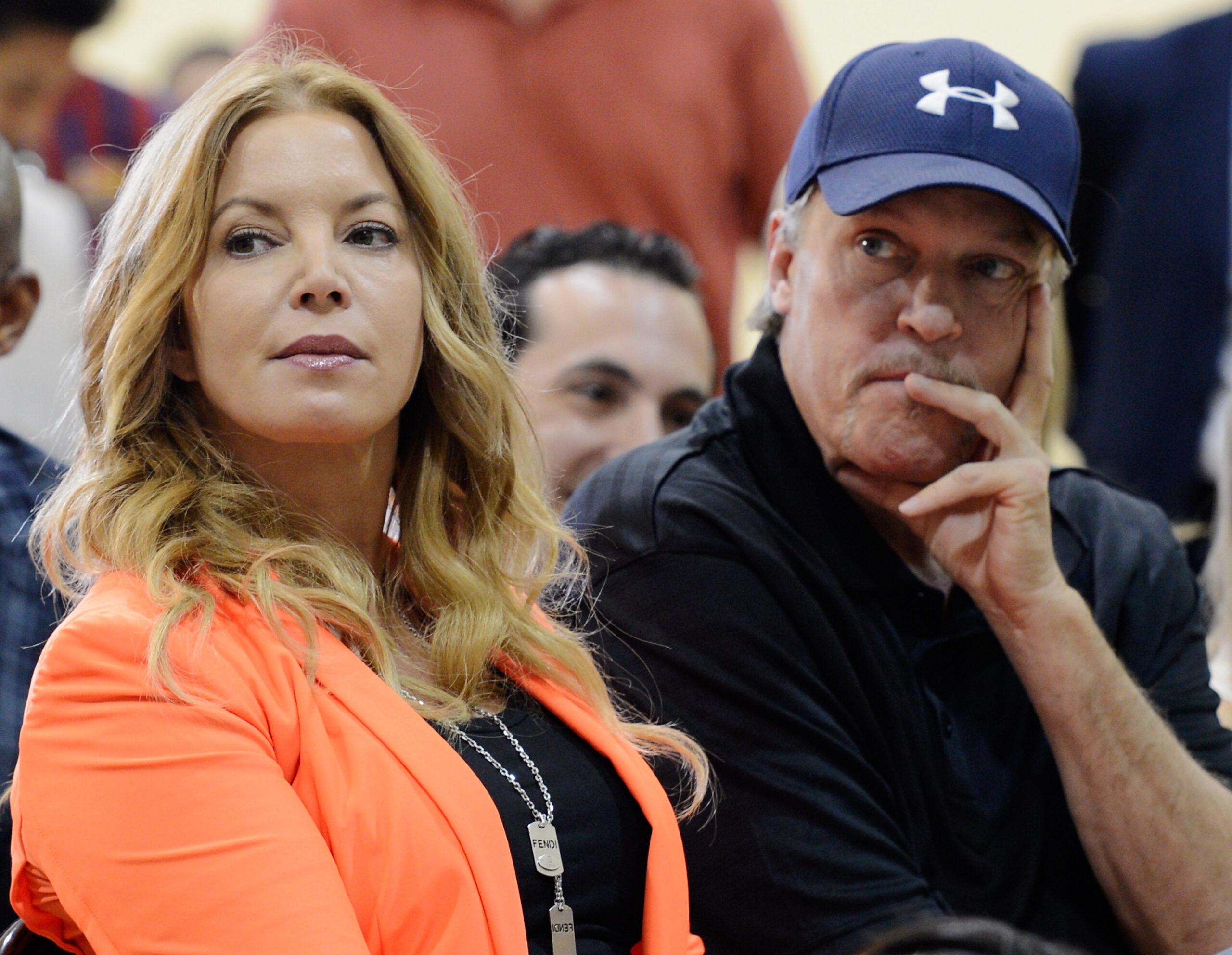
Jeanie and Jim Buss at a news conference in 2012
In the years following Jerry Buss’s death, the cold war between the siblings escalated into active, high-stakes litigation. In 2014, Jim Buss said that his goal was to have the Lakers contending for at least a Western Conference win in the next three or four seasons. Jeanie held him to that goal, and in February 2017, following a franchise-worst 17-65 season in 2015-16, she fired her brother as well as longtime GM Mitch Kupchak and brought in Magic Johnson and Rob Pelinka. (“Earvin and I speak the same language,” Jeanie told Shelburne that year, “because we were raised by the same man.”) Things snowballed from there. In retaliation, Jim and Johnny sought to push through a vote replacing Jeanie on the team’s board of directors. In retaliation for that, Jeanie took them to court, obtaining a restraining order and a judge’s note stipulating that the Buss family trustees had an ongoing obligation to support Jeanie as “Controlling Owner” until someone ruled otherwise.
The arrival of LeBron James in 2018, the signing of Anthony Davis in 2019, and the 2020 COVID-era bubble championship helped take the attention off the team’s chaotic owners for several years. But they would soon be under more scrutiny than ever. In 2021, Walter, the owner of MLB’s Los Angeles Dodgers since 2012, quietly got his foot in the door when he purchased 27 percent of the Lakers. (The stake came not from the Buss family but from AEG honcho Philip Anschutz, who built L.A.’s downtown arena in 1999 and was given a chunk of the Lakers by Jerry Buss in exchange for letting the team play there.) And in 2025, when the two youngest Buss sons began inquiring about the potential to sell a small stake in the team—10, 15 percent or so—in exchange for some sweet, sweet liquidity, Jeanie revealed that she had some other, bigger plans.
“This transaction ensures the Lakers will remain a championship-caliber organization for decades to come,” Jeanie said in July 2025 upon announcing that Walter was the new majority owner of the Lakers, via a deal that upped his share to 75 percent of the franchise at a $10 billion valuation. In the aftermath of the sale, Lakers CFO Joe McCormack—who is to the franchise what Karl is to the Roy family in Succession—informed Joey, Jesse, and Janie Buss that their services were no longer needed with the team. “At times like this, we wish we could ask our Dad what he would think about it all,” the two youngest sons wrote in a statement. Later, in Holmes’s article, Jesse Buss recalled a phone conversation with his half sister years earlier in which Jeanie had snarked that he shouldn’t have even been born.
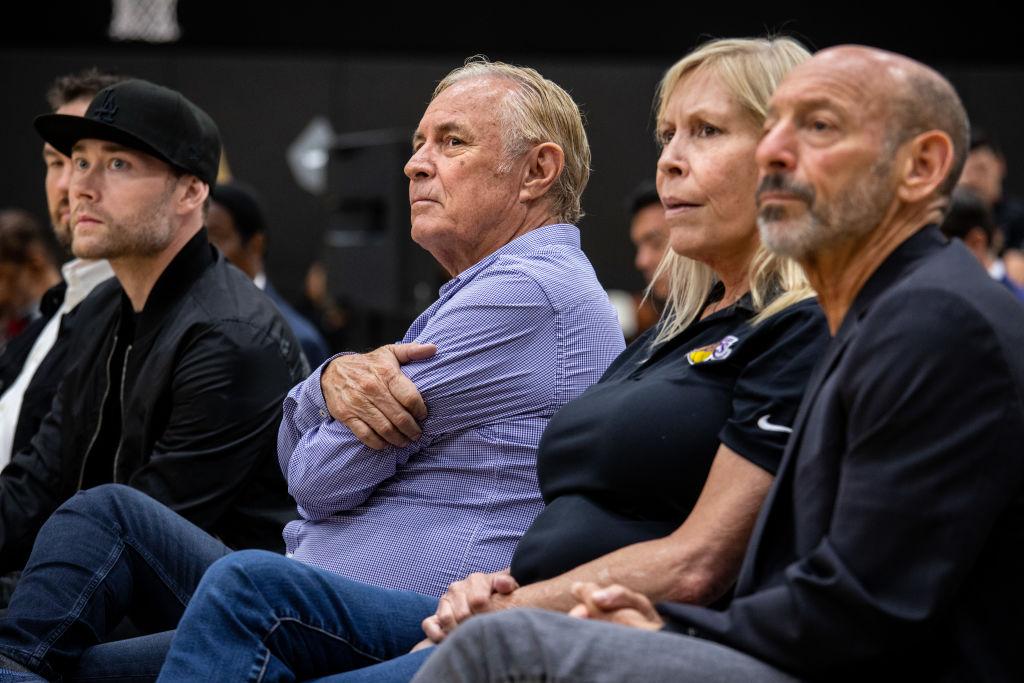
Joey, Jesse, Johnny, and Janie Buss with Ronnie Weinstein, a mediator who works with the family, at a press conference in 2022
For now, an uneasy silence hangs over the near-term future of the L.A. Lakers, like the post–door slam lull of a house in which everyone has been sent to their rooms to stew. Jeanie contends that the 2017 judge’s ruling—which instructed the trustees to vote to preserve her controlling stake in the franchise—still applies today. The other five Busses, meanwhile, are more like: scooooreboard. LeBron is no longer a Laker, having set sail for the less hectic shores of … Philadelphia?! The team’s employees, up to and including GM Rob Pelinka, are stuck fretting about the actual upcoming season. And blessedly, the players have been mostly busy gallivanting and hooping in Slovenia, care of Luka Doncic, as all this chaos unfolds in Southern California.
After Iger and Kushner agreed to purchase the team last week, Iger was diplomatic when asked about whether he’d honor an agreement Jeanie made with Walter last summer that she’d stick around as Lakers governor for five seasons, through 2030. “We have every intention to honor [that],” he said. “If things change, they’ll change, but we’re going into this with enormous respect and appreciation for who she is and what she represents.”
It’s safe to say that things have now officially changed. On the spectrum from “Iger sends Jeanie his warmest regards and wishes her well on her way out the door of Crypto.com Arena” to “Jeanie drums up enough capital to buy out the rest of her siblings and hang on to 15 percent of the team for life,” I’ve lately been shifting toward the former. (Especially after reading about how, the day before Walter sold his stake to Iger and Kushner, Jeanie and McCormack tried to convince the rest of the Buss siblings to sign off on a sudden, casual eleventh-hour rejiggering of the family trust.)
Still, without having access to the family’s legal documents and filings amassed over the course of various disputes, it’s hard to thread the exact needle of where things will go from here. It’s possible, for example, that the bigger Lakers transaction—the one between Mark Walter and Iger-Kushner—will proceed apace, unimpeded by this side pocket of familial squabbling. But! There could also apparently be “atomic” language in the tag-along clause that would require everything to be done in one fell swoop. Which means that a stubborn Jeanie could wind up having the power to stall and drag this through the legal system—and, in doing so, prevent an over-strapped Walter, the underlying source of all this mess, from obtaining his sorely needed funds for months. And a lot of things might result, or unravel, from that. Walter, for example, may well wind up having to sell the Dodgers next.
When Jerry Buss bought the Lakers, The New York Times reported that he looked like a Marlboro Man and loved to party, and it noted that “Buss's pride is considered one of his biggest personal assets.” It also explained his career switch out of the aerospace industry and into the world of sports ownership. “All we heard about was war, missiles, and destruction. I wasn’t cut out for it,” Buss said. Speaking to SI in 1998, Buss admitted that “of all my kids, Jeanie’s the one who turned out most like me.” (Maybe that cut-out-for-global-conflict gene skipped a generation?) Late NBA commish David Stern added at the time: “If [Jeanie] took over the Lakers from her father, I don’t think anything would be lost in the transition.”
While it hasn’t quite turned out that way, things aren’t over yet. As all this has played out in the news this week, I’ve recalled a small scene involving Jerry Buss from Winning Time. (OK, it’s John C. Reilly playing Jerry Buss, but no less an authority than Jeanie herself called his performance Emmy-worthy.) In the scene, former Lakers coach Paul Westhead refers to the Lakers as “my team” during a conversation with Buss, who is in the middle of mixing a drink. At that, the owner’s expression immediately darkens, his vibe shifting from open and affable to stony and selfish. “Actually, it’s MY team,” Jerry Buss snaps. Like father, like daughter! Well, at least for now.