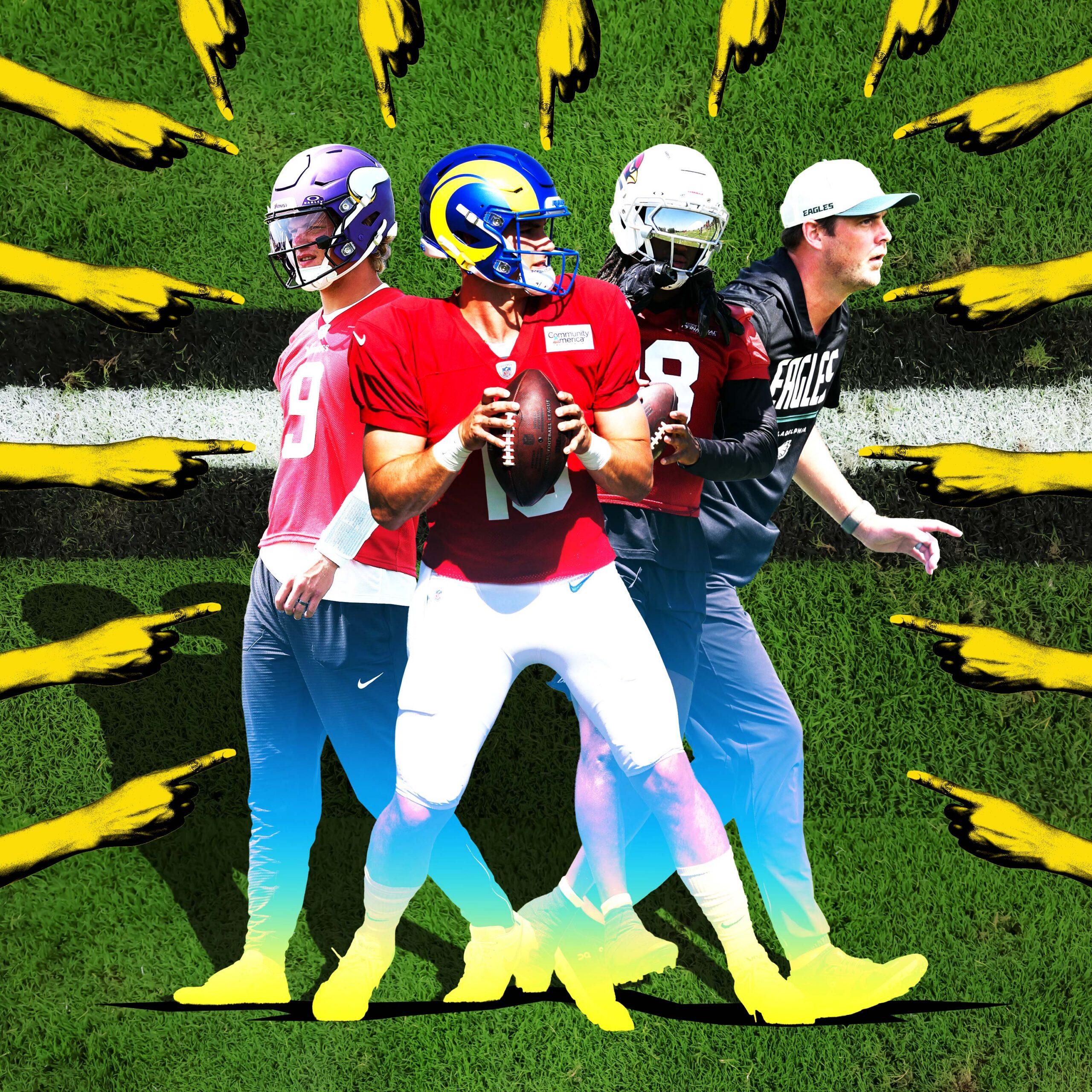

The NFL regular season is fast approaching, and football fans across the country are counting down the days until they get to watch big names like Patrick Mahomes, Myles Garrett, and Ja’Marr Chase take the field again. But for the true sickos, football season arrived last Thursday, when the Cardinals and Panthers played in the Hall of Fame game. Sure, anyone can get up for a Josh Allen–Lamar Jackson quarterback duel, but it requires a certain level of fandom to care about Carson Beck reps. There’s no shame in that. That’s what this month is all about. We’ll have 18 weeks to celebrate the stars of the game when the real contests kick off in September, but preseason football allows some of the less heralded players to briefly step into the spotlight. So let’s take a look at some of the main characters in this year’s exhibition season and highlight who—and what—to keep your eyes on over the next three weeks.
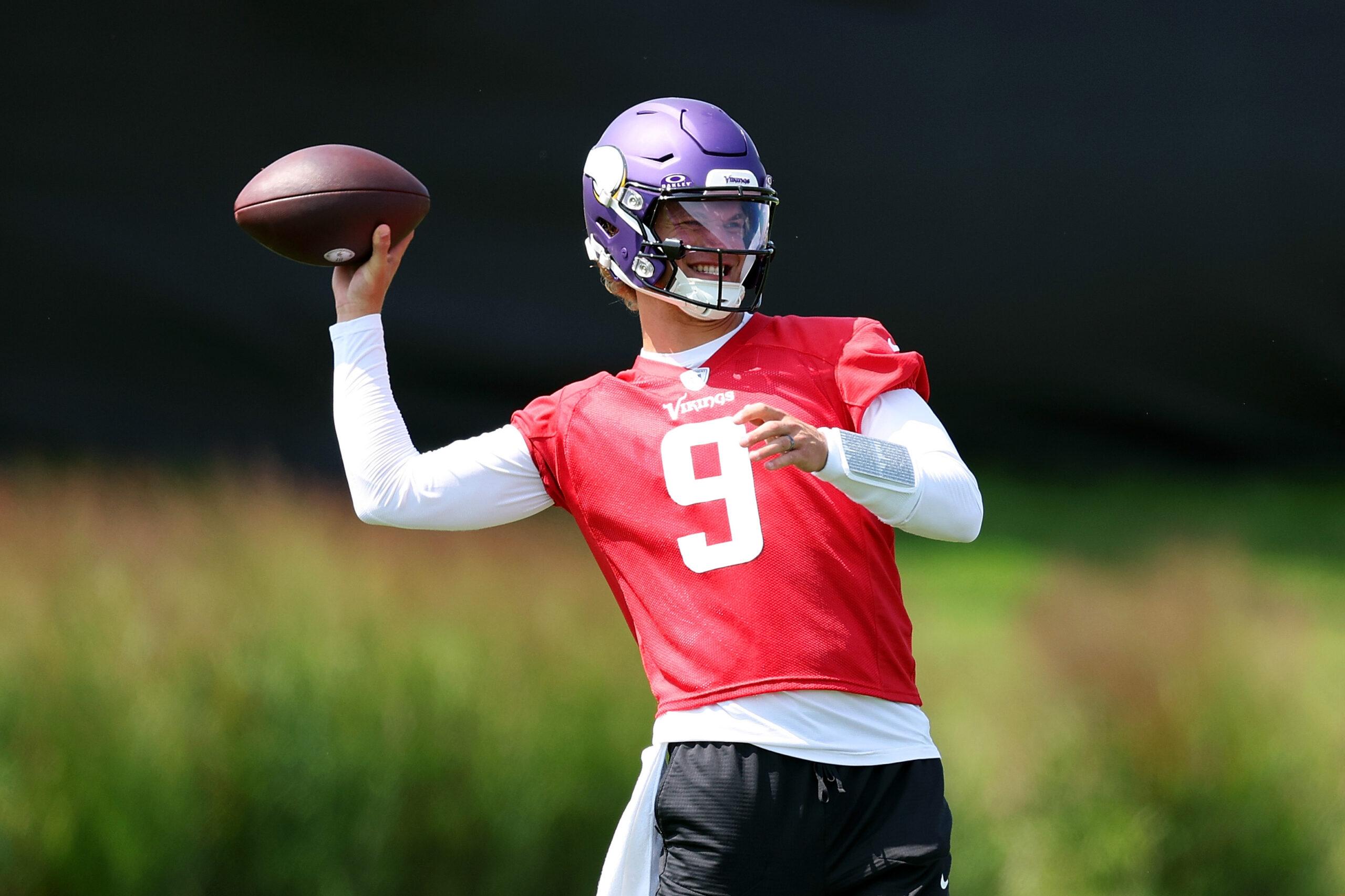
J.J. McCarthy
Vikings coach Kevin O’Connell didn’t need to see a preseason game to declare a winner in Minnesota’s quarterback battle. As expected after he signed a one-year prove-it deal with the team back in March, Kyler Murray will be the Vikings’ starting quarterback going forward. O’Connell went out of his way in training camp to maintain the illusion of a competition between Murray and 2024 first-round pick J.J. McCarthy, but he finally gave up the charade on Tuesday.
The QB battle may be over, but this story is just starting to get interesting now that we know McCarthy’s days in Minnesota are probably numbered. Given Murray’s injury history, there’s still a good chance that McCarthy could see the field for the Vikings this season, but these next few weeks could be crucial to convincing the NFL’s other 31 teams that he’d be worth investing in. McCarthy has acres of ground to make up there. It would be easier to ignore his bleak on-field results last season—he threw more interceptions than touchdowns, finished with a completion percentage of just 57.6 percent, and ranked 32nd (out of 33 qualified quarterbacks) in EPA per dropback, per TruMedia—if not for the damning behind the scenes reports that have come out about him this week. McCarthy wasn’t just unplayable on the field; he may have also been difficult to coach off it.
Bad on the field plus bad vibes is not a viable combination for any player, much less a quarterback. McCarthy’s preseason goal should be chipping away at that reputation. Handling the demotion to backup will be the easier part of his reclamation project. All he has to do is give boring but professional answers to the media, stay actively engaged in meetings, and take advantage of any opportunity to show public support for Murray and/or O’Connell. Basically just being a pro who can contribute to the quarterback room.
The more difficult bit for McCarthy will be proving that he belongs on the field. There are some clear aspects of his game that require improvement to reach an NFL level—with pocket presence and accuracy at the top of the list. The preseason games will show us how much progress, if any, he’s made in those areas. Is the ball getting out on time without any unnecessary hitches? Has he added some much-needed touch to his passes, or is he still throwing every ball 100 mph?
Preseason results don’t carry much weight, but the film is the film, as coaches like to say. Getting through a few progressions on time and making some layered throws this month would be more meaningful for McCarthy than an impressive stat line—and may be enough to convince another quarterback-needy team to bring him in as a backup with a chance to be more in the future.
Whoever Is Throwing the Challenge Flag for Your Team
For the first time in what feels like forever, the league didn’t make any major changes to the rule book this offseason. There were some tweaks, like the fact that teams can now attempt an onside kick at any time and that special teams units have more options in how they line up on kickoff returns, which means a wider variety of blocking schemes. But anyone looking for a resolution to the tush push problem or an expedited review process will be disappointed to learn that the competition committee kicked both of those cans down the road to next offseason.
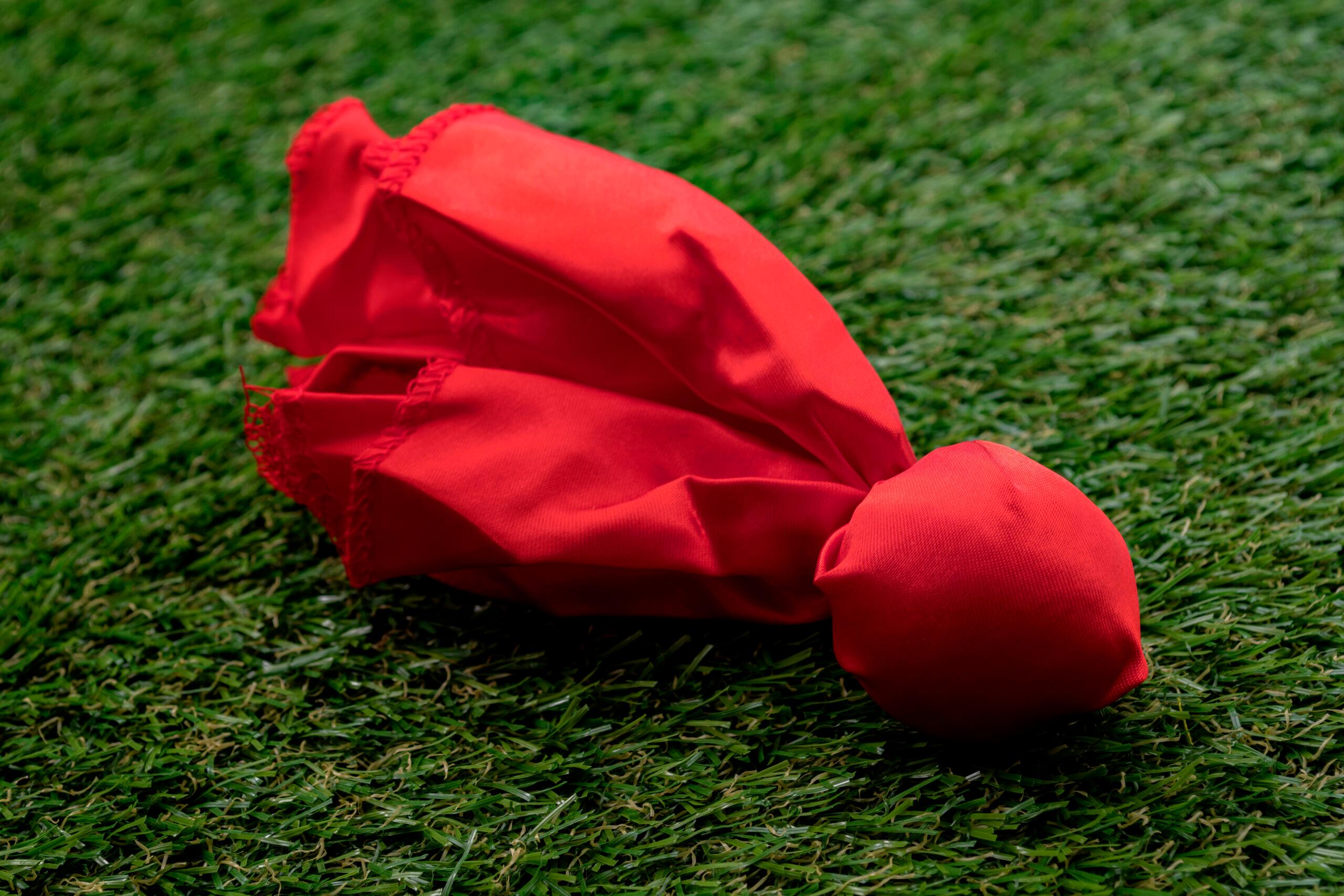
We did, however, get a small change to the challenge process that could end up being a big deal this season. Teams can now designate any member of the coaching staff, other than the head coach, to throw the red challenge flag if they want a call on the field reviewed. It’s unclear how many head coaches will feel comfortable giving up that responsibility, but it’s easy to see the benefits of delegating it. Imagine a coach who’s in constant communication with the booth making those all-important decisions rather than a head coach who’s caught up in every little thing that’s happening on the sideline during a game. Some of the very best coaches in the league are awful at managing their timeouts and challenges (cough, Kyle Shanahan, cough). There’s no shame in giving up the red flag.
I’m sure there will be stubborn coaches who won’t even consider giving up that power. But more enlightened ones may be willing to give it a try, and what better time to do that than in meaningless preseason games? If and when that happens, I’m looking forward to the first miscommunication, when a challenge flag gets thrown against a head coach’s wishes. This rule may not change the sport in a meaningful way, but it could lead to some fun discussions—and maybe even a little controversy. So when you see a challenge flag thrown over these next few weeks, play close attention to who threw it.
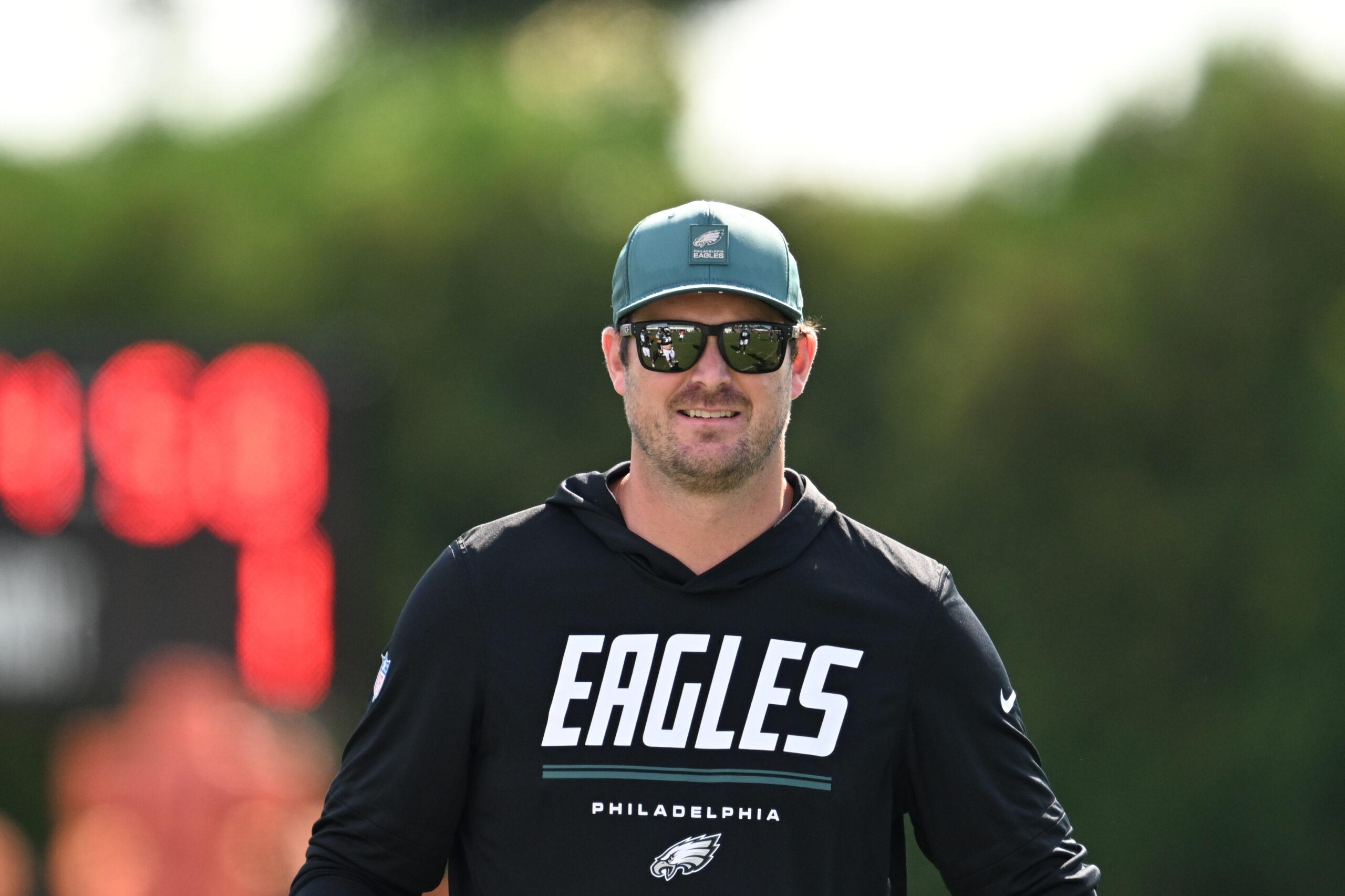
Sean Mannion
You know those hypothetical questions that pop up on social media that are like, Would you take having a 99 percent chance of winning a billion dollars if it came with a 1 percent chance of dying? Getting offered the Eagles offensive coordinator job has to feel a little like that, only with slightly lower stakes. Instead of winning a billion dollars, you could go on to land one of 32 NFL head coaching jobs in a year or two, and instead of dying, you could just become the most hated public figure in Philadelphia and suffer enough professional embarrassment that you’ll probably never get a meaningful NFL job again. Oh, and this is more of a 50-50 proposition, based on recent history. Shane Steichen (2021-22) and Kellen Moore (2024) parlayed Super Bowl trips into head coaching jobs in Indianapolis and New Orleans, respectively. But Brian Johnson (2023) and Kevin Patullo (2025) were both run out of town and demoted to “pass game coordinator” jobs after their stints in Philly. This season, former Packers assistant Sean Mannion will get his turn to play the high-stakes game—and his reputation is hanging in the balance.
Through all of those coordinator hirings and firings, the Eagles offense has remained mostly the same. But that may change this year now that Nick Sirianni has finally gone outside his coaching tree to hire Mannion. (Kellen Moore wasn’t an internal hire, but both he and Sirianni are branches off the Norv Turner/Air Coryell coaching tree.) Mannion is a West Coast guy who worked under Matt LaFleur in Green Bay. And the 34-year-old first-time play caller isn’t coming in to offer a new voice in the room; he’s there to rebuild the offense from the ground up.
The preseason will offer us the first glimpse of the changes Mannion has planned. We expect to see Jalen Hurts operate from under center more often than he has in the past, which will be a major departure for him. Historically, Philadelphia has mostly kept Hurts in the gun, where he poses more of a run threat on option plays. Hurts hasn’t been very productive on option keepers in recent seasons, but the threat that he’ll pull the ball still opens up space for Saquon Barkley, who led the NFL in EPA on “read option” carries last season, per Sports Info Solutions. Mannion says that the Eagles will “lean into” Hurts’s rushing ability. That suggests Philly will still regularly line up in the gun since there are few concepts that get the quarterback involved in the run game from under center (outside of QB sneaks). The 28-year-old QB also showed up to camp looking notably leaner and quicker, which could make those option keepers more effective than they were a year ago.
Among quarterbacks with at least 10 option keepers last season, Hurts had the lowest success rate, and only Bo Nix lost more EPA on those plays, per Sports Info Solutions. So there’s a lot of room for improvement in that area, and a faster Hurts should be more capable of burning defenses that are keyed in on Barkley.
It will be interesting to see how Mannion incorporates the QB run-option game into the modern West Coast offense. We’ve seen coaches from the Shanahan-McVay tree use pistol as a middle ground between under center and shotgun formations, and if that does end up serving as a foundation for Philly’s offense in 2026, we’ll likely see it in the preseason, when teams work on their base concepts. Don’t expect Mannion to reveal too much of his system this month, but we should get plenty of clues about how the Eagles offense will be structured when the regular season kicks off—which could tell us how the rookie coordinator plans on using Hurts’s legs.
Shedeur Sanders
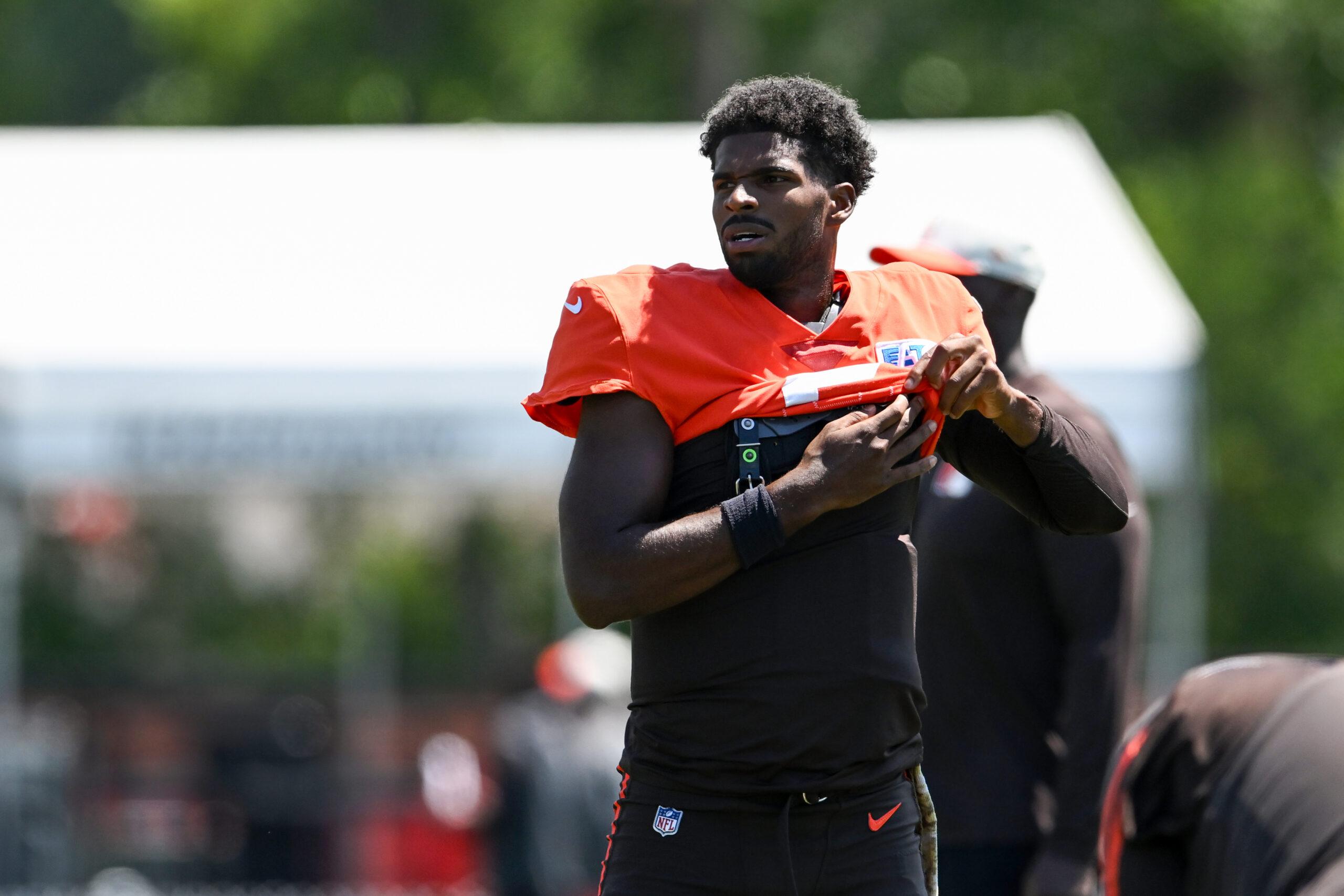
Based on how anonymous league execs and coaches feel about him, Shedeur Sanders isn’t just fighting for the Browns’ starting quarterback job this August; he might be fighting for his NFL future. The Athletic’s annual “Quarterback Tiers” project and ESPN’s poll of league execs morphed into The Comedy Central Roast of Shedeur Sanders when it came to evaluating Cleveland’s polarizing second-year quarterback.
“I’d sleep like a baby if I got to play him every week,” an anonymous defensive coordinator told Mike Sando. As mean as that quote was, it wasn’t as damning as this one from another coordinator: “He’s not an on-time player, can’t really read through the coverages, is a little bit heavy-footed. He is thicker and harder to tackle than expected, but you shouldn’t lose to him.” In other words, Sanders doesn’t really do anything to threaten a defense. He’s a run-around quarterback who lacks the pro-level athleticism or arm talent to play out of structure, which would be fine if he didn’t also lack the timing and precision (or willingness) to play in structure. At least in the minds of these anonymous decision-makers.


Fortunately for Shedeur, he’ll have the opportunity to make those scouting reports look foolish over the next few weeks as he battles a thoroughly washed-up Deshaun Watson for the Browns’ starting quarterback job. Watson appears to be the early leader, but the Browns’ first unofficial depth chart listed “Deshaun Watson or Shedeur Sanders” in the QB1 spot, so Sanders isn’t out of the running yet. First-year coach Todd Monken has laid out what he’d like to see from the 24-year-old to warrant consideration for the starting gig: “Being able to check the ball down and get it out of his hands,” Monken said last week. “He’s such a playmaker that that’s hard for him. For a guy that is always looking to make plays—super competitive—that is a win. Trying to get super competitive quarterbacks to understand that throwing the ball away and eliminating lost-yardage plays is a win.”
Sanders doesn’t have Patrick Mahomes’s arm. He doesn’t have Lamar Jackson’s mobility. He won’t stick around long if he doesn’t come to grips with that. The best version of Sanders is one who sticks to the pocket and makes daring throws downfield when the opportunity arises or dumps the ball off to a more capable playmaker. There is a place for that version of him. And he’ll have at least three games this month to show that he’s got it in him.
Marvin Harrison Jr.
Overreacting to training camp clips is often a fool’s errand. It’s important to remember that we’re seeing just a small fraction of what’s going on out there, and it’s easy for one or two bad clips to paint a misleading picture of how a certain team or player is performing. We’re still a month away from the four-month regular season, so there’s really no need to jump to strong conclusions.
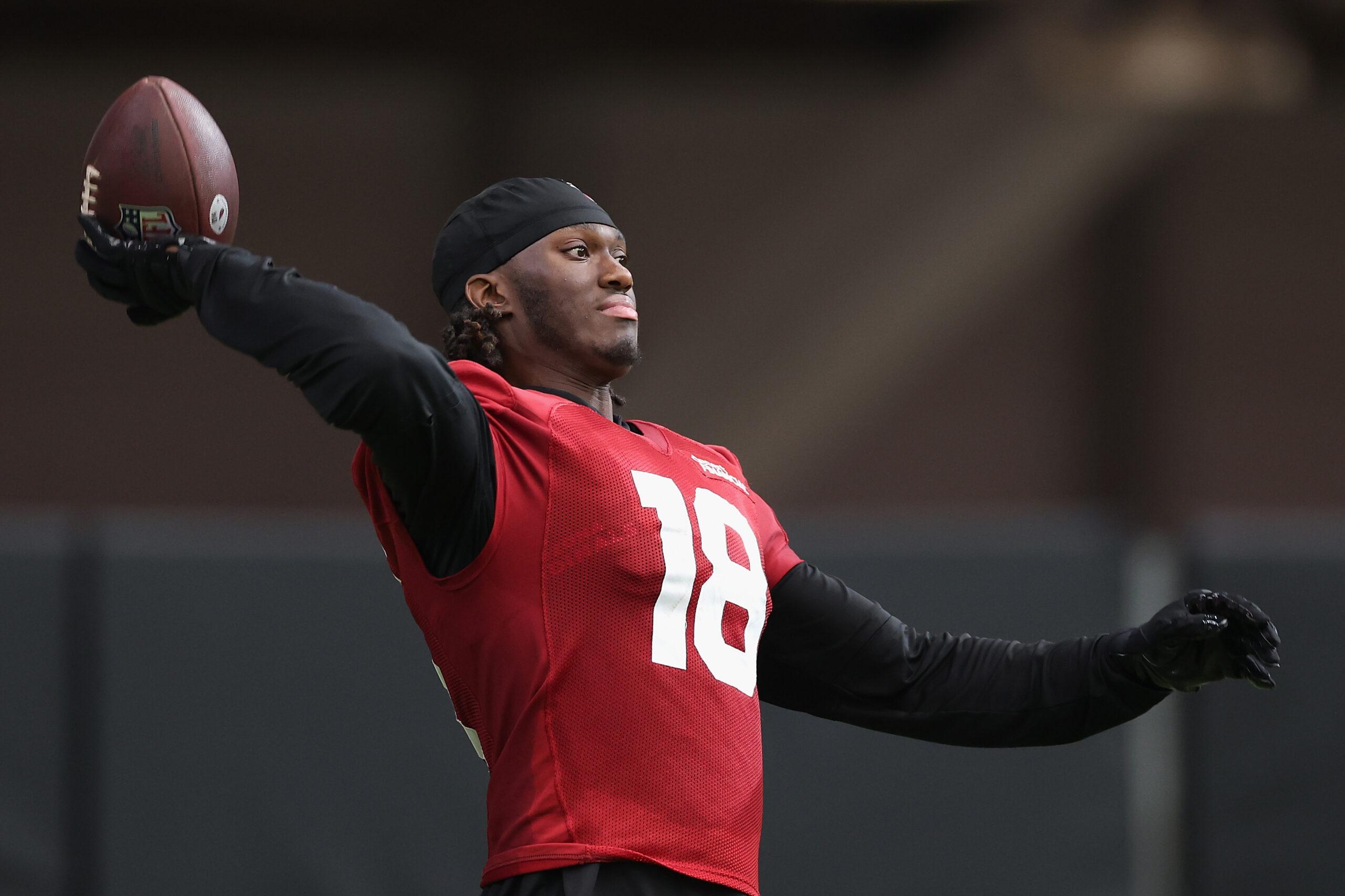
All that said … I’m worried about Marvin Harrison Jr. Harrison has been all over my timeline recently looking like he’s caught up in a Space Jam situation in which aliens have stolen his ability to catch a football. It seems like we’re getting a new lowlight every day of camp.
This is especially concerning since, at this point in his career, making contested catches is Harrison’s primary attribute. He’s not much of a separator and doesn’t do much after the catch, but his ability to bring down 50-50 balls has been the one thing to carry over from his remarkable college career. If that goes out the window, it’ll be time to start throwing around the dreaded “bust” label for this former “can’t miss” prospect.
I’m not ready to go that far, but I would like to see Harrison catch a football in a game before I’m ready to buy into a year three breakout—or buy into the idea that Arizona’s cadre of young, talented playmakers will do something of note this season. Fortunately, first-year coach Mike LaFleur has said that his starters will be playing this August, so we’ll get a chance to see whether Harrison does have a case of the yips or whether the practice lowlights are the latest example of training camp nonsense.
Ty Simpson
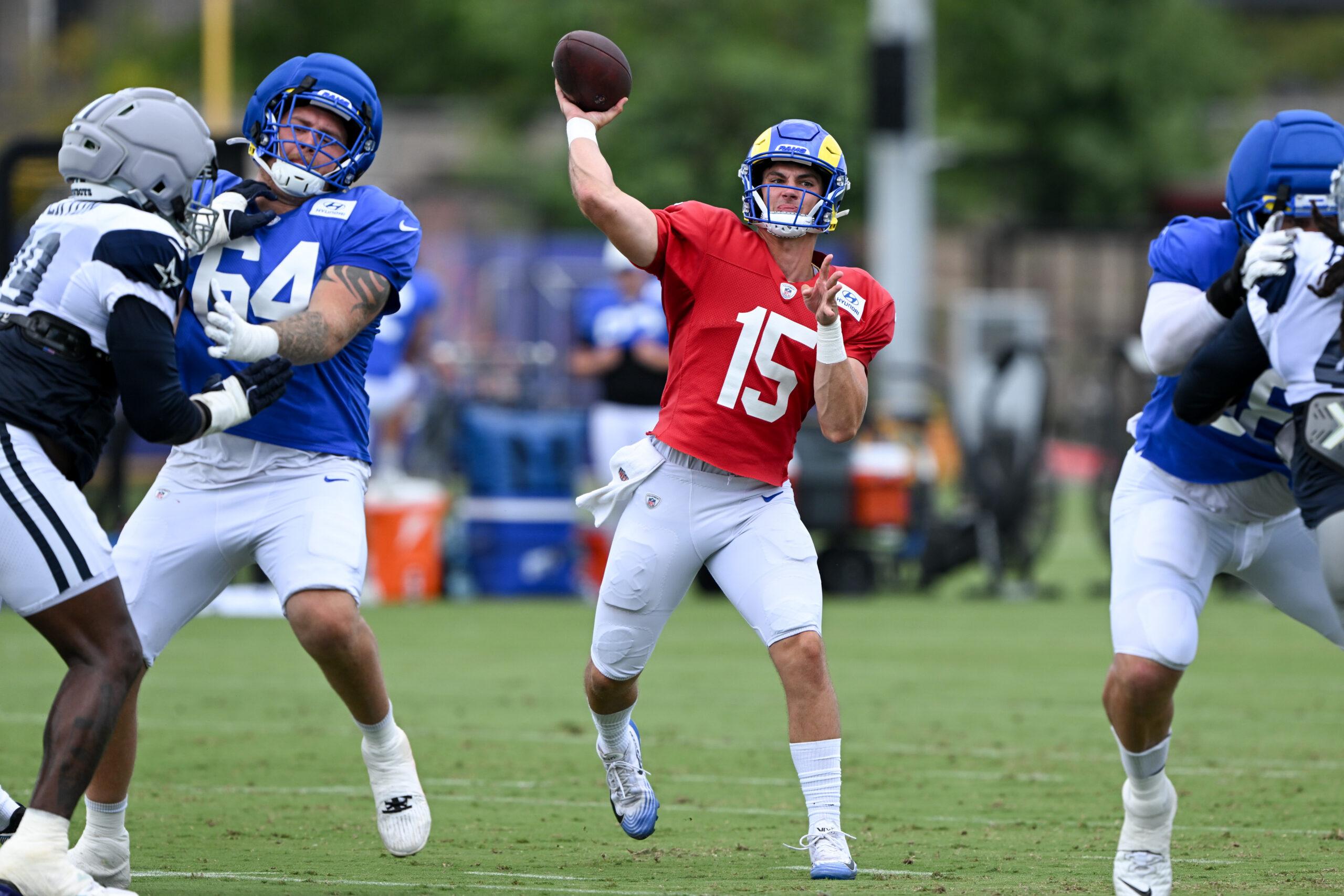
The Rams have yet to formally announce who will be serving as Matthew Stafford’s primary backup this season—first-round rookie Ty Simpson or former Day 3 pick Stetson Bennett. But coach Sean McVay may have given it away this week when he said that Simpson will “definitely” be playing in the preseason, while he hasn’t decided whether Bennett will see the field this month. If McVay isn’t willing to risk a Bennett injury, he probably envisions him playing a significant role in the Rams season.
If that’s true, then these next three weeks may be our only chance to see the 13th pick in live game action this season. And given that Stafford signed an extension that will keep him in Los Angeles through the 2027 season, it could be awhile before Simpson gets any taste of real football. These three exhibition games could go a long way in shaping our perception of the rookie’s future with the Rams—and how we judge L.A.’s process after it made that highly controversial pick in April.
Simpson won’t be playing with the Rams’ star-studded skill-position players, and he won’t be enjoying the perks of McVay’s game-planning in an exhibition setting. So it’s not fair to set statistical goals for the 23-year-old, who made just 15 starts at Alabama. But it would be nice to see glimpses of Simpson’s supposed polish in the pocket and arm strength when pushing the ball downfield. We saw plenty of that early in Simpson’s final season in Tuscaloosa, before a midseason shoulder injury coincided with a decline in his performance. At the very least, the preseason tape should give us a better idea of which version of Simpson is closer to his true form.
Fernando Mendoza
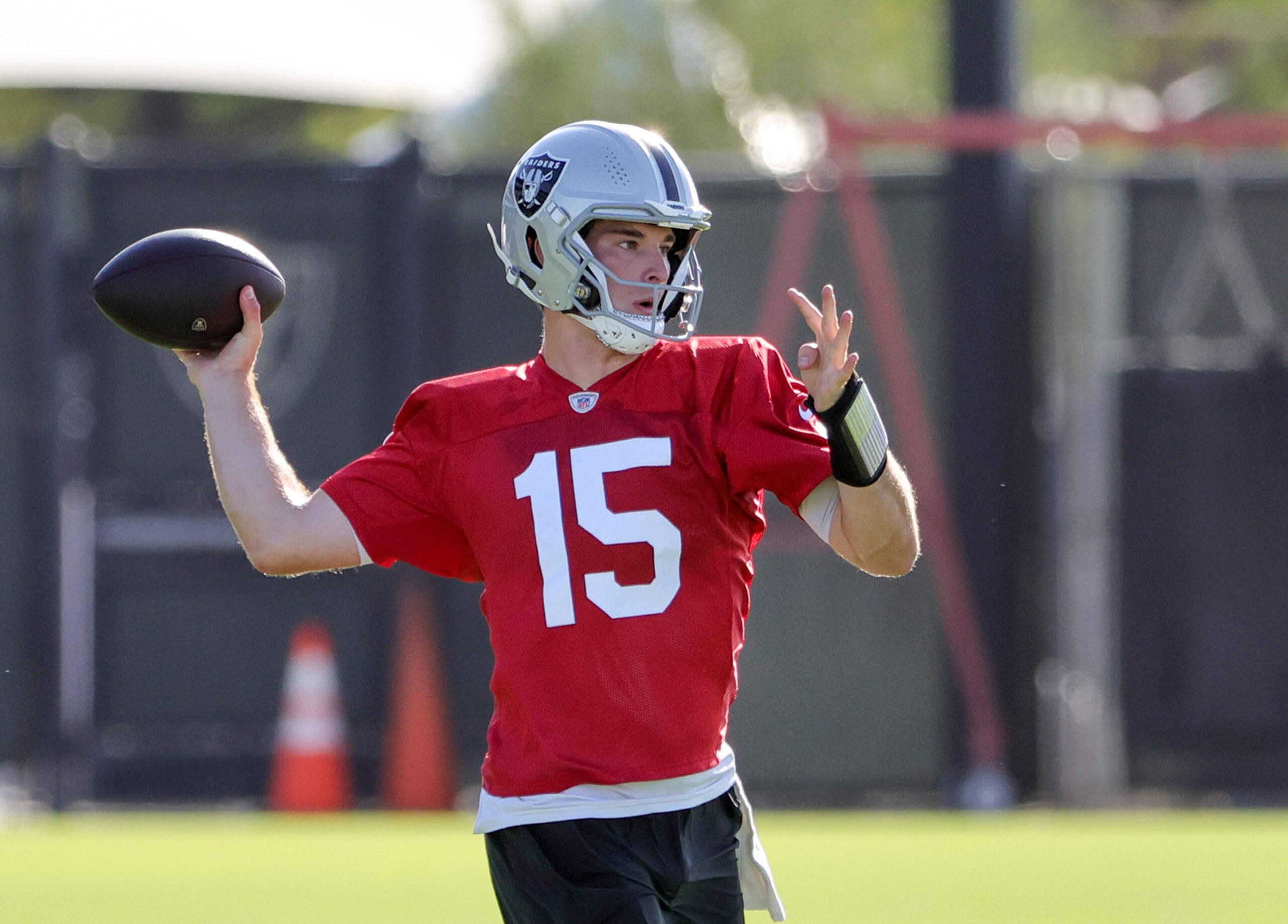
I’ve watched enough of Kirk Cousins over the past two years to know that he’s probably not making it through a full regular season. As much as Tom Brady wants this to be a redshirt year for the first pick, Fernando Mendoza will likely be seeing the field at some point in 2026, whether he’s ready to play or not. If and when that happens, the rookie’s preseason performance will be seen as little more than an interesting footnote, but for the time being, it’ll give us a good idea of how ready he will be when he gets the call.
It wasn’t difficult to evaluate Mendoza when he was a prospect coming out of Indiana. He’s got the requisite size and athleticism front offices are looking for in quarterbacks. His arm isn’t generational, but he can hit deep perimeter throws with little effort. And if you’ve ever heard Mendoza talk ball, you have no questions about his ability to process the game.
But because of the nature of Indiana’s offense, which was built around run-pass options on early downs, some analysts have wondered how his game will translate to a pro-style passing attack. Mendoza got rid of the ball quickly in college, but RPOs don’t require multiple reads and, oftentimes, those decisions are made based on the defense’s alignment before the snap. Mendoza won’t be running too many RPOs in Klint Kubiak’s offense, which is based on West Coast principles. He’ll be asked to get through a progression featuring up to five eligible receivers, and to do so in a matter of seconds. There are a few examples of Mendoza doing that in his Indiana film, but it will be an every-down task in the pros.
If the rookie can keep his time to throw down during the preseason, it may show that he’ll be ready to snatch Cousins’s job sooner than expected.