
Editor’s note: On Thursday afternoon, Lions running back Jahmyr Gibbs reportedly agreed to a contract extension that will make him the league’s highest-paid running back, with an average annual salary of $22.5 million.
NFL training camp is in full swing, with teams having their first padded practices this week. With training camp comes a rush of news about contract extensions, injuries, position battles, and teams laying the groundwork for major breakouts. Here’s a handful of story lines that have caught my eye since football’s been back.
The wide receiver bubble is rapidly growing.
After signing a massive contract extension on Tuesday that will pay him $35 million per year, Baltimore’s Zay Flowers is now tied as the fourth-highest-paid receiver in the league. He’s set to make the same amount as (or more than) multiple receivers with All-Pro selections, and while it’s fair to wonder whether the Ravens overpaid a player with two 1,000-yard seasons and a pair of Pro Bowl nods, his contract is certainly a sign of a bubble in the receiver market that may affect roster building across the NFL.
Receivers are now being paid like the most important non-quarterbacks on offense, a significant shift in the way teams allocate their money. There is only one offensive tackle, the Commanders’ Laremy Tunsil, currently making more than $30 million per year, but there are now a dozen active receivers earning at least that much. Of that group of pass catchers, four have never won a playoff game, and three haven’t made the postseason at all. Teams are spending at the position, but what are they getting in return? It was one thing for the Seahawks to reset the receiver market by paying Jaxon Smith-Njigba after he made the All-Pro team and was the most important skill position player during Seattle’s Super Bowl season. It’s another for the Ravens to give Flowers Justin Jefferson–level money. Baltimore is paying a premium for a player it hopes can ascend. But at this price point, Flowers needs to quickly emerge as one of the league’s elite pass catchers to justify being the second-highest earner on a roster that also includes elite defensive players like safety Kyle Hamilton and defensive tackle Nnamdi Madubuike.


Flowers’s contract will have major ripple effects for the next receivers in line to get paid. If Flowers is earning $35 million per year, it’s easy to see Rams receiver Puka Nacua—a first-team All-Pro last season, when he led the league in catches and receiving yards per game—commanding no less than $40 million. It’s certainly possible that Nacua will surpass Smith-Njigba’s $42 million average and reset the market entirely. Flowers’s deal also sets the floor for receivers like George Pickens, Ladd McConkey, and Jordan Addison. And because Pickens and Addison play alongside other receivers who make at least $30 million per year, the Cowboys and Vikings, respectively, could be facing tricky negotiations—or risk losing those players in free agency next offseason.
Flowers isn’t the only receiver celebrating a major payday this summer, as Saints receiver Chris Olave signed a four-year deal worth up to $132 million just as training camp opened. He hasn’t made a Pro Bowl in his career, but he's averaged 1,152 yards and six touchdowns per 17 games played, so his contract may serve as a baseline for other solid no. 1 receivers entering their primes. Olave has been productive, but this is still a lot of money for a rebuilding team like the Saints to spend. Yet it’s the cost of retaining young receiver talent, because true difference makers at the position are rarely available in free agency.
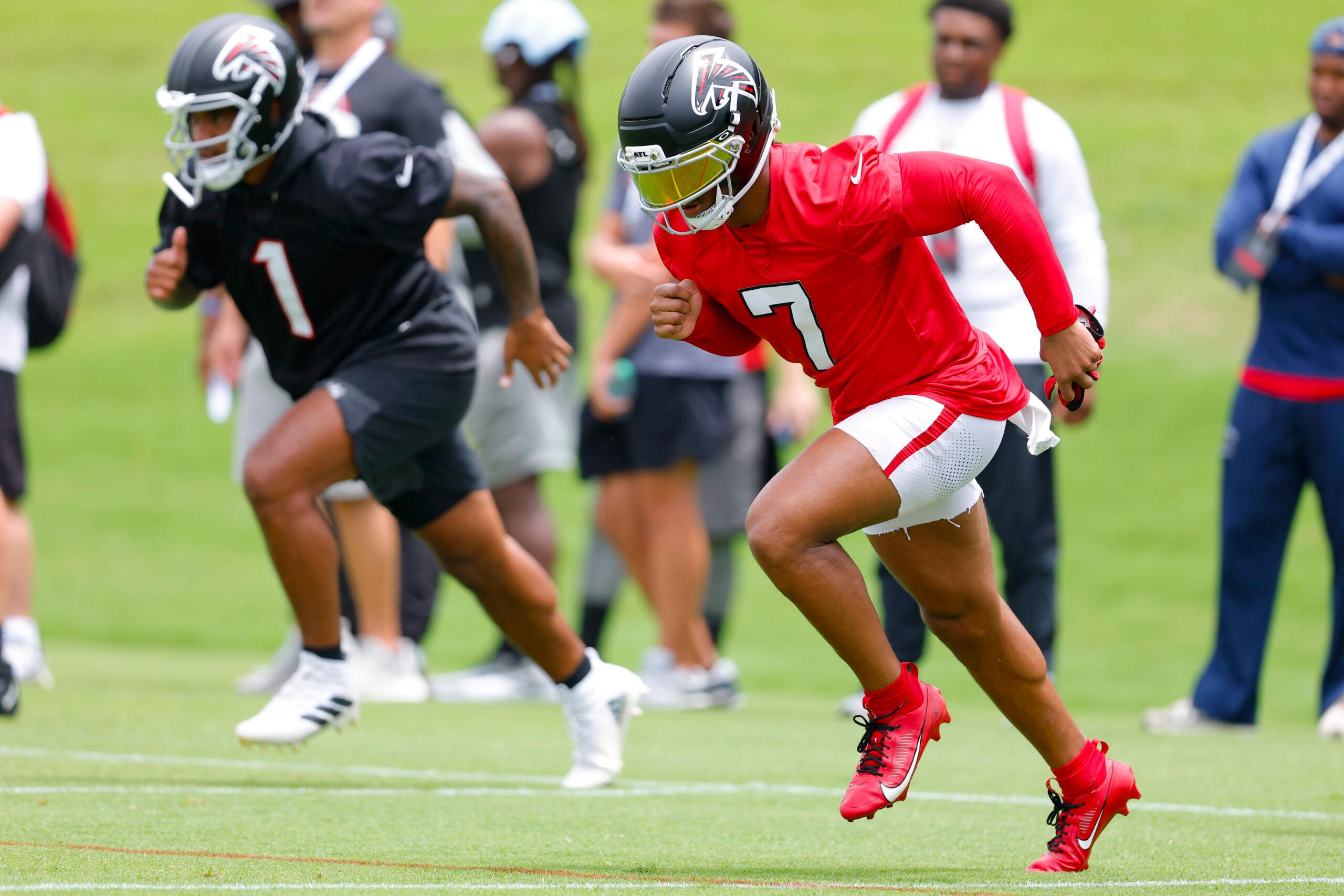
Bijan Robinson warms up during OTAs
Running backs might matter again.
The running back market has shifted significantly in recent days.
Earlier this week, the Falcons signed Bijan Robinson to an extension worth nearly $67 million, a deal that will keep him under contract through the 2030 season. Then, on Thursday morning, the Colts reportedly reached an agreement with Jonathan Taylor on a two-year, $44 million extension. When camps opened in late July, there was just one running back—Philadelphia’s Saquon Barkley—making $20 million per year. Now, there are two making $22 million (or more). Soon, there could be a third.
The next running back in line to get paid is Detroit’s Jahmyr Gibbs, who has been holding in during Detroit’s training camp while awaiting a new contract. Gibbs was reportedly in contact with Robinson during their respective negotiations.


Lions head coach Dan Campbell said this week that Robinson’s new contract is “not gonna hurt” Detroit’s negotiating position with Gibbs, and I’m inclined to agree. Gibbs is the engine of Detroit’s offense. The Lions would not have traded running back David Montgomery to the Texans if the plan hadn’t been to make Gibbs one of the highest-paid running backs in the league and the centerpiece of their offense. Could he be the first running back to reach $23 million per year? Gibbs has reportedly ended his hold-in and is returning to practice for at least minimal work on Thursday morning, so I’d bet that this extension is right around the corner.
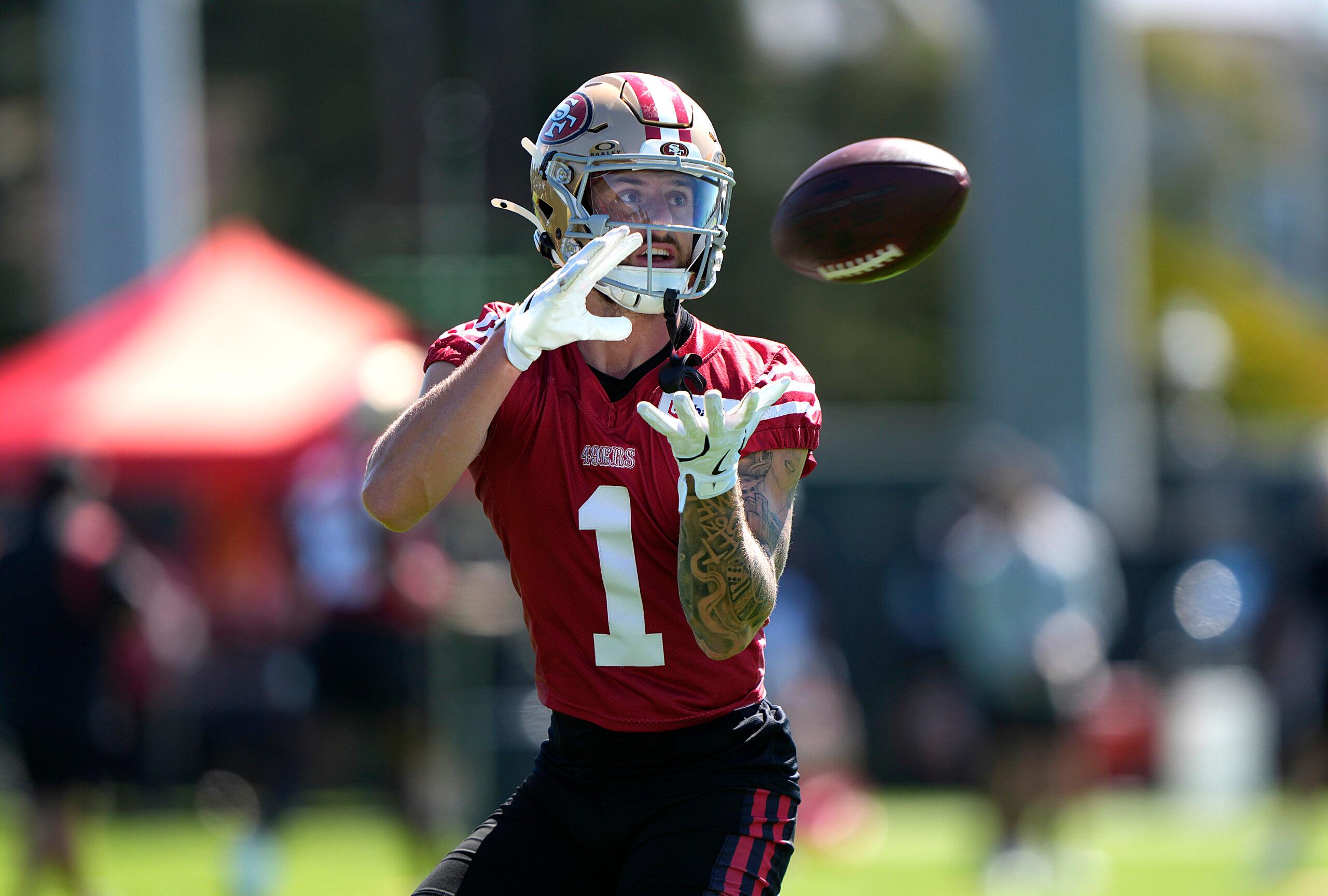
Ricky Pearsall works out during 49ers training camp practice
The 49ers can’t stay healthy.
With the return of football always comes injury misfortune, and we’ve already seen several players suffer season-ending injuries during the first 10 days of practice.
No team has been hit harder by camp injuries than the 49ers, who practiced on Wednesday without 20 players from their 90-man roster. The biggest loss is receiver Ricky Pearsall, who won’t play this season after experiencing a setback in his recovery from the PCL injury that sidelined him in 2025. Pearsall did not have surgery on the ligament last year but will undergo a procedure this month, GM John Lynch told reporters.
Pearsall has played in only 20 games since the team drafted him in the first round in 2024, and he hasn’t looked like a potential no. 1 receiver in San Francisco’s offense since last December. The 49ers brought back receiver Deebo Samuel in his absence, hoping he could again be the versatile playmaker he was for this offense in 2023. San Francisco was hoping to ride its unstoppable offense into the postseason like it did last year, but the Pearsall injury (and all the other injuries 49ers players have suffered during camp) has sapped a bit of energy from this team to open the preseason.


Other players already out for the year include:
- Falcons outside linebacker Jalon Walker, who had five sacks as a rookie last season and figured to be a major part of the Falcons’ pass rush plans in 2026.
- Saints defensive tackle Bryan Bresee, who anchored the surprisingly stout New Orleans run defense last season.
- Panthers edge rusher Nic Scourton, who also had five sacks last season, and receiver Chris Brazzell, who will miss all of his rookie season after tearing his LCL in practice last week.
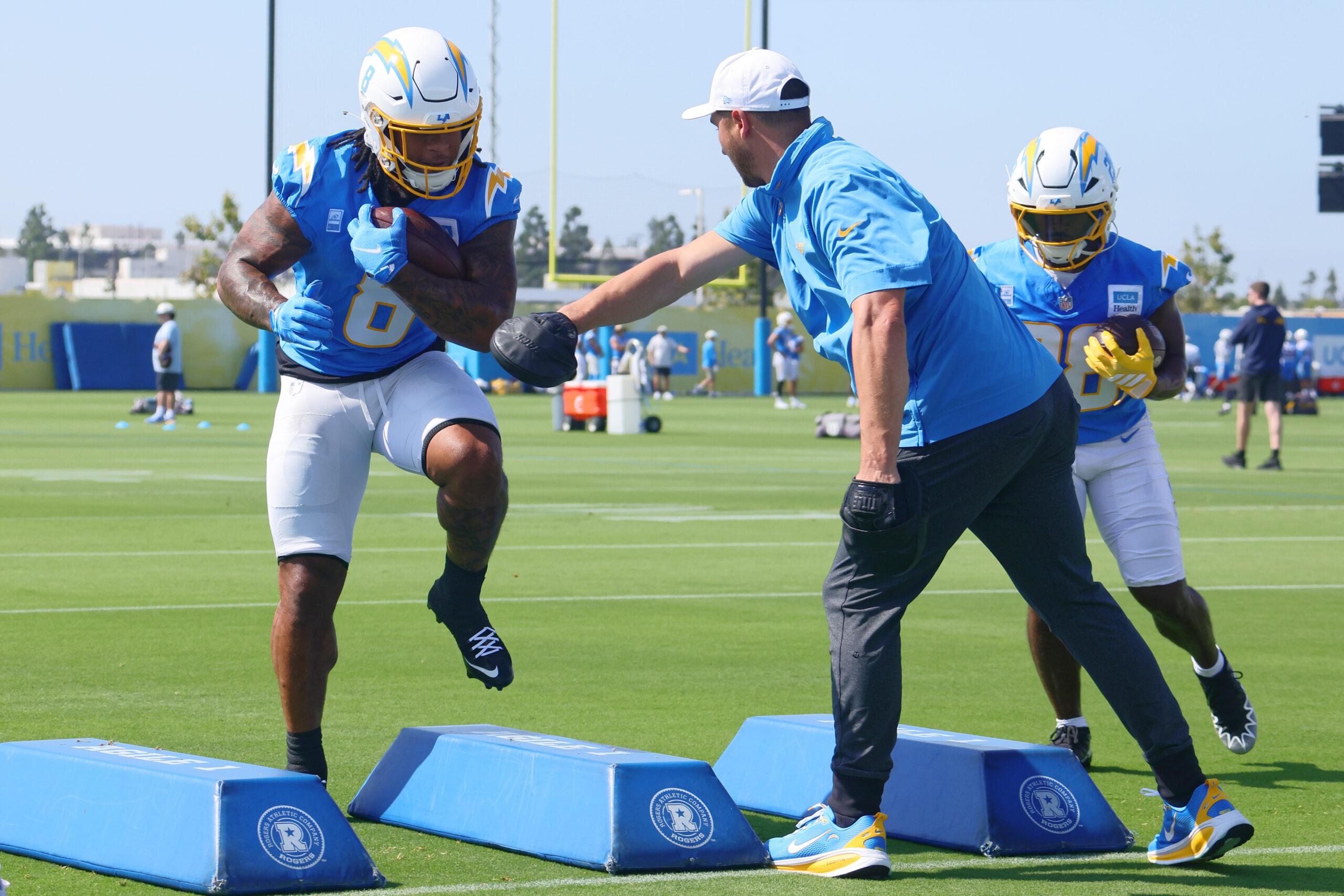
Omarion Hampton runs the ball in a pad drill during Los Angeles Chargers training camp
The Chargers offense is worth the hype.
This Chargers team feels worthy of preseason hype. As a native San Diegan (who was never afflicted with the condition of loving the Chargers), I’ve spent my entire life consoling friends and family every time this team breaks its fans’ hearts in spectacular fashion. But this time, there might be a real reason to believe. I’ve been checking in on the Chargers at practice for the past couple of months, from OTAs to training camp, and I’ve seen things from this current squad that it didn’t have before.
This team has more offensive depth than any other in the Justin Herbert era. When the starting unit of skill position players jogs off the field during practice, they’re replaced by receivers and tight ends who would actually earn a role on most other rosters across the league. And the Chargers’ top players are versatile, which feels novel after former coordinators Greg Roman and Joe Lombardi forced square pegs into round holes. Tight end Charlie Kolar, the team’s top free agent addition, is a perfect example. The former Raven is already proven as a blocker, but he has the athleticism and underrated route-running chops to be a three-down player and one of the most impactful tight ends in the league. Second-year running back Omarion Hampton, who was on pace for over 60 targets (which would’ve ranked in the top five among running backs) and over 300 overall touches before getting injured last year, is primed for a breakout campaign, too. He should be more effective now that he most likely won't be running the ball into stacked boxes on almost every first down.
Having multi-tool players like Kolar and Hampton will allow Herbert and new offensive coordinator Mike McDaniel to maximize the more one-dimensional players, like receiving tight ends Oronde Gadsden and David Njoku and fullback Alec Ingold.
From the handful of practices I've watched, it’s clear that McDaniel’s offense will be multiple and unpredictable, with frequently changing personnel groupings and plenty of motion. The clip above, from a camp practice this week, is a perfect example. Njoku motions into the slot—which forces the defense to reveal that it’s playing zone coverage. That motion and Njoku’s route take up enough of the secondary’s attention that no one sees McConkey streaking up the seam until the ball is already in the air. That kind of intentional play design was missing from Los Angeles’s offense last season, when the Chargers ranked 24th in passer rating in the red zone even though they had one of the league’s best quarterbacks.
Plays like that have made Chargers camp a must-watch. Ingold might zip across in motion and end up on the perimeter on one play. McConkey is always on the move, and McDaniel is trying to manufacture soft coverages or favorable matchups by forcing defenses to adjust to his constant movement. And if outside receivers Tre’ Harris and Quentin Johnston can take advantage of one-on-one matchups, defenses will be put in a bind as they try to decide which parts of this offense they want to try to stop.
McDaniel’s offensive philosophy is built on hunting explosive plays in the run game and trying to get the ball out of Herbert’s hands quickly while he’s in the pocket. Tuesday’s practice at the University of San Diego felt like a major step toward their ultimate goals. At one point, Herbert completed eight straight passes in the red zone, identifying every broken coverage or out-of-sync defender and zipping the ball past them for chunk gains or touchdowns. If the offensive line can stay healthy enough to maintain the kind of consistent rushing attack it never had under Roman, Los Angeles can win the AFC West—and maybe be the top team in the AFC.
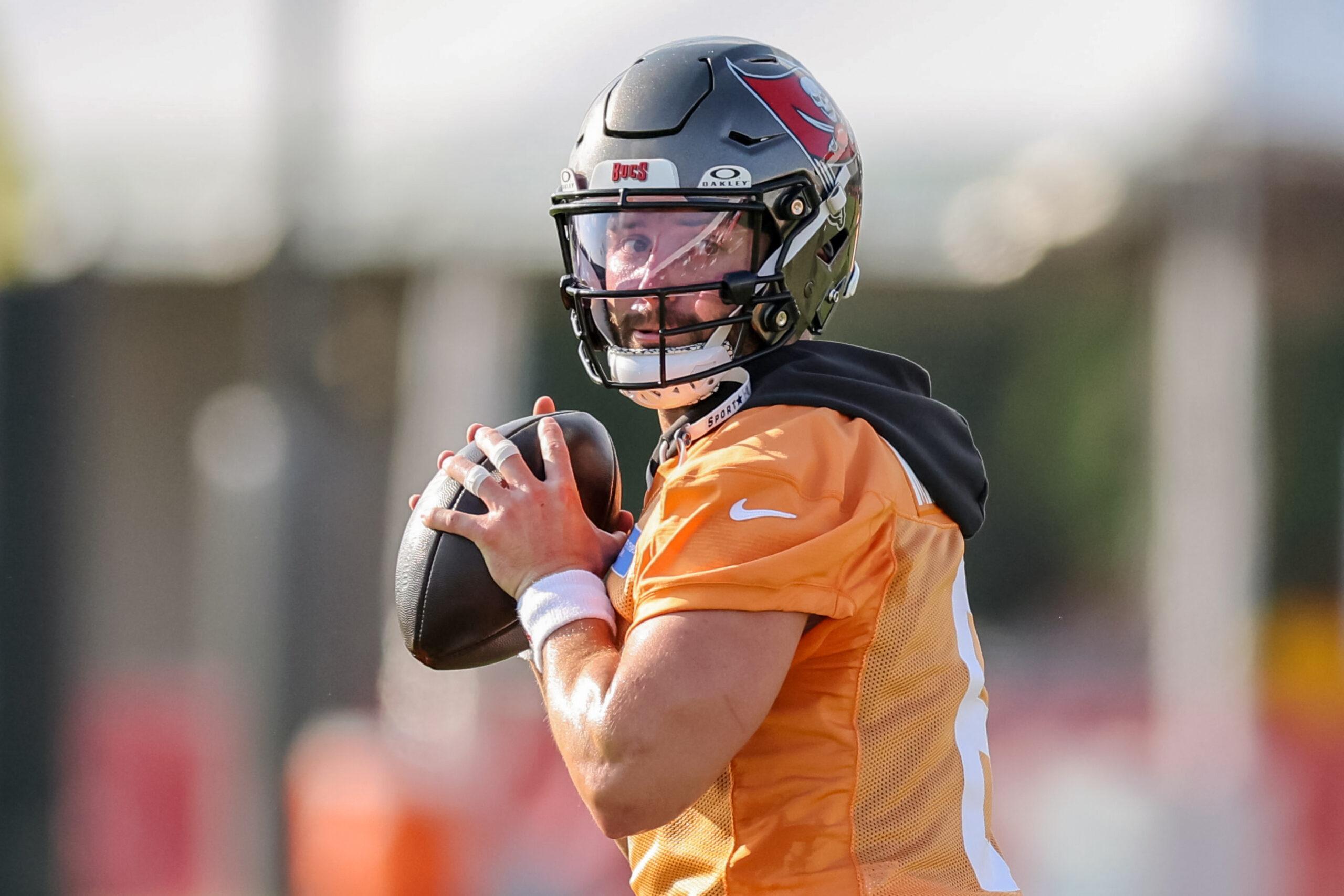
Baker Mayfield throws during Buccaneers training camp
There is drama in Tampa.
It’s been a rocky start to training camp for the Bucs. Quarterback Baker Mayfield and the team couldn’t agree to terms on an extension, and he’s now planning to play out the final year of his contract without long-term security, while defensive tackle Vita Vea has requested a trade and is “holding in”—he’s reported to camp and is attending meetings, but not practicing. And Vea's agent expects that the standoff will end with Vea being dealt, a signal that contract talks aren’t productive or encouraging at the moment.
Bucs head coach Todd Bowles has said the team is “not concerned” with Vea’s unavailability thus far and won’t be unless he abstains from practice deep into the preseason. But because Vea is so integral to the way Tampa Bay plays defense, taking on double-teams and eating up space on the interior of the line, he holds enough leverage to make his absence uncomfortable for Bowles and GM Jason Licht, who is now under a lot of pressure to determine the short- and long-term future of this roster.


The defensive tackle market exploded since Vea signed his current $71 million contract in 2022, with elite defensive tackles now earning north of $25 million per year. With Dexter Lawrence, coming off a down season with the Giants, making $28 million this season in Cincinnati, and Tennessee’s Jeffery Simmons signing a new deal this offseason that will pay him $35 million per year, Vea is probably looking for a new deal worth at least $30 million per year. I’m curious about whether Tampa Bay will concede and ultimately be willing to pay market rate for the 31-year-old Vea. Licht typically doesn’t hand out big contracts to players older than 30—even if they’re homegrown stars like Vea.
Mayfield’s contract situation could be even more problematic this season. Mayfield isn’t holding in like Vea—but he also hasn’t held back on his feelings of displeasure with the franchise. When Mayfield addressed the media at the start of training camp, he said he felt “disrespected” by the Bucs’ reported offer of a two-year extension worth over $100 million. After assessing the market, I don’t see how Tampa Bay can give Mayfield the contract he thinks he deserves without mortgaging its future cap flexibility. Mayfield turned 31 earlier this year. This season, there are 10 quarterbacks age 30 or older who are expected to start. Six of them are being paid like franchise QBs. The other four—Aaron Rodgers, Kirk Cousins, Jacoby Brissett, and Mayfield—are making well below what the elite tier of quarterbacks are making. And while Mayfield isn’t in the same realm as guys like Joe Burrow, Josh Allen, Patrick Mahomes, or Dak Prescott, it's easy to see why he believes he deserves a longer-term deal, like the four-year, $212 million contract Jared Goff signed with the Lions in 2024.
Because Mayfield set training camp as a negotiating deadline, and because Tampa Bay doesn’t usually compete at the top of the market for players, Mayfield will probably have to stew on this frustration until next offseason. And if the Bucs feel their two-year extension offer was reasonable, they probably won’t have any issues with using the franchise tag on him next spring. Mayfield has long been at his best when he feels slighted or overlooked, but we haven’t seen him publicly direct that ire at his own franchise since he was in Cleveland—and that led to him sniping at teammates. He was eventually traded to Carolina in 2022. If both of these sagas are headed for divorce, the prospect of having a disgruntled Mayfield under center and not having Vea on the defensive interior could make for a disastrous 2026 campaign.
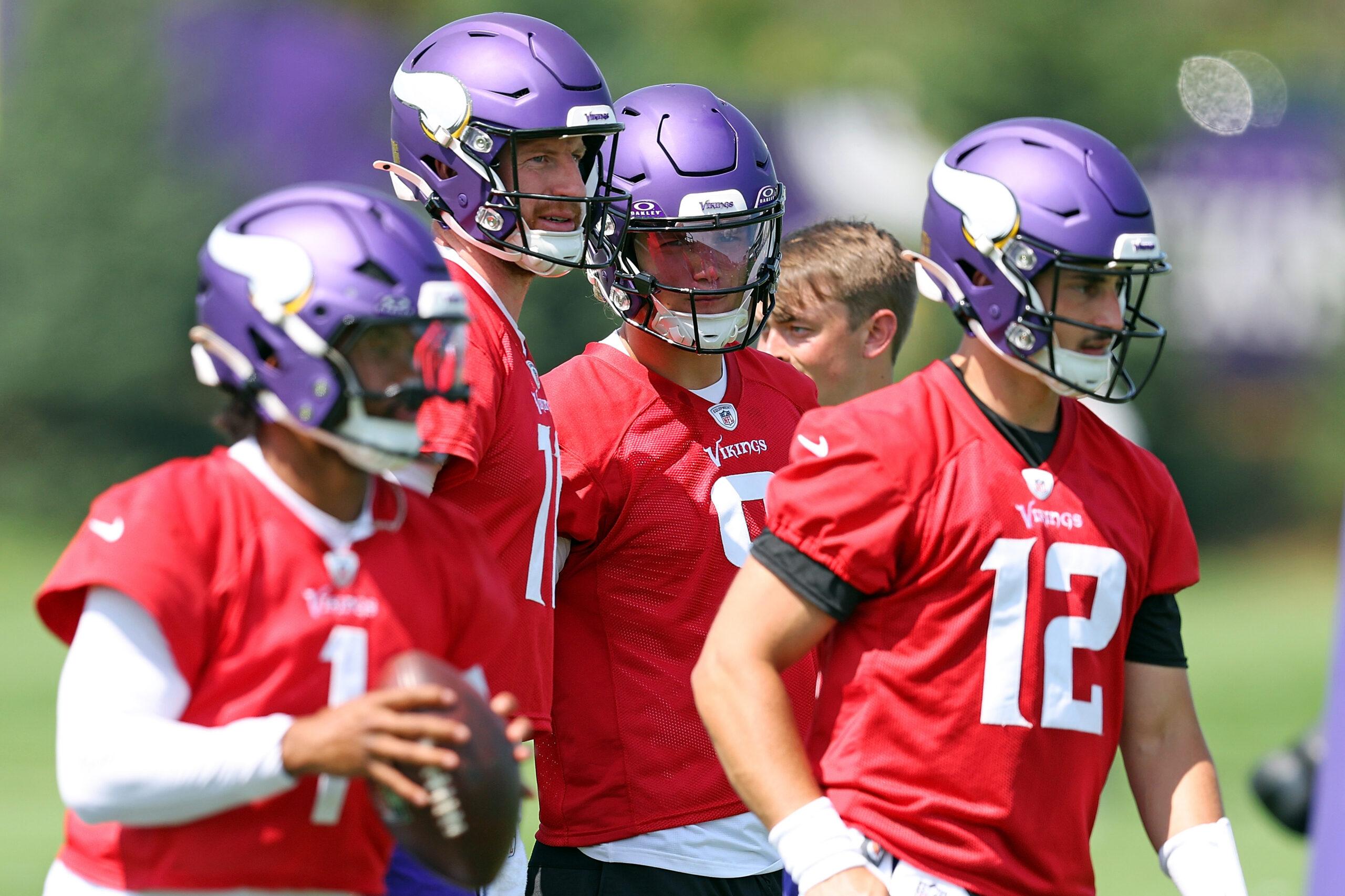
J.J. McCarthy looks on as Kyler Murray participates in a drill during Vikings training camp
The Minnesota quarterback battle was real … but should be over.
When Kyler Murray first signed with Minnesota, it seemed that a quarterback competition between the veteran free agent and J.J. McCarthy, the Vikings’ disappointing first-round pick from 2024, would simply be a formality. Nearly two weeks into camp, though, the battle has been real.
And now, it might be nearing an end, with Murray finally seeming to separate himself by showing off his accuracy and stacking strong days of practice.
Murray should win this job because he’s the better quarterback by nearly any objective measure. But it still feels like McCarthy is losing it. Veteran Minnesota reporter Judd Zulgad of SKOR North even described McCarthy’s play in training camp as the “football yips.” McCarthy often looked lost or overwhelmed during his 10 starts last year, and his hesitancy in the pocket contributed to his 12 interceptions and high sack rate. Inconsistent ball placement has still been an issue for McCarthy in camp, and fans seem to be over it.
If the game isn’t slowing down for McCarthy as he enters year three, I don’t blame anyone in Minnesota for feeling like it never will.