
On Monday, I wrote about why the NBA’s analytics discourse suffered a slow and painful death this summer. As promised at the end of that piece, now we’re running my Jaylen Brown All-Stars. As I wrote on Monday, these players are “contradictory figures who elicit a schism between stats and eye test … frowned upon by myriad trustworthy numbers despite actually being pretty good for who they are.” Ranked by how effective I think each player will be next season, here they are:
1. Paolo Banchero, Orlando Magic
The most obvious candidate on this list also has the most talent and promise. Early last season, I wrote about the concerning regression of Banchero’s game—inefficient shooting, abysmal on-off numbers, and a statistical retreat from his first three seasons. To me, it was kinda shocking. I had picked the Magic to reach the NBA Finals and thought Banchero would be a legitimate MVP candidate.
Instead, he had the most disappointing season of his career, didn’t even make the All-Star team, and was pretty much abandoned by the analytics community. Most people I talk to who work in the NBA no longer see the 2022 no. 1 pick as a franchise player. Whether we’re discussing his ability to lead Orlando on a deep playoff run or his trade value, Banchero’s reputation has been tainted by the fact that his team is always better when he’s off the court and not very good when he’s on it. (Making matters worse, lineups that have Franz Wagner but no Banchero have been awesome for the past four seasons.) His true shooting percentage has never tipped above league average, despite a dramatic reduction in on-ball responsibility last season.
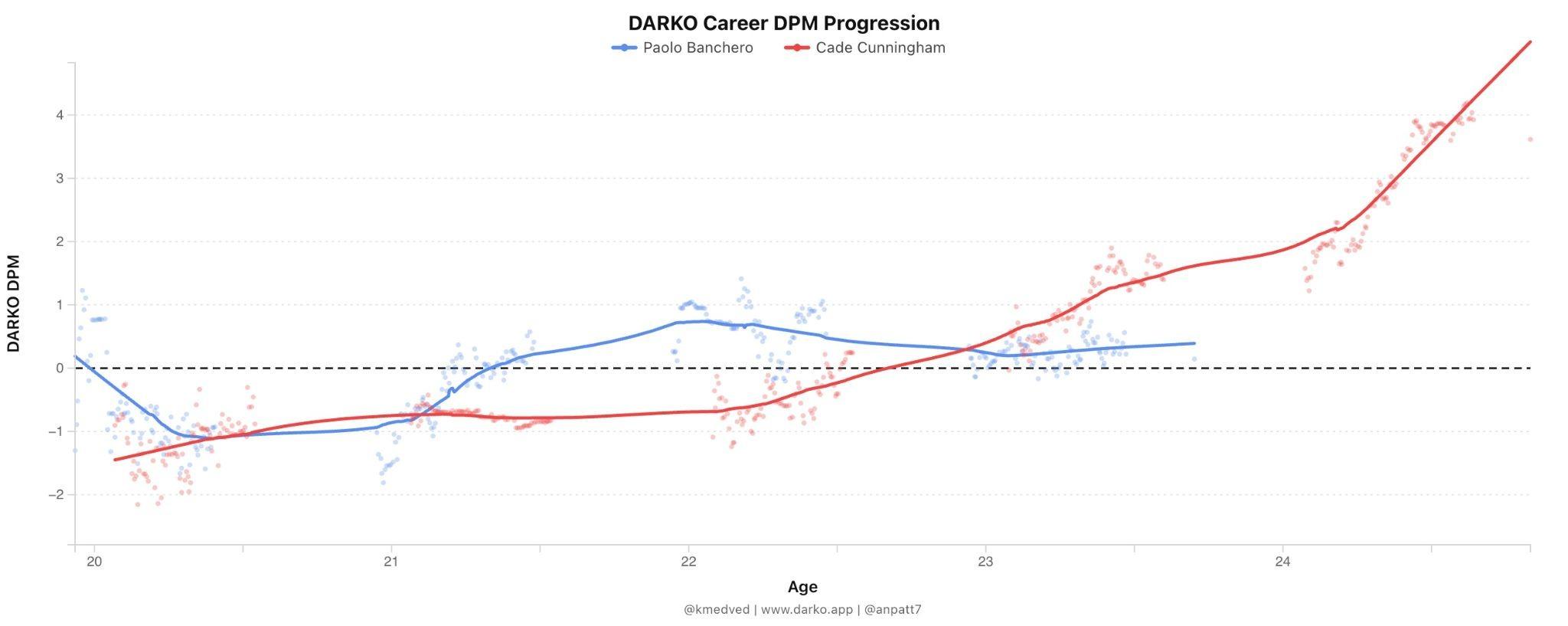
All of this is hard to argue against. But, as someone who stubbornly chooses to believe that Banchero’s shortcomings are at least somewhat a by-product of him being a victim of his own circumstances, allow me to make a few excuses. At 23 years old, Banchero has mostly played on injury-depleted teams, in lineups that can’t space the floor, under a coach he didn’t vibe with. Jamahl Mosley successfully prioritized Orlando’s defensive identity but struggled to implement a productive offense. How can someone watch Game 5 of Orlando’s first-round series against the no. 1 seed Detroit Pistons and not see special qualities in the guy who needed 31 shots to score 45 points? Most of that series can be viewed as an instructive reminder of Banchero’s potential. When he’s generally compared with Cade Cunningham (another young star who was once pilloried by advanced analytics), it’s good to remember that patience is a virtue, and circumstances matter.
2. Alperen Sengun, Houston Rockets
Here’s a 24-year-old two-time All-Star who averaged 20.4 points, 8.9 rebounds, and 6.2 assists per game on a 52-win team last season. Seems pretty good! But Sengun is still one of the most polarizing players in the league. Even with Fred VanVleet out for all of last season with a torn ACL, Sengun didn’t finish in the top three on his own team in estimated plus-minus or daily plus-minus, two of the more reputable catchall metrics that attempt to quantify winning impact. In overall three-year RAPM, which accounts for teammate and opponent quality, Sengun ranks 68th overall. His 3-point shot remains DOA, and he’s limited—but not bad!—on defense.
All understood. I remain an apologist. If Nikola Jokic and Domantas Sabonis didn’t exist, Sengun would be an alien. I love how, warts and all, his combination of vision and power forces opposing coaches into anxious deliberations whenever he has his back to the basket. Should we hard double on the catch, wait for him to put the ball on the floor, or just let him go one-on-one? Wait, our starting center already has two fouls trying to stop this dude on an island? Let’s keep sending help until his teammates actually make an open 3.
In a nutshell, this is why I’m willing to overlook Sengun’s inefficient shooting and pledge to make brainless mistakes at the worst possible times. I think it’s worth imagining what all that talent would look like on a roster that didn’t overburden him. I see an über-skilled scorer whose degree of difficulty is higher than it would be if the Rockets surrounded him with more shooting and reliable ball handlers. Sengun is flexible. Very few bigs can post up, draw a double-team, get off the ball, set a screen, and then make a play out of the short roll, all in one fluid sequence. He will!
This season will tell us a lot about who Sengun can be, and there’s a very good chance we’ll see his underlying metrics shift.
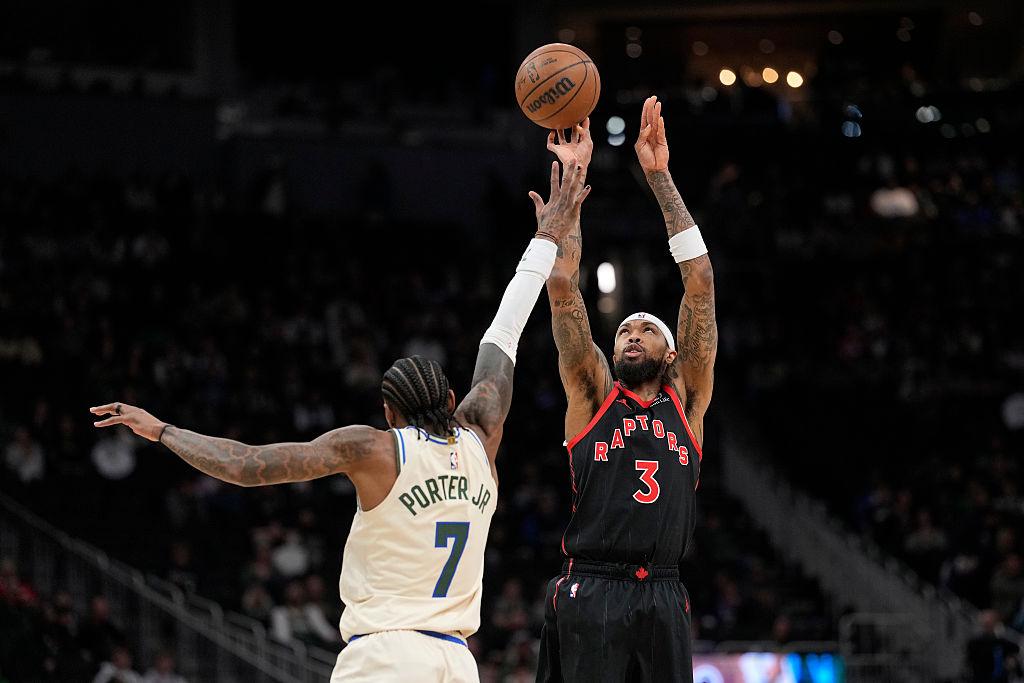
3. Brandon Ingram, Los Angeles Clippers
It’s hard to back a no. 2 draft pick who’s responsible for approximately zero relevant moments in a 10-year career. Ingram has appeared in just three playoff series and 15 playoff games. Most have been a disaster.
Yet we’re still only a few years removed from Ingram’s remarkable stretch with the New Orleans Pelicans, when, on some nights, he looked like Jayson Tatum with significantly worse PR. I don’t know whether that iteration still exists—and there are certainly more consistent playmakers and shotmakers who make $40 million—but Ingram is a modestly efficient scorer who most recently averaged 21.5 points per game for a team that needed the reliable exclamation points he can tack onto the end of a play.
Ingram was an All-Star last season but finished 191st in estimated plus-minus. His on-ball percentage plummeted below 20 percent, and the Toronto Raptors hardly missed him in their seven-game first-round series against the Cleveland Cavaliers. He’s probably going to spend next season as the leading scorer on a lottery-bound Los Angeles Clippers team that’s looking to reset around players much younger than he is. It’s not going great!
But there’s just something so satisfying about watching a midrange craftsman drill a smooth elbow fadeaway to save a possession that was going nowhere. To me, his vision, length, and skill are enough to outweigh a shot diet that might never be a data collector’s best friend. Even if it’s not with the Clippers, I’ve convinced myself that he’ll have a moment in the sun before it’s all said and done.
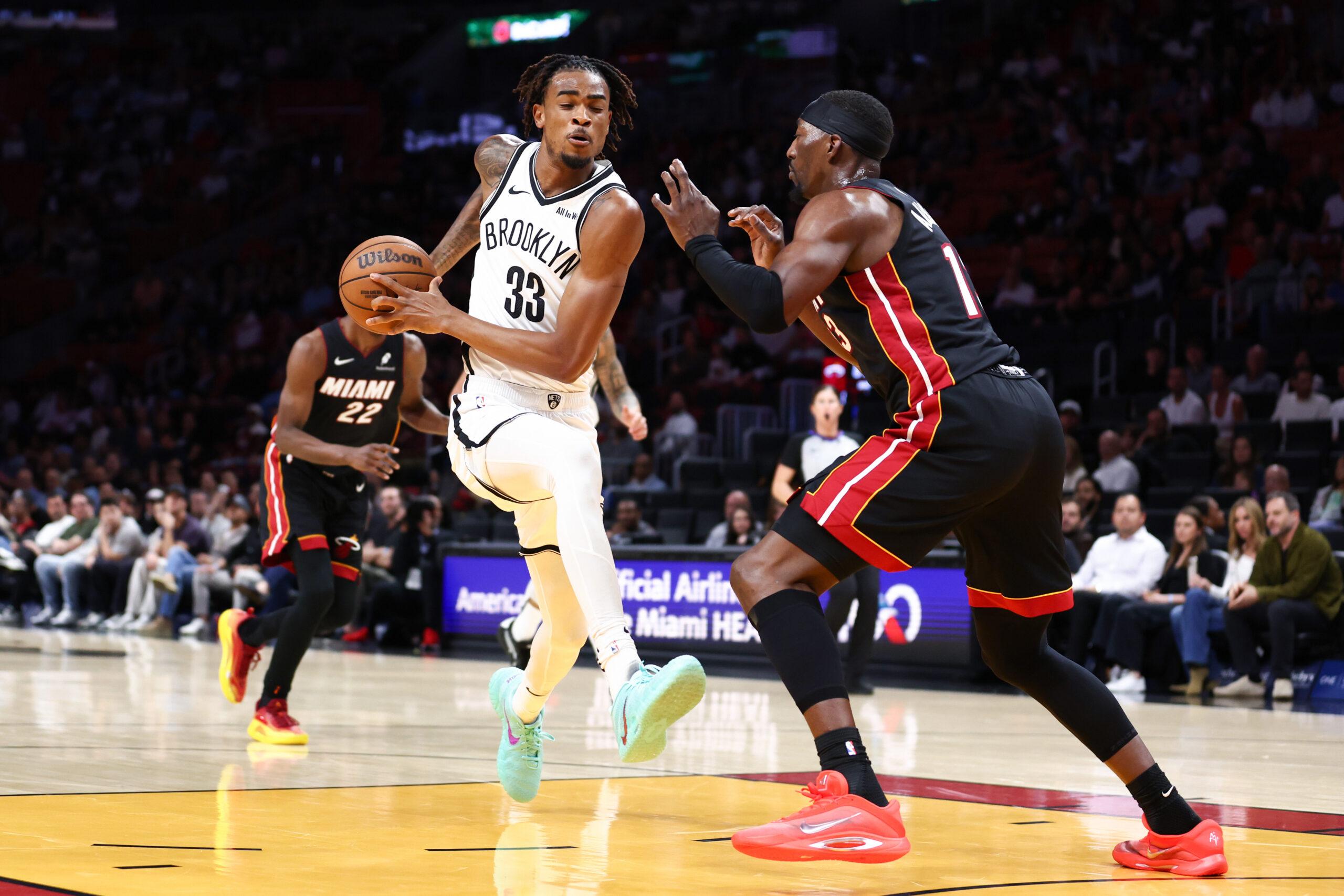
4. Nic Claxton, Chicago Bulls
The Brooklyn Nets have spent the past two years as an NBA wasteland/waystation, floating through a developmentally focused rebuild that (still) has no end in sight. As the Nets played five first-round picks and won just 20 measly games last season, the only team with less roster continuity was the Sacramento Kings.
Nic Claxton suffered through it as much as anyone. The three most effective playmaking teammates he’s had since Mikal Bridges was traded in 2024 were Ben Simmons, D’Angelo Russell, and Dennis Schröder. None were on the team last season, when pretty much every catchall metric graded Claxton out as a losing player who had to do more stuff with the ball in his hands than he probably should. More spoon-fed shots at the rim and fewer floaters off the dribble, please.
Breaking news: Basketball is easier for players who are surrounded by other skilled players. Driving lanes are wider. Cuts are rewarded more often. Potential assists generate actual baskets. Defensive mistakes get fixed on the fly before any damage is done.
Still only 27 years old, Claxton remains a switchy, athletic shot blocker who can handle the ball on the perimeter. Now on a more talented Chicago Bulls team that’s better able to accentuate his strengths, Claxton will catch lobs tossed by Josh Giddey, work dribble-handoff magic with Norm Powell, run some pick-and-roll with Tre Jones—quite possibly the most underrated player in the league—and anchor a long, athletic defense behind Caleb Wilson and Matas Buzelis. Fun!
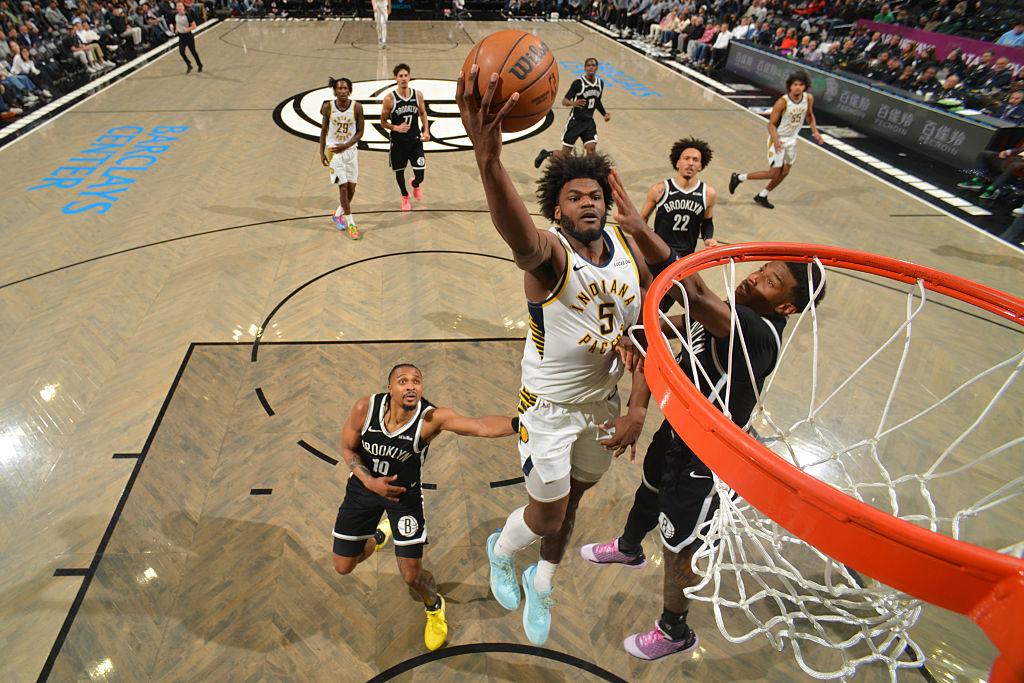
5. Jarace Walker, Indiana Pacers
According to most catchall metrics, Walker is one of the worst players in the NBA. According to me, don’t be shocked if he’s a Most Improved Player candidate next season. The Pacers were trash on purpose last season, but Walker showed flashes as someone who can thrive in the twitchy system that’s prepared to recommence. He can shoot 3s, drive closeouts, and make quick reads. The Pacers want Walker to be their own version of OG Anunoby, which might be a pinch of wishful thinking (particularly on the defensive end). But it also speaks to Walker’s potential as someone who almost definitely won’t be what most advanced analytics say he is a year from now.