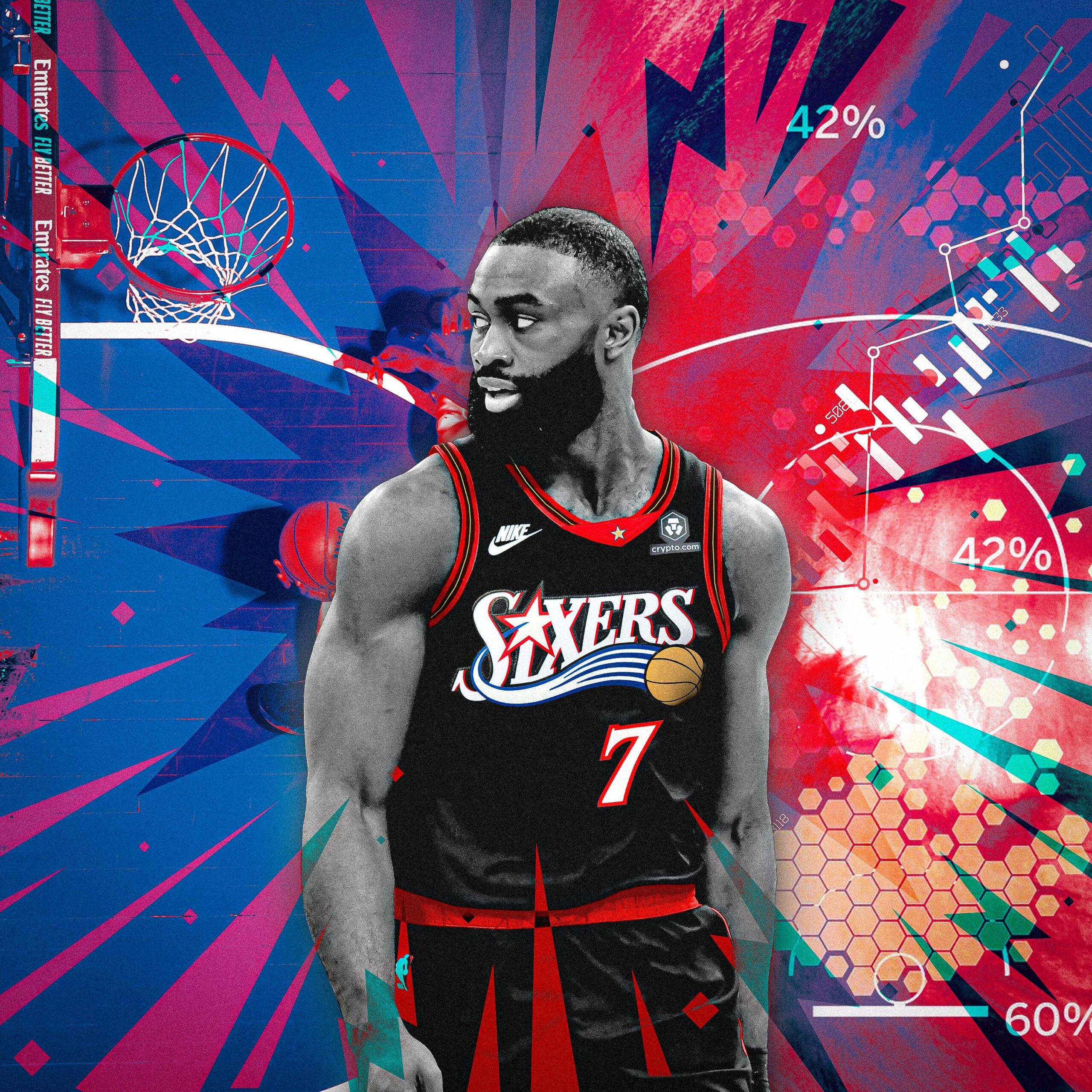

Aside from the Aspiration scandal and a few staring contests in restricted free agency, the vast majority of the NBA’s offseason business has been settled. In other words, we’ve reached the point of the summer when I have enough time to write about a mind-numbing conversation topic that continues to plague the discourse.
Earlier this month, when Brad Stevens was asked about the role advanced analytics had in his excruciating decision to trade Jaylen Brown, Boston’s president of basketball operations respectfully minimized their significance. "You take in every angle and every ounce of information that you have, and you put it all together, right?” Stevens said. “For me—and Mike [Zarren] and his staff might get mad at me; they do every day—I would say that was a small piece of information for me."
At the time, Brown’s name was getting dragged through the mud by anonymous NBA staffers who had some of the more sanity-shaking opinions you’ll ever read about an earnest MVP candidate. For Stevens, this was obviously a sensitive topic. I don’t think he outright lied—there are other rational ways to explain this deal—but I also have a hard time believing his statement on its face. Whether using numbers to confirm what he could already see, allowing them to alter his perspective, or letting them reduce risk in his own decision-making process, Stevens did not become one of the most successful people in the NBA by dismissing info. This wasn’t a minor call. Finals MVPs are made men. The aggressive decision to trade one, in his prime, in a buyer’s market, would not be done without reams of data to support it.
Outside the Celtics organization, an even more distorted debate was taking place. I experienced it firsthand, in conversations with colleagues and friends, huddled over sweaty beers in some Brooklyn bar. I’ve heard it on podcasts, repeatedly, from highly intelligent people who work in and around the NBA. I’ve read articles and perused social media. The word “crisis” is far too strong to describe something that doesn’t tangibly affect any regular person’s life, but the discourse still bums me out. Not to paint with too broad a brush, but how did everyone get so dogmatic about such a layered topic?
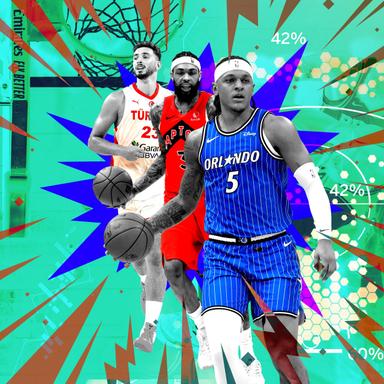
Pragmatists were committed to exposing Brown’s faults instead of shaping a nuanced discussion about the complexities of his game. And, in response, basketball aficionados who’ve long been suspicious of the growing influence that analytics hold over NBA power brokers drizzled gasoline on a fire that’s been raging for at least a decade. This dynamic brought to light exactly how broken the discourse has become. In the trade’s aftermath, one Western Conference executive told ESPN’s Brian Windhorst that "we're going to turn into baseball if we're not careful, where you have every defender between second base and right field, and no one can get a hit, and it becomes boring.”
I’m not exactly sure what this means, but I do believe analytics are wielded, condescendingly, as a roadblock to substantive debate. At their worst and most overwhelming, they’re powerful enough to crush, rather than invigorate, one’s personal opinion. Evidence, as it pertains to the hunt for unimpeachable clarity, is a dead end that’s incongruous in a sport that’s too noisy and fluid to be pinned down. The NBA’s popularity depends on the unrealized. Wonder, romanticism, mystery, and harmless skepticism. In that vein, analytics are an intruder.
It doesn’t have to be this way: Every player and every team is a constant work in progress. Nothing is static; evaluation is an ever-evolving process. But, unfortunately, in the aftermath of Boston’s league-altering trade, the very word we’re here to discuss no longer means anything. “Analytics” is shorthand gobbledygook, a cousin of “postmodern” or “fashion”—ubiquitous, opaque, and deeply frustrating when used by itself to craft an argument about basketball players.
All this connects back to Brown. I find him virtually impossible to describe in a sound bite. Relative to other All-Stars, his success is simultaneously cemented in NBA lore and tied to a slew of shortcomings that complicate just about any firm declaration about the degree to which he impacts winning. In some sense, during a time when speaking in extremes is the language du jour, what makes Brown so fascinating is his ability to be whoever you want. Is he a generational triumph or a stubborn ball hog? The answer, of course, is varying degrees of both. And neither.
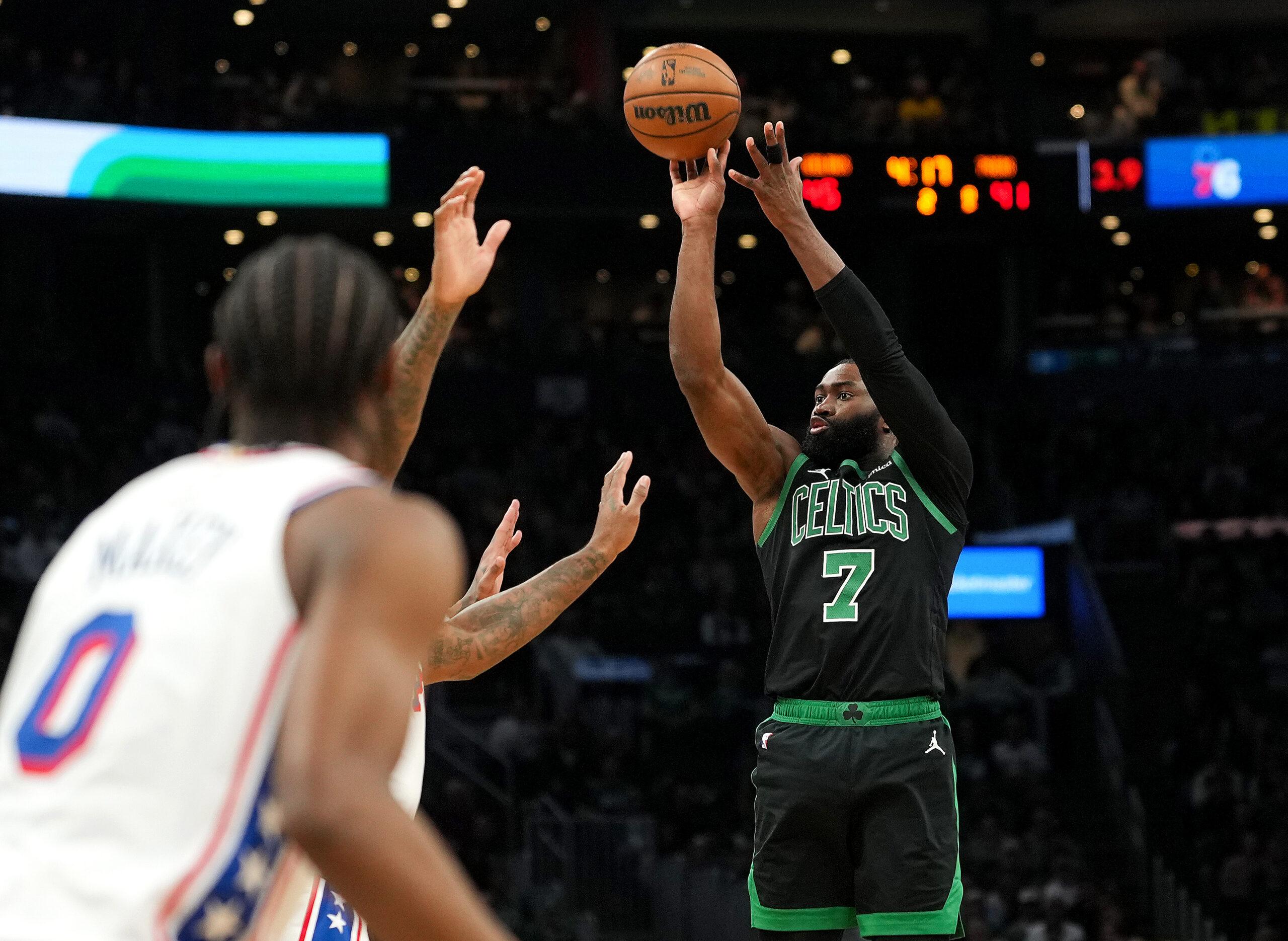
“Jaylen Brown’s analytics are bad” is a terminally vague and hollow statement that demands so much more interrogation. What does it even mean? As the only All-NBA player on a 56-win team that had a top-five offense and a top-five defense, he averaged 28.7 points, 6.9 rebounds, and 5.1 assists per game last season, ranking second in usage rate, first in total drives, and 11th in PER. Inarguably impressive!


At the same time, Brown finished 56th in estimated plus-minus, 34th in daily plus-minus, and 114th in regularized adjusted plus-minus. He was 32nd in win shares and 51st in win shares per 48 minutes. For the second season in a row, his true shooting percentage was below league average. For the fourth season in a row, his team had a higher net rating when he was on the bench. (Although it’s worth noting here that he’s typically staggered with Jayson Tatum and that Boston annually eviscerates its opponents with Brown on the floor, which should really be mentioned more than it is.) Brown tied his new teammate Tyrese Maxey for most missed shots in the NBA last year. He ranked second in traveling violations and second in offensive fouls while finishing 169th in assist-to-turnover ratio during Boston’s high-leverage minutes.
Every stat mentioned above is a grain of sand in the desert of intelligence that analytics has to offer. It’s boundless, thorny, and undeniably useful. As is the case with every other player in the league, though, individual data points in Brown’s statistical portfolio must be weighed against one another and then blended with “the eye test,” an empirical way to interpret everything that’s happening on the court. Some observations can be pretty conspicuous: Pull-up 3s! Feisty on-ball defense! Lobs and dunks! The amount of dog lodged deep in a person’s chest! The eye test can also glean enlightening subtleties, draw humanity into the conversation, and, critically, contextualize any numbers that look absurd without a frame of reference.
(Defense remains a black box. The damage of regularly getting beaten off the dribble or closing out at full speed against poor 3-point shooters or getting hunted on every other possession in ways that force a team’s fundamental structure and/or playing style to warp around the weak link’s deficiencies can’t ever fully be captured on a spreadsheet. If a coach really wants to play zone but is hesitant to break it out because two of the starters don’t digest the action in front of them at an acceptable rate, it’s a problem that’s deducible strictly via the eye test.)




More on the NBA
At times, watching Brown is like witnessing an unstoppable force who can score at will from all three levels, refuses to take his foot off the gas in transition, overpowers mismatches, and accepts taxing defensive assignments. He can create his own shot off the bounce from just about anywhere and thrives when the degree-of-difficulty meter is cranked up to 11. To those who pray at the altar of buckets, Brown’s sainthood application was officially accepted sometime last year.
Inconsistencies abound, though. Brown has tunnel vision, makes questionable decisions handling the ball, gets lost defensively on the backside, is a bit too obsessed with the midrange, and, even though he jacks up more shots than literally every other player in the league, is the rare star who doesn’t elicit true panic from the opposition. Some of that isn’t his fault: How many players, let alone stars, have enjoyed better spacing in their prime? According to math, just about any shot Brown takes that isn’t a dunk will be less efficient than a catch-and-shoot corner 3 by Sam Hauser.
In other words, whether he’s the lead option in Boston or wriggling into a slimmer role with the Philadelphia 76ers, Brown’s nearly limitless intricacies help explain why it’s never analytics versus the eye test. The two methods of examination are inherently textured, and, while harboring dissent in their own camps, they should always, eventually, integrate to complete each other. It’s a jumbled mess of proof and point of view. Both are crucial to understanding how each player helps their team win. Anyone who rejects information is, definitionally speaking, unreliable. Anyone who doesn’t acknowledge that there are unquantifiable characteristics at play shouldn’t be viewed as a credible source, either. Checks and balances. Prosecution and defense.
There is no one true way to arrive at your own conclusion about a basketball player. I normally can’t do it without hours, weeks, months, and, often, years spent watching them in various circumstances, surrounded by different teammates against a range of opponents. The most impressive and concerning possessions are assessed in a subjective process that has no predetermined outcome.
I then fill in (many, many, many) cracks by studying from myriad websites I am hopelessly addicted to, listed here in no particular order: CourtSketch, Dunks and Threes, Bball-Index, Cleaning the Glass, Databallr, Hoops Junkie, Basketball-Reference, PBPstats, CraftedNBA, Inpredictable, and a dozen other resources that help clarify this wonderfully complicated game. I look at shot charts, on-off/lineup data, context-driven metrics, impact models, and counting stats. I peruse tracking and play type data. I make historical comparisons. It’s a giant stew of intractable knowledge. The numbers are never-ending. For all intents and purposes, so is the live action. They enunciate and undermine each other all the time, and that’s OK! It doesn’t mean one side is more important than the other. It means player evaluation is an incredible challenge, full of shades of gray that require an open mind. Bias is baked in. Different people care about different things. Different general managers value different skill sets. Sometimes disdain and enthusiasm are cemented based on little more than a gut feeling.
The Brown trade came about a month after Cleveland Cavaliers head coach Kenny Atkinson publicly used analytics as a shield, of sorts, during the Eastern Conference finals. Atkinson said the quiet parts out loud, citing expected point totals as the reason why he remained so bullish on his team’s chances to, you know, actually win a game.
"I think analytically … we've won two out of three,” Atkinson told reporters a day after Cleveland fell into an 0-3 hole against the New York Knicks. “I know you're looking confused. Last night, our expected score was … us shooting way below expected. Them shooting way over. I know no one wants to hear that. Everyone is outcome based. Sure, I get that, too.” Atkinson was a punching bag for days. Some even wondered whether those comments would cost him his job. But Atkinson isn’t delusional. He wasn’t trying to bend truth to the will of some computation that emerged out of an incredibly small sample size or futilely extending false hope to his players. No, the 2025 Coach of the Year was bolstering a harsh truth: Basketball is a game of probability.
It reminded me of something Joe Mazzulla said minutes after the Celtics won the title in 2024. Sitting at the podium, Boston’s head coach was asked about his team’s historically great net rating and the balance that was harnessed to achieve it. “I mean, those were actual numbers,” Mazzulla said. “We live in an expected world. So we didn't pay much attention to the actual numbers.” He was not wrong. Margins are tiny. Process is everything.
It also reminded me of another bold statement Atkinson made last March before a regular-season game against Boston. “Derrick White is a top-five player in this league. I know no one says that in the standard media, but analytically, if you look at all the advanced stuff, he’s a top-five player in the league. Superstar.”
White is Brown’s inverse. He doesn’t have eye-popping counting stats and can’t physically overpower whoever’s guarding him. But advanced analytics adore his defensive impact and situational awareness. They affirm what close watchers have always known. He didn’t shoot the ball particularly well last season and doesn’t average enough points to ever be considered much more than a “role player.” But White rarely takes bad shots when the alternative is a drive or pass that can set the table for someone else. White will run the floor in transition or cut hard from the slot, knowing his effort will loosen up the defense and make things easier for his teammates. On the other end, he’ll dart in and out of gaps to deter an opponent from driving into the paint. Scoring is cool, but there are so many other, oft-imperceptible things someone like White can do to impact winning. He does them all the time.
Brown does not. Unlike White, he can’t cram his game into any system without a harsh, potentially interminable adjustment period. The importance of a (very loud) high-volume scorer who’s mostly average at just about everything else is grossly inflated. But the pendulum of public opinion shouldn’t swing too far in any one direction here. In Brown, we’re still talking about someone who, before last year’s postseason, had never lost a first-round series! He’s won a ton of games over a very large sample size and stands as a lightning rod for takes that are untethered from reality.
I could probably write a dissertation on this Russian nesting doll of a star—about whom my own thoughts change depending on the day or who I’m talking to—but instead I want to highlight five other players who remind me of Brown: contradictory figures who elicit a schism between stats and the eye test. None of them spark the type of debate Brown has, but they’re of a similar ilk, frowned upon by myriad trustworthy numbers despite appealing to my own sensibilities as a basketball fan. The five players I chose for this exercise demand (at least, to me) holistic analysis. Without it, whether you’re for or against, they can’t be understood. So check out Part 2, in which I break down the guys I’m affectionately calling the Jaylen Brown All-Stars.