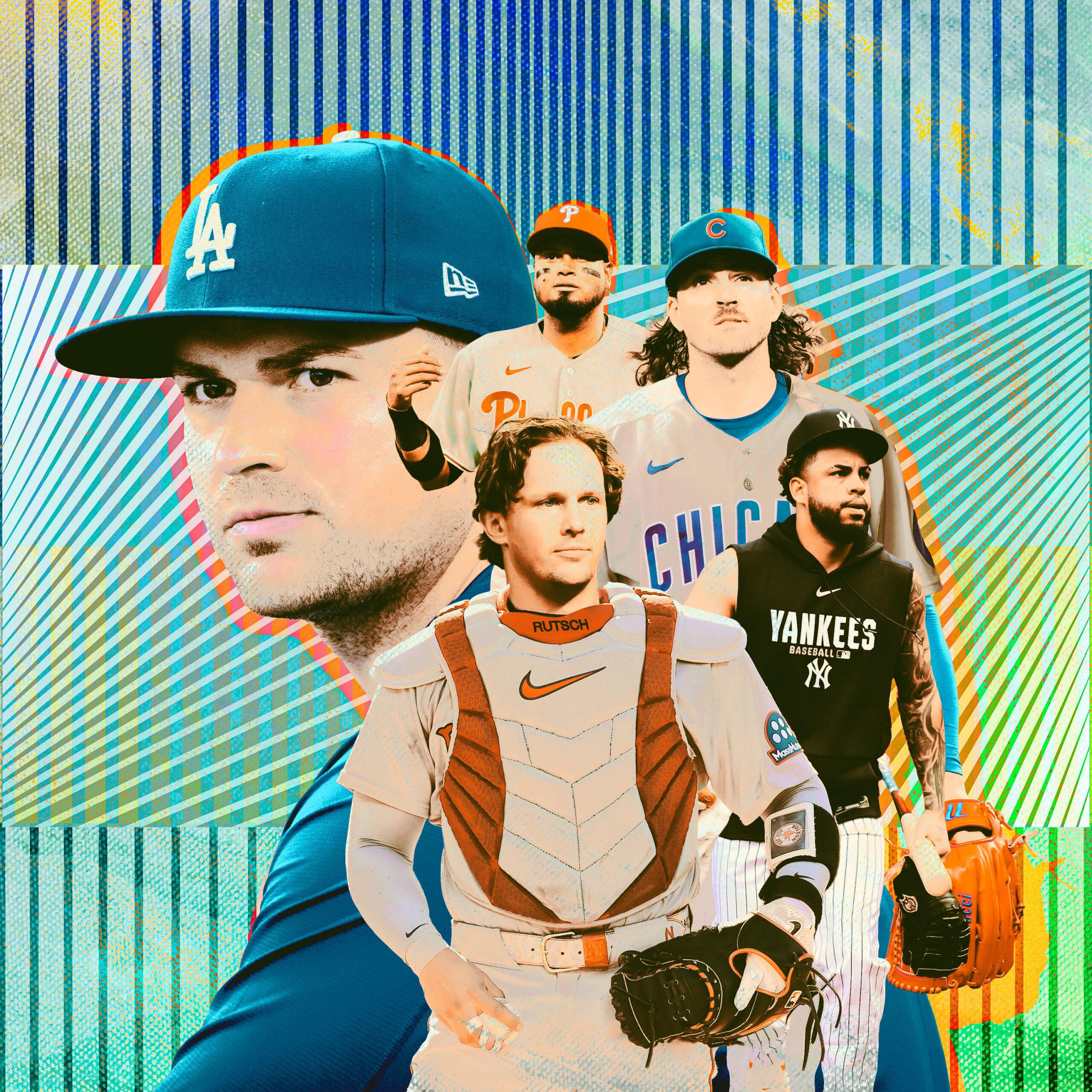

The MLB trade deadline typically provides a lot more sizzle than steak once the dust settles and the true value of the traded players can be assessed. The 2026 version brought two blockbuster moves and a handful of marginal upgrades. But as we saw in 2021—when Jorge Soler was traded to Atlanta and went on to win World Series MVP—you never know when a small move will make a big difference.
The headlining move of the deadline was the Los Angeles Dodgers’ trade for Tarik Skubal. The deal united one of baseball’s best pitchers with its most stacked roster, cemented the Dodgers as one of the biggest villains in sports, and launched a thousand takes about the upcoming labor negotiations and MLB’s delicate competitive balance. Elsewhere around the league, two AL squads were the biggest sellers: The Los Angeles Angels turned over a promising new leaf, while the Baltimore Orioles gave up on a core that had so much promise just two years ago. In the NL, the Chicago Cubs aggressively addressed a major need, while the Phillies got help on offense but may have created other issues in the process.
Let’s run through the biggest winners and losers from a trade deadline that could reshape not only this October but the future of Major League Baseball.
Winner: The Los Angeles Dodgers
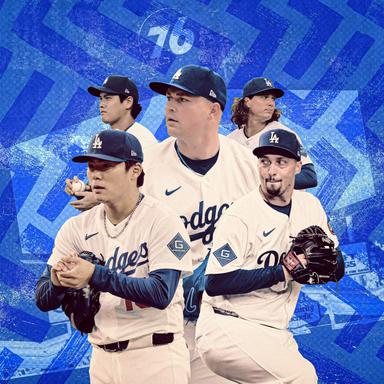
For all the discourse around the Dodgers’ acquisition of Skubal on Saturday night—not to mention the trade for Kris Bubic on Monday—this isn’t a case of the Dodgers dunking on the rest of MLB just because they can. This pair of moves addressed one of the few genuine weaknesses on baseball’s most loaded roster.
The uncertainty surrounding the Dodgers’ rotation made starting pitching a legitimate need. Their current rotation includes veteran journeyman Eric Lauer, the inconsistent Emmet Sheehan, breakout left-hander Justin Wrobleski, and the perpetually enigmatic Roki Sasaki. But question marks abound: Shohei Ohtani is dealing with knee soreness and biceps inflammation; Tyler Glasnow and Blake Snell remain sidelined with injuries. Given the checkered injury histories involved, the Dodgers were fortunate to have all four of their aces healthy throughout last October’s playoff run, but they know they can’t count on the same luck again.
Los Angeles was already considered the favorite to land Skubal in free agency this upcoming offseason, but its unusually deep farm system provided the team with enough prospect capital to skip the wait. The Dodgers gave up outfielder Zyhir Hope and pitchers River Ryan and Brady Smith. Hope would be a top prospect in many MLB systems. Ryan is 27 years old and coming off an injury, but he’s an MLB-ready starter with elite stuff. Rather than wait until this winter, the Dodgers outbid every other contender to acquire Skubal in time for another playoff run.
Skubal carries some risk after undergoing elbow surgery earlier this year, but he has quickly reestablished himself as one of baseball’s most dominant starters. Among pitchers with at least 70 innings in 2026, he ranks second in strikeouts per walk and has the second-lowest SIERA, which is a predictive stat that captures a pitcher’s true ERA. If the Dodgers rotation gets healthy, it’ll be one of the best in MLB history. But that’s a big if. The Dodgers identified their clearest October vulnerability and filled it with arguably the best pitcher in baseball. That’s enough to make the two-time defending champions the biggest winners of the deadline—and the unquestioned favorite to win the World Series this October.
Loser: Baseball Doomsday Propaganda
The Skubal trade generated more alarm about the long-term health of MLB than pretty much any other move in recent memory. (At least since the last time the Dodgers owned the hot stove.) Immediately after news of the deal broke, the conversation pivoted to baseball’s competitive balance, ownership collusion, and the merits of a salary cap. The usual takes started flying—that the system isn’t fair and that the Dodgers are ruining baseball—as well as the idea that the Skubal trade is the final straw that ensures there will be no baseball in 2027.
This all stems from the uneasy feeling in the bottom of every baseball fan’s stomach amid the league’s ongoing collective bargaining negotiations. Both the owners and players association are in their “stand tall and give up no leverage” phase; neither will show any weakness, and both will try to spin the fallout from this deadline in their favor. There will probably be some type of lockout next spring, and the 2027 season is in jeopardy.
However, the Dodgers haven’t ruined baseball’s competitive balance. And this trade—in which the Dodgers used prospect capital to acquire a star rental pitcher—won’t be the trigger for a lost season, either.
First, the competitive balance issue: The Dodgers had to win multiple elimination games in the past two playoffs—against the Padres in 2024 and the Blue Jays in 2025—just to win the World Series in the first place. They didn’t even earn the first-round bye over Milwaukee and Philadelphia in last year’s regular season. Their core offensive players are aging considerably. Edwin Díaz and Kyle Tucker signed massive contracts in the offseason and have not produced at all. The Dodgers are an elite team, but they’re not so dominant as to be unstoppable. To the extent that L.A. does have a massive advantage, it has as much to do with its scouting, player development, and moves on the margins as it does with its lavish spending. And since when is a dynasty bad for a sport?
As for the structural advantage that could threaten the 2027 season: The Dodgers certainly have more margin for error than almost every other franchise. Their enormous television deal, attendance revenue, and ownership’s willingness to spend allow them to absorb mistakes that would devastate smaller clubs. That is a legitimate source of concern, especially when so many owners are simultaneously treating competitive balance tax thresholds as hard salary caps. But Skubal is not the transaction to present as Exhibit A in the case against baseball’s economic system. Any number of other teams could have beaten L.A.’s offer. The Dodgers didn’t exploit deferred money or overwhelm Detroit with cash. They used the prospects produced by their scouting and development apparatus to acquire a rental pitcher coming off elbow surgery who is owed less than $10 million over the rest of the season. A salary cap would not have prevented this trade.
Baseball’s looming labor crisis is real. The anger is simply being aimed at the wrong target. The league’s competitive problems come less from the Dodgers trying relentlessly to win than from the franchises that collect revenue-sharing checks, suppress payroll, and then point toward Los Angeles as justification for their own inactivity. The Dodgers might win a third consecutive championship. They might even become the villain that defines this era. But if other owners use Los Angeles as an excuse to limit player salaries rather than match its ambition, the Dodgers won’t be the ones threatening baseball’s future.


Winner: The Los Angeles Angels’ Rebuild
Angels interim general manager John Mozeliak offered an illuminating assessment after dealing Logan O’Hoppe and Chase Silseth to Texas last week. “As we enter this trading period, one of the things we are focused on is understanding change,” Mozeliak said. “Clearly, where the Angels are at right now, we need to do some things differently.” That may sound obvious in most cases, but for the Angels, it amounts to an organizational breakthrough.
In 2023, the going-nowhere Angels refused to trade Ohtani, bought at the deadline, and then imploded almost immediately. This year, they aren’t competitive, nor are they particularly close to becoming competitive. But they weren’t delusional about their position at the deadline. They confronted reality and converted useful major leaguers into the kind of young talent their barren farm system desperately needed.
The biggest return came from Toronto. The Angels traded José Soriano, a talented 27-year-old starter under team control through 2028, for a three-prospect package headlined by Arjun Nimmala. Nimmala is a 2023 first-round pick who immediately became the second-best prospect in the Angels’ system. Outfielder Eddie Micheletti Jr. and young pitcher Angel Rivero, who also came over from the Jays, will add further depth to the Angels’ system. Mozeliak then turned reliever Ryan Zeferjahn into Moisés Ballesteros and Mason McGwire. Ballesteros is an advanced young hitter with elite power potential, while McGwire provides another intriguing pitching prospect. Finally, the Angels moved longtime outfielder Jo Adell to the Guardians.
For too long, the Angels’ defining organizational failure was their refusal to choose a direction. They employed Mike Trout and Ohtani simultaneously without constructing a playoff team around them, yet they were also unwilling to rebuild while those stars still possessed enormous trade value. That indecision left the franchise with neither October appearances nor a sustainable young core.
In 2026, Mozeliak wasn’t afraid to move controllable players to improve the franchise’s long-term position. One productive deadline cannot repair a decade of organizational failure, but it can represent the building blocks of a new era. For once, the Angels stopped behaving like the team they wished they were and made decisions based on the team they actually are.
Loser: The Baltimore Orioles’ Rebuild
When the Orioles selected Adley Rutschman with the first pick in the 2019 MLB draft, he immediately became the face of the team. Baltimore had lost 115 games in 2018 and was on its way to losing 108 that 2019 season. This wasn’t going to be a quick retool. Baltimore had torn the franchise down to the studs and subjected its fans to years of noncompetitive baseball in exchange for the promise of a longer, more sustainable run.
Eventually, the payoff arrived—at least in the regular season. The Orioles won 101 games in 2023 and another 91 in 2024, but they failed to win a single playoff game in either season. Now, general manager Mike Elias has traded the team’s onetime centerpiece to a division rival for another collection of prospects.
The timing makes the surrender even more jarring. The Orioles spent the 2023 and 2024 deadlines resisting significant major league upgrades, operating under the assumption that this core would receive numerous opportunities to contend. There was no reason, the thinking went, to shorten a supposedly lengthy competitive window by overpaying for win-now veterans. But in the end, Baltimore dealt Rutschman while sitting just 2.5 games out of a playoff spot. The Orioles may like young catcher Samuel Basallo’s bat more, and Rutschman’s injury history can be concerning, but it doesn’t send a great message to the fan base and clubhouse.
In retrospect, the Orioles’ mistake was assuming that youth guaranteed them unlimited chances. Prospects stalled, pitchers got hurt, established players regressed, and the front office never adequately adjusted. The return from Boston could eventually produce another wave of winning baseball: Anthony Eyanson, Kyson Witherspoon, and Enddy Azocar give Baltimore more young talent, while Carlos Narváez can help replace Rutschman immediately. But that almost makes the outcome more upsetting. After spending years asking its fans to dream about the future, Baltimore is asking them to do it again.
Winner: The Chicago Cubs
More than any other team, Chicago identified a clear need and addressed it with strength in numbers. The Cubs are elite defensively and have a quality lineup, but their pitching has lagged well behind the rest of the roster. The Cubs’ lack of top-end pitching hurt them in their playoff series loss to the Brewers last season, and this year they rank 26th in fWAR. By adding playoff veteran Kevin Gausman and Clay Holmes in the midst of his best season (2.39 ERA), the Cubs now have two potential frontline, right-handed playoff starters.
But Chicago didn’t stop there. The Cubs also added Ryan Zeferjahn, a high-leverage reliever from the Angels, and Braxton Garrett, a lefty starter from the Marlins. The Cubs don’t need all of them to be great, and they parted with a good amount of young talent to get them, but Chicago now has a formidable staff to compete with the top tier of the NL.
Losers: The NL Wild-Card Contenders
Outside of Chicago, which is safely in playoff contention right now, the National League’s wild-card contenders all made just modest upgrades at the deadline. Philadelphia added Luis Arraez and a couple of relievers but didn’t do much else to improve its league-worst on-base percentage or lacking starter depth. The Pirates added only relievers, most notably Luke Weaver and Kirby Yates. The Diamondbacks didn’t make a single trade until late on Monday, when they added Lars Nootbaar from St. Louis. The Cardinals determined they’re not ready to compete and sent Nootbaar to Arizona and Dustin May and JoJo Romero to Milwaukee. The Nationals traded multiple bats—Luis García Jr. and Curtis Mead—to try to bolster their pitching but then also moved their best starting pitcher, Foster Griffin.
There are now five teams—the Dodgers, Brewers, Braves, Cubs, and Phillies—with playoff odds above 67 percent, per FanGraphs. That means there is likely only one spot up for grabs in the NL playoff picture. The upside just wasn’t really there for the second tier of NL teams and potential no. 6 seeds to push more chips in to try to win now. Even the notoriously aggressive A.J. Preller was tame this deadline, settling for modest starting pitching upgrades in Robbie Ray and Casey Mize. It’s hard to imagine that any of these teams could have made a meaningful change to their World Series odds given how top-heavy the National League is, so these teams are as much losers of circumstance as anything else.
Winner: The Red Sox’s Rapid Turnaround
A month ago, the Red Sox were viewed as an obvious seller. At the start of July, they were 37-48 and languishing at the bottom of the AL East. The vultures were circling to pick off the scraps of a lost season, and it seemed like Jarren Duran, Willson Contreras, Aroldis Chapman, and others could be on the move.
What a difference a month can make. Boston won 15 in a row, then eight of 11 after that. Then, ahead of Monday’s deadline, general manager Craig Breslow pushed his chips into the middle with a trade for Rutschman. Now, the Red Sox have the third-best odds to win the World Series.
The computer models and prospect experts will likely grade the Red Sox’s trade for Rutschman as an overpay. They gave up three of their top five prospects, including two top pitchers (Anthony Eyanson and Kyson Witherspoon) and outfielder Enddy Azocar. But given that Boston had one of the worst catching situations in all of baseball, Rutschman represents a massive improvement. Even though he’s never quite lived up to the lofty expectations, four of his past five seasons have been above average at the plate, and he rates out as a plus defensive catcher.
So much of baseball’s current playoff format comes down to knowing when to capitalize on an opportunity. And given the dearth of quality teams at the top of the AL right now, Boston has a real opportunity. Catchers like Rutschman don’t become available very often, and the AL is rarely as weak at the top as it is right now.
Loser: Aaron Judge’s Health
The Yankees upgraded their lineup at the deadline by adding Heliot Ramos to the outfield and Luis García Jr. to a first-base platoon already featuring Paul Goldschmidt. But given their positioning in a wide-open American League, it’s fair for Yankees fans to view Brian Cashman’s latest moves as half measures. The Yankees found good value in both deals—both players are under team control for multiple seasons—but neither player will address the Yankees’ biggest weaknesses this season: catching, bullpen depth, and the left side of their infield.
The Yankees are currently 2.5 games behind the Rays for first place in the AL East, but Aaron Judge hasn’t played at all in June or July because of a stress fracture in his rib. With this deadline now in the rearview, it’s impossible not to wonder whether Judge’s injury prognosis for 2026 is more negative than initially suggested. Cashman said on Monday that the Yankees are still “very optimistic” that Judge will come back this season, but he acknowledged there are “challenges with all that too.” If the Yankees were more confident in Judge’s return, would they have more aggressively pursued short-term help?
Loser: The Philadelphia Phillies’ Defense
The Phillies came into the deadline with the lowest on-base percentage in MLB. Adding Luis Arraez will certainly help in that regard, as he’s one of the best pure hitters in the sport. However, Arraez creates a headache for a team that is already defensively challenged. The Phillies will move Bryson Stott to third base, where he has hardly played throughout his career. Moving Stott to third forces Alec Bohm to first base, where he’s struggled in his occasional starts. And the biggest and riskiest domino is moving Bryce Harper back to right field.
Harper is the cornerstone of the franchise, and he hasn’t played right field full time since 2021. He was a well-below-average defender then (minus-7 outs above average), and odds are he will struggle there yet again. Is Arraez’s bat strong enough to warrant shifting three different defensive positions? Can the Phillies withstand downgrades at first base and right field? The offense is dangerous, but the Phillies could be one of the worst defensive teams of the decade.