
“What am I really playing for at this point?”
That’s the question that drove LeBron James’s latest free agency decision, according to the man himself. And after a multi-week period of reflection—in which James considered retirement and several new NBA situations—he found his answer: “I still want to sacrifice. I still want to work. I still want to grind. I still want to compete, to win and to have a chance at the feeling of winning.”
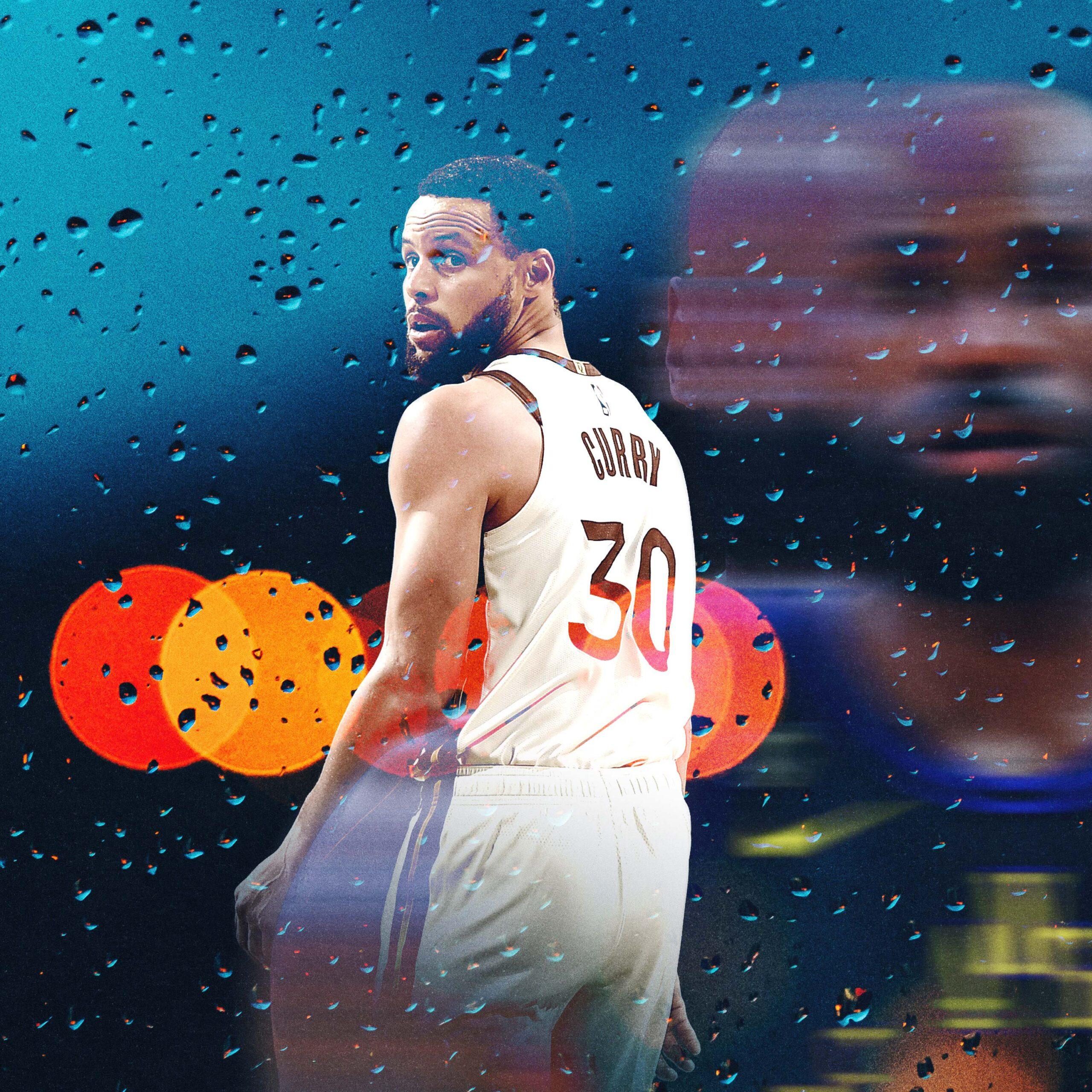
Unfortunately for the Golden State Warriors, that’s the one thing they couldn’t offer. The Warriors have dreamed of adding LeBron since they abandoned the two-timeline approach four years ago; they reportedly tried to trade for James before the 2024 deadline and then pursued him again this summer as a free agent. LeBron’s presence would have turned the Warriors into the Beatles of the hardwood. His pick-and-rolls with Steph Curry would have been nirvana. His relationship with Draymond Green would have tested every limit of what a work friendship can endure. With James and Curry atop the marquee, Golden State would have occupied the center of the basketball universe, but the roster wouldn’t have given either star a real chance to win another ring in their twilight.
So LeBron chose the 76ers, and the Warriors are left to wonder what might have been. Should they have tried to trade Jimmy Butler and draft picks for Anthony Davis? At summer league in Las Vegas, a small contingent of Golden State’s front office pushed for that path, but AD’s injury history and desire for a new extension ultimately convinced team brass to stay put. Should they have gotten in on the Jaylen Brown sweepstakes? The Warriors had an opportunity to trade for the former Celtic before the deadline in February but couldn’t build an organizational consensus that Brown would be the right player to carry the Warriors beyond the Curry era.
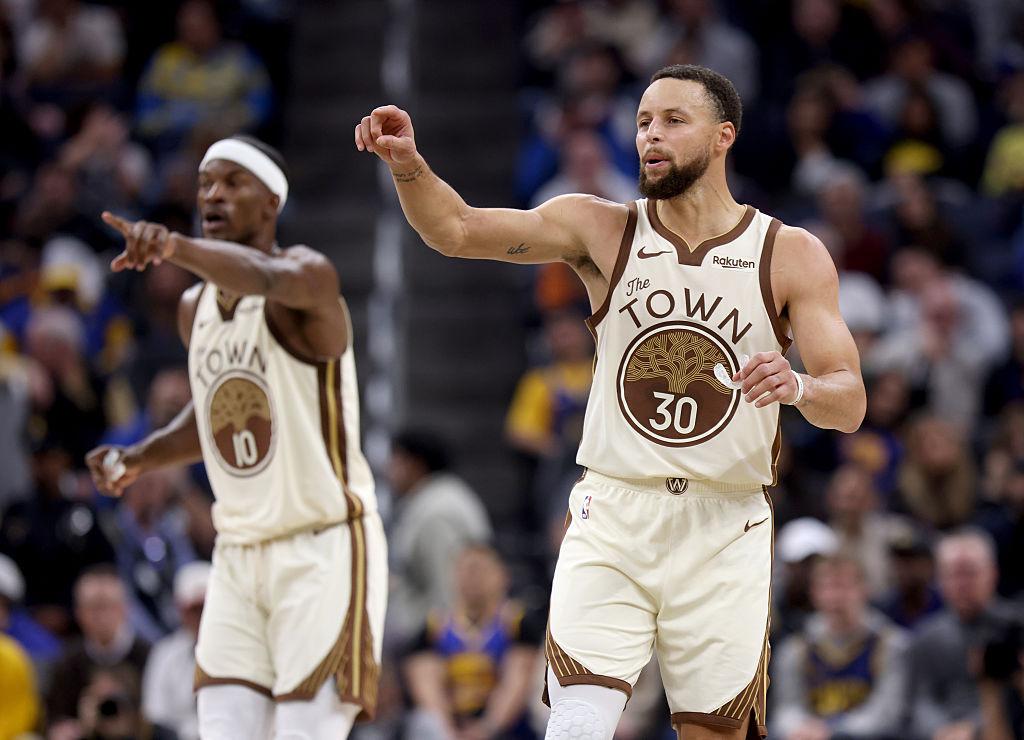
Now, the Warriors are expected to basically run it back. On Tuesday, they took the first step in that direction by re-signing Green to a one-year, $27.7 million deal—an almost exact salary match for the player option Green declined to help the Warriors pursue James. Golden State’s opening night starting lineup is projected to be Curry, Green, Kristaps Porzingis, Gui Santos, and the extension-eligible Brandin Podziemski, unless summer league standout Yaxel Lendeborg plays his way into a wing spot.
Porzingis, who signed a two-year, incentive-laced contract worth up to $40 million earlier this summer, has played more than 50 games in a season just three times since 2020-21. Moses Moody underwent knee surgery in March and will miss a large portion of the 2026-27 season. Butler, who is currently rehabbing from ACL surgery, isn’t expected back in the lineup until the winter at the earliest, leaving Curry to carry even more of the offensive load at a time when his body is starting to break down. Last season, he missed 39 games, including 27 with runner’s knee, an issue that may continue to crop up given Curry’s frenetic playing style.
James was the latest would-be acquisition in an increasingly desperate attempt to catapult the team back to contention—or at least instill a sense of meaning—in the final years of Curry’s career. Before LeBron, it was Lauri Markkanen, Paul George, Kevin Durant, and Giannis Antetokounmpo, all big fish that the Warriors pursued and ultimately didn’t land.
This latest whiff continues a pattern that has defined the past few years under the watchful eye of team owner Joe Lacob. When Lacob purchased the Warriors in 2010, he surrounded himself with basketball luminaries to help steer the franchise. In 2012, at the behest of Danny Ainge, he hired Bob Myers, who oversaw the rise of the Warriors dynasty with nimble decision-making and imaginative dealmaking. Lacob listened when Jerry West told him not to trade Klay Thompson for Kevin Love in 2014 and reaped the rewards when West helped convince Durant to sign with Golden State in 2016.
Part of Myers’s value was his ability to be the glue between different parts of the Warriors organization. He interfaced with Lacob so that Steve Kerr and the coaching staff could focus on the team, and he leveraged his relationships with players to prevent locker-room melodramas from spiraling out of control. Since Myers’s departure in 2023, Lacob has consolidated more power over personnel decisions—and his fear of what life after Steph will be like for the Warriors has been the biggest reason the team has opted not to exchange more future draft picks for immediate help.
To be fair, the Warriors’ forward-thinking approach was a key component to their dynastic success—with a hint of luck thrown in. Their shrewd, below-market extension in 2012 for Curry, who was plagued with ankle injuries early in his career, and their success in the draft helped them lay a championship foundation. Later, they took advantage of a one-time cap spike to absorb Durant. And when Durant left, Myers engineered a sign-and-trade for D’Angelo Russell, paid Russell the max, and then flipped him for Andrew Wiggins, who became a vital contributor to the 2022 title run—and then Dunleavy traded Wiggins for Butler, who looked great with the Warriors before his injury.
But from here, there’s no single transaction that could rescue the Warriors, just like there’s no single move that got them into this current mess. When you zoom out and look at the past few years, the Warriors have been stuck in limbo and facing repeated stalemates. A month after stepping into the general manager role, Mike Dunleavy resolved the then-long-simmering Jordan Poole situation by trading the youngster to Washington for Chris Paul. That deal was sold as a placeholder to buy the franchise time to flip Paul’s contract for a star, but instead the Warriors let Paul’s contract expire, essentially turning a vital piece of the roster into nothing. The following summer, Dunleavy engaged in a protracted negotiation with Jonathan Kuminga’s representation that stretched until the eve of the 2025 season, limiting the Warriors’ ability to sign free agents, and then traded Kuminga to Atlanta in February. Part of the reason the Warriors held on to Kuminga for as long as they did was Lacob’s hope that Kuminga could be part of a succession plan post-Steph.
But the Warriors’ current fixation on the future hasn’t netted any homegrown stars and hasn’t revealed a road map to contention in the long term. If anything, the lack of urgency about improving the team left the ultimate pitch to LeBron flat. They could offer the greatest show on hardwood, plus a chance to play with friends, golf with Steph, and jet down to L.A. to see his family on off days. But a pitch like that disrespects one of the league’s greatest competitors—and raises sobering questions about what the Warriors have left to offer their own superstar, the greatest player in franchise history.
Curry is the reason the Golden State ownership group had enough cash lining its pockets to build a privately owned arena in San Francisco’s Mission Bay, which Curry christened with a title three years after construction was completed. He’s the reason the Warriors are still the NBA’s most valuable franchise. He’s also a reminder that no matter how much an employee does for a company, the organization is under no obligation to return the favor.
Curry will be eligible for an extension in August, and he can posture behind the scenes to entice the Warriors to invest more in the team over the final years of his career. But Curry has long maintained that he wants to be a one-team player. His relationship to the Bay Area is irreplaceable, and in the back of his mind he knows winning a championship somewhere else would never fulfill him in the way it would here. I’ve asked him several times over the past few years whether he’d ever consider leaving the Bay, and he’s knocked down the notion on every occasion.
“It’s always been my hope and my desire, that the summer of whatever, and I say it’s time that I’m done playing, that I have only worn one jersey,” Curry told me last year, a week before Golden State traded for Butler. “That’s my hope. All of my actions have been evident of that, so that’s what I’m trying to make happen.”
However his future plays out, Curry will be gone one day, and all the advantages he provides will follow him out the door: the on-court gravity, the Chase Center sellouts, and possibly even Golden State’s status as a Bay Area power. Lacob has good reason to worry about the future after Steph, and building another contender without an inherited generational talent will be a different kind of challenge than his first time around. Lacob’s ambition has taken Golden State to unprecedented heights, but it’s an open question whether he can sustain this altitude.