‘House of the Dragon’ Episode 3: A New Antagonist Shakes Up the War
With Aegon on the run, Aemond injured, and Otto dead, Rhaenyra was running out of enemies. Enter: Ormund Hightower.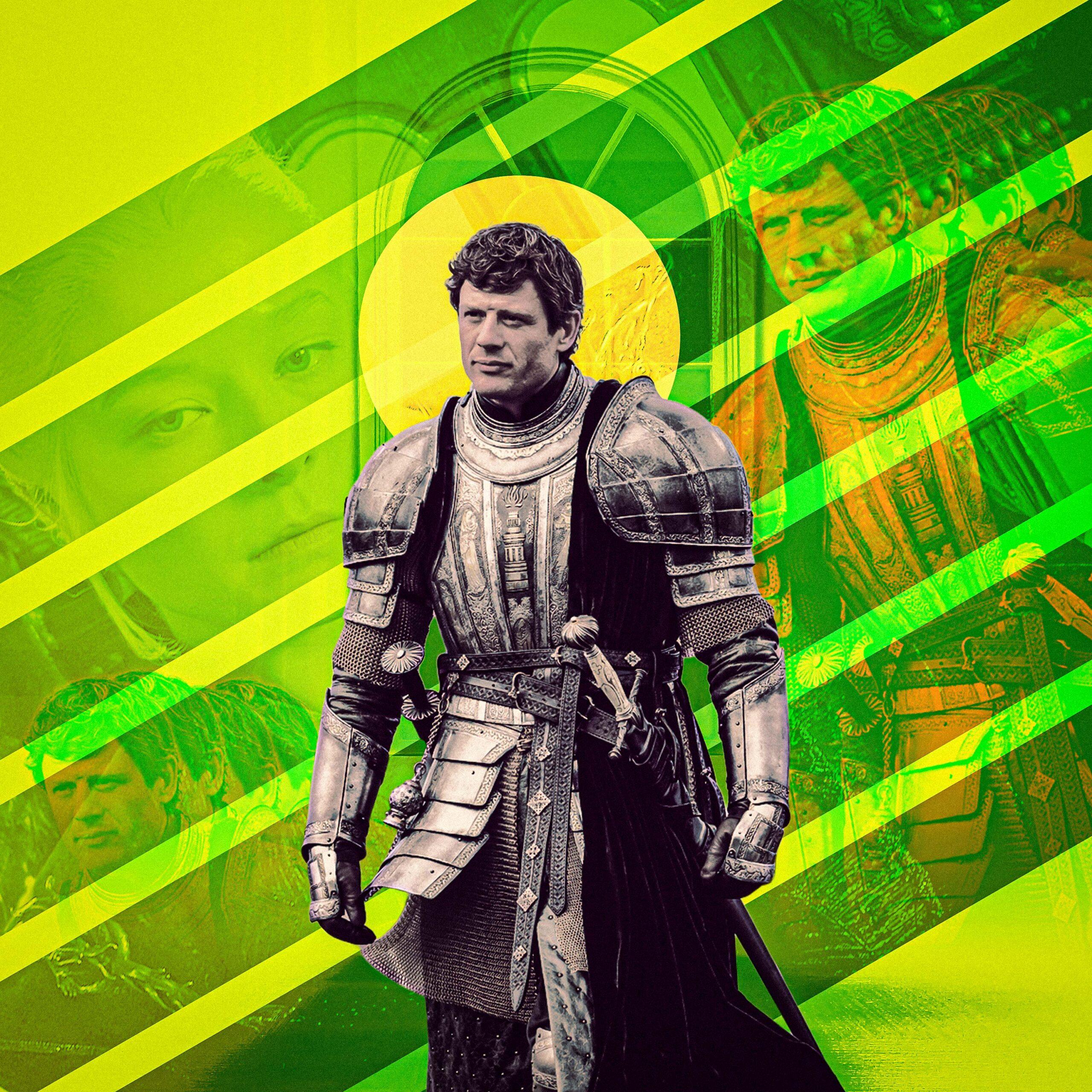


Rhaenyra gets her monkey’s paw moment in Episode 3 of Season 3 of House of the Dragon. She has the Iron Throne, but it turns out ruling a kingdom is more difficult and less fun than taking one. She’s not the first monarch in A Song of Ice and Fire to learn that lesson.
Just last season, King Viserys told his brother in a dream that the crown is so heavy, it isn’t really worth it. “It crushes whoever wears it,” he says.
In A Game of Thrones, Robert Baratheon has a quote that is so apt for this episode it’s worth speculating whether it served as the inspiration for showrunner Ryan Condal and writer Sara Hess. In the very first Eddard chapter in A Song of Ice and Fire, Robert tells Ned:
I swear to you, sitting a throne is a thousand times harder than winning one. Laws are a tedious business and counting coppers is worse. And the people … there is no end of them. I sit on that damnable iron chair and listen to them complain until my mind is numb and my ass is raw. They all want something, money or land or justice. The lies they tell … and my lords and ladies are no better. I am surrounded by flatterers and fools. It can drive a man to madness, Ned. Half of them don’t dare tell me the truth, and the other half can’t find it.
Rhaenyra faces all of these problems from the very first day of her reign, with the added obstacles of an empty treasury, a septon who won’t anoint her, a hand of the queen who feels she is betraying him, and a castle full of literal rats. As discussed last week, Rhaenyra’s capture of King’s Landing has put her in her strongest position yet—but the war is far from over.
Plus, she now has a new enemy. With Aemond injured, Aegon on the run, Alicent held prisoner, and Otto dead, this series needed a new antagonist. Enter: Ormund Hightower.
In just a few episodes, Alicent’s cousin and the Lord of House Hightower has established himself as a worthy successor to Otto as a schemer. We were first introduced to him in the season premiere, and he immediately gave the sense that he’d be a player in this conflict when he practically shrugs at the news that King Aegon II is dead and Aemond has taken his place. Now, in this episode, he cooks up some classic Hightower duplicity: a plot to send a fake Daeron to Rhaenyra, as part of a false surrender.


Ormund’s ruse is off book but far from off theme. In Fire & Blood, Ormund’s host is not close to King’s Landing, so none of this—Ormund’s meeting with Daemon, his “surrender,” and his handing over of a fake Daeron—happens on the page. But this type of plot point is very familiar to A Song of Ice and Fire readers.
This world’s medieval-inspired setting means that none of the characters truly know what the others look like unless they’ve physically met. We already got a hint of this reality in the premiere episode this season, when soldiers loyal to Rhaenyra don’t recognize Aegon. In the books, characters make use of this all the time.
Do you remember in Game of Thrones when Ramsay Bolton forces Sansa to marry him to help establish his rule over the North? In the books, that happens much differently. In A Storm of Swords, Roose Bolton, Ramsay’s father, realizes that virtually all the Starks are dead or missing. With almost no one left who could identify any of the missing Stark girls, he creates a fake Arya Stark—a girl named Jeyne Poole who was actually Sansa’s best friend back at Winterfell. Jeyne knows all the particulars of Winterfell and the Stark family to put on a show of legitimacy if questioned, and she’s lured into the plot by the promise of becoming a true noble lady. And so it’s not Sansa who marries Ramsay, but instead Jeyne pretending to be Arya.
Arya and Sansa themselves also use hidden identities to evade would-be captors. Arya at various times goes by “Arry” and “Weasel” and “Blind Beth” as she moves throughout Westeros and on to Essos (and in Season 2 of Thrones, she serves as Tywin Lannister’s cupbearer without him recognizing her). Sansa pretends to be “Alayne Stone,” a bastard of Petyr Baelish’s, when she arrives in the Vale after Littlefinger has whisked her away from King’s Landing.
Still other characters pretend to be someone else. When Barristan Selmy arrives in Essos to meet with Daenerys, he initially introduces himself as Arstan Whitebeard, a fake name. When Tyrion travels from Westeros to Essos, he uses the aliases Yollo and Hugor Hill.
And the books have a whole other character—another Aegon Targaryen, nicknamed Young Griff—who was cut from Game of Thrones but whose identity is central to what is happening in the novels. Griff has Valyrian hair and eyes and claims to be the lost son of Rhaegar Targaryen and Elia Martell. Whether he actually is Rhaegar’s son would be of huge importance to the story—he would technically come ahead of Daenerys in the line of succession. But no one, not even book readers, knows whether he’s actually legitimate.
In a world without photographs or Social Security cards, identity is difficult to prove. So while this specific plotline with a fake Daeron doesn’t happen in the books, it is totally in keeping with A Song of Ice and Fire storytelling.
Ormund knows that this ruse can only buy him a bit of time before he’s found out. And at the end of the episode, we learn that his host has taken Tumbleton, a market town not too far from King’s Landing. The “young dragon”—Daeron’s Tessarion—is with them.
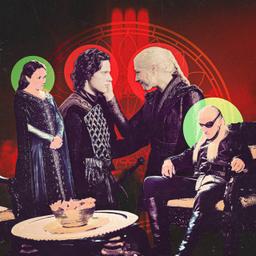
(Unfortunately, Tessarion is where this plot point falls apart a bit. How did Ormund manage to surrender “Daeron” but not the boy’s dragon? The blacks would’ve immediately taken Tessarion to the Dragonpit and put her under maximum security. Yet the Hightowers just have Tessarion back at the end of this episode. How did that happen? You have to suspend some disbelief here to make it work.)
Ormund has essentially taken the city hostage, as an attack from Rhaenyra would mean burning the smallfolk inside. “What does Ormund hope to accomplish?” Rhaenyra wonders aloud at the end of the episode. “He cannot win.”
It’s an interesting situation brewing. Tessarion is a young dragon, described at one point in the books as being just half the size of Vermithor, the mount of Hugh the Hammer. Rhaenyra has tasked Daemon with going to the Vale, but even a contingent made up of Hugh, Ulf the White (whose Silverwing should also be much larger than Tessarion), and Addam of Hull (whose Seasmoke should also be larger, though not as dramatically) should be more than enough to overwhelm Daeron and the Hightower forces. But Ormund would have known this when creating this plan. As proven in this episode, Ormund is crafty—and up to something.
We’ve already gotten a lot more of Ormund than we ever get in the books, where he’s not that big of a character. Since Fire & Blood is written as an in-universe history book and the primary sources for that history aren’t with the Hightower host, his actions are presented with some distance. It’s mostly limited to where his army goes and what battles it fights.


One such battle has already been omitted from the screen. In the book, the Reach is bitterly divided over whom to support in this war. The Hightowers are obviously all in with Aegon and the greens, but the Tyrells—their liege lords—are ruled by an infant boy at this time and decide to remain neutral. Other important houses in the region such as House Tarly, Caswell, Costayne, Rowan, and Beesbury decide to back the blacks. Thus, in Fire & Blood, when Ormund sets out from Oldtown to King’s Landing, he doesn’t simply march along the roseroad to the gates. He immediately gets into a battle at Honeywine, not far from Oldtown.
These other Reach houses surround Ormund’s host, cutting him off from a retreat to Oldtown while pushing his forces back to the banks of the Honeywine River. Defeat seemed certain, until a dragon appeared in the air. It was Tessarion, ridden by Daeron, and he turned the tide of the battle for the Hightowers. After the battle, Ormund knighted Daeron, dubbing him “Daeron the Daring.”
Well, this was pretty daring, wasn’t it? Faking your own capture, while knowing that your mother and sister are behind enemy lines, that same enemy has you significantly outmanned and outdragoned, and your older brother—the king you are fighting for—is missing? Flying over a dragonless army and melting them in their armor is one thing, but this plot is even more daring. Ormund has me intrigued, but I can’t wait to meet Daeron.
Given the reality presented above, it would have made sense for Ormund and Daeron to actually surrender this episode. Instead, they devised one of the more interesting page-to-screen changes we’ve seen. Rhaenyra’s position still appears to be dominant, but the cracks are showing. And the war continues.