‘House of the Dragon’ Episode 2: So, Did Rhaenyra Just Win the War?
Another explosive episode has turned the Dance of the Dragons on its head. But the war is far from over.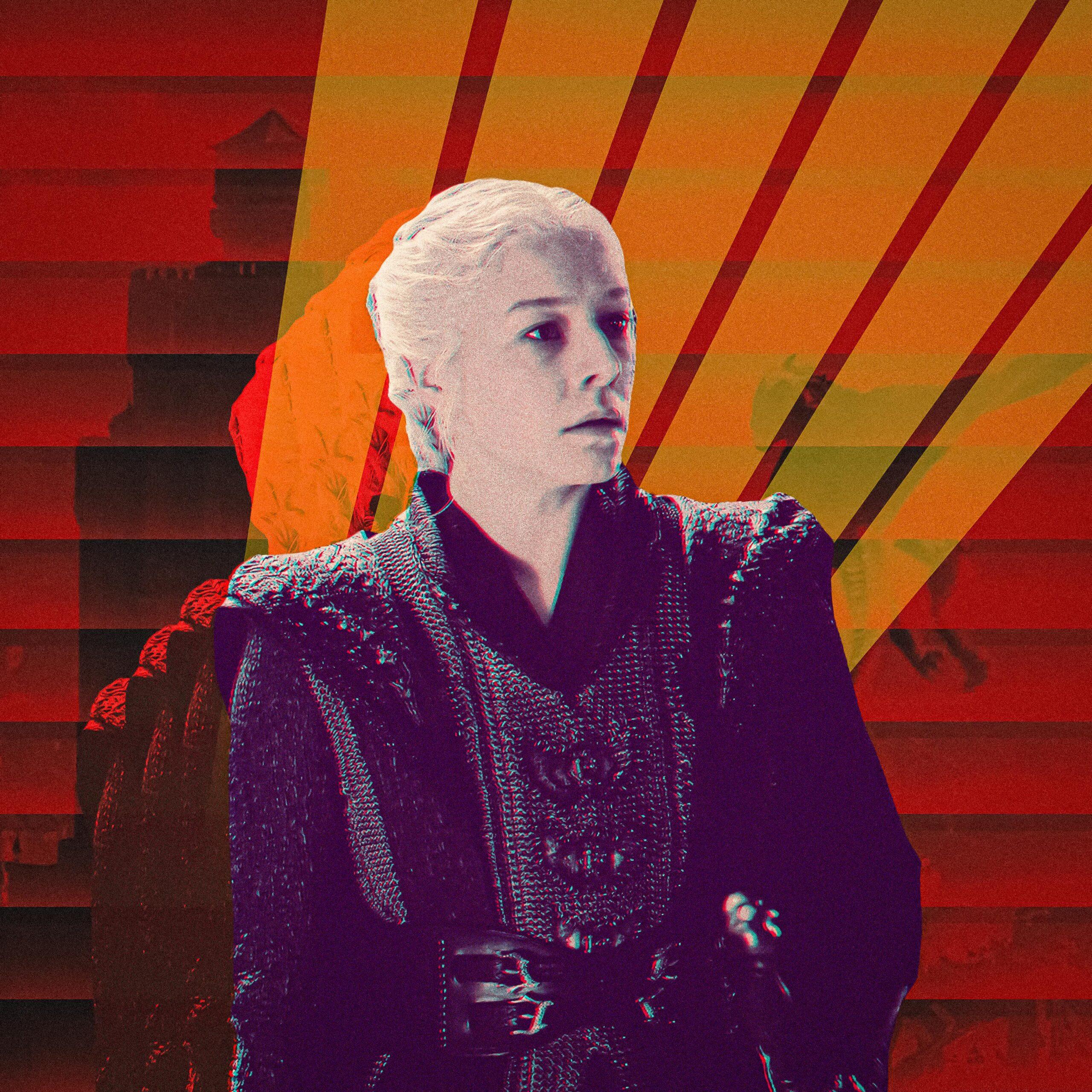


Perhaps you’ve heard of Betteridge’s law of headlines. But even if you haven’t, it should be apparent from every piece of context—like the six episodes remaining in this series, the full Season 4 yet to come, and the tone overall—that in fact, no, Rhaenyra has not just won the Dance of the Dragons.
But hey! For perhaps the first time, there has been major movement in this war. After another explosive episode of House of the Dragon, Rhaenyra now has control of King’s Landing and is sitting on the Iron Throne.
In fact, everything has been turned upside down in just a handful of episodes. Season 2 saw our main characters rarely ever leave their locations. Rhaenyra spent virtually an entire season on Dragonstone, Daemon was holed away at Harrenhal, and most of the greens spent the vast majority of their time inside the Red Keep. Now it’s flipped—Rhaenyra sits the Iron Throne, Daemon is by her side, Aemond is now the Targaryen at Harrenhal, and Aegon is on the run. (As mentioned last week, all this plot development reinforces that these two episodes should’ve been the conclusion of Season 2, but I digress.)
And the loss of her son and heir Jace notwithstanding, things are going well for Rhaenyra. Last season, her plan to find dragonriders for Dragonstone’s riderless dragons gave her fresh aerial power in the form of Hugh Hammer (riding Vermithor), Ulf the White (riding Silverwing), and Addam of Hull (riding Seasmoke). Those three added to the four Rhaenyra already had: her own Syrax, Daemon’s Caraxes, Jace’s Vermax, and Baela’s Moondancer. The greens are down to just three dragons: Aemond’s Vhagar, Helaena’s Dreamfyre, and Daeron’s Tessarion. Considering Helaena has essentially refused to ride Dreamfyre into battle, the advantage is seven to two (and even after Jace’s death, six to two).
This towering advantage has now finally resulted in Rhaenyra taking the throne. And again, despite Jace’s death, it is easy to argue that her position has strengthened in the past couple of episodes. Her forces crushed the Triarchy last week (even if the victory was somewhat Pyrrhic), and in this episode Aemond arrives to a nearly empty Harrenhal only to get stabbed, apparently putting him out of commission. The Riverlands are united for her, and a powerful group of Northmen have ridden south to fight as well. Who could stop her?
Before we answer that question, let’s turn to the page. The fall of King’s Landing to Rhaenyra happens a bit differently in the books. In the show, Alicent sees the writing on the wall and essentially surrenders the city to Rhaenyra. It’s not so in George R.R. Martin’s Fire & Blood. In the book, Alicent is left to see to the city’s defense, and she tries to prepare as best she can. She “[closes] the gates of castle and city, [sends] the gold cloaks to the walls, and [dispatches] riders on swift horses to find Prince Aemond and fetch him back.” But the gold cloaks are still loyal to Daemon, and they open the gates to allow Corlys’s men in.
In the book, after trying to hold out in Maegor’s Holdfast for less than a day, Alicent surrenders to Rhaenyra. “The city is yours, Princess,” she tells the queen, “but you will not hold it long. The rats play when the cat is gone, but my son Aemond will return with fire and blood.” The characters are much more vicious in the novel.
Aegon has indeed fled the city in the book, along with Larys, but Rhaenyra takes Alicent, Tyland Lannister, Jasper Wylde, and Otto Hightower prisoner. Rhaenyra does not execute Otto immediately, but her ascension to the throne is similarly dour in the book. In Fire & Blood, she makes every man and woman in the Red Keep kneel before her to swear fealty and beg forgiveness. The ceremony lasts the whole night, and at dawn, when Rhaenyra finally descends from the throne, “cuts were seen upon Her Grace’s legs and the palm of her left hand. … Drops of blood fell to the floor as she went past, and wise men looked at one another, though none dared speak the truth aloud: the Iron Throne had spurned her, and her days upon it would be few.”




More on ‘House of the Dragon’
Getting cut by the throne carries huge symbolism in Martin’s world. The idea is that the throne can reject those unfit to rule. It’s been awhile since Season 1 of this show, but the throne cut King Viserys frequently—it’s why he had two fingers amputated and constantly needed leeches and other remedies for his open wounds. Other kings had similar problems. Maegor the Cruel was found dead in the chair, impaled on the blades, and whispers spread that it was the throne itself that had killed him. The Mad King Aerys was cut so frequently on the throne that he was nicknamed “King Scab.” And Joffrey gets cut on the throne in one of his most despicable moments, from A Clash of Kings:
Joffrey lurched to his feet. “I’m king! Kill him! Kill him now! I command it.” He chopped down with his hand, a furious, angry gesture … and screeched in pain when his arm brushed against one of the sharp metal fangs that surrounded him. The bright crimson samite of his sleeve turned a darker shade of red as his blood soaked through it. “Mother,” he wailed. With every eye on the king, somehow the man on the floor wrested a spear away from one of the gold cloaks, and used it to push himself back to his feet. “The throne denies him!” he cried. “He is no king!”
The show omits Rhaenyra’s cut—or is perhaps saving it for later—but the symbolism isn’t exactly lacking on-screen. Moments before ascending the throne, Rhaenyra personally takes Otto’s life, which is another on-screen change. In the book, Otto does die shortly after Rhaenyra takes King’s Landing, but it’s rather unceremonious. “Ser Otto Hightower, who had served three kings as Hand, was the first traitor to be beheaded” is all we get from Fire & Blood.
I found this choice a bit curious. Why did Rhaenyra personally execute Otto? And why so quickly, in the throne room with zero preparation or warning? The idea that “the man who passes the sentence should swing the sword” is rooted in the North, but not the rest of Westeros. Rhaenyra would’ve had a headsman for executions—for example, it was Ilyn Payne who executed Ned, not Joffrey.
When she hacks away at Otto’s neck, it feels like a flashback to Theon Greyjoy executing Rodrik Cassel in Game of Thrones. Although Rhaenyra actually does a much better job than Theon, funnily enough. A sloppy execution feels like another bad omen, though—if you can’t cleanly remove a man’s head from his shoulders, how can you manage a kingdom?
Regardless of the particulars, this makes for a dramatic scene. Rhaenyra ascends the throne with tears in her eyes. Just as she sits, Alicent and Helaena are escorted into the throne room—and Alicent immediately sees her father’s headless body spilling its blood all over the floor. There was so much worry among Rhaenyra’s camp that Alicent would betray her, but now the betrayal feels like it has run the other way. In the Season 2 finale, Rhaenyra made it clear that she’d need to take Aegon’s head to secure her place as queen. Alicent understands that she has no choice but to accept that, but they hadn’t talked about what would happen with Otto. For many reasons, Rhaenyra couldn’t allow Otto to live—he was the chief architect behind Aegon’s decision to claim the throne—but his speedy execution doesn’t keep with the spirit of reconciliation that these two had begun fostering at the end of Season 2.
But despite the rocky coronation, Rhaenyra’s position is stronger than ever. Her advantage in dragonpower and manpower remains enormous, and now she has the throne itself. So back to the main question: Is she unstoppable?
Well, we haven’t accounted for every piece on the board. Elsewhere in this episode, we see Rhaena go to the Vale to ask Jeyne Arryn for asylum, which Jeyne somewhat grants, telling her simply that she “can’t stop a dragon from abiding where it pleases.” As I wrote last week, making Rhaena the character to claim Sheapsteeler is the biggest page-to-screen change in the series so far. Showrunner Ryan Condal explained to IGN that he wanted to make the story a bit more family focused:
It just felt to us that because again, this story is told in point of view, that it felt more apt as this is a family story to where we had the opportunity to involve one of the family members in the storyline. And because Rhaena has been set up since Season 1 as the member of this family who doesn't have a dragon and basically her sole identity is the Targaryen kid who doesn't have a dragon, it felt like that was a character that we had already set this long runway for that it could be very satisfying for the TV audience that didn't have an experience with the book at all to see that character claim a dragon and then in a very, I think, Game of Thrones and Westerosian kind of way, to reap the consequences of having her wish come true. It's a very monkey's paw kind of moment for Rhaena. She gets her great wish and it becomes her greatest nightmare.
Rhaena is ostensibly on Rhaenyra’s side, and so are the Arryns (although Lady Jeyne has been slow to actually send an army to help, as she feels Rhaenyra’s promise of dragons to protect the Vale was broken when Rhaenyra sent only the two hatchling dragons that belong to her young sons, Aegon and Viserys). But Rhaena is also ostensibly to blame for Jace’s death.
Rhaena’s sister Baela saw Sheepstealer during the battle. But she didn’t see who the rider of that dragon was. Rhaena’s secret is safe only until the knowledge of her dragon becomes more widespread. And as Daemon voiced in this episode, the blacks are assuming that Sheepstealer belongs to the greens. So they’ll want to investigate.
We also have the Hightower army, somewhere on the march toward King’s Landing, as well as the yet-unseen Daeron Targaryen, Alicent’s youngest child. The Hightowers are technically bannermen to the Tyrells (who have remained neutral, as at this time the lord of their house is an infant), but they are sometimes referred to as “overmighty” because they are arguably more powerful than the house they are sworn to. These are significant forces at King’s Landing’s doorstep.
Then, at Harrenhal, an injured Aemond has just been introduced to Alys Rivers, who’s had a falling-out with Daemon. Aemond doesn’t get injured in this way in the books, for what it’s worth, so he may not be out of commission long. And this episode we get a better idea of Alys’s motivations—she wants Harrenhal for herself—something Aemond may be more willing to grant her than Daemon was. What she can do for him remains a bit of a mystery, but she appears ready to flip sides.
And of course, we can’t forget about Aegon himself. After being imprisoned by Rhaenyra loyalists last episode, Aegon and Larys escape due to sheer dumb luck in this episode. Larys’s original plan was to go to Duskendale and buy passage to Essos, but now Aegon has made the decision to head to Rook’s Rest, where Criston Cole has a garrison that should still be loyal to the king. So it seems that these two will be sticking around in Westeros for a while longer.
Rhaenyra’s position has never been stronger. But the war is far from won.