
A draft class like this doesn’t really need any formalities. Let’s skip to the good stuff. Here are the biggest winners and losers from the first round of the 2026 NBA draft. (For more analysis, check out J. Kyle Mann’s pick-by-pick grades from the first round.)
Winner: Consensus!
For all of the smoke screens and manufactured tension in the lead-up to the draft, the top of the board played out exactly as most predicted after last month’s draft lottery. And, for my money, AJ Dybantsa, Darryn Peterson, Cameron Boozer, and Caleb Wilson all landed where they were meant to be.
So much has been said about these four, but I truly don’t believe it’s overselling it to say that those players have landscape-shifting potential. Dybantsa’s nuanced scoring and driving ability are unheard of for a player of his size who could have easily just coasted on his elite all-around athleticism. Peterson’s cramping issues appear to be a thing of the past, which gives us more space to celebrate one of the most effortless scorers to enter the league in decades. Boozer’s central processing unit can diagnose how to exploit a double-team better than a number of current NBA stars can. And Wilson’s combination of otherworldly explosiveness, seam-bursting passion for the game, and rather detailed outline of a two-way skill set will grant him one of the most exciting development arcs we’ve seen in a long time. Exposure fatigue tends to hit hard at the end of every draft cycle, but the enthusiasm for what this class could bring has never wavered. Last year’s class was chock-full of future stars and significant contributors. Let’s run it back with this one.
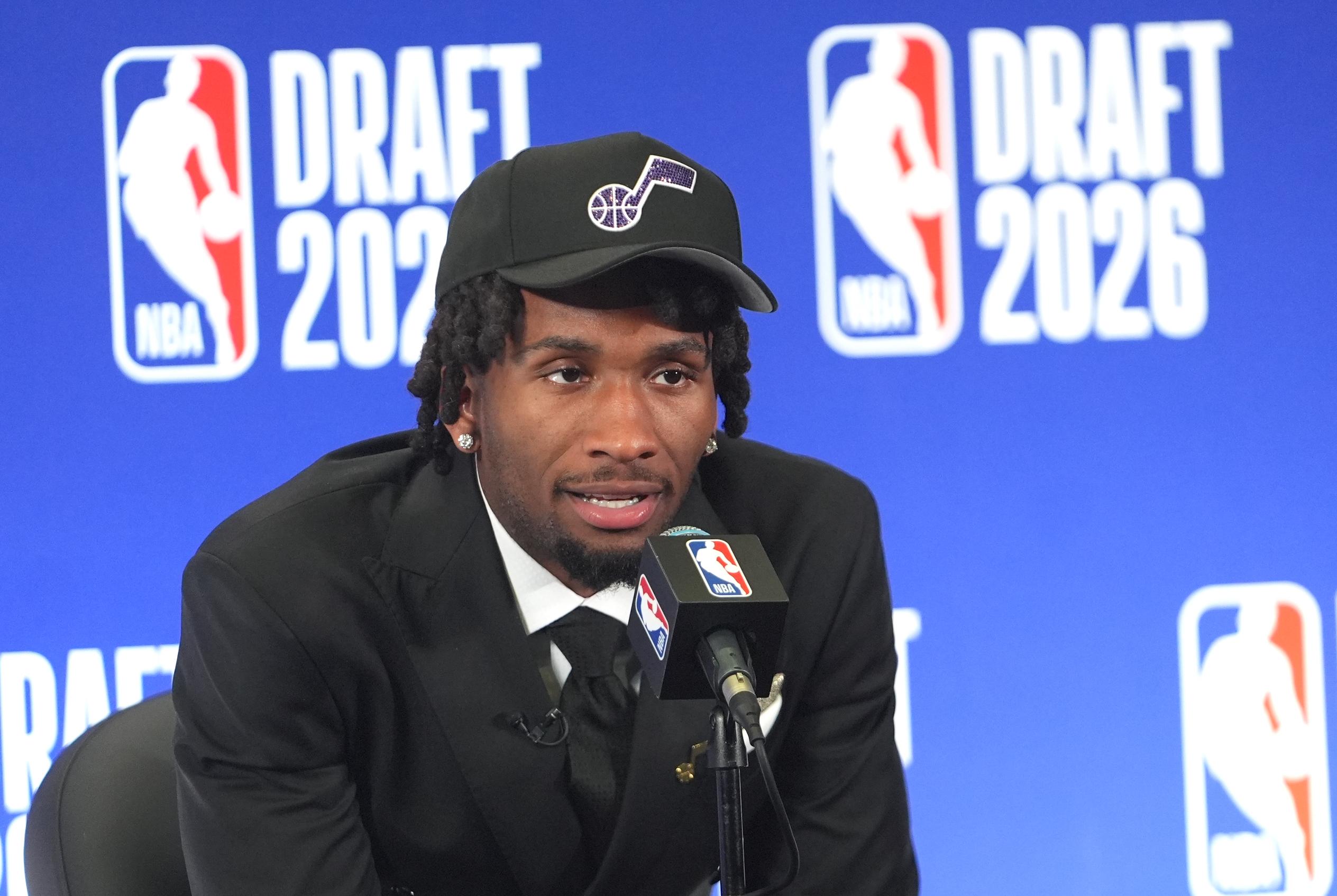
Darryn Peterson talks to the press after being selected by the Utah Jazz
Loser: Trying to Talk Your Way out of Utah
Another year, another draft where Austin Ainge ignores predraft scuttlebutt about a top-five prospect’s landing spot preferences. First Ace Bailey, now Peterson. If you’re the best player on the Jazz’s board, you’re going to play a foundational role in one of the most interesting rebuilds in the league, whether you like it or not!
Winner: The (Re-)Rise of the Point Guard
There are prevailing wisdoms that emerge at the end of every NBA season, and the draft presents the first opportunity for teams to test ideas that may shape the league moving forward. Jalen Brunson’s heroic Finals MVP–clinching performance in Game 5 was a poetic triumph for the small guard archetype, which has been oft maligned over the past decade. In that sense, Brunson has become the modern-day Allen Iverson in his influence on team-building trends. Finding the next A.I. proved impossible, and finding the next Brunson may be just as much a fool’s errand. But it just so happens that arguably the biggest strength of this vaunted draft class—aside from the unique, franchise-changing talents at the very top—is its preponderance of point guards. Brunson’s performance could not have come at a better time for these prospects, who enter the league with a clear proof of concept to refer back to.
The Brooklyn Nets and Sacramento Kings took the first big swings Tuesday night, placing their fate in the hands of the two point guards in the class with the highest star potential as offensive engines. The Nets placed their chips on the dazzling creativity and obscene long-distance pull-up shooting of Mikel Brown Jr., while the Kings transparently coveted the mega-productivity and efficiency of Darius Acuff Jr., who had one of the best college seasons of the 21st century.
The postseason also reinforced on-ball playmaking as an imperative for playoff teams, given the pressure and defensive shells thrown at a lineup on any given possession. It was reflected in the picks made in the first round. A brief rundown:
- The Clippers selected Keaton Wagler, who arguably has the most unexpected one-and-done trajectory ever, betting that his size, mesmeric feel for the game, and shooting versatility will allow him to serve as a long-term complement to Darius Garland.
- The Hawks augmented their teamwide identity with Kingston Flemings, a player whose speed and downhill tenacity should create fractures in a defense that can then be exploited by Atlanta’s numerous secondary creators; his Houston DNA as a relentless defensive hound is a natural fit for the team’s overall ethos.
- The Hornets’ wildly prolific 3-point shooting was a revelation this past season, and landing Christian Anderson—arguably the best shooter out of the pick-and-roll in the draft—will ensure that Charlotte will never lack for deep gravity, no matter the substitution pattern.
- Ebuka Okorie, whom the Pistons traded up to acquire, is every bit Cade Cunningham’s stylistic complement: Where Cunningham moves patiently, Okorie bolts down the lane with control and violence; where Cade has been known to cough the ball up once or thrice, Okorie had an almost impossibly low turnover rate despite the burden he carried as Stanford’s entire offensive system.
- The Thunder’s deadline acquisition of Jared McCain was such a playoff hit that the team got itself a copy in Bennett Stirtz.
- The Sixers may rue the day that they got rid of McCain, but they may have lucked out with one of the steals of the draft in Labaron Philon, a multifaceted method actor capable of being a two-way ancillary contributor one year and an efficient on-ball usage monster the next.
- The Mavericks had a clear need at point guard and waited until after the first round’s proceedings to make a trade for Sergio De Larrea, a wing-sized, sharpshooting, no-nonsense playmaker who scored 13 points in a Spanish ACB finals game earlier this week.
They won’t all hit, but it’s less about the results than it is about the rationale. The sheer volume of point guards taken (and we’re not even counting Peterson and Brayden Burries, who both have lead guard potential to varying degrees) is all the evidence we need that dynamic ballhandling depth has become a true marker of status.

Loser: Milwaukee Bucks
There’s nothing the Bucks could have done on Tuesday to ease the pain of losing arguably the most important player in franchise history, Giannis Antetokounmpo. It’s still too early to fully assess Milwaukee’s haul, but unless the Bucks wrangle another first-rounder by trading Tyler Herro, Myles Turner, or any of the other pieces on this shell of a team, the no. 13 pick used to select Nate Ament is the last first-rounder the rebuilding Bucks possess until … 2030.
Milwaukee’s draft decisions on day one reflect the reality of both the team’s particular plight and a leaguewide shift in strategy. In a post-tanking world—and especially in this bleak reality where the Bucks don’t have control over their own picks for the next four years—there’s no real upside to being awful. As such, with the no. 10 pick, the Bucks drafted one of the safer bets in the draft in Burries, a hyperaggressive guard who could make for an effective 3-and-D backcourt mate alongside Ryan Rollins. There is value in just being a solid, well-rounded player like Burries, who rebounds well for his position, hits 3s at an above-average clip, and defends with passion and grit. Burries serves as a hedge for the much bolder bet on Ament, the 13th pick. The upside swing on Ament feels like a consoling act of nostalgia: Maybe another tall, lanky wing with open growth plates could act as an avatar for what they’ve lost.
Winner: Dusty May
It’s been an incredible two years for May, who went from coaching at Florida Atlantic University in 2024 to being named the head coach of the Dallas Mavericks in 2026—winning a whole damn national championship at Michigan along the way. Before taking the Dallas head coaching gig on Monday, May had been advising teams about the Michigan players slated to be drafted in the first round. And just one day after it was reported that May had taken the Mavs job, the team selected a familiar face at no. 9—perhaps the draft’s biggest shocker.
That the Mavs went with Morez Johnson, arguably the least heralded of the trio of Wolverines taken in Tuesday’s lottery, says a lot about how much May values the big man’s burgeoning skill set. Johnson is one of the draft’s most impactful defenders, with all the physicality and ground coverage you could want from a small-ball 5 with legitimate switchability. Morez was largely used as a one-man cleanup crew on offense when playing alongside Aday Mara, a gargantuan passing hub, and Yaxel Lendeborg, the single most well-rounded player in college basketball—that the Mavs stayed put to draft him at no. 9 is a huge vote of confidence in the untapped skills he left on the cutting-room floor to help the team get a national title. If anyone knows what Johnson is capable of, it’s Dusty.
Loser: Anyone Expecting a Massive Draft-Day Trade
With the biggest offseason domino fallen, it was only natural to expect a few more to follow. Massive draft-day trades aren’t common, but they do happen. And they can have major implications. Jrue Holiday (traded in 2020) and Kristaps Porzingis (traded in 2023) were both trade headliners who went on to serve as championship catalysts for the Bucks and Celtics, respectively. Deni Avdija was routed to Portland back on draft day in 2024, although he hadn’t yet blossomed into the star he is today.
It was quiet on Tuesday night, at least in one sense. There was actually a deluge of trades made on Tuesday night; nine of the final 15 picks of the first round changed teams. But not a single player under contract was traded. Teams were locked in on one of the deepest and most talented draft classes in recent memory; the Jaylen Browns and Trey Murphy IIIs of the world will have to wait.
Loser: Indiana Pacers
There’s no use crying over spilled milk, I know, but seeing all of the teams moving up and down and in and out of the draft reminded me of the sort of shake-up that Kevin Pritchard would have led back in the day. Imagine what Pritchard would have done if he’d widened the protections on the Pacers pick even just a little bit at the deadline. Alas.
Winner: San Antonio’s Fledgling Wemby Protection Agency
The Spurs’ performance in the Finals made the team’s draft needs plain as day. Overly reliant on Victor Wembanyama’s psychophysical force field in drop coverage, the Spurs lacked a true bruiser who could fight for boards on both ends of the floor. And in potentially the only way these two teams could be similar to each other at this point in time, the Spurs opted for a strategy like the Milwaukee Bucks’ with their two first-round picks: one safe choice, one home-run swing. When Wemby famously put a hit out on McCain in Game 5 of the Western Conference finals, he had to enlist the decrepit remains of Mason Plumlee and Bismack Biyombo. Now he has two of the strongest prospects in the draft in tow. Jayden Quaintance and Tarris Reed Jr. seem destined to become a new-age version of the Davis Brothers—Dale and Antonio—who were Reggie Miller’s personal enforcers back in the ’90s.
The Spurs traded back into the first round to select Reed at no. 26. He’s a classic low-post rumbler with some surprising athletic traits: Even though he was the second-heaviest player at the combine, he posted some of the best lane agility and shuttle run times in the class, regardless of position. But the real sinking feeling moment came when Adam Silver announced San Antonio’s pick at no. 20: Quaintance, a titanically strong and explosive defensive prospect who slid in the draft because of complications in his recovery from a torn ACL suffered back in 2025. Quaintance seems likely to redshirt his rookie season, but the 18-year-old has extreme youth on his side. There’s a good chance that Quaintance will be younger than some of the one-and-done prospects who come out of the 2027 draft. If the Spurs medical staff can work their magic and keep Quaintance upright, the defensive potential of a Quaintance-Wembanyama frontcourt is almost unfathomable.
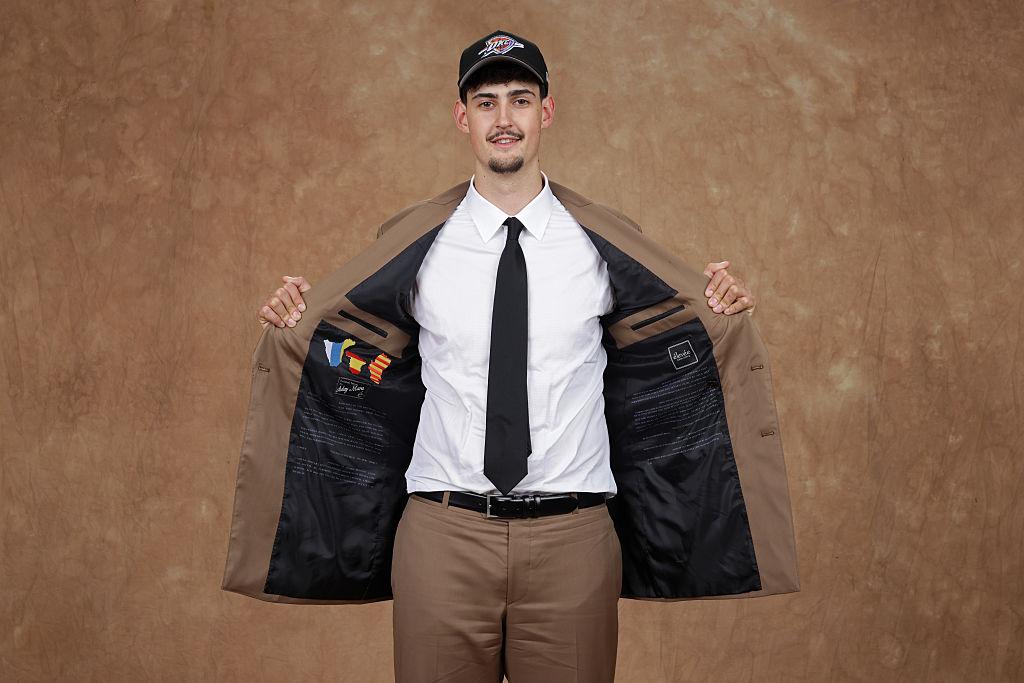
Aday Mara poses for a portrait after being drafted by the Oklahoma City Thunder
Loser: Isaiah Hartenstein?
The Thunder are gearing up for what could be a perennial battle for the future, and they’re going to match size with size. Mara, who was selected 12th, will immediately be an imposition in the painted area. There just aren’t many players in league history who’ve combined his enormity, hand-eye coordination, and instincts on both ends of the floor. Hartenstein is one of the better passing big men in the league, but Mara has the potential to be special as a 7-foot-3 distribution hub. Hartenstein plays physical, smart, reactive defense, but Mara’s dimensions could make him a proactive defender, killing the germ of an idea around the basket before it ever seeds.
There is a very real worry that the speed of the game may not be too friendly to a plodding giant like Mara, but the Thunder offer the ideal auspices to put it all to the test. Hartenstein got in where he fit in during the seven-game slobberknocker against San Antonio, but he has a $28.5 million team option looming this week. Mara’s presence could either be a potential improvement on Hartenstein’s most valuable contributions to the scheme or a pretty tough negotiation chip the Thunder could use in long-term extension talks.
Loser: Positional Orthodoxy in Toronto
The Raptors have long been adamant that they don’t draft for need but rather select players who exhibit a certain size-skill intersection that the team has done an outstanding job of maximizing over the past decade. It’s also led to a certain stereotype of Raptors player evaluation, dubbed Project 6'9" (or Vision 6'9") by fans, a nod to the team’s fairly transparent desire to put five similarly sized two-way players on the floor at the same time and hope their complementary talents interlock into a sort of daisy chain of doom. So it shouldn’t have been a surprise that the Raptors ultimately eschewed positional need and went with another version of their favorite kind of player:
If Collin Murray-Boyles—Toronto’s 2025 first-round pick and massive playoff riser—is a younger, stronger variant of Scottie Barnes, then Allen Graves is a younger, more perimeter-oriented variant of CMB. The aim is clear: Stack enough connective playmaking, defensive aggression, and concerted effort on the offensive glass, and perhaps a higher basketball consciousness will emerge. What position do they play when they’re on the court together? Who cares! In a time when small guards are making a triumphant resurgence, Toronto’s keeping the dream of positionless basketball alive.
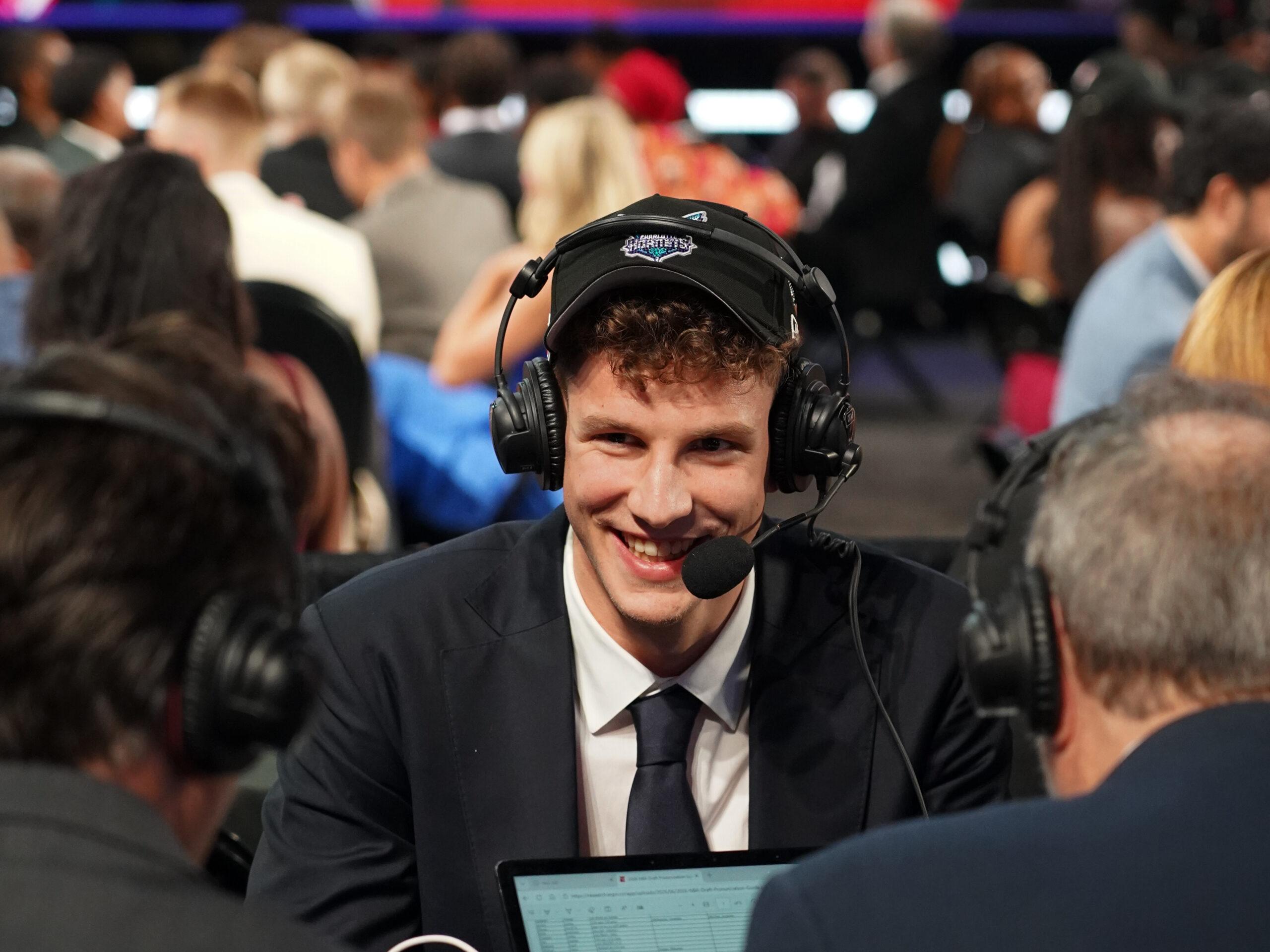
Hannes Steinbach is interviewed after being drafted 14th by the Charlotte Hornets
Winner: Cultural Name Variations
The thing about Hannes Steinbach is that his name is literally just a more Germanic version of John Steinbeck. Steinbeck, of course, was the 1962 Nobel Prize winner in literature who wrote American classics such as Of Mice and Men and The Grapes of Wrath. It was announced that Steinbeck won the Nobel award on October 25, two days after Wilt Chamberlain had a 56-point, 29-rebound game for the San Francisco Warriors in a 140-113 victory over the Detroit Pistons. When Steinbeck was asked whether he deserved the award, he had just two words: "Frankly, no."
All this to say: There have been only three instances in the 2020s when an NBA player has logged at least 29 rebounds in a single game. If Steinbach can alleviate some of the positionality concerns and stay on the floor in Charlotte, I think he has a real shot at becoming the fourth one day.
Winner and Loser?: The Memphis Grizzlies’ Cheap Thrill
Perhaps sitting at the no. 3 spot and picking whoever was left between Peterson and Boozer was too easy. In Boozer, Memphis landed one of the smartest, most well-rounded prospects in recent memory; his bulldozer strength, diverse offensive skill set, and advanced playmaking and processing simply make the game easier for everyone around him. Then the Grizzlies took Stirtz with the 16th pick, but they opted to trade him to OKC in exchange for two second-round picks. Great business. Then they made another trade to move down four spots, allowing the Pistons to get their guy, Okorie, for the sweet price of three more second-round picks. Memphis picked up five second-round picks in the span of basically five minutes to move down five spots in the draft … all to take Karim Lopez, who was the 36th-ranked player on The Ringer’s 2026 Big Board, at 21.
After they bypassed so many point guards en route to Lopez, it’s clear that the Grizzlies are currently content with their cabal of playmakers. Lopez is a gigantic wing with the potential to be an incredible strength-based driver once he becomes more attuned to his body’s internal sense of balance. Memphis landed two of the youngest prospects in the draft in Boozer and Lopez, showing that the team is willing to be patient. Asset accumulation is never a bad thing, and if Lopez was the team’s target all along, snagging five extra picks before drafting him is a significant win. But the landscape of amateur athletics has shifted in the NIL era: The talent pool in the second round has been steadily dwindling, given how much more lucrative staying in school can be. A second-round pick isn’t what it used to be, and it might not even be what it was in 2023. For reference: Five second-rounders was exactly the going rate for Jae Crowder at the trade deadline in 2023. TBD what they’ll amount to in 2026.