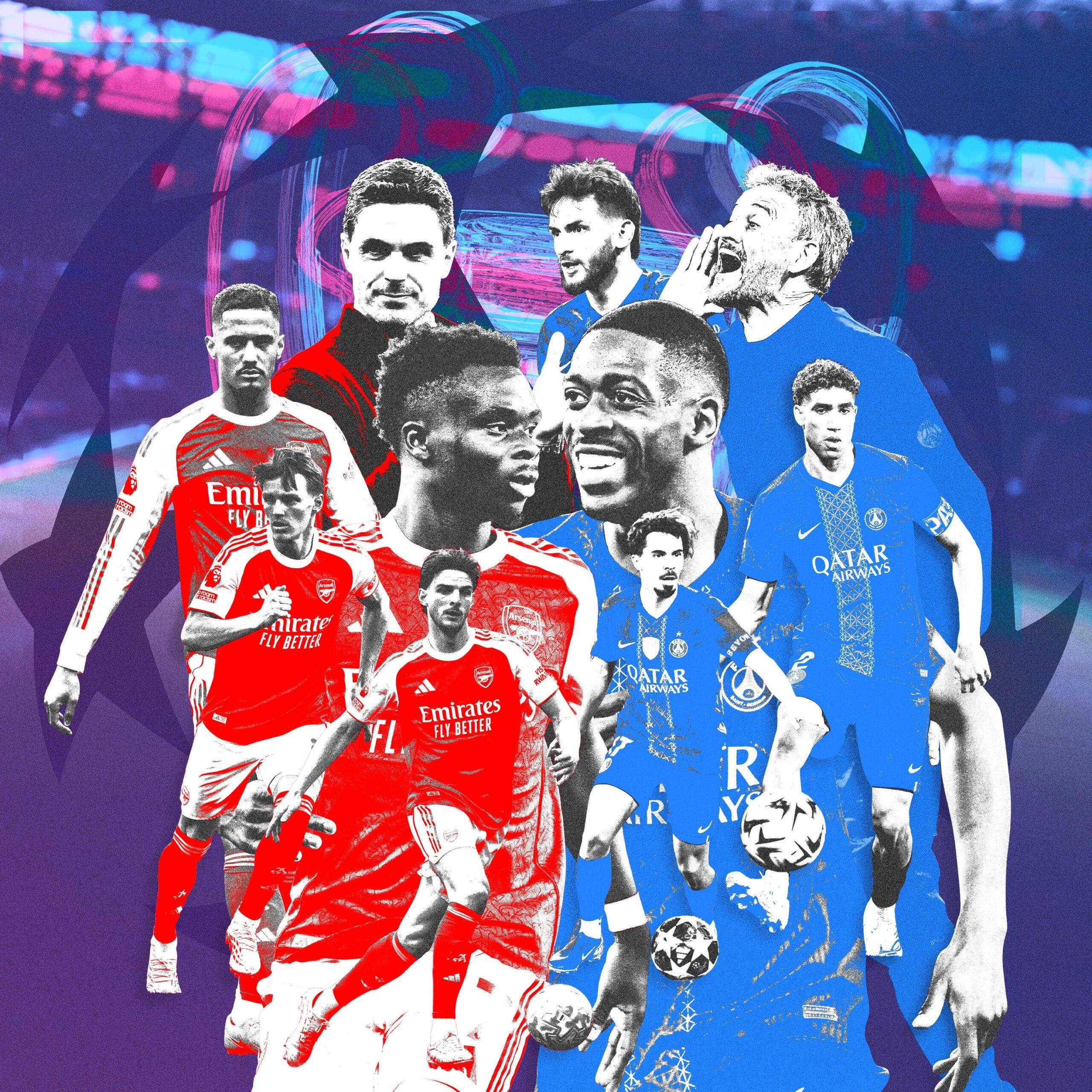

In Saturday’s Champions League final, Europe’s most dynamic attack will meet one of the best defenses the sport has seen in years. Paris Saint-Germain is trying to become the first modern dynasty of the post–Real Madrid era, while an Arsenal win would cement this year as the greatest season in club history. The game will also double as a stylistic referendum on where elite soccer is headed. PSG represents youth, pressing, and attacking flair; Arsenal counters with physicality, defensive dominance, and ruthless set piece efficiency. It’s the match that launched a thousand think pieces.
If Arsenal wins, it’ll become the fourth team in English history to complete the league and European cup double: Only Liverpool, Manchester United, and Manchester City have accomplished the feat. If PSG wins, the club that made winning the Champions League its white whale for most of the 21st century will have won it not once but twice in a row.
Here’s everything you need to know about the 2026 Champions League final.
1. Twenty-four different clubs have won the Champions League (formerly the European Cup) since the tournament began in 1955. Arsenal is hoping to become the 25th. The Gunners’ only other appearance in the final came in 2006, when they lost 2-1 to Barcelona. Arsenal’s Sol Campbell scored the opening goal that day in Paris, but after their goalkeeper, Jens Lehmann, was sent off, the 10-man squad was unable to hold off a second-half onslaught from Barcelona.
2. PSG is attempting to become the second club (alongside Real Madrid) to win consecutive Champions League titles since the tournament was rebranded in 1992.
The Parisians demolished Inter Milan 5-0 in last year’s final and are expected to have at least nine of the same starters for their repeat attempt. Longtime goalkeeper Gianluigi Donnarumma departed the club for Manchester City last summer, and he’s been replaced by Russian keeper Matvey Safonov. Superstar right back Achraf Hakimi is recovering from a thigh injury, so he almost certainly won’t be fit enough to go a full 90 minutes. He hasn’t had any match action since PSG’s first-leg semifinal victory against Bayern Munich on April 28. PSG is otherwise expected to have the same starting midfield from last year’s final, which overwhelmed Inter athletically—João Neves, Vitinha, and Fabián Ruiz. Ousmane Dembélé returned to training this week and said he’s fit for the final, and he’ll lead the PSG front line, with forwards Khvicha Kvaratskhelia and Désiré Doué flanking him.
Even though PSG has largely run its core group back this season, it is still one of the youngest teams in Europe, with an average age of 24.4. Among the 96 teams in Europe’s top five domestic leagues (England, Spain, France, Italy, and Germany), only Strasbourg and Parma in Italy are younger. The Parisians’ youth and defensive energy are what enable them to be a pressing monster with the fewest passes allowed per defensive action in Ligue 1 and the second fewest in Europe’s top five leagues. That has also allowed them to be successful even after superstar Kylian Mbappé’s departure following the 2023-24 season. I wrote about the Mbappé Ewing Theory last spring.
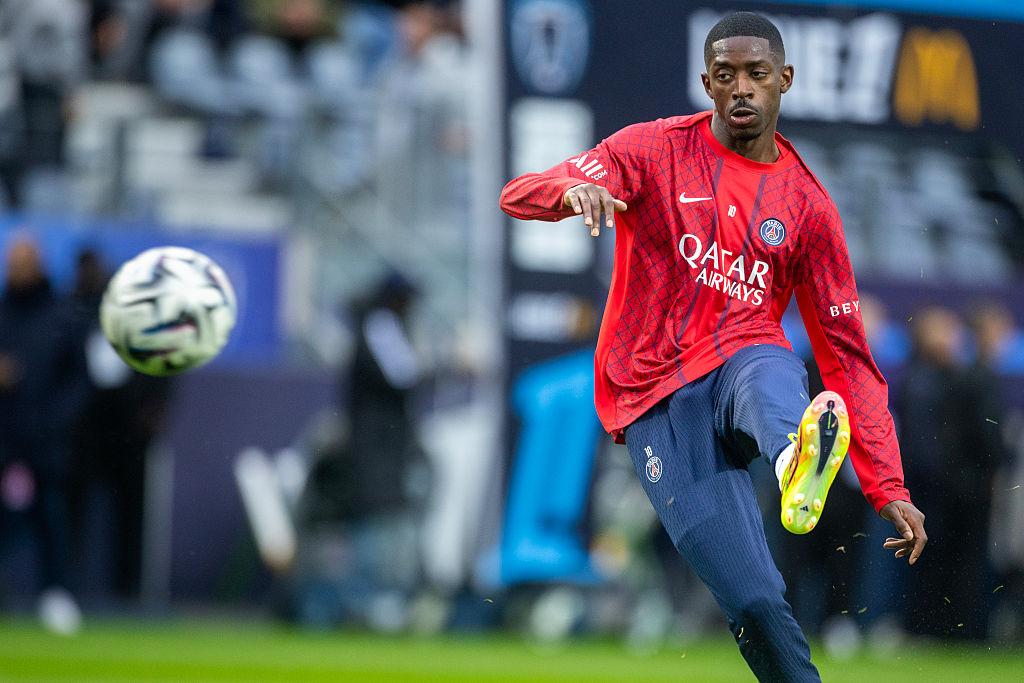
3. PSG manager Luis Enrique load-managed his squad like a top NBA team throughout the year. The French champions have such a massive talent and squad depth advantage over the rest of Ligue 1 that they won the league title without pushing their stars to play every week. Only three players in the entire PSG squad played more than 2,000 minutes in the French league this year, and none of PSG’s three oldest starters—Dembélé, Ruiz, and Marquinhos—made more than 13 starts or played more than 1,500 minutes in league play. PSG prioritized saving its top talent for Champions League matches, but even then, it still made sure that its most fragile and injury-prone guys didn’t play more than 60-70 percent of the available minutes.
4. PSG might be the only thing standing in the way of England’s total dominance of the continent right now. In the second- and third-tier European competitions, Tottenham, Aston Villa, Chelsea, and Crystal Palace have won all four trophies in the last two years. In the last two seasons, English teams have won 21 consecutive knockout ties against non-English opponents in the Europa League and Conference League. Meanwhile, in the Champions League, PSG has systematically wrecked English dreams. It beat Liverpool, Aston Villa, and Arsenal in succession en route to last year’s final. This year, it defeated both Chelsea and Liverpool in the knockouts. Across its last 10 knockout matches against English foes, PSG has outscored its opponents 21-8.
5. For the second consecutive year, PSG failed to clinch a top-eight seed and a bye following the Champions League “league phase” and had to come through the playoff round. And once again, the extra round didn’t derail them. The top seeding can certainly help a team’s draw, but there’s still a lot of chance involved. Arsenal was the top seed this year and drew Bayer Leverkusen, Sporting Lisbon, and Atlético Madrid. Not exactly a gauntlet. But when Liverpool was a top-two seed last year, it ran into a PSG buzzsaw in the round of 16. There’s a real question now as to whether the European giants should prioritize the fall league phase UCL matches. PSG clearly has not done that, and it could win the competition in consecutive years.
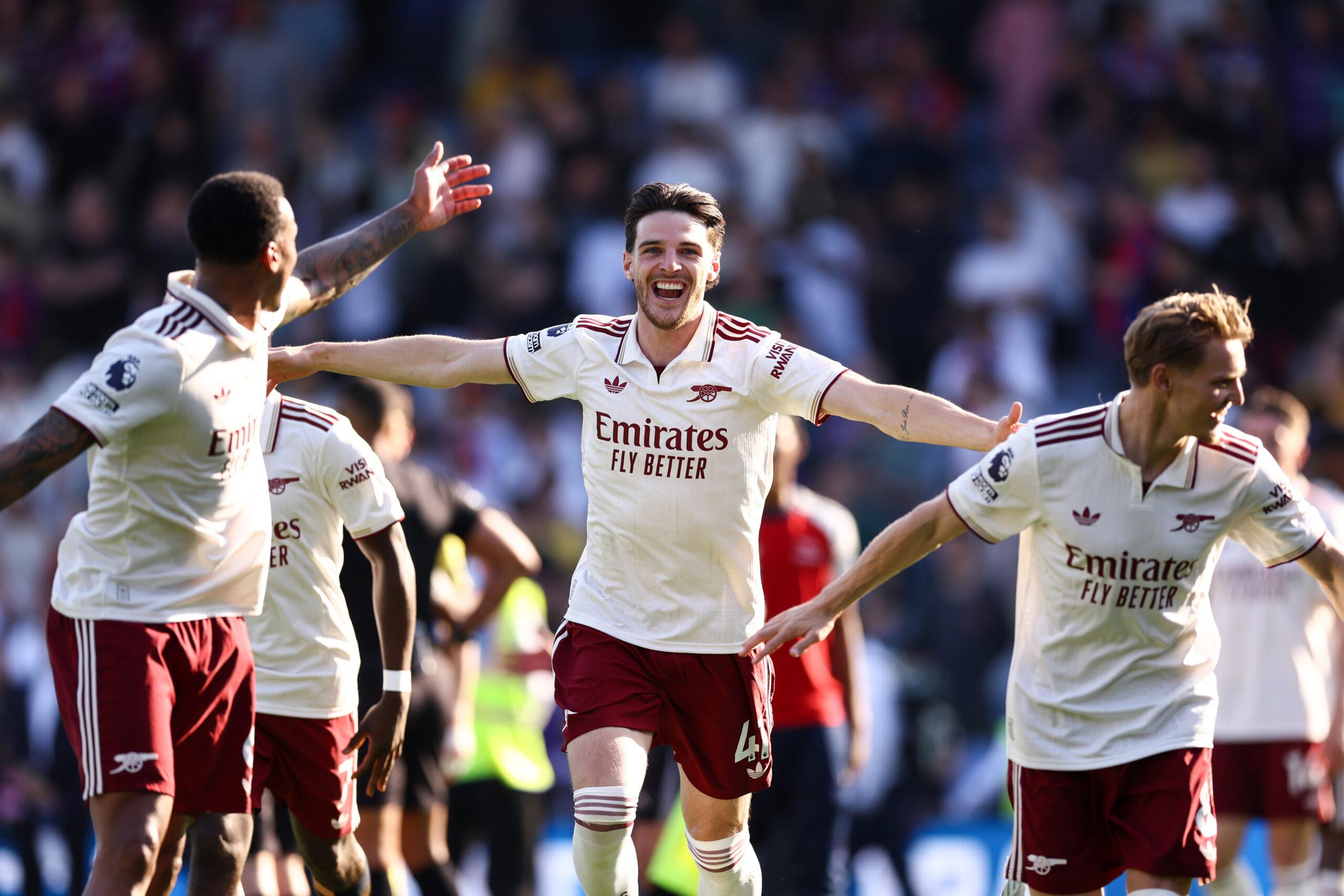
6. This matchup of PSG and Arsenal is the ultimate battle of unstoppable force meets immovable object. PSG has scored 44 goals in 16 matches in the Champions League this year, and now it’ll have to best one of the top defenses in modern soccer history. Arsenal may not play in a way that appeases the eye or impresses the neutral or casual fan like PSG does, but that doesn’t make its defense any less dominant. The Gunners conceded just 28 expected goals in the Premier League this year. Not only did they allow 59 fewer shots than any other EPL team, but they also gave up the lowest average shot quality. It was the third consecutive season that Arsenal had by far the best defensive metrics in the English top division.
As I wrote earlier, none of Arsenal’s three knockout opponents come close to matching PSG’s firepower, but the Gunners allowed next to nothing defensively in six matches against Leverkusen, Sporting, and Atlético. They still have not conceded an open-play goal—just two penalties—in the Champions League knockouts. Plus, Arsenal’s full central defense combination—Declan Rice, Gabriel, William Saliba, and goalkeeper David Raya—is healthy for this game.
7. These two teams are both very similar to those that met in last year’s Champions League semifinal in terms of tactics and personnel. PSG won 3-1 on aggregate, but the underlying metrics from that tie were much closer than the final score line suggests. Across two legs, Arsenal created more quality scoring chances by expected goals, but PSG was the more clinical finishing side.
In the first leg in London, Arsenal deployed an aggressive man-to-man press, and PSG countered tactically by dropping Dembélé into a false 9 role to create a midfield overload. Once Dembélé was able to receive the ball and turn, he had enough time and space to find PSG’s wide forwards—especially Kvaratskhelia on the left.
Kvaratskhelia is arguably the best left wide forward in the world right now, and Arsenal enters this tie with questions at right back. Jurrien Timber is unlikely to be fit to start this game, and the team’s second choice, Ben White, is out for the season. Assuming Timber can’t go, Arsenal will likely have to use natural center back Cristhian Mosquera in the position. And PSG’s primary attacking goal will be to find ways to isolate Kvaratskhelia against Mosquera. In last year’s match, Kvaratskhelia’s gravity and movement with the ball allowed Dembélé to find space at the edge of the Arsenal penalty area and score the opening goal just four minutes in.
8. You can’t discuss an Arsenal match without mentioning set pieces. The Gunners led the Premier League with 23 goals from set pieces this year—four more than the next-highest team. Last year, they thought they’d scored a goal in the first leg of the semifinal from a free kick, but it was ultimately canceled by VAR after a lengthy review. In the second leg, Arsenal created two immediate chances from throw-in set pieces in the opening 10 minutes. They scored on neither, but they still totaled 0.77 xG from dead-ball situations in Paris. Between throw-ins, corners, and free kicks, Arsenal’s aerial and height advantage is the single greatest edge for Mikel Arteta’s side.
PSG does not concede many set pieces because it dominates the ball so often in Ligue 1. But on a per–set piece–allowed basis, it was quite mediocre this year. The French champions allowed the fourth-highest shot percentage and were mid-table in Ligue 1 in goals allowed per set piece. They’re an undersized team by pure height, and Arsenal’s ability to get into the heart of the penalty area has overwhelmed plenty of bigger and better defenses over the past few seasons.
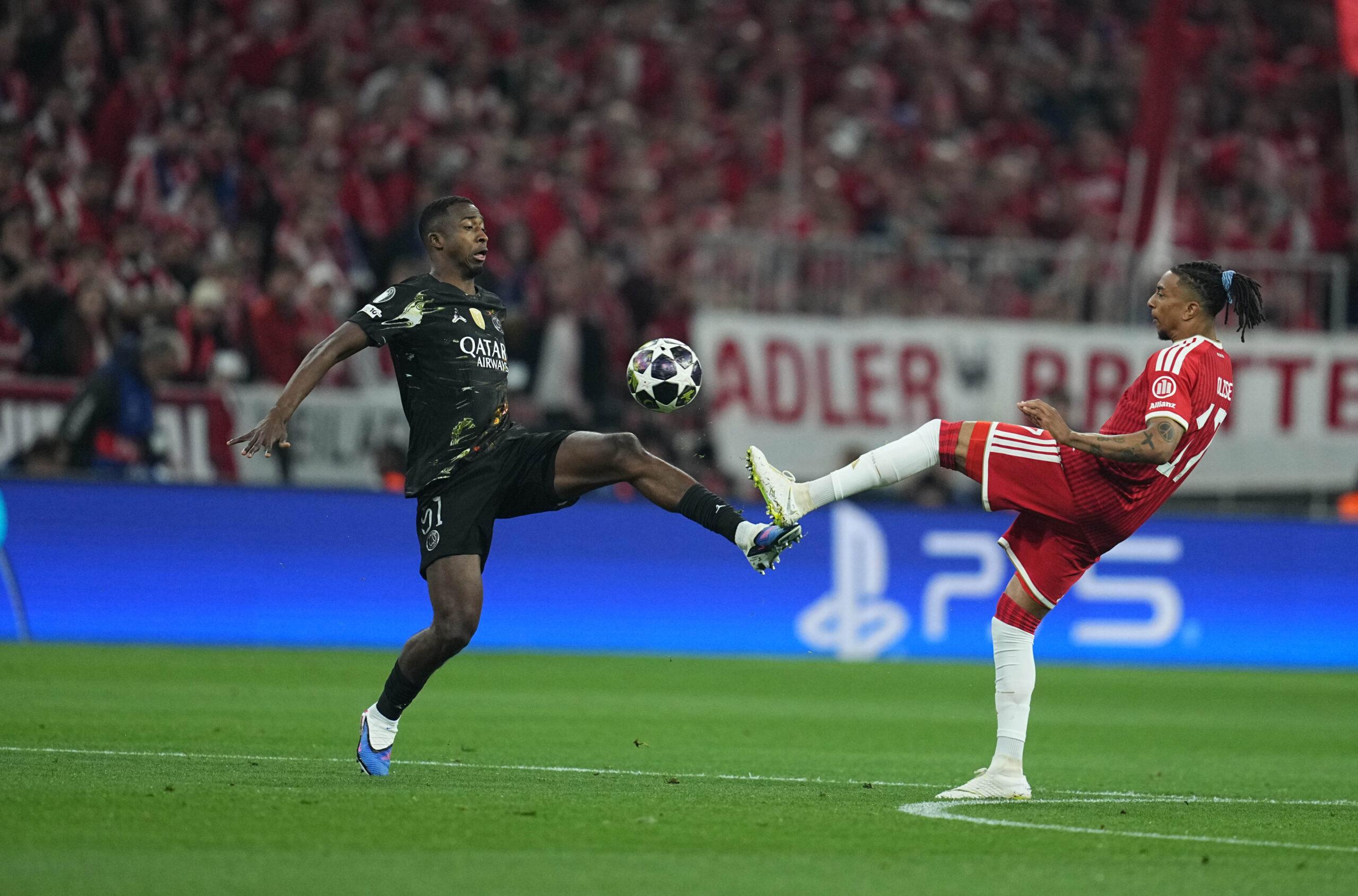
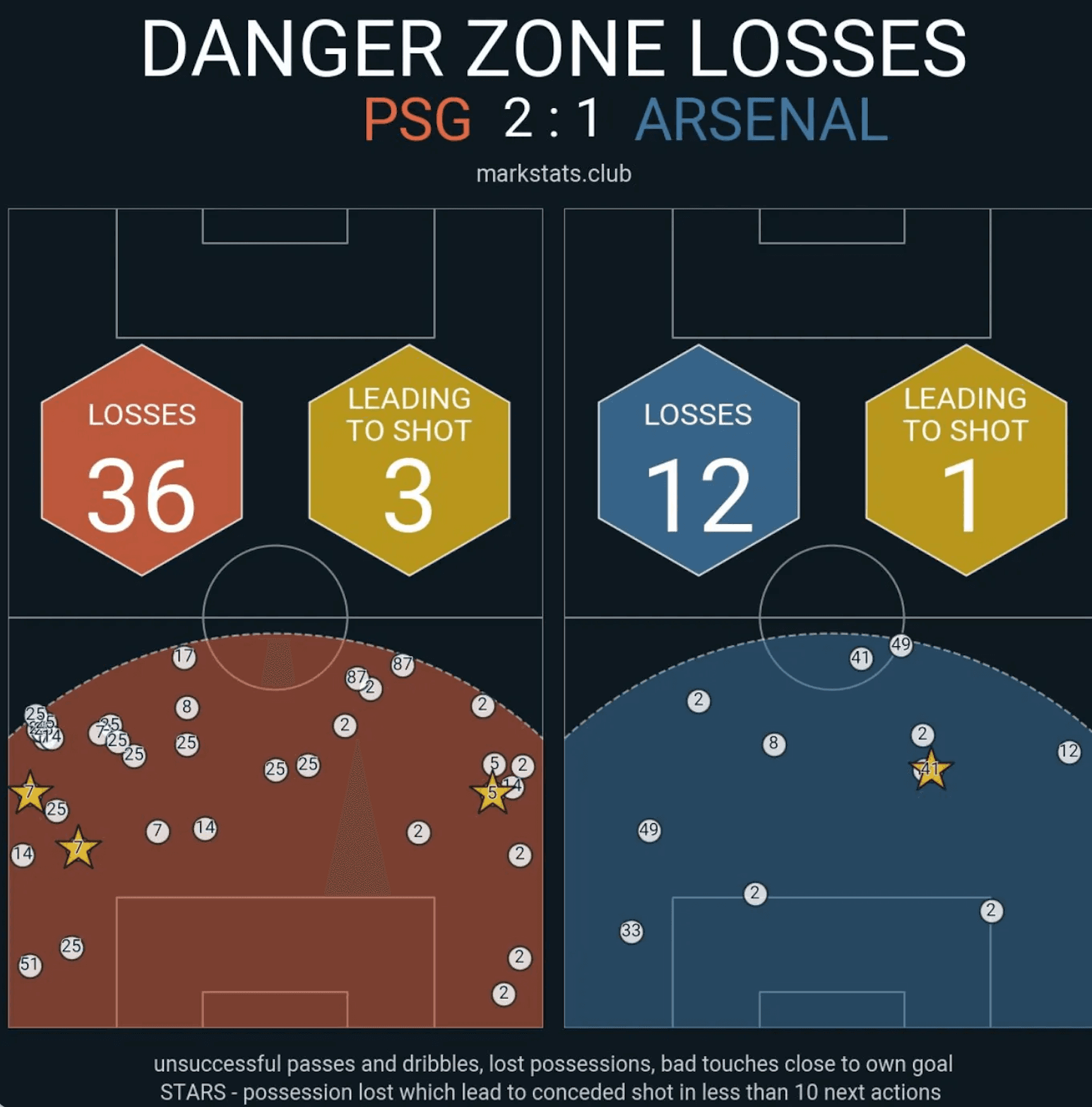
9. There are very few teams that are willing to aggressively press PSG in build-up because of how devastating it can be in transition. Bayern and Arsenal are two of them. While trailing on the road in the second leg of the semifinal last year, Arsenal dialed up the pressure and forced a ton of high turnovers. The problem was that Arsenal wasn’t effective at turning those into scoring chances.
Bayern similarly was able to force plenty of PSG build-up mistakes in the second leg earlier in May, but it also failed to capitalize. Between Willian Pacho’s ability to roam the defensive half and left back Nuno Mendes’s skill in completely shutting down one flank (with help from Kvaratskhelia tracking back), PSG’s defenders are underrated as individual playmakers. Mendes had stellar defensive performances against Mohamed Salah and Bukayo Saka during last year’s knockout rounds.
10. Hakimi is one of the best two-way players in the world, and his availability will dictate whether PSG can use wide overloads to isolate Doué and Kvaratskhelia against Arsenal defenders. However, so much of Arsenal’s attack is directed through Saka on the right in open play that Mendes is actually the more important PSG fullback in this matchup. Mendes will get the assignment of trying to slow down Saka once again. And in the first leg of last year’s semifinal, Arsenal's starboy had only one touch in the PSG box. He was a lot more productive in the second leg, but Arsenal also tweaked his position to get him on the ball more centrally.
11. In a match this competitive and important, Enrique is guaranteed to find every little edge imaginable to benefit his team. In this year’s semifinal second leg against Bayern, he deliberately instructed his goalkeeper to send goal kicks out of play. What seemed like a puzzling set of miscues from Safonov in the moment proved to be brilliant upon further review. By forcing Bayern throw-ins on right winger Michael Olise’s side of the pitch, he basically guaranteed that there would be more players from both teams around Olise at all times. Olise is one of the most creative attacking players in the world, and he excels in open space. Enrique’s seemingly bizarre tactical choice limited Olise’s opportunities to go one-on-one with PSG defenders. That was one of Olise’s least productive games of the season.
These kinds of tactics evolved from PSG’s original innovation of sending the opening kickoff out of play deep in the opponent’s half. By forcing opponents to throw in from there, PSG can set up its press and box them in. The goal is to create a turnover and spring an early attack.
Given that Arsenal’s most creative player plays the same position as Olise, I would expect Safonov to once again intentionally send goal kicks out of play and try to keep Saka boxed in.
12. When Arsenal signed Viktor Gyokeres last summer, many saw him as the missing piece that would make the Gunners more dynamic from open play. While Arsenal did finally win the league—and Gyokeres led all Arsenal scorers with 14 goals in the Premier League—it’s not clear whether he’s an upgrade over Kai Havertz. Now that both are fit for this Champions League final, Arteta has to decide who to start.
Gyokeres would give Arsenal more shots and a more direct attacking punch when it wins the ball off PSG. But Havertz is the much better presser, and he’s much better at operating in tight spaces. It’s likely that both will play in this match, but Arsenal’s tactics across 90 minutes will certainly change depending on who is at the top of the formation. I’m not sure that Arsenal can effectively push man-to-man with Gyokeres as the tip of that press. My guess? Havertz starts, and Gyokeres comes on in the second half.
13. Betting markets have the Parisians as a –148 favorite to repeat as Champions League winners. That equates to a 57.4 percent chance of lifting the trophy on Saturday. PSG was a slightly larger favorite at –156 last year before it blew Inter away in that match.
Unlike last year, when PSG and Inter Milan were both relative long shots to reach the final, oddsmakers were pretty good at pricing this year’s Champions League. Both clubs entered the season as top-five favorites to win the competition.
14. Last year’s Champions League final felt like a coronation. PSG announced itself as Europe’s next great superteam by overwhelming an aging Inter Milan side that had finally run out of upsets. This year’s final carries a very different tension.
Arsenal arrives in Budapest as a team that has spent years circling the summit without ever fully reaching it. “Second again, ole, ole” became the taunt that followed Arteta’s side through three consecutive Premier League runner-up finishes from 2023 to 2025. Champions League exits against Bayern Munich and PSG raised questions about whether his project could ever break through.
What makes this Arsenal squad fascinating is that this version of the team might not be better than the previous two iterations. The underlying metrics suggest they may simply have benefited from weaker versions of Liverpool and Manchester City domestically. But maybe that’s the point. Sustained excellence eventually bends probability in your favor. Arsenal has spent years building one of the best and most structurally sound teams in Europe. This season could just be the moment when fortune finally broke their way.That is what makes this final so compelling. We already know how elite PSG is because we’ve watched it vanquish every other challenger in Europe across two seasons. If Arsenal grinds its way past a team of PSG’s quality, there’ll be no one left for it to answer to. But if PSG’s superior attacking talent and quality shine through again, the Gunners will feel like only a Premier League win across this incredible four-year run is truly selling their quality short.