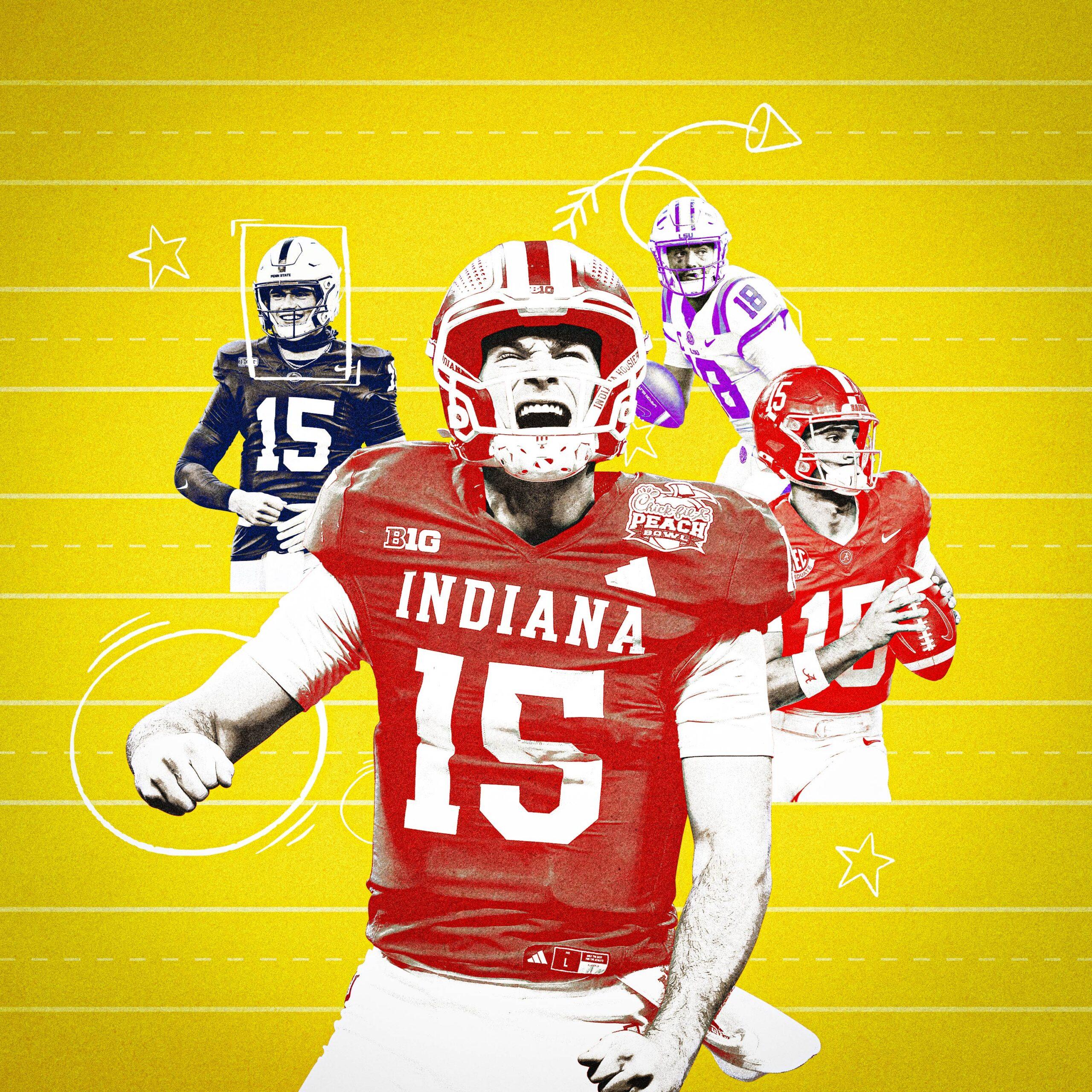

Welcome to a special edition of The Ringer’s Quarterback Notebook, in which we’ll be breaking down the 2026 draft class just days ahead of the first round. How will Fernando Mendoza, the projected first pick, fit in on the Raiders offense? What is Ty Simpson’s ceiling? Who’ll win the battle for QB3? We’ll cover all that and more. Let’s talk quarterbacks.
Fernando Mendoza May Be the Ultimate Shanahan Quarterback
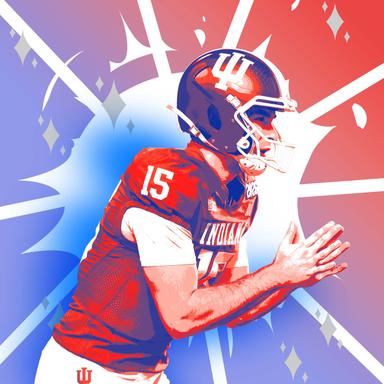
Since early January—before Fernando Mendoza led Indiana to its first national championship—it’s been widely known that the Heisman-winning quarterback would be the first player taken in this year’s draft. A class with an unquestioned QB1 can make for a dry draft cycle, so I do appreciate the efforts of various pundits who are trying to spice things up. The most notable attempt has come from ESPN analyst and former NFL quarterback Dan Orlovsky, who has said that he prefers Alabama’s Ty Simpson over Mendoza based on how Simpson would fit in on the Raiders offense under new coach Klint Kubiak. As Orlovsky notes, Mendoza took just five snaps from under center during his entire college career. And a large chunk of Indiana’s early-down offense last season was made up of run-pass options. There’s no way around it: It was a college-ass scheme and nothing like the one Mendoza will presumably operate in when he links up with Kubiak in Las Vegas.
I don’t think that Orlovsky’s concerns about the offense—and how it prepares a passer for the next level—are totally off base, but his conception of “scheme fit” might be off. Mendoza may not have been asked to play in an offense similar to the Kyle Shanahan–style scheme he’ll run with the Raiders, but that didn’t stop him from displaying traits that have made other quarterbacks successful in that system. Even if he wasn’t asked to make many “pure progression” reads—the foundational concept in the Shanahan passing game—he was comfortable doing them on the few occasions Indiana dialed them up. Below, in a game against Oregon, he gets to his fifth read—a checkdown in the flat—in a timely manner, which allows his running back to pick up a first down after the catch.
On this play against Iowa, he exhausts his progression again and, finding no one open, takes off for a scramble.
These are the kinds of reads Mendoza will routinely be asked to make in Kubiak’s offense. And while examples of him doing that may be scarce, that wasn’t his fault. Mendoza has top-of-the-class accuracy and timing. More significantly, he has the right mentality to play in the Raiders’ new style of offense. Mendoza doesn’t want to get outside the pocket and make plays out of structure. He’s not an improviser. He’s dedicated to following the script. There’s almost a robotic nature to his game—which coaches in the Shanahan system seem to like. And while that style of offense, which has taken over the NFL, is seen as QB friendly, it also requires a coach-friendly quarterback to work. On tape and in interviews, Mendoza comes off as one of the most coachable QB prospects in recent memory. If you ignore Indiana’s play calling tendencies, this seems like a perfect fit—for both player and team.
It’s difficult to get excited about a QB1 prospect who doesn’t create outside the pocket after we’ve seen some truly dynamic talents enter the league over the past few years, but I can’t wait to watch Mendoza develop in this scheme. He may not have a generational arm or creative playmaking instincts, but he does have a special trait that many Shanahan quarterbacks have lacked: precision on deep perimeter throws. As many have observed, those throws are Mendoza’s superpower. While working through his film, I had to stop myself from clipping every accurate back-shoulder fade and deep comeback he made to avoid overloading my hard drive. But here’s a sampling.
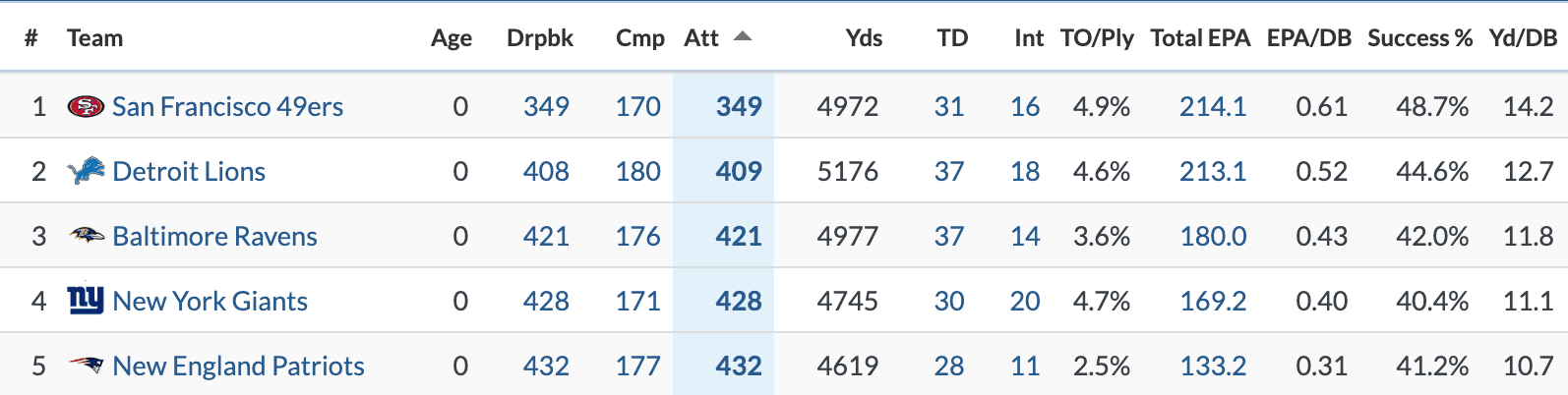
Mendoza may not have the arm to drive the ball off his back foot, but he has outrageous control on those perimeter passes, which will add a dynamic to the Shanahan offense we haven’t really seen since Shanahan and Matt Ryan worked together in Atlanta. Since 2019, 49ers quarterbacks have attempted 349 passes that were over 15 air yards and aimed outside the numbers. That ranks dead last in the NFL by a comfortable margin, per TruMedia.
The Shanahan passing game is designed to attack the middle of the field, and anything outside the numbers is a bonus. With Mendoza’s ability, Kubiak will have a luxury that his old boss in San Francisco has not enjoyed. If opponents want to load up the box to stop the run game—which is typically the strategy of choice against this scheme—they’ll be leaving themselves vulnerable to Mendoza’s biggest strength. If opponents play with two-deep safeties to combat that, sophomore running back Ashton Jeanty should have plenty of space to exploit in the run box. Las Vegas still needs receivers who can win one-on-one matchups and an offensive line that can capitalize on a numbers advantage, but the running back is already in place—and a quarterback who can do his part is arriving on Thursday night.
A Lofty Comp for Ty Simpson—and Why It’s Not as Complimentary as It Sounds
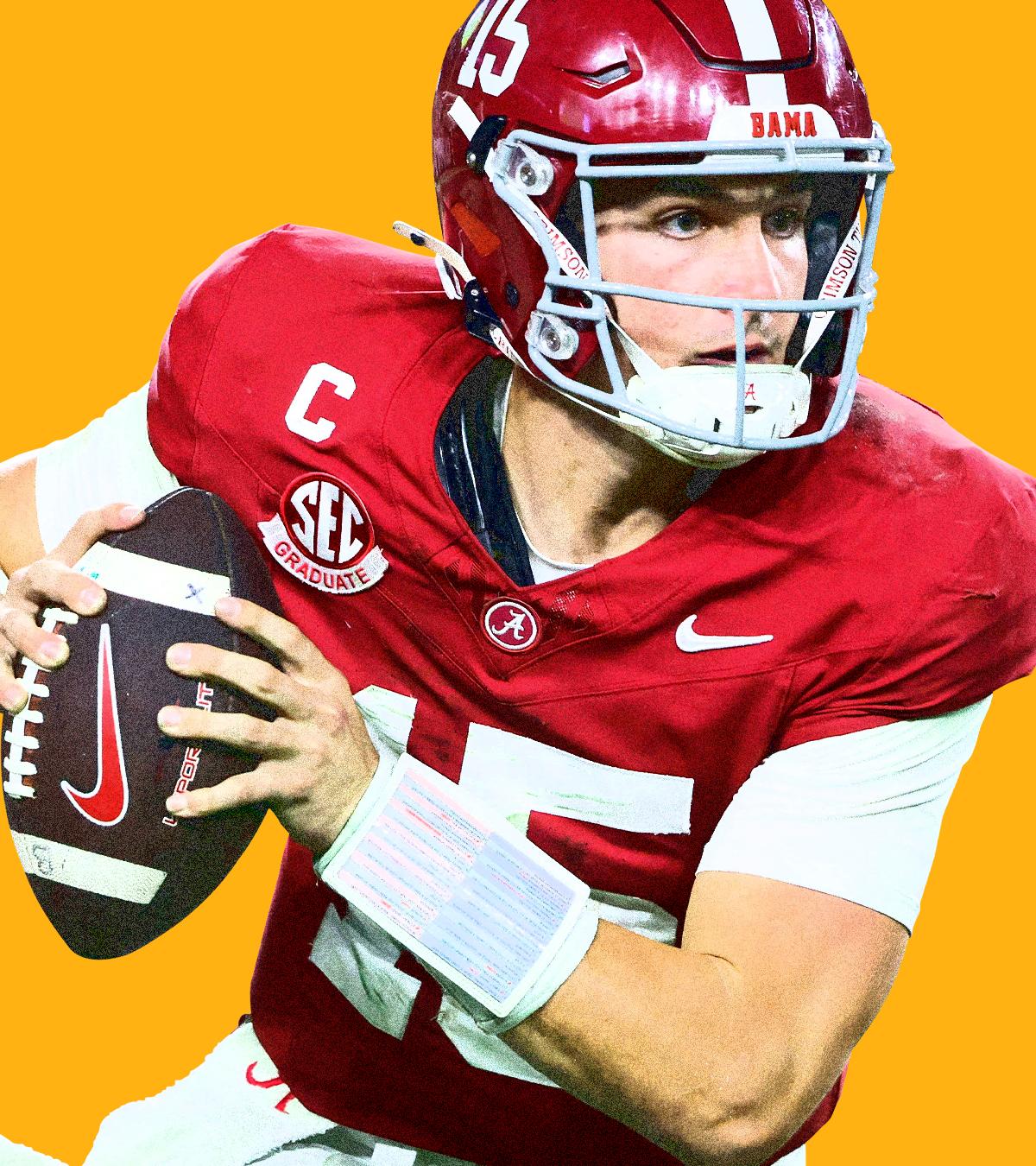
I was surprised by how much fun I had watching Simpson’s film from this past season at Alabama. The guy is a gamer and tries to play the quarterback position the honorable way: He’ll stick in the pocket and go through his reads when given time, but he’s not afraid of playing out of structure; he’ll test tight windows with anticipatory throws; and he has the touch to layer throws over defenders. I can see why some analysts are enamored of his game.
You can see all the fundamental skills of playing the position—pocket movement, an ability to cycle through reads, anticipation, touch, and so on—on his tape. If you squint, you might think that you’re watching a (very) young Drew Brees. That’s a bold comp for any quarterback prospect, but even more so for a guy who could potentially drop out of the first round of the draft. Brees is a Hall of Fame quarterback who shattered passing records in New Orleans. But before he developed into that guy, he was viewed like Simpson is and ended up falling to the second round. Here’s how ESPN’s Mel Kiper Jr. described his pro prospects in the run-up to the 2001 NFL draft:
“Did a great job directing Joe Tiller's sophisticated pass offense, but in the NFL Brees will be looking to overcome his lack of ideal size and top arm strength.”
Simpson didn’t have the long track record of success that Brees left Purdue with, but Kiper’s words could also apply to the Alabama quarterback, who similarly lacks “ideal size and top arm strength.” And as for Brees, Simpson’s tape suggests that he’ll have no problem learning an NFL offense and reading complex coverages. Whether he’ll develop into one of the most accurate quarterbacks of all time or improve his arm strength, as Brees did during his pro career, is another matter. Landing with a Canton-bound play caller (like Brees had in Sean Payton) would certainly help.
But if we ignore what Brees went on to do in the pros (a difficult task, I admit), I don’t think that a Simpson-Brees prospect comp is as outlandish as it sounds. Brees’s lack of arm strength was seen as a limiting factor, and that could ultimately be Simpson’s biggest hurdle before he locks down a starting gig in the pros. Simpson has decent arm strength, and he’s generally fairly accurate, but he struggles when he has to deploy both characteristics on the same throw. When Simpson has to drive the ball to the perimeter or pierce a tight window in the middle of the field, the ball doesn’t come off his hand smoothly. You see a lot of wobblers and passes fluttering just outside the frame of his intended receiver.
Simpson puts a lot of effort into those passes, which throws off his mechanics. You can see it in his follow-through; he consistently loses balance after making a pass.
We typically view “arm strength” and “accuracy” as two separate skills, but with Simpson, you can see how they intertwine. If Simpson had a little more juice in his arm and could throw with less effort, he’d be a far more accurate quarterback. Brees had similar issues early in his career, but after thousands of hours on the practice field and in meeting rooms with Payton, he gained a mastery of the position that allowed him to overcome his physical limitations. He always got rid of the ball on time, so he rarely had to overexert himself to fit it into a tight window. Whether Simpson can ever attain that same comfort is almost impossible to project—which is why most mocks currently have him at the bottom of the first round.
Even with the benefit of hindsight, I can’t say that NFL evaluators were wrong about Brees back in 2001. They gave him credit for his football smarts and accuracy. They were correct in saying that he lacked top arm strength and that his size could be a limiting factor. But Brees was an outlier. To that point, we hadn’t seen smaller quarterbacks with mediocre arms thrive in the NFL, and there are few, if any, examples of that happening after he came along, either. The league wasn’t undervaluing him by letting him drop to the second round. If he entered the NFL today, he’d likely receive similar draft grades. And if a second-round projection was good enough for Brees, it’s good enough for Simpson.
The QB3 Debate: Garrett Nussmeier vs. Drew Allar
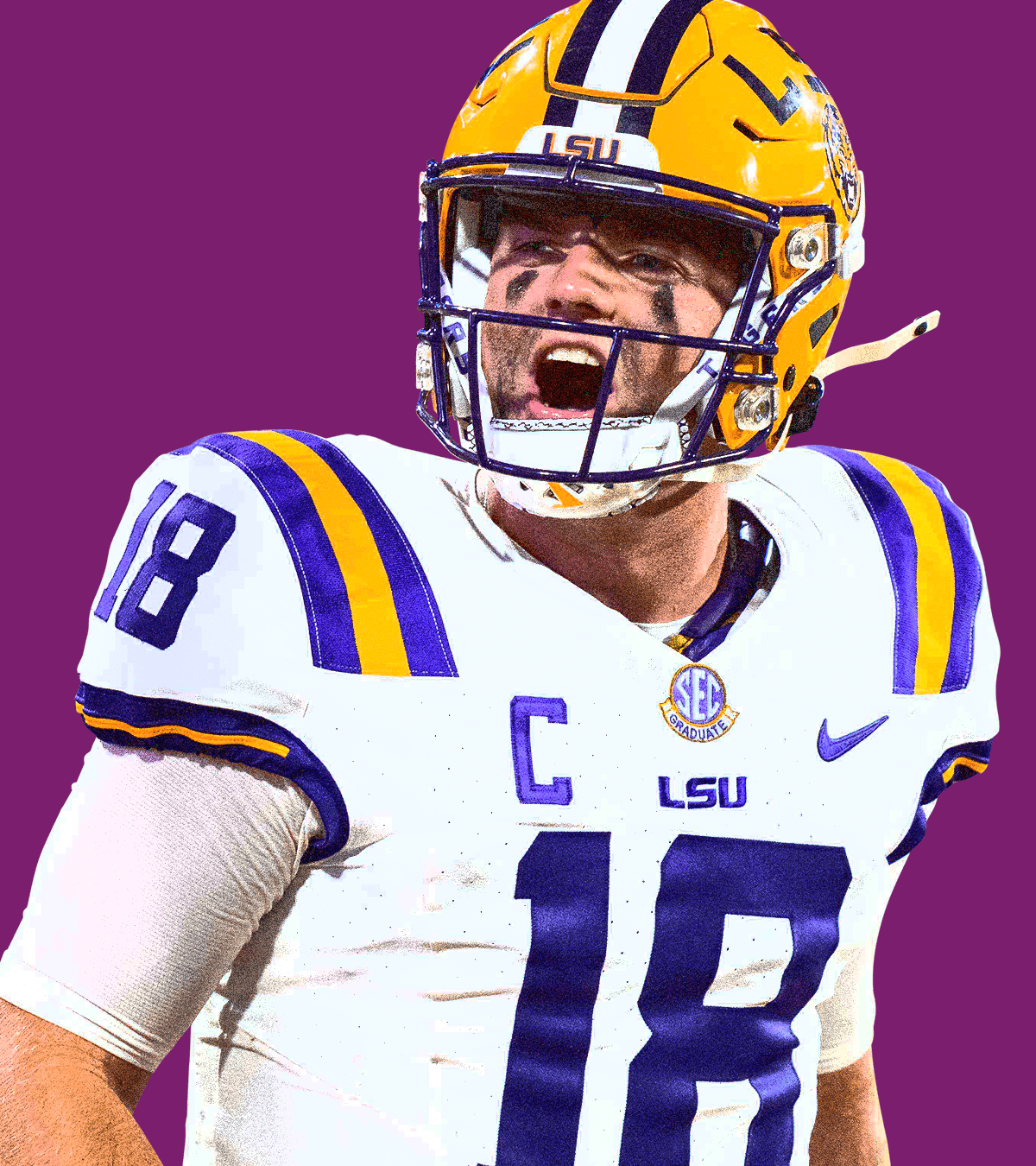
We know that Mendoza is headed for Vegas and that Simpson will go somewhere in the late first round or early second, so this is where the intrigue of this quarterback class really starts. A handful of passers are vying for the third slot on the draft board, but based on predraft smoke, it will likely come down to LSU’s Garrett Nussmeier or Penn State’s Drew Allar. Nussmeier is the “safer” prospect. He’s a smart quarterback who knows how to read and attack coverages from the pocket. Allar, on the other hand, is your prototypical developmental prospect. He has the strongest arm in the class and can make plays on the move. Had he been more productive at Penn State, he may have been viewed as a top-15 pick. I’m not sure that either guy will ever get a legit crack at starting in the NFL, but I’m fascinated to see how the league ultimately stacks these two prospects. Will teams prefer the high ceiling? Or play it safe with the higher floor?
Personally, I’m torn. Allar is the quarterback I’d typically prefer. He’s an effortless thrower who can change his arm angle to get passes off with defenders in his lap. While he hasn’t committed to full-on Patrick Mahomes cosplay like Dylan Raiola, there are some throws on Allar’s tape that could remind you of the Chiefs quarterback.
But that’s where the comparison ends. Allar may be able to match Mahomes’s twitchy arm, but he lacks many of the other aspects that make Mahomes the NFL’s best quarterback. Allar doesn't have the instincts to know when to take a chance on a play and when to give up. He also doesn't have the consistent accuracy that’s required to start in the league.
Allar has a wider range of possible outcomes, but it’s more challenging to evaluate Nussmeier because he tried to play through an oblique injury last season. The quarterback acumen that previously had evaluators projecting him as a first-round pick was still evident. You can find many instances of him quickly sussing out the coverage and making NFL-level downfield throws in his 2025 tape.
But Nussmeier’s throwing ability was clearly compromised by the injury, and his accuracy suffered as a result. The risky throws that Nussmeier got away with in 2024 came up short or floated into the hands of defenders more often last season. And LSU’s offense didn’t make his job any easier. The Tigers ranked 128th in EPA per rush, ahead of only Minnesota and Oklahoma State among power conference schools, per Game on Paper. That put the Tigers in obvious pass situations, which the offensive line wasn’t equipped for. Nussmeier had the deck stacked against him but still managed to finish 30th in QBR in 2025. That speaks to how high his floor is as he enters the pros.
The injury also seemed to affect his mobility, but that’s not a strength of his game even when he’s healthy. That’s why it’s hard for me to fully buy into Nussmeier as a potential starter down the line. There’s plenty of craft in his game when he’s playing from the pocket, but he’s not a creative playmaker when pressure flushes him out of it. He loves to spin out of the pocket to his left, but it takes an eternity for him to pull it off. And he’s not a strong passer when throwing across his body. I don’t need my quarterback to be Lamar Jackson, but some playmaking out of structure would be nice.
Which QB you prefer, Allar or Nussmeier, is likely based on your stylistic preferences. If you favor big-armed playmakers, Allar looks like the obvious pick for QB3. If you’re more of a traditionalist, it’s Nussmeier. Here’s how I ended up stacking the two, as well as the other draftable prospects in this quarterback class:
How I Rank the Top Nine QB Prospects
1. Fernando Mendoza, Indiana (Grade: Middle of the First Round)
He may never be more than a system quarterback, but he’s got a chance to be one of the best system quarterbacks of all time.
2. Ty Simpson, Alabama (Grade: Middle of the Second Round)
Besides his arm strength, Simpson’s size is a real concern. I don’t know whether he has the frame to withstand the punishment he’ll take at the next level if he doesn’t change his playing style. Simpson is a gamer, but that could get him into trouble against NFL pass rushers, and he doesn’t have physical ability to spare.
3. Garrett Nussmeier, LSU (Grade: Late Second Round)
I feel like I’m betraying myself by opting for the “high-floor” prospect over the “high ceiling” that Allar presents. In the end, Nussmeier’s ball knowledge and ambitious approach to playing the position made the difference for me.
4. Drew Allar, Penn State (Grade: Early Third Round)
I need to see only one flashy throw in the preseason to look back at this ranking with regret. I’m a sucker for a quarterback like Allar.
5. Taylen Green, Arkansas (Grade: Early Fourth Round)
Green’s combination of speed and arm talent is tantalizing. He’s got first-round-worthy highlight tape. But down to down, you don’t see those traits show up in tandem nearly enough. He didn’t make as many plays as you’d expect from a guy with his physical talents. But if Green can figure out how to mesh his running and throwing ability, he’s got starter potential.
6. Carson Beck, Miami (Grade: Early Fourth Round)
I really liked Beck as a prospect when I first saw him play at Georgia a few years ago. He had prototypical size and arm strength and looked comfortable in a pro-style offense. Unfortunately, he hasn’t gotten any better since then. If anything, his decision-making has regressed.
7. Cole Payton, North Dakota State (Grade: Day Three)
There’s been a late push for Payton to be the third quarterback off the board, but I’m not buying it. Payton is a big lad and ran a 4.5 40-yard dash at the combine. He’s also got a strong arm, so it’s easy to see why some evaluators like him. But I don’t believe that he has NFL-level accuracy and feel for the position. Imagine if Trey Lance were slightly slower, had a slightly weaker arm, and had slightly less experience. That’s Payton.
8. Cade Klubnik, Clemson (Grade: Day Three)
Klubnik is fidgety in the pocket and does not have enough mobility or arm strength to make up for it.
9. Joe Fagnano, Connecticut (Grade: Late Day Three)
Fagano knows ball and should stick around the NFL as a longtime backup, but it’s difficult to see a statuesque passer with accuracy problems developing into anything more than that.
QB Class of 2026 Superlatives
Best arm: Drew Allar, Penn State
Best accuracy: Fernando Mendoza, Indiana
Best pocket presence: Ty Simpson, Alabama
Best decision-maker: Mendoza
Highest ceiling: Taylen Green, Arkansas
Highest floor: Mendoza
Most likely to never attempt an NFL pass: Cole Payton, North Dakota State
Most likely to be doing film breakdowns on Twitch in 10 years: Garrett Nussmeier, LSU
Most likely to be rescued by Kevin O’Connell in 2030: Allar
Most likely to become an NFL offensive coordinator: Joe Fagnano, Connecticut