The History of WrestleMania 2
Forty years after the “forgotten WrestleMania,” a look into the event, its players, and how it changed the industryThe History of WrestleMania 2
Forty years after the “forgotten WrestleMania,” a look into the event, its players, and how it changed the industry
Bret “the Hitman” Hart slumped in his seat at a bar in Grand Rapids, Michigan, and half-listened to his brother-in-law, Jim “the Anvil” Neidhart, talk football with Andre the Giant. It was late January 1985, and Hart was scuffling. After more than six months in the red-hot World Wrestling Federation, Hart was still pulling “POOM” duty—his spot so low on the card that newspapers listed his bouts as “plus one other match.”
The Anvil swung his ginger goatee toward Hart and asked him who he thought were better conditioned athletes: football or soccer players?
A fan of self-preservation who was also aware of Andre’s soccer-playing youth, Hart replied, “All I know is that you won’t see a soccer player sitting on the sidelines with an oxygen mask over his face.”
Andre grinned, displaying a shark’s mouth of teeth, and told the bartender he’d get Hart’s next drink. Whatever disagreements they’d had in the past were forgotten.
A little over a year later, that moment in a Michigan bar would help make the WrestleMania that we’ve all unfairly forgotten.
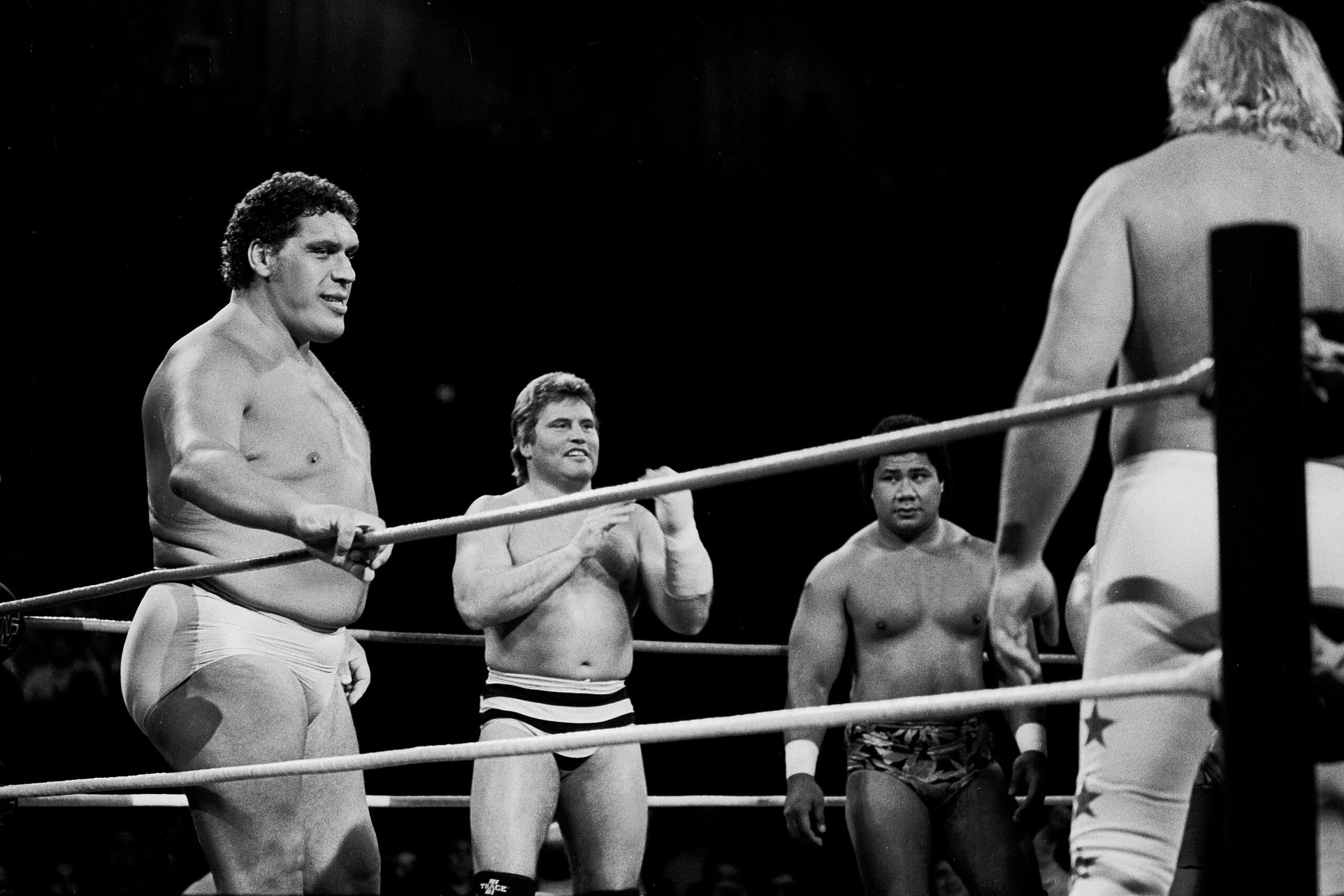
WrestleMania season is always a good time to revisit the history of the Super Bowl of professional wrestling, and 2026 marks the 40th anniversary of its sequel, WrestleMania 2. Forever sandwiched between two of the most iconic WrestleManias of all time—WrestleMania 1, from Madison Square Garden, and the Everest of WrestleManias, WrestleMania 3—WrestleMania 2 typically draws blank expressions or a hazy memory of football players in a battle royal. It was broadcast live from three different arenas: Nassau Coliseum on Long Island; the Rosemont Horizon near Chicago; and the Los Angeles Sports Arena—a three-city concept never attempted again by impresario Vince McMahon, a fact that typically leads people to conclude it was a failure.
“This is often positioned as the forgotten WrestleMania,” says Conrad Thompson, wrestling podcast pioneer and owner of the nostalgia site Ring Classics.
But what if I told you that not only was WrestleMania 2 not a failure, but also that it positioned the burgeoning WWF (today known as the WWE) as the national wrestling company and finalized pro wrestling’s mutation into “sports entertainment”? That it did make money, that its super saturation of celebrities did pay off, and that it gave the company the confidence it needed to produce the spectacle that would be WrestleMania 3 one year later?
Not only is the impact of WrestleMania 2 underappreciated, but the show also came breathtakingly close to holding a match that may have been Steamboat-Savage before Steamboat-Savage: a planned bout between Ricky Steamboat and Bret Hart that will always have us wondering What if?
So how did WrestleMania 2 come about, what went wrong and what went right, and why doesn’t this show get the credit it deserves?
WrestleMania 1 was a key point in Vince McMahon’s expansion of the WWF and his first nationally broadcast supercard, aired coast-to-coast via the now-extinct technology of closed circuit, for which fans crammed into sports arenas to watch the matches on a giant screen. It was presented as a one-off extravaganza, gilded with celebrities from Muhammad Ali to Mr. T.
“It wasn’t like this was going to be a yearly event,” says Steve Taylor, the WWF’s lead photographer at the time.
But its success quickly got McMahon and the talent thinking about a sequel.
“We gotta keep this going for ourselves,” says Hart, who spoke with me extensively for this story. “We didn’t want wrestling to become a flash in the pan. We needed to keep it going—that was sort of the fear after WrestleMania.”
“Vince always had to have the next one be bigger in some way. And I think he was thinking, ‘How can I get more people?’” explains Dick Glover, then the WWF’s vice president of business affairs, who would go on to become an executive vice president at ESPN and a founder of Funny or Die.
In early 1985, the WWF still had few employees and was only three years removed from McMahon’s purchase of the company from his father, Vince Sr.
“During those early days, from a business kind of setup, it was just not very sophisticated. It was still very, very mom-and-pop,” says Glover.
But Vince McMahon and his wife, Linda, who was the company’s co-owner, wanted to grow the family exponentially. They had started implementing more rigorous business practices as they expanded nationally in 1984: convincing talent to sign boilerplate contracts that were extremely pro-promoter; banning non-WWF photographers from their shows; and launching ambitious action-figure and home-video deals.
“Vince just wanted to be Vince. He was incredibly creative and driven and energized, but back then he didn’t really care about the business side of it … On the other hand, Linda had some business and economic background and so Linda was really the one charged with bringing some structure and some sophistication,” says Glover.
The company snagged Glover, who had been the chief administrative officer for the NBA’s Washington Bullets, to oversee its various financial deals. They also replaced director of public relations Mark Soticheck (whose résumé included being a cop in Springfield, Massachusetts, and being friends with George “the Animal” Steele) with the polish of Basil DeVito, the new director of marketing and promotion.
“Vince had a vision right from the beginning,” says DeVito.
“I don’t want to make it about me, but I think I am the perfect example to explain it. Think about who he hired. I had a master’s degree in sports management, I worked for the NFL, I worked for the NBA, and I was producing Bob Knight’s television show. … The vice president of business operations was Dick Glover; he was [an alumnus of] Duke, he used to run the news division at WBZ in Boston. So we had some cachet behind our résumés.”
The WWF added a new CFO, Doug Sages, in 1985 to round out a supporting cast that had no prior connection to the wrestling industry (other company brass like director of operations Jim Barnett and head booker George Scott were wrestling lifers).
“There would be these meetings in Vince’s office, and it’d be Vince, Linda, Ed Cohen, Jim Troy, Pat Patterson, Howard Finkel,” Glover says. “And I can’t remember the specific time, but Vince said, ‘Here’s the idea, let’s do three venues.’”
The idea was for the show to be held live at three different arenas in the country’s three top media markets—New York, Chicago, and Los Angeles—while also being shown live at hundreds of closed-circuit venues and in people’s homes on a new growing platform called pay-per-view.
“The currency of the day for Vince McMahon was attention. So you need to go where the people are, and those are the three most populated markets,” Thompson notes.
“It was insanely high energy, this sort of sense that everything we do is working,” says Glover of the atmosphere at 81 Holly Hill Lane in Greenwich, Connecticut (WWF headquarters at the time), as they planned the event.
Although it presented a logistical nightmare, recruiting three times the production crews and relying on the gods for a reliable live feed, it was everything McMahon loved—risky, ambitious, and novel. And it would cement the WWF as the biggest player in the pro wrestling game.
“Having had the success of WrestleMania 1, from an ego standpoint, I think we thought we could do most anything,” McMahon said on the WWE’s 2011 DVD The True Story of WrestleMania. (McMahon did not respond to my request for comment. In 2024, McMahon resigned as chairman and CEO of WWE amid an ongoing lawsuit in which a former employee says McMahon committed sexual battery and trafficking.)
The first WrestleMania had sold out Madison Square Garden, a building with a 20,111-seat capacity for wrestling. Given the company’s track record in the three venues scheduled for WrestleMania 2, it would likely triple that in live attendance alone.
The stage was set, and the tagline developed: “WrestleMania 2: What the World Has Come To,” a surprisingly passive slogan for a company that was anything but.
The Build
In early 1981, Terry Bollea, wrestling as Hulk Hogan, was backstage at a WWF show chatting with his friend and wrestling trainer Larry Sharpe when one of Sharpe’s students caught his eye. He was massive, about 6-foot-3 and 350 pounds. But it wasn’t the student’s girth that most impressed Hogan; it was his floppy brown hair and handsome face, which reminded Hogan of Austin Idol, one of his early mentors in pro wrestling.
Idol, billed as the Universal Heartthrob, had wrestled in the Alabama territory two years prior when Bollea was still learning the ropes as Terry “the Hulk” Boulder. By studying Idol, Bollea developed many of the signature tropes that would later define the Hulk Hogan character, from cupping his ear to the crowd to “Hulkamania,” a modification of Austin’s “Idolmania.”
The pro wrestling student who captivated Hulk in ‘81 was jobber Chris Canyon (real name Chris Pallies), a former amateur wrestler from Washington Township, New Jersey.
The next time the two crossed paths, four years later on a tour of Japan, Bollea barely recognized Pallies. Gone was the mop of hair and boyish good looks, replaced with a shaved head and an additional 100 pounds of heft. Pallies was now performing as a monster heel named King Kong Bundy, and since their last encounter, Hulk Hogan had become the biggest wrestling star in the world and the WWF champion.
Hogan saw dollar signs, and at the first opportunity he set up a phone call between King Kong Bundy and Vince McMahon.
McMahon told Bundy he would need to sign a contract.
“What does that contract include?” Bundy asked.
“Everything up to and including your first-born,” McMahon replied.
As usual, McMahon promised Bundy little more than an opportunity. Eventually he gave him a major push, as Bundy squashed S.D. Jones at the inaugural WrestleMania. King Kong Bundy was the quintessential WWF heel for the 1980s, a self-coined “walking condominium” in a black singlet who avalanched opponents against the turnbuckle and, when he pinned them, demanded referees count to five rather than three for his victories. McMahon and his lead booker, George Scott, scheduled King Kong Bundy against Hulk Hogan at least six times toward the end of 1985 to test their chemistry in the ring: Bundy as the behemoth and Hogan as the vulnerable babyface spurred on and saved by his Hulkamaniacs.
Bundy loved working with Hogan.
“He was good. He never hurt you. Sometimes when he dropped the leg [Hogan’s famous leg drop finisher], his ass hit your face. But never a problem,” Bundy said to host Sean Oliver in a 2016 interview for Kayfabe Commentaries’ Supercard: WrestleMania 2.
As the year drew to a close, Hogan, who had enormous influence over booking as the company’s clear megastar, confided in Bundy: “I remember Hulk telling me for the big show [that] they were going to pick me or Savage. I said, ‘Fuck Savage … me and you is a much better match,’” Bundy relayed to Oliver. (Savage and Hogan would end up main-eventing WrestleMania 5.)
Whether you think Bundy was right depends on what one considers to be a good match. Randy “Macho Man” Savage was one of the most athletic and gifted workers in the WWF, but he was relatively small in an era that prioritized giants. Bundy wasn’t a great worker (by his own admission), but came across as a nasty, believable villain who terrified the little Hulkamaniacs into saying even more prayers and taking more vitamins than usual.
McMahon chose Bundy. The monster over the worker.
On Feb. 15, 1986, the story lines to set up WrestleMania 2 were shot in Phoenix for Saturday Night’s Main Event, an NBC special that occasionally aired in place of Saturday Night Live. Despite an 11:30 p.m. ET time slot for a product catered to kids, Saturday Night’s Main Event drew incredible ratings—this show alone, aired on March 1, was viewed by approximately 9.5. million households. Television legend Dick Ebersol lent his expertise to these specials, which were very much NBC-first productions.
“They were primarily [Ebersol’s] shows. Vince and Dick would deal with the script ahead of time, but it really felt like an NBC show,” says Tom Buchanan, then a freelance photographer who worked with the WWF. “We had a really formal run sheet. Prior to that we would have simple run sheets which would just tell you the match order. This [run sheet] would tell you every piece of music that played and everything that happens in between and what camera is gonna do what. … They were very much like scripts in the entertainment world.”
On this episode’s undercard, Cowboy Bob Orton boxed against Mr. T, the A-Team actor whose celebrity helped make WrestleMania 1 a success, but whose star was now dimming only a year later. Scheduled for WrestleMania 2 was a boxing match between Roddy Piper and Mr. T, both of whom had been part of the tag-team main event at WrestleMania 1 and now had real-life animosity.
“Roddy Piper, until the day he died, felt that Mr. T took from the business and didn’t put enough back into it,” says Keith Elliot Greenberg, author of Bigger! Badder! Better! Wrestlemania III and the Year It All Changed.
The Saturday Night’s Main Event episode pitted Hogan against an old foe, Magnificent Don Muraco. After the match, Bundy ambushed Hogan and destroyed him with avalanches and splashes, leaving Hogan a writhing mess on the canvas. On cue, medics rushed to the ring and loaded the helpless Hulkster on a stretcher to be carted out.
Buchanan, still fairly green to the business, was at ringside shooting for WWF Magazine. Forty years later, he still thought of it as a night he’d rather forget.
“I got in the way and thought I was gonna lose my job. [Hogan] was being taken out to the ambulance and I was supposed to cover that. I’m a newspaper photographer, so I covered it like a newspaper photographer,” he said. “Got in close, getting pictures and all that. Gorilla Monsoon was taking the stretcher out and boom, ‘Get out of the way!’ He gives me a good shove and I thought, oh my God, did I mess up the shot?”
Buchanan found Monsoon after the show, terrified he had screwed up. But Monsoon, a retired wrestler turned announcer, loved the realism of the moment.
The only thing Bundy would have changed was his character doing more damage to Hogan.
“I wanted to kick Hulk off the stretcher. But somebody [on the booking team] put the kibosh on that,” he told Oliver.
In those early days, that scrum was all it took to build the main event of WrestleMania 2. Over the ensuing six weeks, Bundy and Hogan rarely crossed paths. There was no need for breathy, 20-minute dialogues outlining personal stakes like you see today on the road to WrestleMania; all you needed was a good guy and a bad guy ready to collide.
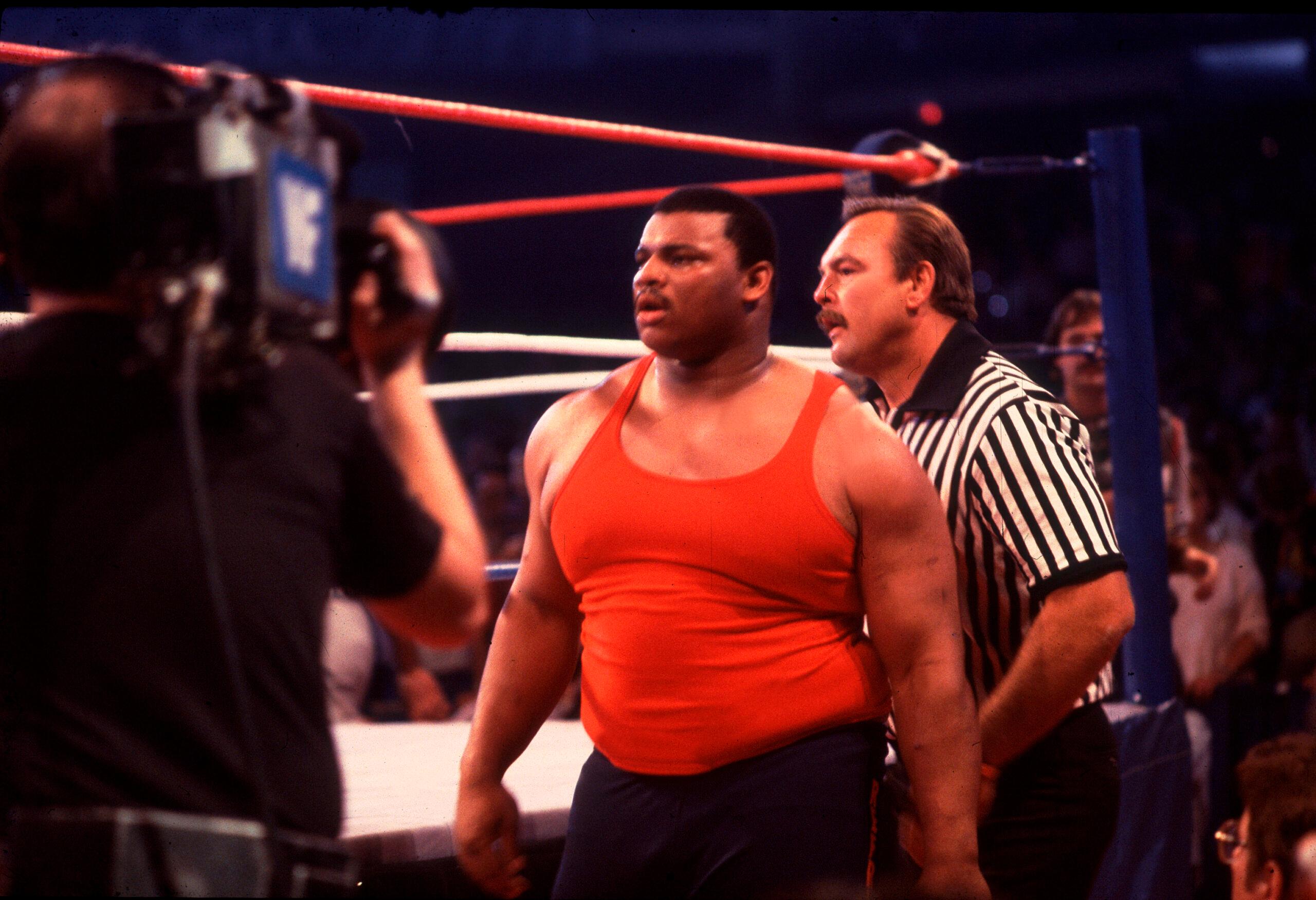
Hulk Hogan vs. King Kong Bundy—in a steel cage match for the WWF Championship—would headline the L.A. portion of the show, with Mr. T vs. Roddy Piper leading the New York card. For Chicago, McMahon tapped another feature attraction, Andre the Giant, to step into a battle royal with 13 other wrestlers and six NFL players, including William “the Refrigerator” Perry and Jimbo Covert of the newly crowned Super Bowl champion Chicago Bears.
Gathering his new trio of lieutenants— Glover, DeVito, and Sages—and giving them their promotional marching orders, McMahon must have wondered whether the world would indeed come to see “What the World Had Come To.”
Two days after the Saturday Night’s Main Event taping, Bret Hart laced up his boots in a dressing room at Madison Square Garden. About a year removed from his night in the Grand Rapids bar with Andre the Giant, Hart had momentum to his career because of his role in a heel tag team, the Hart Foundation, with Neidhart. Though Hart was undersized for his era, he was an incredible talent in the ring, wrestling with a controlled violence that made people want to believe what they were seeing was real.
“I was jumping as high as I could to get any kind of leg up on a spot or position. I thought, as the heels at that time, that Jim and I were actually a really, really good team and we were really coming along,” Hart says.
In tag matches against the British Bulldogs—made up of Hart’s other brother-in-law, Davey Boy Smith, and the Dynamite Kid—the Hart Foundation shined.
The career upswing helped diffuse some of the personal turmoil Hart was experiencing, from a fraying marriage to his father’s local Canadian wrestling promotion, Stampede Wrestling, teetering on bankruptcy. Hart sought refuge in the 20-by-20-foot squared circle, where he could be in control (quite literally—the heels usually called the matches, not the babyfaces).
That night at the Garden promised to be a special one, and Stu and Helen Hart flew in from Calgary to watch their son. George Scott, always one for the kind of action-packed tag team wrestling he had promoted in the Carolinas with Jim Crockett Promotions, had booked the Hart Fountain against the Killer Bees and given them a full 20 minutes to put on a show, an eternity by 1986 WWF standards. They delivered a fantastic match, so much so that even McMahon told them “great match!” as they came back through the curtain.
Best of all, Scott pulled Hart aside and told him he would be working against Ricky “the Dragon” Steamboat at WrestleMania 2.
“I was shocked. I was thinking, me and Ricky Steamboat! I had never worked with him or anything like that, and I always thought it would be great to have a story line with him,” Hart says.
“Ricky Steamboat was a great, great wrestler and a great worker,” Hart recalls. “Everything he did, nothing hurt. He would never injure you, he was so safe. … He was a real artist out there.”
A year after WrestleMania 2, Steamboat and Savage had one of the greatest matches of all time at WrestleMania 3. But in February 1986, it looked like Hart and Steamboat were going to do it first.
The WWF brass settled on April 7, 1986, as the date for WrestleMania 2. The only downside was that it would be on a Monday night.
“WrestleMania was placed around [the] time change and Easter,” says DeVito of the annual scheduling conundrum in those early years. Although WWF preferred to hold it on a Sunday, in 1986 Easter Sunday fell on March 30 and the daylight-savings time change came the next week. To avoid any mishaps with people showing up (or tuning in) to WrestleMania at the wrong time, the company landed on Monday.
From a production standpoint, the task was overwhelming.
“It was a challenge for everyone in the company. Instead of just one venue, we had three. We had to get three TV trucks, three lighting systems, three directors. Then you had distribution and satellites and just making sure everything goes smoothly from one to the other,” says Taylor.
“Just the technology alone, today, would be extraordinary if you could pull that off, but this was way back when,” McMahon said on the True Story DVD.
“It was a little risky,” adds Nelson Sweglar, the company’s head of production at the time, who had the unenviable task of coordinating all three venues in real time while being on the Nassau Coliseum set with McMahon, who was pulling double-duty as head of the company and play-by-play man for the New York portion. Constant communication was both necessary and difficult, in an era before the internet and cellphones.
About 20 local promoters around the country were charged with pounding the pavement to fill 223 closed-circuit venues, ranging from the 19,388-seat Spectrum in Philadelphia to small-town movie theaters with a few hundred seats. One of them, Gerry Brisco, was a former McMahon rival turned believer who found himself running 30 closed-circuit venues in the Southeast. Eight weeks out from the event, Brisco started working every TV station manager, building manager, TV rental joint (yes, that was a thing in 1986), and car dealership in his territory to drive advertising and ticket sales. Brisco, still new to promoting (he had been an active wrestler until a couple of years prior), leaned heavily on the acumen of DeVito and Bob Collins, another PR guy in the WWF office, to show him the figurative ropes.
“I got a little panicked. I called up [DeVito], and he was a champ. I mean, he walked me through step-by-step on how to do it, because promoting a live TV event is basically what you’re doing. There’s no live wrestling, and in some of these Deep South places … they want to see live action,” Brisco explains.
To entice people to buy tickets, Brisco would offer free merchandise and other giveaways, place ads in newspapers and on radio and TV shows, and even work a deal with Pizza Hut where every pizza delivery in Hillsborough County, Florida, included a flyer for the closed-circuit event at the University of South Florida’s Sun Dome.
He found himself on the phone with DeVito, Collins, or McMahon almost every day leading up to the event.
“I want to give Vince a lot of props because he stood by me and said, ‘He’s my promoter.’ I wouldn’t say at that time I was a close friend of Vince’s, but I was a friend of Vince’s,” Brisco says.
Friendship aside, McMahon was always about the bottom line, and a lot was riding on WrestleMania 2’s success. He had promised something bigger and better for the sequel, even going so far as to say in The Brattleboro Reformer, “All of our guns weren’t loaded for [the first] WrestleMania as they are for this one. This will be a megaton bomb compared to a firecracker.”
And while wrestling was still hot, it was hard for a pop culture curiosity to sustain the kind of Hollywood attention the WWF had garnered the year before, such as Hulk Hogan and Mr. T hosting Saturday Night Live. It started to become clear to Brisco that not all of his venues were going to sell well, leading to some cancellations.
“Vince would call me and say the market in Roanoke or the market in such-and-such town isn’t doing real well, I think we need to drop that,” Brisco recalls.
The Bundy-Hogan and Mr. T-Piper matches helped sell the show, but arguably the biggest draw was the Chicago main event.
“They didn’t have the dream match for Hogan … so much was made of the football players in the battle royal. That was kind of like the big attraction in the mainstream,” says Dave Meltzer, of the Wrestling Observer newsletter.
One of the six NFL players in the battle royal was Bears offensive tackle and future Hall of Famer Jimbo Covert. (Sadly, Covert and Perry, who’s reportedly in ailing health, are the only surviving members of that six.)
“One of the Bears media guys came to me and inquired if I’d wanna do this wrestling match in Chicago. And I said sure, I’d want to do it,’’ Covert remembers.
“So I flew into New York. They flew me first-class. They put me up at the Helmsley Palace. I got a chance to go and meet Vince McMahon.”
McMahon spelled out the plan, which had Andre the Giant winning the battle royal (even with a star like the Fridge involved, the WWF wasn’t about to put a football player over a wrestler). Covert and McMahon went back and forth on the All-Pro lineman’s fee. When I fact-checked the figure of $10,000 with him, Covert told me this: “Vince McMahon asked me to keep my fee private for a lot of reasons, and I told him I would. I have been asked dozens of times over the years to divulge the fee I was paid and never told anyone. But I will say it was not a huge number, and it was more than 10K.”
While Covert was delighted to get in the ring, the Bears didn’t share in his enthusiasm. Today such a stunt for a marquee player like Covert would be unthinkable.
“The Bears were really upset with me. They were like ‘You’re gonna get hurt doing this,’” Covert recalls. The team let him participate on one condition. (More on that later.)
Three to four weeks before the event, Covert says McMahon flew all the football players and wrestlers (minus Andre) to a training facility in upstate New York to rehearse the battle royal.
“They had a camp, with like five rings in there. I got a chance to meet all the guys that were gonna be in the match, like Big John Studd and Hillbilly Jim, just to kind of get what the concept was, how we were gonna do this whole thing of having 20 guys in the ring,” he says.
Despite rumors at the time that wrestlers like Studd didn’t like the football players, Covert says the wrestlers treated them great.
“I think they were glad to have us because it brought more attention to the WWF,” he explains.
Rehearsal in a backwater facility is one thing, but football players wrestling live in front of thousands in Chicago would be something very different.
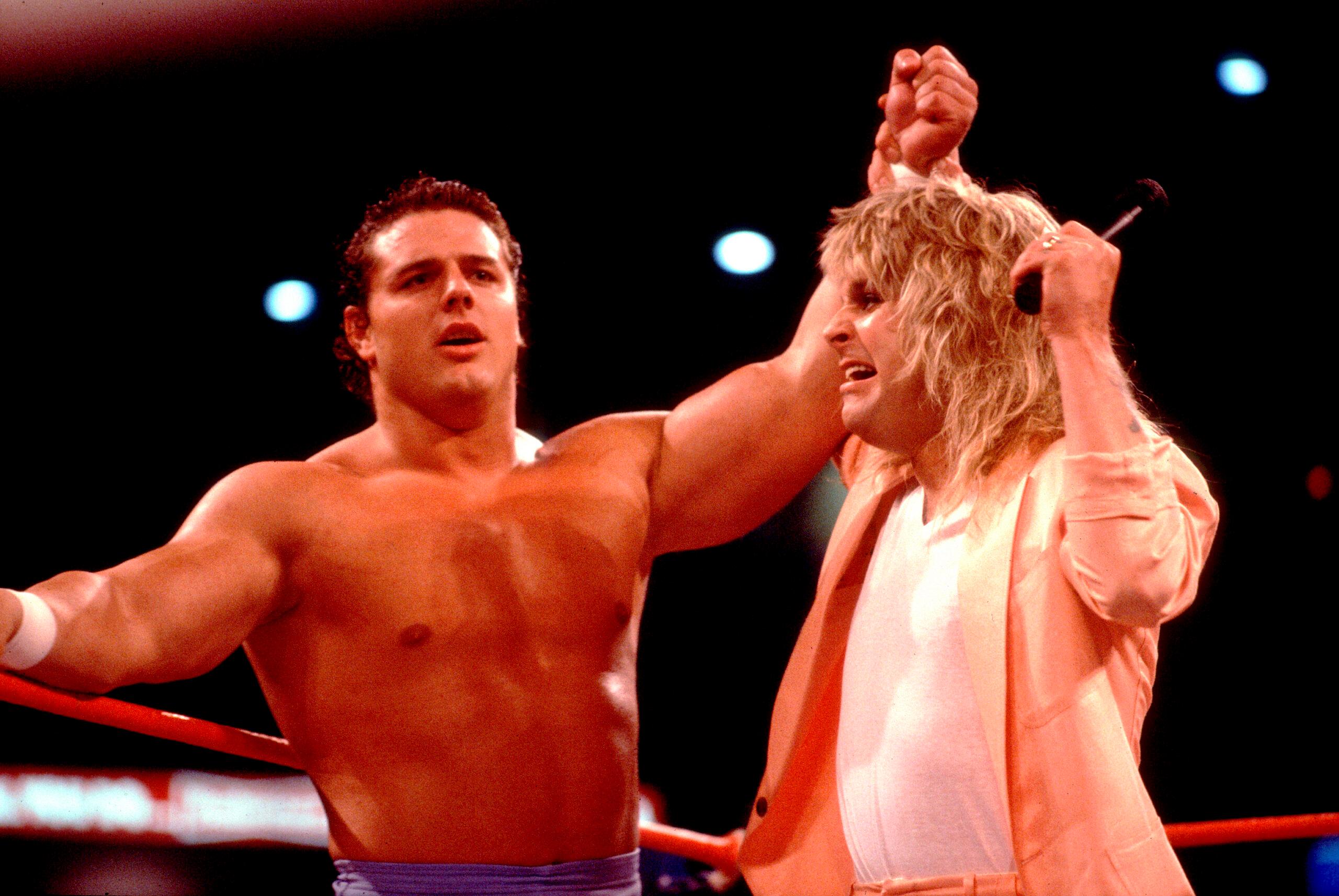
Following his match with the Killer Bees in front of his parents at Madison Square Garden, Bret Hart was riding high, his mind racing through all the possibilities for a match with Ricky Steamboat that would let them steal the show.
And as suddenly as his rocket had launched, it crashed.
At a Boston Garden house show on March 8, when Hart was scheduled to work with Steamboat to tune up for the big WrestleMania match, agent Joe Scarpa (a.k.a. Chief Jay Strongbow from his days as a wrestler) pulled Hart aside and without much of an explanation told him that he wouldn’t be wrestling Steamboat at WrestleMania after all. Instead, he’d be in the battle royal with the football players.
“I was so disappointed. I knew that I would be totally lost [in the battle royal]. So many giants in there, all these football players. If anything I’m gonna be cannon fodder for somebody or most of the wrestlers all the way through the match,” Hart tells me.
“I wanted to have that classic match. I knew I could do it, and I hadn’t really had a chance to have one with anybody yet. Like a British Bulldog-at-Wembley kind of style, you know, where it’s like you have everyone riveted to every move,” he explains.
And so he did. Screw WrestleMania, Hart thought, I’m scheduled to wrestle Ricky Steamboat right here and right now in Boston.
Steamboat was down.
“We kind of knew this might be the only time we ever wrestle, ever. This might be it,” Bret says.
Before going out for their match, Steamboat turned to Hart.
“Let’s do this one for me and you,” he said.
They tore the house down in Boston, and again the next night at the Capital Centre outside of Washington, D.C. It may not have been at WrestleMania, but Hart had his classic match.
“The two times we worked single matches were the best matches of the night. To me, Bret is one of the best workers in the business and that’s saying a lot considering the caliber of wrestlers at that time,” says Steamboat.
Three days later, on March 11, the troupe was in Poughkeepsie, New York, at the Mid-Hudson Civic Center for their tri-weekly TV tapings. Hart, mindful of his good relations with Andre the Giant, was about to make some lemonade. It was well known that Andre wasn’t thrilled about sharing his canvas with NFL players and preferred they stay as far away from him as possible in the battle royal. And Hart, ever the excellence of execution in the ring and out, knew that even if he didn’t win the battle royal, the WrestleMania stage could help elevate him.
He approached George Scott, an avuncular figure who generally preferred the old-school workers to the cartoon characters being pushed by McMahon (this difference of opinion and Scott’s lack of rapport with Hulk Hogan would lead to his exit from the company only a few months later).
“I knew that Andre would love to throw somebody over the top rope on top of somebody on the floor. ‘What if Andre picked me up over his head and threw me out [to end the match]?’” he pitched to Scott.
Scott ran it by Andre, who apparently loved it.
The finish was determined—Andre would win, his friend Hart would look good, and those pesky football interlopers would stay the hell away.
The Show
In the opening moments of WrestleMania 2, a 40-year-old Vince McMahon stood in the ring at Nassau Coliseum wearing a surprisingly sedate black tux, and in his trademark anabolic growl welcomed everyone to “the greatest sports entertainment spectacular of all time.” (Of course, every subsequent WrestleMania would also be “the greatest sports entertainment spectacular of all time.”)
Ray Charles, one of 18 celebrities on the show (spanning virtually the whole alphabet in terms of list quality; think Herb from Burger King and G. Gordon Liddy on the back end), led off the festivities with “America the Beautiful” alongside a video montage featuring images of the American flag, troops, cowboys, Washington, and Lincoln, all culminating with a shot of Hulk Hogan.
Right from the jump, the event had production issues, as feedback from Charles’s mic pierced his mellifluous voice. It was the first of several technical hiccups throughout the night—while there were no major mishaps, the event exposed quality issues that would need to be addressed.
In addition to some sound and editing issues, the camera perspective and lighting of the show stand out for the wrong reasons.
The hard cameras in New York and Chicago were positioned above the ring at an angle that made the ring look small.
“Vince hated that. He wanted the ring to look big and he wanted the talent to look big,” says Buchanan, who shot the event in New York.
The lighting in New York and Chicago was also primitive, with most of the audience blanketed in darkness. The Los Angeles portion fared better thanks to a freelance crew from Sports Illustrated.
“They used a different kind of light. They put giant flash units up on the catwalks, so the whole ring would be lit, almost like it was a studio,” explains Buchanan.
These production quality issues, while not making or breaking the event, hindered its reputation and made it clear that the company needed to fix those problems before WrestleMania 3.
“By the time we got to the third year, it was a much more sophisticated show,” admits Sweglar.
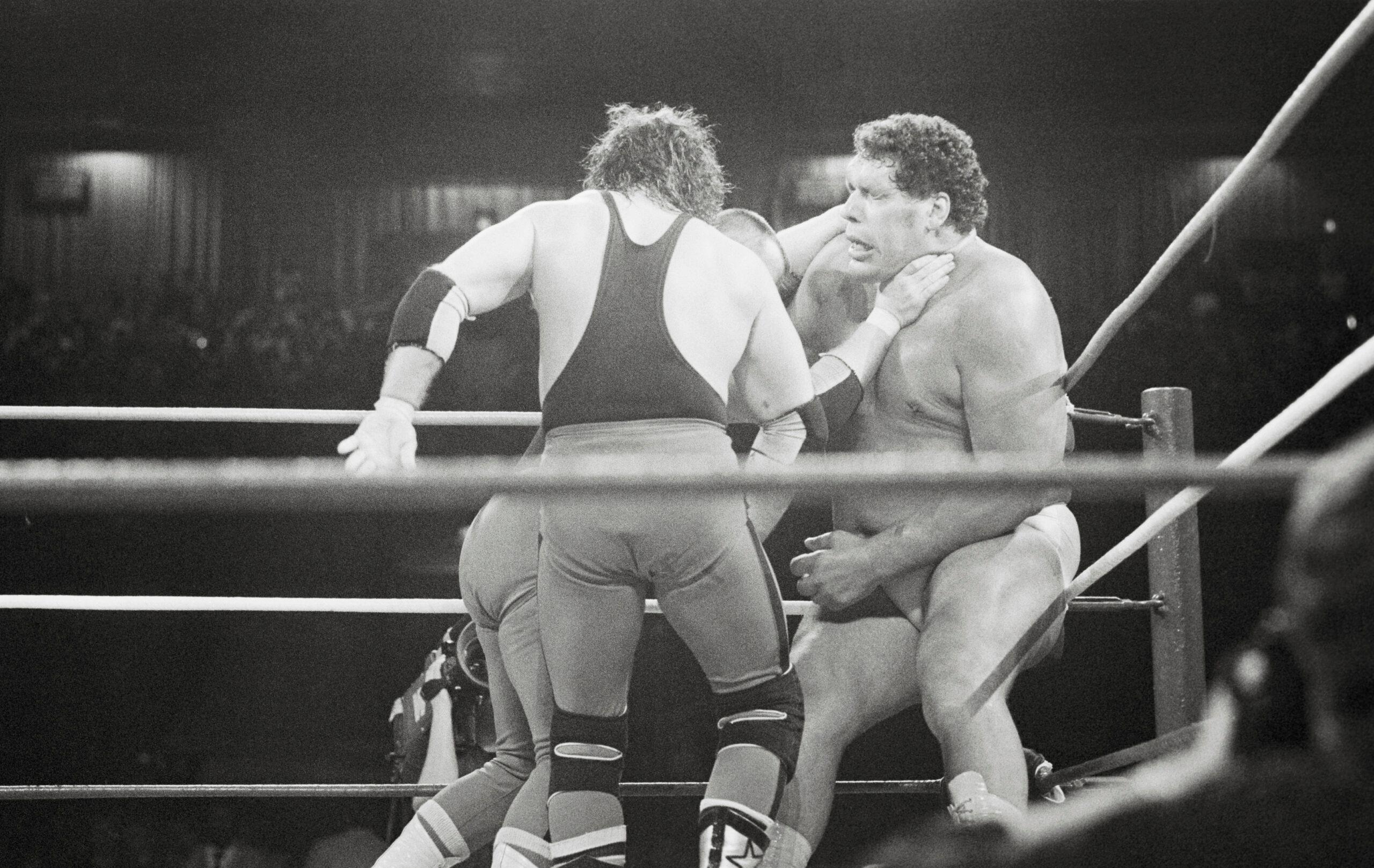
Watching WrestleMania 2 in 2026 reminds us of how much the product has changed in the 40 years since. While this week’s WrestleMania 42 surely will be full of long, seesaw matches and “holy shit” moments, WrestleMania 2’s matches were mostly three- to five-minute affairs in which the outlandish characters trumped the action in the ring. Both styles are designed to garner emotional engagement with the crowd, and they both work for their respective eras. It’s the fans who have changed; the wrestling has simply adjusted in response.
The first match of WrestleMania 2, from Nassau Coliseum, pitted two of the era’s greatest stars against each other: Muraco versus “Mr. Wonderful” Paul Orndorff. Muraco, a two-time Intercontinental champion, was given all of four minutes for a double count-out with Orndorff.
“You know, it was just a match. Vince pretty much put all his backing into Hulk. And Piper was the heel. I think Roddy and I were a lot alike in certain ways, so they didn’t want to detract from him at all. That’s how I ended up sliding, I guess,” Muraco shares with me.
Although his spot on the card was nothing special, Muraco is grateful for the camaraderie that typified the locker room at that time. It was the height of the WWF’s most intense era of travel, with talent crisscrossing the country and wrestling well over 300 times per year, with no time off for injuries. In early 1985, Bret Hart was on the road for 55 straight days. The stress broke many.
“It was the hardest job in the world … the travel, the times broken down at airports, everything you went through to make it to a town, not to mention the drugs and the girls and the nightlife. When I think back, it’s like, I’m just lucky I survived it,” Hart adds.
In fact, the short matches typical of early WrestleManias explain why Hart is actually grateful he didn’t get his dream match with Steamboat at WrestleMania 2.
“I realized I dodged a bullet … [the match with Steamboat] would’ve been two minutes. What are you gonna do with two minutes? He’s gonna beat you with a sunset flip, 1-2-3, get out and you’re done. If anything, it would have trashed me,” he says.
Steamboat was on the rise as a babyface getting a major push (Scott booked him to defeat a strong heel, Hercules Hernandez, in the L.A. part of the show), and Hart was in a heel tag team. They were not positioned as equals the way Steamboat and Savage would be a year later.
The Chicago portion of the show kicked off with a match for the WWF Women’s Championship. Today, a women’s title match could main-event WrestleMania (and has), but in 1986, Velvet McIntyre and the Fabulous Moolah were given one minute and 25 seconds to tell their story, and it was the only women’s match on the card.
“Something went haywire with the timing. Starting out we had 15 minutes, then seven, then under two. All I thought was, OK, you want us to put on a show in under two minutes? Blah,” McIntyre tells me.
After another two-minute match between Corporal Kirchner and Nikolai Volkoff, it was time for the battle royal. Back in the dressing room, a blackboard displayed the names of the 20 entrants and the order in which they were supposed to be thrown out of the ring. King Tonga (later known as Haku) had the distinction of being the first to be dumped, and Jimbo Covert the second; this was the Bears’ condition for Covert’s participation—he could be in the match, but only briefly.
Just as they had rehearsed in upstate New York, several wrestlers ganged up on William Perry early, and Covert went over to rescue his teammate. He got tangled up with King Tonga.
“We’re talking and he’s like, ‘You ready? Let’s do this!’” Covert recalls. “So I throw him over, and then [Atlanta Falcons lineman] Bill Fralic came and flipped me over. I landed really nice on the mat, and then King Tonga slapped me and we kind of ‘argued’ for a little bit. The referees broke it up and he slapped me on the arm and said ‘let’s go have a beer.’ So we went in the locker room and had a beer and waited for everybody else to come in.”
For the most part, the match went as planned, although watching it back with Bret Hart, he tells me the order of exits may have gotten a little jumbled. Ever the perfectionist, Hart had worked out a specific spot late in the match with his partner, Neidhart, and the Fridge that went awry.
“The only one that worked out any spots was Refrigerator, where me and Jim threw him across the ring and he somersaulted up and came back and knocked us over like bowling balls,” Hart remembers.
When the time came for the spot, a jumble of humanity blocked the opposing turnbuckle where the Hart Foundation was supposed to send the Fridge. Hart and Neidhart stalled by pummeling him some more.
“We’re hitting him hard enough not to hurt him, but hard enough for him to feel it,” Hart says.
“If we could just get those guys out of the corner, we could do our spot. Finally, we gotta just do it,” Hart narrates as he watches the Fridge fly only halfway across the ring before charging back to bulldoze the Hart Foundation.
“The timing was all off because there was no room,” Hart laments.
The match came down to Andre, Hart, and Neidhart, just as planned. Andre booted Neidhart over the top rope and then grabbed a handful of the Hitman’s greasy hair and hoisted him up over his head. He launched Hart over the ropes onto Neidhart on the floor, just as Hart had suggested a month prior.
“It’s a scarier-looking move than you might think. I remember kind of falling and falling and falling and it’s like, when do I finally hit somebody? It was a long drop and it doesn’t look like it when you’re watching on the camera,” Hart says. Andre standing alone in the middle of the ring with his hand raised was just the kind of WrestleMania moment that Vince McMahon was looking for.
Following that match, the British Bulldogs won the tag team titles from the Dream Team (Greg Valentine and Brutus Beefcake) in what was truly a great match, even by today’s standards, rounding out the Chicago card. At the end of the night, Hart relaxed at the Chicago Hyatt over a drink with his wife, Julie, along with Neidhart and his wife, Ellie.
“It was really, really good,” Hart says about the show. “The only thing I was disappointed in was the [spot] with the Refrigerator.”
And although Hart was far from the main event, he was ascending. From a long-term storytelling perspective, Hart’s position was significant.
“Bret Hart and Andre the Giant are the last two in WrestleMania. Andre goes from beating me to eventually wrestling Hogan at WrestleMania 3,” he points out.
His role in the battle royal may not seem huge at first, but backstage, the agents and even McMahon himself were watching. The Hitman had something special.
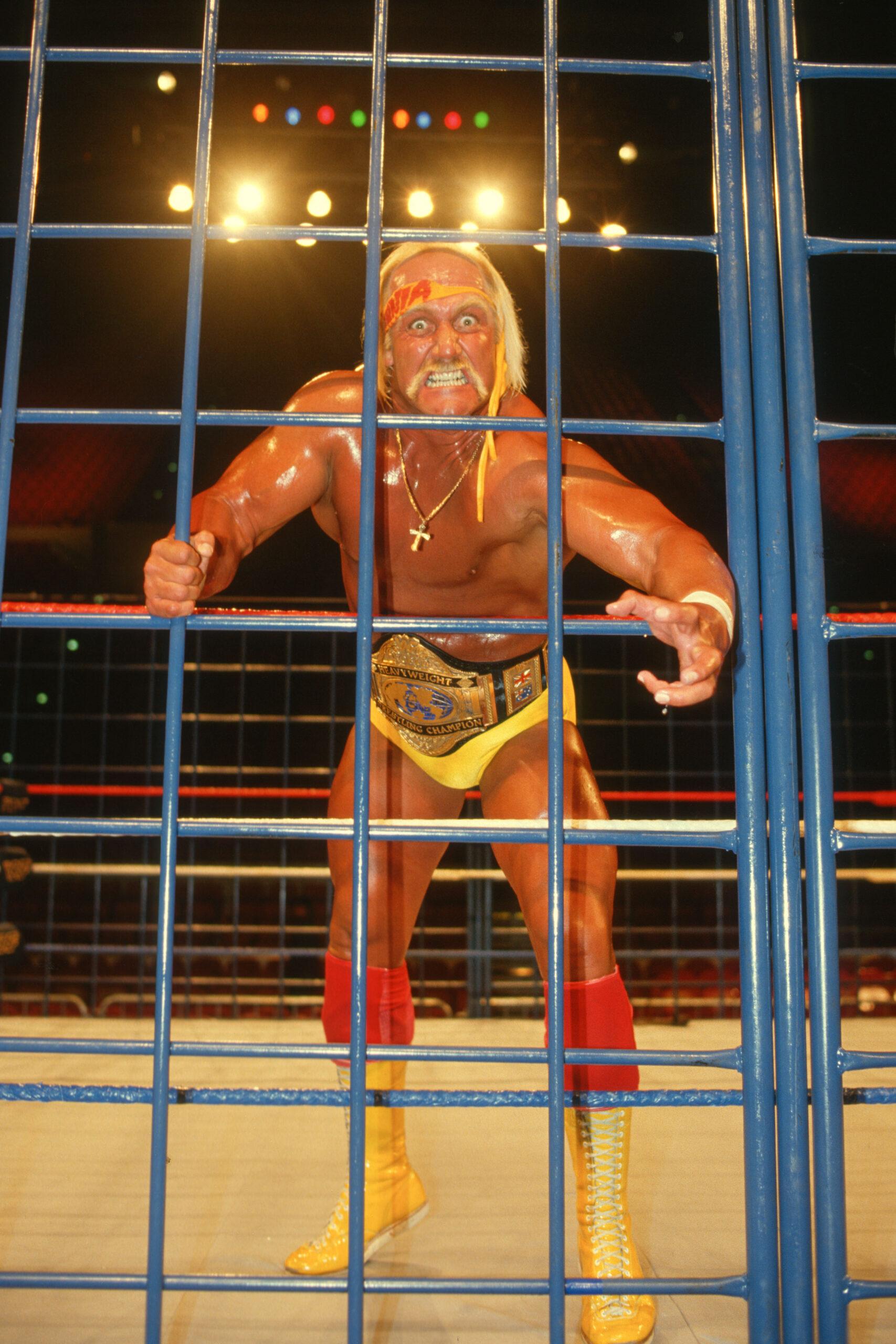
While Hart’s moment on top wouldn’t arrive for another six years, the wrestler du jour was undoubtedly Hulk Hogan.
“Hulk was really over. I mean, he was wrestling. He was red hot, hotter than a murder weapon,” King Kong Bundy said years later.
Backstage at the L.A. Sports Arena, Bundy watched the Chicago show on a monitor while morphing into character. He wrapped white tape around his wrists. He took the tiny point of a razor blade, which he would use to “get color” in the match, and tucked it under the tape.
His old buddy Hogan came over to cover the basics of the match and the finish, how it would end with Hogan scaling the newly designed big blue cage and dropping to the floor before Bundy could get out the door. Hogan told Bundy that while any other time he would gladly get color himself, McMahon had specifically instructed him not to bleed. McMahon was acutely aware of the hero shot at the end of the show—a sweaty but victorious Hulkster hoisting the WWF title belt in front of the whole world—and didn’t want his face of the franchise covered in blood.
By this time, Bundy had worked with Hogan at least 10 times, but never in such a high-profile setting.
“We had a set match, but this was different,” Bundy told Oliver.
Tommy Lasorda, the Los Angeles Dodgers manager at the time, made the ring introductions. Hogan came out to his new theme song, “Real American,” whipping the crowd into a frenzy. Glover allowed himself the indulgence of walking out just in front of Hogan.
“Terry [Hogan] would go stand right behind me when I go out to the ring. ‘You’ll really enjoy it,’ he said, to experience what he’s experiencing. And I do remember, I had never experienced anything like that, how that building erupted,” Glover recalls.
Over the next 10 minutes, Hogan and Bundy had the prototypical Hulkamania-era match. There were no frog splashes through tables, no powerbombs off a ladder, just lots of punching and kicking and, most importantly, prodigious emotional investment from the fans. Even watching it back today, I found myself drawn into the drama as Bundy pounded on Hogan. Maybe it was the facial expressions, maybe the balding head, but something about Hulk Hogan expressed heroic vulnerability better than anyone else before or since.
Bundy and Hogan liked and respected each other, although Hogan felt his opponent could be a little stiff in the ring.
“He was always nice to me. Just heavy-handed as hell,” Hogan told podcaster John Pozarowski when asked about Bundy.
After the match, back to being Chris Pallies, Bundy thanked his opponent. A few weeks later, he would receive his payment for laying down for Hulk Hogan—$50,000, a sum he was pleased with. Hogan would reportedly get $500,000; most would say he deserved every penny in an era when he alone stood at the mountaintop.
Bundy did well in professional wrestling, but he didn’t love the business the way Hogan did.
“I’m very grateful, I had some success, but it’s such bullshit. What is wrestling? I mean, it’s two grown men in their underwear pretending they’re fighting. … It was strictly a business to me. But some of these guys, this was their dream, like when you’re a kid, you want to be a wrestler,” he told Oliver. (Pallies passed away in 2019, at age 61.)
Terry Bollea was one of those kids. Despite numerous scandals from which he never fully recovered, he never stopped being the oversized kid from Port Tampa cheering on Dusty Rhodes and “Superstar” Billy Graham at the Fort Homer Hesterly Armory. That passion may be why he remains the greatest attraction this bizarre and irrepressibly fun business has ever seen.
The Aftermath
WrestleMania 2 was not among the greatest WrestleManias of all time. It was not even a great show. But it was much more than a footnote between 1 and 3.
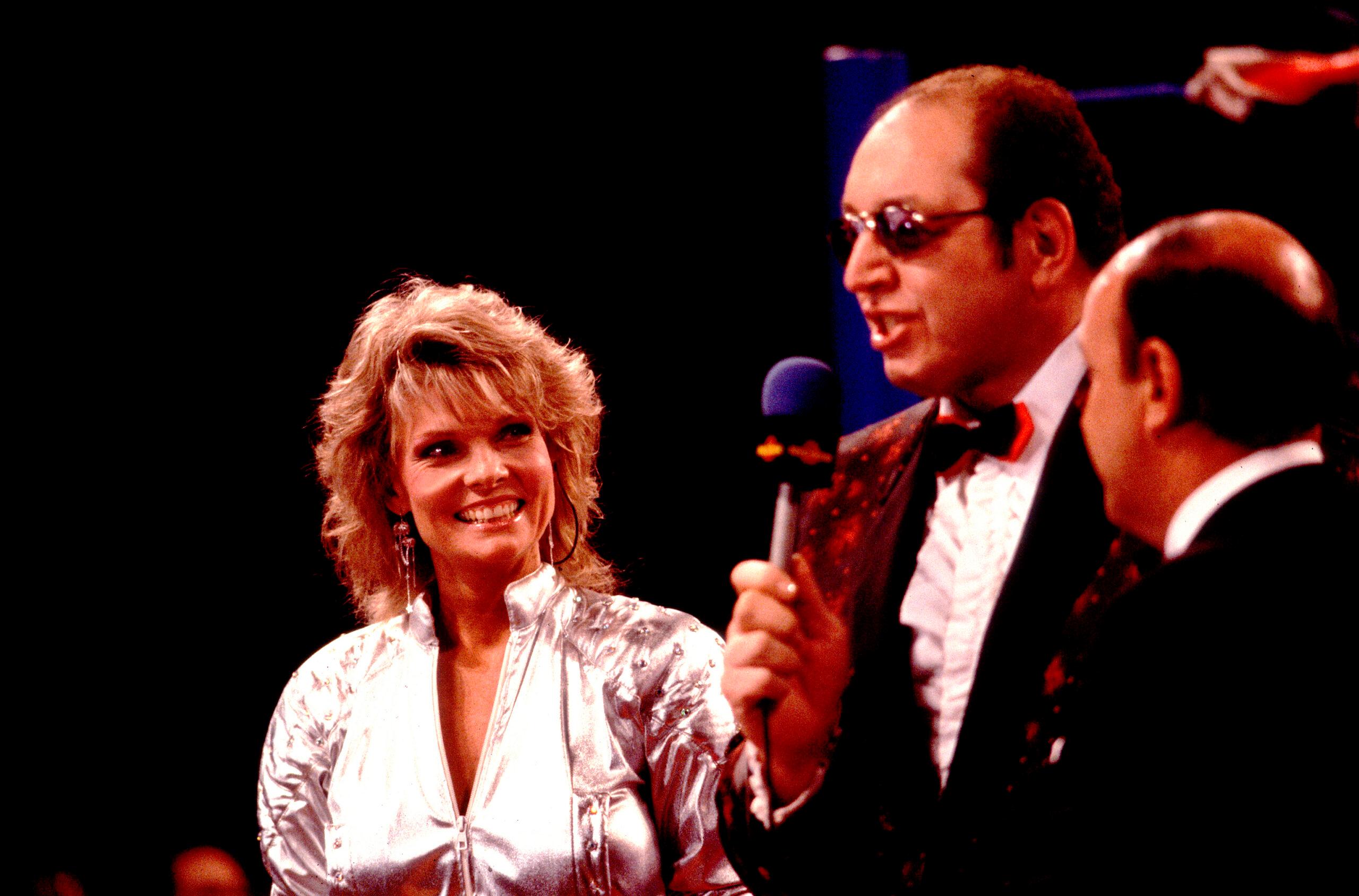
It was undoubtedly a weird show, a true anomaly. Ricky Schroder was a guest timekeeper! The color commentators were Susan Saint James (New York), Cathy Lee Crosby (Chicago), and Elvira (Los Angeles)!
What has gone underreported is that, financially, it appears to have been a successful show. According to Bob McMullan, the WWF’s CFO during the first WrestleMania, that event grossed about $9 million and was considered an unqualified success. For comparison, I estimated WrestleMania 2’s earnings through a combination of scouring old cable TV trade magazines, lawsuit documents, wrestling newsletters, interviews with former WWF staff, and even emails to arena managers in New York, Chicago, and Los Angeles. Surprisingly, none of the show’s three venues sold out, and Chicago’s gate was especially disappointing. Nassau Coliseum drew approximately 15,500 fans paying $387,500; the Rosemont Horizon drew 11,744 paying $294,320; and the L.A. Sports Arena had approximately 14,500 paying $362,500. When you add all three venues together, you get 41,744 fans paying $1,044,320.
“If you combine the three gates it’s the first-ever million-dollar gate [for pro wrestling] in the United States,” Dave Meltzer points out.
The figures for the closed circuit sales, despite the best efforts of Gerry Brisco et al., were down a bit from WrestleMania 1, with approximately 319,000 people paying $4,785,000.
Pay-per-view, on the other hand, was on the rise, and this show drew an estimated 360,000 buys, paying $4,860,000.
Combining all three revenue streams (to say nothing of ancillary revenue like the VHS release and live merchandise sales), the total is $10,689,320.
On the cost side, while he was no longer with the company for WrestleMania 2, McMullan estimated costs to be approximately $7,362,200, which if true would make the event clearly profitable.
Internally, WrestleMania 2 seems to have been regarded with qualified contentment.
“I don’t think it played out very well. It didn’t in the live event. I was in Chicago, and you saw a third of it live and the other parts were taped,” says Taylor.
“WrestleMania 2 was a good event. Certainly I don’t recall any disappointment, but I also don’t recall any great euphoria,” says Glover.
The numbers may have fallen short of McMahon’s stratospheric expectations, and if anything the experience seems to have confirmed his belief that he needed to be on-site.
“I think Vince said, ‘I’m never going to have [a] WrestleMania I’m not in the building for,’” DeVito recalls.
But WrestleMania 2’s success should be measured in much more than dollars and cents. The WWF had solidified itself as the most recognizable brand in wrestling, with deep penetration in the country’s three biggest urban centers.
WrestleMania 2’s legacy may be that it raised the stakes for what the event would be. The first WrestleMania was in one location, the second was in three, and the third would be the first WrestleMania in a stadium, drawing at least 78,000 people to the Pontiac Silverdome. One might argue that the Hulkamania era peaked with WrestleMania 3, and it would be a long time before wrestling infiltrated the zeitgeist to the same extent.
“After WrestleMania 3, the next biggest thing that happened was Mike Tyson [in 1998],” says DeVito.
The other takeaway is that WrestleMania 2 did what Vince McMahon cared most about—it kept people talking about wrestling. The event was splashed all over newspaper front pages on April 8, 1986. Conrad Thompson sums it up well, drawing a parallel to the current day:
“This was about creating an event and a spectacle, just like we’ve seen Jake Paul put on some really out-of-the-box fights. What if Mike Tyson fought this guy or that guy well past their prime? I think that’s what Vince had in mind here,” he says.
After all, WrestleMania 2 was the greatest sports entertainment spectacular of all time.
Until WrestleMania 3. And 4. And 5 …