
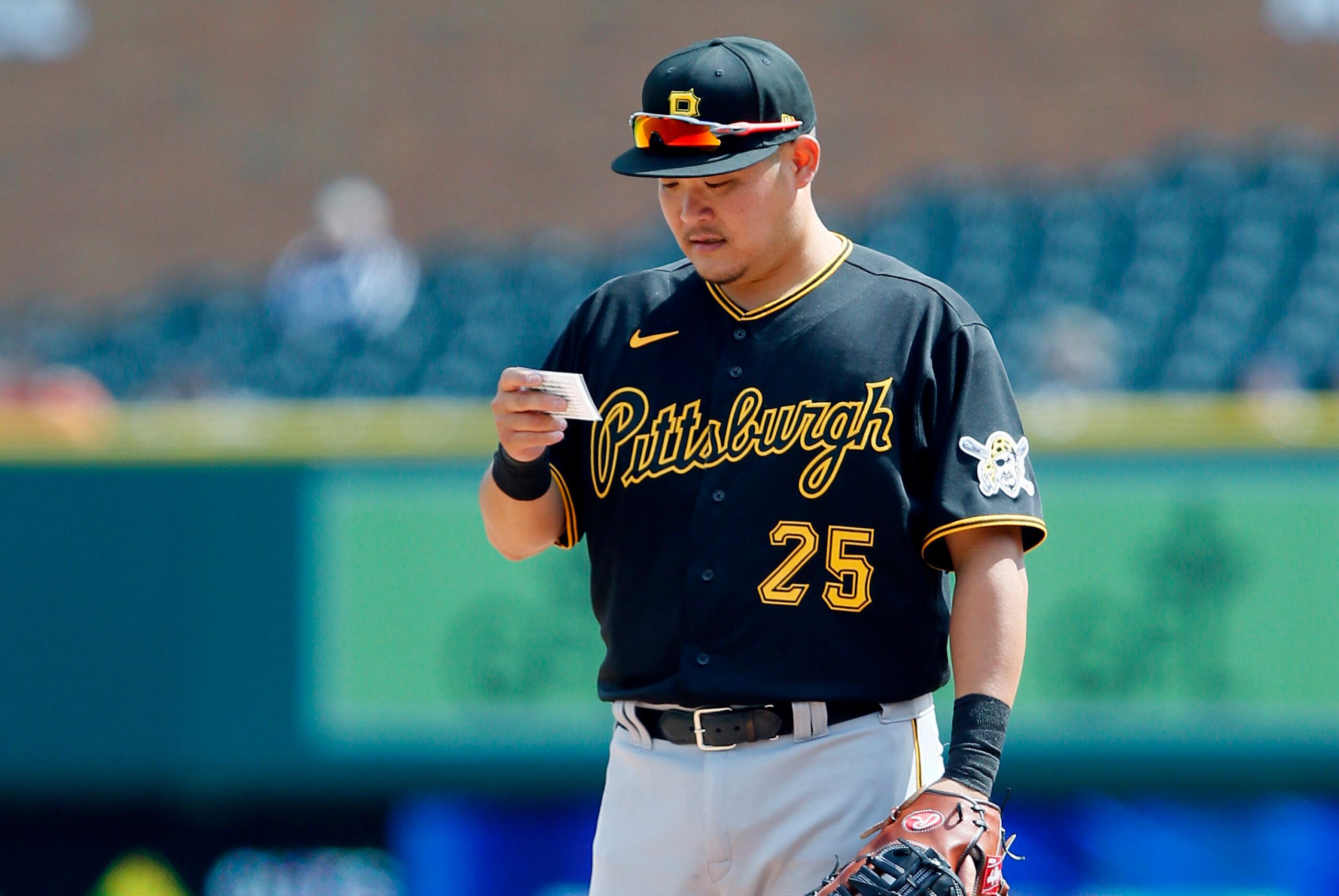
On September 1, 2018, Austin Davis, a rookie reliever for the Phillies, got in trouble at work. With two outs and one on in the top of the eighth in a game against the Cubs, Davis pulled a scouting card out of his back pocket and scanned it for the skinny on pinch hitter Addison Russell. Third base umpire Joe West wasn’t having it. “I saw him take it out, and I went, ‘What the heck is that?’” West would later say. The ump ambled over, asked for the offending piece of paper, and confiscated it, on the grounds that the card constituted a foreign substance. Phillies manager Gabe Kapler, who had introduced scouting cards to the team that season, came out to argue, but Cowboy Joe stuck to his guns, telling Davis, “You can have it back after the game, but you can’t have it now.”
West didn’t give Davis detention, and the game went on. Armed with the info from the contraband card, Davis struck out Russell—though the next inning, a cardless Davis surrendered a run-scoring double to another pinch hitter, David Bote.
At the time, I sided with Davis, and even bridled on his behalf. The phrase “OK boomer” hadn’t been popularized yet, but if it had, I would’ve invoked it. West—who would go on to break the record for most major league games umpired—was an officious, old-school, grandstanding grump, a relic from before baseball’s information age. How dare he deny data and be anal about analytics? Who was West to send the sport back to the information-starved environment of the unenlightened ’70s, when he first made the majors? This sabermetric censorship would not stand. They may take our scouting cards, but they’ll never take the numbers those cards contain!
Now, I’m starting to think that maybe West was right.
To be clear, West’s ruling was wrong in the moment. Davis hadn’t done anything illegal, and he’d consulted the cards without incident in previous games, much as other Phillies defenders had routinely turned to theirs. The next day, MLB informed the Phillies that Davis and his teammates could continue to carry their cards, as long as they didn’t delay the proceedings. Since then, it’s become common and uncontroversial for catchers to scour cards for insights about which pitches to call, and for outfielders to whip them out between batters for guidance on proper positioning.
But in his inflexible, close-minded, showy way, West may have had the right idea. Almost eight years after West’s showdown with Davis, teams are going even further in feeding information to the players while they’re in the game: They aren’t just offering advice about which pitches to throw but dictating those decisions from the dugout, in coordination with quants. The effects of that front-office meddling may be making the sport less fun for spectators. And it might be time for MLB to make like Cowboy Joe and take steps to stop coaching from encroaching on the field. I want a wall of separation between the front office and the field.
Before we proceed, I’ll stipulate that the proliferation of front-office input while games are going on is far from the gravest threat to Major League Baseball, let alone the world. And I’ll acknowledge the Abe Simpson–esque optics of shaking my fist at a new innovation. But I’ll also note that I’m not habitually hidebound. When it comes to numbers and baseball, I’m not normally the guy going “Get off my lawn.” If anything, I’m on the lawn. As a front-office intern, I helped assemble binders bursting with stats before each series and lamented that they sometimes sat unseen in the dugout. I ran the Baseball Prospectus website, I host a podcast for FanGraphs, and I cowrote one book about numbers nerds running a team and another about data-driven player development. I’m normally the last guy to decry the use of information to improve play. So before you “OK millennial” me, hear me out.
There are two main drawbacks to the trend toward delegating decisions that once were within players’ purview to personnel who don’t appear in the box score. The first is aesthetic and somewhat philosophical. The second is practical.
Let’s start with an appeal to appearances. I’m all for information, but I’m also all for preparation. When West impounded Davis’s card, the right-hander objected, “Our analytics department works really, really hard to come up with this stuff for us, and I want to use it because they work all day to come up with stuff to help get guys out. And if I have an answer to get a guy out, I want to know what that is.”
To which I would respond: Then study the scouting report before you get into the game. Or, for that matter, during baseball’s many built-in breaks. Even in the pitch clock era, there’s plenty of downtime in the national pastime. There are 17 two-minute timeouts between half-innings in a full nine-inning game. Even a member of the starting lineup spends half the game in the dugout; Davis sat in the bullpen for the first seven innings of that 2018 tilt. A player on the field is rarely more than 10 minutes removed from being back in the dugout, with unfettered access to coaches and iPads and scouting reports.
Plus, in baseball, the dugout can come to you. Baseball is weird in any number of ways, many of which are wonderful. One of the weirdest is that managers and coaches kind of cosplay as players: They wear uniforms and cavalierly venture into the players’ territory. I’m a hard-liner—an on-field fundamentalist. If I had my druthers, I’d ban mound visits by coaches—which have been limited, at least—and confine base coaches not to their boxes by first and third base but to the dugout. But unless I become commissioner, coaches won’t have to worry about being exiled. So even without their on-field refreshers, players have plenty of lifelines.
As the league established after West overstepped, scouting cards aren’t literally cheat sheets. But by legalizing them, MLB has sanctioned the practice of taking notes into the test. As far as I’m concerned, players should be showered with all the data they desire in the clubhouse and the dugout. But once they cross the foul lines, they should be on their own. “The thing I like about baseball is that it’s one-on-one,” Henry Aaron said. “You stand up there alone, and if you make a mistake, it’s your mistake. If you hit a home run, it’s your home run.”
No one before him hit more homers than Hammerin’ Hank, but “one-on-one” was an oversimplification; the batter-pitcher matchup always involved (at the very least) a catcher and umpire, too. Now, though, the sport’s core confrontation is crowded with non-uniformed, phantom, front-office types, peering over players’ shoulders on both sides of the ball. The front office and coaching staff have a huge bearing on ballgames: They assemble the rosters and draw up the lineups. But when the game is going on, we want to see the players perform—and we want them to look like they’re the ones in control. Turning players into card-carrying extensions of the R&D department reduces them to one goal: “executing” (a favorite term for today’s teams) a prescribed plan. They’re wind-up players pointed toward targets the front office sets.
In 2018, Kapler said, “I think it takes a lot of mental focus, takes a lot of bandwidth to get out the best hitters in baseball, and when you can just take a little of that off your mind and put it on a card, I think that’s helpful for pitchers and good for baseball.”
Helpful for pitchers? Perhaps. But what’s helpful for pitchers—and the fielders behind them—may actually be bad for the game. In recent years, outfield defense has arguably gotten too good: Two years ago, I made a case for widening the foul lines to address this danger. Fielders are faster than ever, sure, but they’re also always waiting where the ball would fall. As Joe Sheehan noted this week, “Setting aside 2020, the league hit under .250 last year for the fifth straight season. That’s happened twice before, from 1965-1969, and from 1904-1910.” In the 1900s, a dead ball was the biggest barrier to offense; in the ’60s, it was mostly a massive strike zone. Now, it’s that fielders and pitchers have perfected their crafts.
Even if laminated cheat sheets aren’t currently counted as foreign substances, MLB could crack down on them just like the league did sticky stuff. It’s hard to say how much stripping players of positioning cards and forcing fielders to remember their blocking or pay attention to frantic waves and shouts from dugout-bound coaches would boost BABIP and slugging. But do we want to give the side that has the upper hand an extra advantage? In baseball, each play begins with the battery; hitters can only react. Giving pitchers and catchers on-field info exacerbates batters’ disadvantage.
I’ll concede that on occasion, these cards can be comic relief. Players rarely look less athletic than when they do a tribute to “[checks notes].” And who could forget the time in 2021 when Rays center fielder Kevin Kiermaier accidentally (or so he said) swiped Alejandro Kirk’s card after it fell out of the Blue Jays catcher’s wristband? The Jays retaliated for this spycraft by plunking Kiermaier. And the crew chief who ejected the pitcher who did the deed? Joe West, of course, who may well have whispered an “attaboy” as he gave the heave-ho.
On balance, though, the cards are distracting for fans, and quite possibly bad news for the dynamic brand of baseball MLB has tried to bring back. Granted, scouting cards are suggestions, not orders. (In fact, Davis created his cards himself, based on intel the team provided.) And had the coaching creep stopped there, I could’ve come to terms with it. But lately, teams have taken things too far.

More on MLB
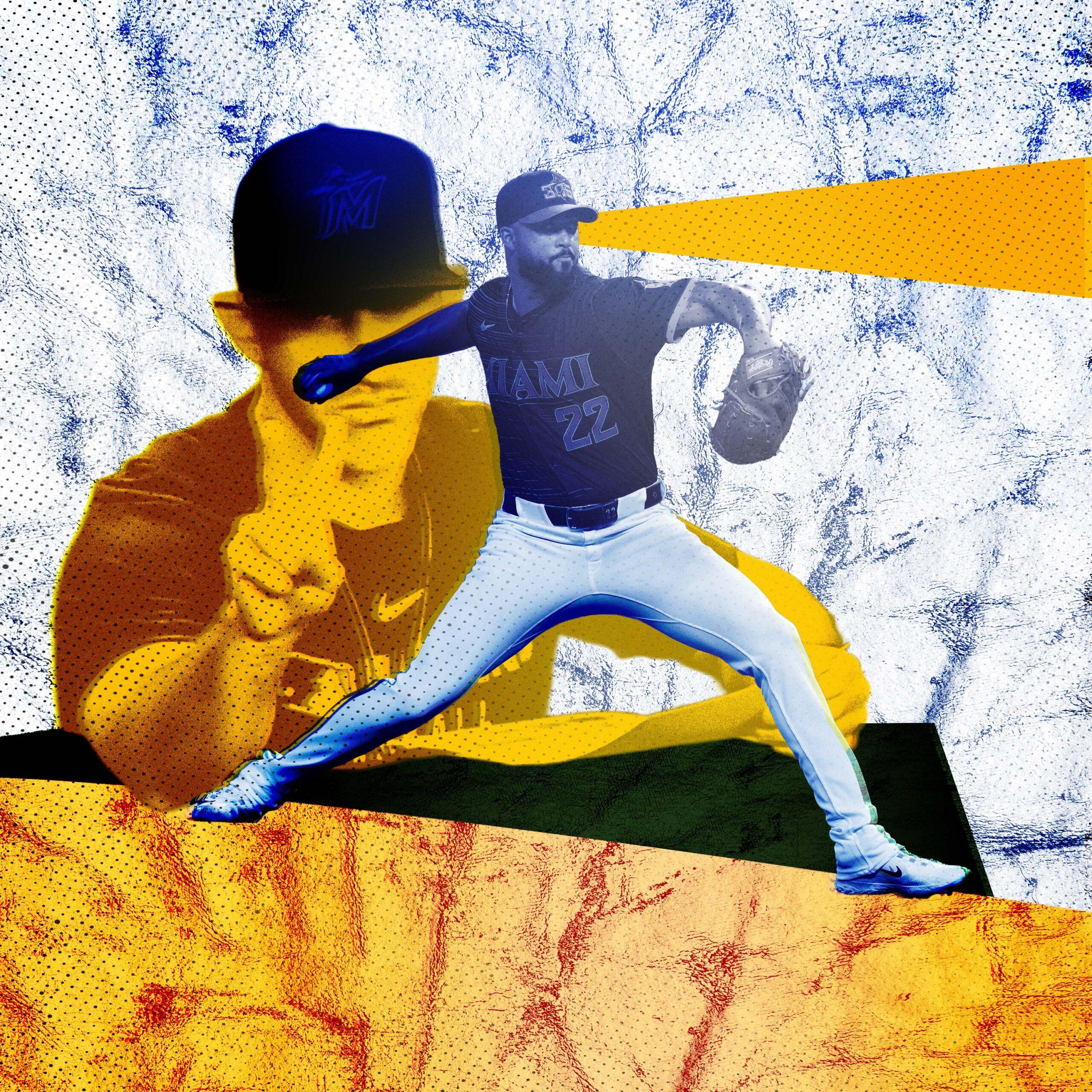
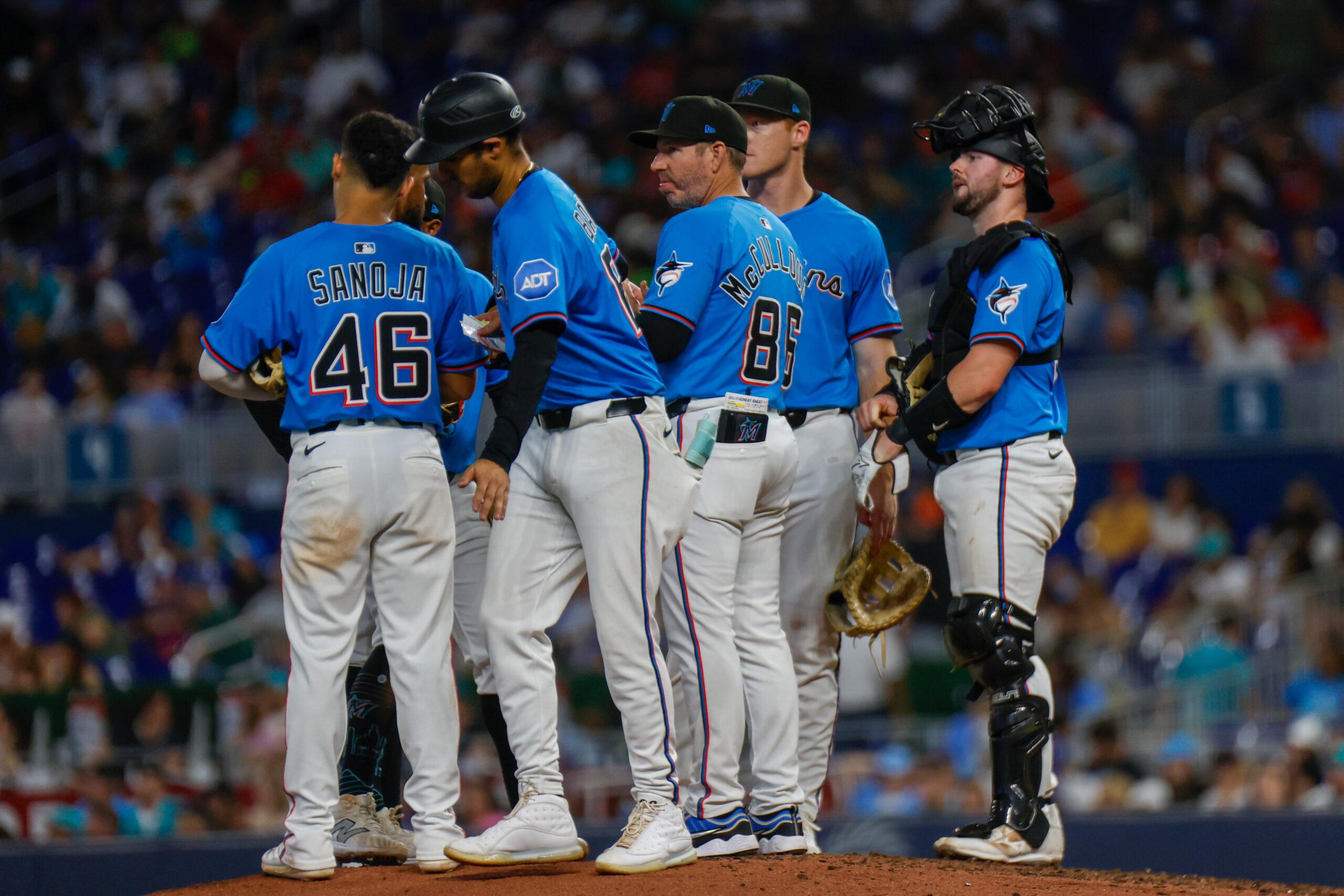
Last year, the Marlins broke the big league seal on calling every pitch from the dugout, when assistant pitching coach Alon Leichman sent signals to the team’s backstops during a nine-game stretch in September. Miami had implemented the policy throughout its minor league system earlier in the year, which catching coach Joe Singley had called “an organizational decision … to try to develop as much as we can the instruction of pitch-calling.” But by the end of the season, dugout-dictated pitches weren’t a training tool or a means to an end. They were the new normal. “We kept coming back to, we think our pitchers, over time, will perform better if that's the delivery system we use coming from the dugout,” manager Clayton McCullough said.
One could make a case that calling pitches from the bench is akin to the longstanding practice of passing other signals from the dugout: giving green lights to steal or swing away, for instance, or ordering forms of self-sabotage such as sacrifices, pitchouts, and free passes. It’s a massive expansion in signal volume, though. And whereas signals to hitters and runners represent real-time responses to developing circumstances, pitch calls are driven more by preexisting tendencies. Plus, most offensive signals are pure pantomime meant to camouflage the significant few. Every pitch call is consequential, which is why team decision-makers are so motivated to commandeer that duty.
The Marlins are picking up this season where they left off last year, now with new assistant pitching coach Rob Marcello at the controls. “We’ve been up front with everybody that we considered bringing into the organization that this is an organizational initiative that we’re not going to compromise,” president of baseball operations Peter Bendix said in February. “It’s not going to be everybody except for this one guy.” The free agents who took the Marlins’ money have embraced or accepted it. “Somebody’s got to call the pitches, whether it comes from the dugout or the catcher,” relief pitcher Pete Fairbanks said. That might be a distinction without a difference for pitchers, but for catchers it shouldn’t be.
The Marlins were perfectly positioned to try this first: They don’t face much fan or media scrutiny, and their catchers are young, homegrown guys who never got accustomed to calling their own shots and don’t have the standing to protest. And with MLB’s lowest payroll, the team could use a cheap first-mover advantage. Yet now that Miami has weakened the taboo, this strategy is spreading. The Giants’ new manager, Tony Vitello, comes from college ball, where coach-called pitches are commonplace. In February, Vitello signaled (so to speak) his willingness to replicate that process in MLB, though he walked that back this month, partly due to pushback from within the organization. (Vitello’s boss, Buster Posey, was one of the best defensive catchers of his day, and the 2026 Giants’ backstop, Patrick Bailey, is the best glove guy in the current crop of catchers.)
Elsewhere in the NL West, though, the Rockies appear primed to follow in the Marlins’ footsteps; they hired Leichman as their pitching coach in December, and they need any edge they can get. Even the big-market, big-budget Mets are experimenting with coach-called pitches, though their system is optional for now. I don’t doubt that many more teams agree with Bendix, who said, “It’s something that we truly believe is going to help us win more baseball games. It’s going to help our pitchers get better results. We think it’s something that can be a real, meaningful advantage for us.”
Here’s the rub: Bendix is probably right. As former Red Sox catcher (and current Red Sox game-planning and run prevention coach) Jason Varitek said last month, “If it works, all 30 teams will be doing it.” Pitch-calling is complicated, and going by gut doesn’t always work well when it’s time for some game theory. (There may be value to randomizing pitch selection, and humans—catchers included—are bad at being random.) Of course, pitchers and catchers can pick up particulars of a batter’s reaction or a pitcher’s stuff that a pregame model (and a coach who’s farther from the action) might not know. (Even the Marlins’ no-exceptions system allows a little leeway for such soft, hard-to-quantify factors.) On the whole, though? Game-calling has real value, and I don’t doubt that computers could be better at it than a catcher who has other jobs to juggle. As a different Davis—Crash—once said, “Don’t think. It can only hurt the ballclub.”
But Crash wasn’t taking that advice; he was dispensing it to young hothead Nuke LaLoosh, who was too attached to his fastball. Crash wouldn’t have taken kindly to Skip Riggins or Larry Hockett telling him what to throw.
In fairness to today’s controlling coaches, dugout pitch-calling by managers and pitching coaches isn’t totally unprecedented. Hall of Famer John McGraw was known to do it; so were Al López, Chuck Dressen, Joe Adcock, Ted Williams, Earl Weaver, Frank Robinson, Don Zimmer, Jack McKeon, Joe Kerrigan, Lou Piniella, and Billy Martin. In most cases, though, these efforts were sporadic, controversial, and constrained to certain combinations of pitchers, catchers, and situations. In 1981, Tigers pitching coach Roger Craig made headlines by calling every pitch at the start of the season for Sparky Anderson’s team; according to one account, “National sports publications are sending reporters to document the strategy. Photographers click off rolls of film showing Craig going to … whatever he touches to send his signals.” But the experiment provoked griping and tailed off after a few weeks. The modern, data-driven revival may be built to last.
Look, my lodestar isn’t self-reliance; I lean liberal. But I cringe when an outfielder looks to a card for his marching orders or a catcher glances toward the dugout for his cue. It’s fine for actors to read from a script during rehearsals. But by opening night, they’re supposed to be off-book. Maybe memorization ups the odds of flubbing a few lines, but hey, it’s hard to be on Broadway. It’s hard to be in the big leagues, too, and in my mind, the difficulty of calling pitches should come with the elite territory. Frankly, deferring to the team is a little bit bush league.
I don’t want to overstate the case: Big leaguers are better than ever, and it’s tough to become one even if coaching is constant and coddling. (After all, you do still have to “execute.”) Plus, although some players’ personal scouting acumen was once key to their success, it’s not as if fans buy tickets or tune in to see who thinks the best. As Scott Stapp once sang, “a diving catch, a stolen base/a perfect game, a triple play.” We watch for physical prowess, and the prospect of seeing someone sock a few dingers. But study skills, smarts, and plain old intuition used to set some players apart. How much will those instincts still matter in a more paint-by-number brand of baseball?
Admittedly, as much as past players knew about baseball, they had a lot to learn. Pitchers tended to throw suboptimal pitch types in suboptimal locations; hitters—probably counterproductively—prioritized contact over patience and power; and both in the outfield and on the dirt, defenders stood in suboptimal spots. Pitchers have updated their arsenals based on front-office input, and it’s served them well: On the whole, they make better decisions about which pitches to throw, and where to throw them, than they used to. But it’s one thing to alter the overall frequency of a pitch’s usage and another to defer entirely to the team on a pitch-to-pitch basis. Catchers and pitchers, I implore you: Have some self-respect.
“I understand the concept,” Giants ace Logan Webb said about his pitches potentially being called from the dugout, “but to begin with, you should be prepared going into the game anyway, as a pitcher-catcher combo.” (Preach.) Webb added, “Baseball at the end of the day is still played with humans, right. I know there’s a ton of technology, pretty much you’re looking at a scouting report that tells you what to throw, but you don’t want just the computer to call a game.”
I’m no Luddite, but I don’t, at least. Maybe I’m overly sensitive about this subject because it mirrors the ways in which all of our lives get governed and gamified by AI and algorithms. Everyone’s worried about losing their livelihoods to some simulacrum of humanity, and in certain respects, even supremely skilled athletes (who are under unceasing surveillance on the field) may not be immune. Or maybe I’m too precious about the sanctity of the field. (I become a crank when players are interviewed on the field during meaningful games, too.)
Still, there seems to be ample evidence that reliance on AI comes at some cost to critical thinking and learning. And if players aren’t incentivized to practice a skill, they’ll lose it. As Joe Maddon, who was managing the Cubs in that game against Davis, said in 2018, “The part I would be concerned with is you take the observation power of the player out of it also to the point where they become so reliant and spoon-fed as opposed to understanding what they’re seeing in front of them.” Next thing you know, teams will be trying to cut your salary because some of the value you used to provide has been swallowed by cameras, computers, and coaches. After all, until recently, positioning was largely a player skill, not a team one. Now, that’s no longer the case—and if catchers aren’t careful, dugout intrusiveness (and, eventually, full ABS) could take game-calling and framing out of their hands, shrinking the value variance and ceiling of players at the position.
Catchers will always have it hard, relative to other positions. And the greater the difficulty of a particular task, the more allowances we make for its performers. Actors must memorize their lines, yes, but an orchestra isn’t expected to play without sheet music. So my campaign is probably a losing battle, because pro sports are exceedingly difficult, and over the long run, specialization is almost undefeated. (Have you noticed that pitchers no longer have to hit—or, for that matter, even pitch very much anymore?)
Look at football, for instance: Audibles notwithstanding, no quarterback has predominantly called his own plays since Jim Kelly left the league 30 years ago. When Roger Staubach handed over play calling duties to Tom Landry, Staubach told the L.A. Times in 2023, “It was a relief for me.” Archie Manning, meanwhile, said, “I kind of felt a little bit that instead of a quarterback, now I’m a guard. I’m just running the play that’s called.”
If quarterbacks no longer call plays, as the NFL’s offensive and defensive schemes grow increasingly complex, why should catchers? Catchers’ jobs have also gotten harder; they have to handle nastier stuff and expanded repertoires from many more pitchers, both within games and across seasons. (They have to face a greater variety of opposing pitchers at the plate, too.) And they have to tackle those defensive duties while satisfying the demands of a heavier focus on framing, a running game that’s stacked against them by recent rule changes, and, as of 2026, the challenge system. “Our catchers need to be able to spend their bandwidth and their time and other aspects of things than the preparation part of it on [the game-calling] side,” McCullough said.
But catchers aren’t quite quarterbacks. For one thing, pitchers do the throwing. For another, baseball is structurally simpler. There aren’t as many players involved in each play. The action is less fluid. And catchers don’t have to deal with defensive linemen who are trying to flatten them. (When it comes to physical strain, restrictions on collisions at the plate, concussion safeguards, and the leaguewide transition from squatting to one-knee-down stances have actually made catchers’ jobs a little less punishing.) Quarterbacks can’t even see everything that happens on a football field, so football teams benefit from giving them headsets and relaying plays from someone with eyes in the sky. Baseball is increasingly complicated—but it’s not so complicated that catchers can’t carry out a game plan. Hitters may be bigger, stronger, and smarter than they used to be, but they still just sort of stand there.
Still, I’m fighting against history here. As Richard Hershberger, author of Strike Four: The Evolution of Baseball, tells me, “Putting pitch-calling into the broad historical perspective, this is simply a step in a long process of in-game decisions moving away from the players. Whatever we think of the aesthetics, if the baseball establishment perceives an advantage, and there is no effective way to ban it, it is going to happen.”
Battles over divisions of tactical labor have been raging since the advent of major league baseball, and time after time, the non-players have won. In the 19th century, managers mostly handled team finances and logistics, but as historian Peter Morris writes in A Game of Inches: The Stories Behind the Innovations That Shaped Baseball, “Even when bench managers became more common, there was still a widespread belief that signals should remain the responsibility of the players themselves.”
The first managers to give signals were players. (Prior to the specialization of the managerial role, player-managers were widespread—hence the now-anachronistic tradition of managers dressing like players.) In late 1878, the National League banished managers from the bench because Hall of Famer Harry Wright—who had recently retired from playing but managed on—was still scandalously helping his club even though he wasn’t in the game. At a league meeting, Providence’s owner said he “had always felt that they were playing 10 men when they played the Boston nine, with Harry Wright on the bench,” and Cincinnati’s representatives said that they “had heard Harry Wright coach his men on the bases” and that they “did not look upon the duty of a manager as the manager of a club on the field.” Partly because it was hard to police signals, the proscription was repealed after a few years—every day we stray further from God’s light—though as late as 1899, catcher Tom Kinslow said in Sporting Life, “The only signals required in the playing of a game are the battery signals, which are, of course, a positive necessity, and the signals for the hit-and-run play, which should be given by the batsman or the base-runner and not the manager on the bench.”
That field-dugout divide didn’t last. “By the early 20th century,” Morris reports, “it was becoming customary for the manager to signal from the bench.” And managers soon had help in exerting their influence: “Between 1900 and 1910 the complexity of signals and managerial strategy increased greatly, and the need for full-time coaches became apparent.” Base coaches came first, followed in the ’50s (broadly speaking) by hitting and pitching coaches, in the ’80s by bench coaches, and more recently by quality control coaches, assistant hitting and pitching coaches, field and strategy coordinators, and so on. Today it takes a village to coach a team. Which would be fine, if that cavalcade of coaches and front-office officials had stayed on the sidelines. Instead, the coaches are crossing the (foul) line.
Can anyone, or anything, thwart them? MLB could, if it decided to step in. And in isolated instances, the league has. In 2016, the Mets complained that the Dodgers were using laser rangefinder devices to identify ideal defensive positions in the outfield and then daub them with paint. All their defenders had to do in games was stand at those predetermined positions, like an actor hitting their mark on a Hollywood set. Although MLB didn’t discipline the Dodgers for this practice, it did notify all clubs “that golf tees, chalk, and paint cannot serve as markers for positioning.” Teams can still tell outfielders where to stand, but at least the fielders have to find those spots themselves. I’ll take it!
Even more encouragingly, MLB struck down a new kind of card this spring. One of the nice things about the challenge system is that it preserves players’ agency: Although a lot of analytical legwork has gone into identifying the scenarios where challenges are worthwhile, catchers, hitters, and (occasionally) pitchers must decide for themselves whether to tap their hats or helmets in the two seconds after the umpire’s call. Earlier this month, the Brewers tried to strip some of the uncertainty from this situation by displaying cards before each pitch that indicated whether conditions were conducive to a challenge. If the dugout displayed a green card, players were encouraged to challenge in the event of a questionable call.
After only one spring training game, the Brewers’ scheme was smacked down. “You can’t do anything that’s not in the spirit of the rule,” Brewers manager Pat Murphy explained. Will MLB be able to ban verbal or manual signals that replicate the cards’ functionality? Teams are sure to test the limits. But cards, at least, look like a no-go. And if one kind of card—and one way to transfer a task from players to non-playing personnel—can be banned, why not others?
Davis and West are gone from the game. Davis, a replacement-level pitcher in his six big league seasons, was last seen allowing 15 runs in 11 1/3 innings for the Padres’ Triple-A team last spring, before being released. (Scouting cards can accomplish only so much.) West last made news for editing his own Wikipedia page. But their 2018 tussle was a sign of struggles to come. And West’s reflexive reaction, however rash, may have been in the best interests of baseball.
"I think it's actually a really good thing for baseball,” Kapler said about his cards in 2018. Years ago, I found common ground with Kapler—who’s now the general manager of the Marlins—when we commiserated over our mutual affliction with skinny calves. But when it comes to cards and pitch-calling, we couldn’t disagree more. Once games begin, let players play. And make coaches and front-office analysts stay out of the way.