‘The Comeback’ Came Back (Again)
Once every 10 years, HBO’s most underrated comedy returns to check in on Hollywood. This time, it’s here to tackle AI.‘The Comeback’ Came Back (Again)
Once every 10 years, HBO’s most underrated comedy returns to check in on Hollywood. This time, it’s here to tackle AI.
Valerie Cherish began as a hypothetical.
In the spring of 2004, Michael Patrick King met Lisa Kudrow for lunch at the Beverly Hills Hotel. He’d just ended his run as a writer, director, and producer on Sex and the City; Kudrow had just wrapped Friends. Neither was eager to jump into another sitcom. The meeting was mostly a check-in—until Kudrow remembered an idea deep from her past. As a member of the Groundlings, she’d performed a character monologue called “Your Favorite Actress on a Talk Show,” which skewered phony, self-important performers peddling fashionable causes with a theatrical, vaguely continental affect. In an instant, she slipped back into her arch persona.
“Please save the planet as a favor to me … I’ll love you for it. I really will!”
Across the table, King burst into laughter, enthralled by what he describes as “the vibration, the vocal, and the attitude.” The character’s outsize ego was so recognizable that “it scared the shit out of me,” King says. He knew this woman—now he just needed to figure out what to do with her.
Kudrow already had a direction in mind. At the time, she’d been disillusioned by reality TV’s recent Hollywood takeover. When Richard Hatch won the first season of Survivor, she couldn’t believe that “the despicable guy” had been rewarded for “playing the best game.” She grew further incensed watching shows like The Amazing Race, where contestants pushed themselves through degrading challenges for more airtime. “We’re willing to just set aside our dignity—for what? Just to be on a show?” Kudrow remembers thinking. Everywhere she looked, a new “celebreality” had agreed to exploit their life for entertainment, while the mass influx of reality content was sending writers rooms into mass panic. A nagging thought crystallized: What if an actress—her actress—knowingly stepped into that meat grinder?
The pair began spitballing various scenes, scenarios, and indignities, “turning little grains of sugar into a sculpture,” Kudrow says. “It felt like we became one brain.” Three hours later, Valerie Cherish was born—and soon after, The Comeback, a series about a faded sitcom actress so determined to reclaim her status that she agrees to let cameras document her return to television, even if it means playing the thankless role of “Aunt Sassy” on a low-rent sitcom called Room and Bored. When King and Kudrow’s show premiered on HBO in 2005, its painfully precise satire of Hollywood’s humiliation rituals initially baffled critics and audiences, many of whom seemed resistant to Kudrow’s brand of cringe comedy. Even though it earned three Emmy nominations—including Best Actress for Kudrow and Best Director for King—the series was canceled after just one season.
Valerie, however, proved strangely difficult to bury. Over time, the show developed a cult following and underwent a critical reappraisal as one of the great lost, before-its-time cringe comedies, leading HBO to revive it nearly a decade later for a surprise second season in 2014. That installment took aim at another Hollywood moment: the rise of prestige antihero dramas. Now, more than a decade after that, The Comeback is back again—this time pitting Valerie against the industry’s newest existential threat: artificial intelligence.
“I don't think it was ever really part of the plan that we'd come back 10 years later and then 10 years again,” says executive producer Dan Bucatinsky, who plays Valerie’s manager. Yet that resilience has turned The Comeback into one of the most unlikely Hollywood stories—a time capsule of an ever-changing, always anxious business that King has conquered with a simple formula: “Put Valerie in a dangerous situation, and watch her excel no matter what.”
On the surface, The Comeback wasn’t the easiest sell. King and Kudrow had devised a meta-comedy reliant on raw reality-show footage, plus a viewership that understood the rhythms and absurdities of the format. But King had a strong relationship with HBO and knew that Kudrow’s return to TV would be an enticing idea for any network. They just needed to convince Carolyn Strauss, HBO’s president of entertainment, to give them the green light.
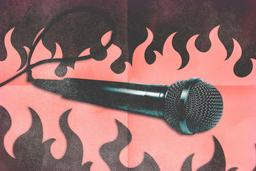
Inside her office, they laid out the premise, specifically “the idea of someone grinding themselves up to be in the spotlight,” King says, an image that would eventually become the show’s poster. Kudrow then slipped into Valerie mode, improvising a video blog while pretending that her husband, Mark, was defecating loudly in the background (King added the fart sounds himself). Strauss laughed but didn’t quite grasp the full concept. Ultimately, it didn’t matter. “Carolyn’s got a great sense of humor. She trusted me. She knew Lisa's a star,” King says. “She said, ‘I don't know what you're talking about, but go ahead and write it.’”
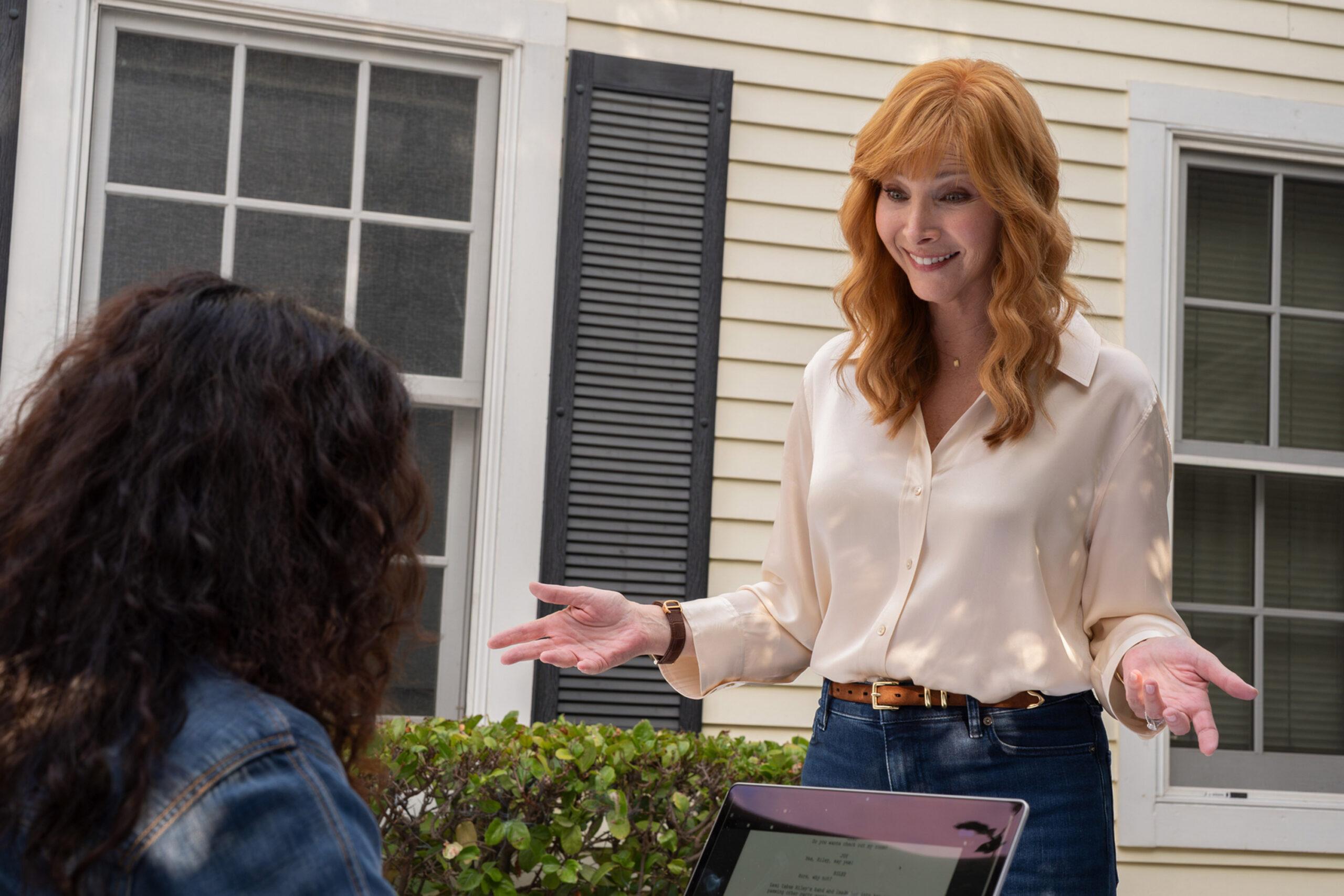
The pilot script took only a few weeks to finish. Kudrow could already feel Valerie flowing through her—how she would answer questions, present herself on camera, even behave at home. Meanwhile, King built the world around her, including Room and Bored, a coastal-set comedy designed to skewer the broad, glossy formulas of early-2000s network sitcoms. “I loved the idea of doing a beach sitcom that was so fake,” King says. “And the idea of four sexy singles was the hybrid wink to Sex and the City.” Much of the writing process happened out loud, with the pair riffing through scenes as King scrambled to transcribe Kudrow’s improvisations, down to her “Ahs” and “You knows?” “Sometimes, he'd be Valerie, and I'd be the other person,” Kudrow says. “I don't remember it being a lot of work.”
Nailing the show’s reality-TV aesthetic proved trickier. Early on, the pair looked to The Anna Nicole Show for inspiration, studying how the series followed the former Playboy Playmate through the chaos surrounding the death of her millionaire husband. But because The Comeback was built on raw, unedited footage, King realized that they needed a producer’s perspective to better understand the genre they were dissecting. Around the start of rehearsals, he acquired several bootleg VHS tapes with raw footage of The Osbournes, the MTV series that followed Ozzy and his family’s daily lives. “That's when we started to go, ‘Oh my God, there's so much downtime. It's so unedited. It's so potentially boring and embarrassing and awkward,’” King says. “That gave us the DNA.”
She was in my head. I’d be doing other things, and then she would just fly out of my mouth.Lisa Kudrow
Kudrow had assumed that reality TV meant only waiting for something interesting to happen, but the footage proved otherwise—and inspired a more prominent role for the fake show’s producer, Jane (Laura Silverman). “It's definitely more produced than I had imagined it was,” Kudrow says. “And Valerie, the unwitting participant, thinks she's in control.”
That level of manipulation—repeatedly asking uncomfortable questions, putting cameras into private areas, and fabricating story lines in the edit—is what made enjoying early reality television so ethically dubious, says Hunter Hargraves, an associate professor of cinema and television arts at Cal State Fullerton. “Anna Nicole Smith is a starlet who is kind of unaware of exactly where she is and what she's supposed to be doing in front of the camera,” he says. “You watch it and feel this sense of deep exploitation.”
The Comeback’s central conflict mostly plays out on the set of Room and Bored, where Valerie’s relentlessly upbeat persona—and the intrusive reality cameras following her every move—quickly become a nuisance to the sitcom’s writers and crew, namely Paulie G (Lance Barber), heightening the uneasy sense that reality TV might soon overtake scripted television altogether. “The minute that reality took over and became incredibly successful, a good 50 percent of the real estate in prime time went to reality,” Bucatinsky says. “It was a very real feeling at the time that reality was going to push the writer out.”
As the writers turned against Valerie on the show, King pushed his satire into darker places, highlighting “the brutality of how people are thrown away in show business, the territorialness of being on a sitcom, the fighting for jokes,” he says. In the sixth episode, Valerie decides to make amends and surprise the writers room with late-night cookies, only to peek through the blinds and see Paulie G miming sex with another colleague dressed like her. “I knew so many Paulie Gs,” King says. “There's a duality between the way they talk about actors in the room and the way they treat them in person.” In the midst of filming, King looked at the episode’s director, Greg Mottola, with a realization: “This is a documentary,” he told him. “This is the truest thing I've written.”
But at the end of its 13-episode run, HBO declined to renew The Comeback for a second season. Audiences struggled to identify the comedy without any explicit jokes or music cues. Most critics couldn’t get over the self-demeaning cruelty, with many reactions mimicking Valerie’s Aunt Sassy catchphrase: “I don’t need to see that!” Kudrow was shocked. “The ratings were the same as Entourage,” she says. “I thought HBO was for things that you didn't fully get yet.” In a last-ditch effort, King petitioned HBO to move the show from Sunday nights to Mondays, but to no avail. “I just couldn't sell them on the idea of an off-Broadway for television,” he says.
Bucatinsky has a simpler theory: “We hadn't built an appetite for watching women exploit their most embarrassing moments on national television.”
In the years after The Comeback’s cancellation, television became saturated with women who resembled Valerie Cherish. In 2006, The Real Housewives of Orange County debuted on Bravo, kick-starting an entire multicity franchise of camera-ready personalities willing to broadcast personal embarrassments. Soon after came Keeping Up With the Kardashians on E!, along with The Girls Next Door, Living Lohan, and 16 & Pregnant, reality series built around intimate, voyeuristic portraits of women.
Against that new landscape, The Comeback started to look prophetic—and worth a second look. Around 2010, the launch of HBO Go reacquainted diehards with the show online and introduced it to a younger wave of viewers. Kudrow noticed publications celebrating the show as one of the great, misunderstood series of the decade. Meanwhile, the rise of social media allowed fans to connect with and champion Valerie as an icon in ways they couldn’t years earlier. Even Damian Young, who plays Mark, could hear the renewed interest in real life. “I'd walk down the street, and someone would say, ‘Marky Mark!’” Young says. “My daughter, who at the time was about 14, started to know about it. I was like, ‘If it's trickling down to the early teen set, maybe there's something here.’”
With more distance, Valerie’s desperation to be liked in the first season didn’t read as humiliating so much as honest—a true marker of celebrity culture’s direction. “In the world of reality TV, the longer you're on camera, the more you're winning,” Hargraves says. “The Comeback was great about helping audiences really understand the constructedness of a term like ‘authenticity’ and how our understanding of authenticity really is dependent on these types of media technologies reflecting the world back to us.” The groundswell also confirmed what King had always felt about Valerie: Audiences hadn’t spent enough time with her. “And if you spend enough time with her,” he says, “you might get a kick out of her.”
In 2013, HBO felt the same way—again. The network’s new leaders, Michael Lombardo and Casey Bloys, gave King and Kudrow a call that served as a retroactive mea culpa. “We made a mistake,” King remembers their tone. “Do you want to do a second season?” The answer was a quick yes. In the years after it aired, King had considered the show “dead, buried, and gone,” he says, but “it never died inside of us.” Kudrow, meanwhile, always had Valerie on speed dial. “She was in my head. I'd be doing other things, and then she would just fly out of my mouth,” Kudrow says. But the only reason to return, they agreed, was if they could “do something that reflected television again.”
Luckily, in the nine years that had passed, Hollywood had changed. The reality shows that had saturated the networks pushed writers to find new opportunities on cable—and eventually streaming—networks, leading to a new era of prestige scripted series. The shows that garnered the most attention at that time—Breaking Bad, Mad Men, Homeland—were darker and edgier, centered on complicated, often unlikable antiheroes and featuring racier material, a darker aesthetic, and auteurist sensibilities. Everyone wanted to be taken seriously. “There was stuff being done that was very introspective, but not as introspective as it was indulgent,” Kudrow says. “There was a fascination with addiction—and someone being in amends without really being in amends.”
Season 2 of The Comeback explores all of that. At its start, Valerie hopes to pitch Andy Cohen her own Bravo show. Instead, she winds up starring in an HBO dramedy called Seeing Red, a scripted, darker reinterpretation of her time on Room and Bored—written by Paulie G, who has been through rehab for his heroin addiction. Naturally, Valerie recruits Jane to shadow her with cameras for another degrading experience. As The New Yorker’s Emily Nussbaum wrote, The Comeback had become “a scripted series about a reality series about a reality star making a scripted series about the time she made a reality show about a scripted series.”
King and Kudrow threw in “everything that was considered au courant in dark dramedies,” he says, without any expectation for a direct follow-up. As such, Valerie ends Season 2 with a more conclusive, redemptive final act: Upon hearing that her longtime hairdresser, Mickey (Robert Michael Morris), has fallen ill, she leaves the Emmys and meets Mark at the hospital, where the three of them watch her win Outstanding Supporting Actress. “We never really thought about anything past the creative impulse to end it that way,” King says. “She was now through that looking glass into the real world.”
For the next few years, Valerie existed only as a thought experiment. Whenever King and Kudrow got lunch or had a private meeting, they’d end their time together wondering the same question: “What do you think Valerie is up to?” Their answers rarely amounted to anything substantial. After Morris died in 2017, that question felt even harder to answer. Without Mickey—Valerie’s lovable confidant and, in many ways, the audience’s surrogate—Kudrow couldn’t quite see a path forward. “How do we do a show without him?” she remembers thinking. “I think we need him. It hurts too much.”
After the pandemic, that first question about Valerie came back again. Kudrow initially thought about putting Valerie on Broadway as a replacement in Chicago—a nod to an actual Real Housewives story line—then considered what she’d be doing during the 2023 SAG-AFTRA strikes. Maybe hosting a misguided Zoom table read? “We'd play around with some funny things,” Kudrow says. “That's a good bit, but it's not eight episodes’ worth of storytelling.” Finally, the brainstorming eventually led to a breakthrough. King, reflecting on the strikes, kept returning to artificial intelligence and the need for labor renegotiations in 2026. That’s when the idea hit: What if Valerie took a role in a multi-camera sitcom written entirely by AI? “It involved the same sort of terror, comedy, and unknown crescendo that the other episodes have had,” he says, noting the specific similarities to Season 1. Kudrow immediately began riffing it into existence.
Two weeks later, at a lunch meeting with Bloys, King went back into pitch mode and got an immediate yes. “Some ideas are really complicated, and you can't get them into that fucking logline,” King says. “This one was clear as a bell because everybody knew Valerie—and everybody is obsessed with AI.” Beyond the premise, Amy Gravitt, HBO’s head of comedy, appreciated how much King and Kudrow had thought about Valerie’s adaptability, determination, and constant evolution over 20-plus years.
The Comeback was great about helping audiences really understand the constructedness of a term like “authenticity” and how our understanding of authenticity really is dependent on these types of media technologies reflecting the world back to us.Hunter Hargraves
“They know who she is as a woman underneath it all,” Gravitt says. “And honestly, that's where the guts of the show is.”
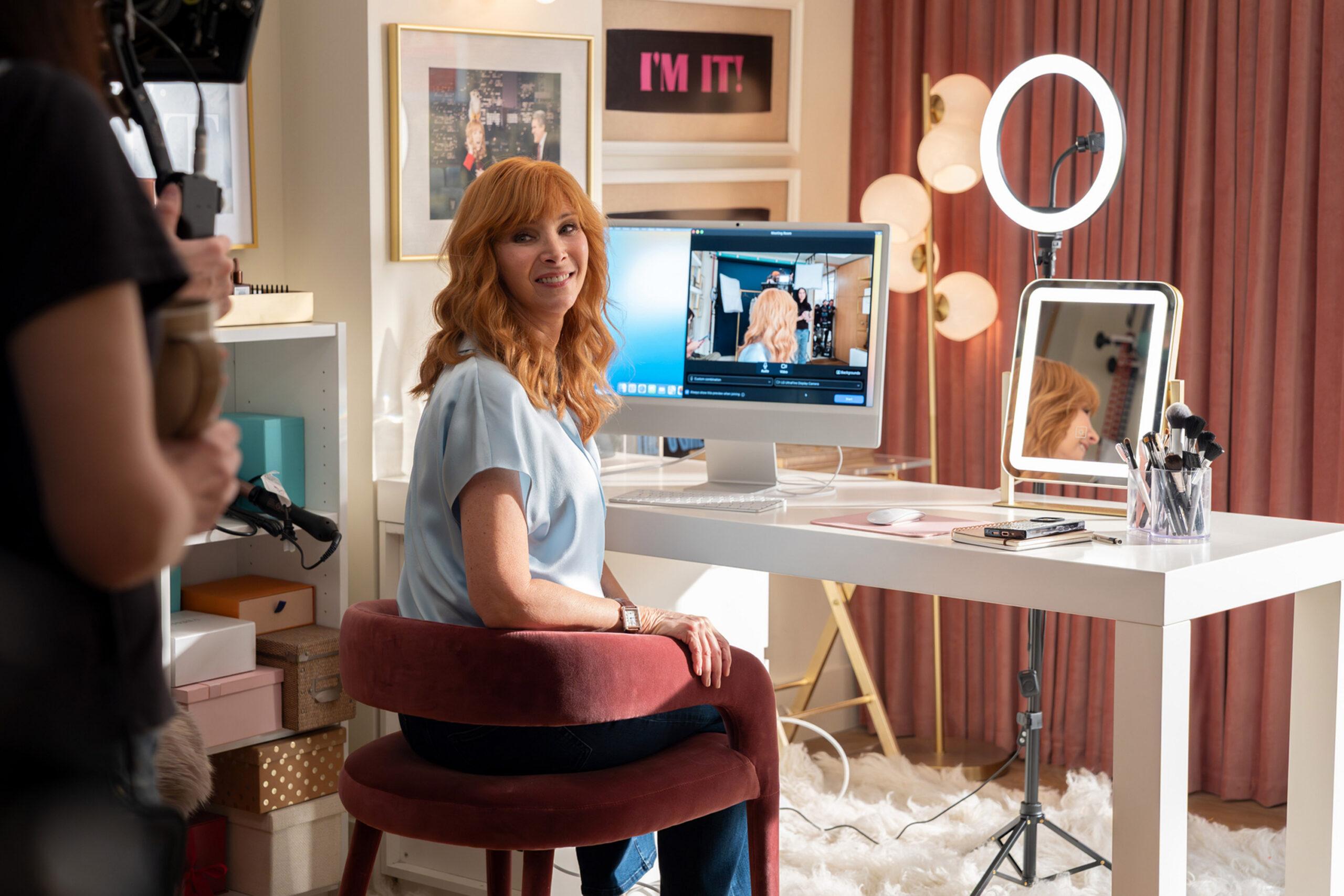
In this iteration, Valerie has kept herself afloat with a podcast (Cherish the Time), has hired a personal social media coordinator, and secretly agrees to join How’s That?—New Net’s AI mishmash of Newhart and Fawlty Towers that takes place at a New England B&B—only because the script is babysat by two human writers. To flesh out the polarizing plotline, both King and Kudrow did extensive research with a number of AI experts in the industry—everyone from “the Paul Revere world-is-ending guys to the other side, which is ‘It's just a tool.’” But they made sure not to come off didactic. “We don't know what the moral is,” King says. “We're just reporting.”
Perhaps the only certainty is that Valerie will keep adapting—and falling backward into success. It’s part of why she’s endured for so long. “There's something very appealing about the symmetry,” Gravitt says. “But I also think it takes a really strong character at the center of the show to be able to come back after 10 years and have kept the audience's interest.”
King notes that he could keep doing “the Neanderthal evolution chart and show Valerie walking through different eras of television.” But he and Kudrow seem adamant that their unique experiment will remain a trilogy. “This whole thing was a party,” King says. “We think this is it.”
Gravitt agrees but leaves the door slightly ajar: “Call me in 10 years …”