

Timothée Chalamet’s real first love isn’t movies or the Oscars or even Soulja Boy’s beloved “Crank That”; it’s the Knicks. Chalamet wastes no time in Theo Von interviews or College GameDay appearances establishing his ball-knowing bona fides, and he makes no bones about the fact that he sees his career like a high-stakes game and himself like a high-level athlete. In that infamous SAG Awards speech last year, he said he was inspired to be great the same way Michael Jordan and Michael Phelps are; in his more recently infamous conversation with Matthew McConaughey, he said that as a kid he wanted to be an athlete, not an actor, but he just didn’t quite have the talent or the physique to do it.
As he acknowledged on a podcast with an actual athlete, Carmelo Anthony, there’s a kind of envy NBA stars inspire in him, beyond just the obvious: When someone’s the MVP or a Finals champion, it’s indisputable. “These guys,” Timmy told Melo in December, “it’s like a different mentality to be athletically gifted, and it’s not subjective. Like, you average 28 points. You know that for a fact. Acting is still subjective.” The barely concealed subtext is that Chalamet wants his own undeniable proof of greatness—that elusive, taunting Best Actor Oscar, which he’d long been favored to win for his role in the sports-coded Marty Supreme. On Sunday, it slipped away from him for the third time when Michael B. Jordan took home the gold for his work in Sinners. But it wasn’t in spite of his dogged pursuit of greatness that Timmy lost the Oscar; it was probably, at least in part, because of it.
As definitive as the Oscars might purport to be, judging acting is still, like Chalamet says, subjective—and, more to the point, it can be pretty biased and hidebound. An actor can’t will himself to a win like Phelps can, pushing to the front of the pack through training and talent alone. The Oscar face-off is a political one, not a competition that’s won by sheer brute force. If anything, the long stare down between a striving actor and the Academy is a lot more like a sports movie than an actual game, following predictable narrative beats and putting young actors through their paces.


Actually, the plot of F1, a Best Picture nominee this year, offers a good example of one of the Academy’s favorite story lines—the upstart who has to pay his dues before he can claw his way to the top. As proof of this hallowed Oscar tradition, only one Best Actor winner has been younger than 30: Adrien Brody, Chalamet’s onetime rival, who got his first statuette at 29 for his role in The Pianist. Leonardo DiCaprio, whom Chalamet’s clearly modeling his career after, didn’t win until he was 41; he wasn’t even nominated for Titanic. This goes deep into Oscar history: Al Pacino didn’t win until Scent of a Woman, when he was 52; Henry Fonda didn’t get his Oscar until he was 76, for On Golden Pond. The overdue Best Actor Oscar is a long-running rite of passage, right up there with awarding actors who can manage to enunciate through a mouth full of fake teeth. The wunderkind Best Actor Oscar, on the other hand, is a narrative beat that literally doesn’t exist.
But railing against that kind of enshrined tradition is part of Timothée’s whole deal. In that McConaughey talk, Chalamet also said, “We work in a really institutionalized industry … and people can get a little uncomfortable if you’re pushing against them. I feel like that’s my job, man.” And while, to us common folk, his promotional high jinks for Marty Supreme—from the hypebeast jackets to the perfectly orange ping-pong balls to his cosplay as the monomaniacal Marty Mauser—may have been entertaining, and his egocentric pursuit of winning at all costs may be refreshing (especially compared to the respectable restraint of his fellow nominees), the institutionalized Academy might not see it that way. My favorite Oscar tradition is reading the ballots—featuring catty, candid commentary—that roll into the trades from anonymous voters, and several of them expressed a high-minded distaste for Chalamet’s antics:
“I got a little turned off by the whole publicity thing. He’s young, and he has time.”
And then, of course, in the wake of his comments about opera and ballet in the McConaughey interview:
“It's so trashy. Punching down on artists who make a fraction of what he makes, yet have spent 10 to 20 years honing their craft? I'm sorry, you know, this guy is not Philip Seymour Hoffman. And Philip Seymour Hoffman would certainly never punch down on opera or ballet dancers. That's an entitled dude. I'm sorry. I lost a lot of respect for him.”

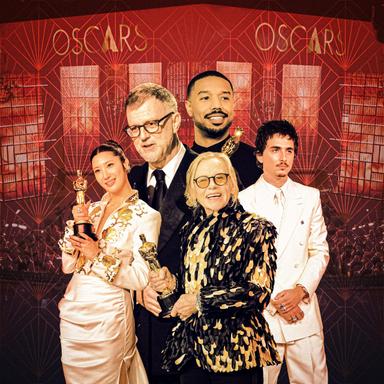
As plenty of pundits have noted, Chalamet’s opinions about opera’s and ballet’s irrelevance really got kicked up on social media on the final day of Oscar voting, so they probably aren’t solely responsible for his Best Actor loss. But his comments are broadly representative of his Marty Supreme campaign as a whole: Channeling his character, he’s been brash, loudmouthed, and competitive in a way that his more demure fellow nominees were not. Academy members, even before operagate, had been complaining. It’s interesting (and proof that he really might be the iconoclast he claims he is) that Chalamet chose to play up Marty’s tendencies on the campaign trail—Mauser himself is deeply unlikable, widely responsible for his own failures because he just can’t keep his mouth shut around the people pulling the strings. It’s not hard to imagine that the Academy felt the same way about Marty (and, perhaps, Timmy himself) that a lot of audiences did: that he’s so unlikable that the movie was unwatchable. The Oscar results (and some of those anonymous ballots) bear that out; Marty Supreme slumped off into the night with zero wins, after netting nine nominations.
In contrast, Michael B. Jordan followed a classic campaign playbook, giving heartfelt credit to his cast, crew, and loved ones in his acceptance speeches and generally letting the work speak for itself, rather than drowning it out with appearances on sports podcasts. And, of course, that’s to say nothing of his actual performance in Sinners, which is magnetic and technically impressive, the kind of leading role that the Academy generally prefers over a slimier part like Marty. When Jordan won at the Actor Awards (smack-dab in the middle of the Academy’s voting window), it really did feel like the tide changed; if you see Viola Davis that happy, don’t you want to keep adding to the vibes? Chalamet’s Best Actor odds, which had remained strong throughout awards season, even after his BAFTA loss, entered free fall after Jordan’s win. The opera and ballet comments, as late as they came, didn’t help, and now here we are: with a bereft, Oscar-less Timmy, for the second year in a row.
But if Timmy had really been embodying Marty Mauser, he’d have known that he’d need to lose—preferably again and again and again—before he could have any chance of winning. There’s no good sports movie, or awards season, without an underdog, even if that underdog really is convinced he’s the greatest to ever do it. Chalamet might be trying to game the Oscars like the NBA Finals, but the Academy’s still playing by its own sports movie rules: You earn your wins with time (and humility), not just talent.


Marty Mauser himself finishes as the runner-up in his first big competition, and the rest of the movie is just a gauntlet of humiliations he has to run through to prove himself. But unlike, apparently, the Academy, I thought the middle of Marty Supreme—in between the losing and the eventual winning—was great stuff. Marty plays tennis with a walrus, hustles at a bowling alley, chases down a dog he lost in New Jersey, and tries to pawn one of Gwyneth Paltrow’s priceless diamond necklaces after pawing her in Central Park. Those side quests feel like the real point of the movie—the life that happens on your way to winning.
I’d love to see Chalamet go on some side quests like that, too, to deviate from this single-minded pursuit of winning. He did do the less awards-friendly Wonka—as he told McConaughey, “I actually thought it was kind of punk rock to do something that wasn’t, you know, so cool.” Maybe not every project needs to be evaluated based on how punk rock it is, but those offbeat choices are what separate a career from a campaign trail. Don’t Look Up, for instance, wasn’t earning Chalamet any Oscars, but it was a rare treat to see the star in goofball mode, which feels a lot closer to his real essence anyway.
Chalamet’s a great actor, and he’s capable of doing interesting stuff that sometimes the leading-man box doesn’t let you do (after all, Marty himself isn’t exactly a traditional leading man). Why be a messiah when you could be the devil? Why keep working with the cream of the crop of auteurs when you could do an Adam Sandler comedy, a sicko horror movie, or even a TV show (or, God forbid, a superhero movie)?
In sports, greatness is defined in uniform, predictable ways: with a ring, an MVP, a scoring record. In Hollywood, greatness doesn’t have to just be decided by the Oscars. It’s defined by a long (and varied) career, sometimes camping out in the rom-com wilderness, sometimes making rando cameos, sometimes bouncing back and forth between action movies and prestige fare just to follow your fancy. Plus, an emphasis on less Oscar-friendly projects would free us all from Chalamet’s revolving-door campaign tour—which might be just what he needs to get an Oscar anyway. Of course, I might not be giving Timmy enough credit: That could be the story he’s been writing for himself all along.