

In the Oscar-nominated Bugonia, Jesse Plemons plays conspiracy theorist Teddy Gatz with the frantic conviction of a man who knows—just knows—that many of the world’s elites are actually aliens wearing expensive human skin. Frauds, in other words. He kidnaps the CEO of a pharmaceutical company named Michelle Fuller, whom he suspects is an alien, and watches her closely to evaluate whether she’s really human.
We’re going to do something similar for the NBA playoff picture. There may not be actual skin suit–wearing Andromedans in the association, but the postseason always exposes the fraudulent clubs among us. So today, we are all Teddy Gatz, studying the bona fides of each team in the projected playoff field to try to determine who is legit and who is not. Welcome to the NBA’s late-season paranoia window.
With the playoffs just one month away and several hopeful contenders trying to find answers down the stretch, now is the perfect time to run a test on this year's crop of playoff teams. Which ones actually look like champions, and which ones are just pretenders?
Tier 4: Obvious Skin Suit Wearers (Championship Pretenders)
Philadelphia 76ers
Paul George got suspended. Tyrese Maxey got hurt. Joel Embiid is currently inactive (again). When all three share the floor, the Sixers are one of the most talented teams in the East, but here’s the thing: Until they do, this team doesn’t deserve to be taken seriously.
Golden State Warriors
The Warriors are 4-9 since the All-Star break. They’re now below .500 on the season, Jimmy Butler is out for the year, and Stephen Curry isn’t playing. It’s obvious that these guys are no longer light-years ahead of the rest of the NBA. Do we really need any more stats to tell us that?
Portland Trail Blazers
At 33-36, Portland doesn’t scare anyone. It’s bound for the play-in tournament, but it has the league’s 25th-ranked offense, and its season will very likely end there. While there are reasons to be optimistic about the future—namely, the emergence of Deni Avdija, who has found his groove as one of the league’s most active driving threats—the team’s overall offensive woes mimic those of Avdija himself: poor 3-point shooting and turnovers. Portland currently ranks 29th in 3-point percentage and turns the ball over at the highest rate in the league. Those marks need to improve before the Blazers can be contenders.
Toronto Raptors
The Raptors are getting better, but to paraphrase the great Fran Fraschilla, they are probably a year away from being a year away. The team’s defense is strong enough to compete—just ask Detroit, who lost in Toronto on Sunday and scored just 44 points in the second half. But it’s the offense that will ultimately hold Toronto back. The Raptors rank 19th in offense this season, and their offensive attack, centered on Brandon Ingram and Scottie Barnes, just won’t be dynamic enough to win a playoff series against the Eastern Conference’s best teams—as evidenced by Toronto’s 17-24 record against teams that are .500 and better.
Miami Heat
Just three years ago, the Heat became the first 8-seed in the 21st century to make the Finals. Of course, Jimmy Butler is gone. But Erik Spoelstra, Bam Adebayo, and Tyler Herro are not, and when you combine their résumés with their recent level of play, this team might be the scariest underdog in this year’s postseason. They’re 9-3 since the All-Star break and have the third-best net rating in the league in that time frame. They’re also the only team to have beaten Atlanta since the break, and they’ve notched impressive wins over Houston, Charlotte, and Detroit, too.
Atlanta Hawks
After starting the season 26-30, these dudes have gone 11-1 since the break and rank first in the league in both net rating and defensive efficiency in that time frame. That’s legitimately amazing, and it raises a question: Has Atlanta morphed into a contender in real time, or is something else happening?
Sorry, Hawks fans, I’m going with “something else.” Their 10-game winning streak has featured lots of matchups against tankers, and nine of those 10 wins have been at home. Before they beat Orlando last night, their single most impressive victories since the All-Star break had been against the Sixers in Philadelphia (whom they beat by 10 points) and whatever is left of the Bucks in Milwaukee (whom they beat by 18).
That said, Jalen Johnson and Nickeil Alexander-Walker have both leveled up. The team suddenly has a new ultra-athletic brand that could translate well to playoff basketball. But I’m still hedging here. I do think that Quin Snyder has something cooking, but I’m not sure it will be fully cooked by April.

More on the NBA
Phoenix Suns
The Suns have been one of the biggest surprises this year, but it’s unfair to expect them to make noise in the postseason, especially with Dillon Brooks’s status up in the air. Plus, there’s the fact that Phoenix has a negative net rating versus Western Conference opponents this year. Oh, and they have the toughest remaining schedule among all likely postseason teams.
Orlando Magic
Shooting. It’s kind of important. And as good as Orlando has been lately, especially Desmond Bane and Paolo Banchero, this team’s anemic jump-shooting production remains its signature weakness. It currently ranks 28th in jumpers attempted per game and 27th in points per shot on jumpers. In other words, the Magic rarely take them, and when they do, they rarely make them. Bane’s recent hot streak has helped, but will his elevated play be enough to beat playoff defenses? Not if Monday’s result in Atlanta is a preview.
Still, if there’s one team in this group that could prove me wrong, it’s the Magic. They have loads of talent, and when they’re healthy, they are more than capable of beating a team like Cleveland in a playoff series.
Houston Rockets
This one hurts, literally. At a fundamental level, the regular season is simply a survival challenge, and the Rockets have lost two key players whose absence will prevent them from winning four straight playoff series this year. Both Fred VanVleet and Steven Adams are out for the season, and this team sorely misses both of them. VanVleet made 2.7 3s per game last year, and without him, the Rockets rank 26th in 3-point production.
Meanwhile, Adams is arguably the most impactful two-way rebounding force in pro basketball. In his 730 minutes of action this year, the Rockets grabbed a stunning 59.2 percent of available rebounds. While they still lead the league in that category, without him, they’re merely just very good on the glass. The postseason is a brutal meritocracy, and ultimately, few, if any, teams could survive the loss of two key rotational pieces, which is exactly what Houston will have to try to do.
Anthony Edwards during a game against the Orlando Magic on March 7
Tier 3: The Michelle Fuller Zone (Something Feels Off)
Minnesota Timberwolves
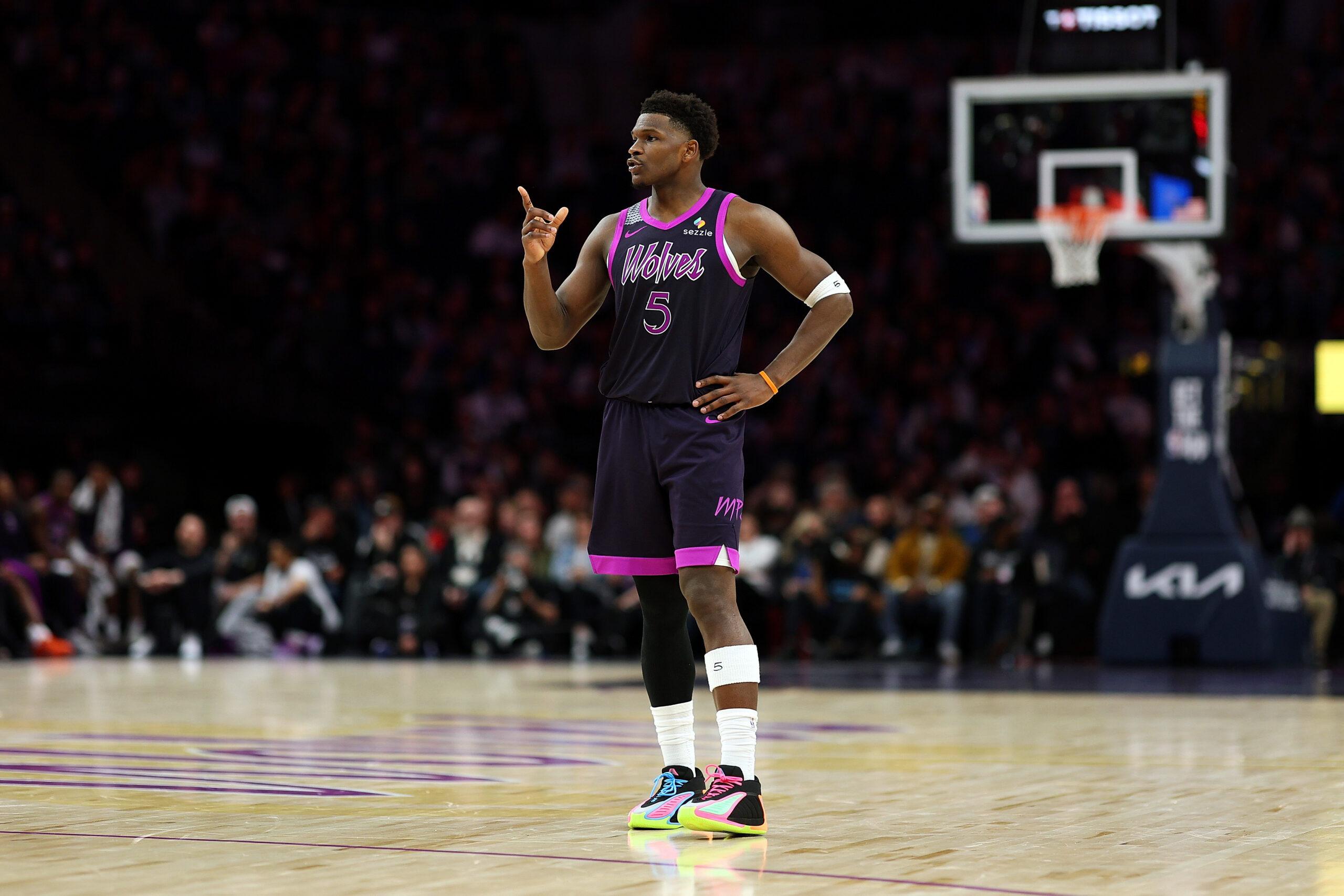
Minnesota deserves respect for making the conference finals in each of the two previous seasons, but the numbers suggest that it isn’t exactly improving this year. In those past two campaigns, Minnesota was a top-five net-rating team, but it’s slipped to 11th in the same metric this season and 22nd in the association since the All-Star break. As of Monday, it had lost four of its past five, including an atrocious performance against the Clippers in which it allowed a season-worst 153 points in a blowout loss. Minnesota had the top defense in the NBA back in 2023-24, but those days are fading in the rearview.
Cleveland Cavaliers
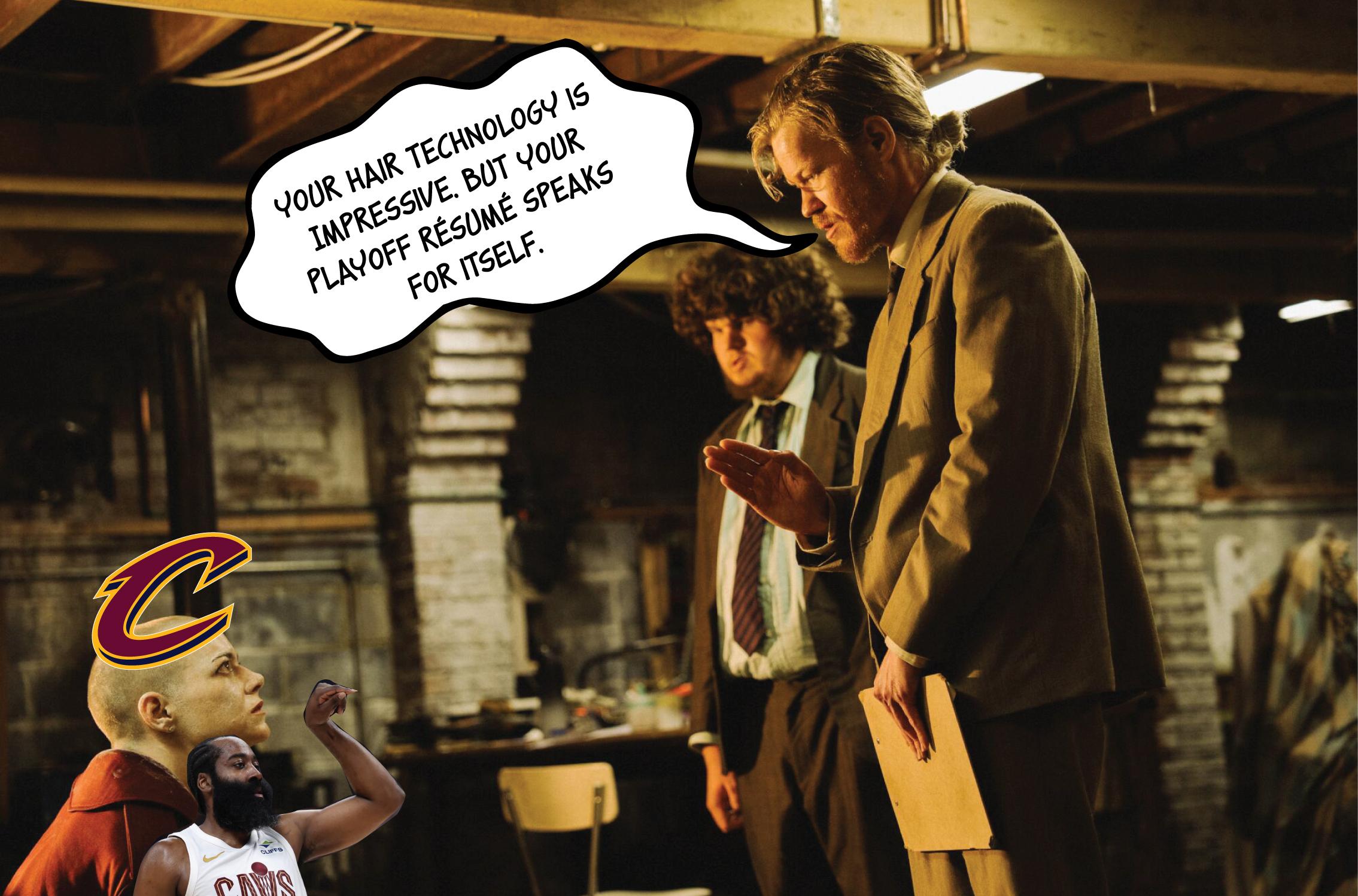
Teddy Gatz knows the power of hair, but for all the appeal of Cleveland’s Honeymoon Harden era, there are some real concerns here. The Cavs have lost five of their past 10, including a defeat at the hands of the tanking Mavericks on Sunday. When you combine that with last year’s woeful postseason performance and James Harden’s playoff legacy, it’s hard to envision this group winning postseason battles against teams like Boston, New York, and Detroit.
Los Angeles Clippers
If you’ve been following the Clippers, you’ve likely heard that they are the first team in NBA history to climb above .500 after falling 15 or more games below .500 to start the season. Their turnaround has been incredibly impressive, especially when you consider that they off-loaded James Harden and Ivica Zubac in the middle of it. Bonkers.
I’m almost willing to project a high ceiling for this team for one reason: Kawhi Leonard is arguably playing the best hoops of his life, and that is saying something. He’s one of the few players who can go out and be the best player in a playoff series. We’ve seen it before. Along with Kevin Durant and LeBron James, he’s one of three active players with two Finals MVPs in his trophy case.
But something feels off here. The salary cap circumvention scandal is hanging over this organization, and when you couple that with Leonard’s fragile health, it takes a lot of faith to believe that this team will reach its ceiling.
Los Angeles Lakers
Here’s the thing with the Lakers. They are 43-25 and have a real shot to be the 3-seed in the loaded Western Conference. They have won six games in a row, and Luka Doncic is in the midst of arguably his best stretch as a Laker. They have a top-10 offense and are arguably the best clutch team in the whole league. After Saturday’s overtime win against Denver, their record in clutch games is up to 18-6, while their net rating in those predicaments is an absurd plus-21.8.
In addition, they are by far the best 2-point-scoring team in the league, converting nearly 60 percent of their attempts inside the arc. How good is that? It’s on pace to be the best such mark for any team in the player tracking era (dating back to 2012-13).
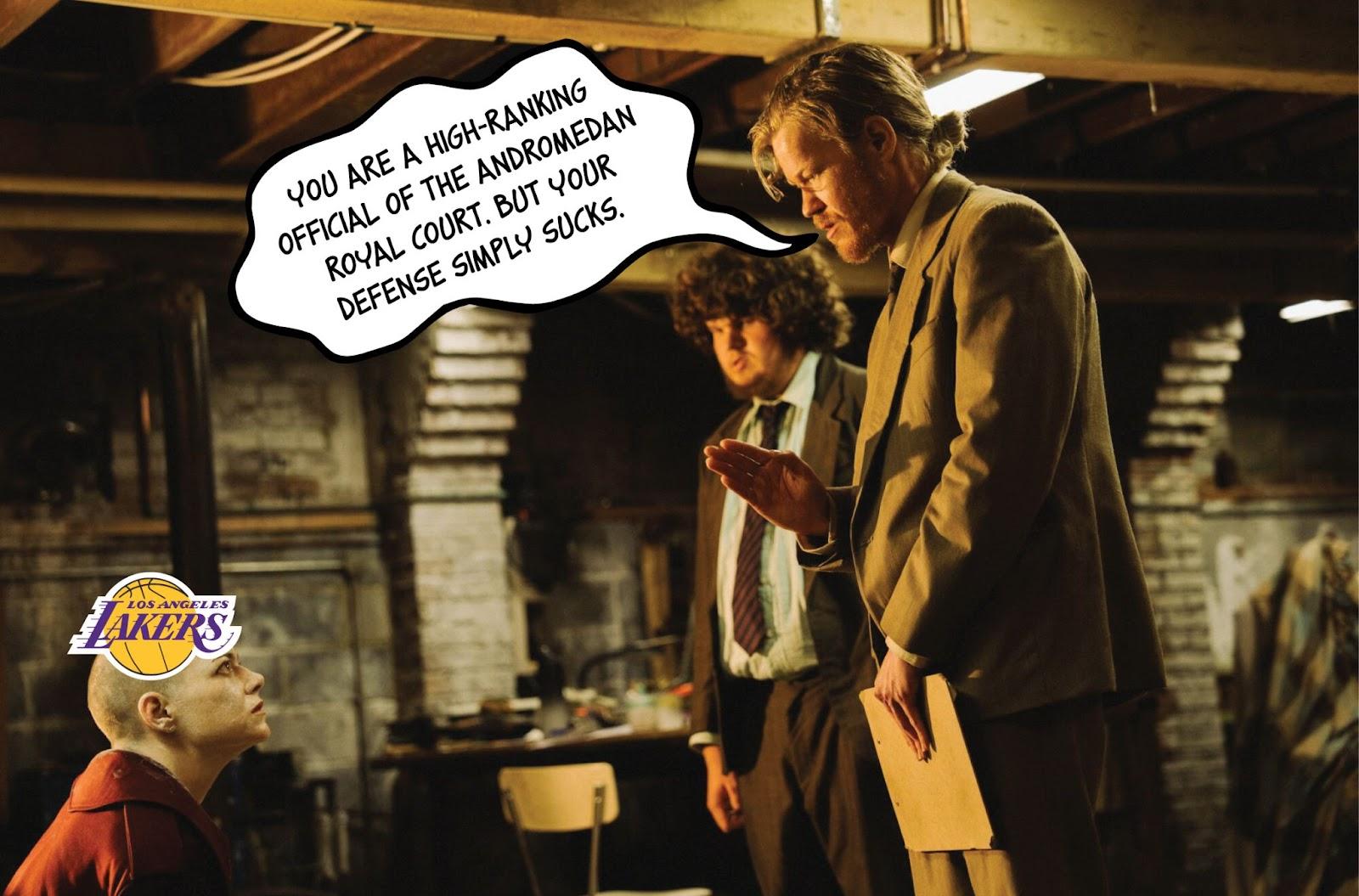
That’s legitimately impressive, but nerds like Gatz and me can see right through it. Let’s not forget that this is pretty much the same roster that got exposed in last year’s playoffs, when they got torched by the Wolves in Round 1. And this season, the Lakers have the statistical profile of a play-in team, with an overall net rating of 1.1, which is worse than both Phoenix and Orlando. Are we really supposed to think that these dudes can win the West?
There’s a familiar fatal flaw here. Last year’s Lakers had the 17th-ranked defense. This year, they rank 20th, and their reliance on Doncic and Austin Reaves to defend the point of attack is one reason the numbers show that they have the worst pick-and-roll defense among all of the likely postseason teams.
NBA history tells us that teams that can’t get stops don’t win many playoff series. Teams like San Antonio and OKC are superior in part because they are elite on both ends of the floor.
Tier 2: Probably Human (Dangerous Contenders)
Charlotte Hornets
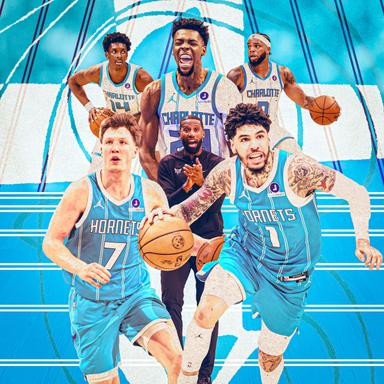
Colony collapse disorder may be a central theme in Bugonia, but in Charlotte the bees are doing just fine. In fact, consider one of the most stunning stats of this season: Since January 1, the Hornets have led the NBA in net rating, thanks in large part to owning the league’s best offense during that time. That offense is buzzing for one simple reason: Charlotte is by far the best jump-shooting outfit in the association. Since January 1, it’s led the NBA in both made 3s AND 3-point percentage—a stunning combination of volume and efficiency for any team, let alone one that has never accomplished much of anything in the NBA.
I may look foolish for putting them this high, but I’ve been obsessing over shooting data for over a decade, and I’ve never seen any team combine 3-point volume and efficiency at this level for multiple months. It’s a strong sign that Charles Lee and the Hornets are finally finding their groove—and it’s a potent one.

It starts with Kon Knueppel, who is the best 3-point-shooting rookie we’ve ever seen. There have been 238 instances in NBA history of a player taking at least 500 3s in a season, and among that massive group, Knueppel ranks ninth all time in accuracy, converting 43.8 percent of his tries. Of the eight player seasons ahead of him, five belong to Stephen Curry and Klay Thompson. This is special stuff, even by Splash Bros. standards.

Denver Nuggets
On paper, this year’s Nuggets team may not deserve this level of respect. At 41-27 but going just 8-11 since the start of February, the Nuggets barely qualify for this tier. But count me among the nerds who just can’t give up on this team. It’s been an awkward season in Denver, and there are many signs—specifically, the never-ending string of injuries to the rotation—that suggest this just might not be its year. But then again, it has Nikola Jokic and the memories from last season’s epic seven-game battle with OKC, and ultimately, that’s the real signal here.
The Nuggets offense can still reach levels that few defenses can stop. The Jokic–Jamal Murray two-man game is as good as it gets and remains the biggest reason Denver currently leads the NBA in both overall effective field goal percentage and 3-point percentage. If it gets healthy—which is one of the biggest and most consequential swing variables in the league right now—its offensive prowess makes it a threat to beat anyone.
New York Knicks
Jose Alvarado made his Knicks debut on February 8 when New York went to Boston and blew out the Celts, 111-89. It was a harbinger.
Alvarado has been a perfect addition to New York. His injection has completely changed the vibes in the Big Apple, where he’s bringing his unique blend of energy, feisty defense, and hustle to a team that desperately needed it.
The numbers prove it. When Alvarado plays, the Knicks’ statistical profile looks like that of a title contender.
Jose Alvarado Has Jump-Started the Knicks (Since February 8)
Before Alvarado arrived, the Knicks were playing average defense, ranking 13th in the league by allowing 113.4 points per 100 possessions. But since acquiring him from the Pelicans, the Knicks have had the NBA’s top defense, allowing just 106.4 points per 100. When Alvarado plays, that figure plummets below 100, which is simply remarkable. He’s ranked second on the team in deflections and third in steals since his arrival, even though he’s played only 17 minutes per game.
Now, these numbers are not sustainable over the long term, but there is no doubt that Alvarado has elevated New York. The team’s defense overall is coalescing at the perfect time. He has shored up its backcourt rotation and provides Mike Brown with defense, depth, and optionality right in advance of a vital postseason run. He also represents another stunning misstep by the Pelicans front office, but that’s a story for another time. Grand theft, indeed.
Detroit Pistons
Detroit basketball is back, and it remains all about defense. The Pistons simply don’t let their opponents shoot. They are holding offenses to 84.7 field goal attempts per 100 possessions, by far the lowest mark in the league. It’s no secret how they’re doing it: They force more turnovers than any other squad.
On the other side of the floor, there are legit questions. Yes, the Cade Cunnigham–Jalen Duren pick-and-roll gives the Pistons one of the most reliable bread-and-butter actions in the NBA. Yes, they own the league’s ninth-ranked offense on the season, and yes, they also lead the league in points in the paint per game. So what’s the problem?
The problems are downtown, where Detroit ranks 28th in 3-point production this year. And while Duncan Robinson has helped, it’s fair to ask whether its full ensemble of shooters is solid enough to overcome playoff defenses that key in on Cunnigham and force the likes of Javonte Green, Ausar Thompson, and Marcus Sasser to make shots from deep. If the role players can hit open 3s, this team can win the East; it’s that simple.
San Antonio Spurs
Yes, Victor Wembanyama is literally nicknamed “the Alien,” but in this exercise, the Spurs are coming through as probably human for one key reason: They are 4-1 against the Thunder, while the rest of the league is 11-52. They’ve also had the best offense in the entire league since the All-Star break, behind the exact kinds of 3-point-shooting numbers the skeptics worried this team would never produce. Maybe they’re still a year away, or maybe they’re already here.
Boston Celtics
Sure, Joe Mazzulla sometimes gives off extraterrestrial vibes, but the Celtics deserve to be the top Eastern Conference team, and here’s why. Not only do they possess the best net rating in their conference, but they also just got Jayson Tatum back, and their roster is starting to look as dangerous as the one that won it all less than two years ago.
Even without Tatum, Boston had found a way to become one of the best teams in the league, winning possession battles by dominating the glass and prevailing in the turnover game. With Tatum back in the fold, it immediately becomes one of the most complete teams in the NBA, on top of winning on the margins.
Shai Gilgeous-Alexander celebrates a made basket against the Timberwolves on March 15
Tier 1: Humanity’s Best Hope (the Undeniable Favorites)
Oklahoma City Thunder
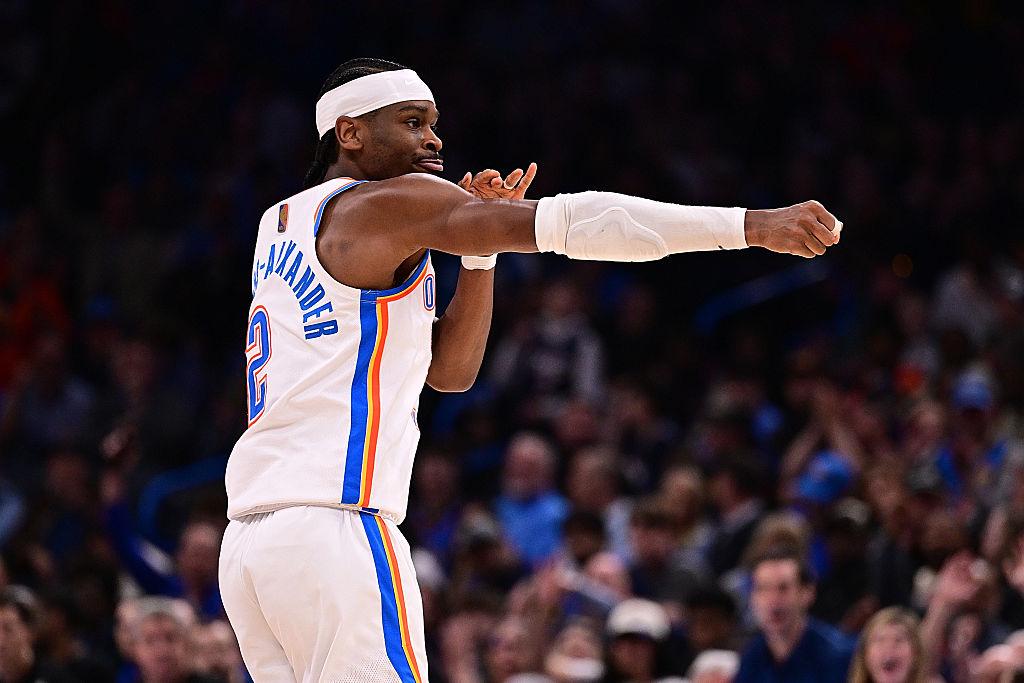
OKC still deserves to be alone here. The defending champs boast the league’s best record, its top net rating, and its top defense. Oh, and they also have the reigning MVP. After a scorching start, the Thunder struggled (by their own remarkable standards) through January and February, but they have bounced back to reclaim their status as the clear class of the league. OKC has won 11 of 12 since the All-Star break—even though its offense has ranked 18th in that time—and all eight of its games since Shai Gilgeous-Alexander’s return from injury. It’s still the gold standard.