The 10 Biggest Questions Heading Into the 2026 Women’s NCAA Tournament
Revenge is a dish best served in March. Here are the biggest clashes, rematches, and pressure points to watch.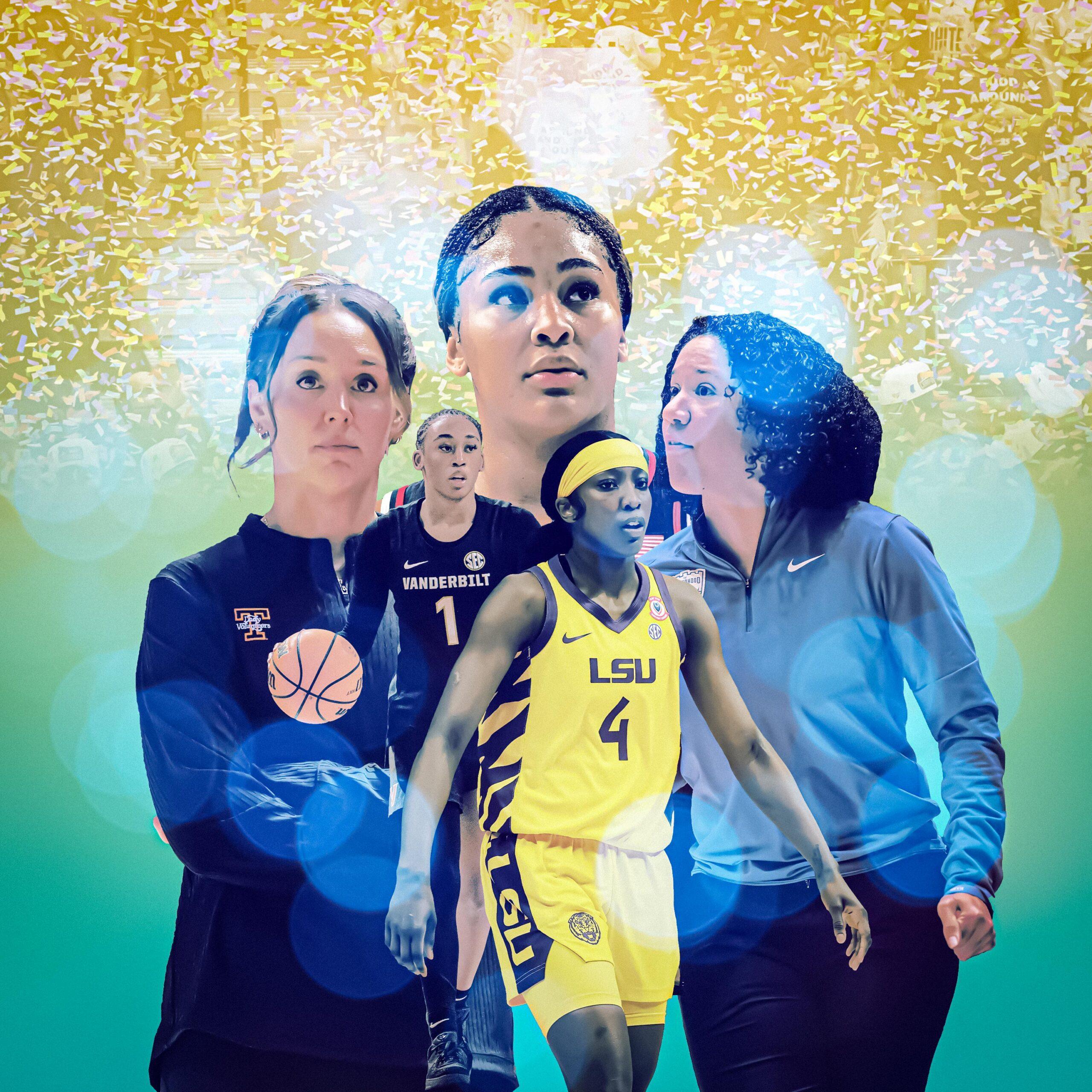

The women’s NCAA tournament committee gave with both hands on Selection Sunday, devising a bracket teeming with psychological and tactical drama.
Undefeated UConn predictably snagged the no. 1 overall seed. Tennessee and its embattled coach, Kim Caldwell, will start the tournament where its season began: against NC State. Flau’jae Johnson could get another crack at Kara Lawson if both parties make the Sweet 16. South Carolina has a chance for redemption against Oklahoma. And Lauren Betts will have to stare down her SEC demons to lead UCLA back to the Final Four. Opportunities for revenge and redemption are featured up and down the bracket, while a player of the year battle between Sarah Strong and Mikayla Blakes looms in the Elite Eight.
Without further ado, let’s fill out our brackets (in pencil, for now) and examine the biggest questions leading into the 2026 women’s tournament:
Which first-round matchup should we plan our week around?
Tennessee vs. NC State (Friday, 8 p.m. ET), for reasons I’ll explain in a second …
Which coach is under the most pressure heading into the tournament?
… OK, now.
It’s undeniably Tennessee’s Caldwell. Following blowout losses to both UConn and South Carolina earlier this season, she infamously told reporters her team had “a lot of quit in us.”
She diagnosed the Lady Vols as lacking not only in leadership—but the bona fides to lead.
“As a player, when you don’t do what you’re supposed to be doing every single day, then you don’t have the respect of your teammates,” Caldwell said. “We have a few young ones that I think could step up and lead, because they do things the right way.”
In the time since, the Lady Vols have gone 1-8, losing seven straight games and watching their season spiral down the drain. Caldwell has benched two stars—Janiah Barker, her biggest transfer portal addition, and Talaysia Cooper—in key losses. And after not playing on senior night, fan favorite Kaiya Wynn left the program.
The reasons for Tennessee's struggles are unclear, shrouding the program in mystery and intrigue.
The cynical read: Caldwell has refused to take accountability for a junky system that worked at the mid-major level but lost its edge once high-level opponents learned to read it, blaming her players instead, and even worse, showing a complete lack of understanding of their psyches.
The sympathetic read: A publicly unpolished coach, honest to a fault, tried to create an opening for a player—ideally one of her five freshmen—to take responsibility. But those younger players may have felt crowded out, on and off the court, by three transfer portal additions, including Barker, a relentless rebounder and defensive catalyst who fit the system on paper but whose love for dribbling into unwise middies has stuck out like a sore thumb.


Caldwell wouldn’t be the only coach to miscalculate a player’s fit due to the frantic decision-making the transfer portal requires, but she is under the biggest spotlight and the most scrutiny right now.
The standards for Caldwell, just as they were for Kellie Harper and Holly Warlick before her, are arguably higher than they were for the woman who built the program. The ghost of Pat Summitt haunts the imaginations of fans and lurks over every Caldwell blunder.
For now, Tennessee has publicly backed Caldwell, but the tournament could change things.
It’s not going to get any easier in the first round. Tennessee plays NC State, whose dribble-drive system features speedy guards like Zoe Brooks who are tailor-made to break the Lady Vols press. On the bright side, Khamil Pierre, a Vandy transfer, is shooting 34 percent against Tennessee for her career.
If Tennessee can survive, it’ll likely face a much more favorable matchup in the second round against Michigan, a 2-seed that hasn’t found an answer to dealing with perimeter ball pressure and presses all season long.
It’s either time for Tennessee to salvage its season or be put out of its misery.


Which potential second-round matchup is the spiciest?
Seasoned by the SEC gauntlet, the Georgia Lady Bulldogs are long and fast, and they love to trap. And they just might be built for the tournament. Iowa wing Taylor Stremlow will likely have her hands full with flamethrower Dani Carnegie—Georgia is 14-1 when she shoots above 33 percent. Beating Georgia requires patience, execution, and an understanding of where your release valves are. I’m looking to see whether Hawkeyes star Hannah Stuelke can make good decisions under duress—a hinge point for her draft potential. If Ava Heiden has options out of the double, 2-seeded Iowa will likely be fine.
The Lady Bulldogs might, in fact, provide Heiden another opportunity to level up her physicality, not unlike the back-and-forth bruising that powered her recent fourth-quarter run against Michigan. But the Hawkeyes have to be on their p’s and q’s. Georgia earned its no. 7 spot with upset victories against unexpecting Vanderbilt, Ole Miss, and Kentucky teams.
What’s the dream Sweet 16 clash?
The story of the golden era of college hoops can’t be told without including one of its most enduring cultural artifacts: the performative campiness of Kim Mulkey, her bedazzled tiger-emblazoned sweaters, and her trash-talking, name-taking LSU Tigers. College basketball is nothing without its characters, and whenever LSU is at the center of a great story, it has a knack for leaning into its role.
All of which is to say that if Flau’jae Johnson gets a rematch against Duke in the Sweet 16—and, in particular, Kara Lawson, the Team USA coach who benched her in the AmeriCup finals this summer—it’s going to be appointment viewing.
When the two teams faced off in the ACC/SEC Challenge earlier this year, it ended with Johnson hitting a 3-point dagger over Duke and screaming some choice words at Lawson:
Lawson, on the other hand, is the polar opposite of Mulkey. She’s a stoic, no-nonsense Summitt disciple who seems relatively immune to celebrity and motivates by way of internal drive rather than settling personal scores.
Duke’s performance after that loss (a 17-game win streak and an ACC tournament title) should have earned the team a no. 2 seed. One wonders whether the committee pigeonholed Duke into a no. 3 seed just to set up a rematch. Honestly, I can’t blame them.
Could we get a Sarah Strong vs. Mikayla Blakes showdown?
Please, basketball gods. Give us UConn vs. Vandy in the Elite Eight.
It would be a clash of titans. Vanderbilt’s Shea Ralph taking on her former program and mentor in a matchup between two National Player of the Year Candidates with competing cases.
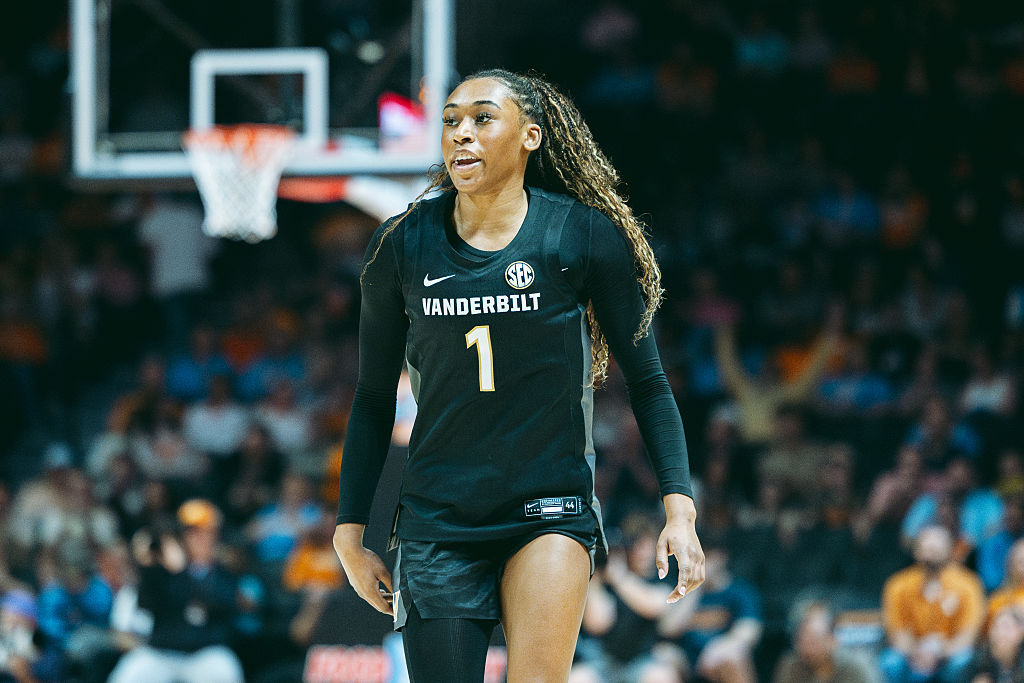
You have Mikayla Blakes, who is notching high-usage, high-efficiency 30-point masterpieces in the SEC gauntlet while leading Vanderbilt to multiple program-changing wins over bluebloods like Tennessee, LSU, and Texas.
She outruns opponents in transition, off screens, and on drives to the hoop. In her sophomore season, Blakes has responded to defenses that have a more detailed scouting report on her with sophistication. Her stop-and-pop deceleration and elite shotmaking ability combined with her driving speed give you shades of Indiana Fever star Kelsey Mitchell. The way she uses that leverage off screens (in a UConn alum’s system, it’s worth noting) to create plays for her teammates is reminiscent of Paige Bueckers.
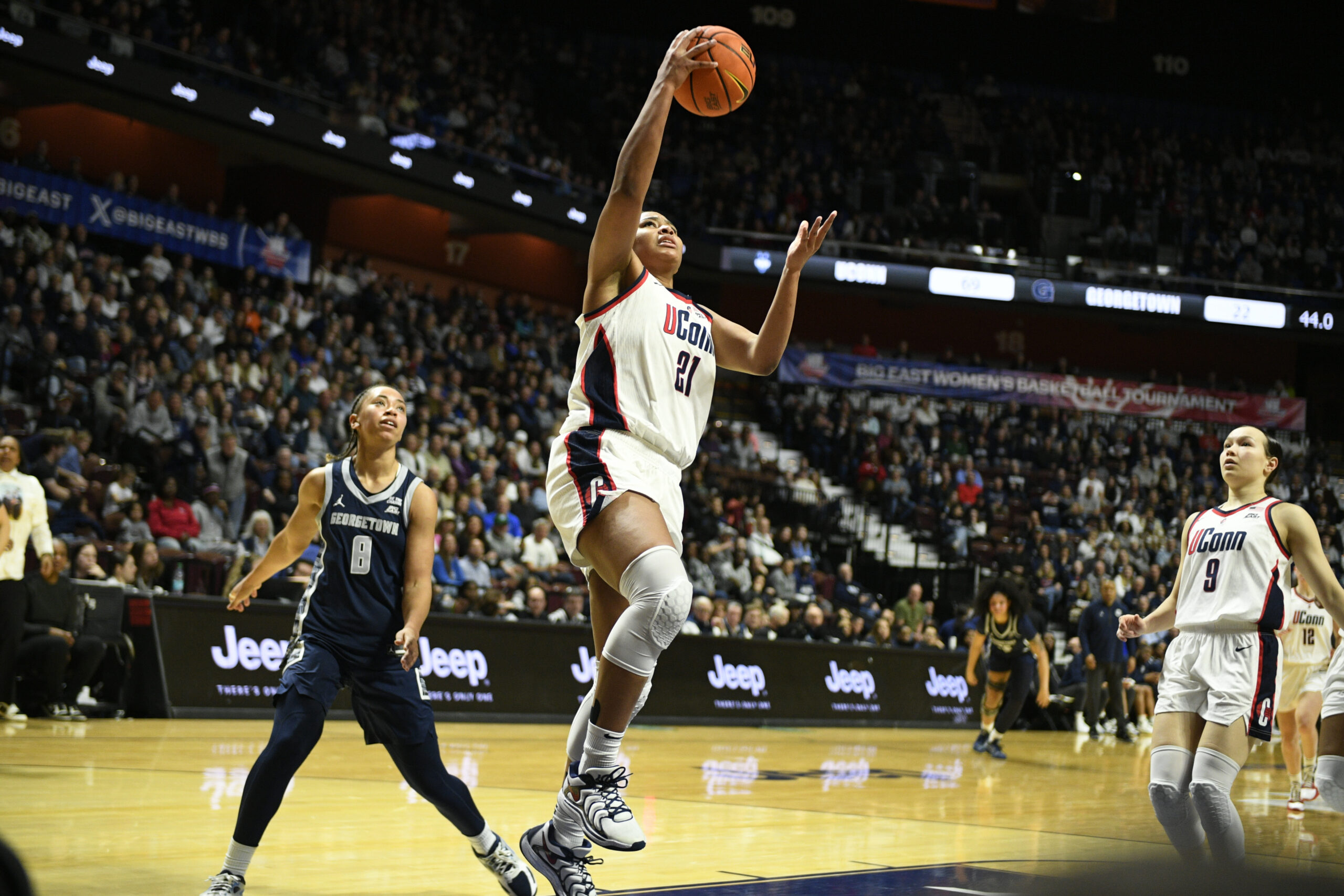
Then you have UConn’s Sarah Strong, a generational talent on a generational team for whom no prediction feels hyperbolic. She’s a positionally defiant matchup nightmare who can score and defend on every level. She could be the first player since Aliyah Boston to win both Naismith Player of the Year and Defensive Player of the Year in her first year. She would be the no. 1 pick in this year’s draft, and every other draft going forward.
Simply put, she’s the best player on the best team. Her splits—60/43/87—are chart-breaking, even for UConn’s high standards of efficiency. The only mark against her—UConn’s easy conference schedule—is unfairly brought up because of how easy she makes the game look. She drives and dumps the ball off at the last second but always seems like she has all the time in the world. She’s the smartest college player in the world, breaking presses, zones, and ankles, all while turning the ball over less than twice a game. Her touch and passing acumen garner comparisons to Nikola Jokic, with whom she also shares a quality of having deceptively fast hands and superb positional awareness.
Although they go about it in different ways, Blakes and Strong both boast incredible efficiency. It took Strong just 711 shots to score her first 1,000 points, and Blakes was on her tail at 716. Juju Watkins needed 830. Breanna Stewart needed 748. Caitlin Clark (732) and Paige Buckers (728) needed more, too.
Both Blakes and Strong are more than deserving of winning Naismith Player of the Year, the voting for which closes right before the Final Four. The results of a potential Elite Eight showdown could very well decide who wins it.
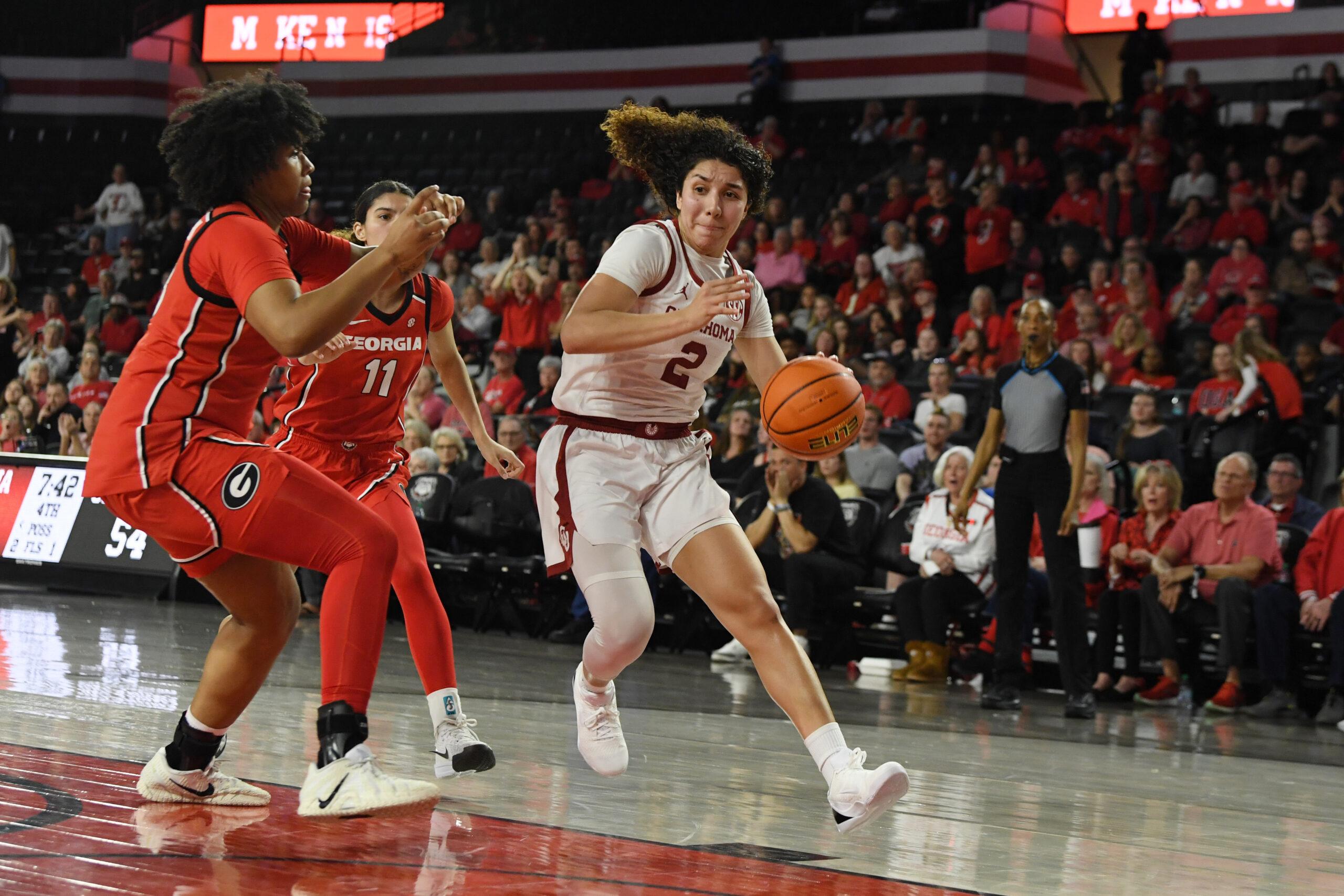
Aaliyah Chavez drives to the basket in a game against the Georgia Bulldogs
Which players could become household names this March?
Blakes is already a superstar in the eyes of basketball sickos, but there’s no better stage for a national coming-out party than an upset victory against an undefeated UConn team in a game nobody expects you to win.
If Oklahoma’s Aaliyah Chavez, a decorated high school prospect and mixtape legend who willingly fires triples from logo range, can repeat her 15-point overtime barrage against South Carolina in a potential Sweet 16 matchup, she can count on some late-night shine with Scott Van Pelt.
But Dawn Staley’s scouting-pilled Gamecocks don’t make a habit of losing to the same team twice, and I’m sure Raven Johnson in particular would love another defensive shot at Chavez.
Which teams have Cinderella potential?
While the increasing parity in women’s basketball has set the stage for some fascinating early-round matchups, I’m not sure the playing field has evened out enough—yet!—for a true Cinderella story to emerge. Consider: A no. 3 seed—including Angel Reese’s LSU team—is the lowest seed to ever win a national title in women’s basketball. What I will say is a chunk of this year’s no. 3 seeds—Duke, Louisville, and TCU—could give any team in this tournament a run for their money.
Who’s peaking at the right time?
Texas. The Longhorns secured the opportunity to open the tournament in Austin, close to home, after winning the SEC title against South Carolina in a game that featured their signature defensive exploits: a suffocating full-court press, even on the last day of the tournament, and ball pressure that made it impossible for the Gamecocks to get into their sets.
The game combined the old-school elements we know and love—like Madison Booker’s midrange mastery and a frontcourt featuring punishing offensive rebounders—with a modern twist: Aaliyah Crump, Texas’s five-star freshman recruit, is coming alive after shaking some nagging injuries, allowing the famously 3-point avoidant Longhorns to play two-way lineups with two (!!!) whole floor spacers, between her and Jordan Lee.
With a healthy Crump, Vic Schaefer could finally have a roster with enough balance to break his Final Four ceiling.
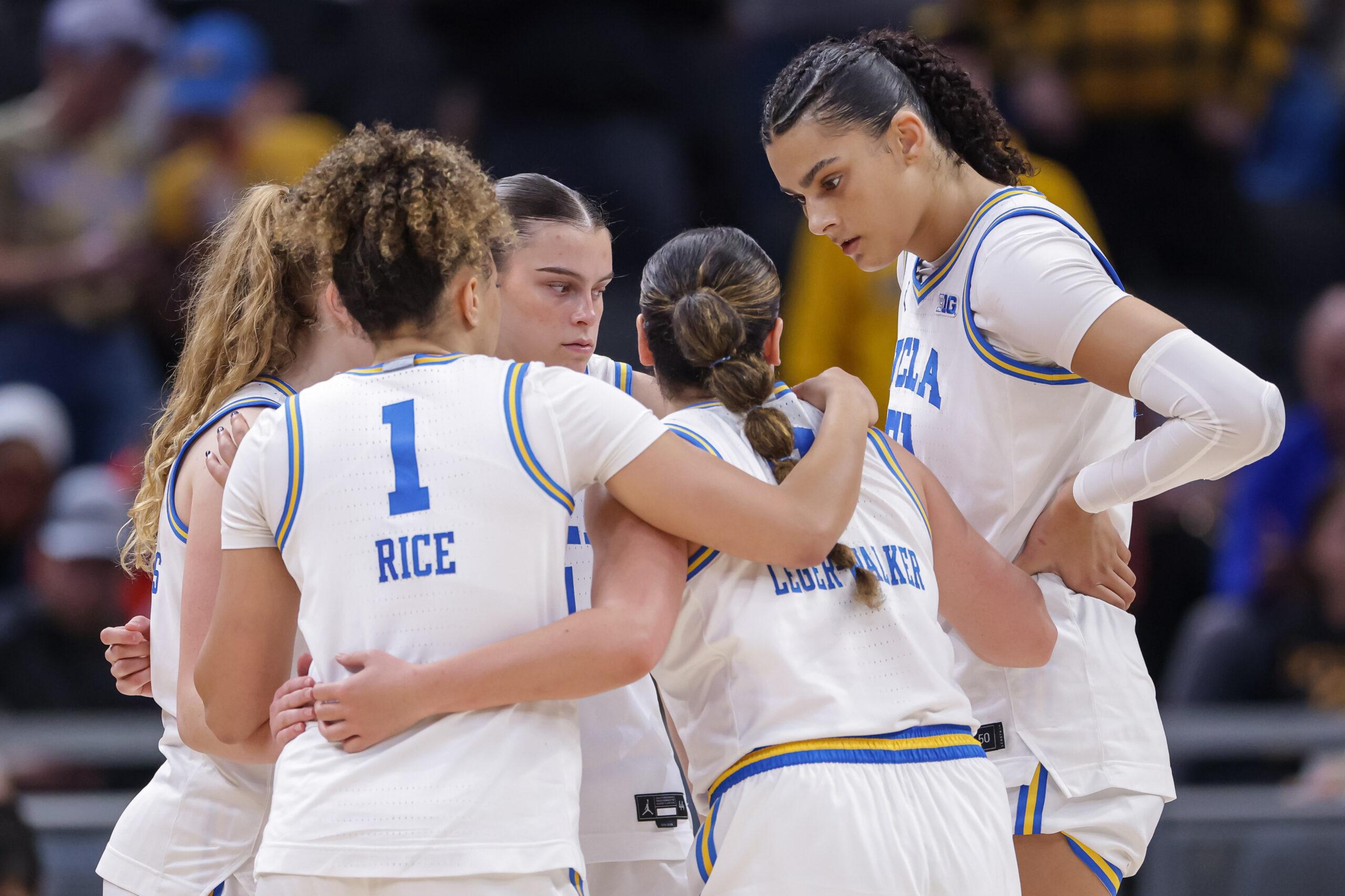
The UCLA Bruins huddle during a game against the Iowa Hawkeyes
Which no. 1 seed has the hardest path?
Despite a 31-1 record, 18 Quad-1 wins, and the fifth-toughest schedule in the nation, UCLA lost out on the no. 1 overall seed to UConn. Being the no. 1 seed in the Regional 2, in Sacramento, offers a short commute and a likely home-court advantage. But the silver linings end there. UCLA’s path to the Final Four will likely include enduring bumps and bruises from Baylor and Ole Miss before potentially facing LSU for the third straight tournament.
Lucky for the Bruins, the Tigers no longer have the frontcourt presence of Angel Reese or Aneesah Morrow to bump with Lauren Betts. UCLA, on the other hand, is spacier, more experienced, more stacked, and more organized than it was last year, with five seniors in the starting lineup, four of whom have likely WNBA futures.
KiKi Rice has refined and multiplied her drives. Transfer portal addition Gianna Kneepkens is the second-best pure shooter projected in the draft. Charlisse Leger-Walker, a Washington State transfer who was hurt last season, gives everyone—most importantly, 6-foot-7 center and projected lottery pick Betts—the ball where they like it. Betts’s improved midrange shooting will likely also give her a reprieve from banging down low.
I still have UCLA making the Final Four, and being extremely battle-tested when it gets there.
Who will win it all?
I’m going chalk: I’m taking UConn. Best player. Best team. Best coach.