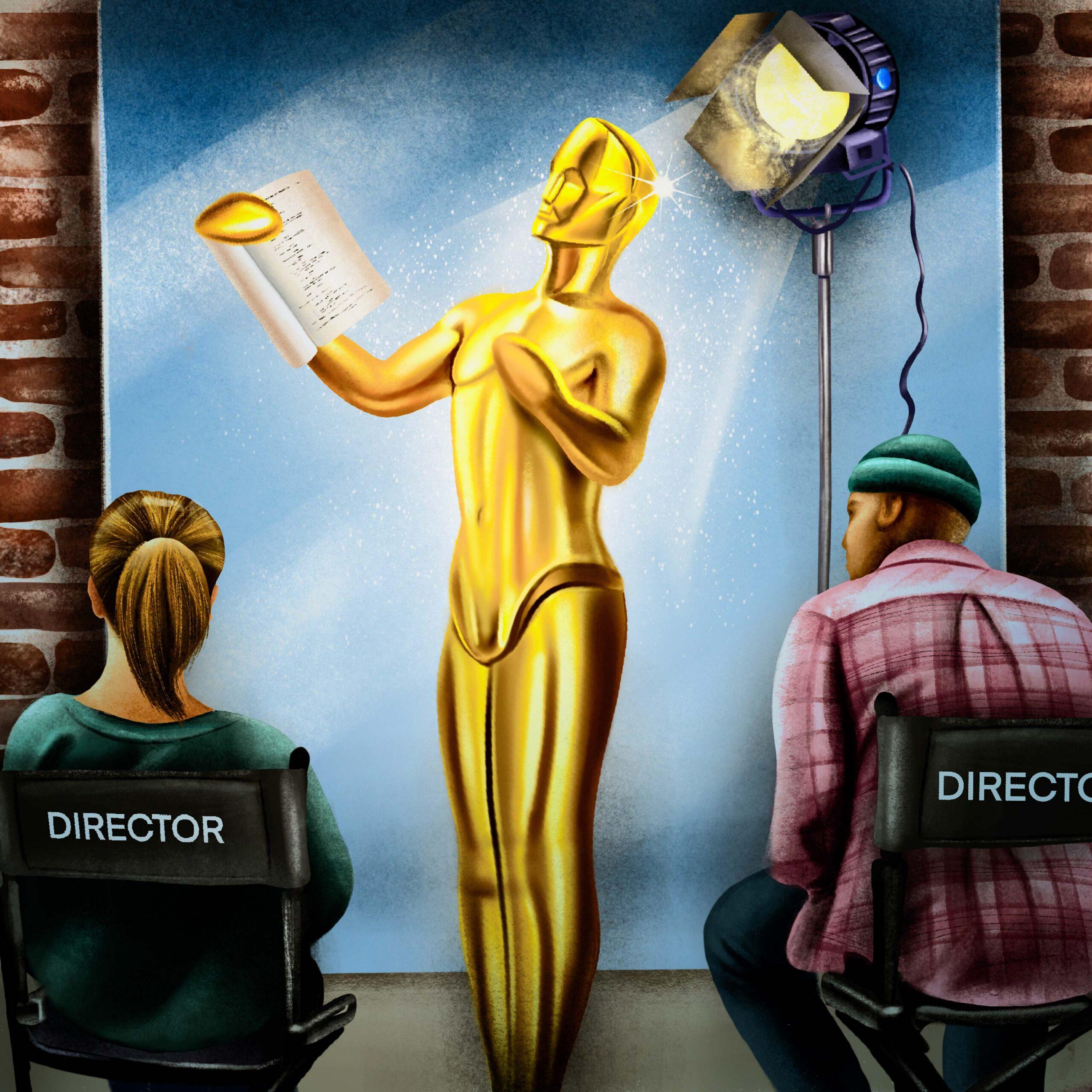

It’s not every year that there’s something new to talk about when it comes to the Academy Awards, but for the first time since the Animated Feature Film category was introduced in 2001, we have an entire new category to sink our teeth into: At March 15’s ceremony, the award for Best Casting will be handed out.
It will take a few years before voting patterns emerge and we better understand what the criteria for “best casting” are. This year, the nominees—Jennifer Venditti (Marty Supreme), Nina Gold (Hamnet), Cassandra Kulukundis (One Battle After Another), Francine Maisler (Sinners), and Gabriel Domingues (The Secret Agent)—map directly onto the list of Best Picture nominees, and the category’s short list also didn’t stray very far from this award season’s buzziest entries (Frankenstein, Sentimental Value, Sirāt, Weapons, Wicked: For Good). As Adam Nayman writes for The Ringer, it’s unclear what shape the category will take, but the hope is that it will eventually find room for more off-the-beaten-path selections.
One thing is for sure: The Academy’s acknowledgment of superior casting direction has been a long time coming. With that in mind, we at The Ringer wanted to use this development as an opportunity to go back in time and decide which movies and casting directors should’ve been holding statuettes had the new category existed back then. To do so, we assembled our own academy, and they voted on the casting efforts of the past 25 years in film. Abiding by the Academy’s rules for eligibility, each voter selected five nominees and, from that list, one winner. Each ballot was tabulated to arrive at our list of nominees and winners.
Before we find out which movie and casting director will hold the first actual Best Casting award, here are the ones that should’ve won it over the past 25 years. —Andrew Gruttadaro
2000
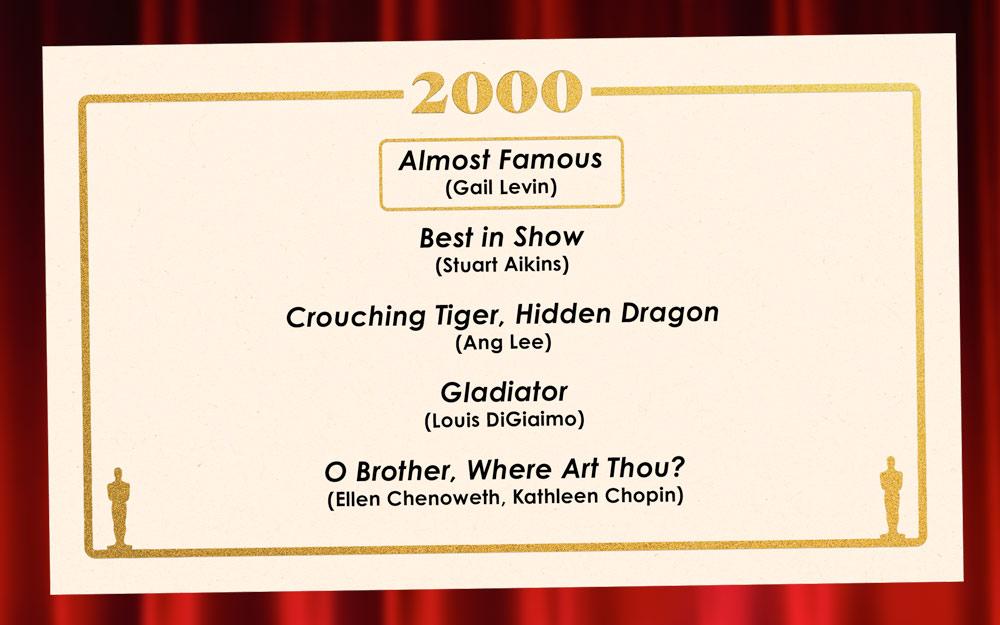
Almost Famous is one of the great ensemble films, and what an ensemble it is. Everyone in this symphony orchestra of a movie strikes just the right note, from the guys in Stillwater to their “Band-Aids” and from the young William Miller to all the people he speaks with over the phone (his rumpled, perfect mentor; his chill yet agitated editor; his mom, freaking everyone out). There are so many great people and performances in this movie that it’s impossible to get to them all, because no matter how many actors I list, I’m leaving out about three times as many even better ones. Still: extra-special appreciation for Frances McDormand, Philip Seymour Hoffman, and the guy who feeds the mouse to his snake.
That Cameron Crowe coming-of-age film very narrowly edged out millennial finalist Crouching Tiger, Hidden Dragon, a “true experiment” of a martial arts movie spotlighting Michelle Yeoh, Chow Yun-fat, and Zhang Ziyi. While there were a couple dozen films nominated by Ringer staffers for the year 2000, the top five vote getters emerged clearly: Rounding out the group of finalists were Best in Show (how lucky that Christopher Guest directed Jane Lynch in a Frosted Flakes ad!), the life-changing O Brother, Where Art Thou?, and Gladiator (which earns its thumbs-up just for the Joaquin Phoenix casting choice). Still, what do we love most about the casting in Almost Famous? To begin with: everything. —Katie Baker
2001
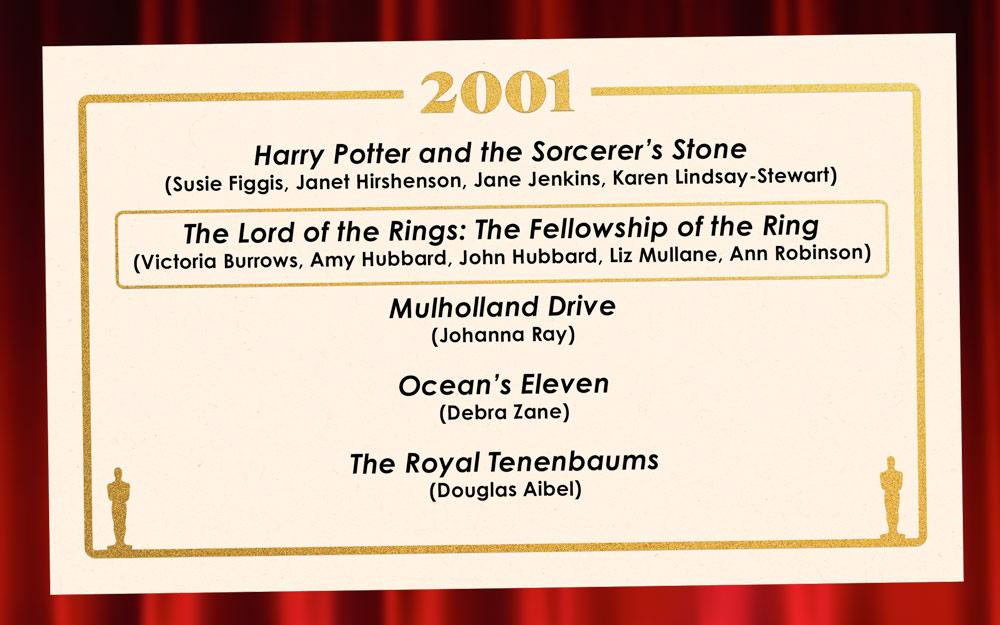
What a fucking year for casting: a perfect microcosm of what the job can be, from meeting the challenge of spiritually faithful adaptation to finding diamonds in the rough, from picking the right leads to assembling an ensemble where no role is bigger than another. The five movies nominated here are unassailable from a casting standpoint, to the point where genuinely elite honorable mentions like Gosford Park and Wet Hot American Summer barely seem like they have a valid argument for inclusion.
Douglas Aibel’s work on The Royal Tenenbaums and Debra Zane’s work on Ocean’s Eleven are masterful examples of filling out a cast. Sure, maybe it’s easy to put Gene Hackman or George Clooney and Brad Pitt into lead roles, but to also land pitch-perfect grace notes like Danny Glover as Henry Sherman, or Bernie Mac as Frank Catton—or Carl Reiner as Saul Bloom, or Andy Garcia as Terry Benedict—is what makes those casts iconic. As for Mulholland Drive, Johanna Ray's collaboration with David Lynch resulted in one of the greatest casting success stories of the 21st century when they took a chance on Naomi Watts. In August of 2025, The Ringer named Watts’s performance as Betty Elms and Diane Selwyn the best of the century—before 2001, Watts was a relative unknown, struggling and on the verge of leaving the business altogether.
And then there’s the work done on the dual launches of two massive franchise adaptations. The pressure to find the right faces for the Harry Potter and Lord of the Rings series can’t be overstated: Any wrong turn of the dial, and each project could have been DOA before a sequel was even made. What both of these casting teams pulled off is almost inexplicable, finding actors who not only fit into the imaginations of massive fan bases but also ended up growing with their roles as the franchises progressed. In both cases, the casting choices made—Daniel Radcliffe as the titular Harry Potter, Emma Watson as Hermione Granger, Alan Rickman as Severus Snape, Richard Harris as Dumbledore; Viggo Mortensen as Aragorn, Ian McKellen as Gandalf, Christopher Lee as Saruman, Elijah Wood as Frodo, Sean Astin as Samwise Gamgee!—are so good that the actors became the definitive faces of the already iconic characters they were playing. Ultimately, our nod goes to Fellowship of the Ring, but you really couldn’t go wrong with any of these five movies. —Gruttadaro
2002
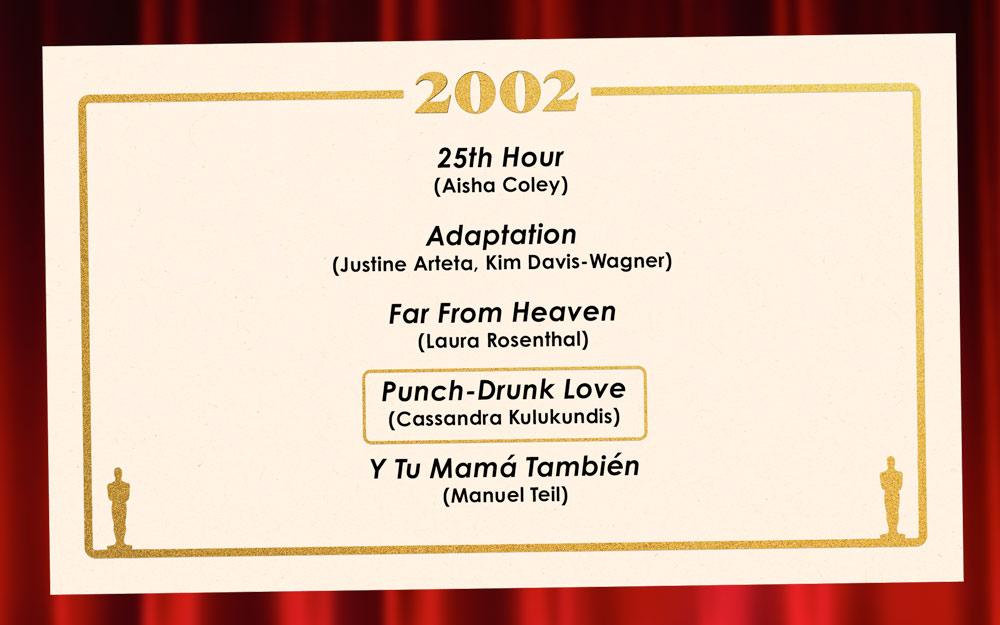
At least one film featuring Philip Seymour Hoffman would have to be nominated for its casting in 2002—and our voters picked two. 25th Hour brought the ever-engrossing actor together with Edward Norton, Barry Pepper, and Anna Paquin for an intense post-9/11 therapy session of a movie, full of long, more or less realistic and juicy conversations about guilt, desire, and NYC’s indomitable spirit. But it was the other PSH-starring film, in which the actor got to adopt a much more explosive persona, that won our prize, perhaps because it also allowed another performer to fully reveal the extent of his range. Adam Sandler may not have the sex appeal of Gael García Bernal and Diego Luna in Y Tu Mamá También, or the pedigree of a Meryl Streep or a Nic Cage, who both give life to different facets of Charlie Kaufman’s tortured personality in Adaptation. He doesn’t play self-doubt with the same subtlety and grace as Julianne Moore in Far From Heaven. But the Sandman has a love in his life, and it makes him stronger than anything you can imagine: His Barry is electrified by his passion for Lena, played by Emily Watson, who’s simply one of the greatest British actors of her generation. The unlikely yet more than credible chemistry between these two wildly different temperaments reminds us of how exciting and experimental casting can be. Punch-Drunk Love deserves its award for the way its group of performers managed to create an entirely new world, full of unexpected and thrilling possibilities for human connection. —Manuela Lazic


2003
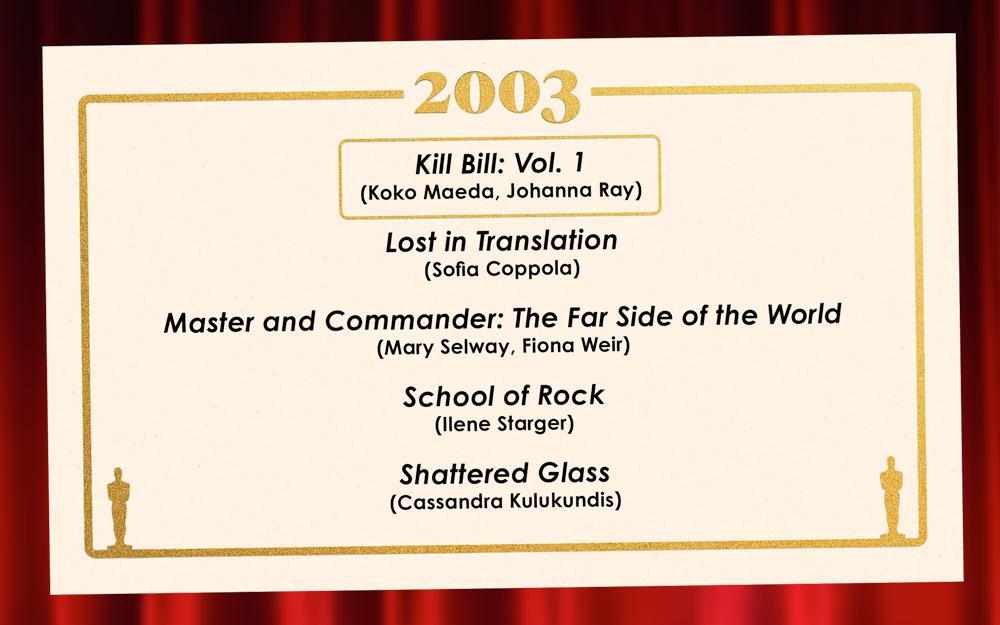
The best-cast movies have an air of inevitability around them—if these exact pieces weren’t in place, the whole thing would cease to exist. Kill Bill: Vol. 1 is that kind of movie; there’s no Bill without the Bride, and there’s no Bride without Uma Thurman. That’s literally true—Thurman and Quentin Tarantino came up with the character together—but also spiritually undeniable. Uma as Beatrix Kiddo is a gorgeous and unrelenting instant icon, and the movie loves her as much as Elle Driver hates her.
Speaking of Elle Driver: Kill Bill is molded around the rest of the Deadly Viper Assassination Squad as much as it is around Thurman. Tarantino paid homage to Daryl Hannah’s on-screen history with the berserk, becoming Elle; he rewrote O-Ren Ishii because Lucy Liu was the only actor who could be his yakuza boss; he saw Vivica A. Fox on a VHS cover and knew he needed her in his movie. Bill himself was a stroke of luck; Tarantino landed on a note-perfect David Carradine only because he couldn’t get Warren Beatty or Kevin Costner. (Can you imagine?)
But Kill Bill’s casting triumphs don’t take anything away from our other nominees. School of Rock fought hard for the win (losing to Kill Bill by only two points) on the shoulders of its kid actors—who not only could act, play instruments, and sing like angels but were all, down to the smallest groupie, extremely fucking funny. Lost in Translation has the same air of inevitability as Kill Bill: There’s just no one besides Scarlett Johansson and Bill Murray who could have been Charlotte and Bob. Sofia Coppola obviously knew that, too, and she spent years trying to track down the elusive Bill Murray through nepo-baby contacts like Al Pacino, Wes Anderson, Bob Costas (?), and Mitch Glazer. Shattered Glass, on the other hand, lucked into its best bit of casting, landing Peter Sarsgaard as the assiduous New Republic editor Charles Lane only after Greg Kinnear dropped out (again—can you imagine??).
Master and Commander might have the most technically skilled cast, and I’m not just talking about Russell Crowe’s and Paul Bettany’s stringed instrument skills. The rest of the cast was maybe even more impressive: Judy Bouley, who worked on casting the movie, found the ship’s crew during a monthslong search in sailing clubs and dockyards; they had to look like they’d weathered the Napoleonic Wars but also had to be able to operate an 18th-century British frigate. Which is what makes Master and Commander not just an impeccably cast movie, but the perfect dad movie. —Helena Hunt
2004
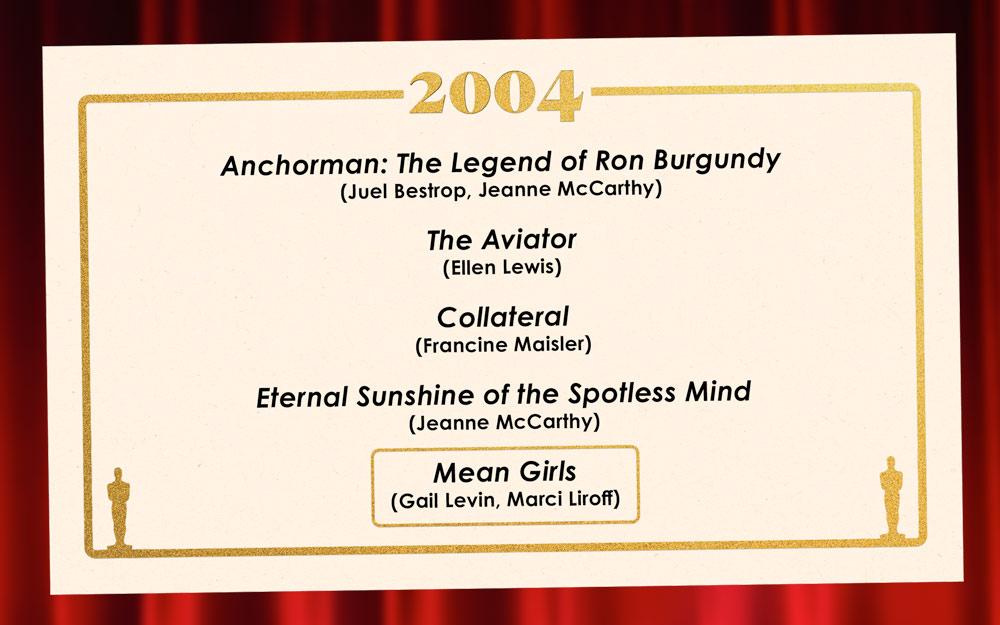
It’s impossible to say whether the alternate universe where Lindsay Lohan played Regina George, Kristen Stewart played Cady Heron, and Blake Lively played Karen Smith is still one where Mean Girls was one of the biggest pop culture sensations of the 2000s. But it’s hard to imagine the Plastics without Rachel McAdams as their queen bee. Sweet, endearing McAdams, who starred in The Notebook this very same year, subverted her signature warmth in one of the great villain performances of modern cinema, transforming a potentially stock bully character into a honey trap on heels. Lohan was reportedly afraid of her on set, and, hey—if it ain’t broke. All this to say that the impulses of director Mark Waters, writer Tina Fey, and casting director Marci Liroff were ultimately spot-on (very fetch, very grool), with Amanda Seyfried, Lacey Chabert, Lizzy Caplan, Daniel Franzese, and Jonathan Bennett rounding out the ensemble of what would become the defining teen film of its decade.
That said, this was a hard-fought victory. Mean Girls spent basically the entire voting process neck and neck with Eternal Sunshine, until one voter pushed it over the edge to take the win. While the process ultimately yielded this batch of nominees and winner, this was one of the years with the least agreement in this entire exercise, with 10 movies ultimately chosen to win by our body of 13 voters. Just missing out on nominations were 13 Going on 30, Closer, Dogville, Million Dollar Baby, Shaun of the Dead, and Sideways. —Kyle Wilson
2005
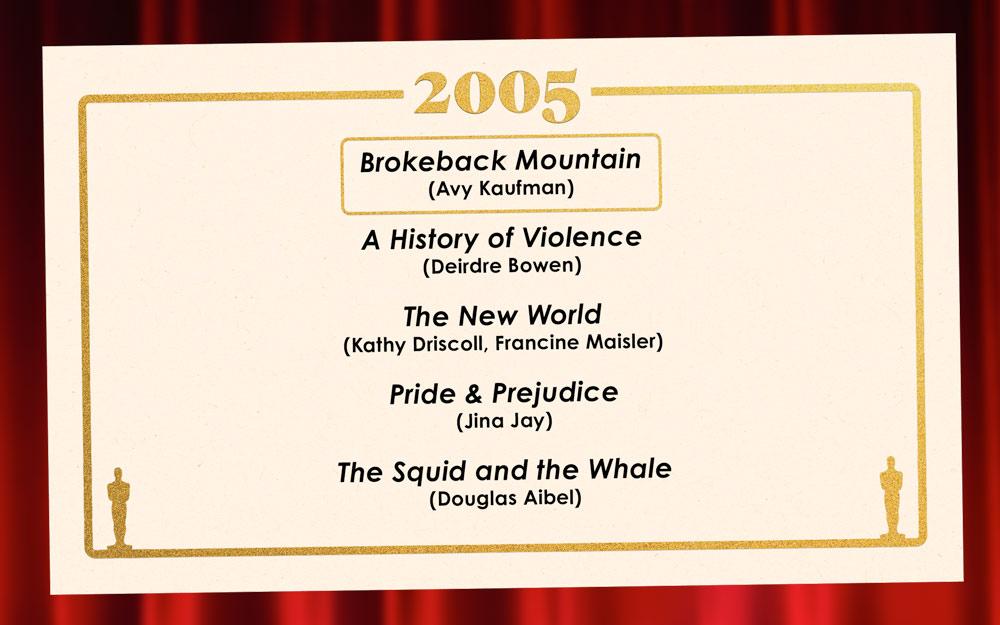
Had the category existed back then, the sheer size of Crash's ensemble probably would have given it the edge. But 2005’s most commendable casting jobs filled out smaller call sheets, placing emerging talent alongside well-utilized stars and veterans. Jesse Eisenberg’s spectrum of brainy neurotics begins in earnest with The Squid and the Whale, which put him toe-to-toe with an uncommonly prickly (and prickish) Jeff Daniels; it took the vision of casting director Douglas Aibel, a frequent Wes Anderson collaborator, to see such a pompous tyrant in the one-time Harry Dunne. Speaking of casting against paternal type, Donald Sutherland had to be talked into playing a beaming girl dad for the ages in Pride & Prejudice—an unintuitive choice that paid off every bit as well as securing a radiant Keira Knightley for the lead. While that film capitalizes fully on her burgeoning star power, A History of Violence subverts Viggo Mortensen’s, ingeniously playing with our Lord of the Rings associations as it hides the dark side of a seemingly heroic family man between more outsized villain roles for Ed Harris and a goateed William Hurt.
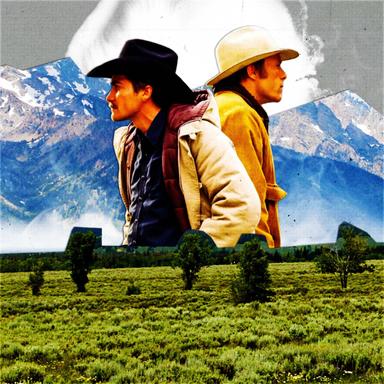
If more really is more, The New World would be a worthy winner: The casting team for Terrence Malick’s historical epic hired dozens of Indigenous performers—including an astonishing Q'orianka Kilcher, the 15-year-old actor who more than holds her own in scenes opposite Colin Farrell and Christian Bale. But casting is often about seeing the potential for a powerhouse turn, and in that regard, no one climbed higher than Brokeback Mountain casting director Avy Kaufman. In Heath Ledger and Jake Gyllenhaal, she found two young stars on the cusp of greatness—both former child actors, just like their terrific costars Michelle Williams and Anne Hathaway—and helped convince them to take roles that might risk their reputations in a homophobic Hollywood. The performances (especially Ledger’s anguished turn as the closeted Ennis) speak for themselves and for Kaufman’s savvy instincts. Also, consider this retrospective award revenge for Crash’s shocking Best Picture victory over Brokeback—still one of the most upsetting upsets in Oscar history. —A.A. Dowd
2006
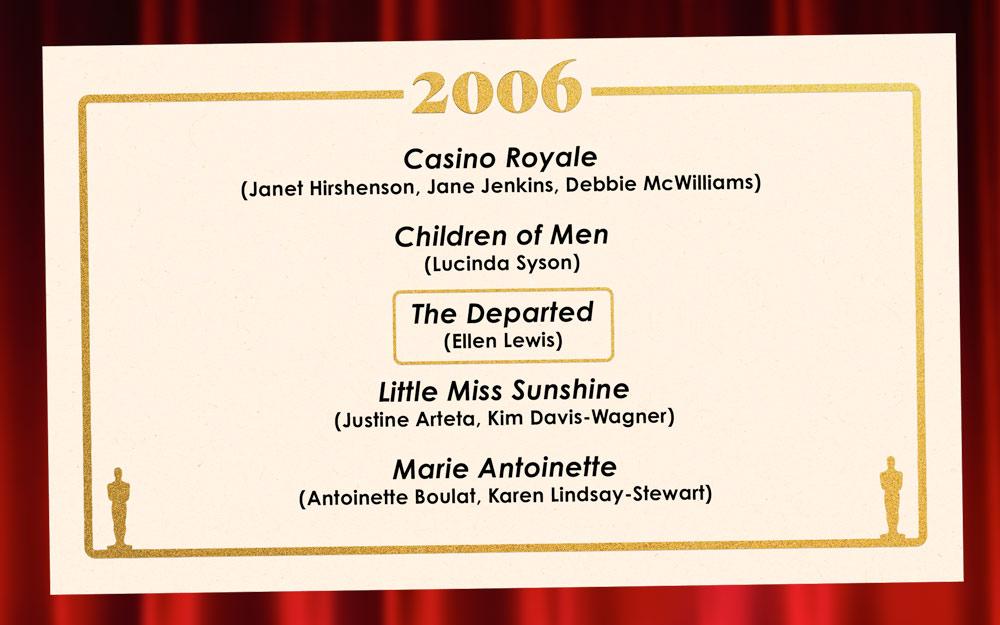
No surprises here. The Departed has one of the splashiest casts of all time—Jack and Leo and Matt, plus Mark Wahlberg and Martin Sheen and Alec Baldwin—and it’s a rare example of supergroup casting that doesn't feel gimmicky at all. Each member of the Intense Dude All-Star team here really inhabits his character. Only two things kept the hypothetical Oscar from feeling inevitable. (1) Women? The Departed has heard rumors that they exist. Apart from Vera Farmiga, it has discovered no evidence to confirm the hypothesis. (2) Degree of difficulty: Being Martin Scorsese’s casting director must be like having a magic fishing net. The fish literally hurl themselves into it. Only instead of catching a flounder, you got Jack Nicholson (a clear upgrade unless you're very, very hungry).
Still, there was no doubt The Departed would prevail here. Casino Royale and Little Miss Sunshine put up a good fight, but “Jack Nicholson in a Martin Scorsese movie” is the Usain Bolt of casting Oscar elevator pitches. It's never going to lose. Children of Men fucking rules, though. —Brian Phillips
2007
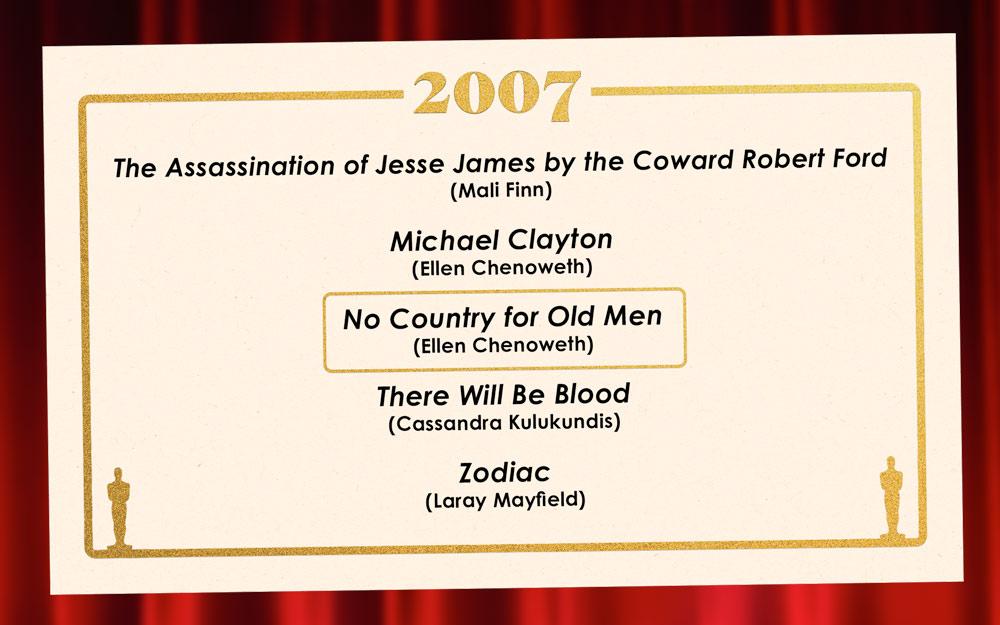
First of all, let’s pour one out for Superbad, which I’m informed was narrowly edged out for the final nomination here by Michael Clayton; the legendary stories about the future McLovin, Christopher Mintz-Plasse, sending a selfie to the film’s casting director in lieu of a headshot—and having to film his sex scene with his mother on set—can’t quite compete with the around-the-edges casting in Michael Clayton. The latter film features maybe the greatest one-scene performance of the 21st century, by Broadway stalwart Denis O’Hare—as a hit-and-run driver who, to be frank, doesn’t like the way this is going—and Sydney Pollack in Eyes Wide Shut mode as an avuncular corporate monster. Using Earth goddess Tilda Swinton as a pit-stained corporate schemer is the icing on the cake (and she deserved her Oscar).
The top contenders, though, are a pair of all-American period pieces (three if you count The Assassination of Jesse James, which sneaks in a Nick Cave cameo at the buzzer); our voters followed the Academy’s lead in elevating No Country for Old Men above There Will Be Blood. Which is, of course, fair enough: Tommy Lee Jones, Josh Brolin, and Javier Bardem are so separately and collectively on point here that it’s impossible to imagine other actors in their roles, or to read Cormac McCarthy’s source novel without picturing them—especially Bardem’s Terminator glare and pageboy-from-hell haircut. The film makes wonderful use of Woody Harrelson as well, as a counterfeit cowboy whose 10-gallon swagger turns out to be a facade. Best of all is the seemingly left-field selection of the extremely Scottish Kelly Macdonald to play trailer bunny Carla Jean, which paid off with one of the most powerfully understated scenes in the Coens’ canon.
All of that being said, the sheer chutzpah of the casting in There Will Be Blood warrants consideration: not just getting Daniel Day-Lewis to reprise and refine his act from Gangs of New York but pitting him against the untested Paul Dano, who was swapped into the role of Eli Sunday after shooting had already begun and the original choice did not pan out. Crucially, the film’s casting director, Cassandra Kulukundis, found a superlative nonprofessional child actor for the role of Daniel’s adopted son, H.W.—Dillon Freasier, wide-eyed and watchful. She also found room for sketch-comedy royalty in the forms of Paul F. Tompkins and Jim Downey, the latter unrecognizable as real estate broker Al Rose (as in “Don’t be thick in front of me, Al”). Only dangerous lunatics, haters, and punk trash could resist seeing the service representative of First CityWide Change Bank as Daniel Plainview’s moneyman. —Adam Nayman
2008
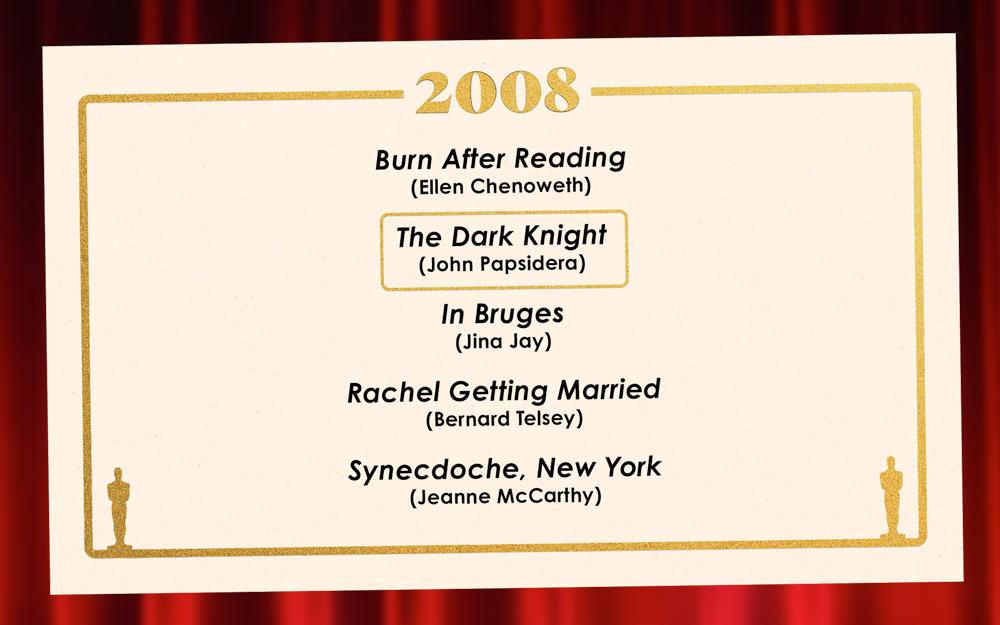
To understand why superheroes have taken Hollywood by storm, look no further than 2008: the year that kick-started the Marvel Cinematic Universe with Iron Man and gave us The Dark Knight. Christopher Nolan’s gritty, grounded thriller had shades of Heat, right down to its all-star cast. The standout, of course, is Heath Ledger’s haunting turn as the Joker, wreaking havoc on Gotham without any guiding principle beyond wanting to watch the world burn. Throw in Maggie Gyllenhaal ably taking over for Katie Holmes as Rachel Dawes, Aaron Eckhart’s tragic Two-Face, and the return of Christian Bale’s gravelly, growling Batman (he’s not wearing hockey pads), and The Dark Knight’s ensemble is a big reason why this film has cast such a large shadow over the blockbuster era it helped define. It might have been denied a Best Picture nomination, but The Dark Knight is a no-brainer for Best Casting.
Our other nominees in 2008 are no slouches, either: Burn After Reading is arguably the funniest Brad Pitt has ever been; Synecdoche, New York belongs in the Philip Seymour Hoffman pantheon; Rachel Getting Married stands as proof that few filmmakers assemble better casts than the late Jonathan Demme. The last slot was filled by Martin McDonagh's directorial debut, In Bruges, which just edged out Happy-Go-Lucky and Slumdog Millionaire in our voting. Call it a banner year in which everything from a superhero crime epic to a Coen brothers screwball comedy to a family psychodrama delivered casts operating at the top of their game. —Miles Surrey
2009
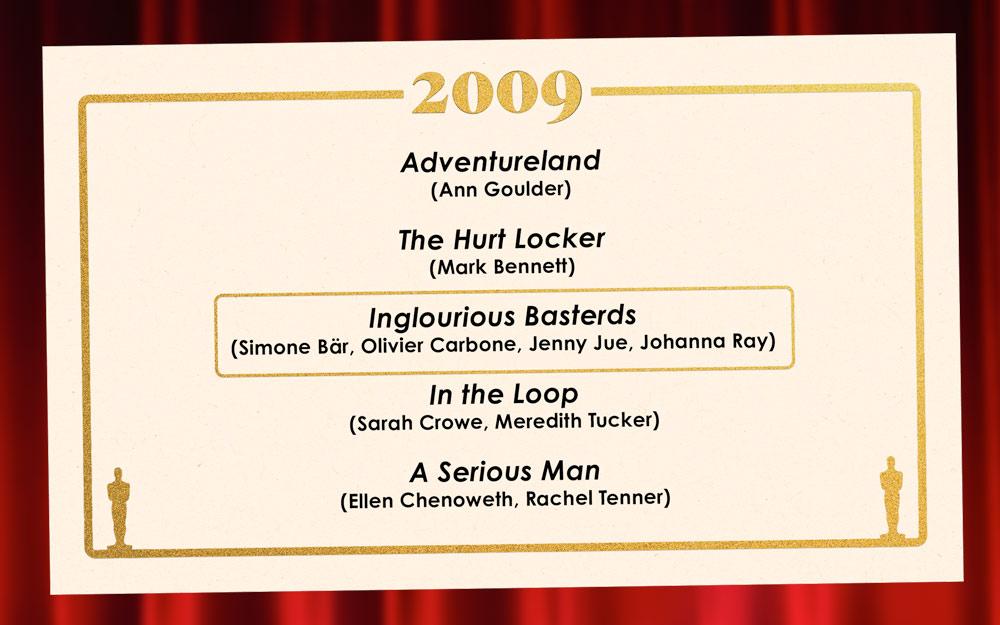
Whether they were recalibrating the vibe of Steven Soderbergh’s dramatic exposé The Informant! by filling out the supporting cast with comedic actors or assembling an ace British and American cast for Armando Iannucci’s political satire In the Loop, casting directors went above and beyond for the films of 2009. But one effort dwarfs all others, in terms of both scale and success. It took teams based in Germany, France, and the United States to assemble the cast of Quentin Tarantino’s sweeping World War II film, Inglourious Basterds. That involved some counterintuitive casting. A ringer, Brad Pitt, top-lines the eponymous “basterds,” but their ranks are filled out by horror director (and Tarantino pal) Eli Roth, The Office’s B.J. Novak, Freaks and Geeks star Samm Levine, and other unconventional choices. But it’s the teams’ combined efforts in recruiting European actors who were either undervalued at the time—like the German-born Diane Kruger and Til Schweiger, who were both coming off rocky stints in Hollywood movies—or largely unknown to mainstream audiences outside Europe. A short list: Daniel Bruhl, Mélanie Laurent, Michael Fassbender, and Léa Seydoux. Also matching that description: Christoph Waltz, who’d been working steadily, mostly in German-language productions, for decades before landing the part that would win him the first of his two Oscars and make him an international star. It’s hard to imagine anyone else playing the role of the charming and vile Colonel Hans Landa, but it’s really hard to imagine anyone else playing any of these roles, a sure sign that the casting directors have done their job well. —Keith Phipps


2010
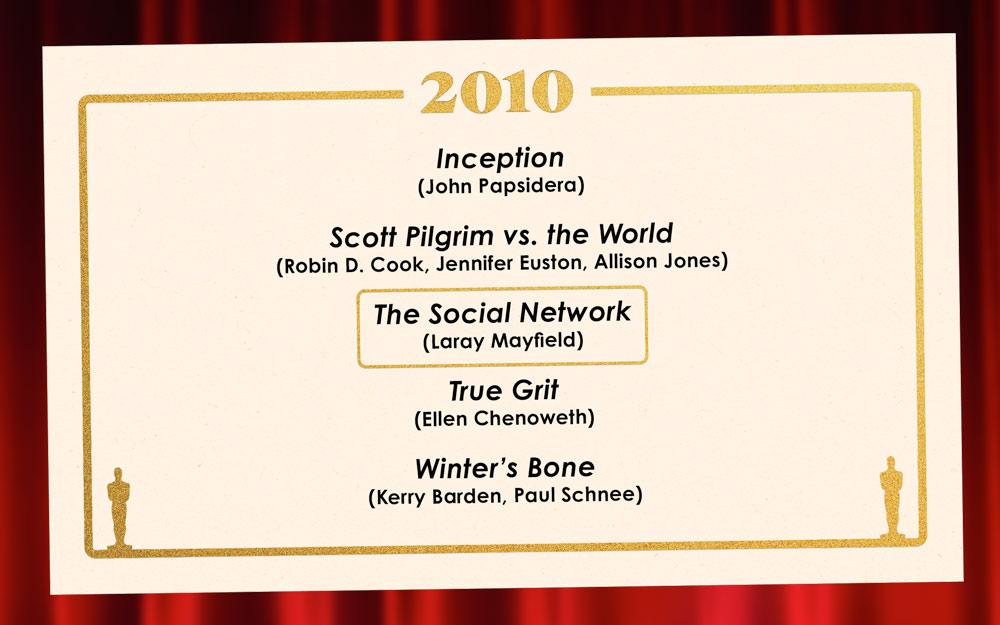
If any movie in this particular poll could win an Oscar for best casting of all time, it’s David Fincher’s The Social Network, which scored the most points in this entire exercise (42), with 12 of 13 voters picking it as a winner or a nominee. Ten voters (including me) picked it to win. In his electric, horrifying, and entirely unsympathetic performance as Facebook founder Mark Zuckerberg, Jesse Eisenberg established himself as an Actor of His Generation and earned the incredible honor of being considered by cinephiles as robbed of the Best Actor Oscar. In his tender, high-strung performance as Eduardo Saverin, Andrew Garfield—the only actor who could sell the brilliant yet demented Aaron Sorkin line “Sorry, my Prada’s at the cleaners, along with my hoodie and my fuck-you flip-flops”—cemented his status as a dorky, moody hearthrob Brit. Armie Hammer’s towering, all-American presence as the Winklevoss twins haunts Zuckerberg throughout the film, even when he (they?) is (are?) off-screen. Although it was probably a well-intentioned effort to bolster his career as a serious artist, casting Justin Timberlake—the smarmy lead singer of a ’90s boy band who campaigned harder for an Oscar than anyone in history and lost—as smarmy Napster founder Sean Parker emerged, in time (pun intended), as an unparalleled troll.
But it isn’t just the main cast that allows The Social Network to sweep this category and the entire competition. As Zuckerberg’s ex-girlfriend Erica Albright, then-newcomer Rooney Mara bookends the film with the emotional weight of an actor decades into her career. Then there’s prestige television’s Max Minghella as HarvardConnection cofounder Divya Narendra; a blond, pre-bangs Dakota Johnson as a Stanford student who knows who Sean Parker is but not what he looks like; and Brenda Song, whose performance setting fire to a scarf is precisely what Martin Scorsese is referring to when he says “cinema.” Meanwhile, Rashida Jones was just happy to be there.
Without a ton of competition for the fifth spot, Christopher Nolan’s Inception sneaked in by default. It’s random at a glance, but upon inspection, Inception’s cast is a sneaky little star cluster. In addition to the star power of Leonardo DiCaprio, Michael Caine, Elliot Page, Ken Watanabe, and Cillian Murphy, Inception turned the skinny-tied good boy Joseph Gordon-Levitt and the soft but dangerous Tom Hardy into Tumblr it boys (whether or not yours truly was involved is none of your business). Similarly, Scott Pilgrim vs. the World opened up a world of possibility for indie niche actors including Michael Cera and Kieran Culkin. It also split the manic pixie dream girl character trope that defined the era into multiple personality types with actual depth: Aubrey Plaza, Mary Elizabeth Winstead, Brie Larson, Mae Whitman, and Alison Pill. Chris Evans is also in it.
Nine of 13 voters selected True Grit as a nominee, perhaps out of respect for the discovery of 14-year-old Hailee Steinfeld, who played the quick-witted Mattie Ross and was nominated for Best Supporting Actress. Winter’s Bone is another strong contender in the once-in-a-generation discovery category, considering it launched Jennifer Lawrence’s career—it was her breakthrough role and earned her a nomination for Best Actress, making her, at the time, the second-youngest nominee in the category ever. As a whole, the 2010s nominees represent star power that doesn’t exist anymore and breakthroughs that would define the decade. If this poll is any indication, had the casting Oscar existed in 2010, The Social Network could have won in a landslide. But in reality, it would have lost to The King’s Speech. —Carrie Wittmer
2011
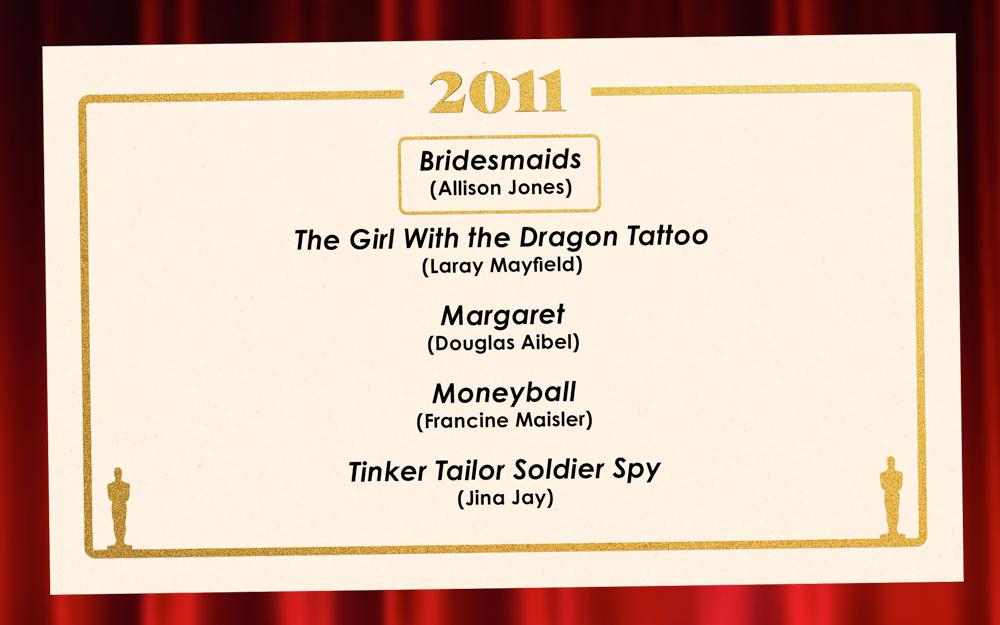
To put it bluntly: In real life, this was an awful Oscar year. (Sorry to remind you, but this is the year The Artist won Best Picture.) But The Ringer’s Academy put together a pretty unimpeachable lineup. With the benefit of hindsight, awards players from that year like War Horse and Extremely Loud & Incredibly Close (betcha haven’t thought about those movies in a while!) were eschewed in favor of a diverse array of genres and casting strategies. In one corner, we’ve got ensemble pictures like Margaret, which had the good sense to cast Kieran Culkin and J. Smith-Cameron years before we’d come to know them as Roman and Gerri, respectively, and Tinker Tailor Soldier Spy, the adaptation of John le Carré’s spy novel that features a multitude of A-list Brits ranging from John Hurt to Tom Hardy. In the other corner, we have two-handers like Moneyball, which paired Brad Pitt with Jonah Hill as a sort of odd couple for spreadsheets, and The Girl With the Dragon Tattoo, whose famously extensive casting search for Lisbeth Salander resulted in the perfect selection of Rooney Mara.
Ultimately, none of them held a candle to our runaway winner, Bridesmaids. Putting Melissa McCarthy—whose blunt, belching performance was so undeniable that she earned the all-too-rare Best Supporting Actress nomination for a comedy role—on the map obviously gives the film a massive edge, but this whole crew is as complete as they come. Rose Byrne as the condescending Annie, Jon Hamm as the cartoonishly dickish fuck buddy—Kristen Wiig and Maya Rudolph should’ve gotten to star in 20 more comedies together, but at the very least, this cast should have an Oscar. —Julianna Ress

2012
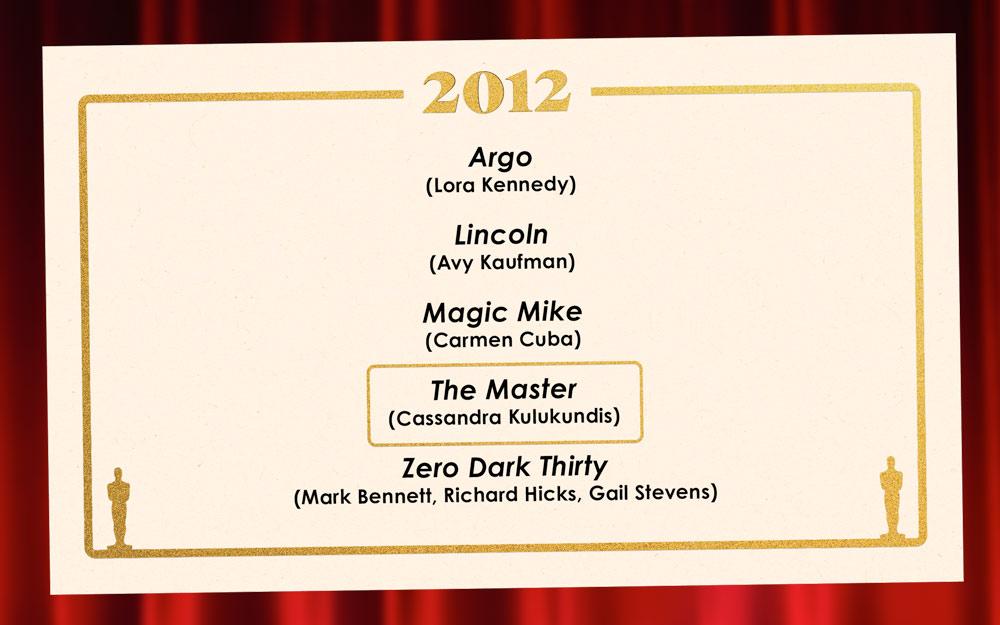
Strong year for the category, even stronger winner. What I love about The Master’s cast is that each of its super-talented actors—Philip Seymour Hoffman, Joaquin Phoenix, Amy Adams, Laura Dern—embodies such a unique flavor of weirdness that they all seem to come from different planets. But instead of trying to get everyone in sync, The Master leans into the feeling of incompatibility. Every encounter becomes a physics experiment in hugely charismatic talents warping each other's fields of gravity. Argo and Lincoln are films in which great casts perform in a movie; The Master is a film in which a great cast seems to be discovering a movie as it goes (and risking their lives while doing it). Magic Mike has its own cool alchemy and could easily have won in a different year, but The Master ran away with this one, and rightfully so. —Phillips
2013
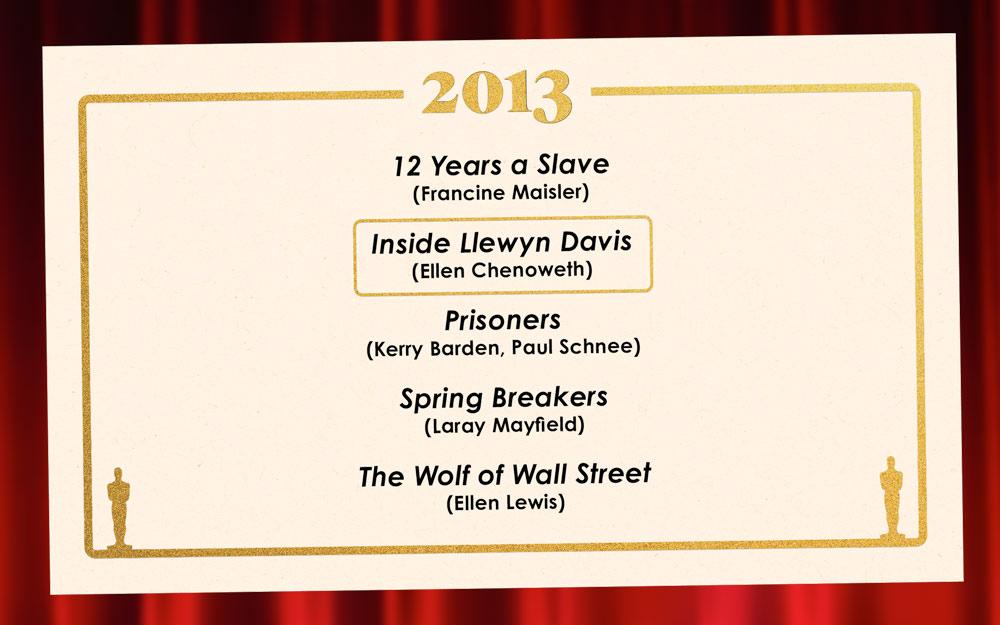
It seems they’ve given me the Coen blurbs here; I can’t imagine why. Anyway, I wouldn’t quibble over the outcome here, since Inside Llewyn Davis pivots on one of the finest pieces of casting in recent Hollywood history: It secured former third-wave ska band frontman Oscar Isaac—who once opened for Green Day as part of the Blinking Underdogs—to act and sing the role of a Greenwich Village guitar slinger who wakes up every morning wondering why life keeps feeding him a big bowl of shit. Isaac is extraordinary in Inside Llewyn Davis, and there are witty cameos all around him; it’s extremely funny, for instance, to have the actor who won an Oscar for playing Salieri in Amadeus show up as the grand arbiter of musical taste who tells Llewyn he simply isn’t ready for prime time. Or how about Justin Timberlake—then on top of the pop world—as a gormless folkie in mustard knitwear?
The rest of the category is a mixed bag, with 12 Years a Slave and The Wolf of Wall Street both showcasing extraordinarily talented ensembles; the sheer density of familiar—and unexpected—faces in the latter is hard to top (Bo Dietl, Fran Lebowitz, and Spike Jonze walk into a bar). Steve McQueen probably didn’t have to have 12 Years a Slave producer Brad Pitt show up as a sympathetic Canadian abolitionist, though. Spring Breakers got plenty of mileage from its Disney Channel–girls-gone-wild conceit, with Gucci Mane and Jeff Jarrett on hand as avatars of Harmony Korine’s hipster instincts; for better or worse, the neo-Gatsbyesque Alien (“Look at my shit”) is the part James Franco was born to play. The interesting dark horse in this race is Prisoners, a flatly ludicrous, we-have–David Fincher–at-home thriller that’s nevertheless teeming with interesting and off-kilter performances: not just Jake Gyllenhaal’s twitchy, small-town cop and Hugh Jackman’s murderously anguished girl dad but David Dastmalchian, deployed perfectly as a creepy flesh-and-blood MacGuffin, and original stage Sweeney Todd Len Cariou as a priest with a dark secret. Plus, it’s always a good idea to have Paul Dano on hand as a literal punching bag! —Nayman


2014
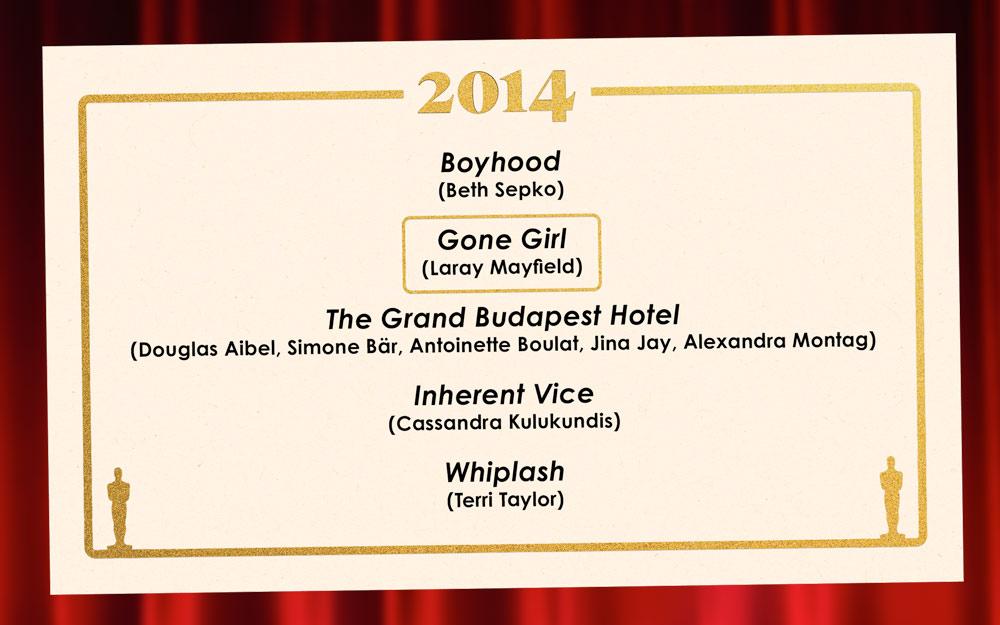
As usual, Wes Anderson and Paul Thomas Anderson assembled impressive casts in The Grand Budapest Hotel and Inherent Vice, respectively. The excellence of Whiplash is epitomized by J.K. Simmons’s terrifying, Oscar-winning performance as jazz instructor Terence Fletcher, who will give anyone who suffered through a tyrannical high school coach unpleasant flashbacks. But with respect to the other nominees, Gone Girl ran away with this thing. Earning 17 more points than second-placed Boyhood—which deserves plenty of credit for Richard Linklater’s decade-plus dedication to filming a child growing up before our eyes—Gone Girl has a lot going for it. It’s one of the finest performances in Ben Affleck’s career; he makes you believe that Nick Dunne is equally capable of murder and spectacular cluelessness. (As David Fincher said of Affleck in the Gone Girl DVD commentary: “He’s so duplicitous.”) Meanwhile, Rosamund Pike is so magnetic as Amy Dunne that she’ll leave you ready to risk it all. (Or is that just me?)
But what makes Gone Girl such an incredible feat of casting is what it accomplishes on the margins. It’s the film debut of a then-unknown Carrie Coon, who’s since become prestige TV royalty. It gives Neil Patrick Harris a rare opportunity to be exceedingly creepy, which he (somewhat eerily) excels at. It’s the best use of Tyler Perry, ever. In Gone Girl, Fincher didn’t just put together an incredible cast—he found perfect fits among the unlikeliest choices. —Surrey
2015
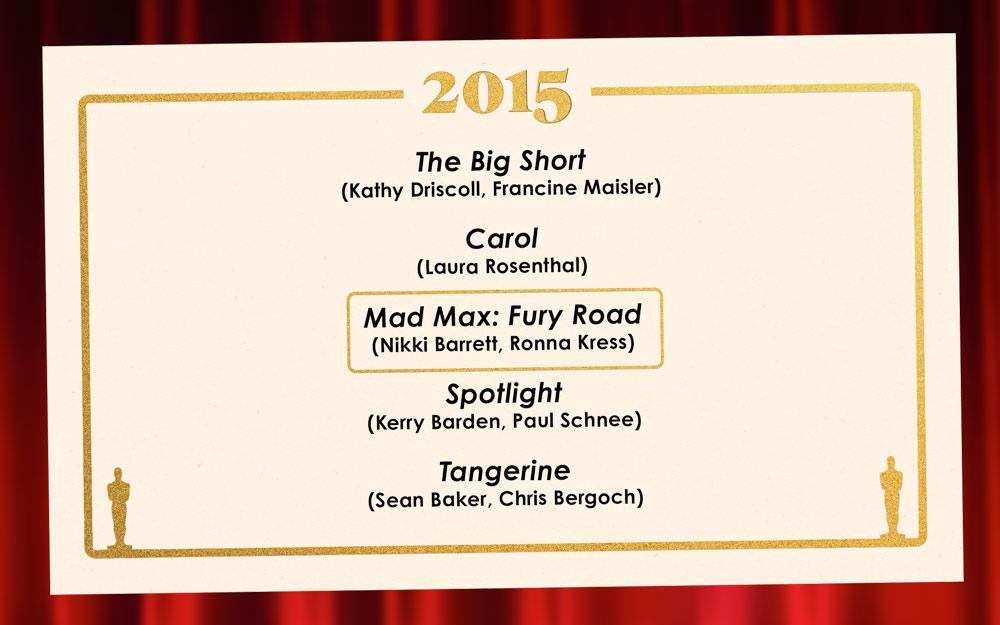
There isn’t a single year in the 21st century more influential for major studio filmmaking than 2015. It was when the “legacy sequel” solidified itself in the popular consciousness and became a dragon that studios have never stopped chasing despite weaker results each time. Who knew that after grizzled Han Solo grumbled, “It’s true. All of it,” we’d be stuck watching all IP known to man desperately try to spark a hint of recognition in your brain for a character or object you remembered fondly? It’s easy to forget, however, that the succession of Jurassic World, Creed, Star Wars: The Force Awakens, and Mad Max: Fury Road did feel exciting at the time. Let’s not get too carried away, but quality aside, it was a new era of blockbuster filmmaking with familiar faces mingling with the stars of tomorrow, and no film did that better than our winner, Fury Road.
It’s tough to even call Fury Road a legacy sequel. While the other three films brought back faces we loved (you remember BD Wong’s immortal turn in the first Jurassic Park, right?), George Miller’s return to the Wasteland felt fresh and exciting. Whether because he was too old or too canceled, Mel Gibson being replaced by Tom Hardy opened Max Rockatansky up to a whole new audience. As expressive and mumbling as Mad Mel was while imbuing the road warrior with sensitivity, Hardy was the only choice to replace an iconic performance. In each sequel, Max has always taken a back seat to the people around him, but it’s in Fury Road that we’re given a new icon. Few 21st-century creations and performances have become as instantly ingrained into pop culture as Charlize Theron’s Imperator Furiosa. Equipped with a metal arm, shaved head, and steely presence, she sometimes blows Max off the screen. Whether they got along on set or not, Hardy and Theron represent an impossibly potent one-two punch. It was rounded out by a tremendous supporting cast featuring rising stars like Nicholas Hoult, Zoë Kravitz, and Riley Keough and also had Hugh Keays-Byrne, the first film’s villain, returning in a new role as Immortan Joe. There was never a doubt that 2015’s enduring masterpiece would speed away with the win.
Making up the rest of the nominations are two splashy, starry ensembles about the important stuff (The Big Short and Spotlight), a gorgeous Sirkian two-hander (Carol), and an indie darling that represented Sean Baker’s explosion into the mainstream (Tangerine). It’s the latter that stands out the most among this crop. Sure, Cate Blanchett and Rooney Mara yearned their way into our hearts in Carol, and Mark Ruffalo perfected his righteous hangdog persona in Spotlight, but Tangerine’s cast electrifies. Even in 2015, casting not one but two trans women as leads felt unheard of. As the delightful Kitana Kiki Rodriguez and Mya Taylor race around L.A. and run into Baker’s now-patented eclectic bunch of misfits (including Anora standout and frequent collaborator Karren Karagulian), you can feel the next decade of indie filmmaking unfold before you. —Brandon Streussnig

2016
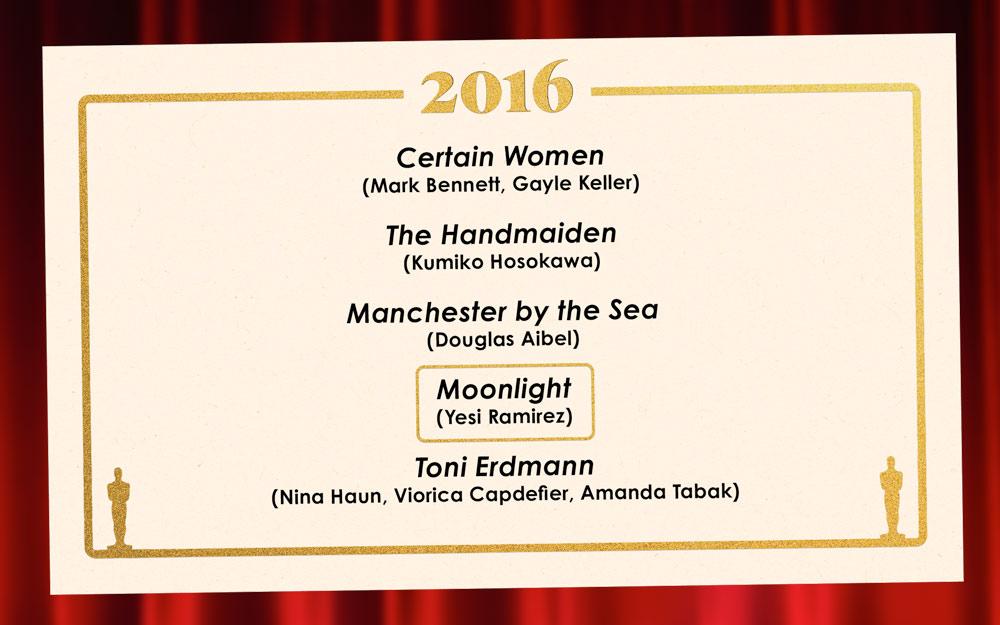
I’ll address the jazz-singing elephant in the room: La La Land did not make the cut. It didn’t even come close! Damien Chazelle’s musical notched just one measly vote from our panel. As a result, our Best Casting winner was announced without a hitch—Moonlight is one of the most dominant winners from this entire exercise. And for good reason: Barry Jenkins’s seminal coming-of-age drama had the tough task of finding three actors to portray its lead at three distinct ages. Expecting the audience to buy that a character is emotionally experiencing the fallout from an event played out by an entirely different actor is a tough ask! Moonlight not only accomplishes this but also manages to fill out the cast with performances that linger far beyond their screen time, limited by the film’s construction. There’s Mahershala Ali, of course, who skyrocketed after winning an Oscar for his unforgettable role as complicated father figure Juan, but there’s also Naomie Harris, Janelle Monáe, André Holland—all adding rich details to Jenkins’s stunning portrait of Black masculinity. As for the rest of the nominees, we gave the films of Park Chan-wook (The Handmaiden) and Kelly Reichardt (Certain Women) the Oscar recognition they’re still chasing to this day, acknowledged the German two-hander that gave us Sandra Hüller’s best performance (Toni Erdmann), and nominated the impossibly sad Casey Affleck vehicle that somehow managed to live on in memes (Manchester by the Sea). But nearly 10 years later, Moonlight still shines brighter than the rest. —Ress
2017
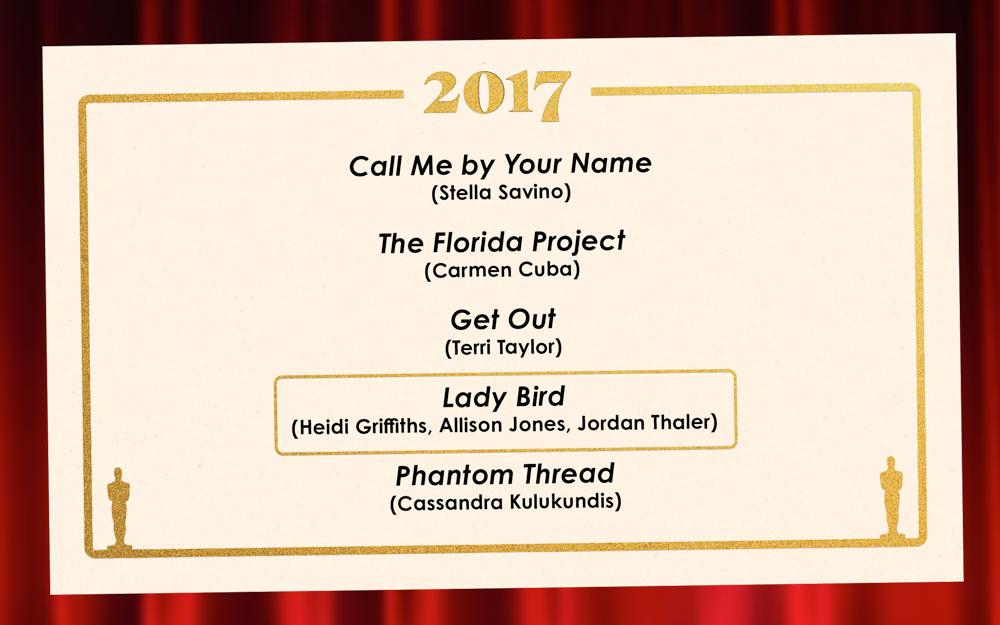
The thing about Lady Bird is that it’s 94 minutes. That means that its stacked ensemble of characters—not just Lady Bird and her mother, Marion, but also her unemployed father, her closeted boyfriend, her dirtbag other boyfriend, her sweetie-pie best friend, her theater teacher, and her academic adviser—all needs to make its mark with very little screen time. The fact that they do is, of course, a testament to the sheer density of character that writer-director Greta Gerwig is able to pack into the fleet-footed magic trick of her screenplay. But it’s casting directors Allison Jones, Heidi Griffiths, and Jordan Thaler who assembled the actors that would become indelible fixtures in the orbit of Saoirse Ronan’s career-defining performance. Much could be said about Lucas Hedges’s relief-filled smile after he delivers the closing speech of The Tempest, about the douchily compelling way Timothée Chalamet delivers “that’s hella tight” or the little head tilt Laurie Metcalf gives her daughter when she’s asked whether maybe she actually is living as the best version of herself. But in the spirit of the film, it’s probably best to be economical: Stephen McKinley Henderson, breaking down in front of his drama class, communicates more with 30 seconds than most actors do with an entire script.
Such is the power of Lady Bird’s multitudinous cast, which won this year pretty handily among a strong consensus five: Call Me by Your Name, which contains perhaps the breakout performance of the last 10 years in young Timmy Tim; The Florida Project, which somehow successfully combined nonactors, children, and Willem Dafoe; Get Out, which (among many other things) understood that Allison Williams plays a great little freak; and Phantom Thread, which knew the power of Lesley Manville and a teacup and also found Vicky Krieps, perhaps the only actor who could go toe-to-toe with Daniel Day-Lewis and win. —Wilson


2018
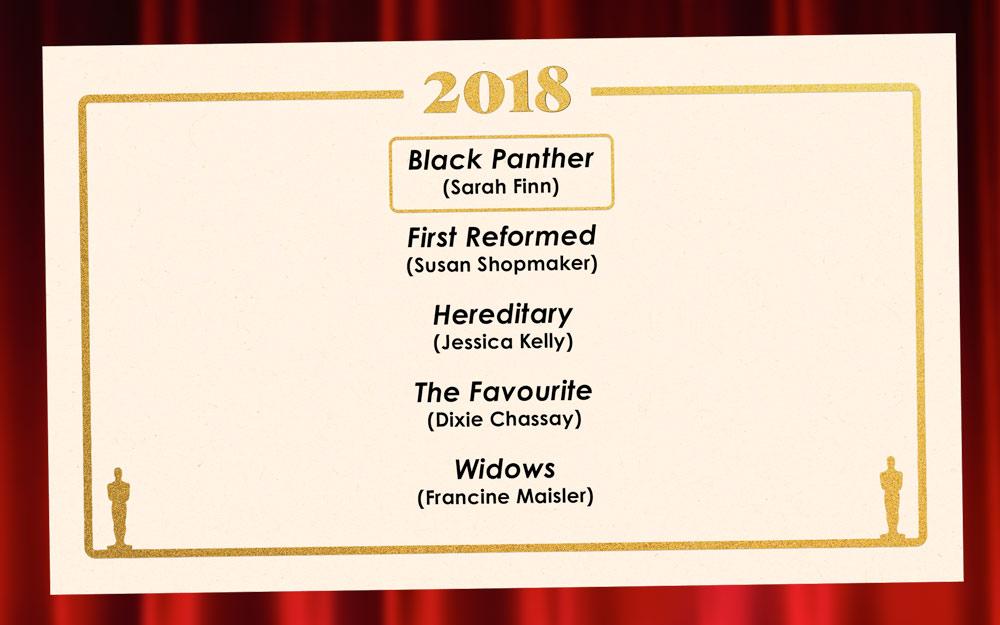
The 2018 awards race between Black Panther and The Favourite was the closest call in this entire exercise: Black Panther edged out The Favourite by just one point. It’s perhaps unsurprising that it was such a tight race given the tremendous success of both films and how different their achievements were. Black Panther was the second-highest-grossing movie of the year (behind only Avengers: Infinity War), raking in more than $1.3 billion at the box office. Meanwhile, The Favourite landed 10 nominations at the Academy Awards (tied for the most that year with Roma), including three for acting. (Olivia Colman won for Best Actress.)
Both movies had incredible casts, but Black Panther’s commercial success and cultural impact ultimately seemed to outweigh The Favourite’s status as a critical darling among The Ringer’s voting body. In Black Panther, the late, great Chadwick Boseman led a stacked group that included Michael B. Jordan, Letitia Wright, Angela Bassett, Lupita Nyong’o, Danai Gurira, Daniel Kaluuya, Winston Duke, Forest Whitaker, and Sterling K. Brown. Director Ryan Coogler and his team faced a lot of pressure with this highly anticipated film, and they assembled an all-star ensemble of Black actors to help turn it into Marvel’s first masterpiece.
The three other nominees in our casting race all just barely sneaked in over the likes of Game Night, Support the Girls, If Beale Street Could Talk, and The House That Jack Built. Game Night may not have won this time, but it’ll forever be a winner for Jesse Plemons’s iconic line delivery: “How can that be profitable for Frito Lay?” —Daniel Chin
2019
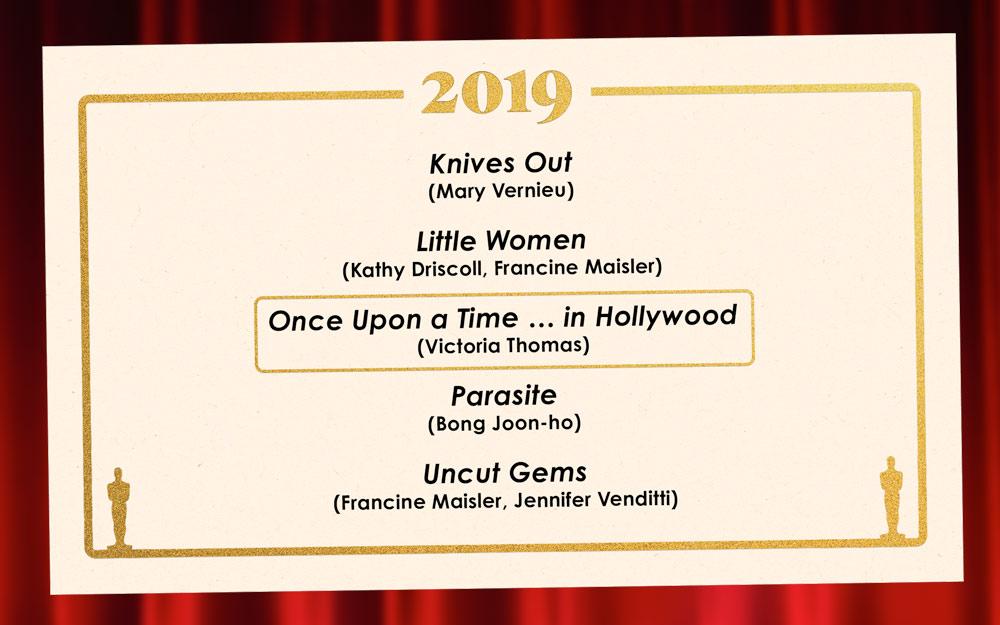
These movies tell two different stories about putting a cast together: what happens when you can cast pretty much whomever you want because everyone wants to be in your movie vs. what happens when you have to take what you can get (and you make some movie magic anyway).
As you could probably guess, Quentin Tarantino—yep, again!—lands in the first category. Naturally, he got our two biggest Hollywood stars, Leonardo DiCaprio and Brad Pitt, as his leads. He cast Margot Robbie, incandescent as Sharon Tate, after she wrote him a letter asking to be in any movie he happened to be making. And then there’s the who’s who of young Hollywood out on Spahn Ranch: Sydney Sweeney, Austin Butler, Margaret Qualley, Maya Hawke, and Mikey Madison had to jump through hoops to get cast as the Manson Family, submitting extra-credit projects like poetry, paintings, and shorn locks of hair to demonstrate their (culty?) enthusiasm.
Greta Gerwig may have had an even easier job with Little Women: Saoirse Ronan and Meryl Streep, two of the greatest actors of our time, both told her they were going to be in her movie, and she’d just have to find a place to put them. Bong Joon-ho had the same kind of leeway when he was casting Parasite: He wrote the script with Song Kang-ho, Choi Woo-shik, and Lee Jung-eun in mind, and he shaped his characters around his actors.
And then there are the filmmakers who didn’t quite get their pick of the litter. Because he knew he probably couldn’t just get anyone he wanted for Knives Out, Rian Johnson wrote the characters as a “blank slate” so he could plug in whoever came along. And because of how good that script was, he ended up getting about the best cast you could imagine: Daniel Craig, Chris Evans, Ana de Armas, Jamie Lee Curtis, Michael Shannon, Don Johnson, LaKeith Stanfield, Christopher Plummer, et al. fill out his ensemble—probably still the best all-around Knives Out cast.
Like Johnson, the Safdie brothers didn’t have any leads initially attached to their Uncut Gems script, but unlike him, they wrote one big star into the middle of it: Adam Sandler. Alas, Sandler (or at least Sandler’s agent) originally turned them down, and they had to improvise à la Howard Ratner, setting their sights on Sacha Baron Cohen and Jonah Hill until they bagged the Sandman himself. What ended up being Kevin Garnett’s part was originally meant for Amar’e Stoudemire—then Kobe Bryant, then Joel Embiid, then maybe someone who wasn’t a basketball player at all, because it’s actually pretty hard to get an NBA player to play themselves in a movie. Then they landed on Garnett, who—per The Ringer—is perfect as a gem-worshipping baller who foils about half of Howard’s plans and salvages a few of them. And, of course, the Safdies got approximately half the jewel purveyors in the diamond district; Julia Fox, their one true muse; Idina Menzel; The Weeknd; LaKeith Stanfield; Eric Bogosian; and a host of others I don’t have space to name but who are probably imprinted in your mind’s eye anyway. —Hunt

2020
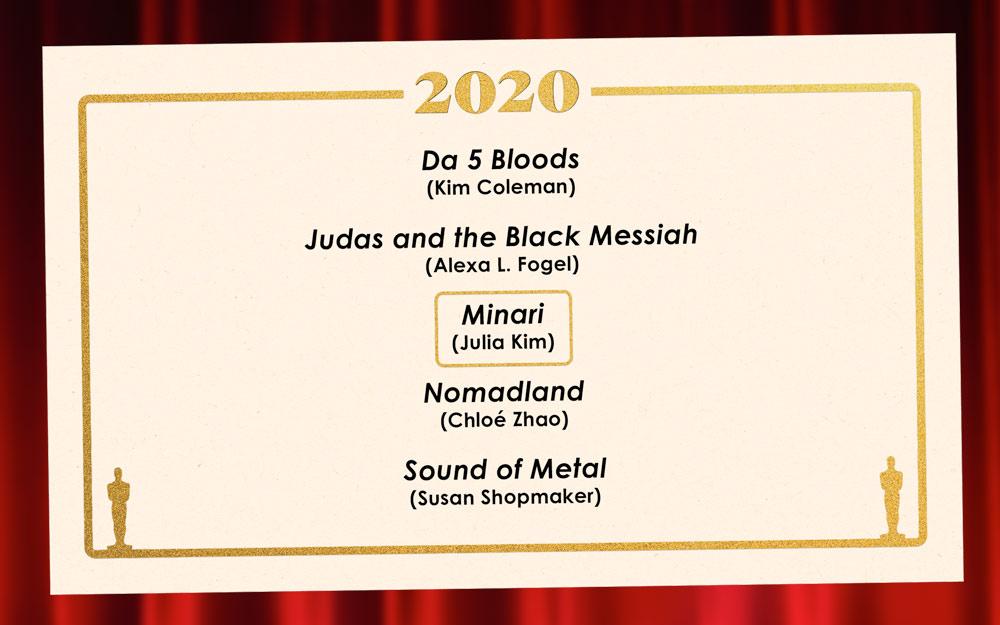
2020 was a strange, challenging year for the film industry and, well, for just about everyone else in the world trying to adapt to the COVID-19 pandemic. Movie theaters shuttered, while streaming from home became the new norm for many. Some of the year’s biggest blockbusters and most anticipated films were delayed until 2021 due to the global health crisis. As a result, the Oscars’ door was left wide open for the movies that were released in 2020, many of which had limited runs in theaters or went straight to streaming. Among them, A24’s Minari took our casting crown.
Minari had a historic night at the 93rd Academy Awards. Steven Yeun became the first Asian American to be nominated for Best Actor, and Youn Yuh-jung won Best Supporting Actress to become the first Korean actor to win an Oscar. Lee Isaac Chung’s beautiful, personal film follows a Korean American family’s move from California to Arkansas after first immigrating to the U.S. from Korea in the 1980s. The cast was fittingly a mixture of American actors—including Yeun and Will Patton—and Korean actors such as Youn and Han Ye-ri, and everyone brought their A game.
The two films that trailed closest behind Minari in our vote were Da 5 Bloods and Nomadland. Da 5 Bloods had some terrific performances, including Delroy Lindo and Chadwick Boseman in what was one of his final film appearances. Nomadland, the year’s Best Picture winner, was led by Frances McDormand’s Oscar-winning Best Actress performance and featured a supporting cast primarily made up of real-life nomads playing fictionalized versions of themselves. Either film would’ve been a worthy winner in our casting race, but Minari—much like the film’s child star Alan Kim—stole our hearts this time. —Chin
2021
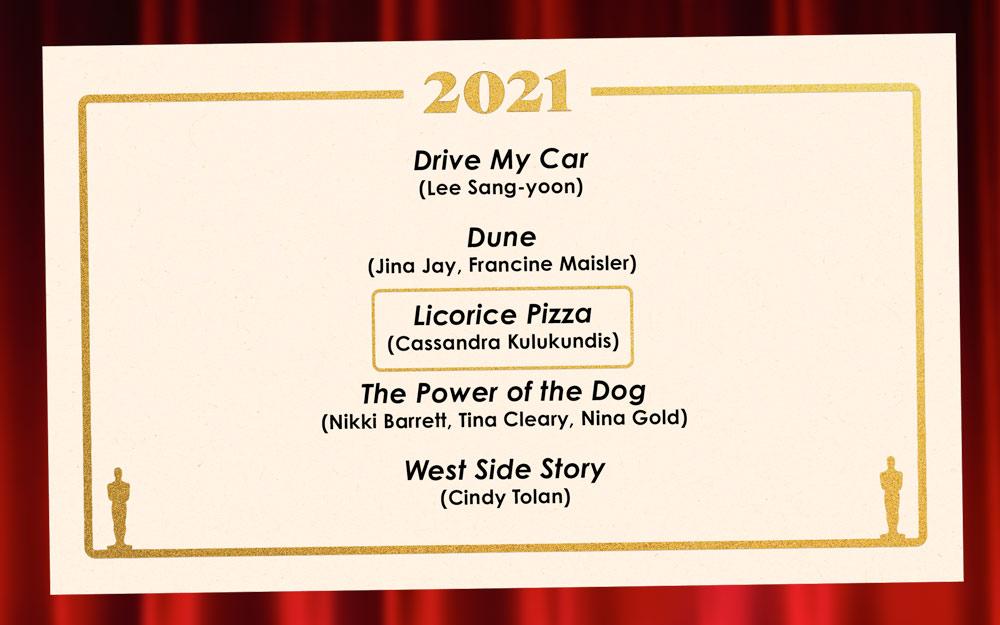
As we emerged from COVID-19 lockdown measures, the future of moviegoing was uncertain. With movies slowly trickling back into multiplexes and streaming fully taking over as many’s preferred method of movie watching, 2021’s slate was an odd bunch. In fact, this year had some of the most disparate results in this exercise, as four films (CODA, King Richard, Nightmare Alley, and The Last Duel) all came within a hair of making the final group of nominations. The nominations themselves all represent fascinating aspects of a tentative step back into theaters.
The blockbusters of 2021 were certainly nothing to write home about, which is why their only representative on this list is Dune, a starry, auteur-driven spectacle. One could say the same about West Side Story, Spielberg’s breathtaking update of the classic musical, although calling that a “blockbuster” feels generous. Both feature an assembly line of stars, and each announce their respective leads, Timothée Chalamet and Rachel Zegler, as bona fide movie stars. A streaming ensemble (Jane Campion’s Power of the Dog) and a genuine two-hander (Drive My Car) make up the artier side of the year. It’s our winner, though, Paul Thomas Anderson’s lovely throwback Licorice Pizza, that finds that sweet spot in the middle and comes away with the gold.
Watching Licorice Pizza—which received the lowest number of votes of all the winners on this list—is like lying on a cozy, warm waterbed. A little uncomfortable but something undeniably fuzzy and nostalgic, Anderson’s vaguely autobiographical coming-of-age tale was the perfect balm for what ailed us. Featuring a bevy of unfamiliar, dare we say normal, faces, musician Alana Haim—the only true “famous star” of the younger leads—and supporting turns from reliable hands like Bradley Cooper and Sean Penn, Licorice Pizza’s cast conjured hazy memories of New Hollywood classics. None of it works without its beating heart at the center, Cooper Hoffman. The son of the late, eternally great Philip Seymour Hoffman, the fast-talking, head-in-the-clouds Gary Valentine is the performance of a lifetime. Immediately proving himself to be the spitting image of his father yet his own actor entirely, Cooper Hoffman made us all remember what it was like when the world seemed endless. A wild dreamer running scheme after scheme, he’s the anchor of Licorice Pizza’s cast of misfits. No film better exemplified the brave new cinematic world we hoped we’d come back to. —Streussnig


2022
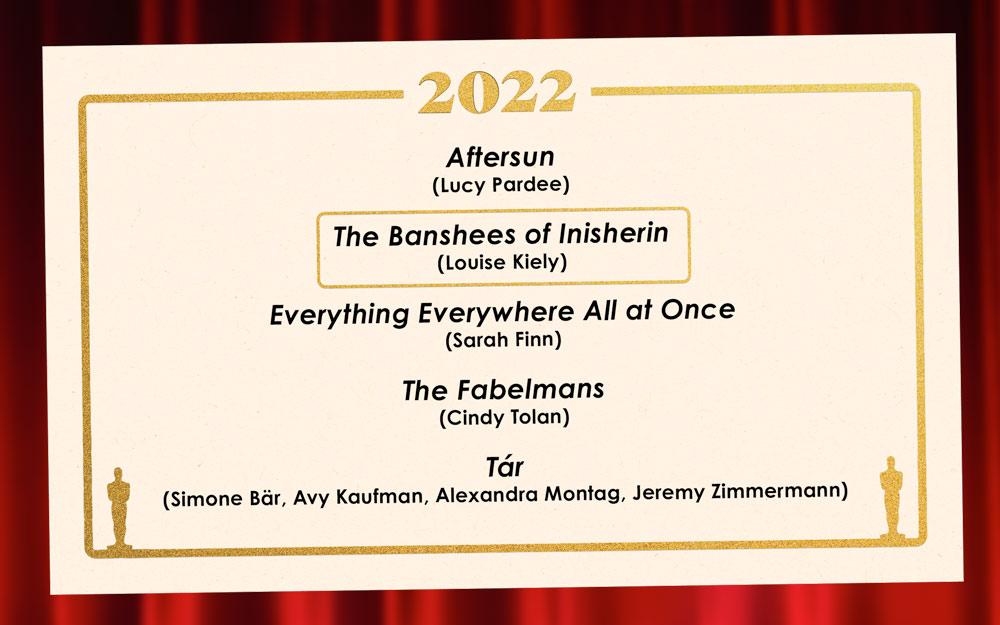
It’s one thing to arrange a long-overdue, meaty dramatic showcase for a veteran star. It’s a whole other thing to do that for several stars, lining up the plum parts they all deserve. On top of its other celebrated merits, all-the-feels A24 blockbuster Everything Everywhere All at Once is triumphantly cast—a platform for the long-underused acting chops of Michelle Yeoh, James Hong, Jamie Lee Curtis, and, in a truly heart-tugging Hollywood comeback, Ke Huy Quan. Three of the above would end up winning Academy Awards for their work in the film (the first time since the ’70s that one movie has won as many acting Oscars), with a fourth nomination going to rising star Stephanie Hsu. In other words, if the Academy had introduced Best Casting just three years earlier, EEAAO casting director Sarah Halley Finn likely would have been its first winner.
Not that the competition wouldn’t have been stiff. In fact, it’s very easy to imagine our own picks here aligning evenly with the Academy’s. Cate Blanchett’s iconic appearance in Tár might well be the most perfect match of star to role in recent memory. Aftersun movingly exploits the hangdog charisma of Paul Mescal while discovering Frankie Corio, the film’s naturalistic preteen star. And The Fabelmans deserves mention in this category for a cameo alone: the inspired spectacle of David Lynch as John Ford. But if any movie in 2022 could rival the ensemble assembly of EEAAO, it’s The Banshees of Inisherin. Every role—from the squabbling main characters (played by Brendan Gleeson and a truly never-better Colin Farrell) down to the day players and scene-stealing livestock—is perfectly occupied in Martin McDonagh’s wounding tragicomedy. Together, they all create the sense of a vibrant, lived-in, disturbingly unsettled community. Save some credit for Louise Kiely, the woman who put together the troupe. —Dowd
2023
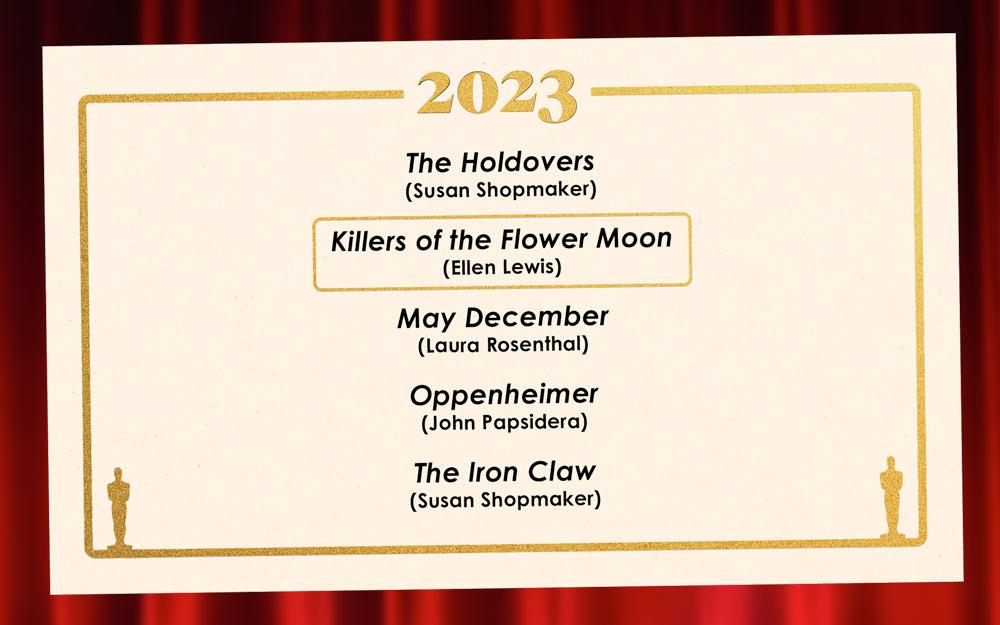
This may not be the most surprising of winners—indeed, seven of our 13 voters picked Killers of the Flower Moon, an apotheosis in Martin Scorsese’s rich and continuing career, to be their winner. The Holdovers and The Iron Claw revealed some up-and-coming acting talent in colorful ensemble casts, as did May December, which also granted Natalie Portman and Julianne Moore a lot of room for camp and meta exploration. Oppenheimer was picked as a runner-up by all voters, yet only two chose it to win: Did Benny Safdie’s Hungarian accent not convince, or was it Tom Conti’s Einstein moustache? Perhaps nothing could compete with Scorsese’s ambitious proposition. His film not only brings together two of his favorite guys, Robert De Niro and Leonardo DiCaprio, but also gives them particularly challenging parts. In what may well be the filmmaker’s most bone-chilling and violent film, both stars must walk a thin tightrope between comedy and horror, sincerity and pretense, as they scheme together to decimate the Native American community where they live, with varying levels of denial. Their layered work is supported by that of an ensemble of actors brought in to populate Fairfax, Oklahoma, each clearly selected to bring their own idiosyncratic personalities to what could have easily been a bland group, more of an idea than an embodied reality. This film is also responsible for rescuing one of the greatest performers of her generation from oblivion: Before getting the part of Mollie, DiCaprio’s Osage wife, Lily Gladstone had almost given up on acting altogether, as very few parts came her way following her introduction on the scene in 2016 with Kelly Reichardt’s Certain Women. She is the quiet, emotional, and moral heart of Scorsese’s typically macho world. The cherry on top comes in the shape of Jesse Plemons, who appears late in the film and almost steals the spotlight—that is, until Scorsese himself gets in front of the camera and, like an emulsifier, brings together this eclectic ensemble cast. —Lazic


2024
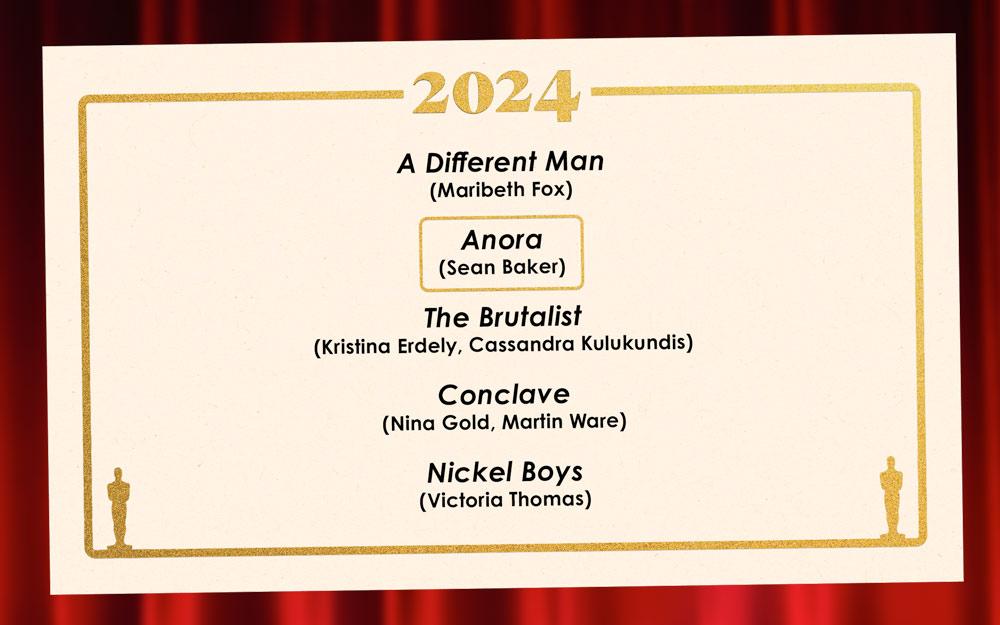
A year-plus was not enough time for a clear winner to emerge from 2024—a whopping 31 films from the year received votes from our panel, the most from any year on this list. Just out of the top five were Dune: Part Two and Wicked, and edging them out were two films that deserved more love during awards season last year. Nickel Boys’ first-person perspective meant that it had to find a cast who could speak to a camera as if it were a human being, communicating the film’s weighty themes in the process, and it did so with two relative unknowns in the lead. The surreal dark comedy A Different Man found a perfect trio of leads (Sebastian Stan, Adam Pearson, and Renate Reinsve) to use in smart, multifaceted ways, playing off their personas while the story bounces off the walls. (And, honestly, maybe it should have won just for the one scene in which Michael Shannon plays himself.) But leading the race were The Brutalist, which introduces a ton of memorable faces over its three-plus-hour running time; Conclave, which pieced together an international group of actors to bring its papal drama (and the vaping cardinal) to life; and the winner, Anora.
It’s hard to argue with Sean Baker’s talent for casting—he’s made a career out of willing breathtaking performances out of nonactors, and as a result, his films appear on this list three times. In Anora, Baker—who, in addition to his many roles on the Anora set, also served as the film's casting director—used that skill to fill out his title character’s place of employment with real dancers and sex workers. But he also introduced American audiences to Russian actors Yura Borisov and Mark Eydelshteyn. Plus, he recognized Mikey Madison’s talent from supporting parts in Once Upon a Time … in Hollywood and the Scream franchise and gave her her breakthrough role. Had the Best Casting category been introduced one year earlier, Baker very well could have broken the record for most individual wins at a single Oscars ceremony instead of tying it. —Ress