


For Marisa Abela, who plays high-society schemer Yasmin in HBO’s money-minded saga Industry, it’s not unusual to sputter a little bit at a new script. Even when Abela knows the broad strokes of her character’s journey in advance. “Inevitably, when I read a scene, I’m always like: ‘Oh my God, what?!’” Abela told me earlier this winter.
This season, for example, Abela knew that “there was a sort of, like, Ghislaine Maxwell–type story line coming in” for her character. (This wasn’t exactly a mystery: The convicted felon and Jeffrey Epstein companion is a posh publishing heiress whose father died in 1991 after falling from a yacht named the Lady Ghislaine, while Yasmin is a posh publishing heiress whose father died in Season 3 of Industry after jumping from a yacht named the Lady Yasmin.) “But I had no idea—we were at Episode 7,” Abela recalled, “and I was like: When is this going to happen, and how does this happen?”
As we see in “Both, And,” the eighth and final episode of Industry’s fourth season, it all happens in Paris, near the end of an eventful episode for Yasmin. She initiates a divorce from her husband, Henry, the disgraced CEO of now multiple failed companies. She begins working with a suave authoritarian political candidate who pals around with Peter Thiel. She hosts a dinner party with evolutionary biologists and Nazis.
And then she organizes a cadre of young women—ranging from her ex-husband’s former household servant to a girl we’ve been told is all of 15—to dress up and entertain the male guests afterward, in ways that we thankfully don’t see on-screen but are nevertheless hard to stomach. It’s a vicious plot development for Yasmin—she’s trying to make connections while losing her own sense of self. “The image that I have,” Abela told me about Yasmin in the season finale, “is like, those little fish that swim next to big sharks so the shark doesn't eat them.”
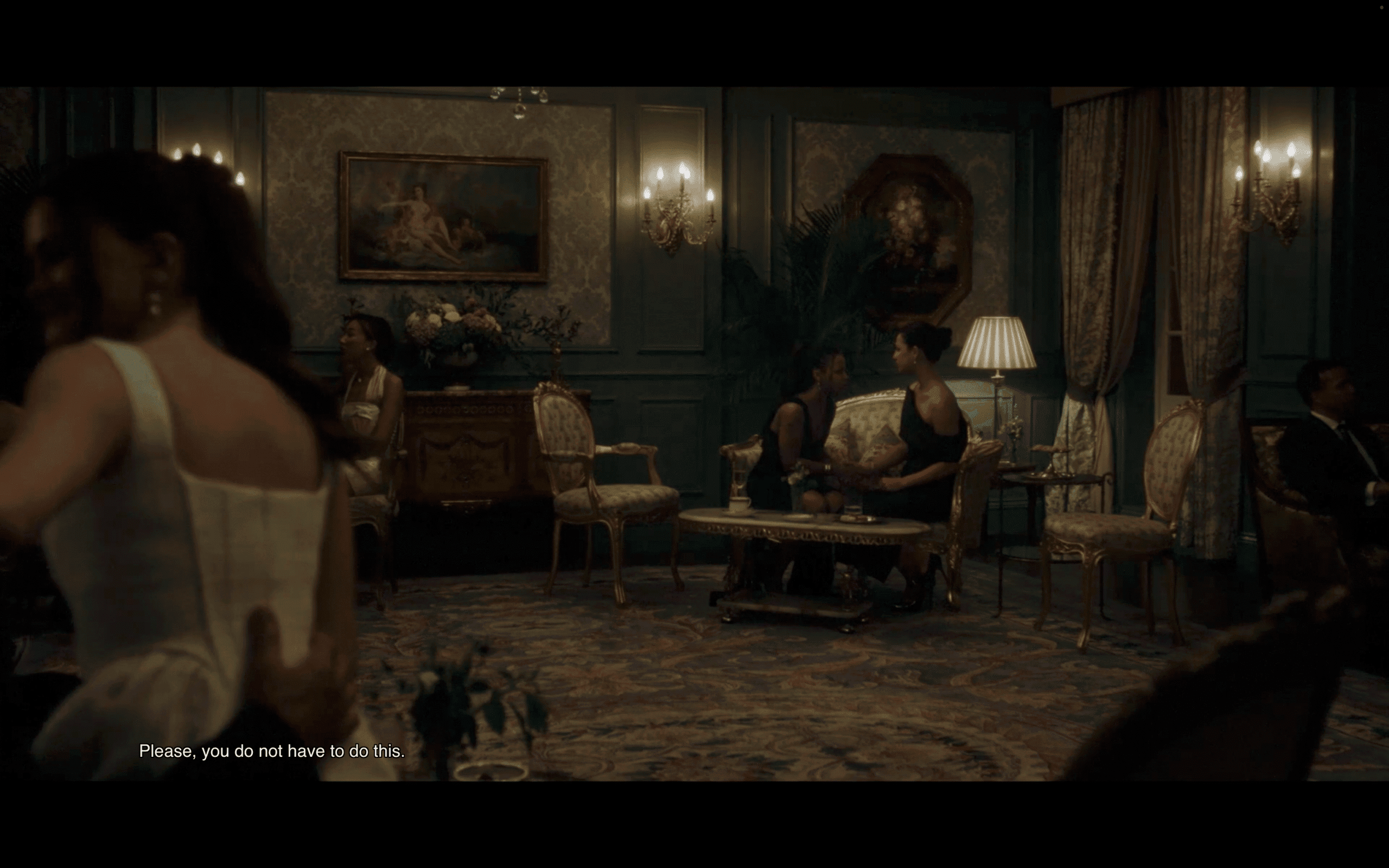
It seems so very long ago that Yasmin was throwing a far more normal party. In the Season 4 premiere, corrupt Tender CFO Whitney Halberstram (Max Minghella) had sidled up to contrarian investor Harper Stern (Myha’la) to ask: “Have you ever felt alone in a group?” As a pickup line, it worked: Those two lone wolves shacked up for a night. But more broadly, it also works as a through line across Industry’s four seasons. (Last week, a fifth and final season of the show was ordered by HBO.)
Back in Season 1, Harper mused to a colleague that “sometimes the loneliest place can be in a room with the people who are supposed to love you.” In Season 3, Harper called Yasmin “the loneliest girl to ever have a boat named after her.” In multiple drunken heart-to-hearts this season, Harper and Yasmin bonded over their shared isolation. And in “Both, And,” just about every character in Industry winds up on their own. Whitney, scorned by Henry, is effectively sentenced to life on the lam, hiding in a crowd for survival. Henry, divorced by Yasmin, faces reporters outside a courthouse, about as “alone in a group” as it gets.
And in an interview with the reporter Patrick Radden Keefe (poor Jim Dycker from FinDigest was right again!) in the final scene of the episode, Harper is asked: “Does being so uniquely right when everyone was so totally wrong feel like vindication, or does it ultimately make you feel very alone?” and she doesn’t really have a definitive answer. “Both/and,” she says.


The Bottom Line
So what happened in this episode?
“Both, And” begins with a montage. There’s our girl Jennifer Bevan squaring off on Politics Hour with the handsome neofascist Sebastian Stefanowicz, telling the crowd that “Tender is not an anomaly” and “we must start acknowledging capitalism is as extractive as it is creative.” There’s Ferdinand in the Tender offices, monitoring the situation as investigators clear out everyone’s desks. There’s Harper, still buzzing from her night out with Yasmin last episode, ripping cigs and typing an investor letter about Tender that begins: “I write with a fierce sense of bloody vindication in the face of institutional denial.” (Same!) There’s Whitney, alive and gluing a wig onto his face, and Tony Day, being perp walked out of his office.
And then there’s Henry and Yasmin, having yet another disagreement in their bedroom. Except that this time it’s not the screaming-crying-threatening kind—which is how you know it’s bad bad. Back in Episode 2 of this season, during one of those fights that was the screaming-crying-threatening kind, Yasmin told Henry that if he didn’t take Whitney’s Tender offer, “we are going to have a serious conversation. And it won't be emotional like this. It will be fucking practical.” And practical is exactly the tone of their end-of-relationship conversation. (Although that doesn’t mean it’s dull: I sputter laughed at the way Yasmin haughtily responds, “... of course I can!” when Henry pleads that she can’t leave him like this.)
There are other aspects of their breakup that hearken back to Episode 2. When Henry sobs that “we had a whole future … life ... and the … kids …,” I thought: Uh-oh, pal, NOT the best thing to say, remembering when Henry last mentioned children and Yasmin started getting the ick:
“He turns around after this, like, hellish night,” Abela told me about that Episode 2 scene earlier this season, “and says, We should try for a baby. And [Yasmin] realizes he's completely delusional and is not doing all of this from a place of clarity, but doing all of this from a place of, like, extreme mania. And I think from that moment, she thinks, OK, I'm never going to be safe with this man. I can't trust him. He's not, like, a sick man getting better. He is a sick man who I've just given, like, more power to.”
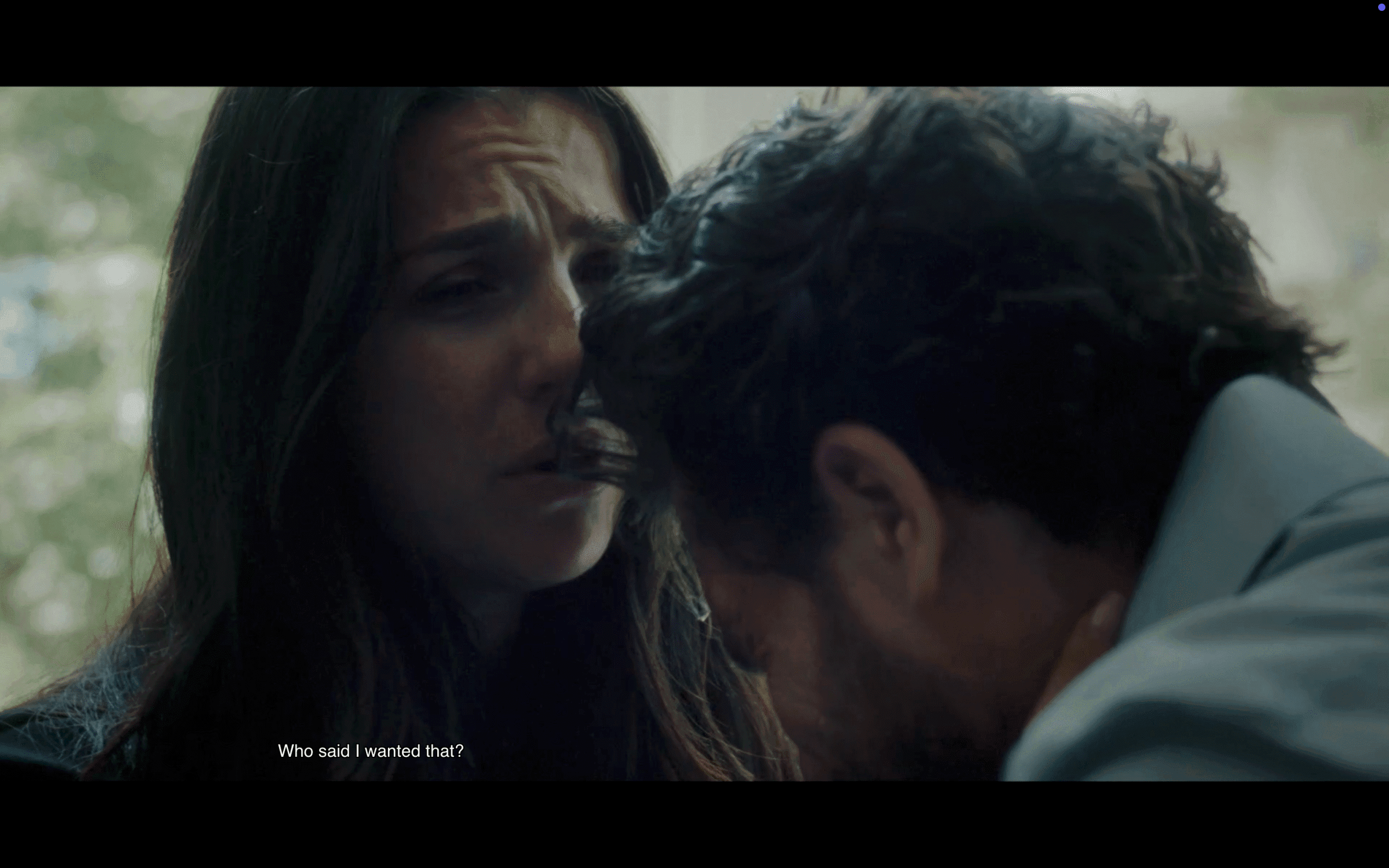
Anyway, the other thing that reminds me of Episode 2 is what Yasmin says to her future ex-husband next: “Whatever it is that you’re feeling, it’ll fade.” She sounds just like his uncle Lord Norton when he told Henry to buck up: “Ignore it, numb it, drown it out, or integrate it into your life step by step, day by day.”
Moving on! At SternExTao HQ, our intrepid investors order Champagne and cigars and Casamigos and McDonald’s fries to celebrate the fact that Tender stock is down 78 percent, which means that they’ve made something like $110 million in back-of-the-envelope profit on the trade. Harper tries calling Eric, but all she gets is voicemail. (It’s such a grim touch that when Eric jumped ship, he forgot the framed school pictures of his daughters on the bedside table.)
We return to Henry, who is looking at derogatory magazine covers about himself (“He failed once … why did they let him try again?”) when he gets a phone call from Whitney, who sounds like a pull-toy version of himself. (Our only power is in retreat! I don’t think you can afford not to believe me! No one’s ever died in suspicious circumstances in police custody! Sell us out, you damn us both!) As it turns out, there are fat stacks of cash hidden in the bureau of Henry’s bedroom. And also, as it turns out, Whitney kinda needs those funds for his getaway plane.
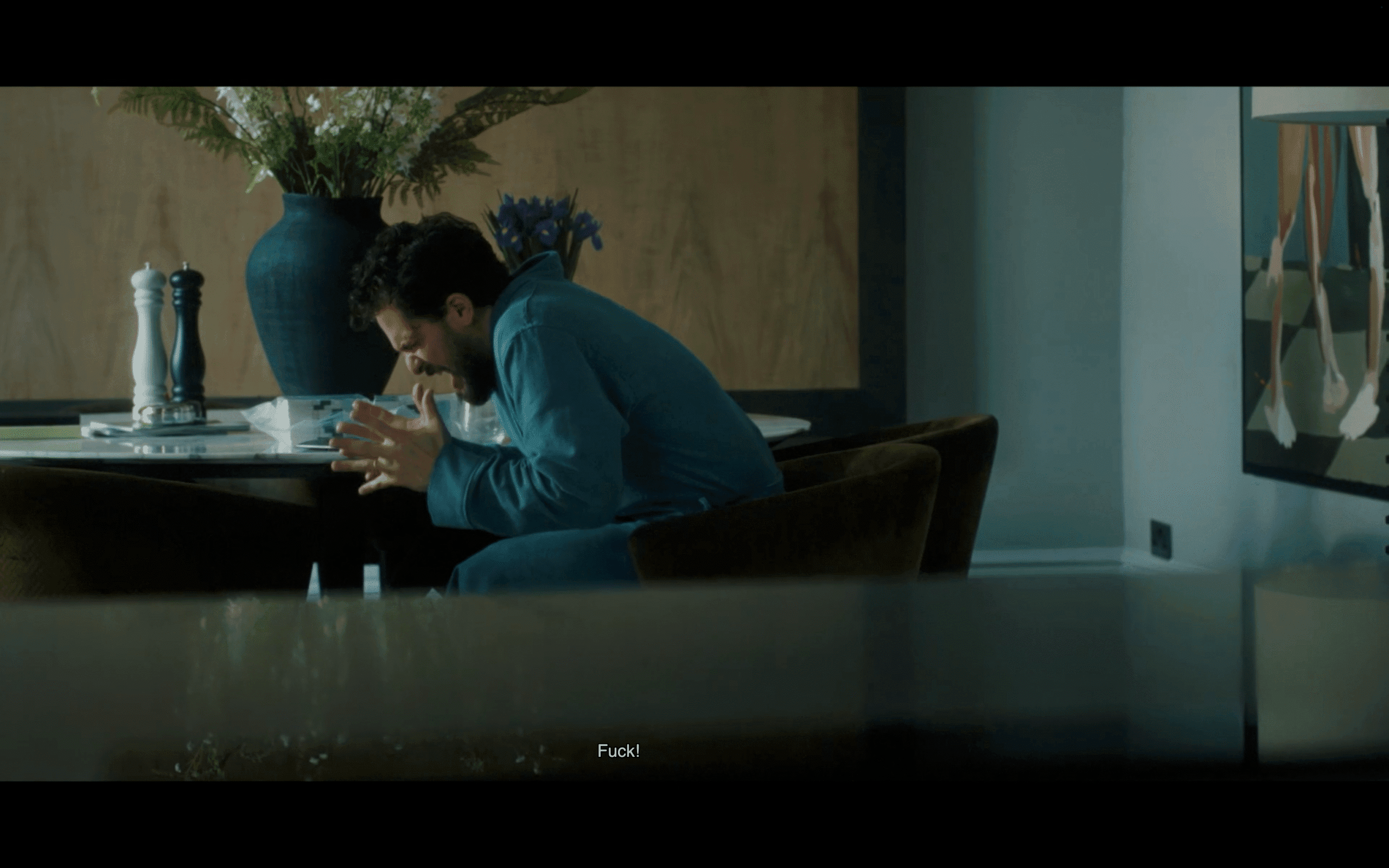
The gamble pays off, sort of, when Henry boards Whit’s exfil flight with the money and a lot of questions. Unfortunately, Henry does not like the answers. He may be a fuckup, but he’s no Lithuanian. “They’re unbelievably self-absorbed and sort of narcissistic people,” Max Minghella, who plays Whitney, told me about the two characters earlier this month. Kit Harington, who plays Henry, echoed the same: “Henry being so wrapped up in himself, you're watching these two kind of completely self-absorbed people somehow have this strange relationship where they see something in each other,” he said.
Not anymore, though. Throughout Whit and Henry’s twisted relationship, Henry has always staunchly enforced one boundary. Anytime Whitney presumes to be on any sort of equal ground with Lord Muck, Henry sets him straight. “Men like us?” says Henry in Episode 2. “I have plenty of middle-class friends,” he says in Episode 6. And now, he lobs a barrage of insults at Whitney like, “You will die a disgusting fucking mooch” and “Poor-boy civilian document” (that’s definitely how I’m referring to my passport at TSA checkpoints from now on) and “If you have to reach for something, then you've already fucking missed it.”
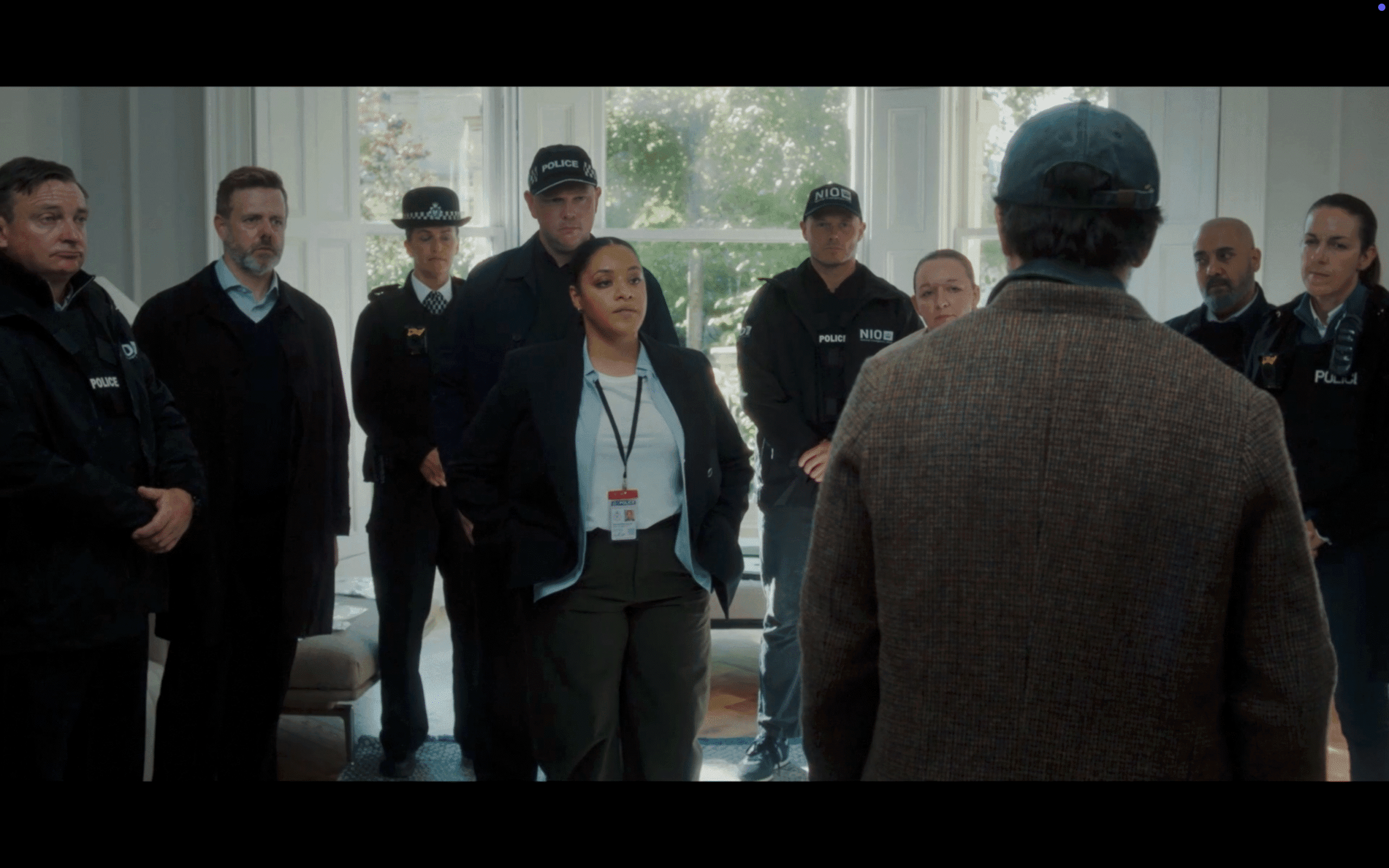
And with that, Henry leaves the snake on the plane, all alone. When he gets home, he tells Yasmin that he’ll do whatever it takes to keep her. Neither Yasmin nor the dozen law enforcement officers from the “serious fraud office” who are waiting one room over seem interested in that option.
When we next see Yasmin, she’s doing what she does best: ushering a politician into Rainmaker Norton’s office and then saying things like, “Yes, we can polish the aesthetic without neutering the appeal” to refer to Stefanowicz’s image. Elsewhere in the political realm, Bevan tells Ricky Martyn that she suspects Russian involvement in the Tender situation. “Don’t poke this particular bear,” he warns. And at a lunch with Otto Mostyn, Henry is told much the same thing. “Don't draw these types of people into your existence,” Otto says. Henry takes this warning to heart, to Jenny’s ultimate disappointment.
Harper shows Kwabena and Sweetpea their new office space. On the downside, there’s no room service, but on the upside, there is blazing-speed internet and zero pictures of Eric’s twin girls. She gives each a $2 million bonus; Sweetpea cracks that she could’ve made that much selling pictures of her feet online. Harper invites Kwabena to be her plus-one at some event in Paris that Yasmin is orchestrating. When they arrive, they run into Yasmin and Hayley in the lobby, laden with expensive shopping bags. “It’s Paris! Anything could happen!” chirps Yasmin (in a very “C’mon! It’s L.A.!” kinda way).
Here’s what does happen: Harper goes to a terrible dinner populated by “titans of industry, academics, [and] evolutionary biologists,” as well as Moritz and Johanna Bauer and Stefanowicz. There is race-science banter and toasts to “family, tradition, proud nations.” We learn that Yasmin is now sober—“Not in an annoying way; I just enjoy clarity,” she says. Hmm! Stefanowicz tells Harper that “I want your mind.” Eek!
Earlier this season, I told Myha’la that Industry showrunners Mickey Down and Konrad Kay had both described Harper and Yasmin as the show’s “central relationship” (especially given the absence of Rob in Season 4). “There's something about these two that feels very much like siblings,” Myha’la replied. “I have never heard anything nastier come out of anyone's mouth than siblings fighting.” At the same time, she said, “Nobody understands them like they do each other. So regardless of how badly they try to hurt each other, they're desperate for the comfort of someone who knows them as well as they do.”
As the two talk in “Both, And,” though, it dawns on Harper that maybe she doesn’t know Yasmin as well as she thinks. Their conversation unfolds a lot like a horror film. The too placid Yasmin sounds possessed, while Harper grows increasingly panicked. Vivacious young (and young) ladies, all of them under Yasmin’s thrall, seem to emerge out of the woodwork, beaming. All-too-real pervy old dudes look on. And an actual horror film comes in the form of the kompromat footage of young Dolly calling Eric daddy, to Harper’s shock.
Harper has a dawning realization that, indeed, she’s not like all the others. Later, when Kwabena compares her to an “NPC or AI” and hints at breaking up, Harper says numbly: “I feel like all the people who I thought were constants in my life have all become something I didn't know they were, or disappeared altogether.”
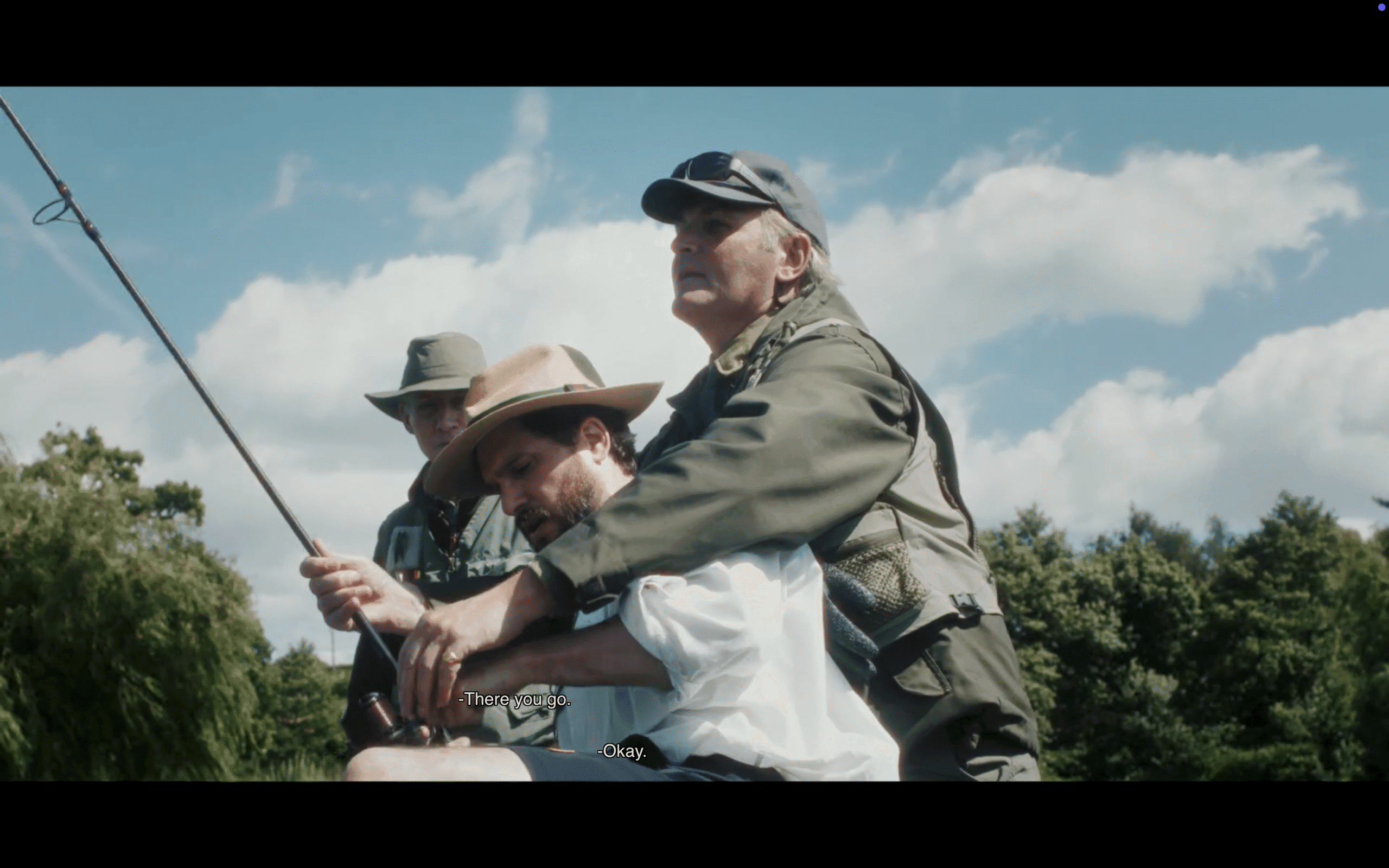
As the episode and the season end, there is another montage of sorts. Yasmin preps Hayley for an appointment at Hermès and “dinner with the Qataris” before listening to the final voicemail her father left her, over and over, while lying on the floor in a bathrobe. (As he has before, Charles Hanani refers to her as “Mina” on the tape in a really unsettling way.) Henry, a house arrest bracelet around his ankle and a Panama hat on his head, gets sunlight in his eyes and takes his lithium and goes fishing with some hands-on help from his uncle and Otto—three big fish on a small pond.
And Harper tells her interviewer, Keefe: “People change.” As Season 4 ends, it’s hard to know whether that’s actually true.
Turns of Leverage
On Industry, characters love borrowing trouble—and are always up to double down. Whose bets are paying off this week, and who is in the midst of a downward spiral?
Leveling up: Well, this Sebastian Stefanowicz character sure seems to be up to no good—and to be good at it! (When even Lord Norton is rattled by your ruthlessness, you’re in an elite tranche, indeed.) Never have I seen a tasteful quarter zip with this much sinister energy, and I’ve spent a lot of time in Fairfield County, Connecticut! I won’t be surprised if this beady-eyed buddy of Marc Andreessen and Peter Thiel winds up running the show next season—while politely running society into the ground.
Credit crunched? Back in Episode 6, when Whitney intercepted Tony Day at breakfast to convince him not to whistleblow, he issued his colleague a warning: that if he cooperated with reporters, there’d eventually be “that single moment when you wake up in a year or so, in a three-star shithole on a quiet Tuesday morning, when the phone stopped ringing, and you realize just how far you fell from grace.” Welp, now it’s Whitney who’s been reduced to life in a dusty Best Western and getting passports thrown in his eye. And it’s Tony Day who will be wishing he had three-star accommodations. So much for that $80 million in stock. (I’m going to choose to imagine that Jonah, meanwhile, sold all his Tender stock at the top because he needed the liquidity for all those cold-as-space vodka martinis and lap dances. That rude lech deserves only the best.)
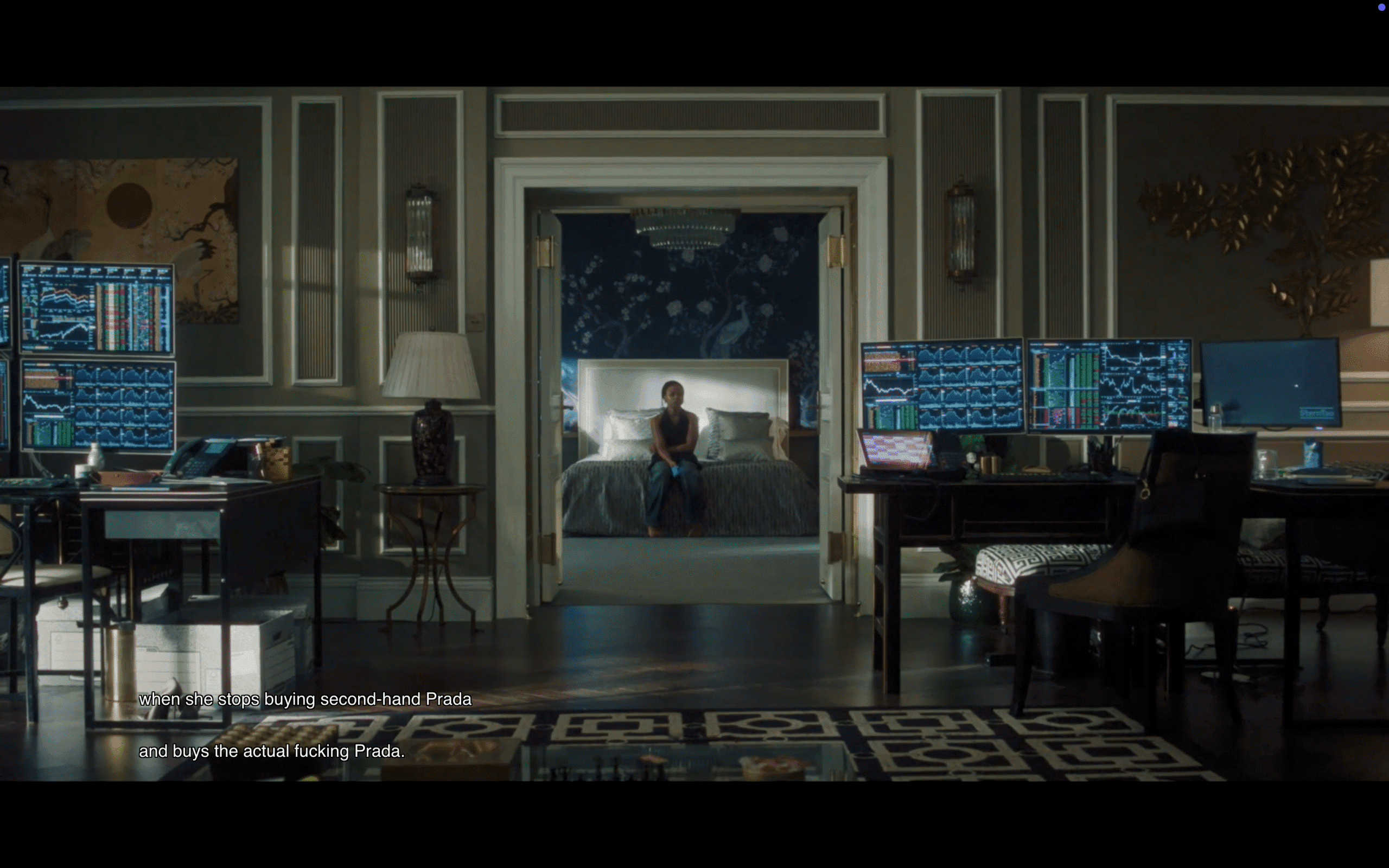
On the watch list: This episode—this season! this show!—is a real study in volatility for Harper. Her trade makes nine figures … but Eric won’t take her call. She brings a strapping lad with her to Paris … and he tells her that she kinda sucks. She goes to a fancy dinner … and gets seated next to lobotomized Nazis. She sits down next to “the only person in the world I don’t feel alone around,” Yasmin … only to realize, with mounting horror, that her friend isn’t who she thought she was. I guess this category should have been called “both/and.”
Tender Offers
Is that a “private banker in your pocket,” or are you just happy to see me? Here’s the latest haps at Tender, the most ambitious “bank killer” in Canary Wharf.
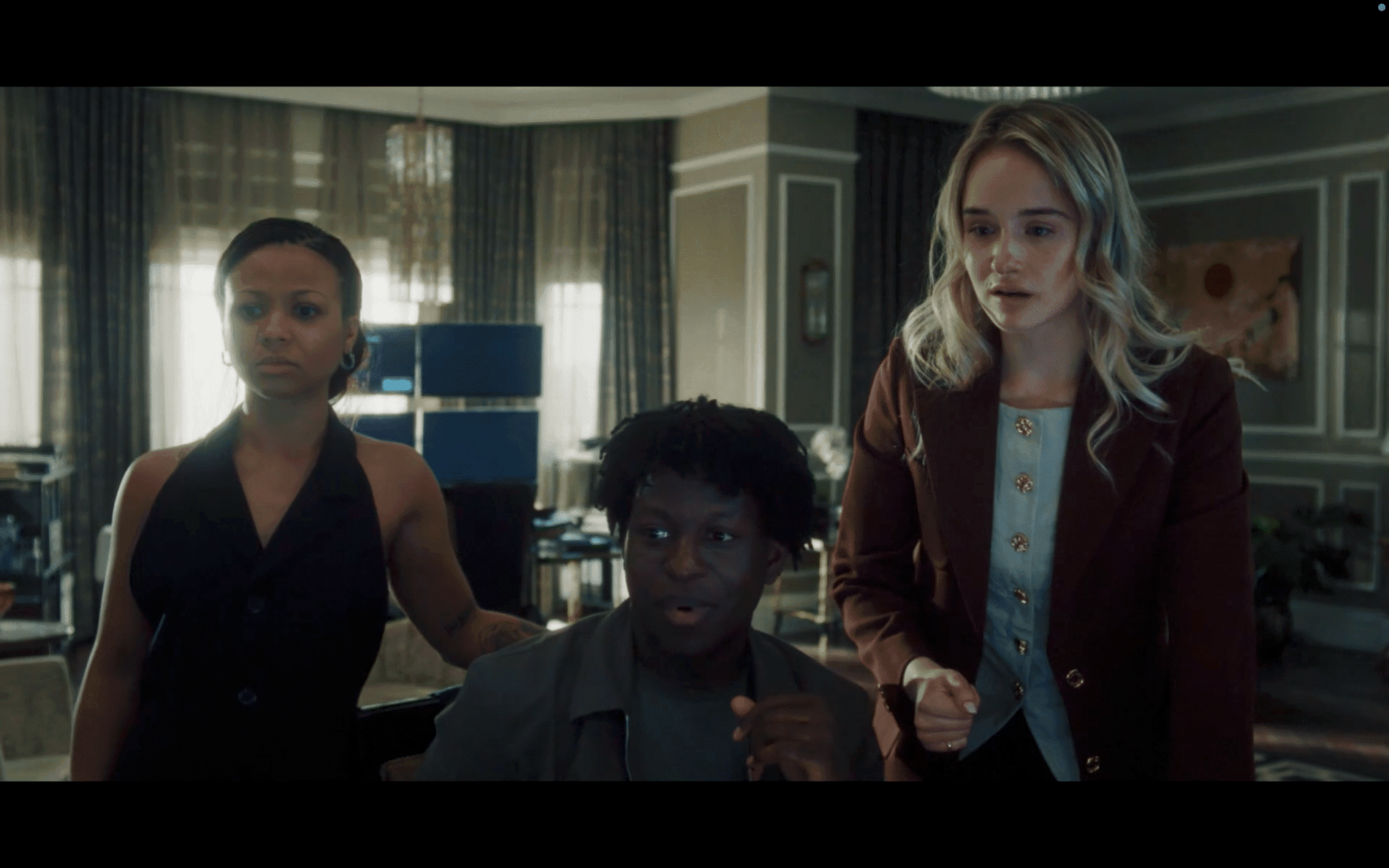
Something tells me it’s not a good sign for an enterprise when the stock is down 87 percent and even the short sellers can’t believe their eyes. I mostly just hope that the one Zoomer Tender employee with the bussin’ cut from the season premiere who didn’t know what boba was lands on his feet quickly.
Mergers and Acquisitions
Activist investor? I hardly know’r! This is a judgment-free zone to discuss emerging corporate synergies in Industry and do our due diligence on who’s doin’ it.
For all the graphic contortions that have long defined Industry, it’s the encounters we don’t see in “Both, And” that feel the most fucked up. “Il est agité par les vagues, mais ne sombre pas,” Yasmin says too brightly to Molly when the girl emerges unsteadily from behind closed doors in the morning, quoting the motto of Paris: She is tossed by the waves, but she does not sink. In many ways, we leave Yasmin at the end of Season 4 the very same way we left her in Season 3: in a grandly appointed sitting room, unmoored and alone, forever traumatized by her fucked-up father, Charles, while also turning into him. But that old version of Yasmin was a mean girl. This version feels more like a monster.
It hadn’t come as that much of a surprise earlier in “Both, And” to see Yasmin leave Henry. “He underestimates her massively from the word ‘go,’ like back in Season 3,” Harington told me earlier this season, adding that Henry had envisioned a marriage in which “she’s going to go and be wifey at home, and he’s going to go off to work.” But “that’s not Yasmin,” Harington said. “That’s not this person and never will be.” What’s far more striking and upsetting in “Both, And” is the way that Yasmin flatly rejects Harper’s offer to go down a different path.
“I think that Yasmin has decided that if she puts herself right next to the thing that terrifies her the most, she will be safe,” Abela said. “And she doesn't want anyone to take her away from that place.” What is the thing that terrifies her the most? “Predatory men,” Abela said. “She will never be good enough for powerful men unless she is exactly what they want. And in her experience, what they want is, you know, vulnerable young women.” Onward she swims, in the shadows of the sharks.
Watch Watch
Time is a flat circle, ideally powered by quartz. Here, we examine Industry’s tick-tocking timepiece(s) of the week.
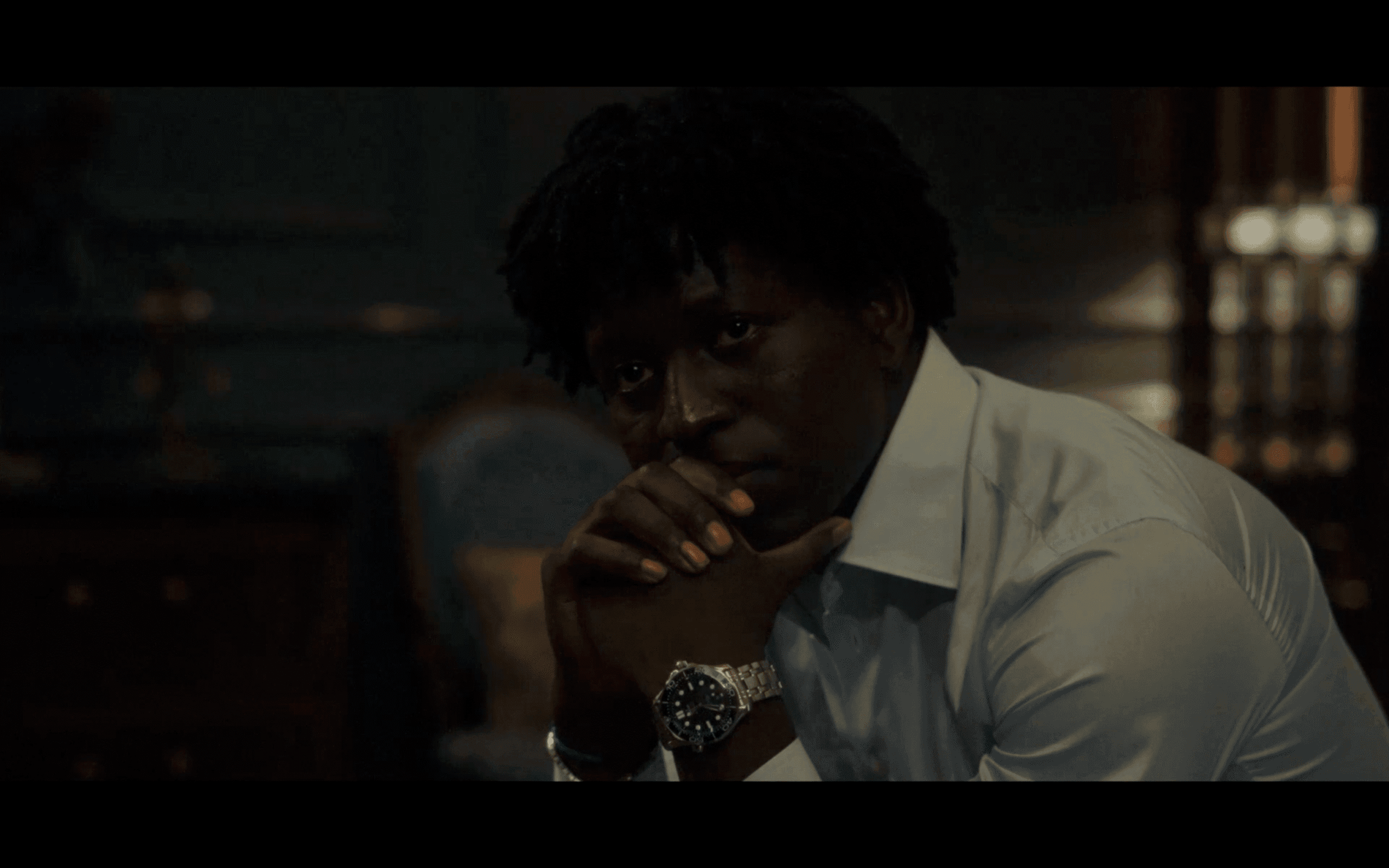
Toheeb Jimoh, who plays Kwabena, told me last month that his character “had a watch, and then had a different watch when he got a million pounds.” A “level-up watch,” Jimoh called it. Unfortunately, Jimoh also admitted to knowing absolutely nothing about horology, so I emailed costume designer extraordinaire Laura Smith about his wristwear this season. The watch above is an Omega Seamaster, and he’s also sported an Oris Aquis Date. As a bonus for the timeheads, Smith clued me in on the accessories worn by the politicos on the program: Bevan wears an Aquis Upscycle, while Stefanowicz opts for a Tudor Back Bay.
Get Me the Comps!
On the one hand, past performance neither guarantees nor predicts future results, as the SEC requires investment firms to remind clients. On the other hand, plus ça change! Here are some of the real-world stories that might be relevant to Industry’s fictional realm.
On Industry: Lord Norton tells Stefanowicz: “You won the Orwell scholarship, then became everything he warned us about.”
IRL: I like how much information we get about Stefanowicz from this one little line. The Orwell Award is a “programme that offers fully funded places to talented boys whose life opportunities have been limited,” allowing them to attend the prestigious Eton—where Princes William and Harry went—for the final years of high school. (And here’s a glimpse into what George Orwell warned us about.)
On Industry: Otto Mostyn dissuades Henry from trying to make a fuss about Russian involvement in Tender by telling him a story about an old pal, Clovis Wodehouse, who got a little too mixed up in the Russian real estate world and was found impaled on the “beautiful Georgian railings” beneath a window of his London home. “He'd had psychotic episodes, elliptical phone calls,” Mostyn says. “There was no evidence of any third-party involvement. So officially, it was unexplained.”
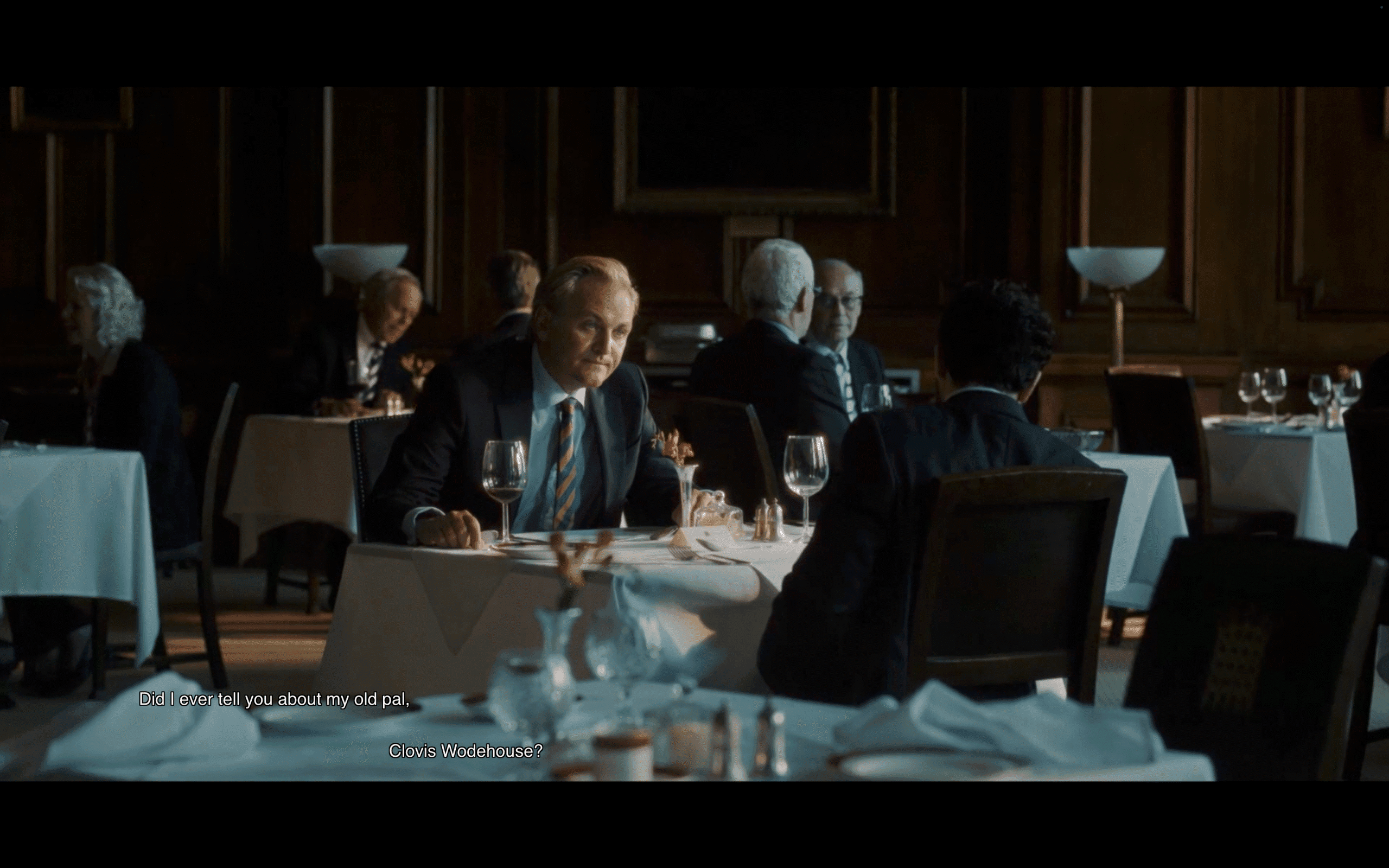
IRL: In December 2014, a wealthy Scotsman named Scot Young, whose business affairs included Russian real estate (and whose American girlfriend was on the reality TV show Ladies of London, which is neither here nor there, just a fun fact), was found impaled on the spiked railings beneath a window of their London home. Due to previous mental health struggles and an ongoing divorce, police initially ruled his death “non-suspicious.” Everyone’s “this isn’t part of ‘the Russian Ring of Death’” shirts, however, raised a lot of questions that were already answered by their shirts, and investigations by BuzzFeed and Tatler several years later suggested that foreign assassins actually may have been involved.
On Industry: One of the newspapers laid out at Yasmin and Henry’s house has a headline that says: “Peacock invasion of our villages.”
IRL: This is a real problem! (At least they aren’t feral hogs.)
On Industry: Kwabena tells Harper that “I had a mate at Francis Holland with Yasmin. Said she was a pretty nasty piece of work … she was like, Chick’s a sadist.”
IRL: Francis Holland is a girls’ day school in London whose alumnae include Jackie Collins (!) and “bright young thing” Nancy Mitford.
On Industry: Near the end of the episode, as Henry fishes with his old boys, we hear a song that features the following lyrics: “For he himself ascended / and it’s greatly to his credit / that he is an Englishman …” (As opposed to a Lithuanian man, sadly for Whitney.)
IRL: This song is called “For He Is an Englishman” from the Gilbert & Sullivan play H.M.S. Pinafore, and it has been in Industry before. Earlier this season, this “bitingly satirical piece of faux-patriotism” is what Henry was singing in the shower when Whitney was creeping on him, and in Season 3 it was bellowed out by Charles Hanani aboard the Lady Yasmin. They all wish they could be more like Sideshow Bob!
Open Interest
What are we left wondering?
- So does Hayley actually have any “game tape” of her, Yasmin, and Henry’s wild night in Austria? The case for NO: It would be really fitting, with respect to an overarching theme of the show, for Hayley to have leveraged a made-up narrative to spook the Mucks and achieve her goals. Also, note that neither Hayley nor Whitney ever confirmed the existence of a video when asked: Hayley demurred by saying she’d been told to “be in their lives,” while Whit answered Henry's question with a question on the plane. The case for YES: Hayley scares me, and I wouldn’t put anything past her.
- I asked this question last week, but now I’m wondering even harder: Why is Lord Norton still at Yasmin’s beck and call???
- Recently, I saw a tweet suggesting that Harper’s mother’s death was no accident—but that the shadowy forces who enabled her “fall down the stairs” didn’t account for the fact that her daughter hated her guts. Thoughts? I do like the idea that Harper is so emotionally avoidant that she’s impervious to mob tactics …
- Why wouldn’t Whitney just keep the fake beard on for his flight after going to all that trouble with the glue?
- Are Harper and Kwabena on a plane or a train in the final scene? It seems cramped and empty enough to suggest a plane … so is Harper already becoming a private-plane person after one good trade?
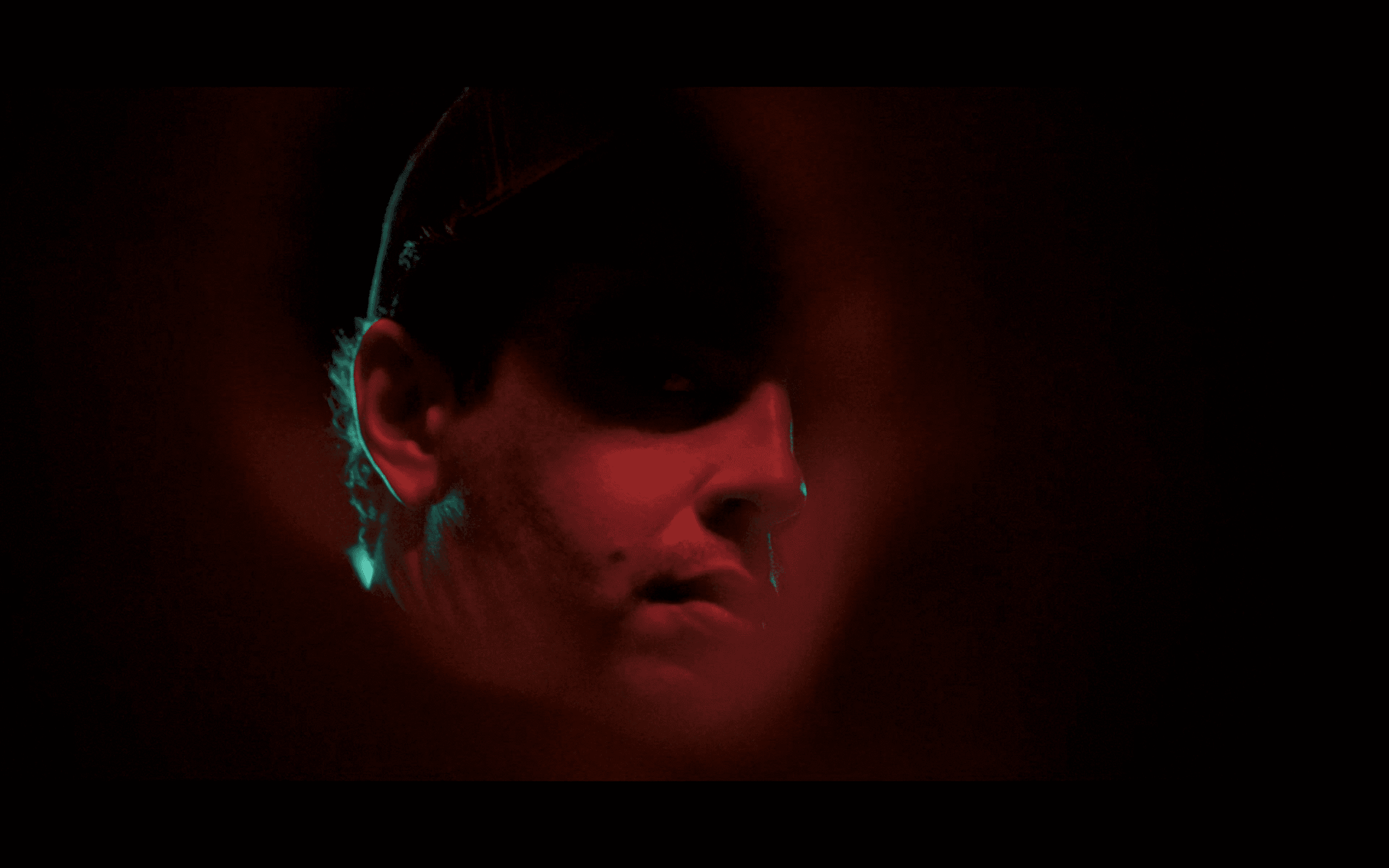
- Finally, what’s the meaning of this blink-and-you’ll-miss-it glimpse of Whit just before the closing credits?! Is this taken from, like, the POV of a Russian sniper? A red-light district security camera? Either way, I’m gonna be seeing this image in my sleep paralysis night terrors real soon.
And with that, the second-to-last season of Industry rings its closing bell. Minghella told me a couple of weeks ago that the final scene he shot for “Both, And” was Whitney’s desperate departure on the airplane, and on that day he was filled with a sort of preemptive nostalgia for the whole production. “Sometimes there's this beautiful thing that happens when you're shooting,” he said, “where lines blur in this quite fantastical way.” At one point, Minghella said, he was alone on the plane, “pulling onto the runway, and thinking: This is Whitney leaving, and this is Max leaving. It was deeply melancholic to me.”
And it was all a fitting end to a weird and wonderful experience. “Something I recognized the whole time I was doing Industry,” Minghella said, was “that there wouldn’t be anything else like it.” Hey, you never know! Maybe Whitney can use some of that newfound alone time to mastermind his way back into Season 5. As the character himself put it this season, “Your story begins when you start telling it,” and “The story ends where we say it ends.”
An earlier version of this piece misstated the writers of H.M.S. Pinafore; it is Gilbert & Sullivan, not Rodgers & Hammerstein.